

What to Expect at First Chiropractic Visit: A Clear Guide
You wake up with that same stiff neck again. Or maybe your lower back starts barking the moment you get out of the car on Federal Highway. You've tried stretching, resting, and telling yourself it'll pass, but it keeps hanging around. Now you're thinking about seeing a chiropractor, and one question keeps coming up: what happens on that first visit?
That uncertainty is normal. It is common for individuals not to feel nervous about chiropractic care itself. Instead, they feel nervous about the unknowns. Will it hurt? Will you be rushed? Will you be pressured into a long plan before anyone even understands what's wrong?
A first visit should feel clear, respectful, and practical. It's less about “getting cracked” and more about learning what your body is doing, what may be driving your pain, and what kind of care makes sense for your situation. If you're in Deerfield Beach, there's often another layer too. Many people come in after an auto accident, with a workers' comp claim, or while trying to coordinate care with physical therapy or other rehab services.
If you want reassurance before you book, it can help to read real success stories for back pain relief from people who started in the same uncertain place. It also helps to understand what a chiropractor does in plain language before you walk through the door.
Your First Step Toward Pain Relief
A first chiropractic appointment usually feels much more ordinary than people expect. You check in, answer some questions, sit down with the doctor, and talk through what's been happening. Then the visit moves into an exam and, in some cases, a gentle first treatment.
For many new patients, the biggest relief comes from finally being heard. If you've been dealing with back pain after lifting at work, neck pain after a crash on I-95, or sciatica that makes long drives miserable, you want someone to connect the dots instead of jumping straight to a one-size-fits-all fix.
Why the first visit matters
Your first visit shapes everything that follows. It tells the doctor where the pain is, when it started, what makes it worse, what you've already tried, and whether there are clues pointing to a joint issue, nerve irritation, muscle imbalance, or something that needs a different kind of referral.
That's especially important in a place like Deerfield Beach, where people often arrive with very different needs:
- Auto accident patients may need documentation, symptom tracking, and insurance coordination.
- Workers' comp patients often need clear records tied to job duties and injury history.
- Active adults and athletes want to know when they can move safely again.
- Seniors may be more focused on balance, walking comfort, and daily mobility.
A good first visit shouldn't feel mysterious. You should know why each step is happening and how it connects to your recovery.
What you're really walking into
Think of the visit as the start of a working relationship. The doctor isn't trying to impress you with speed. They're trying to make a sound decision. That means listening first, examining second, and recommending care only after the picture is clearer.
If you've been hesitating because you're unsure what to expect at first chiropractic visit, that's exactly the right question to ask. Once you know the sequence, the experience usually feels much less intimidating.
How to Prepare for Your First Chiropractic Visit
The easiest way to reduce first-visit stress is to prepare before you leave home. A little organization makes check-in smoother, helps your doctor get a clearer picture faster, and lowers the odds of delays if insurance or injury claims are involved.
If you're coming in after a car accident or work injury, preparation matters even more. For patients using auto or workers' comp insurance, which account for over 35% of chiropractic claims in Florida, bringing your claim number, insurance contact information, and any accident reports to the first visit is critical because it helps the clinic verify benefits and determine same-day treatment eligibility under PIP or no-fault rules, preventing billing delays, as noted in this first-timers guide to chiropractic visits.
What to wear and bring
Wear clothes you can move in comfortably. Think gym clothes, a T-shirt, leggings, athletic shorts, or loose pants. Tight jeans, stiff belts, and restrictive dresses make posture checks and movement testing harder.
Bring anything that helps tell the story of your pain. That may include:
- Photo ID and insurance card so the front desk can confirm your information.
- Medication list because current medications can affect symptoms and treatment choices.
- Past imaging or reports if you already have relevant records from another provider.
- A short symptom summary with where it hurts, when it started, and what triggers it.
- Accident or claim details if your visit is tied to an auto or work injury.
Your First Visit Checklist
| Item | Why It's Important |
|---|---|
| Photo ID | Confirms your identity and helps with registration |
| Insurance card | Allows the office to review coverage and benefits |
| Claim number | Helps process auto accident or workers' comp visits |
| Insurance contact information | Supports benefit verification and billing coordination |
| Accident report or work injury paperwork | Gives the doctor and staff useful injury context |
| Medication list | Helps the provider understand your current health picture |
| Prior imaging or medical records | Adds detail if you've already been evaluated elsewhere |
| Comfortable clothing | Makes the physical exam easier and more accurate |
| Written questions | Keeps you from forgetting concerns once the visit starts |
Practical rule: If a document explains your injury, your symptoms, or your coverage, bring it.
One local detail many guides miss
In Deerfield Beach, many first visits aren't simple wellness appointments. They happen after a fender bender, a slip at work, or while someone is already receiving rehab. That's why it helps to review whether chiropractic care is covered by insurance before you arrive.
If you're unsure whether something matters, bring it anyway. It's easier for the clinic to sort through extra information than to make decisions with missing pieces.
The Foundation of Your Care Consultation and History
The most important part of your first visit may be the part that looks the least dramatic. It's the conversation. Before anyone tests your movement or discusses treatment, the doctor needs your story.

A typical first chiropractic appointment is structured in phases, and the initial consultation and history discussion averages 15 to 20 minutes, which gives the doctor dedicated one-on-one time to understand your symptoms, lifestyle, and goals before the physical exam begins, according to this explanation of a first chiropractic visit timeline.
Why chiropractors ask so many questions
People sometimes worry they're talking too much during this part. You're not. Details matter.
If your neck pain started two days after an accident, that means something. If your back pain gets worse after sitting but eases when you walk, that means something too. If your hand tingles only at night, or your sciatica shoots down the leg when you bend forward, those patterns help narrow the cause.
The doctor may ask about:
- How the problem began suddenly, gradually, or after a specific event
- What the pain feels like sharp, dull, burning, throbbing, stiff, or shooting
- Where symptoms travel such as pain moving into the shoulder, hip, or leg
- What changes it work posture, sleep position, exercise, driving, lifting, or stress
- Your health background including surgeries, previous injuries, medications, and other care
It's part detective work
A consultation often feels like a careful investigation. The pain location isn't always the actual source. Someone may come in saying, “My knee hurts,” but the doctor notices a movement pattern involving the hip or low back. Another patient may complain of headaches, yet the conversation reveals long hours at a desk with recurring neck tension.
Your answers don't need to sound medical. Plain language is enough. “It grabs when I turn left” is useful. “It feels worse after I sit through my whole shift” is useful too.
Goal-setting starts here
This is also where your goals come into focus. Some people want to sleep through the night again. Some want to return to pickleball. Some just want to get through a workday without pain medication or constant stiffness.
That's why the consultation isn't filler. It creates the context for every recommendation that follows.
Understanding Your Body Through a Physical Exam
After the conversation, the exam helps turn your symptoms into something the doctor can see, feel, and test.
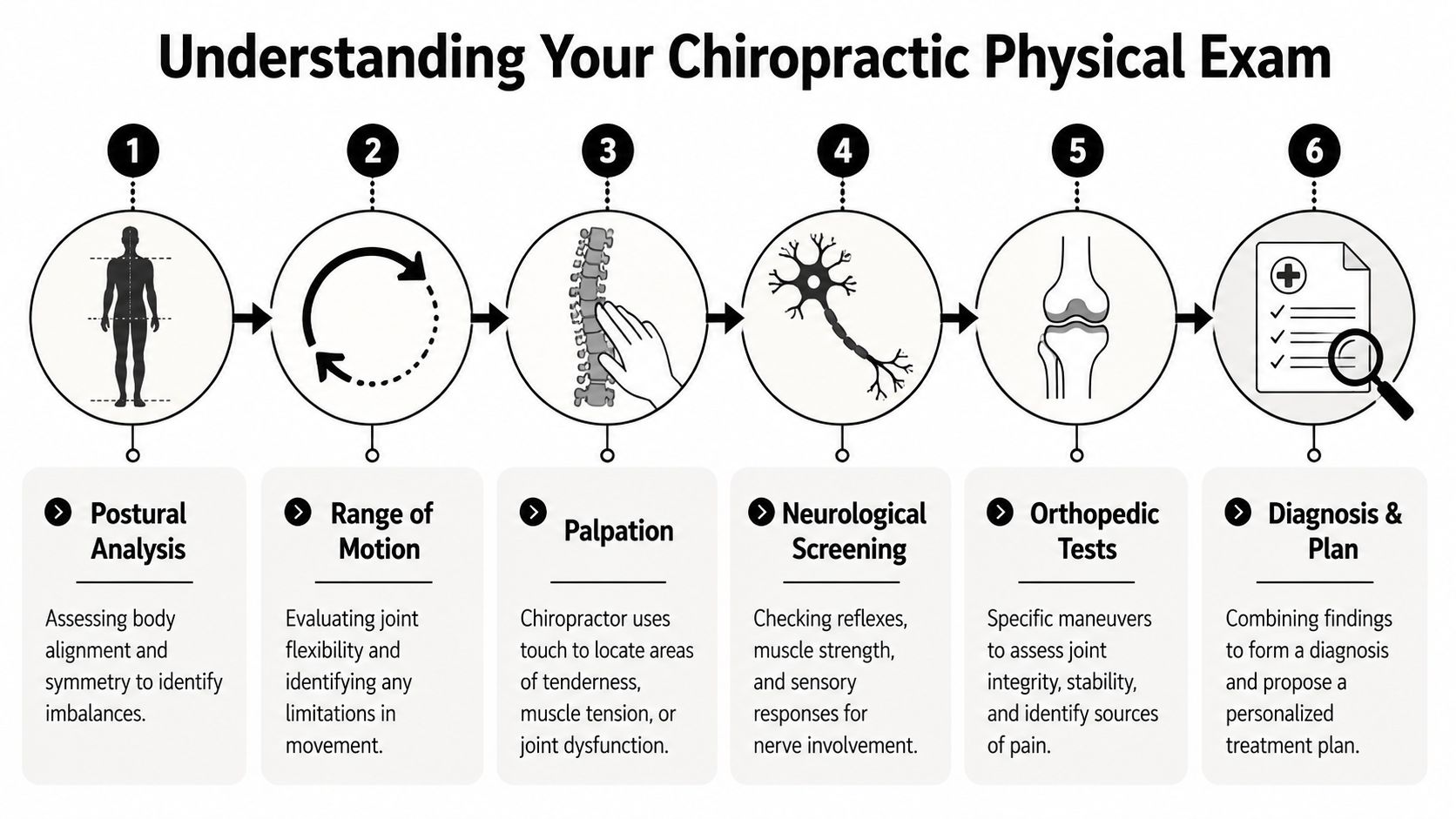
For many first-time patients in Deerfield Beach, this is the part that brings the most relief. You are no longer trying to describe pain with the right words. The doctor is checking how your body moves, where it protects itself, and whether the problem points more toward a joint, muscle, nerve, or movement pattern.
A physical exam works like a road test for your body. Talking tells us where the trouble may be. Movement testing helps confirm what is happening.
What the doctor is looking at
The exam often starts with simple observation. Your chiropractor may watch how you stand, sit, walk, turn, bend, or get on and off the table. Small details matter here. A shoulder that sits higher, a hip that does not move freely, or a guarded step can reveal strain that does not show up on a symptom checklist.
Then the doctor may use a few hands-on and movement-based checks to narrow things down.
Breaking down the common exam pieces
Here's what those parts usually mean in plain language:
- Posture analysis looks at how your head, shoulders, spine, and hips line up. If one area is off, another area often works harder to compensate.
- Range-of-motion testing checks how far and how comfortably you can move. You may be asked to turn your neck, bend forward, lean back, or twist. Sometimes a goniometer is used to measure motion more precisely.
- Muscle testing checks whether certain muscles feel weak, irritated, or protective. The doctor may ask you to push against their hand with an arm or leg.
- Reflex and nerve checks help show whether a nerve may be irritated or not communicating normally. That can matter with symptoms like sciatica, numbness, tingling, or pain traveling down an arm.
- Palpation means the doctor uses their hands to feel for tenderness, swelling, tight bands of muscle, or joints that are not moving well.
Some tests may briefly reproduce your usual pain. That can be helpful. If a certain motion brings on the same discomfort you feel while driving on I-95, lifting at work, or getting out of bed, it gives the doctor a clearer map of what is setting the problem off.
When imaging may be needed
Not every first visit includes X-rays or other imaging. If you were recently in a car accident, have symptoms that raise safety concerns, or need documentation tied to an injury claim in Deerfield Beach, imaging may be appropriate. In other cases, the exam gives enough information to begin care safely without ordering extra tests right away.
That matters because good care is specific care. The goal is to choose the right tests for your case, not pile on tests that do not change the plan.
At MedAmerica, that exam can also help guide whether chiropractic care alone makes sense or whether you may benefit from integrated services such as physical therapy or shockwave therapy. For some patients, especially after an auto accident or a stubborn overuse injury, that team approach gives a fuller picture of recovery.
Why this part helps patients feel more at ease
Many nervous patients relax once the exam begins because the process feels concrete. Instead of a vague problem like “my back is acting up,” you start to see patterns. Maybe your neck turns well to one side but not the other. Maybe your low back is less painful than your hip when you bend. Maybe a nerve test explains why the pain travels.
That kind of clarity builds trust. It also helps you understand why the doctor recommends a certain treatment plan, and why two people with “back pain” may need very different care.
Your First Chiropractic Treatment and Recovery Plan
You have answered questions, gone through the exam, and now you want to know what happens next. That is usually the point where nervous patients in Deerfield Beach ask the same thing. “Will you adjust me today, and is it going to hurt?”
In many cases, you may receive treatment on the first visit. The doctor decides that based on what your history and exam show, your comfort level, and whether same day care is the right fit for your case. If you came in after a car accident, that decision may also be shaped by injury severity, imaging needs, and the documentation needed for a Florida claim.

What a first adjustment may feel like
A chiropractic adjustment is a controlled, specific movement to a joint that is not moving well. It works a lot like freeing a door hinge that has gotten stiff. The goal is not to force your body. The goal is to help the joint move more normally with as little irritation as possible.
For a first visit, many chiropractors start gently. You may lie on a treatment table while the doctor places you in a specific position and applies a quick, precise movement. If you want a clearer picture before your appointment, this explanation of how a chiropractic adjustment works can help take some of the mystery out of it.
Some patients hear a pop. That sound is often gas releasing inside the joint, similar to opening a vacuum seal. It does not mean anything cracked or got shoved back into place, and it does not mean the treatment was stronger.
Patients often describe a first treatment like this:
- Relieving because a tight area finally feels less guarded
- Gentle because it is more controlled than they expected
- Strange but quick because the movement is unfamiliar
- Looser afterward because the area starts moving with less resistance
Your recovery plan is the bigger picture
The adjustment is one step. The plan tells you where that step is supposed to lead.
A clinical study on patient expectations found that 73.2% of new chiropractic patients expected care to be very or extremely successful, and 64.7% expected a lot or quite a bit of improvement in their condition, according to clinical research on chiropractic patient expectations and outcomes. Hope is good. A clear plan is better, because it gives that hope structure.
A useful treatment plan should answer a few plain questions. What problem are we treating first? What should improve first? How long should that take? What will tell us the plan is working?
For one person, success may mean sleeping through the night without neck pain. For another, it may mean driving on I-95 without low back pain shooting into the leg. For a Deerfield Beach patient dealing with an auto accident claim, it may also mean having care that is documented properly while pain, mobility, and daily function are tracked in a practical way.
When care includes more than an adjustment
Some patients do well with chiropractic care alone. Others recover better with a team approach.
That is common after car accidents, sports injuries, stubborn shoulder pain, or flare-ups that involve both joint restriction and muscle weakness. In those cases, the plan may include physical therapy exercises to rebuild strength and control, or shockwave therapy when a tendon or soft tissue problem is slow to calm down. Having those services coordinated in one place can save time and reduce confusion, especially if you are already juggling work, insurance paperwork, and medical appointments.
MedAmerica Rehab Center offers chiropractic care alongside physical therapy, acupuncture, and shockwave therapy under one roof. For Deerfield Beach residents, that can make the first visit feel less like a one-time adjustment and more like the start of an organized recovery plan.
If you want to see what a treatment room experience can look like, this short video gives a useful visual reference before your appointment.
What to Expect After Your First Adjustment
After your first treatment, you may walk out feeling looser, lighter, or more mobile. You may also feel a little sore later that day or the next morning. That response can be normal, especially if stiff joints started moving and tense muscles had to adapt.
A lot of patients compare it to the feeling after trying a new workout. Not alarming. Just noticeable.

What to do in the first day or two
Keep things simple after your visit. You don't need to hover over every sensation, but you should follow the instructions your doctor gives you.
A few common aftercare steps include:
- Drink water because your body often feels better when you stay well hydrated.
- Use ice if recommended especially if a sore or inflamed area feels irritated later.
- Do the prescribed stretches if the doctor gives you a few gentle movements to maintain progress.
- Pay attention to changes including what improves, what still triggers pain, and how you sleep that night.
What shouldn't worry you
Mild soreness, temporary stiffness, or a sense that your body is adjusting can all happen after an initial visit. What matters most is whether symptoms begin moving in the right direction over time and whether your follow-up plan fits your response.
If you're curious about the mechanics behind treatment, this explanation of how a chiropractic adjustment works can make those post-visit sensations easier to understand.
If something feels unusual after treatment, call the clinic and ask. Patients do better when they check in early instead of sitting at home wondering.
Before you leave the office
Checkout usually includes reviewing recommendations, scheduling follow-up care if needed, and making sure any insurance or claim details are in place. Don't be shy about asking what the next visit will involve. Clear expectations reduce anxiety and help you stay consistent.
Your Questions Answered About Care at MedAmerica
People in Deerfield Beach often ask practical questions before booking. That makes sense. You're not just choosing a treatment. You're choosing how easy or difficult your recovery process will feel.
Can I come in after a car accident even if I'm still sorting things out
Usually, yes. If your visit is related to an accident, bring the documents you have, especially your claim information and any reports connected to the incident. Clinics can often guide you through what's still missing.
The key is not waiting until everything feels perfectly organized. Early evaluation can help document symptoms while the details are still fresh.
Is chiropractic care safe for a first-time patient
A proper first visit is built around safety. The doctor starts with your history, reviews symptoms, checks movement and nerve function, and decides what's appropriate before treatment begins. If something suggests you need imaging, medical referral, or a different pace of care, that should be addressed first.
That's why honesty matters. Mention surgeries, medications, old injuries, and anything that worries you.
Why does integrated care help some patients more
Pain doesn't always come from one issue. A stiff joint, weak supporting muscles, poor movement habits, and post-injury tension can all show up together. In those cases, combining chiropractic care with rehab-based exercise or other therapies may make the overall plan more complete.
That can be especially useful for people dealing with sciatica, arthritis, sports injuries, post-surgical stiffness, or accident recovery.
Will I be pressured into a long treatment plan
You shouldn't be. A good recommendation should be explained clearly and tied to your findings, not delivered like a sales pitch. Ask what the plan is based on, what the short-term goals are, and how progress will be measured.
How can I stay engaged between visits
Patients tend to do better when they understand the plan, remember instructions, and know what their next step is. If you like reading about communication and follow-up from the patient side, Call Loop's patient engagement tips offer useful ideas for staying involved in your care.
What matters most on day one
The first visit doesn't need to be perfect. It needs to be clear. You should leave knowing what the doctor found, what the next step is, and what your role is in getting better.
Understanding the value of knowing what to expect at first chiropractic visit is important. It turns uncertainty into a plan.
If you're dealing with back pain, neck pain, sciatica, arthritis, or recovery after an auto accident or work injury, MedAmerica Rehab Center offers chiropractic care, physical therapy, acupuncture, and shockwave therapy in Deerfield Beach. If you're unsure whether you're a good fit, reaching out for a first-visit conversation can help you understand your options and what care might look like for your specific situation.
MedAmerica Rehab · Deerfield Beach
Talk to a clinician about your pain
Physical therapy, chiropractic, acupuncture and shockwave therapy under one roof, since 1995. Same-day appointments are available.
Mon–Thu 8:00 AM – 6:30 PM · Fri 8:00 AM – 3:00 PM