

Find Your Best Neck Pain Relief Device 2026
Your neck may hurt in one of two ways right now. It's either the slow, familiar ache that builds after hours at a laptop, or it's the sharper pain that grabs when you turn your head backing out of the driveway or looking down at your phone.
Individuals often start the same way. They search for a neck pain relief device, scroll past ads for traction units, heated massagers, braces, pillows, and electric pulse gadgets, then try to guess which one fits their problem. That guesswork is where people waste money, delay the right treatment, or irritate an already sensitive neck.
A good home device can help. It can calm muscle guarding, reduce symptom flare-ups, and make daily life easier. But a device is only useful when it matches the reason your neck hurts. The same tool that helps one person with morning stiffness can be a poor choice for someone with arm pain, numbness, or an injury after a car accident.
Finding Real Relief from Persistent Neck Pain
I see this pattern often in adults with modern neck pain. A person spends the day working at a desk, shoulders drift up, head moves forward, and by evening the neck feels heavy and tight. Another wakes up with stiffness that eases after a hot shower, only to return by afternoon. Someone else gets pain near the base of the neck with tingling down the arm and assumes it's “just tension.”
Those problems don't behave the same way, so they shouldn't be treated the same way.
The internet usually treats neck pain as one big category. It isn't. Some pain is mostly muscle tension. Some comes from irritated joints. Some acts more like nerve compression. Some is related to posture and poor support during sleep. That's why one person swears by a heated wrap while another only improves when traction is added.
Practical rule: Before buying a device, define your pain in plain language. Is it stiff, achy, sharp, radiating, posture-related, or worst first thing in the morning?
Home tools work best when you use them as part of a simple plan. Calm the irritated tissue, reduce the stress on the neck, and stop the habits that keep re-triggering the pain. They're not magic cures. They're support tools.
That distinction matters because some neck pain is safe to manage at home for a short period, and some should be evaluated early. If your device gives temporary comfort but the pain keeps returning, that usually means you've managed the symptom without fixing the driver behind it.
The Science Behind At-Home Neck Treatments
Most at-home neck treatments aim to do one of four things. Create space, relax tight muscles, interrupt pain signals, or support better alignment. Once you understand those goals, product descriptions become much easier to judge.
Decompression and why traction can help
Think of spinal decompression like gently opening an accordion. The goal isn't to force the neck into a dramatic stretch. The goal is to apply controlled pull so the joints and discs aren't being compressed all day.
That's the thinking behind cervical traction. In clinical practice, traction is used widely. A 2017 survey of physical therapists reported that 76.6% use cervical traction for neck pain, especially when patients show signs of nerve root compression. That doesn't mean every sore neck needs traction. It means traction has a real place when symptoms suggest compression rather than simple muscle fatigue.
Muscle relaxation and pain signal control
A second group of devices targets tight muscles directly. Heat, massage, and electrical stimulation often help when the neck feels guarded, knotted, or stiff after prolonged posture.
Multimodal devices combine these principles, using EMS frequencies from 2Hz to 85Hz to either fatigue tight muscles or block pain signals, heat therapy to boost circulation, and controlled mechanical stretch to decompress the cervical spine. In plain terms, some settings encourage tight muscles to let go, while others aim to make pain less noticeable for a while.
If your neck just flared up and feels irritated, temperature can also matter. Many people do better when they match the treatment to the tissue response. For help deciding when cold is the better first move, this guide on ice pack physical therapy for pain and recovery is a practical reference.
A device is useful when its mechanism matches the problem. Heat won't decompress a pinched nerve, and traction won't fix every stress-driven muscle spasm.
Postural support and load reduction
The last category is support. Pillows, braces, and posture tools don't “treat” tissue the way traction or stimulation can. What they do is reduce strain. Sometimes that's enough to break a cycle of repeated aggravation.
That's why the best neck pain relief device isn't always the most advanced one. For some people, the right answer is a simple support that stops the neck from getting overloaded every night or every workday.
Comparing Types of Neck Pain Relief Devices
A patient buys a strong-looking neck device online, uses it for three days, and either feels no change or feels worse. That usually happens for one reason. The device did not match the pain pattern.
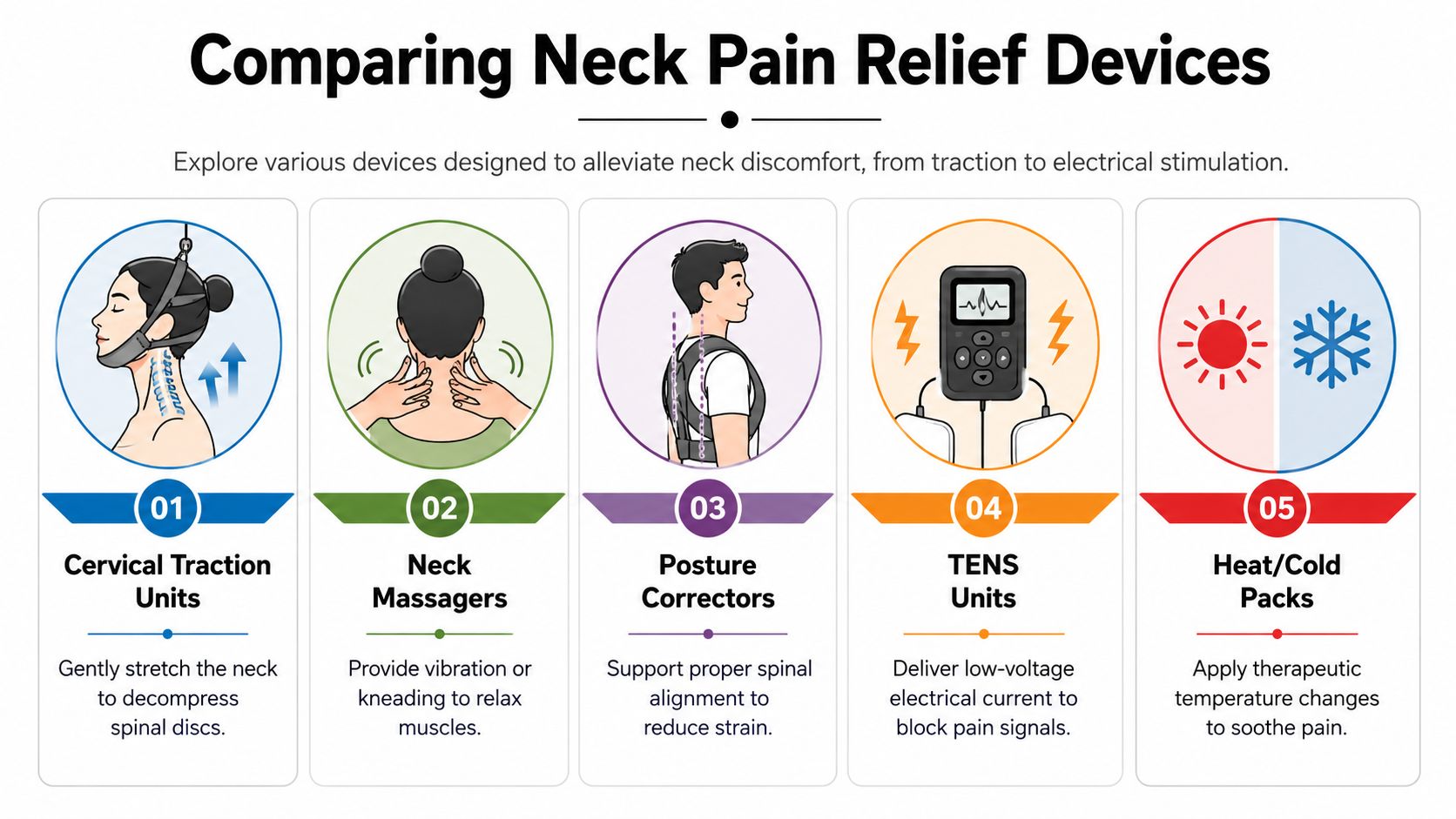
The useful question is not which device does the most. It is which device fits the likely source of your symptoms, and which ones should wait until you have been properly assessed.
Cervical traction units
Traction devices reduce pressure through a gentle pulling force on the neck. They are usually the best fit for symptoms that act like compression. Pain that shoots into the shoulder blade or arm, tingling, or relief when you support your head with your hand are the kinds of clues that put traction on the list.
The trade-off is clear. Traction can calm the right problem, but it can also irritate the wrong one. If pain started after a fall, comes with dizziness, causes marked weakness, or feels severe and unfamiliar, traction should not be the first home experiment.
TENS and EMS devices
These devices send mild electrical current through pads or built-in contacts. In practice, they are most helpful for muscle guarding, stress-related tightness, and the sore, overworked feeling many desk workers get late in the day.
They usually work best when the neck is painful but still moves, even if movement feels limited. They work less well when the main driver is poor sleep setup, nerve irritation, or a newer injury that needs a diagnosis first.
Pain relief is the upside. The limitation is that lower pain does not always mean the cause is improving.
Heated neck massagers and wraps
Heat and massage tools fit a very specific pattern. The neck feels stiff, the upper shoulders feel loaded, and symptoms improve once the area warms up. People often describe this as end-of-day tightness rather than sharp pain.
These devices are comfort-first options. They can settle muscle-dominant pain and help you move more easily for a while. They are a poor match for symptoms that travel below the shoulder, pain linked to trauma, or neck pain paired with numbness.
Cervical pillows
A pillow matters most when pain is worst first thing in the morning or after a full night in one position. In that situation, the goal is not fast relief. The goal is keeping the neck in a calmer position for several hours at a time.
That is why pillow choice is more about fit than firmness. The right shape keeps your neck from sagging or twisting overnight. If waking pain is your main pattern, these tips on how to sleep with neck pain without adding overnight strain are a better starting point than buying a more aggressive device.
Soft neck braces and posture supports
Braces and posture supports reduce load for short stretches. They can help during travel, after a flare, or during an activity that predictably aggravates the neck.
They have a real downside. Long daily use can make people more hesitant to move and less tolerant of normal activity. I usually view them as temporary tools, not ongoing treatment.
Quick comparison
| Device type | Best use case | Usually not the best fit |
|---|---|---|
| Cervical traction unit | Radiating symptoms, compression-style pain, relief with unloading | Acute unexplained pain, people who have not been screened for risk factors |
| TENS or EMS device | Muscle guarding, soreness, tension flares | Clear sleep-position issues or pain with neurologic symptoms |
| Heated massager or wrap | Tight, achy, stress-related neck tension | Persistent arm symptoms or trauma-related pain |
| Cervical pillow | Morning stiffness, sleep-related aggravation | Midday flare-ups caused mainly by work posture |
| Soft brace or posture support | Short-term support during flare-ups | Long-term daily dependence |
How to Choose the Right Device for Your Pain
The right question isn't “Which neck pain relief device is best?” It's “Which one matches the pattern of my pain?”
Start with the symptom pattern
If your pain is a dull, persistent muscle ache, think heat, massage, or electrical stimulation before traction. This pattern usually shows up after stress, computer work, long drives, or repeated shoulder tension. The neck feels heavy and tight more than sharp.
If your pain is sharp and travels into the arm, traction belongs on the shortlist, but only if you've been medically screened and shown that traction is appropriate. For chronic cases, therapeutic pressure for traction devices is often between 25 to 45 pounds, while milder compression may require only 10 pounds. That's why adjustable devices are better than one-size-fits-all approaches.
If your pain is worst when you wake up, put more attention on pillow support and sleep posture. A stronger gadget won't solve a neck that gets twisted or poorly supported for hours every night. If that sounds familiar, this guide on how to sleep with neck pain can help you clean up the basics.
Symptom-to-Device Matching Guide
| Your Primary Symptom | Recommended Device Type | Why It Works |
|---|---|---|
| Achy tightness after desk work | Heated wrap or TENS/EMS device | Helps calm overworked muscles and reduce pain sensitivity |
| Pain with tingling or arm referral | Adjustable cervical traction unit | May reduce compressive stress when traction is appropriate |
| Stiff neck first thing in the morning | Cervical pillow | Improves overnight support and reduces repeated strain |
| Flare-up during travel or prolonged sitting | Soft brace or posture support for short periods | Reduces load and reminds you to avoid aggravating positions |
| Tenderness with stress-related muscle spasm | Heated massager | Promotes relaxation when the issue is primarily muscular |
What usually works and what usually disappoints
The people who get the most from home devices tend to do three things:
- They match the tool to the symptom pattern. They don't use traction for every ache or a massage gun for every nerve symptom.
- They change the aggravating habit. That may mean desk setup, driving posture, or sleep position.
- They stop early if symptoms behave strangely. Increased arm numbness, dizziness, or worsening pain is not a “push through it” situation.
What usually disappoints is buying one aggressive device and expecting it to solve a problem that has three drivers, such as posture, muscle guarding, and poor sleep support all at once.
Safety Precautions and When to Stop
Safety matters more than features. A device that's appropriate for one person can be a bad choice for another, especially with traction.

When home traction is not appropriate
At-home traction is contraindicated for people with osteoporosis, spinal instability, recent fractures, carotid artery disease, or during pregnancy. In those cases, trying to “stretch it out” can make the situation worse.
That's the line many product pages gloss over. They focus on comfort and convenience, but they don't always explain who shouldn't use the device in the first place.
Basic rules for safer use
Use this checklist before you start any new neck device:
- Start low and slow. Use the lowest comfortable setting first, whether that's heat, traction pressure, or electrical intensity.
- Avoid treating an acute undiagnosed injury at home. If the pain started after a fall, collision, or sudden forceful movement, get evaluated.
- Stop if symptoms spread. More pain down the arm, new numbness, headache escalation, dizziness, or a feeling of instability means stop.
- Watch your position. Many devices work better and more safely when you're supported, relaxed, and not trying to multitask.
- Respect skin and tissue tolerance. Heat and stimulation can irritate skin if you overdo the duration or intensity.
Safety note: Relief during use doesn't always mean the device is helping the right problem. Temporary numbness of symptoms can hide a worsening issue.
A quick visual overview can help if you're deciding whether to proceed carefully or pause and get checked first.
Signs you should stop experimenting
Stop using the device and seek professional guidance if:
- Your pain is getting more intense, not less.
- Symptoms move farther down the arm or become more frequent.
- You notice weakness, clumsiness, or dropping objects.
- You feel dizzy, faint, or visually off when using a neck device.
- The problem keeps returning as soon as the device effect wears off.
That last point is common. If relief lasts only a short time and nothing is improving week to week, you likely need a more specific diagnosis.
Self-Care vs Professional Treatment
You buy a neck pain relief device, use it for a few days, and notice some temporary relief. Then the pain returns during work, sleep, or driving. That pattern usually means the device is helping symptoms without addressing the reason they keep showing up.
Home care still has a clear role. For simple muscular tension, posture-related irritation, or morning stiffness that improves as you move, the right device can calm things down enough to let tissues settle. That is often the right starting point.
The limit is diagnosis.
At home, you can judge whether something feels better, worse, or unchanged. You cannot confirm whether the pain is coming from a nerve root, a stiff joint, a disc problem, a post-accident strain, muscle overload, or even a poor pillow setup. The same device can help one of those problems and aggravate another. That is why the timing matters. A device makes more sense after you have a working idea of what you are treating and why it should respond to that type of input.
I see this often in clinic. Someone tries heat, traction, massage, and stimulation in no particular order because each one helped for an hour or two. Relief is real, but it is incomplete. If symptoms keep returning the same way, the next step is usually a better evaluation, not a fifth gadget.
What professional treatment adds
Professional care is useful when the problem is no longer behaving like a simple strain. A good exam looks at symptom pattern, range of motion, strength, nerve signs, joint mobility, posture, sleep position, work setup, and how the pain responds to repeated movement. That process tells you which device is worth using, which one is likely to waste your time, and when self-care should take a back seat to guided treatment.
If you want a clearer sense of that process, this guide on how physical therapy helps with back and neck pain explains what formal treatment can add beyond symptom relief alone.
Signs it is time to get evaluated
Schedule a professional evaluation if you notice any of these:
- Pain after a car accident, fall, or sports impact
- Numbness, tingling, or weakness that is increasing
- Pain with dizziness or balance changes
- Night pain that does not ease with position changes
- New or stronger headaches linked to neck movement
- Symptoms that keep cycling back despite reasonable home care
Clear communication also matters once you do seek help. Clinics that enhance patient care practices tend to make treatment plans easier to follow, which improves consistency and reduces guesswork.
Professional care is not a last resort. It is often the fastest way to match the right treatment to the right kind of neck pain.
Your Path to Lasting Relief at MedAmerica
The goal isn't to become an expert on gadgets. It's to get your neck calm enough, strong enough, and mobile enough that pain stops running your schedule.
That usually takes more than symptom control. It takes a real exam, a plan based on how your pain behaves, and treatment that matches the cause. At MedAmerica Rehab Center, that may include hands-on therapy, targeted exercise, movement correction, and supervised modalities rather than endless trial and error at home.

People also do better when clinics communicate clearly, set expectations, and make treatment feel manageable. That's one reason broader healthcare teams continue to enhance patient care practices with better communication and patient experience systems. Good care isn't just the treatment itself. It's how well the plan fits the person.
If your neck pain is persistent, radiating, tied to an accident, or not responding to the device you bought, the next smart step is a professional evaluation. Temporary relief has value. Lasting relief comes from knowing what you're treating and why.
If you're ready for answers instead of more guessing, schedule a visit with MedAmerica Rehab Center. Their team in Deerfield Beach can evaluate the source of your neck pain, help you decide whether a home device fits your case, and build a treatment plan focused on lasting relief.
MedAmerica Rehab · Deerfield Beach
Talk to a clinician about your pain
Physical therapy, chiropractic, acupuncture and shockwave therapy under one roof, since 1995. Same-day appointments are available.
Mon–Thu 8:00 AM – 6:30 PM · Fri 8:00 AM – 3:00 PM