

Rehab Lakeland FL: Your Complete 2026 Guide
Seeking rehab in Lakeland, FL, often means you're not looking for one neat category of care. You might be dealing with back pain that won't let up, helping a parent transition home after a hospital stay, or trying to figure out whether "rehab" means addiction treatment, inpatient recovery, or outpatient therapy. That confusion is normal.
As a physical therapist, I see this mix-up all the time. People wait too long to get the right help because the word rehab gets used for very different services. The best first step isn't choosing a building. It's choosing the right kind of recovery path for your situation.
The Three Main Paths of Rehab in Lakeland
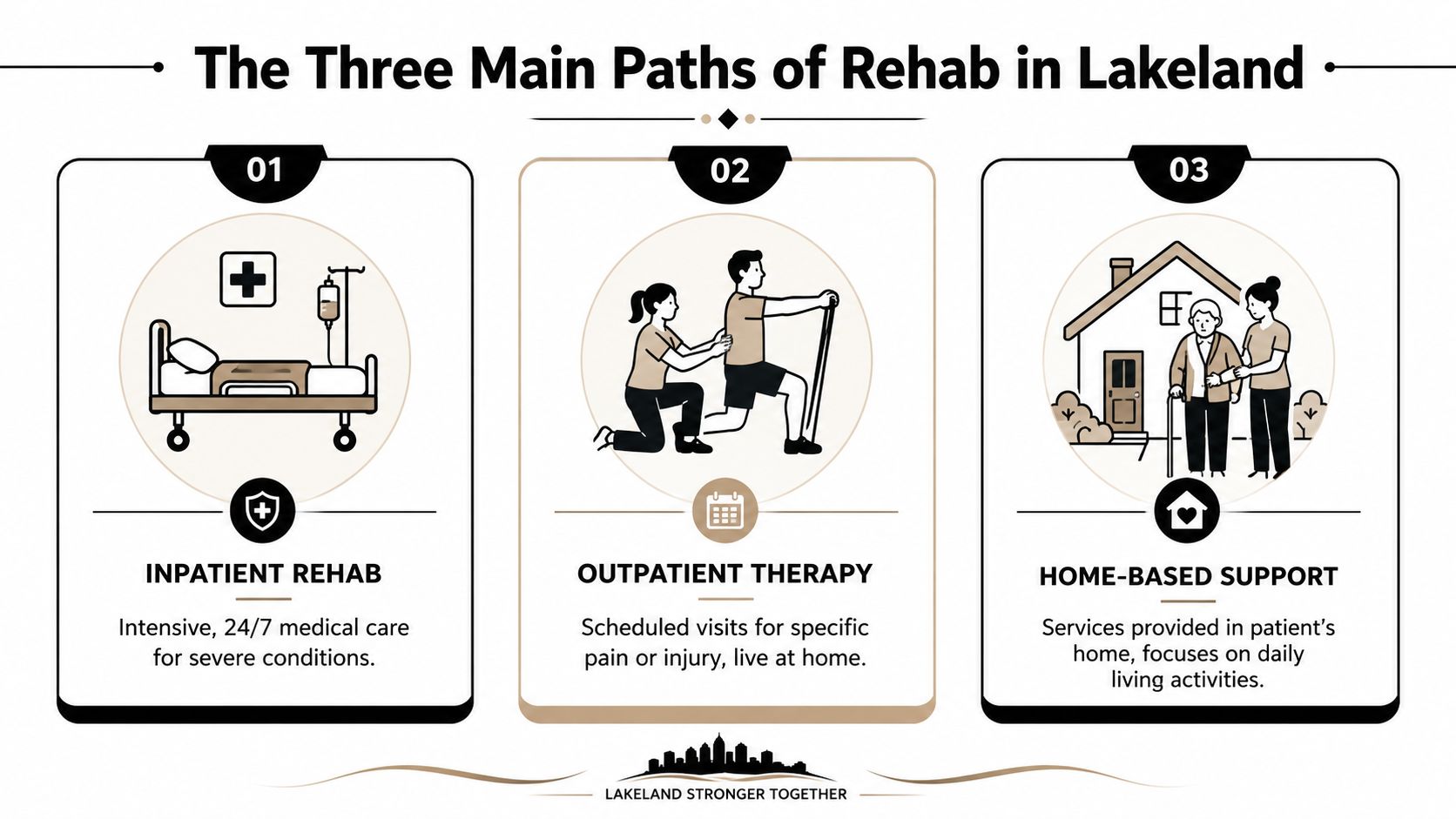
When people type Rehab Lakeland FL into Google, they usually mean one of three things. Each serves a different need, and choosing the wrong level of care can waste time, money, and energy.
Addiction treatment and substance use recovery
For some families, rehab means treatment for alcohol or drug dependence. In Polk County, the Florida Department of Health reports 123 fatal overdoses in a recent year, and there are nearly 100 treatment facilities within a 50-mile radius of Lakeland according to American Addiction Centers' Lakeland treatment overview. That tells you two things at once. The need is serious, and help does exist.
This path usually involves detox support, residential care, outpatient programs, counseling, peer support, and relapse-prevention planning. It is not the same as physical rehabilitation, even though both use the word rehab.
Inpatient physical rehabilitation
This is the path for people recovering from a major medical event. Think stroke, joint replacement, neurological illness, severe injury, or a hospital stay that left someone too weak or unsafe to return home without intensive therapy.
Inpatient rehab happens in a hospital-based or facility-based setting with close medical supervision. Therapy is structured, frequent, and focused on restoring enough strength, balance, mobility, and self-care ability to make home discharge possible.
Practical rule: If someone needs nursing support, close medical monitoring, and help with basic daily tasks, outpatient therapy is usually too light a starting point.
Outpatient physical therapy and related conservative care
This is the option many people need, but often overlook. Outpatient rehab is for people who live at home and come in for scheduled treatment visits. Common reasons include neck pain, sciatica, arthritis, shoulder pain, sports injuries, auto accident injuries, balance issues, and post-surgical follow-up after the hospital phase ends.
This path works best when the person is medically stable but still limited by pain, stiffness, weakness, poor balance, or reduced function. A broader view of how rehab settings differ can also help if you're comparing options beyond Lakeland, such as this overview of choosing a rehabilitation center.
Rehab types in Lakeland at a glance
| Type of Rehab | Best For | Setting | Typical Duration |
|---|---|---|---|
| Addiction treatment | Substance use recovery, detox, relapse prevention | Residential, outpatient, support groups | Varies by program and need |
| Inpatient physical rehab | Stroke, major surgery, severe injury, major loss of function | Hospital or rehab facility with medical oversight | Short-term intensive stay |
| Outpatient therapy | Back pain, joint pain, sports injuries, auto accidents, mobility limits | Clinic visits while living at home | Ongoing visits based on progress |
The right question isn't "Which rehab is best?" It's "Which rehab matches the problem in front of me?"
Understanding Inpatient and Skilled Nursing Rehab
After a hospitalization, the biggest decision often isn't whether rehab is needed. It's which inpatient level fits the person safely. In Lakeland, that usually means understanding the difference between hospital-level inpatient rehab and skilled nursing rehabilitation.
When hospital-level rehab makes sense
Hospital-based inpatient rehab is designed for people who can tolerate a demanding therapy schedule and still need coordinated medical oversight. These are often patients recovering from stroke, brain injury, neurological conditions, major orthopedic surgery, or complex trauma.
A strong quality marker in Lakeland is accreditation. The Bannasch Institute for Advanced Rehabilitation Medicine at Lakeland Regional Health Medical Center is Polk County's only CARF Accredited inpatient rehabilitation facility, according to Lakeland Regional Health's Bannasch Institute page. CARF accreditation matters because it signals that a program has been reviewed against recognized standards for patient care and safety.
That doesn't guarantee a perfect personal fit, but it does help families separate highly structured rehabilitation from facilities that provide more general post-acute support.
What skilled nursing rehab does well
Skilled nursing rehab fills a different role. It often suits people who still need nursing care, medication management, wound care, or a slower recovery pace than a hospital-level rehab unit requires.
In Lakeland, examples of reported skilled nursing rehabilitation outcomes include 30 to 45 percent gains in functional independence within 2 to 3 weeks, 22 percent lower hospital readmission rates, 85 percent completion of discharge planning, and 70 percent return to prior living status within 4 weeks, as described by Lakeland Nursing and Rehab's rehabilitation overview. Those numbers are encouraging, but the key clinical takeaway is simpler. Skilled nursing can be the right bridge when a person isn't ready to go home and also isn't a match for the most intensive inpatient setting.
The best inpatient rehab setting is the one that matches the patient's medical stability, stamina, and discharge goal, not the one with the most impressive brochure.
Questions families should ask before discharge
A rushed discharge creates problems later. Before accepting any placement, ask:
- How much therapy is provided each day? Some settings are much more intensive than others.
- What medical support is available overnight? This matters after surgery, stroke, or when health status is still changing.
- What is the discharge goal? Home, assisted living, or longer-term care all require different planning.
- How will safety be measured? Transfers, walking, stairs, bathing, and fall risk should all be addressed.
Families often focus on bed availability first. Function should come first. If the patient can't transfer safely, manage the bathroom, or get around their home environment, discharge home may be premature even if everyone wants it.
Exploring Outpatient Therapy for Pain and Injury
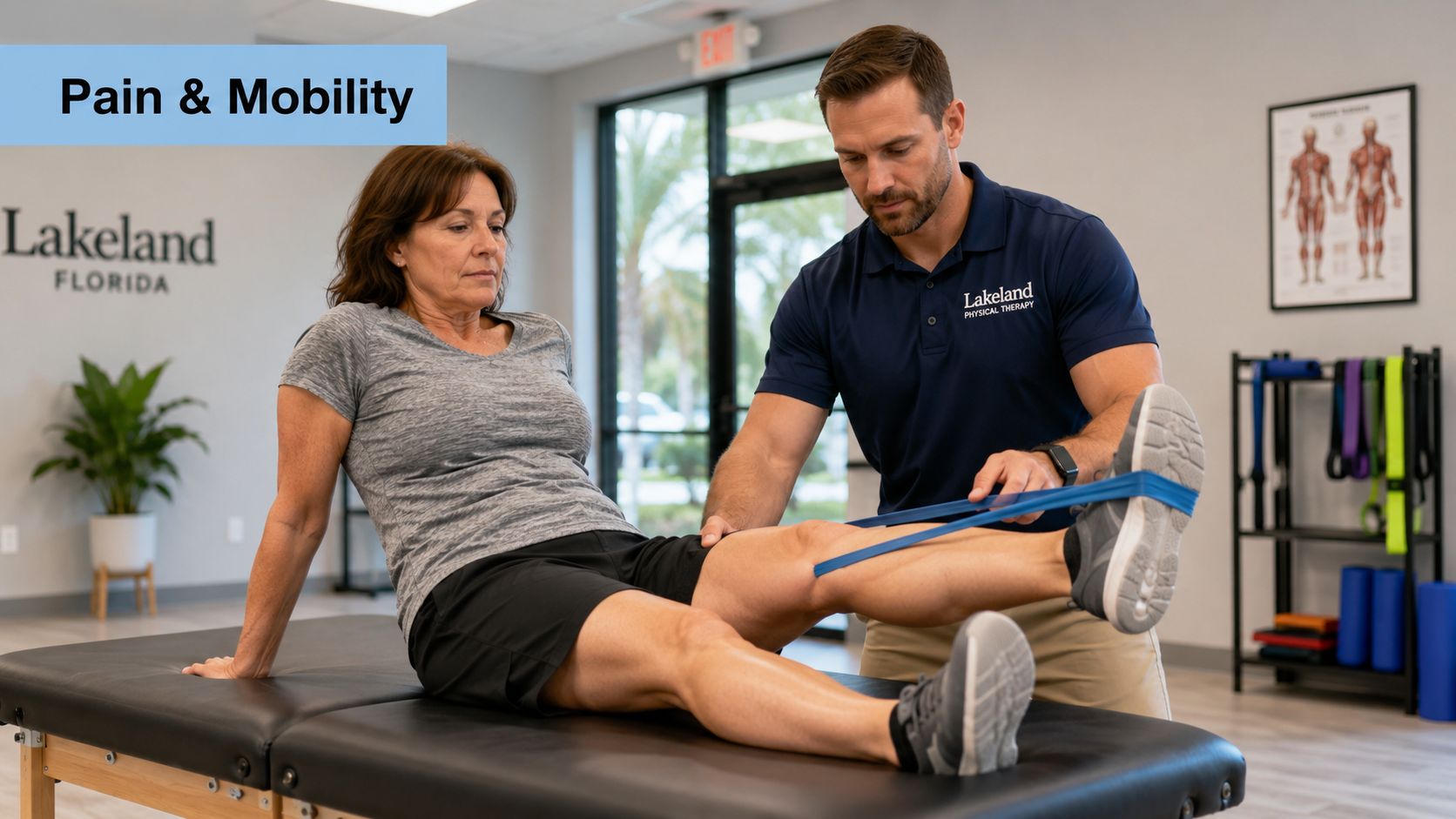
Individuals searching for rehab in Lakeland, FL are not looking for a hospital bed. They're looking for relief. They want to know why their back keeps locking up, why their shoulder still hurts after weeks, or whether they can recover from an auto accident or overuse injury without surgery.
That's where outpatient therapy becomes the most practical path.
Why outpatient care is often the missing option
A lot of local rehab content focuses on facility beds, nursing services, and post-hospital recovery. That information matters, but it doesn't help the person with sciatica, arthritis flare-ups, neck pain from desk work, or a knee that never felt right after a minor injury.
There is a real outpatient gap. Sixty percent of adults with chronic low back pain seek non-pharmacologic care, yet only 22 percent of Florida outpatient clinics offer integrated services like shockwave therapy and acupuncture alongside physical therapy, according to this Lakeland market gap summary. In plain terms, many people want conservative care first, but fewer clinics provide a broader toolbox under one roof.
That matters because isolated treatment often falls short. Exercise alone may not calm severe pain fast enough. Passive treatments alone may feel good temporarily but won't rebuild function. The best outpatient plans usually combine hands-on treatment, progressive exercise, movement retraining, and practical changes to daily habits.
What outpatient rehab helps most
Outpatient therapy is a strong fit when you're medically stable but still limited by pain or movement problems such as:
- Back and neck pain: Especially when stiffness, posture, weakness, or nerve irritation keep recurring.
- Sciatica or radiating pain: Treatment should focus on the source of irritation, not just the painful area.
- Shoulder, knee, and hip injuries: These often improve with guided loading, mobility work, and movement correction.
- Auto accident recovery: Early assessment helps identify motion loss, soft tissue irritation, balance changes, and guarded movement patterns.
- Balance and mobility decline: Many adults don't need a hospital to address this. They need prompt, targeted training.
For older adults and caregivers, a structured guide for assessing fall risk can help you understand what clinicians look for when balance, confidence, or recent near-falls become a concern.
What works and what usually doesn't
Outpatient rehab works when the plan is specific. It should tie treatment to real tasks such as turning your head while driving, climbing stairs, lifting groceries, getting off the floor, or sleeping without waking from pain.
What usually doesn't work:
- Resting too long: Short-term protection can help, but prolonged inactivity often increases stiffness and fear of movement.
- Chasing pain only: Pain relief matters, but lasting progress comes from improving strength, control, and tolerance.
- Using a generic exercise sheet: Recovery is rarely one-size-fits-all.
- Stopping as soon as symptoms dip: Function often lags behind pain, and that's when reinjury happens.
Outpatient rehab is often the smartest middle ground. It gives people active treatment, practical guidance, and a way to recover while still living their normal life.
What to Expect During Your Treatment Journey
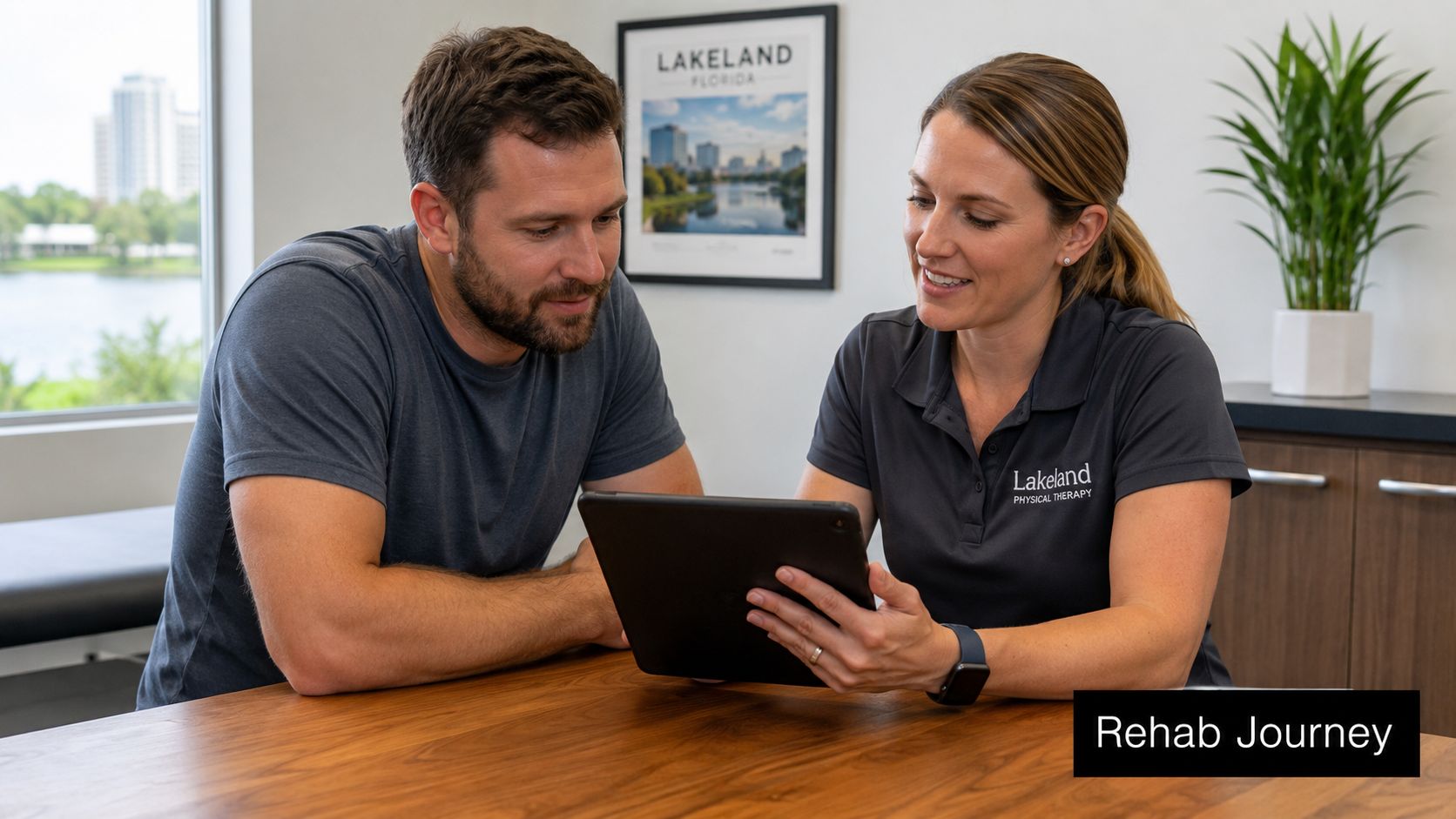
The first visit usually feels easier once you know what should happen. Good rehab isn't mysterious. It's a sequence: evaluate the problem, build the plan, test the response, and adjust as your body changes.
The first appointment
A thorough evaluation should look beyond the painful spot. If your knee hurts, the therapist may check your hips, ankle mobility, walking pattern, and balance. If your neck hurts, they may examine posture, shoulder mechanics, grip strength, and nerve tension.
You'll usually be asked about how the issue started, what aggravates it, what eases it, and which daily activities matter most to you. That's important because the plan should match your life, not just your diagnosis.
A good treatment plan answers three questions quickly: what is irritated, what is weak or restricted, and what you need to do safely this week.
What a typical treatment visit includes
Most visits build around a few core pieces:
- Hands-on care or symptom relief work if pain is limiting movement.
- Targeted exercise to improve strength, control, flexibility, or endurance.
- Movement retraining for walking, reaching, lifting, stairs, balance, or sport-specific tasks.
- A home plan simple enough that you'll follow through with it.
This shouldn't feel random. Each session should connect to a short-term functional goal.
How progress is usually measured
High-quality inpatient and outpatient therapy programs often report 90 percent patient satisfaction and 80 percent functional recovery rates for orthopedic conditions, with some showing a 40 percent reduction in chronic pain scores and 50 percent improvement in mobility, according to Westminster Lakeland's rehabilitation information. Those results don't mean every person improves on the same timeline, but they do support what experienced clinicians already know. Structured, person-centered rehabilitation can produce meaningful change.
Progress should show up in ways you notice:
- Daily function improves: Walking farther, standing longer, sleeping better, getting in and out of the car more easily.
- Pain becomes less disruptive: Not always gone immediately, but less intense, less frequent, or easier to calm.
- Confidence returns: You're moving with less guarding and less fear.
Graduation from rehab doesn't mean perfection. It usually means you can manage your condition, protect your progress, and return to the activities that matter most.
How to Choose the Right Rehab Provider in Lakeland
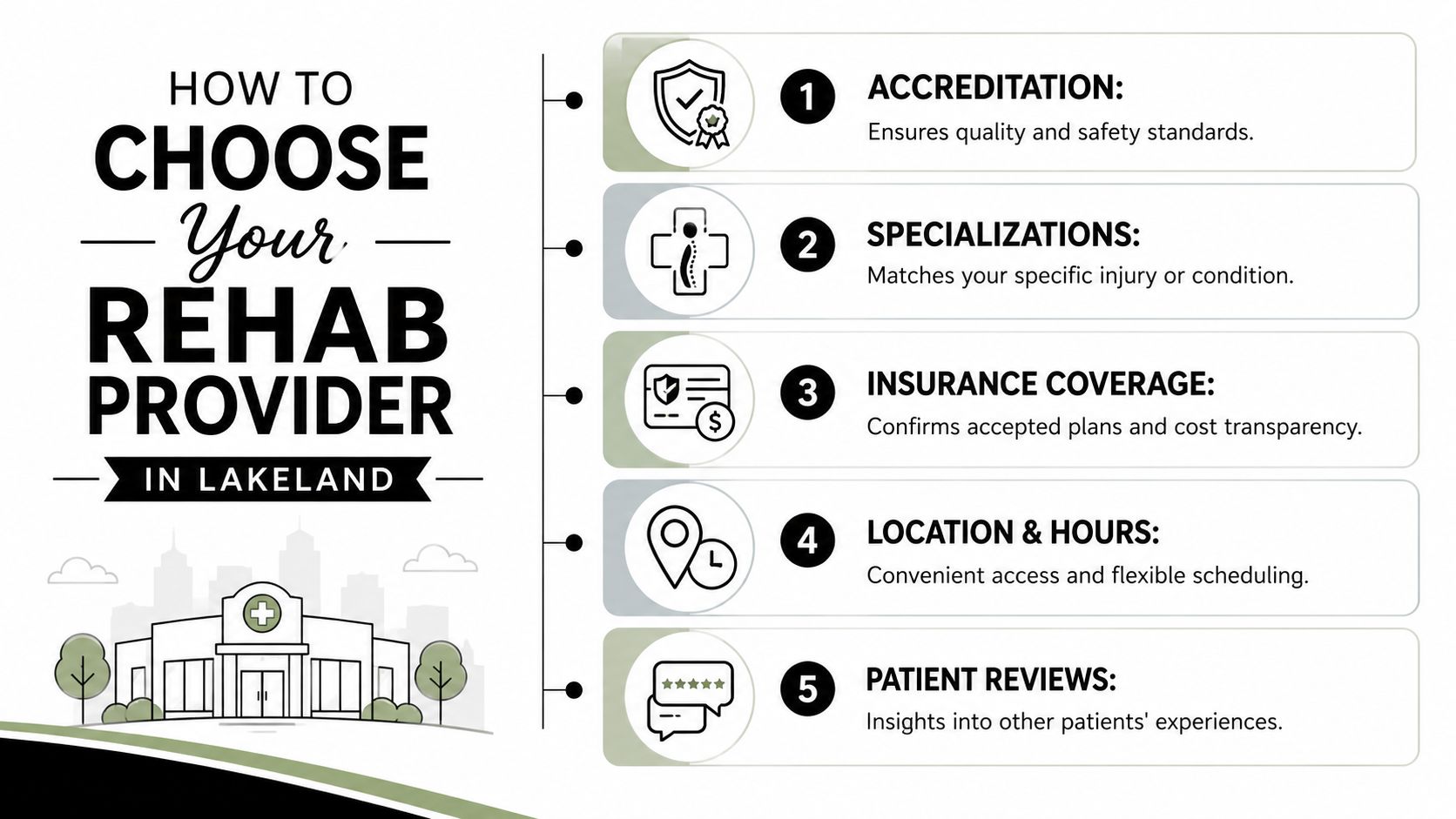
Choosing a rehab provider isn't about finding the first clinic with an open slot. It's about finding the place that matches your condition, your schedule, and the type of help you need.
Start with access, not just reputation
A clinic can be excellent on paper and still be a poor fit if you can't get in promptly. Seventy-eight percent of orthopedic patients prefer same-day appointments to reduce recovery time, yet only 15 percent of Florida rehab centers offer that option without prior hospital admission, according to Encompass Health's Lakeland rehab page. Delayed access doesn't just create frustration. It can lead to more guarding, more stiffness, and more time away from work or normal activity.
If your pain is acute or you're recovering from an injury, ask about appointment timing before anything else.
The five questions worth asking every clinic
- Who will evaluate me? Ask whether you'll be assessed by a licensed physical therapist, chiropractor, or another qualified clinician with experience in your condition.
- Do you treat my specific problem often? Shoulder impingement, post-op knee rehab, vertigo, whiplash, and chronic low back pain aren't interchangeable.
- How hands-on is the treatment model? Some clinics rely heavily on generic exercise circuits. Others provide more individualized care.
- What happens between visits? You want a clear home program and guidance on activity modification.
- How flexible is scheduling? Early morning, evening, and prompt follow-up availability can make or break consistency.
A useful companion resource is this guide on how to choose a physical therapist, especially if you're comparing clinics and aren't sure what qualifications or treatment style matter most.
Green flags and caution signs
Some signs are encouraging right away.
| Green flags | Caution signs |
|---|---|
| Clear explanation of the diagnosis and plan | Vague promises with no functional goals |
| Treatment tailored to your daily limitations | Same routine for every patient |
| Reasonable discussion of timeline and setbacks | Pressure to commit without understanding care |
| Staff answers insurance and scheduling questions clearly | Confusing billing or poor communication |
Choose the clinic that helps you understand your problem, not just the clinic that lists the most services.
The best provider is rarely the loudest one. It's the one that listens carefully, measures progress, and gives you a plan you can follow in real life.
Navigating Insurance and Paying for Care
Cost worries stop a lot of people from starting rehab. That's understandable. Insurance language is confusing, and many patients don't know what they'll owe until the bill arrives. A little prep can prevent that surprise.
The three insurance terms that matter most
Think of your coverage in layers.
- Deductible: This is the amount you may need to pay before your plan starts covering certain services.
- Co-pay: This is a fixed amount due per visit on some plans.
- Out-of-pocket maximum: This is the most you'll pay during a plan period for covered care before the plan takes over at a higher level.
Those details vary by policy, so don't assume physical therapy, chiropractic care, or related rehab services are covered the same way under every plan.
How to verify benefits before you schedule
Call your insurance company and ask direct questions. Write down the answers, the date, and the representative's name.
Use a short checklist:
- Ask whether outpatient rehabilitation is covered under your plan.
- Confirm which services need authorization before treatment begins.
- Check visit limits or medical necessity rules that may affect ongoing care.
- Verify your financial responsibility for each visit.
- Ask whether the clinic is in-network and whether that changes your cost.
If you don't have coverage, it helps to review a plain-language breakdown of physical therapy cost without insurance so you can ask better questions about self-pay options, packages, or payment plans.
Special situations that follow different rules
Auto accident claims and workers' compensation cases don't behave like standard health insurance. They usually involve extra documentation, claim numbers, and coordination with adjusters, employers, or attorneys.
For Florida drivers, it's smart to understand the basics of personal injury protection laws in Florida before starting care after a crash. That helps patients ask better questions about deadlines, medical documentation, and how treatment is billed.
Bring your insurance card, photo ID, referral paperwork if you have it, and any accident or claim information to the first visit. Missing paperwork is one of the most common reasons care gets delayed.
If billing staff can't explain expected costs clearly, keep asking. You don't need every number guaranteed in advance, but you do deserve a reasonable explanation of the process.
Your Rehab Questions Answered and Next Steps
The most important takeaway is simple. "Rehab" in Lakeland can mean very different kinds of care, and recovery gets easier once you match the service to the problem. A hospital-level need, a substance use issue, and an outpatient pain condition should not be routed through the same decision process.
Common questions patients still ask
Do I need a hospital referral to start rehab?
Sometimes yes, sometimes no. It depends on the type of care, your insurance rules, and the clinic's intake process. Many outpatient settings can guide you through what paperwork is needed before the first visit.
Is outpatient rehab enough for chronic pain?
Often, yes, if the condition is mechanical or movement-related and you're medically stable. Chronic pain usually responds best when treatment addresses mobility, strength, movement habits, pacing, and daily function together rather than relying on passive care alone.
How soon should I start after an injury?
In general, earlier guidance is better than waiting until pain patterns become ingrained. That doesn't mean forcing activity too aggressively. It means getting the right assessment before stiffness, compensation, and fear of movement take over.
What if I'm older and worried about balance, not pain?
That's still a valid reason to seek rehab. Balance decline, near-falls, slower walking, and reduced confidence are all treatable concerns. You don't need to wait for a major fall to act.
What if insurance is the reason I'm hesitating?
That's common. If coverage is changing or premiums are a concern, it may help to compare options for saving on Florida health coverage in 2026 before putting off needed care. Financial uncertainty shouldn't force you to guess.
The next step that makes the biggest difference
Don't start by asking which clinic has the flashiest website. Start by naming the actual problem:
- Substance use concern
- Recent hospitalization or major surgery
- Pain, injury, stiffness, weakness, or balance trouble while living at home
Once that's clear, the next steps become much easier. Call a provider that handles that level of care, ask about access, verify coverage, and book the first assessment. Most patients feel less anxious as soon as they have a concrete plan.
Recovery usually doesn't begin when pain disappears. It begins when you stop guessing and get evaluated.
If you're ready to take that first step, MedAmerica Rehab Center offers patient-centered physical therapy, chiropractic care, acupuncture, and shockwave therapy for people who want conservative, practical treatment without unnecessary surgery or medication. Their team helps patients understand what hurts, why it hurts, and what to do next so recovery feels clear from day one.
MedAmerica Rehab · Deerfield Beach
Talk to a clinician about your pain
Physical therapy, chiropractic, acupuncture and shockwave therapy under one roof, since 1995. Same-day appointments are available.
Mon–Thu 8:00 AM – 6:30 PM · Fri 8:00 AM – 3:00 PM