
What Is the Difference Between Acute and Chronic Pain
You lift a grocery bag, feel a sharp catch in your lower back, and spend the next day moving carefully. A few days later, the pain seems quieter. Then, weeks after the original strain, the ache returns when you sit, walk, or reach into a cabinet. You may wonder whether this is still an injury healing normally or whether it has become something different.
That question, what is the difference between acute and chronic pain, matters because the label helps guide the next decision. It can influence how quickly you're evaluated, what your clinician looks for, and whether treatment should focus mainly on tissue recovery or on restoring function across several areas of life.
The three-month line is useful, but it isn't a verdict. Pain can deserve attention before that point, especially when recovery stalls, daily activities become harder, or new symptoms appear.
Why the Acute vs Chronic Pain Question Matters
A sore back after lifting groceries is a familiar example of acute pain. The pain begins after a recognizable event, changes how you move, and may gradually settle as the strained tissues recover. If the soreness keeps returning, interrupts sleep, or makes ordinary tasks harder, the situation deserves a closer look rather than a passive “wait and see” approach.
The words acute and chronic aren't just labels for how bad pain feels. They describe different patterns, different clinical questions, and often different treatment priorities. Acute pain may prompt a clinician to look for a fracture, muscle injury, infection, inflammation, or another recent problem. Persistent pain may require a wider assessment that includes movement, sleep, mood, work, self-care, and the nervous system's response to repeated signals.
Practical rule: Don't use the calendar as your only guide. A pain problem that's worsening or limiting normal activity deserves assessment even when it hasn't reached the chronic-pain threshold.
Understanding the distinction also helps you choose the right level of care. A new episode after an accident may need prompt evaluation for injury. Pain that continues beyond expected healing may call for a longer-term plan involving rehabilitation and coordinated medical care. That doesn't mean chronic pain is hopeless, and it doesn't mean every acute injury is destined to persist.
The most useful mindset is to treat the three-month point as a decision point, not a deadline. During the first weeks, pay attention to whether you're regaining movement and sleep, returning to daily tasks, and feeling less guarded. If those areas aren't improving, ask for help early. The purpose of early care is not to predict your future. It's to identify barriers while they're still changeable.
Defining Acute and Chronic Pain in Plain Language
A fresh ankle injury can hurt sharply when you stand, while a burn may sting even after you move away from the heat. These are familiar examples of acute pain, which is usually a short-term warning signal linked to a recent injury, illness, procedure, fracture, infection, or inflammation.
Acute pain asks for attention while the problem is fresh. It may encourage you to protect an injured ankle, stop touching a hot surface, or seek care after a serious accident. A surgical incision, muscle strain, or burn can all activate this protective response. As the underlying problem heals, the pain typically becomes less frequent or intense.
The three-month line is a guide
Chronic pain is generally pain that persists or recurs for more than three months, or continues beyond the expected healing period (IASP definition and explanation). This time frame is a clinical convention, not a verdict about your recovery. Healing varies with the condition, your age, overall health, and the care you receive.
The three-month point works best as a decision point. In the first weeks after an injury, monitor whether movement, sleep, and ordinary tasks are gradually returning. Notice whether you are becoming less guarded or avoiding more activities. If progress stalls, symptoms worsen, or daily life remains restricted, ask a clinician for help before the problem shapes your routine.
Persistent pain can remain after the original injury has healed. It can also accompany ongoing disease, nerve injury, or changes in how the peripheral and central nervous systems process signals. The experience may include aching, burning, stiffness, fatigue, or sensitivity that shifts with activity or stress.
Clinicians may describe pain by its likely mechanism:
- Nociceptive pain comes from actual or threatened tissue injury, such as an irritated joint or strained muscle.
- Neuropathic pain results from injury or disease affecting the somatosensory nervous system. It may feel burning, electric, tingling, or shooting.
- Nociplastic pain involves altered pain processing without a clear ongoing tissue injury or nerve lesion.
These categories can overlap. They provide vocabulary for assessment and treatment, not a judgment about whether pain is real. Acute and chronic describe pain patterns, helping clinicians choose care that fits the situation.
How Pain Works and Why Timing Changes Everything
Your body has sensory detectors called nociceptors. They respond to potentially damaging mechanical, thermal, or chemical stimuli and convert those signals into messages that travel through the nervous system (IASP explanation of pain mechanisms).
A useful analogy is a home security system with different wires. A-delta fibers carry relatively fast signals, which can feel sharp and well localized. C fibers carry slower signals, which are often duller, aching, or more diffuse. If you touch a hot surface, the quick signal helps you pull away. A slower, lingering signal may then draw your attention to the affected area while healing begins.
That wiring helps explain why acute pain can feel sudden and precise. The nervous system is responding to a recent threat and encouraging protection. As the injury heals, the signal often becomes less intense and less frequent. You can learn more about how this process affects movement and recovery through pain neuroscience education.
When the alarm becomes more sensitive
Persistent pain can involve a change in nervous-system responsiveness called sensitization. Repeated nociceptive input may increase responsiveness in the spinal cord and brain. As a result, a movement that once felt harmless may begin to feel threatening or painful, even when it isn't causing new damage.
That doesn't mean the pain is imaginary. It means the alarm system may be reacting too easily or too strongly. Sleep disruption, fear of movement, stress, and reduced activity can reinforce the cycle by making normal movement feel less safe.
Pain intensity also doesn't reliably measure the amount of structural damage. A severe pain experience doesn't always mean severe tissue damage, and normal imaging doesn't rule out clinically significant chronic pain. A clinician must combine your symptoms, examination, history, and functional changes rather than relying on a scan or a single number.
Acute vs Chronic Pain at a Glance
A side-by-side view can make the distinction easier to use. The table below focuses on the questions patients usually ask: how long the pain lasts, what it may signal, and what care is trying to accomplish.
| Dimension | Acute Pain | Chronic Pain |
|---|---|---|
| Typical duration | From a few seconds up to approximately three months | Persists or recurs for more than three months, or beyond expected healing |
| Usual context | Recent injury, surgery, burn, infection, inflammation, or illness | Ongoing disease, nerve injury, altered pain processing, or pain that remains after healing |
| Main signal | A warning of actual or threatened tissue damage | A persistent pain condition that may no longer reflect current tissue damage alone |
| Common experience | Sudden, sharp, localized, and linked to a recent event | Ongoing, recurring, aching, burning, sensitive, or function-limiting |
| Assessment priority | Identify the cause, serious injury, and warning signs | Measure function, contributing factors, nervous-system sensitivity, and overall impact |
| Treatment focus | Support healing, manage symptoms safely, and maintain safe movement | Restore function, reduce disability, address contributing factors, and coordinate longer-term care |
| Helpful next question | “What happened, and what needs protection?” | “What is limiting my life, and what can help me move and function better?” |
Treatment choices depend on the cause and the individual. Some patients also explore regenerative options for chronic pain as part of a discussion with a qualified clinician. The important point is that the label should guide a careful assessment, not replace one.
How Each Type of Pain Is Assessed
When acute pain follows an injury, the first job is to identify what happened and whether anything requires urgent treatment. A clinician may ask when the pain began, what movement or event triggered it, whether you heard a pop, and whether swelling, bruising, fever, numbness, or weakness appeared.
The examination may focus on strength, sensation, reflexes, range of motion, swelling, tenderness, balance, and the way you walk. Imaging isn't automatically necessary for every ache. Its value depends on the injury history and examination findings, which is why understanding when you need an MRI and when you need an X-ray can make the conversation more productive.
Acute warning signs
Seek prompt medical evaluation for worsening neurologic deficits, signs of infection, major trauma, or unexplained severe pain. New or progressing weakness, spreading numbness, fever with a painful or swollen area, or severe pain after a significant accident shouldn't be managed by waiting for the three-month mark.
Chronic pain assessment looks beyond the pain score. The Centers for Disease Control and Prevention emphasizes functional effects such as walking, lifting, sleep, work participation, and self-care alongside numerical pain ratings (CDC discussion of chronic and high-impact chronic pain).
A thorough visit may include questions such as:
- Movement: How far can you walk, and which movements do you avoid?
- Daily life: Can you lift, dress, cook, drive, or manage personal care?
- Sleep: Does pain delay sleep or wake you during the night?
- Work: Are you missing duties, changing tasks, or needing assistance?
- Mood and confidence: Are fear, stress, frustration, or low mood changing how you move?
- Medical context: Could another condition, medication, or previous injury be contributing?
Bring those details to your appointment. “My pain is six out of ten” matters, but “I can no longer stand long enough to cook dinner” gives the clinician a clearer treatment target.
Treatment Approaches That Actually Fit Each Type
Acute pain treatment usually begins with the cause. A sprain, surgical recovery, infection, fracture, or muscle strain may each require a different plan. The broad goals are to protect healing tissue, manage symptoms safely, and preserve appropriate movement instead of becoming completely inactive.
Rest can be useful when a movement would clearly aggravate an injury, but prolonged avoidance can create stiffness, weakness, and fear. Your clinician or physical therapist can help define what “safe movement” means for your specific condition. If pain worsens, new neurologic symptoms appear, or you develop signs of infection, the priority shifts to prompt medical evaluation.
For persistent pain, the target often changes from eliminating every sensation to improving function, confidence, sleep, and participation. Physical therapy may use graded strengthening, mobility work, pacing, balance training, hands-on techniques, and education about pain sensitivity. Chiropractic care, acupuncture, shockwave therapy, and coordinated medical management may also be considered when they fit the diagnosis and your goals.
A plan should match the person
A multidisciplinary plan doesn't mean every patient needs every service. Someone with a recent shoulder injury may need a focused rehabilitation program. Someone with long-standing back pain, poor sleep, reduced activity, and fear of movement may benefit from a broader plan that addresses each barrier gradually.
A 2025 prospective low-back-pain cohort reported chronic-pain risk at follow-up of 44.3% among participants classified as having acute pain and 45.6% among those with a new pain episode, with pain intensity, disability, and depression acting as consistent predictors across definitions (IASP discussion of chronic pain definitions). The practical lesson is not that a particular outcome is inevitable. It's that early attention to disability, mood, and pain intensity can reveal problems worth addressing before they become entrenched.
For serious illness, symptom relief may be part of a broader conversation about palliative vs hospice care, which are different forms of support and shouldn't be treated as interchangeable.
In Deerfield Beach, MedAmerica Rehab Center combines physical therapy, chiropractic care, acupuncture, and shockwave therapy for acute injuries and chronic pain, with treatment directed toward mobility and daily function. A pain management physical therapy evaluation can help determine whether rehabilitation is appropriate now, rather than assuming complete rest is the safest option.
What to Watch For and When to Seek Help
Use the next two to six weeks as a period for observation and action, not passive waiting. Pain may fluctuate, so look for the overall direction and record what you can do.
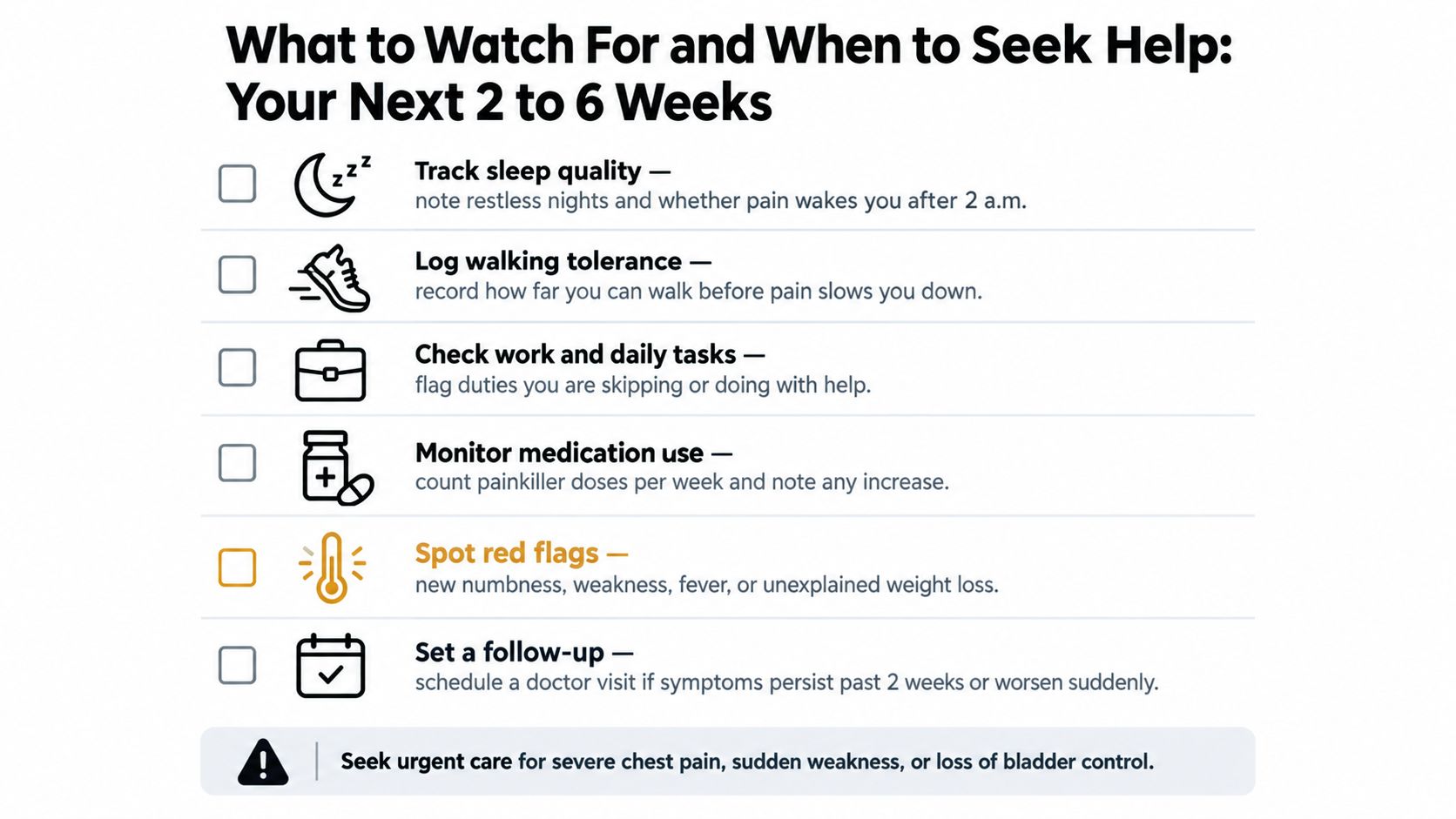
Track these practical signals:
- Sleep: Note whether pain delays sleep or wakes you during the night.
- Walking: Record how far you can walk before symptoms slow you down.
- Daily activity: Notice which household, work, or personal-care tasks you skip or do with help.
- Medication: Watch for increasing reliance or a need to take pain medicine more often.
- Movement confidence: Pay attention to growing fear of bending, lifting, turning, or walking.
- Recovery direction: Contact a clinician if symptoms aren't improving, worsen suddenly, or continue beyond the expected healing period.
Get urgent help for severe chest pain, sudden weakness, loss of bladder control, major trauma, signs of infection, or rapidly worsening neurologic symptoms. These are not situations to monitor at home while waiting for a time threshold.
A rehabilitation clinic can assess the problem, measure function, and create a personalized plan before limitations become routine. MedAmerica Rehab Center offers same-day appointments for people in Deerfield Beach and nearby communities who need an evaluation rather than another week of guessing.
The following video offers another patient-friendly explanation of pain management:
Common Questions About Acute and Chronic Pain
A new ache has returned after an old injury. Is it acute or chronic?
It depends on the pattern, not only the history. A new flare after you recently increased activity may reflect an acute irritation, while recurring pain that has continued beyond expected healing may fit a chronic pattern. A clinician should consider the original injury, the current trigger, your function, and any new symptoms.
Should I rest or keep moving during the early weeks?
Protect movements that clearly aggravate an injury, but don't assume complete rest is always best. Safe, gradual movement can help preserve strength and confidence, while a clinician can adjust activity when there's a fracture, major tissue injury, surgery, or another condition requiring specific protection.
When is imaging useful?
Imaging is most useful when the history and examination suggest a condition that would change treatment. Major trauma, worsening neurologic findings, suspected infection, or unexplained severe symptoms may require prompt investigation. For persistent pain, a normal scan doesn't automatically explain away your experience, because chronic pain can involve nervous-system processing as well as visible tissue changes.
Can acute pain become chronic?
It can persist or recur, but the calendar alone doesn't determine what happens. Monitor sleep, walking, work, daily tasks, mood, and movement confidence from the early stages. If recovery stalls or disability grows, an individualized assessment can identify modifiable barriers without assuming that every acute injury will become chronic.
MedAmerica Rehab Center evaluates acute injuries and persistent pain with individualized physical therapy, chiropractic care, acupuncture, and shockwave therapy plans focused on restoring movement and daily function. Visit MedAmerica Rehab Center to request an assessment in Deerfield Beach and discuss the next practical step for your recovery.
MedAmerica Rehab · Deerfield Beach
Talk to a clinician about your pain
Physical therapy, chiropractic, acupuncture and shockwave therapy under one roof, since 1995. Same-day appointments are available.
Mon–Thu 8:00 AM – 6:30 PM · Fri 8:00 AM – 3:00 PM