
Sciatica Physical Therapy Near Me: What to Expect
You wake up, swing your legs out of bed, and get hit with a sharp, electric pain that runs from your low back into one leg. Standing feels worse. Sitting feels worse too. At that point, people do the same thing, they grab their phone and search for sciatica physical therapy near me because they need relief that makes sense, not another guess.
Sciatica is a symptom pattern, not a standalone diagnosis. It usually means the sciatic nerve is irritated somewhere along its path from the lower spine through the pelvis and down the leg. That irritation can come from a disc problem, spinal narrowing, muscle tension, or movement patterns that keep loading the nerve the wrong way.
A good clinic doesn't just hand out stretches and hope for the best. It looks at why the nerve is angry, how your body is moving, and which treatments change the problem instead of just muting it for an hour.
Understanding Sciatica and Why It Happens
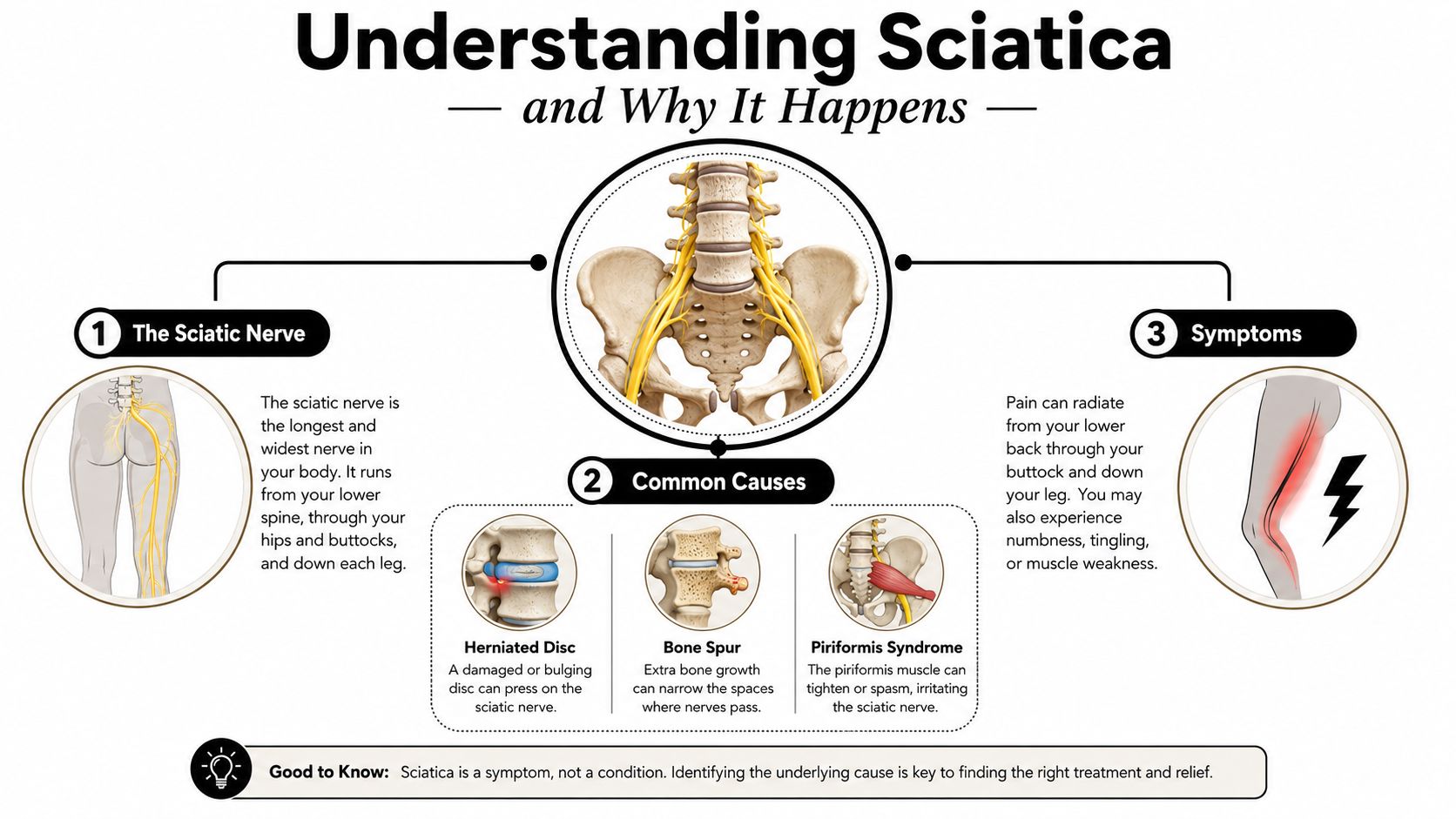
A patient sits up too fast, plants one foot on the floor, and feels that familiar shoot of pain down the back of the leg. In that moment, the problem is no longer a vague back ache. It affects dressing, driving, sleeping, and getting through a workday.
What the pain usually means
The sciatic nerve is the body's largest nerve, and when it gets irritated, symptoms can show up far from the source. People often describe radiating pain, numbness, tingling, or weakness, and those symptoms often worsen with sitting, bending, or staying still too long.
In clinic, the common causes include lumbar disc herniation, spinal stenosis, piriformis-related irritation, and degenerative disc disease. The pattern matters because the plan changes depending on whether the nerve is being crowded, tugged, inflamed, or sensitized by the way the body is moving.
A major review of epidemiologic studies found prevalence estimates ranging from 1.2% to 43%, while another review estimated lifetime incidence between 13% and 40% and annual incidence of episodes at 1% to 6% (PubMed review). Those figures vary because studies define sciatica differently, but they show why it is such a common reason people look for hands-on care.
Practical rule: if pain keeps traveling below the knee, changes with posture, and lingers when you sit or bend, don't treat it like ordinary soreness.
Why root cause matters
A disc-related flare can look a lot like pain from spinal narrowing or a tight deep hip muscle, but the best next step is not the same for each one. One patient may need movement that eases nerve irritation. Another may need a different loading strategy because the back reacts badly to too much flexion, extension, or repeated stretching.
That is why a good evaluation goes beyond the pain location. A clinician should look at what reproduces the leg symptoms, what eases them, and how your body tolerates walking, sitting, bending, and everyday tasks. In a multidisciplinary clinic, that often means symptom-guided exercise dosing, nerve mobilization when it fits, and psychologically informed care for people who have started guarding every movement because the pain has gone on too long.
The point is to match treatment to the driver, not the label. That gives the plan a better chance of helping after the appointment ends, instead of only calming things down for a few hours.
Evidence-Based Physical Therapy Treatments for Sciatica
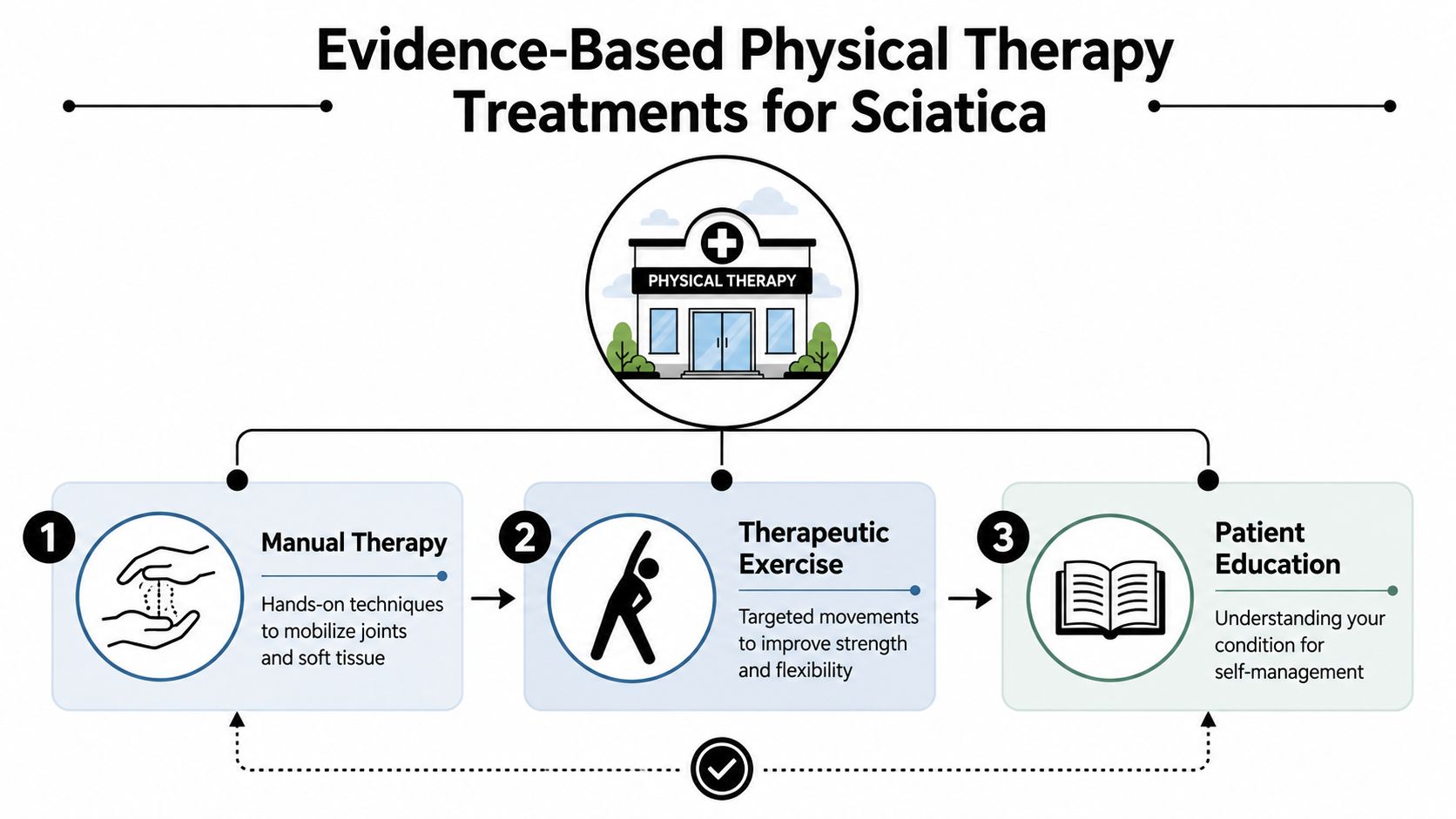
The strongest physical therapy plans don't rely on one tool. They combine hands-on work, symptom-guided movement, and education so the nerve stops getting provoked over and over.
Manual therapy and movement-based care
Manual therapy usually includes joint mobilization and soft tissue techniques. In plain terms, that means a therapist uses skilled hands to help stiff joints move better and to reduce muscle tension that may be adding pressure around the irritated nerve.
Therapeutic exercise is not a random stretch sheet. It's symptom-guided dosing, meaning the therapist picks the right type and amount of movement based on how your leg pain behaves. For some people, nerve glides help the sciatic nerve move more freely. For others, core stabilization reduces strain on the lumbar spine. Directional exercises matter too, because some backs feel better with one motion pattern and worse with another.
Guideline summaries consistently support starting with education, advice, and active exercise rather than bed rest. Evidence reviews note that supervised exercise may produce a small short-term reduction in leg pain, but long-term differences versus staying active are usually not dramatic (evidence summary). That's the point, exercise helps most when it's customized, not copied from a brochure.
A recent systematic review found exercise-based programs for sciatica had only modest average effects, with about 11 points of short-term leg-pain improvement on a 0 to 100 scale, and no meaningful long-term advantage for disability compared with advice to remain active (systematic review). The clinical takeaway is simple, exercise matters, but dosage and progression matter just as much.
Adjuncts and when they fit
Some clinics also use shockwave therapy, acupuncture, or dry needling as adjuncts, especially when pain has become stubborn or when muscle guarding keeps the area overloaded. Those tools don't replace movement, but they can make it easier to tolerate movement.
For patients with disc-related leg pain, a targeted plan often needs more than generic stretching. This herniated disc guide shows how a structured conservative plan is usually built around function, not just symptom suppression.
Clinical reality: the best plan is usually phased, first calm the pain, then restore motion, then rebuild tolerance for sitting, walking, bending, and lifting.
A broad guideline review also emphasizes multimodal conservative care, including neural mobilization, stabilization or motor-control exercise, and manual therapy as first-line treatment for lumbar radiculopathy (guideline review). In practice, that means a good therapist is constantly asking, “What reduces leg symptoms today, and what lets you do more tomorrow?”
What to Expect During Your First Physical Therapy Visit
The first visit usually feels more detailed than people expect, but not painful. You're not there to prove how bad the pain is, you're there to help the therapist understand the pattern well enough to treat it correctly.
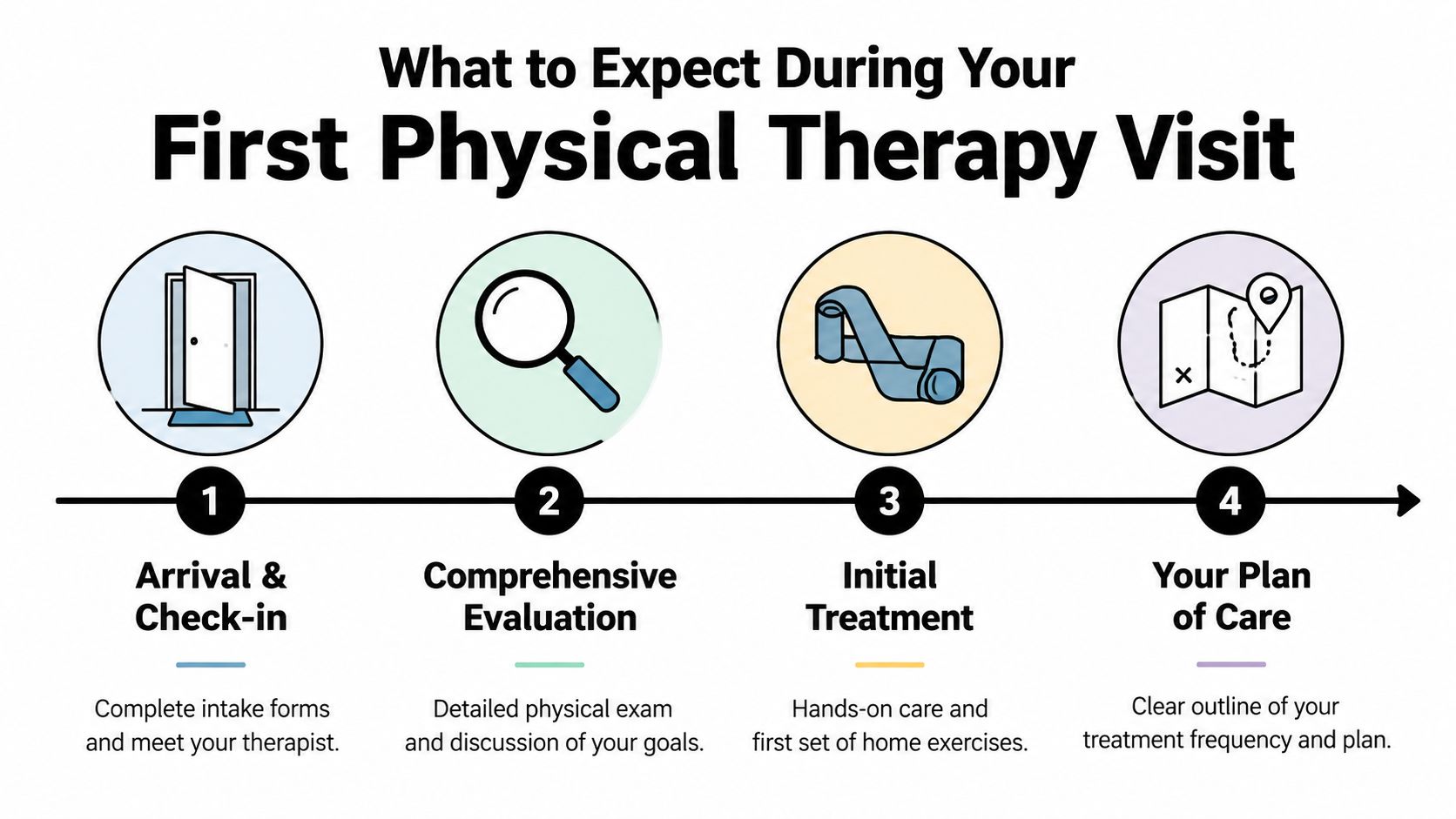
From intake to evaluation
Check-in usually starts with forms about your medical history, current medications, and where the pain sits on your day-to-day map. Then the therapist asks when it started, what changed before it began, and what makes it better or worse.
The physical exam is practical. Expect posture checks, range-of-motion testing, reflex and sensation screening, and special tests like the straight leg raise if nerve involvement is suspected. A therapist may also watch how you sit, stand, bend, and walk, because those movements often reveal the exact load that keeps irritating the nerve.
The first appointment should leave you with clarity, not confusion.
If you want a sense of how a typical session flows once you're in care, this overview of a standard physical therapy session helps set expectations without making the visit feel mysterious.
What treatment usually starts on day one
After the exam, the therapist explains the findings in plain language and sets goals with you. That may sound like, “We want your leg pain to stop traveling as far,” or “We want sitting to stop flaring you up at work.”
Treatment often begins immediately with gentle manual therapy, a short exercise starter plan, and advice on what to do and what to avoid until the next visit. You usually leave knowing how often you should come in, what home exercises to do, and how progress will be measured.
The visit shouldn't feel like a sales pitch for a huge commitment. It should feel like the start of a reasoned plan, one that respects your pain and gives you something concrete to do before the next appointment.
Who Is a Good Candidate for Sciatica Physical Therapy
Some people should head straight into conservative care. Others need medical evaluation first. Knowing the difference saves time and keeps the wrong approach from dragging symptoms out.
Signs physical therapy makes sense
If your pain runs from the low back into the buttock or leg, gets worse with sitting or bending, and hasn't improved much with rest or over-the-counter medication, you're often a reasonable candidate for PT. People with symptoms that have lingered beyond a couple of weeks also benefit from an exam because the body often starts compensating in ways that keep the nerve irritated.
Physical therapy works especially well when you're willing to participate in active care, not just passive treatment. That means doing the exercises, changing a few daily habits, and letting the therapist adjust the plan based on how your symptoms respond.
Red flags that need medical attention
Some signs shouldn't wait for a routine therapy appointment. Progressive leg weakness, bowel or bladder changes, saddle numbness, or pain after a significant trauma need prompt physician evaluation.
If you're not sure where you land, use this quick filter:
- Pain pattern: Does the pain travel below the knee and change with posture?
- Function: Is sitting, driving, or standing becoming harder to tolerate?
- Response so far: Have rest and basic pain relief failed to help in a lasting way?
- Neurologic signs: Do you notice weakness, numbness, or changes in balance?
If symptoms are getting more intense or changing faster than expected, don't wait for them to settle on their own.
A major reason therapists take sciatica seriously is that the condition can look routine while still needing careful screening. The best outcome usually comes when the right person starts conservative care early, and the right referral happens when the presentation is not routine.
Insurance Appointments and Choosing the Right Local Clinic
The logistics matter because pain already makes everything harder. If you're calling around for sciatica physical therapy near me, the first thing to sort out is whether the clinic can help you move from question mark to appointment without extra friction.
What to ask before you book
Start with insurance. Ask whether the clinic is in-network, what your copay may be, whether visits are limited, and whether your plan requires a referral. If you're on Medicare, Medicaid, or a commercial plan, those details can change how fast you get started and what paperwork you need.
The next filter is the team itself. You want licensed therapists who treat orthopedic and nerve-related problems often enough to recognize when the pain pattern is mechanical, when it's mixed with fear, and when a referral is needed. A multidisciplinary clinic can be useful because it reduces the back-and-forth between separate offices.
What a strong local option should offer
Look for convenient scheduling, including early and late options if you're working around a job or family care. A modern clinic should also be able to explain how it uses hands-on care, exercise, and other modalities without promising miracles.
For readers in Broward County, one local option is MedAmerica Rehab Center, which offers physical therapy, chiropractic care, acupuncture, and shockwave therapy in Deerfield Beach. The clinic also promotes direct access and bilingual staff, which can make the first call easier for patients who want a straightforward entry point into care.
If you want a deeper checklist for comparing providers, this guide on choosing a physical therapist is a practical place to start.
| Feature | Why It Matters | MedAmerica Rehab Center |
|---|---|---|
| Licensed, experienced therapists | Helps the plan match the actual cause of symptoms | Multidisciplinary team |
| Integrated services | Reduces the runaround between separate offices | Physical therapy, chiropractic care, acupuncture, shockwave therapy |
| Convenient scheduling | Makes it easier to start and stay consistent | Same-day and accessible scheduling options |
| Clear first-visit expectations | Lowers anxiety and speeds up treatment decisions | Structured intake and individualized plans |
A clinic is a better fit when it can explain not just what it treats, but how it decides what to do next. That's especially important with sciatica, where the wrong generic plan can keep you stuck.
Real Patient Results and Your Next Steps Toward Relief
A desk worker came in after months of sitting pain that kept flaring on long drives. The plan centered on movement modification, symptom-guided exercise, and education about which positions were keeping the leg irritated, and the big change was that daily sitting stopped feeling like a gamble.
An active adult showed up after a sudden flare that made bending and lifting miserable. Manual therapy helped calm the worst of the pain, then nerve-focused movement and gradual strengthening gave him back confidence with workouts and chores.
An older patient dealing with degenerative changes needed a slower, steadier approach. The key wasn't intensity, it was consistency, with treatment adjusted to keep function moving forward without repeatedly provoking the nerve.
Those cases look different, but the pattern is the same. A plan works when it's matched to the way your symptoms behave, not when it's copied from somebody else's discharge sheet.
If you're dealing with sciatica now, don't wait for it to become your new normal. Call a local clinic, ask the right questions about insurance and evaluation, and get a plan that's built around how your back and leg respond.
MedAmerica Rehab Center in Deerfield Beach offers individualized physical therapy, chiropractic care, acupuncture, and shockwave therapy for sciatica and related back pain. If you're ready to stop guessing and start working with a plan that fits your symptoms, visit MedAmerica Rehab Center and schedule a visit to get started.
MedAmerica Rehab · Deerfield Beach
Talk to a clinician about your pain
Physical therapy, chiropractic, acupuncture and shockwave therapy under one roof, since 1995. Same-day appointments are available.
Mon–Thu 8:00 AM – 6:30 PM · Fri 8:00 AM – 3:00 PM