

Physical Therapy Pillows: Recovery Guide & 2026 Top Picks
The most popular pillow advice is often the least useful: buy memory foam, choose a premium brand, or look for a dramatic cervical contour. A pillow doesn't treat pain because of its label or price. It helps when its height and shape keep your head, neck, spine, or joints in a position your body can tolerate. A costly pillow that pushes your neck into extension can be worse than a basic pillow that fits your anatomy.
Physical therapy pillows work best as positioning tools and adjuncts to active rehabilitation. They may reduce strain while you sleep, rest, or exercise, but they won't replace assessment, movement training, strengthening, or medical care when those are needed. The practical question isn't “Which material is best?” It's “Does this pillow support my body in the position I use?”
Why Pillow Height Matters More Than Brand or Material
A pillow's material affects how it feels, compresses, and responds to movement. Its height and geometry determine where your head and spine rest. That distinction matters more clinically than a marketing claim about latex, gel, cooling foam, or a recognizable brand.
A side sleeper usually needs enough height to fill the space between the mattress and the side of the head, which is influenced by shoulder width and mattress firmness. A back sleeper typically needs less height, because excessive loft can push the chin toward the chest or force the neck forward. A stomach sleeper may tolerate only a very low pillow, although this position can still place the neck in prolonged rotation.
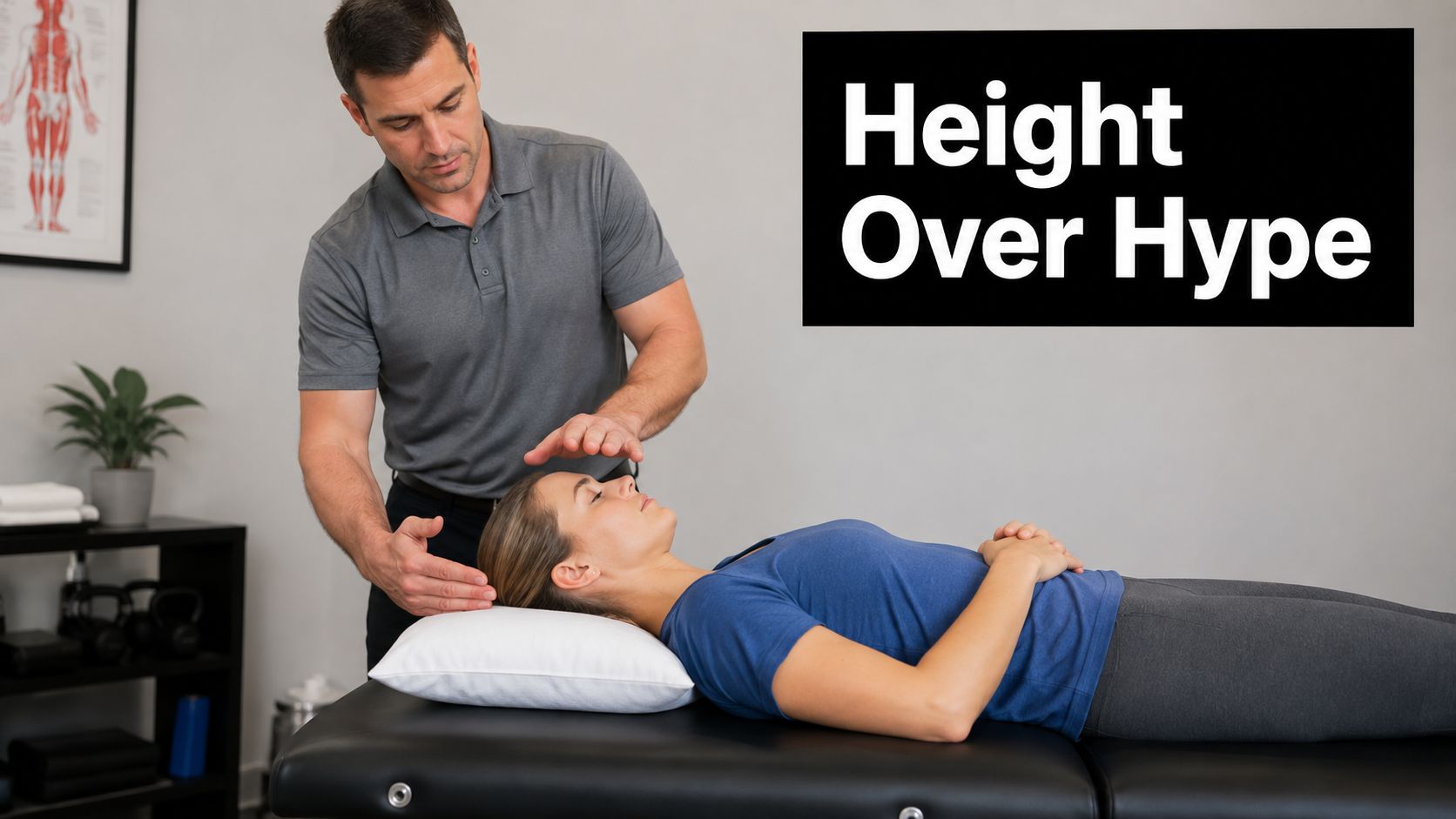
How clinicians assess fit
In a clinic, pillow selection starts with the person, not the product page. A therapist considers sleeping position, shoulder width, neck shape, symptom location, morning stiffness, and whether the mattress allows the shoulder to sink. The therapist also checks whether the head stays level with the trunk rather than tilting up, dropping down, or rotating into a painful range.
You can perform a basic home check. Lie in your usual position and ask someone to look from behind. Your nose should generally point in line with the center of your chest, and your neck should appear continuous with the rest of your spine. This isn't a diagnostic test, but it can reveal an obvious height mismatch.
Practical rule: If a pillow feels supportive only because it's firm, but it holds your neck in a visibly awkward angle, firmness isn't solving the right problem.
A systematic review found that pillow shape and height may matter more for cervical alignment than material alone, while evidence for a clearly superior pillow type remains limited and heterogeneous. That makes individual fitting more sensible than assuming the most expensive option will work best. For sleep-position details, use this guide to sleeping with neck pain, then reassess your pillow based on alignment rather than branding.
The Main Types of Physical Therapy Pillows
Physical therapy pillows are easier to choose when you identify the body region and the position you're trying to control. The categories overlap, but each one has a different mechanical job.
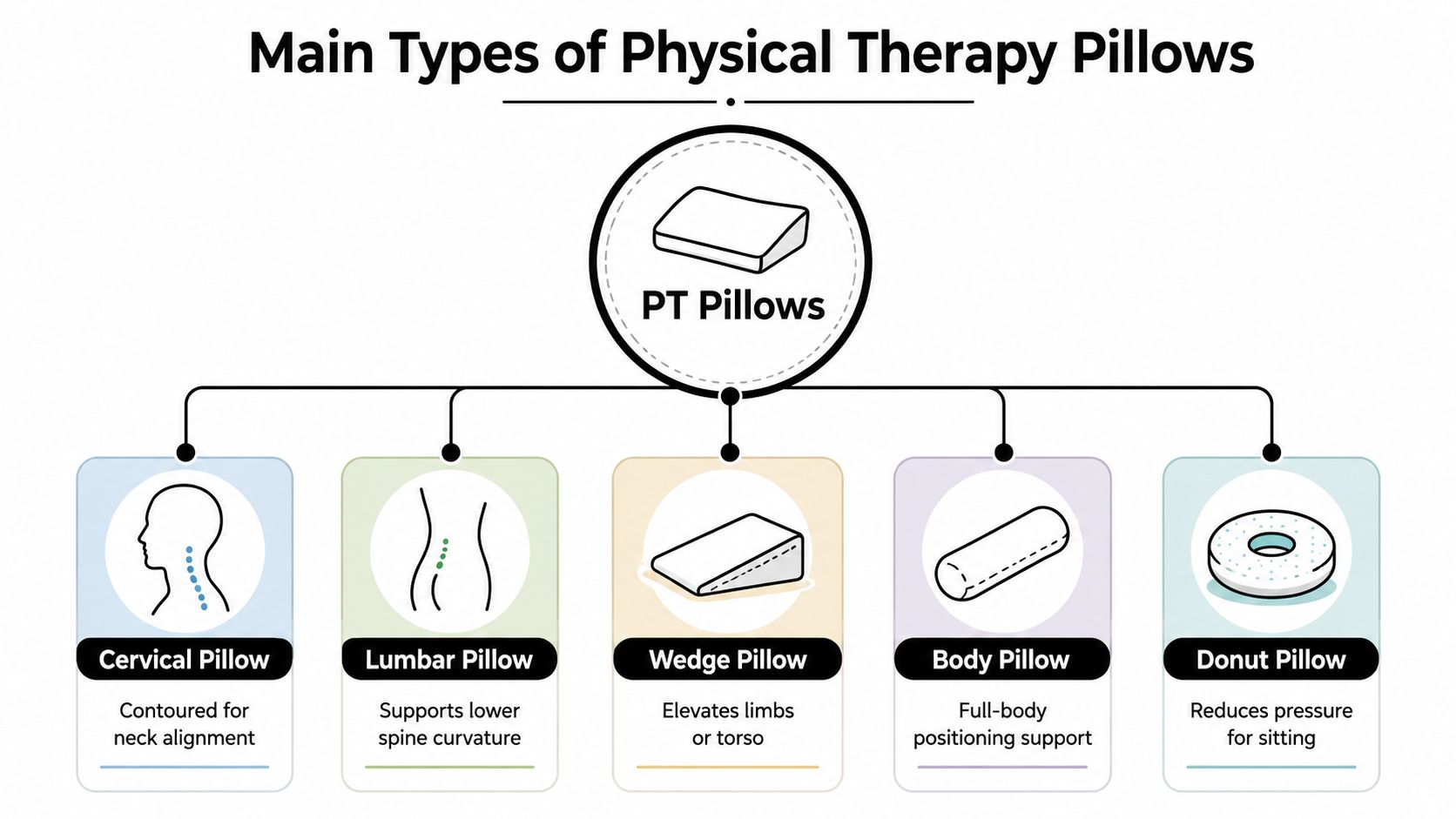
Cervical pillows
A cervical pillow uses a contour, roll, or shaped edge to support the natural curve of the neck. It's most often considered for people with chronic neck discomfort, morning stiffness, headaches associated with neck loading, or symptoms that worsen after sleep.
The contour isn't automatically beneficial. If the raised edge is too tall, it may lift the head and create extension. If it's too low, the neck can fall toward the mattress. A contoured memory foam pillow guide can help you compare designs, but the final choice should still depend on your sleep position and body dimensions.
Lumbar pillows
Lumbar pillows support the inward curve of the lower back when you're seated or resting. They're commonly used with office chairs, car seats, recliners, or beds when a person needs a small amount of support behind the waist.
The ideal lumbar cushion fills the gap without forcing the pelvis forward. A thick cushion can increase arching and aggravate symptoms in someone who already dislikes extension. A thin roll may be more comfortable and easier to adjust.
Wedge pillows
A wedge has an angled surface that raises the torso, knees, legs, or another body region. Clinicians may use wedges for positioning after surgery, reducing pressure on a painful joint, or providing support when a patient has difficulty changing position independently.
The angle should serve a clear purpose. Elevating the torso can change hip and spinal loading, while elevating the legs changes how the knees and ankles rest. Follow the plan provided for your procedure or condition rather than treating a wedge as a universal sleep solution.
Bolsters and positioning pillows
A bolster is usually a firm cylindrical cushion. It can support the knees, ankles, arms, or another area during stretching and rest. Positioning pillows are broader tools, often used to stabilize limbs, prevent unwanted rolling, or protect a sensitive region for people with reduced mobility or after surgery.
A body pillow can function as a positioning pillow when placed between the knees or held against the chest. The goal is joint alignment and pressure management, not surrounding yourself with cushions. For related device considerations, see this neck pain relief device guide.
Donut cushions
A donut cushion has a central opening designed to reduce direct pressure during sitting. It may be considered when sitting is uncomfortable, but it isn't appropriate for every pelvic, tailbone, or post-surgical problem. If the opening concentrates pressure around the painful area or causes pelvic imbalance, stop using it and seek individual advice.
What the Clinical Evidence Shows
Clinical evidence supports a limited, practical role for physical therapy pillows. A pillow may improve positioning and support rehabilitation, but it cannot correct every spinal problem or replace active treatment.
A randomized controlled trial published in 2015 found that adding a back care pillow to physical therapy produced better outcomes for chronic non-specific low back pain than physical therapy alone. The pillow-plus-therapy group reported greater improvements in pain, lumbar range of motion, and functional disability, according to the published trial. The useful takeaway is the combination. The pillow supported the rehabilitation plan rather than replacing it.

What neck-pain research suggests
A 2021 meta-analysis associated rubber pillows with lower neck pain, waking pain, and neck disability, along with greater satisfaction. The reported standardized mean differences were -0.263 for neck pain, -0.228 for waking pain, -0.506 for neck disability, and 1.144 for satisfaction, with the corresponding significance values listed in the PubMed analysis.
Those findings do not establish rubber as the right choice for every sleeper. The analysis found that spring and rubber pillows could reduce several symptoms, while cervical alignment in side-lying did not clearly differ between pillow types. A separate review also emphasized that shape and height may matter more than material, with little evidence that one material consistently outperforms all others.
A randomized trial involving adults with cervical spondylosis found that adding an ergonomic latex pillow to routine physical therapy for four weeks improved neck biomechanics and function. The researchers reported changes in cervical vertebra angle and neck extensor muscle endurance in the trial report. This supports careful attention to pillow geometry, not a universal claim that latex is superior.
The broader evidence remains uneven. A newer 2026 review described limited evidence for specific pillow types, substantial variation among studies, and no clear superiority among latex, foam, or standard pillows in the review from the Physical Therapy Korea journal. Choose height and shape based on spinal alignment and symptoms, rather than assuming material or price determines the result.
Matching Pillow Types to Specific Conditions
The best match depends on the symptom pattern and the position that provokes it. Use the table as a starting point, then adjust the pillow so it supports neutral alignment without increasing pressure or radiating symptoms.
| Condition | Primary Pillow Type | Key Selection Factor |
|---|---|---|
| Back pain | Lumbar or positioning pillow | Supports the natural curve without forcing excessive arching |
| Sciatica | Positioning pillow or knee bolster | Reduces twisting and keeps the pelvis and legs comfortably aligned |
| Neck pain | Cervical pillow | Matches height to sleeping position and shoulder width |
| Neck-related headaches | Cervical or positioning pillow | Avoids sustained rotation, flexion, or extension |
| Post-surgical recovery | Wedge and positioning pillow | Follows surgical restrictions and protects the treated region |
| Arthritis and joint pain | Bolster or body pillow | Offloads the painful joint while maintaining alignment |
| Mobility limitations | Positioning pillow | Stabilizes the body without making transfers unsafe |
Back pain and sciatica
For back pain, start with the position that already feels tolerable. A small lumbar cushion may help during sitting, while a pillow under the knees can reduce the need to hold the legs rigidly straight when lying on your back. Side sleepers may benefit from support between the knees if the top leg pulls the pelvis forward.
Sciatica needs more caution. If a pillow increases leg pain, tingling, or numbness, it's not helping just because the spine looks straighter. Persistent radiating symptoms call for an evaluation rather than increasingly elaborate pillow arrangements.
Neck pain and headaches
A cervical pillow should fill the neck's space without lifting the head too far. Side sleepers often need more height than back sleepers, but the mattress and shoulder width change that calculation. For additional consumer-oriented comparison, this best pillow for neck pain resource may help you review design features, but it shouldn't replace fit testing.
Surgery, arthritis, and limited mobility
After surgery, a wedge can assist with elevation, while positioning pillows can prevent a limb from drifting into a restricted position. Your surgeon or therapist's precautions override general pillow advice. A comfortable setup must also allow safe rolling, standing, and transfers.
For arthritis, a bolster between the knees or under an arm can decrease joint compression during rest. The right choice is the one that reduces pressure without locking the joint in a position that feels stiff when you get up.
How to Position and Use Your Pillow Correctly
A therapeutic pillow can fail because of placement, not design. Start with your normal mattress and usual sleep position, then make one adjustment at a time so you can identify what changes your symptoms.
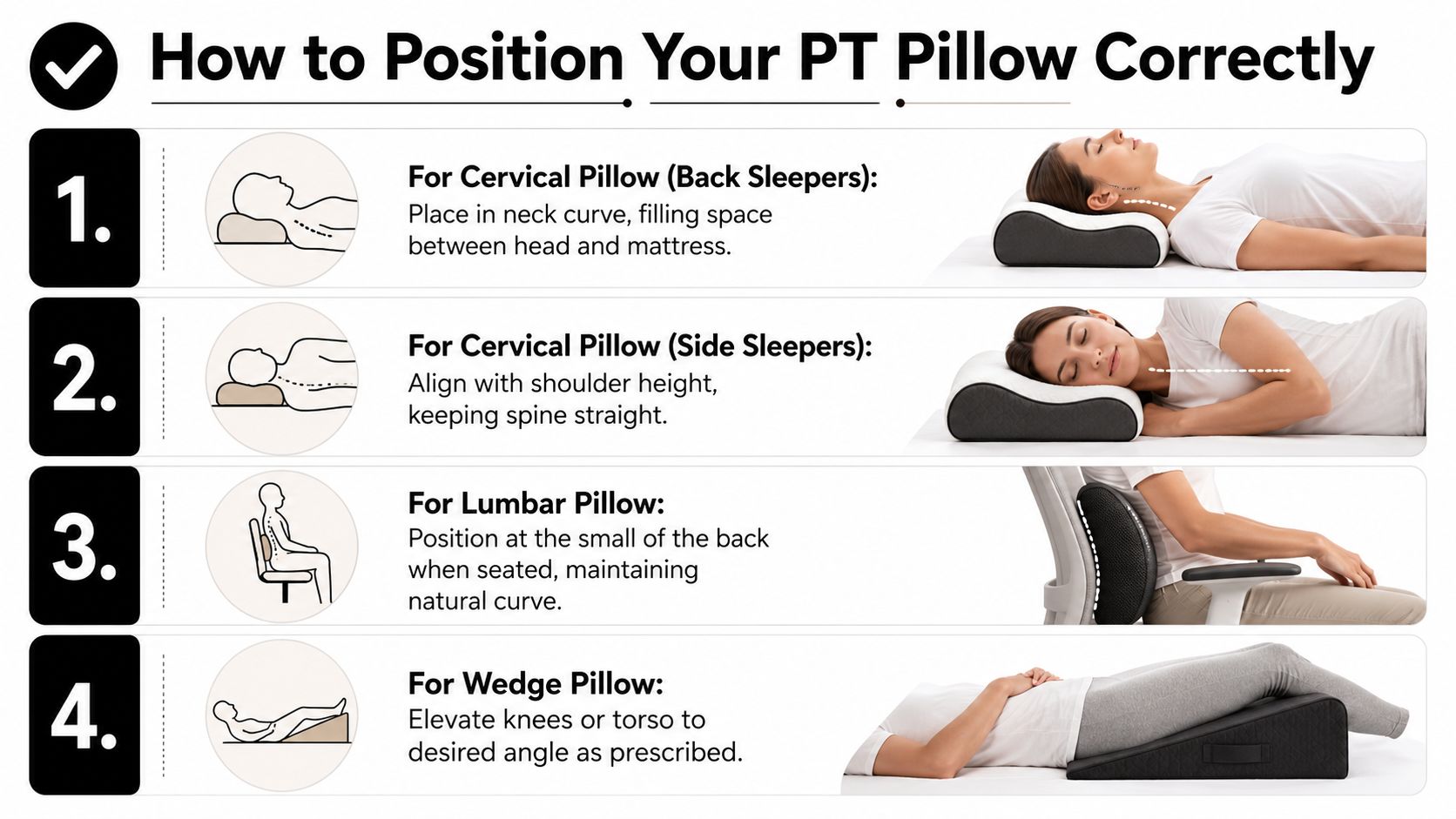
Cervical support
When lying on your back, place the contoured section beneath the neck curve, with the head resting on the lower portion rather than being pushed forward. Your chin shouldn't point sharply toward your chest, and you shouldn't feel a strong backward bend.
When lying on your side, position the pillow so it fills the distance from the mattress to your neck. Your nose should remain in line with your sternum instead of angling toward the mattress or ceiling. If your shoulder is broad or the mattress is firm, a low pillow may leave the neck unsupported. If the mattress is soft and your shoulder sinks, the same pillow may become too tall.
Lumbar support
For sitting, place the lumbar pillow at the small of your back, near the beltline, not high between the shoulder blades. Sit back against it and keep both feet supported if possible. The cushion should help you maintain a comfortable curve without pushing your ribs forward or tipping your pelvis excessively.
In bed, a lumbar roll can be useful for a specific exercise or resting position, but it shouldn't force you to remain in a posture that increases pain. If you're unsure whether a roll or wedge is appropriate, this pillow roll for bed guide offers a practical starting point.
Wedges and bolsters
Place a wedge beneath the region you intend to raise, keeping the supported area broad rather than balancing it on a narrow edge. For knee support, use a bolster or pillow under the knees so the legs can relax without pressing the cushion directly into the back of the knee for prolonged periods. For side sleeping, place a pillow between the knees and, when needed, support the top ankle so the leg doesn't rotate downward.
Alignment check: Comfort should improve or remain neutral during use. A pillow that produces new pressure, numbness, tingling, or morning stiffness needs repositioning or replacement.
Care, Maintenance, and When to Seek Professional Help
Support pillows collect skin oils, sweat, and dust, so follow the manufacturer's care label rather than assuming the entire pillow can go in the washer. Many covers can be removed and washed, while foam or latex cores may require spot cleaning and thorough air drying. Don't saturate a material that retains moisture, and inspect the cover and seams regularly for damage.
A pillow has lost its job when it stays compressed, develops uneven areas, collapses at the edge, or no longer holds your head or limb in the position that originally felt comfortable. Replacement should be based on loss of support and hygiene, not an arbitrary calendar. If you keep adding folded towels to compensate for a sagging pillow, the underlying cushion probably needs reassessment.
Stop experimenting and contact a qualified clinician if pain persists despite reasonable positioning, worsens whenever you use the pillow, or spreads into an arm or leg. Numbness, tingling, weakness, significant loss of movement, or new symptoms after surgery deserve professional assessment, especially when they're changing or becoming more frequent.
A physical therapist can observe your sleep and resting positions, assess joint and spinal movement, and test whether the pillow is helping or masking a problem. Bring the pillow to an appointment if possible. Seeing its height, contour, and compression in person often makes the fit issue easier to identify.
MedAmerica Rehab Center provides individualized physical therapy, chiropractic care, acupuncture, and advanced shockwave therapy for neck pain, back pain, sciatica, arthritis, injuries, and post-surgical recovery. Visit MedAmerica Rehab Center to schedule an evaluation and get practical guidance on pillow positioning alongside a rehabilitation plan built for your symptoms.
MedAmerica Rehab · Deerfield Beach
Talk to a clinician about your pain
Physical therapy, chiropractic, acupuncture and shockwave therapy under one roof, since 1995. Same-day appointments are available.
Mon–Thu 8:00 AM – 6:30 PM · Fri 8:00 AM – 3:00 PM