
Ice Arm Sleeve: Targeted Pain Relief Guide
You notice it when you lift a grocery bag, turn a doorknob, finish a pickleball game, or reach for your seatbelt. The outside of the elbow aches. The forearm feels tight. Maybe the whole arm feels irritated in that dull, nagging way that never seems dramatic enough for an emergency visit, but never quiet enough to ignore either.
A common first approach involves the same routine. A bag of ice. A frozen vegetable pack. A towel wrapped around something cold while trying not to drip all over the couch. It works a little, then slides off, warms up, and turns treatment into a chore.
That's why more people are reaching for an ice arm sleeve instead. It's a simple upgrade in home care. Instead of balancing a cold pack over one sore spot, you slide on a wearable sleeve built to cool the area while adding gentle compression. Used correctly, it can be a very practical way to settle pain and swelling after activity, after a flare-up, or in the early phase after an injury.
That Nagging Ache in Your Arm and a Modern Solution
A lot of arm pain starts small. A weekend tennis match leaves your elbow sore. Yard work irritates your forearm. Hours at a desk make the muscles around your wrist and elbow feel overloaded. Then the discomfort starts showing up during ordinary tasks, not just workouts.
That's the moment when people usually want something that's easy, fast, and realistic to use at home. An ice arm sleeve fits that need better than the old routine of holding a cold pack in place with one hand and a towel with the other. It's designed to stay on the arm, cover the area more evenly, and let you rest without fussing with straps or melting ice.
Why people switch from basic ice packs
The biggest reason is convenience. If treatment is messy or awkward, users often stop using it consistently.
An ice arm sleeve also feels more targeted. Instead of cooling one patch of skin, it wraps the region that's irritated, which matters when pain spreads around the elbow, upper forearm, or lower arm instead of sitting in one exact point.
The best recovery tool is often the one you'll actually use correctly and consistently.
If you've been trying to sort through options, product updates, and practical home-care tools, it can help to browse latest St. Petersburg medical equipment insights from Affinity Home Medical Equipment for a broader look at how everyday recovery gear is changing.
What this tool can and can't do
An ice arm sleeve can help calm symptoms. It can make a painful area feel more manageable after activity or during a flare-up. That's useful.
But it doesn't automatically fix the reason your arm started hurting in the first place. If the problem is coming from tendon overload, poor lifting mechanics, post-surgical stiffness, nerve irritation, or weakness higher up at the shoulder, the sleeve is only one part of the picture.
How an Ice Arm Sleeve Delivers Cold and Compression
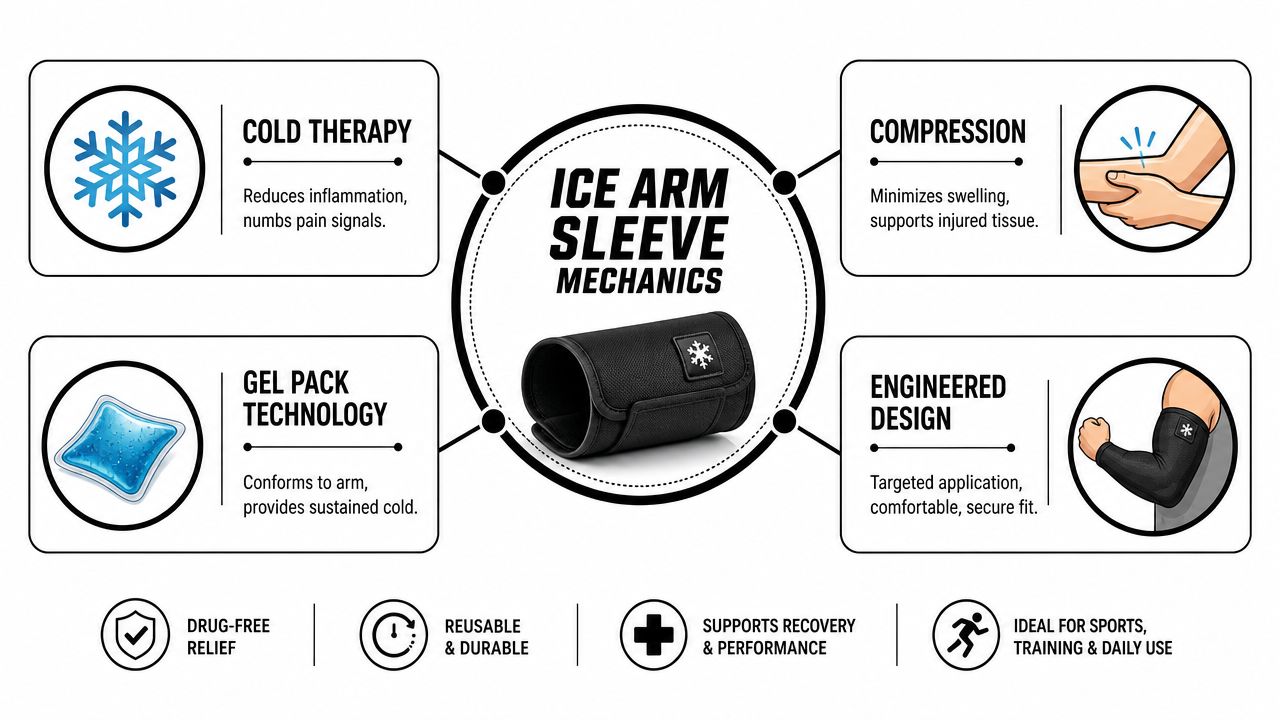
An ice arm sleeve is more than a cold object you pull over your arm. It's a combined cryotherapy and compression device. Major sports medicine brands describe this category as offering “360 degrees of compression therapy” and “100% coverage of treatment area” through a flexible wraparound design, which shows how these products have moved beyond basic ice packs into engineered cold-compression systems on the Shock Doctor Flex Ice Therapy Arm/Elbow Compression Sleeve page.
Think of it like a wearable cold wrap
The simplest way to understand it is this. A regular ice pack cools one side of the arm. An ice arm sleeve tries to cool the area all the way around while gently hugging the tissue.
That matters because two things are happening at once:
- Cold therapy helps numb pain signals and calm the area.
- Compression helps manage swelling and gives the tissue a bit of support.
- Close contact improves how evenly the cold reaches the irritated region.
- Hands-free wear makes it easier to use during normal home recovery.
Why the design feels different from older cold packs
Current products in this category usually focus on full elbow or arm coverage, soft flexible gel, and stretch fabric that's easier to pull on. That's a noticeable change from older rigid cold packs that sit awkwardly, lose contact when you move, or need extra wraps to stay in place.
DICK'S Sporting Goods describes ice therapy sleeves as combining compression and cold therapy to reduce swelling and pain, and Academy Sports describes a Freeze Sleeve with “soft, 4-way stretch fabric” for muscular and joint relief in the arms or legs on DICK'S overview of ice therapy sleeve options.
Practical rule: Better contact usually means better comfort. If the sleeve bunches, gaps, or slides, the treatment effect drops quickly.
That's why fit matters just as much as temperature. A sleeve that conforms to the arm usually performs better than a colder product that barely stays in place.
Relief for Tennis Elbow Sprains and Post-Op Swelling
When patients ask me whether an ice arm sleeve is worth trying, the answer depends less on the product name and more on the problem they're trying to calm. This tool makes the most sense when the arm is irritated, swollen, overworked, or recovering from a recent aggravation.
McDavid's Flex Ice Therapy Arm/Elbow Compression Sleeve is marketed for recovery from sprains, strains, bursitis, tendinitis, tennis elbow, and golf elbow, which reflects how these sleeves are positioned as dual-action tools that cool tissue while helping manage edema on the McDavid product page.
Where it helps most
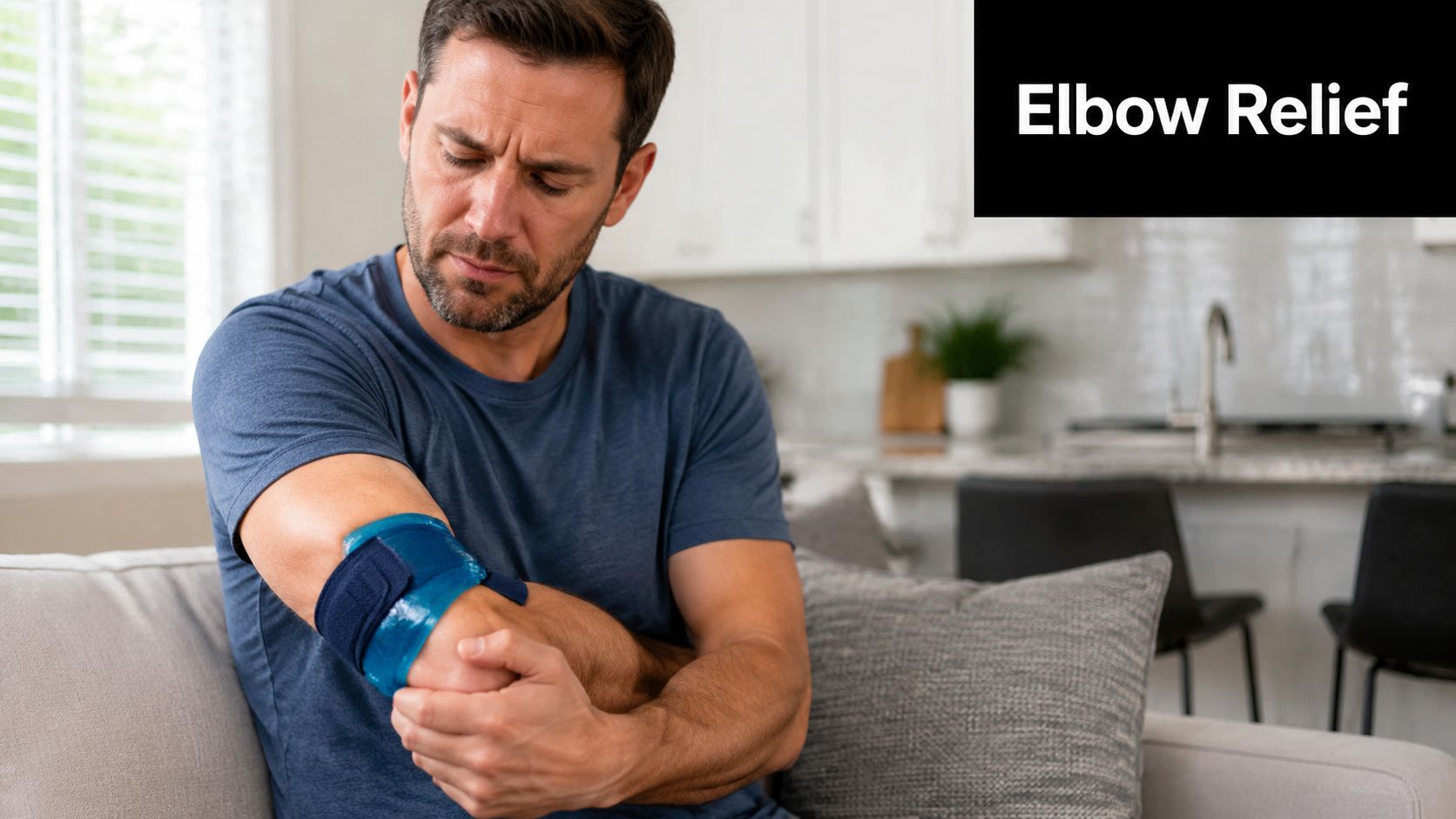
For tennis elbow and golfer's elbow, the sleeve can be a good symptom-management tool after activity. These conditions often flare when the tendon area gets overloaded. Cooling the region and adding mild compression can make the arm feel less reactive so daily tasks are easier later in the day.
If tennis elbow is your main issue, a more complete rehab plan usually matters just as much as symptom relief. This guide to tennis elbow pain relief explains the broader treatment approach.
For sprains and strains, the sleeve is most useful early, when the area feels hot, puffy, and sensitive. It won't repair tissue by itself, but it can make the first stage of recovery more tolerable.
For post-op swelling, many people like the secure feel of a sleeve because it doesn't require balancing a heavy ice bag over a sore area. That said, post-surgical patients should follow the surgeon's and therapist's instructions first, especially if there are incision concerns, bracing restrictions, or sensitivity changes.
What it does well and what it doesn't
An ice arm sleeve works well for:
- Flare-ups after repetitive use from racket sports, golf, lifting, or manual work
- Localized swelling around the elbow or forearm
- Short home sessions when you want less mess than a melting ice pack
- Recovery comfort after rehab exercises or a demanding day
It works less well when:
- Pain is nerve-related, with tingling, burning, or numbness
- The problem is chronic stiffness more than irritation
- The source is elsewhere, like the neck or shoulder
- Severe weakness or instability is present
If your pain improves only while the sleeve is on and comes right back every time, that usually means you need more than symptom control.
Your Step-by-Step Guide to Using the Sleeve Safely
The biggest mistakes with an ice arm sleeve are simple. People either use the wrong size, leave it on too long, or pull it over an area that's too irritated to tolerate pressure. A safer routine usually works better than an aggressive one.
A useful detail from KT Health is that sizing is based on limb circumference, with Small/Medium for elbows at 9–13 inches (23–33 cm) and Medium/Large for knees at 14–20 inches (35–51 cm) on the KT Recovery Ice Sleeve page. That tells you these sleeves aren't meant to be one-size-fits-all.
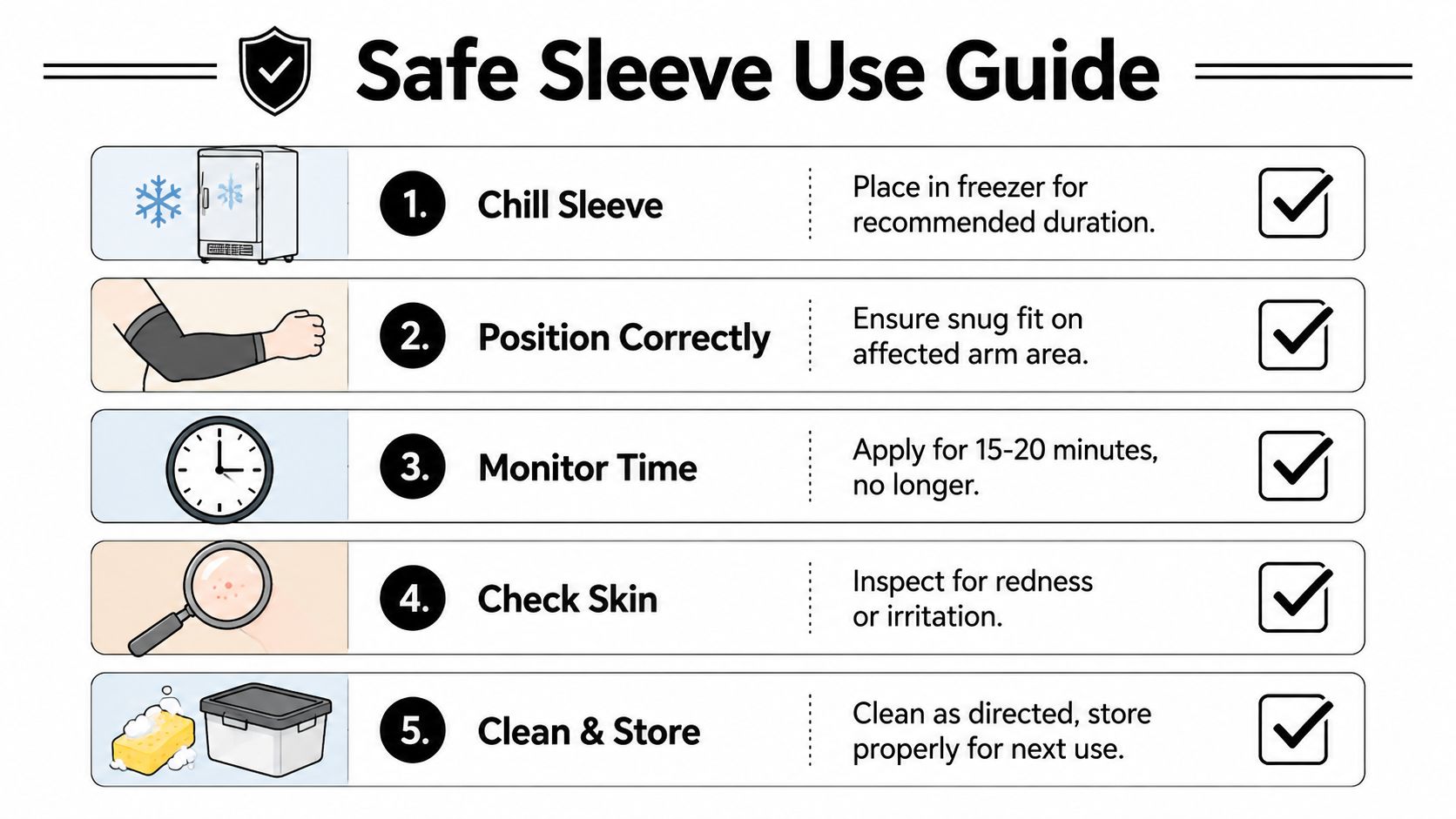
Step by step home use
Chill the sleeve first
Follow the product instructions for freezer or refrigerator use. Don't assume longer freezing always means better treatment.Check your skin before applying it
Don't put a cold compression sleeve over broken skin, an open incision unless your medical team says it's appropriate, or an area with unusual color changes.Slide it on gently
Position it so the sore area sits in the center of the cooling zone. It should feel snug, not painfully tight.Keep the session short
A consumer review reported that the cold sensation stayed clearly noticeable for about 10–15 minutes before fading on the KT page above. In practice, that's a useful reminder that more time isn't always more benefit.Remove it and recheck the skin
Mild pinkness can happen. Sharp pain, intense burning, or worsening irritation means stop.
Here's a quick visual walkthrough for general cold-sleeve use at home:
Common safety mistakes
Some problems come from rushing. Others come from thinking cold therapy is harmless no matter how it's used.
- Using the wrong fit. A sleeve that's too loose won't make good contact. One that's too tight can feel miserable and may irritate the area.
- Leaving it on too long. If the cooling effect has already faded, keeping it on doesn't add much.
- Ignoring skin response. If the skin looks angry or feels painfully numb, take it off.
- Using it for every kind of arm pain. Not all arm pain needs cold. Some people need loading, mobility work, or heat later in recovery.
Cold therapy should feel calming, not punishing.
Comparing Ice Sleeves to Traditional Cold Packs
Individuals typically don't choose between an ice arm sleeve and “nothing.” They choose between the sleeve and whatever's already in the freezer. That comparison matters because the best option depends on the kind of pain you have, how often you'll use it, and whether you need something simple enough to stick with.
If you're also interested in broader recovery methods used around training, Cartwright Fitness has a practical article on optimizing athletic performance through cold exposure in different settings.
Cold Therapy Options at a Glance
| Feature | Ice Arm Sleeve | Ice Pack (Bag of Ice) | Gel Pack with Strap |
|---|---|---|---|
| Coverage | Wraps around the arm or elbow | Usually cools one side at a time | Better than loose ice, but often still spot-focused |
| Compression | Built into the design | None unless you add a wrap | Some, depending on strap tension |
| Ease of use | Slide on and position | Needs a towel or hand support | Takes more setup and adjustment |
| Mess | Low mess | Can drip as it melts | Usually cleaner than loose ice |
| Fit during rest | Stays put better | Slips easily | Can shift if the strap loosens |
| Best use case | Elbow and forearm flare-ups, quick home sessions | Quick temporary cooling when nothing else is available | More targeted treatment when you want adjustable placement |
Where the sleeve stands out
The sleeve usually wins on convenience, coverage, and consistency of contact. That's especially useful around the elbow, where an ordinary pack tends to leave part of the area uncovered.
A standard ice bag still has a place. It's cheap, available, and works fine when you need immediate cooling and don't care about movement or comfort. A strapped gel pack can also be a good option when you want to target one exact point rather than the whole region.
For a more general look at how clinics use cold applications in treatment plans, MedAmerica has a helpful overview of physical therapy cold packs.
The honest trade-off
The sleeve isn't magic. It may feel better to use, but it still depends on timing, fit, and using the right tool for the right problem.
If your arm pain is diffuse, inflammatory, or tied to swelling, the sleeve often feels more practical than a loose pack. If your pain is sharply pinpointed, you may prefer a small gel pack you can place exactly where you want it.
When Your Arm Pain Needs a Physical Therapist
Home care works best when the problem is mild, recent, and clearly improving. An ice arm sleeve can help in that stage. It can reduce symptoms and make the first few days or post-activity flare-ups easier to manage.
But cold therapy has limits. A sports-medicine review discussed on the Old Bones Therapy collection page notes that cryotherapy can help short-term pain yet may also blunt some healing-related inflammation, which is why many clinicians use it mainly for symptom control rather than as a universal answer for every recovery phase on Old Bones Therapy's arm compression sleeves page.

Signs you should stop guessing
If any of these are happening, it's time for a proper evaluation:
- Pain keeps returning as soon as the cold wears off
- You feel numbness or tingling into the forearm, hand, or fingers
- Grip strength is dropping or the arm feels weak
- Swelling persists or the area stays unusually irritable
- You can't identify a clear trigger, or the pain seems to travel
- The problem becomes chronic, especially around tendon pain or arthritis
What a therapist adds
A physical therapist doesn't just tell you whether to ice. Their primary job is figuring out why the arm is hurting.
Sometimes elbow pain is really a wrist-loading problem. Sometimes forearm pain is coming from gripping mechanics. Sometimes “arm pain” is partly a shoulder or neck issue. A therapist can sort that out, then match treatment to the stage you're in. That may include exercise progression, hands-on care, movement changes, and guidance on whether cold, heat, compression, or rest fits.
If you're trying to decide who to see, this guide on how to choose a physical therapist can help you know what to look for.
A sleeve can calm symptoms. A rehab plan addresses the pattern that keeps bringing them back.
If your arm pain keeps lingering, changes how you work, train, sleep, or lift, it may be time for a full evaluation at MedAmerica Rehab Center. Their team provides physical therapy and related care for acute injuries, chronic pain, and post-surgical recovery, with treatment plans built around symptom relief, restoring motion, and helping you return to normal activity safely.
MedAmerica Rehab · Deerfield Beach
Talk to a clinician about your pain
Physical therapy, chiropractic, acupuncture and shockwave therapy under one roof, since 1995. Same-day appointments are available.
Mon–Thu 8:00 AM – 6:30 PM · Fri 8:00 AM – 3:00 PM