
How to Treat Knee Pain Naturally and Move Confidently Again
You take the first step down the stairs and feel the familiar warning signal in your knee. By the time you reach the kitchen, the joint feels stiff, and you're already planning how to avoid the longer walk later. Maybe you've tried resting, icing, or searching for a supplement that promises to fix everything.
Natural knee-pain care can help, but it rarely comes from one miracle remedy. The practical answer to how to treat knee pain naturally is a structured combination of movement, strength, aerobic conditioning, symptom-guided activity changes, and selected support strategies. The right plan depends on whether your main problem is stiffness, swelling, weakness, or reduced confidence while walking.
Why Natural Care for Knee Pain Starts With Movement Not Rest
For years, many people were told to rest a painful knee until it settled. Short-term rest can be useful after an injury or during a flare, but complete inactivity often leaves the leg weaker and the joint less prepared for everyday demands. Getting out of a chair, climbing stairs, walking across a parking lot, or standing at the kitchen counter all require the knee and its supporting muscles to share the workload.
Clinical guidance has changed. The Royal Australian College of General Practitioners strongly recommends land-based exercise for everyone with knee osteoarthritis, regardless of age, structural severity, or pain level. Its preferred activities include walking, muscle-strengthening exercise, and Tai Chi, with the broader message that progressive movement is a foundation of care, not an optional extra. You can review that guidance in the RACGP exercise recommendations for knee and hip osteoarthritis.
That shift matters because knee pain is persistent and widespread. One analysis of U.S. data found that age- and BMI-adjusted knee-pain prevalence increased by 66% between 1974 and 1994 in NHANES, while another review reported knee pain in 35.7% of participants and bilateral knee pain in 11.3% of participants. The same review found that every guideline examined recommended exercise for knee osteoarthritis, and six strongly recommended it. These findings support active rehabilitation rather than medication-only care or passive rest. (Population data and guideline review)
What natural care should look like
Natural care means using your body's capacity to adapt, then supporting that adaptation with sensible daily choices. Strengthening the quadriceps, glutes, hips, and calves can improve control around the knee. Walking, cycling, or water exercise can build endurance without demanding repeated high-impact loading.
You shouldn't expect every ache to disappear after one session. The early wins may be easier stairs, less stiffness after sitting, a steadier gait, or the ability to walk farther before symptoms become distracting. For readers in Deerfield Beach, a graded movement approach to breaking the cycle of inactivity is often more useful than waiting for a pain-free day that may never arrive on its own.
Calm the Flare and Keep Moving With Smart Daily Adjustments
When a knee becomes irritable, don't choose between pushing through everything and staying in bed. Use relative rest, which means reducing the movements that provoke symptoms while keeping comfortable activity in your day.
Start with the aggravating task. If stairs hurt, use the handrail, slow your pace, and take one step at a time temporarily. If sitting during a long drive causes stiffness, change position regularly and take brief walking breaks when safe. Replace running or jumping with flat-surface walking, stationary cycling, or pool exercise until the knee tolerates more load.
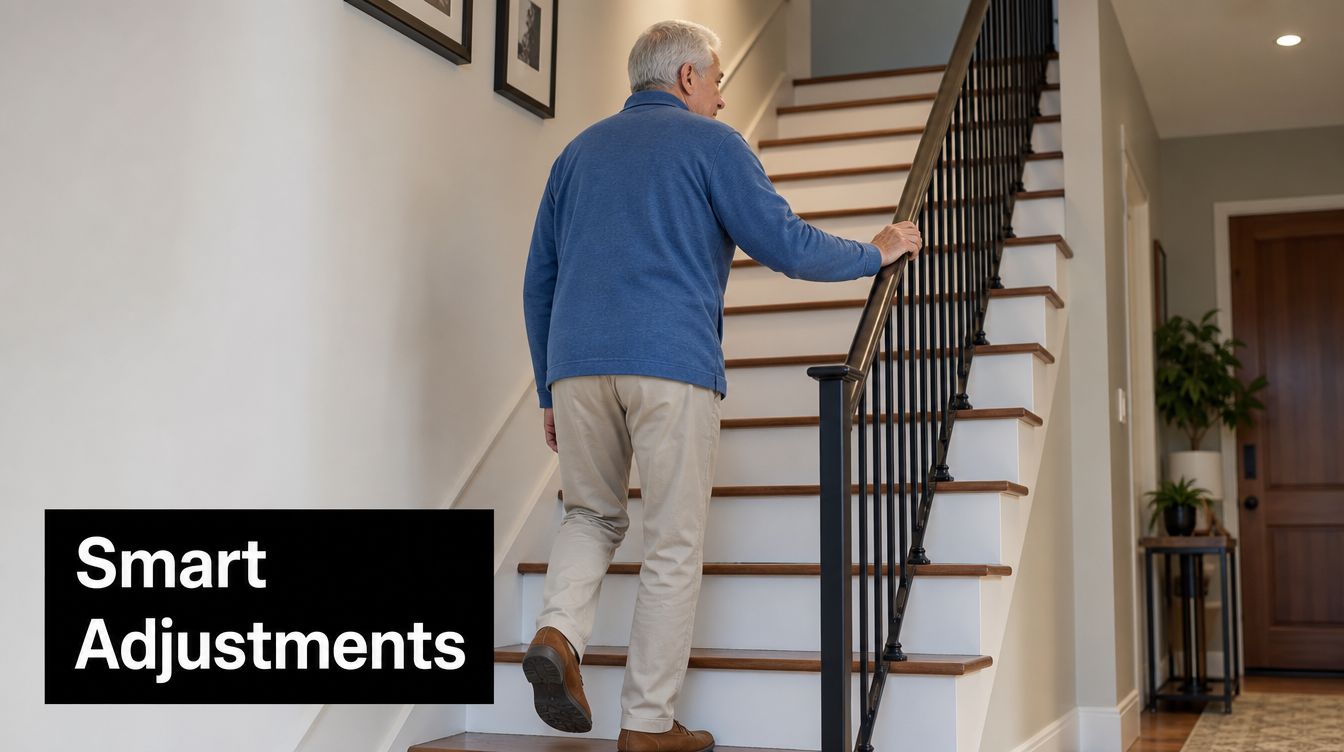
Swelling and soreness also need different responses. A cool pack wrapped in cloth may feel appropriate after activity when the knee is warm or puffy. Gentle warmth before movement may help a chronically stiff joint feel more ready, but heat isn't a substitute for evaluating swelling that keeps returning. Elevating the leg after a demanding day can provide comfort, while compression or a simple sleeve may offer short-term awareness and support.
Practical rule: A modification is working when you can perform the activity with less limping, less swelling afterward, or a quicker return to your usual comfort. If the knee feels progressively worse each day, the activity or total workload still needs adjustment.
Footwear matters because unstable or worn shoes can make walking feel harder. Choose a comfortable, stable pair for daily walking and favor even surfaces while the knee is sensitive. A cane or handrail can be useful during a flare if it lets you move safely, but relying on support indefinitely without rebuilding strength can limit recovery.
Topical products may provide temporary symptom relief for some people. Follow the product directions and check with a clinician or pharmacist if you take other medication, have sensitive skin, or aren't sure whether the product is appropriate. The purpose of these tools is to make useful movement more tolerable, not to hide symptoms while you overload the joint.
Strength Mobility and Balance Exercises That Actually Restore Function
The knee needs more than stretching. A durable program trains strength, mobility, aerobic capacity, and balance, then adjusts the workload according to the response afterward.
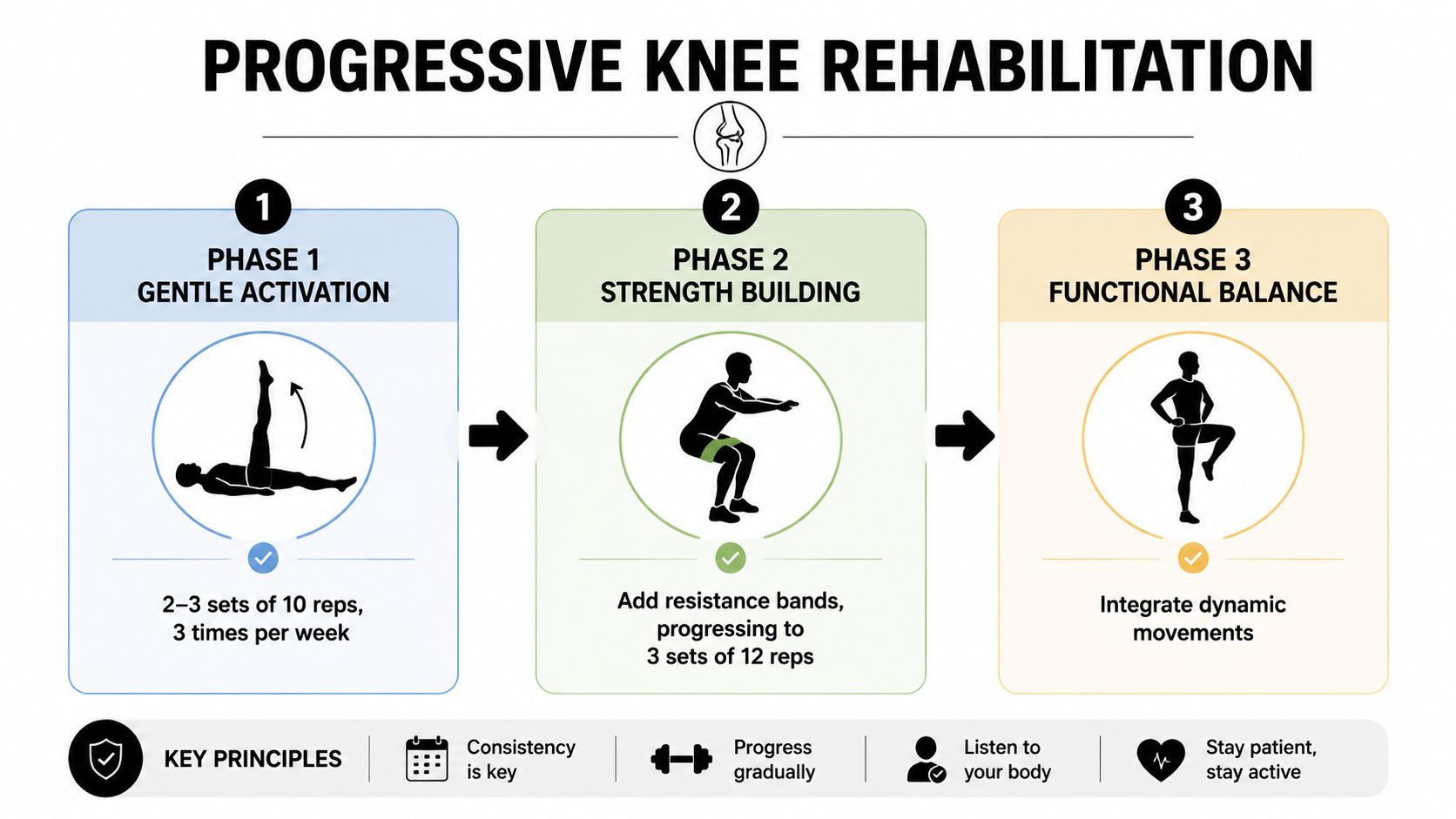
Begin with movements you can control. Depending on your irritability, that might include a straight-leg raise, a supported sit-to-stand, a shallow squat holding a counter, a bridge, calf raises, or a low-resistance stationary-bike session. Keep the knee aligned with the foot rather than allowing it to collapse inward, and use a range of motion that feels manageable.
The RACGP patient guidance suggests a mix of strength, aerobic, and flexibility work. Its suggested strength dose is at least 3 times per week, using 6 to 12 exercises, 8 to 15 repetitions, and 2 to 3 sets. Aerobic exercise is suggested for 20 to 60 minutes, 2 to 5 times per week, while flexibility work is suggested at least 3 times per week, with 15 to 30 second holds. (RACGP exercise guidance for patients)
Use symptoms as your progression dial
The 2-hour pain rule keeps exercise useful instead of reckless. If unusual pain remains high for more than two hours after a session, reduce the repetitions, resistance, range, or duration the next time. If the knee settles within that window and daily function is stable, progress gradually by changing one variable at a time.
A practical weekly sequence looks like this:
- Activation: Start with controlled, low-load exercises that wake up the quadriceps and hips.
- Strength: Add resistance bands, a light weight, or a deeper range only after the current level feels predictable.
- Function: Practice step-ups, balance near a stable support, and walking changes that resemble your daily needs.
Aggressive stretching is a common mistake. Stretching through substantial swelling or sharply increasing pain can aggravate symptoms, and flexibility alone won't restore the force needed for stairs or standing. Balance exercises also require a safe setup, especially if the knee gives way or you have a history of falls.
Women navigating hormonal changes may also benefit from broader guidance on menopause strength training tips, particularly when building a sustainable resistance routine. For exercise examples that can be adapted to your current level, see these five knee-strengthening exercises.
Watch the demonstration below for additional movement ideas, but use the pain response and the 2-hour rule to decide what belongs in your program.
Hands On Therapies Modalities and Supports Matched to Your Symptoms
The most useful natural add-on depends on what your knee is doing. A knee that feels stiff after driving needs a different emphasis from a knee that swells after standing or buckles because the leg lacks control.
| Main symptom | Options that may fit | What to remember |
|---|---|---|
| Stiffness | Warmth before movement, hands-on therapy, gentle mobility, cycling, or aquatic exercise | Use these to prepare for active work, not to replace it |
| Swelling or irritability | Activity modification, cooling after activity, water exercise, and a carefully fitted brace | Persistent swelling deserves an evaluation |
| Weakness or giving way | Progressive strengthening, balance training, taping, or a supportive brace | The long-term target is control, not permanent dependence on a device |
| Pain with walking | Footwear review, walking-pole or cane assessment, aquatic therapy, and graded walking | The support should improve safety and movement quality |
Aquatic therapy is especially logical when land exercise feels too provocative. Buoyancy reduces the demand of body weight while water resistance still allows controlled movement. Bracing can help when alignment or confidence limits walking, but a brace selected without an assessment may be uncomfortable or poorly matched to the problem.
Hands-on physical therapy can help identify whether restricted hip, ankle, or knee motion is changing how you load the joint. Acupuncture, shockwave therapy, TENS, laser, and neuromuscular exercise may be considered in selected cases, with the understanding that their role is to support pain and function work. A 2025 review identified knee braces, water therapy, and exercise among the more promising non-drug approaches, while another review highlighted TENS, laser, neuromuscular exercise, shockwave, and aquatic exercise among stronger physical-therapy options. (Review of physical therapy approaches)
At MedAmerica Rehab Center, care may combine individualized exercise with hands-on therapy, acupuncture, or shockwave therapy when the evaluation supports those choices. A cooling sleeve, such as the approach described in this knee support resource, can be a comfort tool during a flare, but it shouldn't become the whole treatment plan.
Weight Management and Anti-Inflammatory Habits That Lighten the Load
If you carry excess weight, reducing it can make walking and exercise more manageable. For adults with knee osteoarthritis who are overweight or obese, the strongest symptom-improvement evidence supports diet-induced weight loss combined with exercise, rather than diet alone. A systematic review reported that at least 5% body-weight reduction over about 20 weeks can improve symptoms, with larger benefits around 10% loss or more. In the IDEA trial, intensive diet and exercise produced mean long-term weight loss of more than 10%, with greater symptom improvement than either approach alone. (Systematic review and trial evidence)
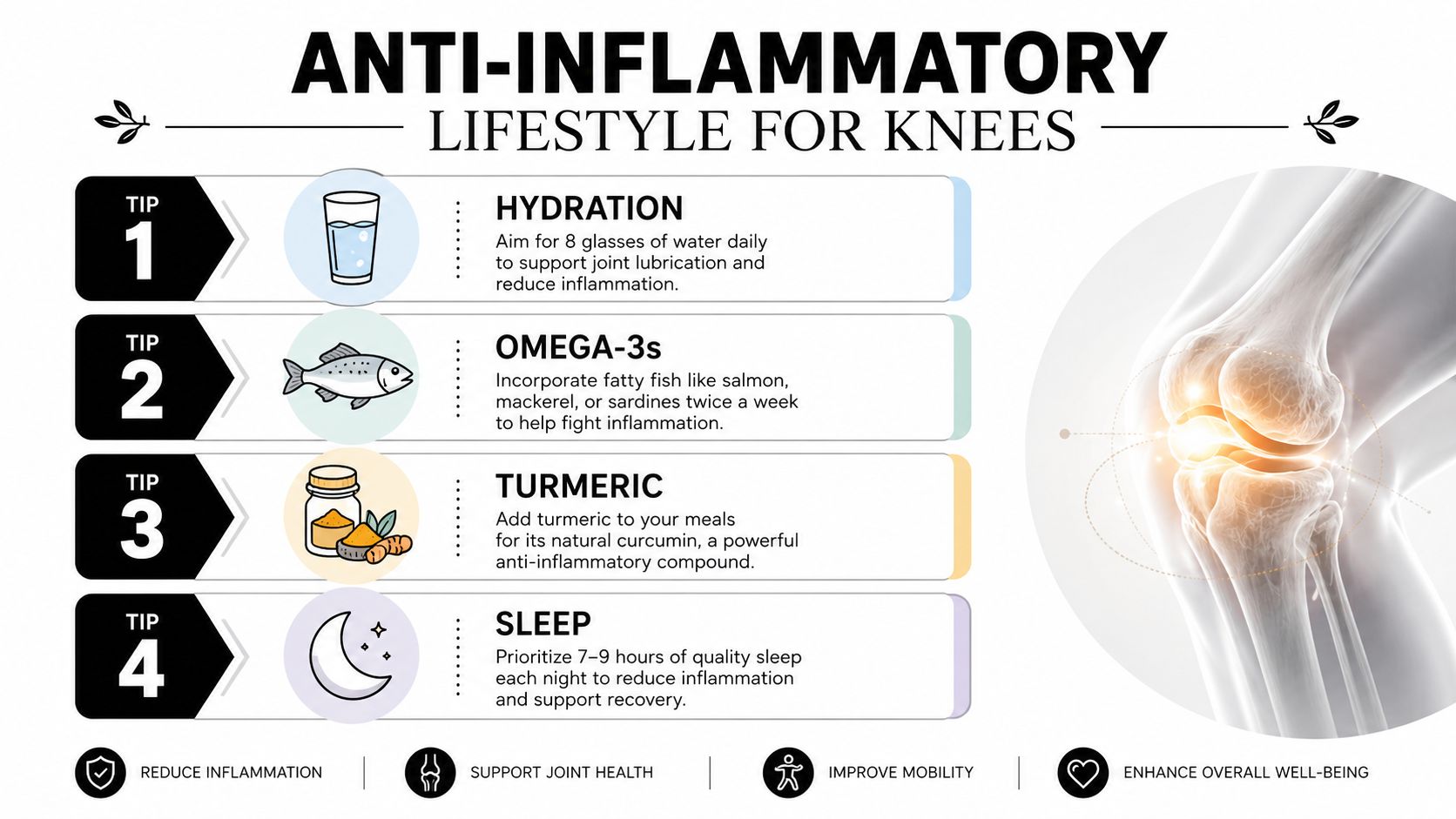
Those milestones should guide planning, not create pressure. Start with meals built around vegetables, fruit, beans, lean protein, whole grains, and unsaturated fats. Fatty fish, nuts, seeds, and olive oil can fit an anti-inflammatory eating pattern, while reducing heavily processed foods may make calorie control easier. The sustainable question is whether you can repeat the pattern on a busy week, not whether you can follow a severe diet briefly.
Build the habits around your knee plan
Pair food changes with low-impact activity. Walking on a flat route, cycling, swimming, or water aerobics can support cardiovascular fitness while you gradually build leg strength. If a long session causes a flare, divide activity into shorter blocks rather than abandoning it.
Sleep and hydration also affect how consistently you move, although neither should be sold as a stand-alone cure. Keep a simple record of walking tolerance, swelling, sleep quality, and exercise response. That record can reveal whether a particular food, schedule, or activity pattern is helping.
Supplements belong in the adjunct category. Reviews describe possible symptom benefits from curcumin, Boswellia, glucosamine-chondroitin, ginger, collagen, and krill oil, but the certainty is often low to moderate. Discuss supplements with a healthcare professional, particularly if you take blood thinners or other medication. For a practical discussion of managing weight with joint pain, focus on methods that preserve muscle while supporting gradual weight reduction.
Your 4 to 8 Week Natural Recovery Plan and When to Seek Care
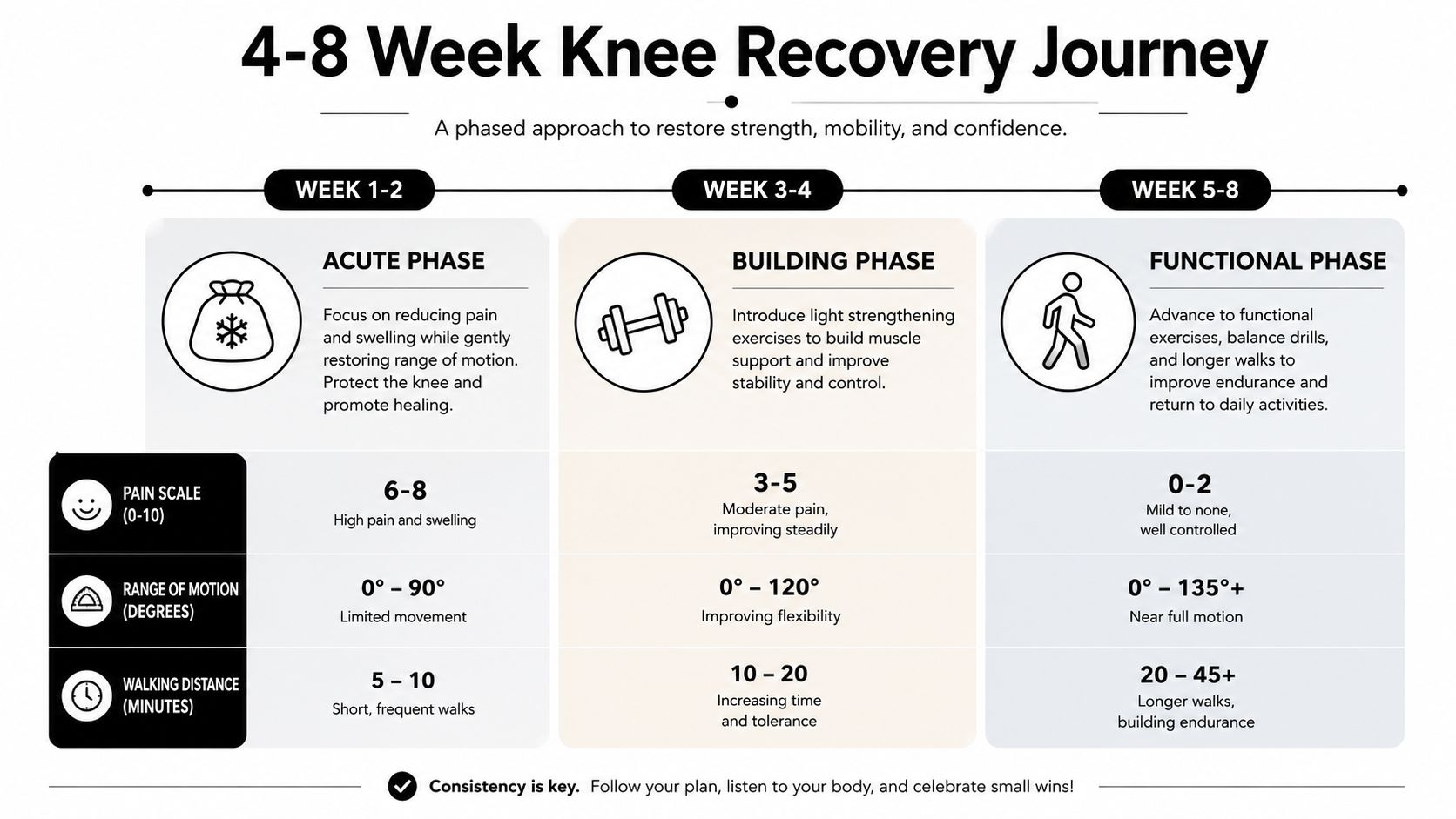
A natural recovery plan should give you a clear next action without pretending every knee follows the same timetable. Track four things each week: morning stiffness, swelling, walking tolerance, and confidence on stairs. Improvement may appear first as smoother movement or fewer rest breaks, even before pain changes dramatically.
Weeks 1 and 2
Reduce the activities that repeatedly flare the knee, keep comfortable walking or cycling, and begin controlled strengthening. Use the 2-hour pain rule after each session. Your early target is better movement quality and a calmer response, not maximum exercise volume.
Weeks 3 and 4
If symptoms are settling, increase resistance or range gradually. Add supported sit-to-stands, shallow squats, step work, or balance practice near a counter. Keep aerobic work within the suggested ranges from the earlier guidance and avoid increasing strength, walking distance, and intensity all at once.
Weeks 5 through 8
Build toward the activities that matter to you, such as longer walks, household tasks, golf, or beach outings. Continue strength work at least three times weekly, retain mobility practice, and use aquatic exercise or a brace when they improve participation. For people considering botanical products alongside rehabilitation, why AloeCure matters for joints offers another perspective, but supplements remain secondary to movement and should be reviewed for safety.
Seek prompt professional evaluation for a knee that locks, repeatedly gives way, develops persistent or substantial swelling, becomes red or hot with fever, or hurts more despite consistent modification and exercise. Sudden severe pain after trauma, visible deformity, or inability to bear weight also warrants medical attention. A personalized assessment can identify whether the issue is osteoarthritis, tendon irritation, a meniscal problem, ligament injury, or something requiring a different plan.
If knee pain is limiting your stairs, walking, or exercise, visit MedAmerica Rehab Center in Deerfield Beach for an individualized rehabilitation evaluation. The clinic offers physical therapy, chiropractic care, acupuncture, and shockwave therapy, with a plan designed to restore strength, mobility, and confidence without relying on unnecessary medication or surgery.
MedAmerica Rehab · Deerfield Beach
Talk to a clinician about your pain
Physical therapy, chiropractic, acupuncture and shockwave therapy under one roof, since 1995. Same-day appointments are available.
Mon–Thu 8:00 AM – 6:30 PM · Fri 8:00 AM – 3:00 PM