
Back Pain Under Ribs: Causes, Red Flags and Relief
Pain that feels like a pulled back muscle may not come from your back at all. Back pain under ribs describes a location, not a diagnosis. Accompanying symptoms matter more than the spot you can point to: Mayo Clinic's back-pain guidance flags fever, trauma, neurological symptoms, unexplained weight loss, and abdominal throbbing as reasons for medical attention.
That doesn't mean every ache is dangerous. It means the safest route to relief starts with deciding whether you need emergency care, a medical appointment, or an assessment for a movement-related problem.
Warning Signs That Need Urgent Care
Under the ribs tells a clinician where to investigate, not what treatment to give. Before stretching, applying heat, or booking rehabilitation, check the symptoms and circumstances accompanying the pain.
Warning Signs and the Action Each One Calls For
| Warning sign | What it may point to | Action |
|---|---|---|
| Chest pain, shortness of breath or fainting | Heart, lung or aortic problem | Call emergency services now |
| Sudden severe pain that rapidly worsens | Kidney stone, serious infection or internal emergency | Same-day or emergency assessment |
| Fever, chills or feeling very unwell | Infection such as kidney infection or pneumonia | Same-day medical review |
| Blood in urine or painful urination | Kidney stone or urinary tract infection | Prompt medical review, urgently if fever or severe pain accompanies it |
| Pain after a fall, car crash or blow to the chest | Fracture or organ injury | Emergency evaluation, particularly after significant trauma |
| Numbness or weakness in the legs, or bladder or bowel changes | Spinal nerve compression | Emergency care for new symptoms |
| Unexplained weight loss, cancer history or prolonged steroid use | Serious underlying disease or increased fracture risk | Prompt medical evaluation |
| Pain that reproduces with twisting, breathing or pressing and stays stable | Musculoskeletal source | Routine assessment if other warning signs are absent |
These are triage clues, not diagnoses. Pain during a deep breath, for example, can occur with irritated chest-wall tissues, but breathlessness or fever changes the urgency. Being able to reproduce pain by pressing on it doesn't cancel out other warning signs.
New or Changing Symptoms Need a Fresh Assessment
NICE's back-pain recommendations advise clinicians to reconsider alternative diagnoses when symptoms are new or changing and to exclude causes such as cancer, infection, trauma, and inflammatory disease. Although that guidance addresses low-back pain, the screening principle matters when discomfort sits higher, near the ribs.
Your medical history can change the next step. Sudden pain in someone with osteoporosis deserves particular attention, even when the triggering movement seemed minor. Immunosuppression, prolonged steroid treatment, or a cancer history also lowers the threshold for medical review.
Practical rule: A familiar location doesn't make a new symptom familiar. Reassess pain that becomes more severe, spreads, or develops accompanying symptoms.
Don't use a temporary response to heat, massage, or pain medicine as proof that the cause is muscular. Symptom relief doesn't establish a diagnosis, and rehabilitation shouldn't delay treatment for infection, fracture, internal-organ disease, or spinal compression.
If the pattern is stable and no warning signs apply, a routine assessment is a reasonable first step. Our guide to what helps with back pain relief offers additional context for conservative care. The absence of red flags doesn't mean pain should be ignored, only that emergency treatment may not be the appropriate starting point.
Musculoskeletal Causes in Ribs, Spine and Muscles
The rib cage isn't a rigid box. The ribs, muscles between them, thoracic spine, and small rib-to-spine joints form a moving frame that expands with breathing and turns with your trunk.
The diagram shows how these structures connect.
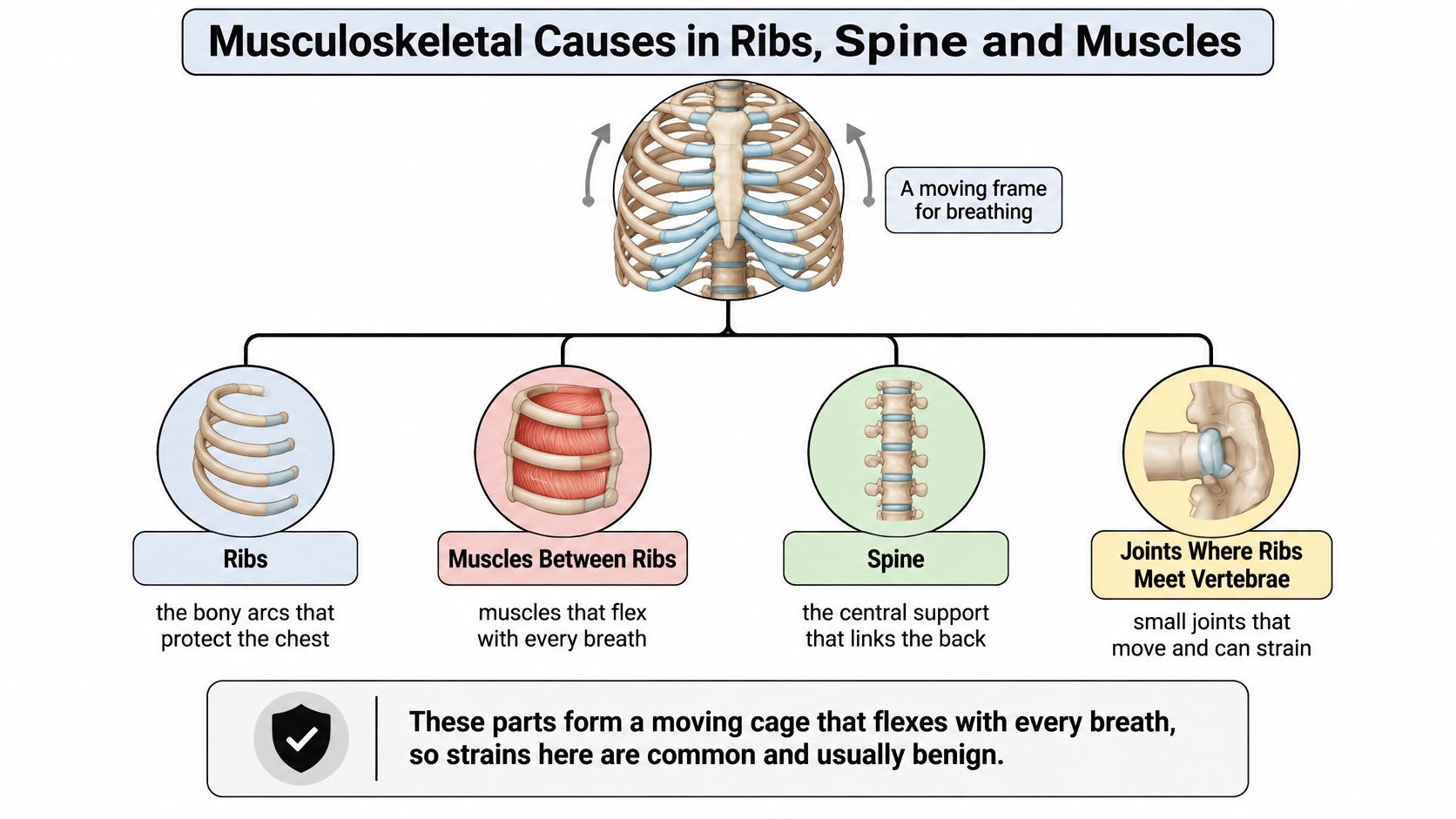
A strain or irritated joint can therefore hurt during an ordinary breath, not just during exercise. That overlap explains why clinicians assess the chest wall and spine together rather than assuming that every posterior ache starts in a disc.
Musculoskeletal Causes and the Movement That Reproduces Them
| Cause | Movement that reproduces pain | Typical feel |
|---|---|---|
| Intercostal muscle strain | Lifting, hard coughing or twisting while reaching | Sharp with deep breaths, often easier with relative rest |
| Costochondritis | Gentle pressure where ribs join the breastbone | Localized tenderness at the front of the chest |
| Thoracic facet or costovertebral irritation | Rotation or sitting up after prolonged sitting | Focal ache near the spine |
| Paraspinal muscle spasm | Bending or loading after gardening, lifting or an uncomfortable sleeping position | Tight, guarded ache beside the spine |
| Thoracic disc degeneration | Bending, rotation or sustained positions may provoke symptoms | Ache that can refer around the rib cage |
Intercostal muscles occupy the spaces between ribs. A forceful cough or awkward reach can overload them, making breathing and turning uncomfortable. Paraspinal muscles, which run alongside the spine, can instead produce a broader feeling of tightness or guarding.
Costochondritis needs a location distinction: it affects cartilage connections near the breastbone, so it's primarily a front-of-chest condition, not the default explanation for pain beneath the back ribs. New chest pain still needs appropriate screening rather than a self-diagnosis based on tenderness.
Observe Movement Without Forcing It
An irritated joint can behave like a stiff door hinge: certain directions feel restricted or painful, while others remain comfortable. That makes movement testing useful, but it doesn't let you identify the exact tissue at home.
Try only a small, comfortable trunk turn or side bend. Note whether the familiar discomfort appears, where it sits, and whether it settles when you stop. Don't repeatedly press hard on a painful rib or force a deep stretch to prove a theory.
For more detail about the region, the Aspen Falls Wellness thoracic pain guide provides additional context on mid-back symptoms.
This video offers a supplementary visual reference, not a substitute for an examination.
A rib fracture after a fall can mimic a strain, including sharp pain during breathing. Mechanical-looking pain is considered suitable for conservative treatment only after the injury history and warning signs have been assessed.
Organ Causes That Can Feel Like Back Strain
The area beneath the ribs overlaps with the flank, the region between the upper abdomen or back and the pelvis. Pain felt there can originate in internal structures rather than the muscles directly beneath your hand.
Cleveland Clinic's flank-pain guidance identifies kidney and urinary conditions, gallbladder and liver disease, pancreatitis, shingles, and pneumonia among possible causes. It also includes abdominal aortic aneurysm, a less common but potentially urgent explanation.
Organ and Nerve Causes and Their Typical Signs
| Cause | Where pain tends to sit | Accompanying signs |
|---|---|---|
| Kidney stone | Side of back or flank, sometimes moving toward the groin | Colicky waves, blood in urine, nausea |
| Kidney infection | One side of back or flank | Fever, chills, painful urination |
| Gallbladder disease | Right upper abdomen, sometimes spreading beneath the right shoulder blade | Pain after fatty meals, nausea, sometimes fever |
| Liver disease | Right upper abdomen or beneath the right ribs | Jaundice, swelling, tiredness |
| Pancreatitis | Upper abdomen, radiating through to the back | Severe constant pain, vomiting |
| Shingles | Band-like area on one side of the ribs | Burning or sensitive skin, followed by a blistering rash |
| Pneumonia or pleurisy | Side or back beneath the ribs | Cough, fever, pain on a deep breath |
| Abdominal aortic aneurysm | Central back, abdomen or flank | Possible pulsing sensation; sudden severe pain requires emergency care |
The table describes recognizable patterns, not a checklist that every person will match. An organ-related problem can begin without all its usual accompanying symptoms.
The Contrasts That Matter Most
Kidney stones and kidney infections can hurt in similar places, but the pattern can differ. Stone pain may come in intense waves and travel toward the groin. Infection is more concerning when one-sided discomfort accompanies fever, chills, or urinary burning.
Meal-related right upper abdominal pain suggests a different line of investigation from urinary symptoms. Gallbladder pain may follow fatty meals and extend toward the shoulder blade, while jaundice, swelling, or marked tiredness raises concern about liver or bile-flow problems. These patterns need medical assessment rather than a stretching program.
Severe upper abdominal pain extending through to the back, especially with vomiting, also shouldn't be treated as routine back strain. The abdomen may be the source even when the back pain feels more noticeable.
Other distinctions involve skin and breathing. Shingles can begin with unusual skin sensitivity or a painful band before a rash appears. Cough and fever accompanying breath-related pain suggest that a clinician should assess the lungs, not just rib movement.
Pain that feels deep, unusual, or unrelated to a clear movement deserves attention, especially when another body system seems affected.
A new abdominal pulsing sensation with back pain warrants urgent assessment, and sudden severe pain or fainting requires emergency help. Use the opening warning-sign table to choose the level of care. No single symptom confirms an organ diagnosis, and missing a typical symptom doesn't reliably exclude one.
What to Track Before You See a Clinician
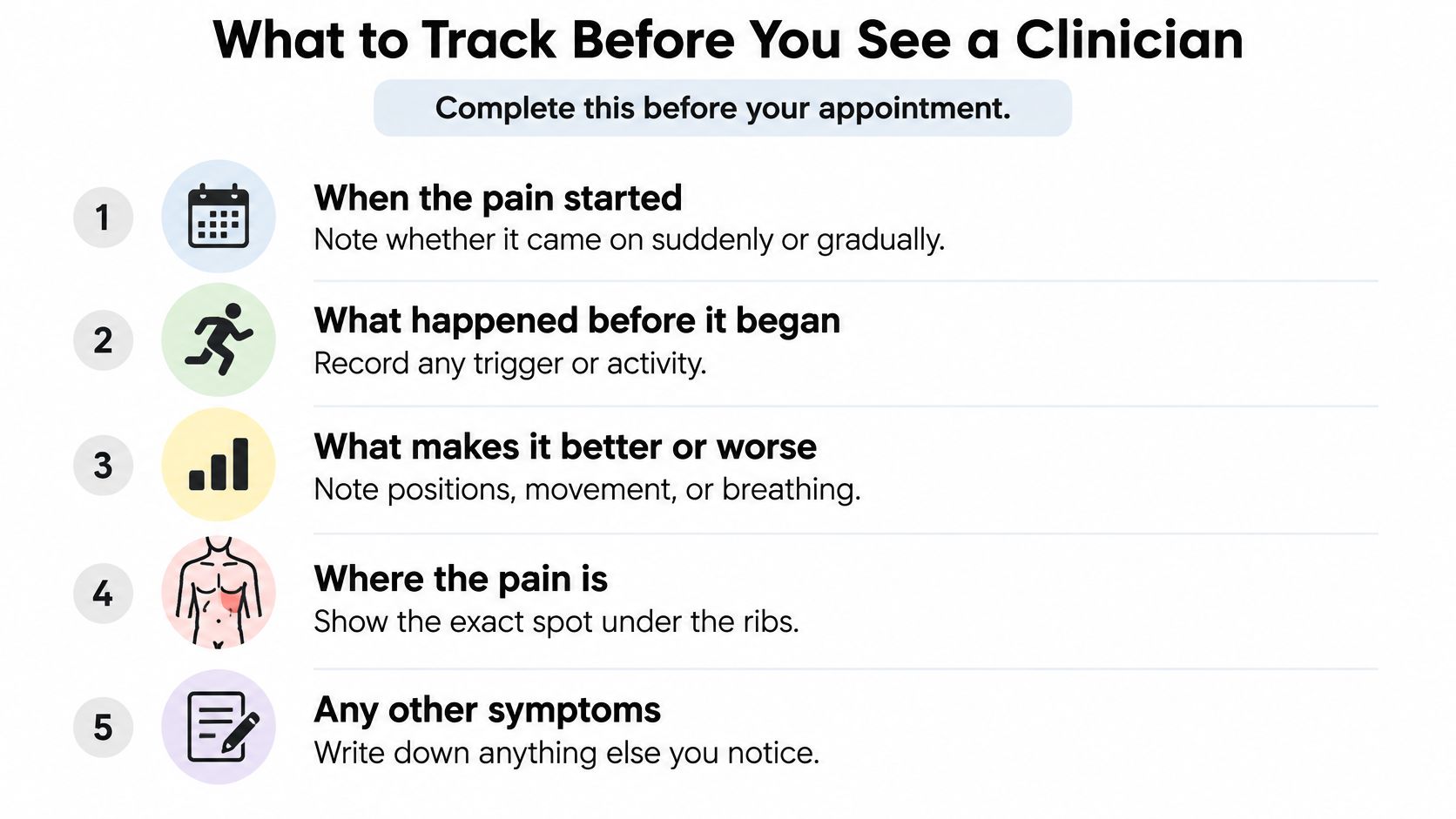
A useful symptom record explains what happened, what changes the pain, and what else you've noticed. You don't need medical terminology or a theory about the diagnosis.
Use this visual checklist as a starting point.
Bring Details That Can Change the Plan
- Onset and trigger: Record whether pain began suddenly or gradually, and whether lifting, coughing, a fall, or a car crash came beforehand.
- Aggravating and easing factors: Note changes with turning, breathing, meals, sitting, lying down, or walking.
- Location and spread: Mark the exact spot and whether pain travels toward the groin, shoulder, chest, or abdomen.
- Urinary and digestive changes: Include urine color, frequency, burning, bowel changes, nausea, and vomiting.
- General symptoms: Write down fever, night sweats, appetite changes, or unplanned weight loss.
- Nerve symptoms: Describe numbness, tingling, leg weakness, or changes in bladder or bowel control.
- Health background: Bring your medicine list, especially steroids and blood thinners, plus any history of cancer, osteoporosis, or previous imaging.
The NHS back-pain guidance distinguishes symptoms suitable for routine care from those requiring urgent help. Your record supports that decision, but it shouldn't become a reason to postpone treatment.
Keep the Diary Simple
Use a consistent pain scale, from no pain to the worst pain you can imagine. Make brief morning and evening entries while waiting for your appointment, noting the activity involved and what helped. Record sleep disruption and practical limitations, such as difficulty getting dressed or reaching into the car.
For example, someone whose ache appears when twisting toward the back seat, settles when facing forward, and isn't accompanied by fever or urinary symptoms has documented a useful movement pattern. That supports a focused assessment, but it doesn't establish a muscle diagnosis.
Bring existing reports rather than arranging tests on your own. A complete record saves appointment time; a new warning sign changes where you should seek care.
Imaging and Tests That Help or Mislead
A normal chest X-ray doesn't reliably exclude a small or nondisplaced rib fracture. Rib injuries often produce localized tenderness and pain that limits a deep breath, so the injury history and examination remain important even when an image looks reassuring.
The StatPearls rib-fracture review reports that standard chest radiographs detect only about 50% of isolated rib fractures; it also describes point-of-care ultrasound sensitivity of approximately 80%–98.3% in small studies. Those figures concern rib-fracture detection, not every possible cause of pain beneath the ribs.
Common Tests for Pain Under the Ribs
| Test | Used for | Main limit |
|---|---|---|
| Plain X-ray | Fracture screening after trauma or suspected bone problems | Can miss isolated rib fractures; isn't routine for uncomplicated back pain |
| CT scan | Detailed assessment of rib fractures and possible internal injury | Uses radiation and can identify fractures that don't change treatment |
| MRI | Spinal or nerve concerns when the examination suggests serious disease | Can reveal incidental changes unrelated to symptoms |
| Point-of-care ultrasound | Bedside assessment for rib fracture and pneumothorax | Performance depends on technique and the clinical setting |
| Urinalysis | Looking for blood or signs of urinary infection | A normal result doesn't fully exclude a kidney stone |
| Blood tests | Assessing suspected infection, inflammation, or liver and pancreas problems | Results need clinical context rather than interpretation in isolation |
After minor trauma, a clinician may sometimes diagnose a rib injury through examination without needing detailed imaging. Concern about multiple fractures, a collapsed lung, or organ damage changes the question and may justify additional tests.
CT is especially sensitive for rib fractures, but detecting every fracture isn't always necessary. The useful question is whether identifying an injury would change treatment, monitoring, or the need for hospital care.
Match the Test to a Clinical Question
MRI is useful when clinicians suspect spinal cord, nerve, or other spinal disease. CT may be considered when MRI can't be performed, but the two tests aren't interchangeable for every problem. Our explanation of when an MRI or X-ray may be needed provides further context.
An imaging finding also needs to match your symptoms and examination. Disc changes on a report don't automatically explain pain, and treating the report instead of the person can distract from the actual cause.
Before a test, ask: What question will this answer, and which result would change my treatment?
Persistent discomfort deserves reassessment, but it doesn't automatically require advanced imaging. Appropriate testing follows the suspected cause and level of risk, not the length of time you've been uncomfortable.
Physical Therapy Options Without Surgery
Physical therapy is appropriate when screening supports a musculoskeletal cause and there isn't an untreated medical problem requiring another route of care. Treatment should address the activities you can't comfortably perform, not just a tender spot.
Screening Comes Before Treatment
At an initial assessment, the therapist reviews the onset, injury mechanism, medical history, and symptom record. They assess aggravating movements, tenderness, functional limitations, and neurological findings where relevant, while asking about breathing, abdominal, and urinary symptoms.
That examination guides the treatment plan and whether medical referral is necessary. Goals might include turning to check traffic, sleeping comfortably, lifting groceries, or returning to exercise.
A practical treatment sequence may include the following approaches.
Reduce painful guarding. Gentle soft-tissue work or joint mobilization may help when examination identifies restricted thoracic or rib movement. Manual treatment should support movement practice, not replace it, and forceful techniques aren't appropriate over a suspected fracture.
Restore comfortable mobility and breathing. A therapist may use supported seated rotation, side-lying movement, or relaxed rib-cage breathing. The aim is comfortable expansion and movement, not repeatedly forcing the painful end of a deep breath.
Build strength for the tasks that trigger symptoms. Shoulder-blade exercises, rowing movements, and trunk-control work may be introduced as tolerated. The exercise choice should reflect the person's capacity rather than a standard routine for everyone with rib-area pain.
Practice the difficult activity. Reaching into a car, lifting a basket, or working at a desk can be broken into manageable movements. Changing the load, reach distance, or position may make practice more comfortable while strength improves.
Return to Activity Without Repeated Flare-Ups
Progress should reflect your response, not a fixed calendar. A therapist can adjust resistance, range, and repetitions so that you regain function without repeatedly provoking a substantial flare-up.
For example, if lifting laundry causes pain, begin with a lighter basket held closer to the body. Practice turning with your feet rather than twisting under load, then gradually restore the tasks your household requires. The goal isn't to make you afraid of twisting, but to rebuild tolerance for it.
Heat or a wrapped cold pack may provide short-term comfort. Protect your skin, avoid sleeping on a heating pad, and stop if the area becomes irritated. Ask a pharmacist or medical clinician about pain medicine if you take blood thinners or have kidney, stomach, or other relevant health problems.
Recovery check: Judge progress by what you can comfortably do, not only by whether pressing the area still hurts.
Our overview of physical therapy for back pain explains how exercise and hands-on approaches can fit into conservative care. Treatment frequency and home practice should be individualized.
An uncomplicated strain should show a trend toward easier movement and better function. If pain worsens, changes character, or fails to progress despite an appropriate plan, medical reassessment is more useful than adding harder exercises. Self-care and rehabilitation can't treat an infection, repair an unstable fracture, or resolve an internal emergency.
Choosing Urgent Care or a Physical Therapy Assessment
The right first appointment is the one matched to your symptoms, not the shortest waiting list. Use this decision path without trying to identify the exact diagnosis yourself.
- Choose urgent or emergency care when warning signs apply. Follow the action attached to your symptom in the opening table. Don't wait for a rehabilitation appointment to investigate a potentially serious problem.
- Arrange a routine assessment for stable, movement-related discomfort. Bring your symptom record and explain which activities you want to regain. If you're unsure whether the pattern is mechanical, start with a medical clinician.
- Request medical review when the pattern changes or recovery stalls. Rapid recurrence, worsening symptoms, or a new accompanying symptom deserves a fresh assessment rather than automatic continuation of the same exercises.
After appropriate screening, conservative care can focus on restoring movement and reducing the loads that repeatedly provoke pain. A prevention plan should reflect your work, home responsibilities, and preferred activities.
At MedAmerica Rehab Center in Deerfield Beach, we can review your symptom record and assess whether conservative care is suitable. Our care aims to relieve pain, restore mobility, and improve quality of life without surgery or unnecessary medication, with pain management and prevention suited to individual needs.
Your action this week is straightforward: write your symptom record tonight and book the appointment that matches it. If an emergency warning sign is present, seek help now instead of completing the diary.
MedAmerica Rehab Center offers individualized physical therapy and chiropractic care for back pain and mobility limitations. If your back pain under the ribs is suitable for conservative care after screening, visit MedAmerica Rehab Center to arrange an assessment and bring your symptom record so we can discuss an appropriate next step.
MedAmerica Rehab · Deerfield Beach
Talk to a clinician about your pain
Physical therapy, chiropractic, acupuncture and shockwave therapy under one roof, since 1995. Same-day appointments are available.
Mon–Thu 8:00 AM – 6:30 PM · Fri 8:00 AM – 3:00 PM