
What Is Good for Back Pain Relief: Your Path to Comfort
You bend to put on your shoes and your back grabs. You sit down to “rest” for a minute, then getting back up feels worse. By afternoon, you're moving like someone twice your age, canceling a walk, skipping the gym, or avoiding the laundry basket because one wrong twist seems risky.
That's the frustrating thing about back pain. It doesn't just hurt. It interrupts ordinary life.
It's also not a personal failure, and it's not rare. The World Health Organization reports that low back pain affected 619 million people worldwide in 2020 and is projected to rise to 843 million by 2050. The same WHO guidance prioritizes physical therapies, physical activity, and lifestyle changes over painkillers as first-line care. That tells you something important right away. Good back pain relief usually isn't just about numbing pain. It's about helping your back move, tolerate load, and function again.
The All-Too-Common Problem of Back Pain
Back pain often starts with something small. You lift a grocery bag from the trunk. You spend a long day at a desk. You sleep in an awkward position. Then the next morning, tying your shoes, getting out of bed, or reaching into a cabinet suddenly feels complicated.
For some people, it's a sharp catch. For others, it's a deep ache across the lower back, or a tight, guarded feeling that makes every movement feel uncertain. What makes it so discouraging is how quickly it changes your behavior. You stop walking normally. You brace. You avoid bending. You get nervous about making it worse.
That reaction is understandable. But it also creates confusion. People want one simple answer to what is good for back pain relief, and what they usually get is a random list: ice, heat, stretching, ibuprofen, rest, massage, posture, maybe a new mattress. Some of those can help. Some help only in certain situations. Some are overused.
A helpful mindset: relief and recovery aren't always the same thing. A strategy that calms pain today may not be the one that restores normal movement next week.
Back pain also exists on a spectrum. A short-lived flare after yard work is different from pain that keeps returning, pain that travels down the leg, or pain linked to numbness or weakness. The right response depends on where you are on that spectrum.
A practical approach starts with three questions:
- What kind of pain is this: a recent flare, a recurring issue, or something more persistent?
- What can I safely do today: calm it down, keep moving, and avoid making it angrier?
- When does this need more than home care: either professional rehab or urgent medical evaluation?
Those answers matter more than chasing a miracle remedy. The safest path is usually a stepwise one. Calm the flare. Keep your body moving. Watch for warning signs. Get skilled help if the problem doesn't settle or starts limiting your life.
Understanding Why Your Back Hurts
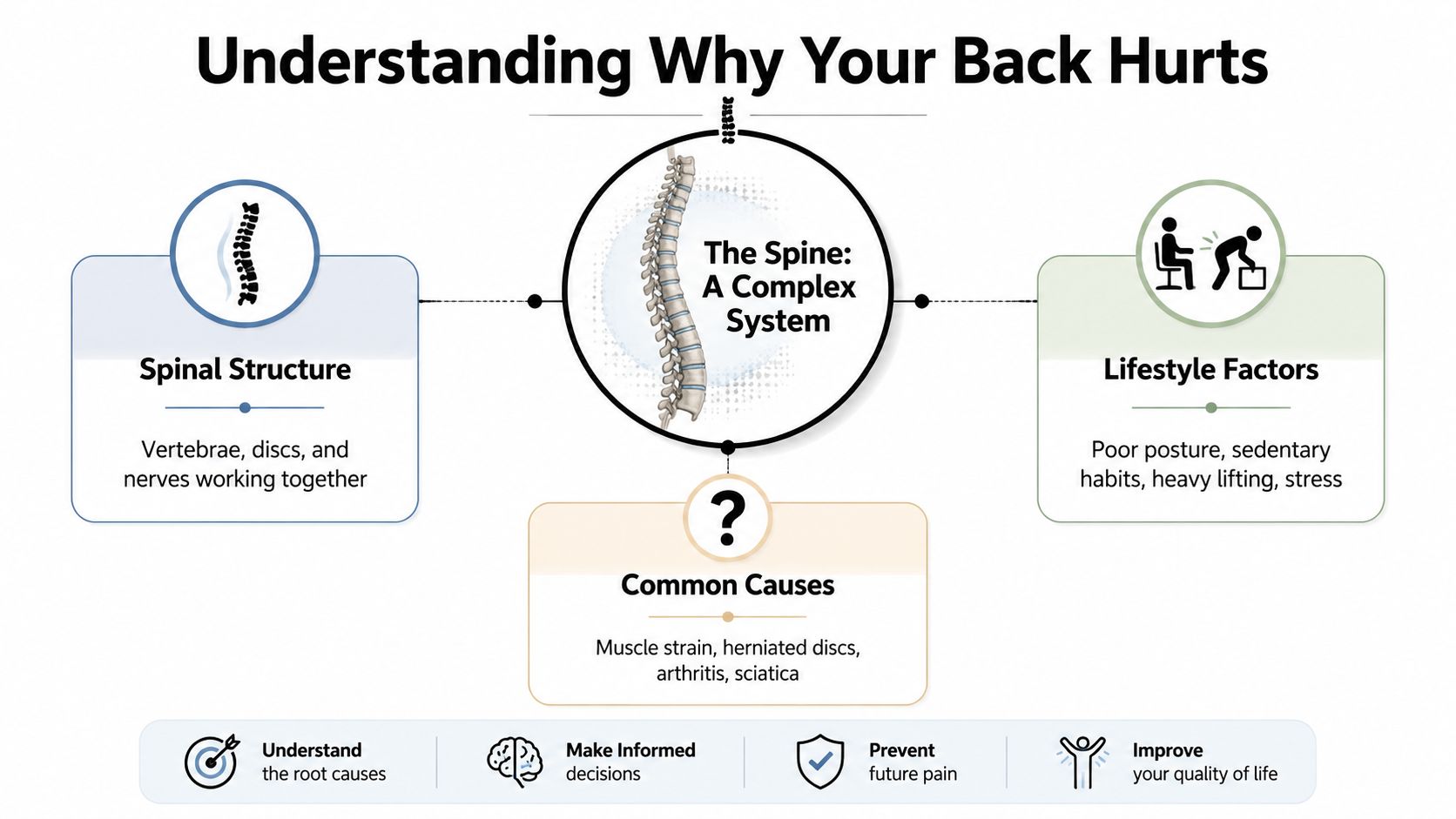
Your spine works less like a stack of blocks and more like a coordinated team. Bones, discs, joints, muscles, fascia, and nerves all share the load. If one part gets irritated or stops doing its job well, another part often takes on more stress.
That's why back pain can feel confusing. The painful spot isn't always the only problem; rather, it often functions as a weak link in a chain. If your hips are stiff, your lower back may bend more than it should. If your trunk muscles aren't supporting movement well, your back muscles may stay tense and overwork. If a disc or joint becomes irritated, nearby muscles often tighten up as a protective response.
Common pain generators
The most common causes are usually mechanical, meaning they relate to how tissues are loaded, irritated, or strained during daily activity.
- Muscle or ligament strain often shows up after lifting, twisting, repetitive work, or a sudden awkward movement. The area may feel tight, sore, or guarded.
- Disc irritation can happen when one of the cushions between the vertebrae becomes inflamed or bulges enough to bother nearby structures. This can create back pain alone or pain that spreads into the buttock or leg.
- Arthritic or joint-related pain often builds more gradually. People may notice stiffness, especially after being still for a while.
- Nerve-related pain tends to travel. Burning, tingling, shooting pain, or numbness down the leg can point to sciatic nerve irritation or narrowing around spinal nerves.
If your symptoms include leg pain, numbness, or walking intolerance, this guide to sciatica and spinal stenosis gives a useful overview of how those patterns differ.
Why lifestyle factors matter
Back pain doesn't only come from one dramatic event. It often builds from repeated stress without enough recovery.
A few common drivers include:
- Long periods of sitting: your back gets less movement variety, and certain tissues stay under low-level strain.
- Poor lifting habits: bending and twisting under load can overload irritated tissues.
- Deconditioning: when people move less because of pain, muscles and stamina drop, and ordinary tasks feel harder.
- Stress and tension: many people hold tension in the back, hips, and shoulders without realizing it.
Your back is designed for movement, not perfect stillness. Most backs do better with varied, gradual activity than with rigid protection all day.
Understanding the “why” helps you choose better relief. If pain is driven by irritation and muscle guarding, calm it first, then reintroduce movement. If pain keeps returning because of poor load tolerance, the long-term fix is usually strength, mobility, and movement confidence, not endless passive treatment.
Immediate Relief Strategies You Can Try at Home
When your back flares up, think of home care as first aid, not a full repair plan. The goal is to calm the pain enough that you can keep moving safely and avoid sliding into a cycle of stiffness and fear.
Start with symptom control
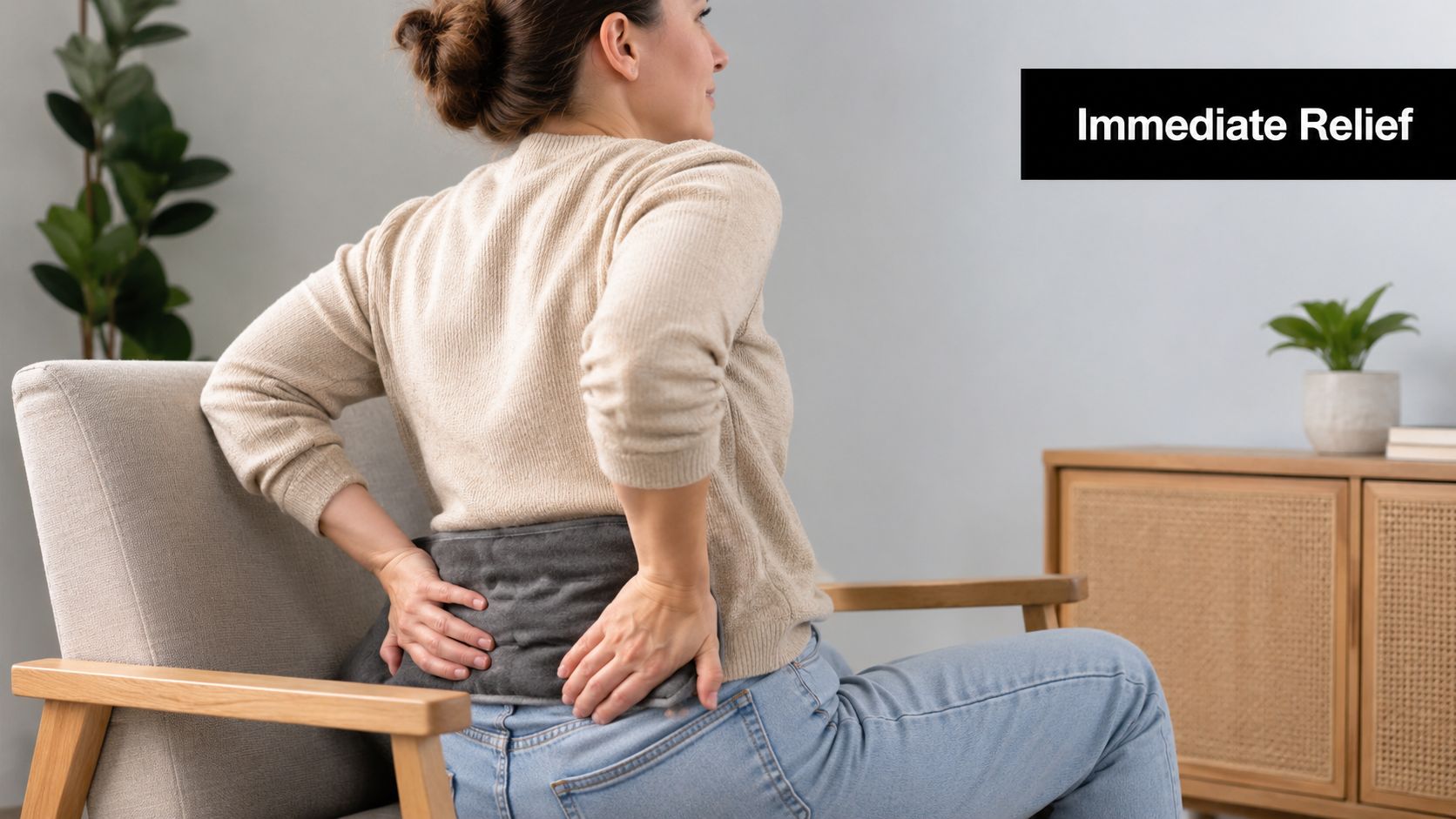
If the pain feels fresh, hot, or aggravated after a specific strain, ice can be useful early on. If the area feels tight, guarded, or stiff, heat often feels better. This doesn't have to become a debate. Use the one that clearly settles your symptoms.
A simple way to approach it:
- Ice: often helpful when pain feels irritated after activity
- Heat: often helpful when muscles feel tight and movement feels restricted
- Short sessions: enough to calm symptoms, not so much that you stay inactive for hours
Don't stay in bed
Many people still assume rest is the answer. For typical back pain, that's usually outdated advice. Cleveland Clinic notes that light activity is usually better than bed rest, and opioids are generally a last resort in back pain care, as explained in its back pain symptom guidance.
That doesn't mean pushing through severe pain. It means avoiding the trap of becoming motionless. Short walks around the house, changing positions often, and gentle movement usually help more than staying on the couch all day.
Practical rule: if a movement slightly increases soreness but loosens you up afterward, that's often acceptable. If it sharply worsens pain and stays worse, back off.
Use medication as a short-term tool
For acute low back pain, pooled evidence suggests NSAIDs are one of the few effective short-term options, while many common noninvasive treatments offer only marginal benefit. The same analysis noted that only about 1 in 10 common non-surgical and non-invasive treatments were effective overall, and for chronic pain, exercise and spinal manipulative therapy were among the effective options, according to this BMJ summary of pooled evidence.
That's the trade-off. Ibuprofen or naproxen may help calm an acute flare, but they don't build strength, restore mobility, or fix the movement pattern that keeps provoking the problem.
Add gentle movement, not random stretching
If you're wondering what is good for back pain relief at home, the safest answer is usually controlled, comfortable motion.
Try a few basics:
- Short walks: even a few minutes can reduce stiffness
- Gentle position changes: move from sitting to standing more often
- Simple mobility work: easy knee-to-chest, pelvic tilts, or trunk movements if they feel relieving
- Beginner exercises: a guided plan is safer than guessing. These lower back pain exercises are a good starting point for people who need structure.
A brief guided session can also help you move without overthinking every sensation:
Protect your back without becoming rigid
You don't need perfect posture. You need less prolonged strain.
- When sitting: keep both feet supported and avoid collapsing into one side for long stretches.
- When standing: shift positions instead of locking your knees and staying frozen.
- When lifting: keep the load close, hinge at the hips, and avoid twisting while carrying.
If home care is helping a little each day, stay consistent. If you're stuck, plateauing, or getting more limited, it's time for a more targeted plan.
When to Seek Professional Non-Surgical Care
There's a point where waiting becomes its own problem. If your back pain keeps returning, limits work or sleep, travels down the leg, or makes you stop normal activities, home remedies alone usually aren't enough.
In the U.S., the CDC reports that 39.0% of adults had back pain in the past three months in 2019, and guidance summarized there notes that first-line care for nonspecific back pain includes remaining active, exercise therapy, and cognitive behavioral therapy, while second-line options can include spinal manipulation, massage, acupuncture, and yoga. That supports a modern, non-surgical model. Persistent back pain usually responds better to an active, multimodal plan than to repeated rounds of rest and symptom chasing.
Signs you've outgrown self-care
You don't need to wait until the pain is unbearable. A professional evaluation makes sense when any of these are true:
- Pain keeps coming back: each flare may settle, but the pattern never really breaks
- Daily life is shrinking: you avoid driving, chores, exercise, or sleep positions because of pain
- Symptoms spread: pain into the buttock or leg, or symptoms linked to certain positions, often need more specific guidance
- You're guessing: many people alternate between rest, random stretches, and internet advice without knowing what's actually helping
What a non-surgical plan should actually do
A good rehab plan should answer three questions clearly. What tissue or movement pattern seems irritated? What activities should you keep doing, modify, or pause? What progression will get you from pain control to normal function?
For chronic low back pain, a clinical evidence review found moderate-to-high evidence for a classification-based exercise plus manual therapy program, self-management, and duloxetine, with self-management showing a moderate effect size and duloxetine showing a moderate treatment effect, as outlined in this clinical review of low back pain interventions. The practical takeaway is simple. Long-term improvement usually comes from a plan that combines movement treatment with behavior change and consistency.
One local option for that kind of care is MedAmerica Rehab Center, which provides physical therapy, chiropractic care, acupuncture, and shockwave therapy in a non-surgical setting. If you want a deeper overview of how rehab treatment addresses both pain and function, this guide to physical therapy for back and neck pain is worth reading.
Comparing non-surgical therapies at MedAmerica Rehab
| Therapy | Primary Goal | Best For |
|---|---|---|
| Physical therapy | Improve movement, strength, and load tolerance | Recurring pain, stiffness, weakness, post-injury recovery |
| Chiropractic care | Improve joint mobility and reduce mechanical restriction | Back pain linked to movement limitation or spinal joint irritation |
| Acupuncture | Help reduce pain sensitivity and muscle tension | People with persistent pain, muscle guarding, or flare-related tension |
| Shockwave therapy | Stimulate healing in stubborn soft-tissue pain patterns | Chronic pain cases where tissue irritation has lingered |
Passive treatments can calm symptoms. Active rehab changes capacity. Most lasting recoveries need both, with exercise doing the heavy lifting over time.
The main trade-off is this. Short-term relief feels rewarding because it's immediate. Real recovery is slower because it asks your body to rebuild confidence, strength, and tolerance. That's why professional care can be valuable. It replaces trial and error with a plan.
Red Flags That Require Urgent Medical Care
Most back pain is mechanical and not dangerous. Some symptoms are different. They are not “wait and see” symptoms.
If you have back pain with the warning signs below, seek urgent medical care right away.
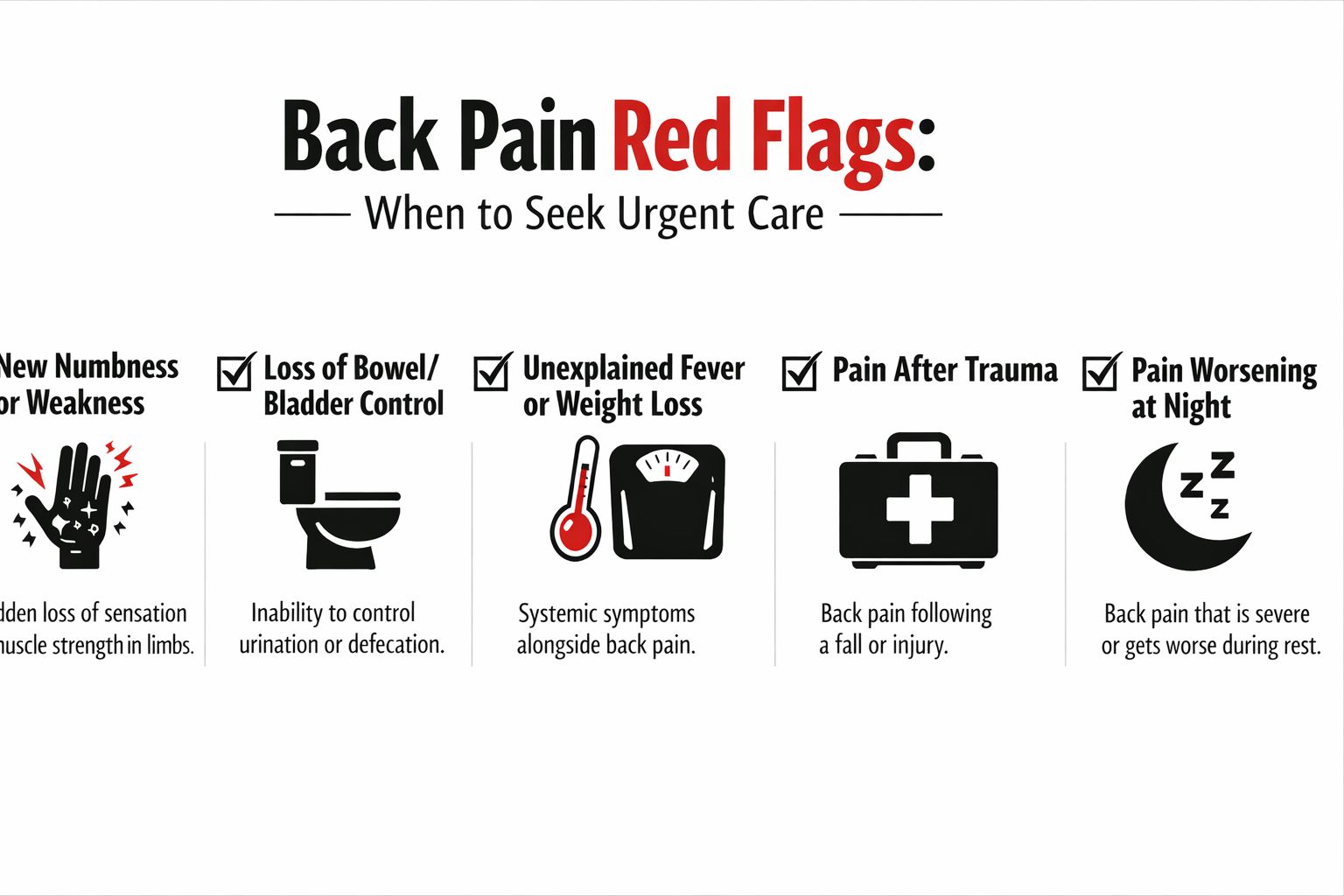
Get emergency help for these symptoms
- Loss of bowel or bladder control: call a doctor immediately or go to the ER
- New numbness in the groin area or major leg weakness: urgent evaluation is needed
- Back pain after a significant fall, crash, or other trauma: don't assume it's “just a strain”
- Back pain with fever or unexplained weight loss: this needs medical assessment, not home treatment
- Severe pain that is worsening at night or at rest: especially if it feels unlike a normal flare
Don't try to self-diagnose a red flag
People sometimes minimize these symptoms because they don't want to overreact. This is the time to overreact. Mechanical back pain may be miserable, but the symptoms above can point to nerve compression, fracture, infection, or another condition that needs prompt medical care.
If a symptom feels alarming, new, or rapidly progressive, get checked the same day.
Your Path to Lasting Back Pain Relief
The most useful answer to what is good for back pain relief isn't one remedy. It's a sequence.
Start by calming the flare with sensible first aid. Use ice or heat based on what settles symptoms. Stay gently active. Use short-term medication carefully if it fits your situation. Avoid turning a painful week into a deconditioned month.
If the pain lingers, keeps returning, or starts changing how you live, shift from self-care to structured rehab. That's where many people finally make progress. They stop guessing. They learn which movements help, which habits aggravate the problem, and how to rebuild strength without provoking another flare.
Cleveland Clinic and Mayo-style guidance consistently points in the same direction: light activity is better than bed rest, opioids are a last resort, and a guided non-pharmacologic plan gives people a more reliable path from temporary relief to functional recovery. That's why the decision framework matters more than a random remedy list.
For some readers, back pain also overlaps with legal or insurance questions after a crash or work injury. If that's part of your situation, this article from a Lawyer in Martin County discusses back injury in a way that may help you understand the documentation side while you pursue treatment.
Yoga can also be a useful bridge between pain relief and movement confidence when it's adapted to your symptoms. These back pain relief yoga asanas show how gentle movement can support mobility without turning recovery into an all-or-nothing effort.
Back pain tends to improve when people stop looking for one magic fix and start following the right next step. Calm what's irritated. Keep moving. Escalate care when needed. Treat red flags like red flags.
If your back pain isn't improving, MedAmerica Rehab Center can help you build a personalized non-surgical plan with physical therapy, chiropractic care, acupuncture, and other targeted treatments designed to reduce pain, restore mobility, and help you get back to normal activity safely.
MedAmerica Rehab · Deerfield Beach
Talk to a clinician about your pain
Physical therapy, chiropractic, acupuncture and shockwave therapy under one roof, since 1995. Same-day appointments are available.
Mon–Thu 8:00 AM – 6:30 PM · Fri 8:00 AM – 3:00 PM