

Physical Therapy for Pinched Nerve in Neck Relief
Waking with a stiff neck is unpleasant. Waking with a sharp, electric pain that travels from your neck into your shoulder, arm, or hand is different. You may turn your head carefully, avoid lifting a coffee cup, or keep shifting at your desk because one position makes the tingling worse. That combination of neck pain and arm symptoms often points to irritation of a cervical nerve root rather than a simple muscle strain.
Physical therapy for pinched nerve in neck symptoms focuses on more than stretching the neck. A therapist identifies which movements reduce pressure, which activities keep aggravating the nerve, and how to rebuild strength without provoking another flare. The aim is to calm the irritated tissue, restore useful movement, and help you return to work, sleep, driving, lifting, or sport with a plan suited to your symptoms.
Understanding a Pinched Nerve in Your Neck
A patient may describe the problem this way: “My neck hurts, but the worst pain is in my arm.” That pattern makes sense anatomically. Cervical nerves leave the spinal cord through small openings between the neck bones, then travel toward the shoulder, arm, and hand. When one of those nerve roots becomes irritated or compressed, the symptoms can follow the nerve's path instead of staying in the neck.
Think of the spinal nerves as electrical cables leaving a central junction box. The discs and joints around the neck form the protective housing around those cables. If a disc bulges, a joint becomes arthritic, or surrounding tissues narrow the available space after strain, the housing can crowd the cable. The result may be pain, pins and needles, altered sensation, or weakness in the area supplied by that nerve.
Clinicians commonly call this cervical radiculopathy, a medical term for a pinched nerve in the neck. It isn't rare. Pooled research estimates an annual incidence of about 0.8 to 1.8 new cases per 1,000 person-years, while other population data report 107.3 cases per 100,000 men and 63.5 per 100,000 women each year. Prevalence estimates have ranged from 1.2 to 5.8 per 1,000 people, and symptoms peak particularly in the 40s and 50s, according to this clinical review of cervical radiculopathy.

Why targeted treatment matters
A generic neck routine may miss the underlying problem. One person may feel better when the neck is gently extended, while another experiences more arm pain in that position. A third may tolerate neck movement but flare after prolonged sitting because the head stays forward and the upper back remains stiff.
A physical therapist uses those differences to select loading, mobility work, and activity changes. The treatment may include gentle motion at first, followed by deep neck and upper-back strengthening as irritability settles. The right approach doesn't force the nerve through pain. It gives the nerve and surrounding joints enough movement to recover while gradually improving the support system around the neck.
Recognizing Symptoms and Warning Signs
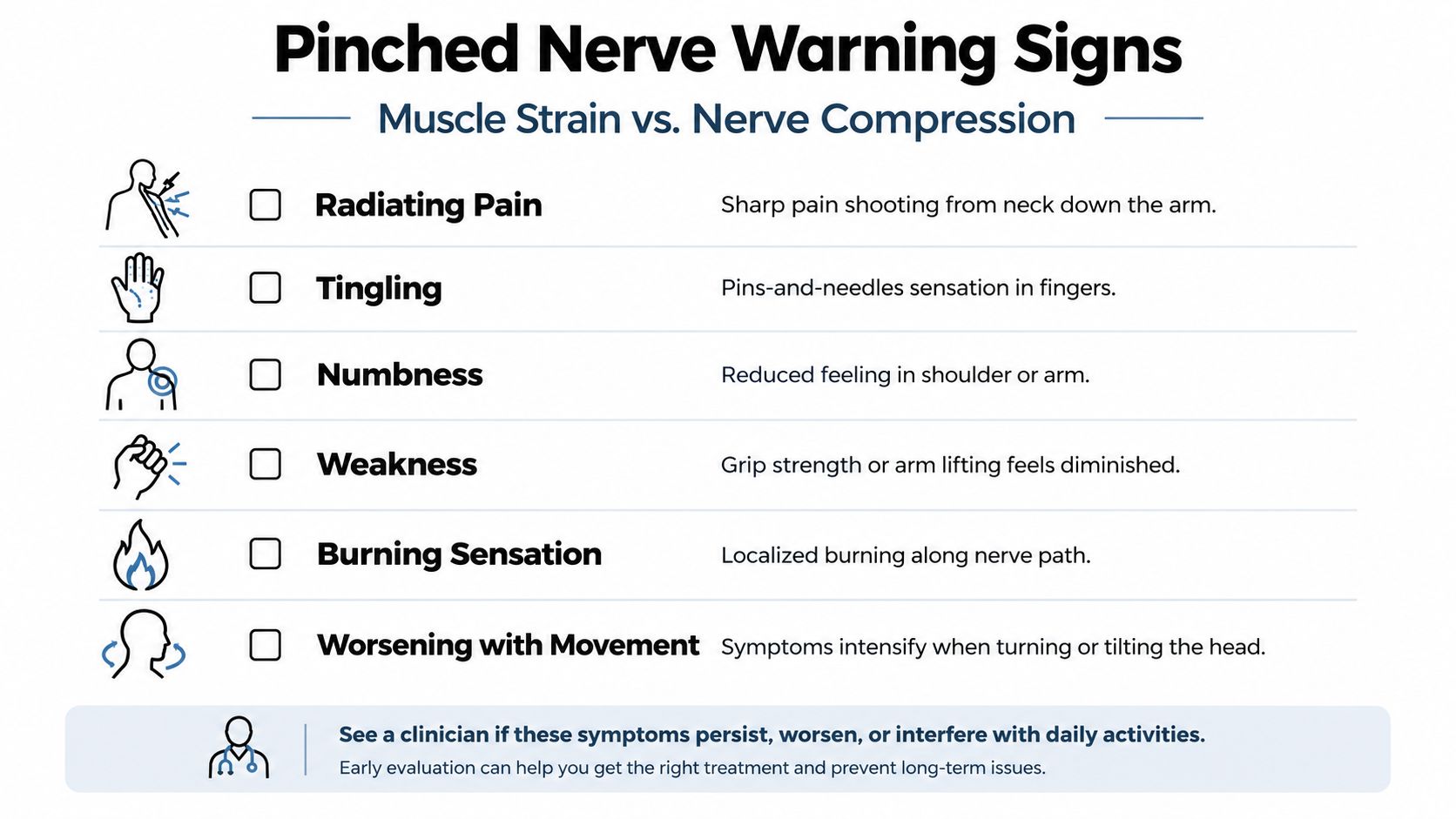
A muscle strain usually produces local soreness, tenderness, and stiffness around the neck or upper shoulder. A nerve-related problem is more likely when symptoms travel beyond the neck, especially into the shoulder, arm, forearm, or fingers. The exact distribution depends on which nerve root is irritated, so your therapist will ask where symptoms begin, where they end, and whether a particular finger or part of the hand feels different.
Common signs include:
- Radiating pain: A sharp, aching, or electric sensation may run from the neck into the arm.
- Tingling: Fingers or part of the hand may feel as if they're filled with pins and needles.
- Numbness: Touch may feel dulled in the shoulder, arm, or hand.
- Weakness: You may notice difficulty lifting the arm, extending the wrist, opening a jar, or maintaining your grip.
- Burning sensitivity: The discomfort may feel hot or burning along part of the nerve's route.
- Position-related symptoms: Turning or tilting the head, looking down, or holding one posture may increase the arm symptoms.
When an evaluation should become urgent
Not every case requires emergency care, but neurological changes deserve attention. Seek prompt medical assessment if weakness is clearly worsening, numbness is spreading, or your arm function is declining rather than gradually stabilizing. New problems with coordination, balance, or walking can indicate a problem broader than irritation of a single nerve root and shouldn't be managed with home exercises alone.
Loss of bowel or bladder control, severe weakness affecting both sides, or rapidly developing difficulty using the arms or legs are urgent warning signs. Stop an exercise that causes a noticeable increase in radiating pain, new numbness, or weakness, and contact a medical professional for direction.
Safety rule: Muscle fatigue after strengthening can be expected. New or worsening neurological loss is not something to push through.
Symptoms can also resemble problems elsewhere. For example, tingling in the hand may come from compression at the wrist, the neck, or both. This comparison of carpal tunnel syndrome and cervical radiculopathy explains why the location and pattern of symptoms matter. A proper examination helps determine whether the neck is the primary source before treatment begins.
How Physical Therapy Evaluates Cervical Radiculopathy
A skilled evaluation doesn't start with a generic list of stretches. It starts with your story. Tell the therapist how the symptoms began, whether they followed an accident or lifting episode, what your work requires, which positions change the arm pain, and what you need to do again. Sleeping through the night and typing comfortably may require a different plan from returning to overhead work or competitive sport.
The examination follows the symptoms
Your therapist may begin by observing how you sit, stand, turn your head, and move your shoulders. They'll compare active neck movement with arm movement and note whether a motion changes the location or intensity of your symptoms. A movement that reduces symptoms toward the neck may be useful, while one that drives pain farther down the arm may need modification.
The neurological examination can include:
- Strength testing: The therapist checks selected movements at the shoulder, elbow, wrist, and hand for side-to-side differences.
- Sensation testing: Light touch or other simple checks may help identify an altered sensory pattern.
- Reflex testing: Changes in reflexes can provide additional information about nerve function.
- Neural tension testing: Carefully controlled positions can show how sensitive the nerve and surrounding tissues are.
- Functional testing: Reaching, gripping, lifting, or desk-related movements connect the examination to your daily goals.
Posture is part of the assessment, but it isn't a diagnosis by itself. A forward head position may increase the demand on the neck during prolonged computer work, yet the therapist also needs to understand your thoracic mobility, shoulder-blade control, breathing habits, and tolerance for sustained positions. A stiff upper back or poorly controlled shoulder movement can make the neck compensate, even when the original irritation began elsewhere.
Your plan should change with your response
The first session may focus more on finding safe positions and establishing a baseline than on completing a demanding workout. Your therapist may provide a short home program and ask you to monitor pain, tingling, numbness, and strength separately. That information helps determine whether an exercise is calming the problem, having no meaningful effect, or increasing nerve sensitivity.
A typical appointment may include examination, education, hands-on care, exercise, and a review of your response. This guide to a typical physical therapy session can help you know what a first visit may involve without assuming every patient receives the same treatment.
Core Physical Therapy Treatments and Techniques
The first objective is often irritability control, not maximum flexibility. An inflamed or sensitive nerve may react poorly to aggressive stretching, repeated end-range neck positions, or forceful self-manipulation. Your therapist may instead begin with comfortable neck rotation, small-range movements, supported arm positions, breathing control, and adjustments to the activities that repeatedly provoke symptoms.

Gentle motion before heavy loading
Gentle range-of-motion work keeps the neck from becoming guarded and stiff. The movement should be controlled and selected according to your symptom response. If a particular exercise increases arm pain or causes tingling to travel farther into the hand, the therapist may reduce the range, change the position, or remove it temporarily.
Manual therapy may address stiff joints and tense muscles around the cervical and upper thoracic regions. Hands-on treatment can make movement easier, but it shouldn't replace active rehabilitation. The lasting goal is to help you move independently and tolerate the positions your life requires.
Early strengthening often uses isometric contractions, where the muscles activate without large neck movement. Gentle deep-neck-flexor work, shoulder-blade control, and upper-back exercises can reduce the tendency to brace the neck during ordinary tasks. As symptoms settle, the therapist may progress resistance, repetitions, arm loading, and functional patterns.
Loading should match your current tolerance
A useful exercise is one you can perform with steady breathing and controlled form without producing a meaningful increase in arm symptoms. Your therapist may ask you to repeat a small set at home, then assess how you respond later that day and the next morning. If symptoms remain stable, the program can progress. If the nerve becomes more irritable, the load or position needs to change.
Evidence-based guidance has supported physical therapy as part of nonoperative care for cervical radiculopathy for decades. Earlier guidance included gentle range-of-motion work, stretching, massage, heat or ice, and electrical stimulation during the early stage, followed by progressive isometric and resistive strengthening as pain improved. More recent guidance continues to support traction, exercise, and staged strengthening. One treatment guideline describes acute care at two to three sessions per week for four to six weeks, and a randomized trial cited in that guidance found that physical therapy plus home exercise for six weeks substantially reduced neck and arm pain. These recommendations are summarized in the American Academy of Family Physicians guidance.
A clinic's administrative support can also affect how consistently patients attend and follow a plan. Practices exploring a physical therapy answering service may use it to make scheduling and patient communication easier, but the clinical program still depends on an appropriate examination and individualized progression.
The Role of Traction and Nerve Mobilization
Traction and nerve mobilization can be useful, but neither should be treated as a universal answer. They're adjuncts, meaning they work best when a therapist has already identified a suitable movement strategy and paired the technique with active exercise, education, and activity modification.
Mechanical cervical traction applies a controlled pulling force intended to reduce compression temporarily and make certain movements more comfortable. The research is encouraging but limited. A meta-analysis of seven studies involving 589 patients found that adding traction to other treatments improved pain by about 5.93 points on the pooled scale, with a 95% confidence interval from −11.81 to −0.04. Another review found short-term pain benefit and intermediate-term disability reduction, while one randomized trial found lower Neck Disability Index scores at six months when exercise was combined with mechanical traction, with a mean difference of 13.3 compared with exercise alone and a 95% confidence interval from 5.6 to 21.0. The review also described the evidence quality as low to moderate, so traction is more defensible for selected patients than as a stand-alone fix. These findings are discussed in this systematic review of cervical traction.
Nerve mobilization, sometimes called nerve gliding or neural mobilization, uses gentle coordinated movements to encourage a nerve to slide relative to nearby tissues. It shouldn't feel like a forceful stretch along the entire arm. A therapist may adjust the neck, shoulder, elbow, wrist, and fingers so the exercise acts as a controlled slider rather than a sustained tensioning maneuver.
Comparing the options
| Treatment Type | Primary Goal | Best Used When |
|---|---|---|
| Standard exercises | Restore comfortable movement, strength, and postural control | Symptoms respond to graded activity and the patient needs durable self-management |
| Mechanical traction | Temporarily reduce mechanical sensitivity and improve tolerance for movement | Selected patients have position-related symptoms and respond positively during assessment |
| Nerve mobilization | Improve nerve movement through surrounding tissues without aggressive stretching | The examination suggests neural sensitivity and the exercise can be performed without a flare |
| Manual therapy | Address joint stiffness and muscle guarding | Restricted movement or surrounding tissue tension limits exercise |
| Education and activity modification | Reduce repeated aggravation during daily tasks | Desk work, driving, sleep, lifting, or phone use repeatedly provokes symptoms |
A 2025 trial and review found that adding neural mobilization to routine physical therapy improved mobility more than routine therapy alone, but it didn't improve pain. That distinction matters. A technique may help you move better without being the main reason your pain settles, and the right choice depends on your examination rather than the name of the modality. The evidence and remaining uncertainty are described in this recent review of neural mobilization.
Be cautious with any device marketed as a guaranteed solution. A neck pain relief device guide may help you understand available options, but a device can't determine whether your symptoms reflect nerve compression, another condition, or a warning sign requiring medical review.
Recovery Timeline and Managing Daily Activities
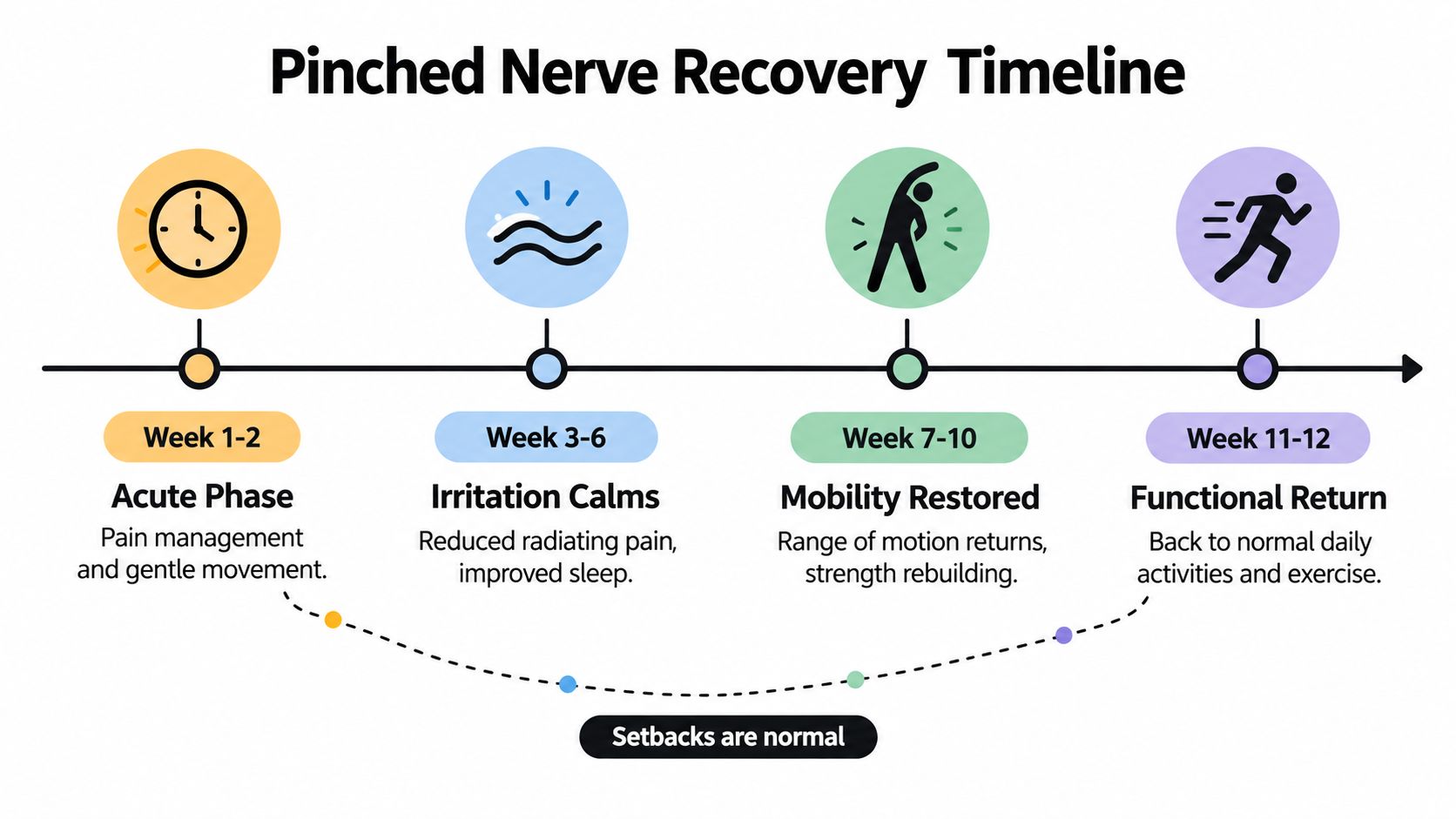
Recovery usually unfolds in stages, but the stages overlap. Early on, the priority is to reduce the activities that keep provoking the nerve while preserving comfortable movement. Later, the program shifts toward strength, endurance, and the specific tasks you need to perform. Pain may improve before numbness or weakness, so track each symptom separately rather than judging progress by pain alone.
Your workstation needs a movement plan
A “perfect” posture won't protect you if you hold it rigidly for hours. Set the monitor so you aren't repeatedly bending your head toward the screen, keep the keyboard close enough that your shoulders can relax, and use a chair that supports an upright position. More important than a fixed posture is changing position regularly and taking brief movement breaks before symptoms build.
If your arm pain increases after laptop work, try raising the screen and using a separate keyboard. If phone use triggers symptoms, hold the device higher instead of dropping your head toward your chest. Your therapist can test these positions and help you decide which adjustment reduces symptoms rather than relying on a generic workstation checklist.
Sleep, driving, and lifting
Choose a sleep position that keeps your neck reasonably neutral and doesn't leave your arm compressed beneath your body. A pillow that is too high or too low may increase morning stiffness, so use your symptoms as feedback and discuss persistent problems with your therapist.
Driving requires repeated head turning, sustained sitting, and quick reactions. Adjust the seat and mirrors so you don't have to reach or rotate farther than necessary, and don't drive if pain, weakness, medication, or restricted movement makes it unsafe. For lifting, keep loads close, avoid sudden overhead effort during an irritable phase, and rebuild capacity gradually rather than testing maximum strength.
Practical rule: Modify the task that provokes symptoms, not every activity in your life. Complete rest can make you more guarded and deconditioned, while carefully graded movement builds confidence and tolerance.
Progress may include a better night's sleep, less pain traveling into the hand, easier head turning, improved grip, or a longer period at the desk before symptoms appear. A temporary flare doesn't automatically mean damage, but symptoms that spread, weakness that worsens, or a lack of improvement despite consistent care warrants communication with your therapist or physician.
Starting Your Healing Journey at MedAmerica Rehab Center
Choosing a clinic for neck and arm symptoms should begin with clinical fit, not a promise of instant relief. Look for a team that can perform a neurological and movement assessment, explain what it finds, and adjust treatment when a technique increases symptoms. Physical therapy may be combined with hands-on care, therapeutic exercise, neuromuscular reeducation, and modalities such as electrical stimulation or ultrasound when those tools fit the examination.
MedAmerica Rehab Center is a family-owned clinic in Deerfield Beach, Florida, offering physical therapy alongside chiropractic care, acupuncture, and advanced shockwave therapy. Its team treats neck pain and symptoms that travel into the arm with individualized plans rather than assuming every patient needs the same exercises. The clinic also works with acute and chronic musculoskeletal problems, sports injuries, auto accidents, and workers' compensation rehabilitation.
What to expect at the first visit
A first appointment should give you a clear starting point. You can expect discussion of your symptoms and goals, movement testing, strength and sensory checks when appropriate, and practical advice for work, sleep, driving, or lifting. The therapist may begin with a manageable home program and explain which changes would mean you should stop an exercise or contact your physician.
An insurance-friendly process and same-day appointment availability can make it easier to begin care while the problem is limiting your routine. A comfortable facility and attentive communication also matter because rehabilitation works best when you understand the plan and can carry it into daily life.
If symptoms are severe, neurological function is worsening, or progress stalls, physical therapy should remain coordinated with medical care. A therapist can help restore movement and loading capacity, while a physician determines whether further diagnostic work or specialist assessment is needed.
MedAmerica Rehab Center provides individualized physical therapy, hands-on treatment, and guided exercise for neck pain with arm symptoms in Deerfield Beach and nearby communities. Visit MedAmerica Rehab Center to request an evaluation and discuss a practical plan for reducing irritation and returning to the activities you need.
MedAmerica Rehab · Deerfield Beach
Talk to a clinician about your pain
Physical therapy, chiropractic, acupuncture and shockwave therapy under one roof, since 1995. Same-day appointments are available.
Mon–Thu 8:00 AM – 6:30 PM · Fri 8:00 AM – 3:00 PM