
Quality of Life Improvement: Manage Pain, Boost Mobility
Pain changes life in small, frustrating ways before it changes it in obvious ones. You stop taking the long way through the grocery store. You brace before getting out of bed. You turn down a walk with family because your back is already talking to you. After surgery, a flare-up, or months of stiffness, people often tell me the hardest part isn't just the pain itself. It's how quickly their world gets smaller.
That shrinking can feel discouraging, but it isn't the end of the story.
Quality of life improvement usually starts with ordinary wins. Getting dressed without wincing. Standing long enough to cook. Sleeping in one position for more than an hour. Walking with more confidence than fear. Those steps may look modest from the outside, but in rehab they matter because they restore control.
Vague advice to “take care of yourself” isn't particularly helpful. What's needed is a clear path. First, calm things down. Then move better. Then build enough strength and confidence that the problem stops running the day. That's how real recovery tends to work in the clinic, and it's the same framework that can help at home.
Reclaiming Your Life From Pain and Immobility
A few situations come up again and again. Someone tweaks a back while lifting a laundry basket and expects it to settle in a few days, but weeks later they're still avoiding stairs. A knee replacement patient works hard in the early phase, then gets stuck between “not in crisis” and “not back to normal.” An older adult starts walking less because balance feels uncertain, and within a short time even simple errands feel like too much effort.
In each case, the body problem is only part of the issue. Pain and immobility start to affect routines, mood, sleep, confidence, and relationships. When people stop trusting their body, they often stop doing the very activities that give life structure and enjoyment.
That's why quality of life improvement has to be practical. It can't stay at the level of motivation or positive thinking. It has to show up in movement, habits, pacing, and the environment around you.
You don't have to solve everything at once. You need the next right step that your body can tolerate today.
For some people, that step is learning how to settle an irritated joint. For others, it's starting gentle exercise without triggering a flare. For someone recovering from surgery or dealing with arthritis, it may be making the home easier and safer to move around while strength catches up.
What works is rarely dramatic. It's consistent symptom management, the right dose of movement, and enough structure to tell whether you're improving or just guessing. What doesn't work is the all-or-nothing cycle. Resting for too long can stiffen the body further, but pushing through sharp pain usually backfires too.
A better life after pain isn't built in one breakthrough session. It's built in phases. Relief first. Function next. Resilience after that.
What Quality of Life Improvement Really Means
When people hear quality of life improvement, they often think of one goal: less pain. That matters, of course. But in practice, a better life is bigger than a lower pain level. It means being able to do what your day asks of you with less struggle and less fear.
The parts that matter most
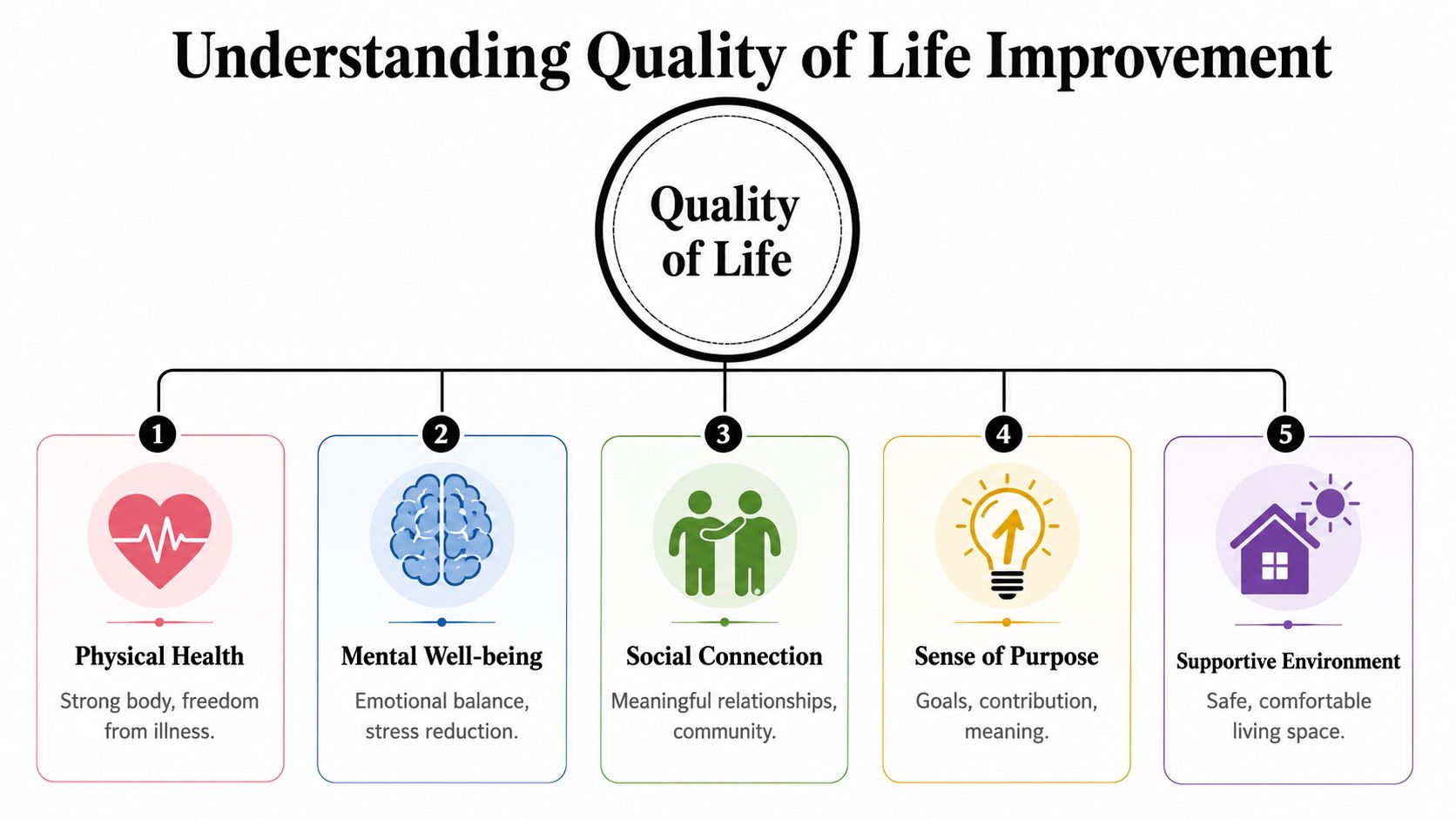
I encourage patients to think about quality of life in several connected areas:
- Functional independence means handling daily tasks with less help and less hesitation. Getting in and out of bed, carrying groceries, reaching overhead, bathing, driving, or walking through a store all count.
- Mental well-being matters because pain is exhausting. When symptoms drag on, people often become more guarded, more frustrated, and less active.
- Social connection is easy to overlook. Many people pull back from family events, hobbies, travel, or community activities because movement feels unreliable.
- Purpose and routine often improve when your body becomes more dependable again.
- Environment plays a role too. A safe, supportive space at home can either reduce strain or magnify it.
This broader view isn't just a modern wellness slogan. It reflects how health has been understood more meaningfully over time. Between 1980 and 2000, major gains in life expectancy in the United States were accompanied by a decline in disability among older adults of about 2% per year, along with less institutional living, showing that progress included more functional independence, not only more years alive, as discussed in this analysis of health and quality of life trends.
Better isn't perfect
Many people get stuck because they assume improvement must mean “back to exactly how I was before.” Sometimes that happens. Sometimes it doesn't. A meaningful outcome may be different.
A good rehab outcome can look like this:
| Area | What improvement may look like |
|---|---|
| Walking | You can walk farther with steadier confidence |
| Home tasks | Cooking, laundry, and cleaning take less effort |
| Sleep | Fewer position changes and less night irritation |
| Mood | Less fear of movement and fewer pain-driven decisions |
| Community life | You return to errands, visits, worship, or hobbies |
Practical rule: Measure progress by what you can do, not only by what you feel in one moment.
Some pain-sensitive conditions fluctuate. A sore day doesn't always mean you're getting worse. If your body is allowing more motion, more activity, and faster recovery after effort, that counts. Quality of life improvement is really about expanding your life again.
Your First Steps in Practical Pain Management
When pain is loud, the first job isn't fitness. It's reducing irritation so your body will tolerate movement again. That usually means choosing the right tool for the right problem instead of doing everything at once.
Use heat or ice with a reason
People often ask whether heat or ice is better. The answer depends on what the tissue is doing.
- Use ice for fresh irritation or swelling. If a joint feels hot, puffy, or sharply aggravated after a strain or activity spike, cold can help calm that response. If you want a practical guide on timing and safe use, this overview of ice pack physical therapy is useful.
- Use heat for stiffness and guarding. Tight muscles, morning stiffness, and achy joints often respond better to warmth because it helps the area relax enough to move more comfortably.
- Don't apply either and stay still for the rest of the day. The goal is to make gentle movement easier afterward.
A simple example: if your low back feels rigid when you first wake up, heat followed by a short walk or easy stretching often makes more sense than icing and going back to the couch.
Move gently before you move a lot
Stiff, irritated tissues usually dislike sudden effort. They often do better with small, repeatable motion.
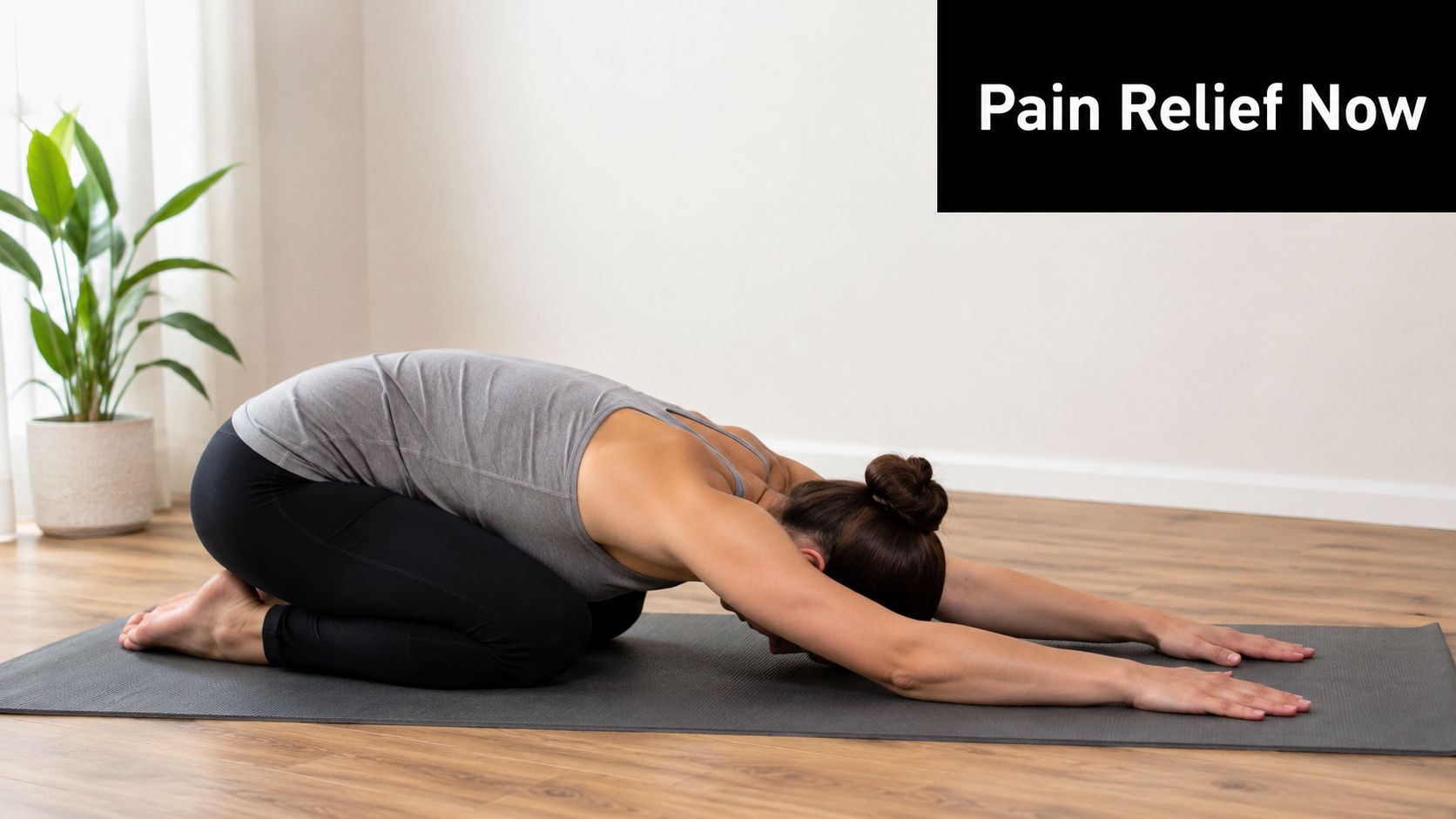
Try a short round of gentle mobility:
- Neck pain: slow chin tucks and shoulder rolls
- Low back stiffness: pelvic tilts, knees-to-chest one side at a time, or a brief walk
- Hip tightness: seated marches or supported weight shifts
- Shoulder soreness: pendulum swings or assisted table slides
The key is dosage. Stop well before the point where your body starts bracing.
Relief should make movement easier. If a strategy leaves you more guarded an hour later, it's the wrong dose or the wrong tool.
Change the positions that keep feeding the pain
Sometimes pain relief comes less from an exercise and more from stopping the repeated stress that keeps poking the same area.
A few high-value adjustments:
- Sitting: keep your hips fully back in the chair and support your low back with a small rolled towel if you tend to slump.
- Sleeping: side sleepers often do better with a pillow between the knees. Back sleepers may feel better with support under the knees.
- Transitions: roll to your side before sitting up in bed if your back is flared.
- Standing tasks: place one foot on a small step or open cabinet ledge while washing dishes if your lower back aches in prolonged standing.
Many people also benefit from broader holistic approaches for pain management that support recovery habits, especially when stress, sleep, and inflammation seem to affect symptoms.
A brief guided routine can help if you're unsure how to start moving again:
What usually doesn't work
A few patterns tend to delay recovery:
- Complete rest for too long. Rest can help in the first phase, but extended inactivity often increases stiffness and deconditioning.
- Testing the pain all day. Repeatedly bending, twisting, or poking the sore area usually increases sensitivity.
- Waiting for zero pain before moving. Individuals often improve when they find tolerable motion, not when they wait for perfect comfort.
The goal in this stage is simple. Settle symptoms enough that your body is willing to participate in rehab.
Building Strength with Targeted Rehab Exercises
Once pain is more manageable, the next step is building capacity. During this phase, many people either progress well or accidentally stall out. They do too much too soon, or they choose exercises that look productive but skip the foundation.
Start with control, not intensity
Your body needs stability before it needs challenge. For low back, hip, knee, and shoulder problems, that often means waking up the smaller support muscles before loading the bigger ones.
A good opening sequence might include:
- Breathing with abdominal engagement. Exhale gently and feel the lower abdomen tighten without holding your breath.
- Pelvic control drills. Small tilts or neutral spine awareness help you find a safer starting position.
- Supported joint motion. Heel slides, mini bridges, wall slides, or scapular setting build coordination before resistance is added.
If you're unsure how much movement a joint should have, a review of range of motion ROM exercises can help you understand the purpose of early mobility work.
Sample movements that help common problem areas
Different bodies need different programs, but a few exercise categories are useful in many rehab plans.
| Body area | Entry-level exercise | Why it helps |
|---|---|---|
| Low back | Pelvic tilts or dead bug progressions | Improves trunk control without heavy spinal loading |
| Hips | Bridges, clamshells, sit-to-stands | Builds support for walking, stairs, and balance |
| Shoulders | Scapular squeezes, wall slides, isometrics | Restores control before overhead work |
| Knees | Quad sets, straight leg raises, mini squats | Supports joint stability for transfers and gait |
One important rule: form beats intensity. A smaller, well-controlled movement does more for healing than a larger movement done with compensation.
What progression should feel like
Progression doesn't mean chasing fatigue. It means your body handles a little more work with good control and a reasonable recovery afterward.
Look for these signs:
- Soreness that settles, not escalates
- Improved confidence during daily tasks
- Better tolerance for walking, standing, or reaching
- Cleaner movement patterns with less guarding
If the next day brings a severe flare, back up. That doesn't mean exercise was wrong. It usually means the dose was too high.
Strength work in rehab should leave you more capable, not more inflamed.
For some people, strength training also supports body composition and long-term function. If that's one of your goals, this explanation of the benefits of strength training for fat loss gives helpful context on why resistance work has value beyond the gym.
Common mistakes that slow progress
People often sabotage good rehab with avoidable habits:
- Skipping the easy exercises because they seem too basic
- Adding resistance before mastering control
- Comparing your stage to someone else's
- Treating pain during exercise as a test of toughness
Therapeutic exercise should build trust between you and your body. When done well, it changes movement from something you fear into something you use to heal.
Creating a Safe Foundation for Long-Term Mobility
A strong body still needs a safe setting. I've seen many people improve physically, then remain limited because their home setup, habits, or fear of falling keep them from using that progress. Safety isn't a restriction. It's one of the best tools for maintaining independence.
Change the home before the home changes you
Falls and near-falls often come from ordinary details people stop noticing. A dim hallway. A rug edge. A slippery bathroom floor. A favorite pair of backless shoes worn around the house.
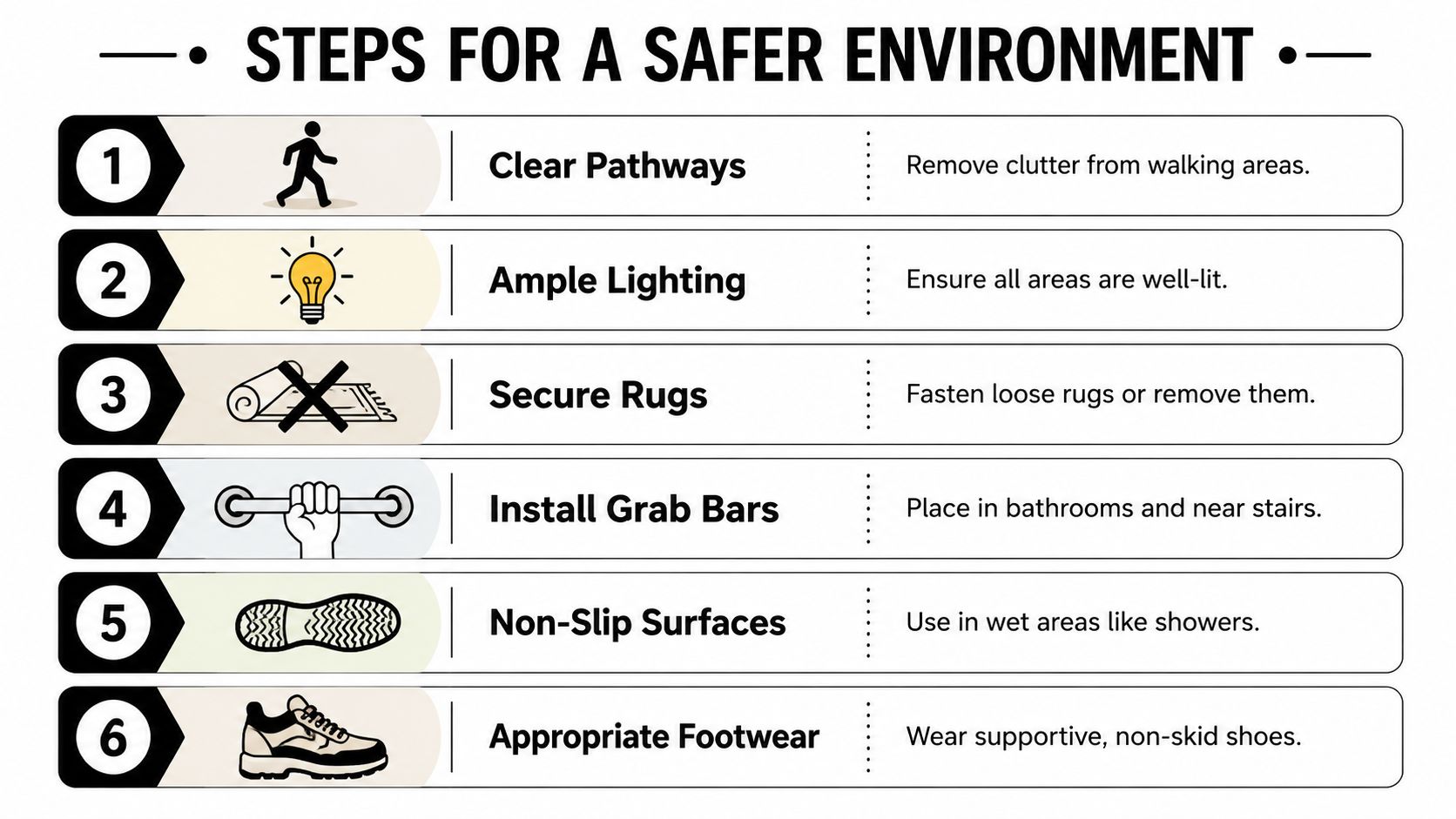
The fix is usually straightforward:
- Clear walking paths. Remove clutter, cords, baskets, and small furniture that narrow the route between rooms.
- Improve lighting. Entryways, bathrooms, and nighttime routes to the toilet need clear visibility.
- Stabilize surfaces. Secure loose rugs or remove them if they shift.
- Add support where your body needs it. Grab bars in the shower or near the toilet can reduce strain and hesitation.
- Choose footwear on purpose. Supportive shoes with grip are safer than socks or floppy slippers on slick flooring.
Independence grows when fear drops
Some people resist home modifications because they think they signal decline. I see them differently. The right setup lets you keep doing more for yourself.
Consider the difference:
| Home feature | Without it | With it |
|---|---|---|
| Bathroom grab bar | Hesitation, awkward twisting, higher slip risk | More stable transfers and confidence |
| Better lighting | Guessing at edges and thresholds | Clearer footing and smoother movement |
| Open walkways | Extra turning and tripping hazards | Easier use of cane, walker, or natural stride |
That's not giving in. That's reducing unnecessary risk so your energy can go toward living.
Outdoor balance matters too
Mobility doesn't stop at the front door. Uneven sidewalks, curbs, wet pavement, and crowded places challenge balance differently than the living room does.
A few practical habits help:
- Slow down before transitions such as curbs, ramps, and grass
- Look ahead, not only down so your body can prepare for the next step
- Turn in smaller steps instead of pivoting quickly
- Use hand support when available on stairs or unfamiliar terrain
Confidence isn't built by pretending the risk isn't there. It's built by reducing the risk you can control.
For many adults, especially after surgery, illness, or a fall scare, these changes are what allow them to return to community life. Long-term mobility depends on more than muscles. It also depends on reducing the friction and hazards that make people withdraw.
Knowing When to Partner with a Rehab Specialist
Self-care can take you far, but there's a point where guessing stops being useful. If symptoms aren't improving, or if they're changing in ways you don't understand, it's smart to bring in a professional who can evaluate the full picture.
Signs it's time to get help
Call a rehab specialist if you notice any of these patterns:
- Pain keeps worsening even though you've reduced aggravating activities
- Numbness, tingling, or spreading symptoms show up or intensify
- Weakness affects daily tasks like lifting the foot, gripping, standing from a chair, or reaching overhead
- You plateau and can't move past the same limit despite steady effort
- Balance feels unreliable and you've had a near-fall or started avoiding activity because of fear
- Recovery after surgery or injury feels stalled and you aren't sure what's safe to push
These aren't reasons to panic. They're signs that the problem needs better assessment and a more targeted plan.
What a structured rehab process does better
A skilled clinician doesn't just hand out random exercises. Good rehab is systematic. One healthcare improvement framework uses a plan, do, study, act cycle with a small set of measurable outcomes so changes can be tested and adjusted based on real response rather than guesswork, as described in this PDSA quality improvement guide.
In plain language, that means a therapist should be asking:
- What's the main functional problem?
- Which change are we trying first?
- How will we know if it's helping?
- What needs to be modified if it isn't?
That process matters because many painful conditions overlap. A person may think they have a simple hamstring problem when the hip, spine, balance system, or walking mechanics are really driving the issue.
What a first visit should feel like
A first appointment should leave you with more clarity than confusion. You should understand what movements are limited, what likely aggravates the issue, what's safe to start, and what the early goals are. If you're comparing providers, this guide on how to choose a physical therapist can help you ask better questions.
In Deerfield Beach, one option is MedAmerica Rehab Center, where patients may receive individualized care through physical therapy, chiropractic care, acupuncture, and other rehab services depending on the condition and goals. That kind of multidisciplinary setup can be useful when pain, mobility loss, and recovery needs overlap.
The right clinician should reduce uncertainty. You should leave knowing what to do next and what progress will be measured.
Professional care is often most helpful when home strategies have done all they can and the next step requires sharper assessment, hands-on treatment, or better progression.
Your Path Forward to a Better Life
Quality of life improvement isn't one decision. It's a series of practical choices that help you reclaim function. Calm the irritated area. Reintroduce movement. Build strength that supports daily tasks. Make your home and routines safer. Get expert help when the problem stops responding to trial and error.
That approach works because it respects how recovery happens. Individuals rarely jump from pain to full confidence. They move through phases. They learn what settles symptoms, what aggravates them, and what kind of movement builds trust in the body again.
If you're dealing with back pain, neck pain, sciatica, arthritis, post-surgical stiffness, or balance concerns, don't underestimate how much progress can come from steady, well-chosen actions. Improvement often begins before pain disappears completely. It begins when you can do a little more, recover a little faster, and feel a little less limited by the day.
Better living is rarely about doing everything perfectly. It's about doing the important things consistently.
If you're in Deerfield Beach or a nearby community and you're tired of managing this alone, partnering with the right rehab team can make the path clearer. The goal isn't just symptom relief. It's getting you back to walking, working, sleeping, driving, exercising, and participating in life with more ease and more confidence.
If you're ready to take the next step, MedAmerica Rehab Center can help you build a plan that matches where you are now, whether you're trying to calm a painful flare, recover after surgery, improve balance, or return to normal daily activity with less fear and more control.
MedAmerica Rehab · Deerfield Beach
Talk to a clinician about your pain
Physical therapy, chiropractic, acupuncture and shockwave therapy under one roof, since 1995. Same-day appointments are available.
Mon–Thu 8:00 AM – 6:30 PM · Fri 8:00 AM – 3:00 PM