
Knee Pain Relief Without Surgery: A Practical Recovery Guide
Knee pain is a major global musculoskeletal problem, and one U.S. primary-care review estimated that it affects about 25% of adults, has risen by 65% over the past 20 years, and drives about 4 million primary-care visits each year (AAFP review). That scale matters because it changes the conversation from “What pill can I take?” to “What plan actually works, and when does surgery stop being the right answer?” For many patients, knee pain relief without surgery is realistic, but it works best when you follow a sequence, not a menu of random fixes.
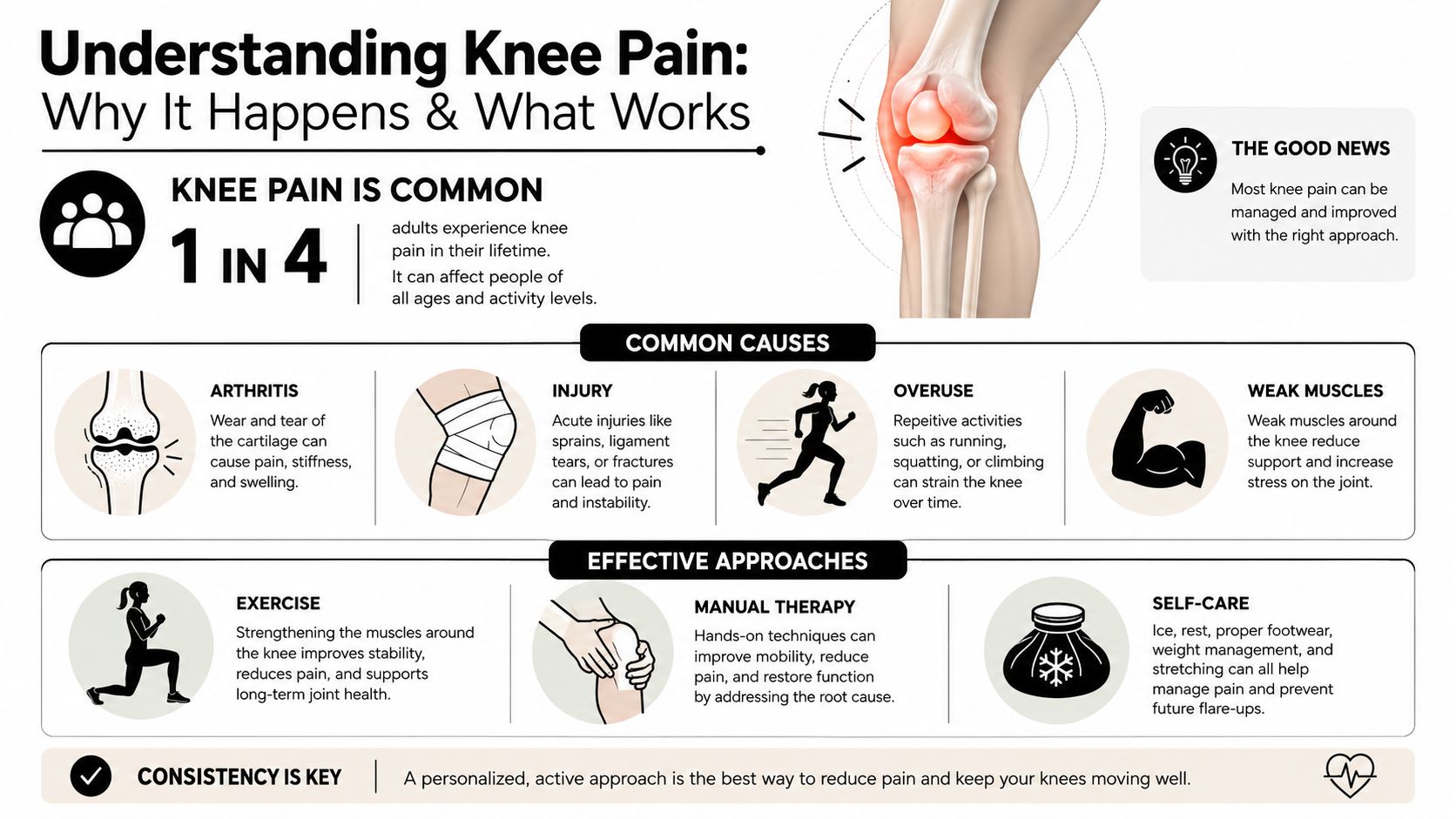
The evidence base is clearer than many assume. A systematic review found resistance training to be among the best-supported approaches for knee osteoarthritis, while aquatic therapy, balance training, and shockwave therapy had only moderate support (AAFP review). That hierarchy matters. If you invest most of your time in passive care first, you can miss the interventions that change function.
I also point patients toward practical references that separate symptom relief from long-term joint care, including a useful overview on how to ease osteoarthritic knee pain. The useful question is not whether a treatment sounds reasonable. It's whether it has enough support to deserve your first hour, first week, and first dollar.
Understanding Why Knee Pain Happens and What Works
Knee pain rarely comes from one isolated problem. Arthritis, overload, weak quadriceps, prior injury, and movement compensation often show up in the same person, which is why generic advice falls short. Pain changes how you move, activity drops, muscles decondition, and the knee ends up handling load even less well than before.
The treatment hierarchy matters
The strongest conservative care starts with exercise-based rehabilitation, especially resistance training, because it builds the joint's capacity rather than only calming symptoms. Education and diet therapy also have a place, but they work best as supports to loading, not replacements for it (AAFP review). In practice, the right plan usually looks less glamorous than the internet wants. It is structured, repetitive, and progressive.
Practical rule: if a treatment makes the knee feel calmer but does not improve walking, stairs, sit-to-stand, or squatting tolerance, it is only doing half the job.
Passive modalities can still have a role, but they should sit behind active care. The evidence review in the brief found resistance training better supported than aquatic therapy, balance training, or shockwave therapy, which had only moderate support (AAFP review). That does not make the moderate options useless. It means they are adjuncts, not the foundation.
The biggest shift for patients is accepting that pain relief and recovery are not identical. A knee can feel temporarily better after rest, ice, or a device, but the ultimate test is whether the joint tolerates more life with fewer flare-ups. That is the standard conservative care should meet.
For readers comparing options with a broader rehab lens, MedAmerica Rehab Center's knee pain care is one example of a clinic that uses physical therapy, chiropractic care, acupuncture, and advanced shockwave therapy in a non-surgical setting. If you want a broader overview of symptom relief and joint care, you can ease osteoarthritic knee pain with a plan that still keeps active rehabilitation at the center.
Immediate Self-Care Strategies for Pain Relief
A knee that is hot, stiff, or irritated usually needs less load, not complete shutdown. Total rest can seem sensible, but it often leaves the joint stiffer and the leg less prepared for the next day. Short-term relief should make movement easier and more tolerable, not turn into a waiting period where nothing improves.
Use symptom control to keep moving
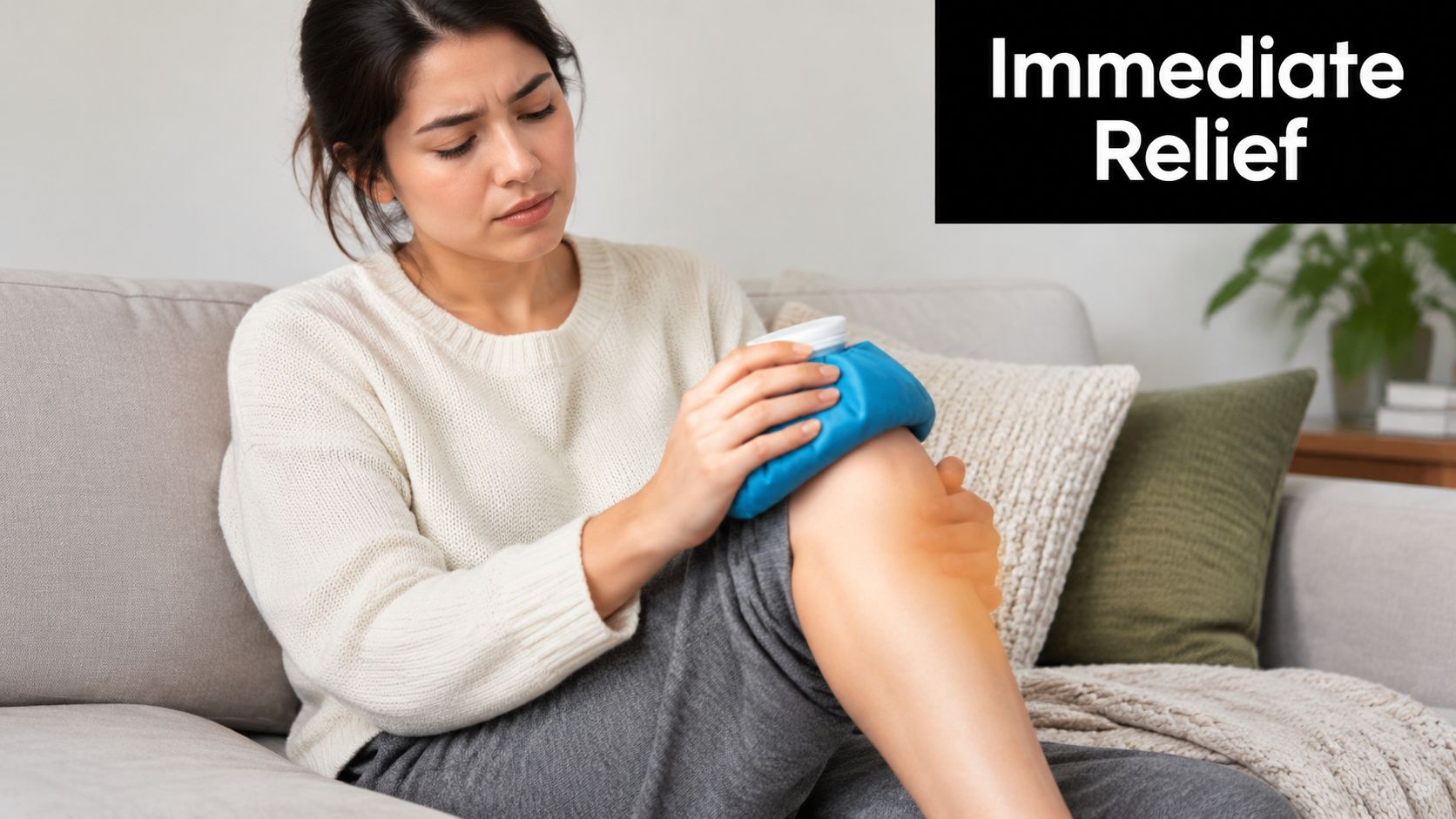
Ice is helpful when swelling or throbbing is part of the pattern, while heat often feels better when stiffness is the main complaint. Match the tool to the symptom. If the knee feels inflamed and reactive, choose the option that calms it without adding more irritation. A simple sleeve or light compression wrap can also give the joint a more contained feeling during the day.
If you want a plain-language rehab explanation of cold therapy, the MedAmerica Rehab Center guide on ice pack physical therapy is a useful reference. The practical point is simple. Use the modality that makes controlled movement easier, then stop before it turns into a crutch.
Reduce strain without freezing the joint
Small adjustments usually help more than patients expect:
- Raise after flare-ups: Keep the knee above heart level when you can, especially if swelling is part of the problem.
- Avoid long static positions: Standing still or sitting too long tends to make the knee feel more locked up.
- Use short movement breaks: Gentle walking around the house, ankle pumps, and easy bending and straightening can keep the joint from stiffening.
- Sleep with support if needed: A pillow under the calf or between the knees can reduce twisting pressure, especially if side-lying bothers you.
Don't wait for the knee to feel perfect before moving. A calm, tolerable range of motion is usually better than guarding the joint all day.
Compression can help, but only if it is used correctly. A wrap that is too tight, worn all day without a reason, or left on despite numbness or skin irritation is doing more harm than good. The same is true for the early phase after a flare. Reducing irritation matters, but immobilizing the knee usually slows recovery instead of helping it.
Building Your Progressive Exercise and Rehabilitation Program
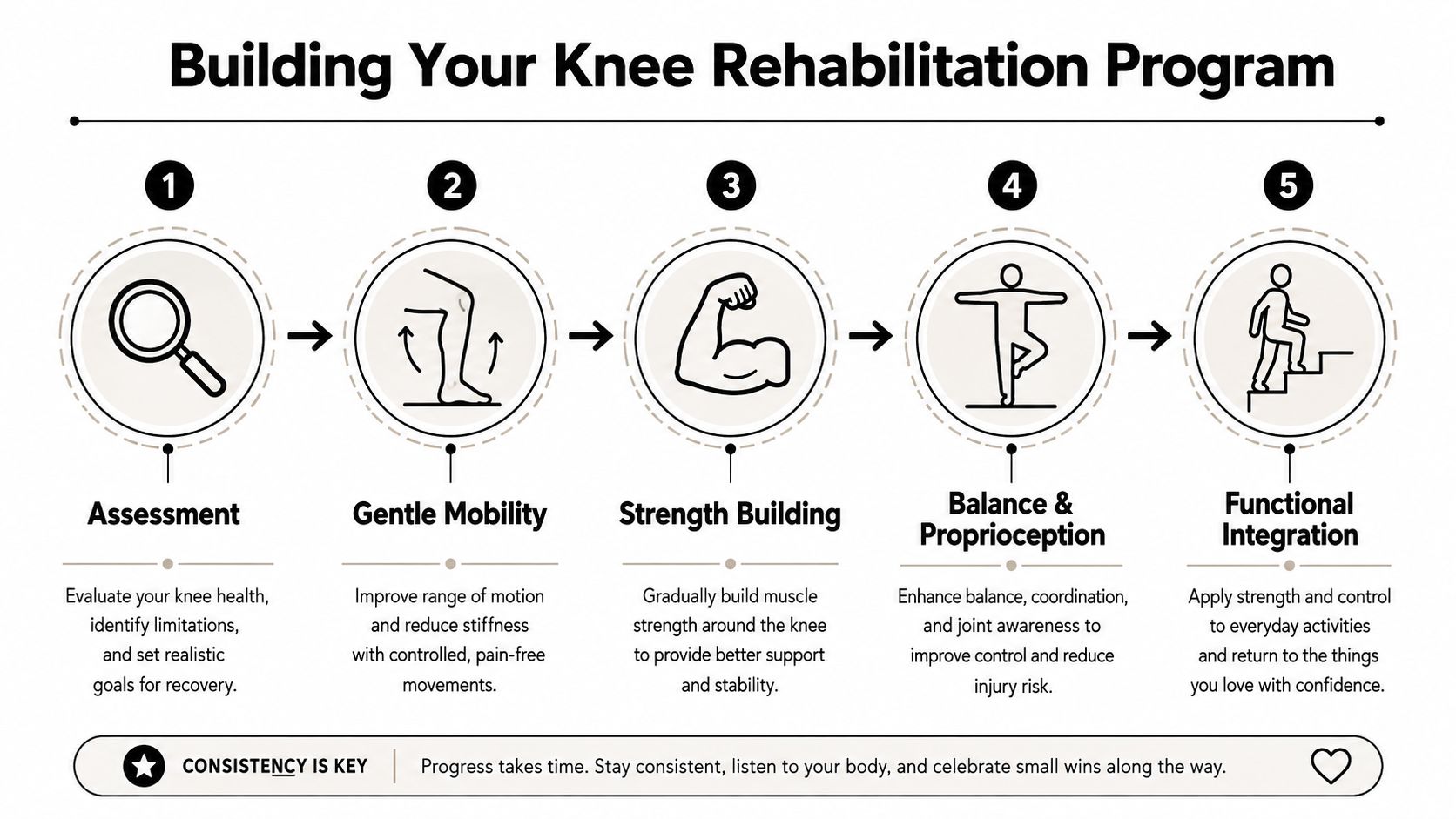
Exercise is where durable knee pain relief without surgery usually happens, but the sequence matters. A common mistake is jumping straight to harder strengthening, or staying with gentle motion so long that the knee never gets enough load to adapt. The better approach is staged loading, where each phase earns the next.
Start with activation and joint motion
The first phase should be low-threat and repeatable. Heel slides, quad sets, short-arc knee extensions, and straight-leg raises help restore control without asking the joint to absorb heavy load too soon. If the knee swells more later in the day or feels worse the next morning, the dose was too aggressive.
Patients often need a reality check here. Exercise does not have to feel easy, but it should feel manageable and recoverable. Mild muscle fatigue is fine. Sharp joint pain, limping that lingers, or next-day flare-ups mean the program needs adjustment.
Progress to strength, then function
Once basic motion is tolerated, move into sit-to-stands, bridges, low step-ups, and side-steps. These build the quadriceps, glutes, and hip control that help the knee manage force. Later, add split squats, controlled squats to a box, step-downs, balance work, and eventually return-to-impact drills for people who need them.
The video below is a useful visual reference for a home-strengthening approach.
The internal knee strengthening resource from MedAmerica Rehab Center, five exercises you can do to strengthen your knees, fits naturally here as a simple exercise reference. The point is not to collect more exercises. It is to progress the right ones at the right time.
Quality beats complexity. A shallow, well-controlled squat is far more useful than a deep squat that collapses the knee inward or leaves you limping afterward.
Manual Therapy and Advanced Treatment Options
Manual therapy can help when it changes what happens next in rehab. It is useful for calming guarding, improving motion, or making weight-bearing exercise more tolerable. It is less useful when it becomes the whole plan. In clinic, I judge it by a simple standard, does it help the patient load the knee better afterward, or does it just feel good for a few minutes?
Compare support options with the evidence in mind
The strongest support still belongs to exercise. Other add-ons have mixed or moderate support, so they should be used with a clear purpose and a short trial period. Shockwave therapy falls into that middle ground, which means it may help selected patients, but it does not outrank active rehabilitation. The same careful standard applies to any treatment that sounds impressive but has weak real-world payoff. For a broader comparison of evidence-based care and lower-value options, see A comparison chart showing evidence-based treatments versus limited evidence treatments for musculoskeletal conditions and pain management.
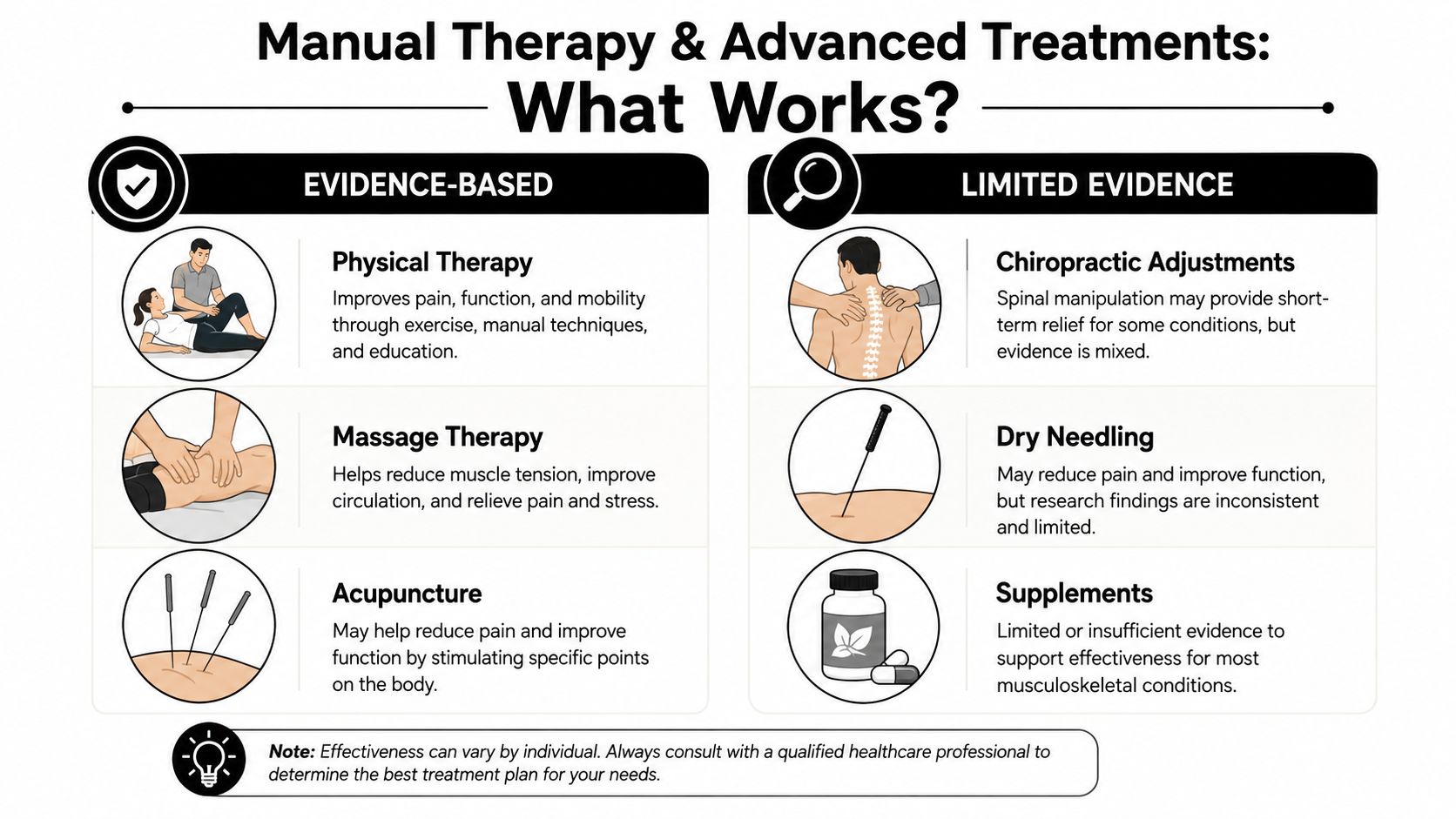
A practical way to sort adjuncts is to ask whether they improve movement and training tolerance. If they do, they may earn a place in the plan. If they only provide comfort, they stay secondary. Bracing, taping, and joint mobilization can be reasonable in the right context, but none of them replaces rebuilding strength and control.
The internal MedAmerica Rehab Center page on manual physical therapy techniques is a useful example of how hands-on care fits into rehab. It shows the point clearly, manual work supports movement, it does not substitute for it.
Swift Running's guide to knee pain is also relevant for patients who need to think about footwear and insert choices as part of load management. That kind of help can matter when the issue is how force is being absorbed and shared during walking or running.
Use biomechanics when exercise alone isn't enough
Gait retraining is one of the more useful biomechanical tools when standard exercise does not get the job done. A small change in walking mechanics may reduce knee arthritis pain as effectively as common medications, and a report in the brief linked it to less cartilage damage over a year-long trial. That is a meaningful option for people who struggle with heavier loading or who cannot tolerate a standard strengthening plan right away.
Acupuncture is another option that comes up in rehab clinics. It can be reasonable for selected patients, especially when pain sensitivity is high and the person needs a bridge back to exercise. Carefully fitted bracing can serve a similar role by reducing stress on the painful area while rehab builds capacity.
I stay cautious with any approach that starts to crowd out active care. The knee improves when symptom control, movement quality, and progressive load work together. A modality can help create that window, but the lasting change still comes from how the knee is trained and how much stress it can tolerate.
Activity Modification and Long-Term Pain Management
Long-term knee relief is often decided outside the clinic. A patient can follow the program well during treatment, then undo progress by sitting for too long, covering too much distance on a rough surface, or returning to exercise that exceeds the knee's current capacity. Those small choices add up.
Move smarter, not less
Walking on flat, even ground usually creates less stress than hills or uneven trails during an irritated phase. Footwear matters too, because worn-out shoes change how force moves through the foot and up the chain. Stair climbing is another useful check, since many people notice there whether the knee is tolerating load better.
For golfers, the Caddie Wheel golf content article on swing pain-free golf and back pain solutions shows how activity can be adjusted without being abandoned. The same principle applies to knees. Keep the activity, adjust the load.
Build a knee-friendly daily pattern
A sustainable plan usually relies on a few habits that reduce flare-ups without shutting activity down:
- Shorter bouts of activity: Several manageable walks are better than one long push that leaves the knee sore for days.
- Workday movement breaks: Knees often stiffen after long sitting, so brief position changes help keep them moving.
- Gradual return to exercise: Change one variable at a time, such as time, speed, or resistance, instead of increasing all three together.
- Load reduction when symptoms spike: Temporary backing off is better than pushing through a setback and losing more ground.
- Function-first weight management: The goal is less joint stress and better daily movement, not chasing a number for its own sake.
If a change keeps you active for months instead of triggering a flare every week, it is not a compromise. It is a better plan.
The evidence brief also points to a practical truth about conservative care. Structured non-surgical treatment is real treatment, not just symptom chasing. The harder question is how to make it livable over time. For many people, that means combining active rehab, selective support, and everyday load management so the knee stays within a workable range.
Recognizing When Conservative Care Reaches Its Limits
Non-surgical care does not work for everyone, and pretending otherwise can delay the right decision. The difficult part is telling the difference between a knee that is still responding slowly and one that has stopped responding enough to matter. Symptoms, function, and time matter more than optimism.
Watch function, not just pain
The clearest sign that conservative care is falling short is a knee that still blocks daily life after real work with exercise, education, and load modification. If walking, stairs, sit-to-stand, or sleep remain severely limited, the joint may need a different level of intervention. Recurrent swelling after reasonable activity is another sign that the knee is not tolerating the current plan.
The evidence gives a practical frame. In one 2-year study, non-surgical treatment improved more than written advice alone by 7.0 points, surgery produced an additional 18.3-point improvement versus non-surgical care, two out of three patients eligible for total knee replacement delayed surgery for at least 2 years after non-surgical treatment, and 16 patients, 32%, in the non-surgical group still went on to surgery during follow-up (PubMed study). A separate UK audit found 84% avoided total knee replacement at 2 years after a non-invasive biomechanical intervention. That is not a promise that conservative care will solve every case. It shows that many people improve without surgery, while a meaningful group still ends up needing it.
Know when to reassess
A few signs should trigger a fresh medical review.
- Persistent instability: Giving way, buckling, or repeated near-falls.
- Mechanical symptoms: Locking, catching, or a knee that will not fully straighten.
- No response to a structured program: If you have done progressive rehab and nothing is changing, the plan needs another look.
- Progressive loss of function: Getting worse despite adherence is different from a plateau.
- Concern about structural severity: When arthritis is advanced or symptoms do not match the rehab response, imaging and specialist review matter.
Surgery is not a failure of discipline. Sometimes it is the right next step after a fair trial of conservative care.
A practical pathway matters most when the patient stops guessing. If your knee is improving, keep going. If it is stuck, the issue may not be effort. It may be that the joint has reached the limit of what non-surgical care can reasonably do.
If you are ready for a structured plan, MedAmerica Rehab Center can evaluate your knee, build a progressive treatment program, and use physical therapy, chiropractic care, acupuncture, and shockwave therapy when they fit your case. Visit MedAmerica Rehab Center to schedule care that focuses on knee pain relief without surgery and gives you a clear next step instead of guesswork.
MedAmerica Rehab · Deerfield Beach
Talk to a clinician about your pain
Physical therapy, chiropractic, acupuncture and shockwave therapy under one roof, since 1995. Same-day appointments are available.
Mon–Thu 8:00 AM – 6:30 PM · Fri 8:00 AM – 3:00 PM