

Mobile Physical Therapy: At-Home Care in Deerfield
Getting to physical therapy isn't always the hard part until you're the one trying to do it. Your knee is stiff after surgery. Your back locks up when you get in and out of the car. Your parent is unsteady on the front step and exhausted before the appointment even starts. Or your workday is so packed that fitting in rehab feels like another injury.
That's where mobile physical therapy makes sense.
For the right patient, at the right point in recovery, at-home rehab isn't just a convenience upgrade. It can be the smarter clinical choice. When treatment happens where you live, your therapist can work on the movements that matter most, like climbing your stairs, getting out of your shower safely, reaching into your kitchen cabinets, or walking from the bedroom to the mailbox without pain or fear.
That matters in a community like Deerfield Beach, where many people are managing orthopedic pain, recovering after surgery, dealing with arthritis or sciatica, or trying to stay steady and independent as they age. In those situations, the question often isn't, “Can I do PT at home?” It's, “Would I recover better if care started there?”
Introduction
Mobile physical therapy brings licensed, hands-on rehab directly to your home. A physical therapist evaluates how you move, treats pain and mobility problems, teaches exercises, and builds a plan around your actual environment instead of a generic gym floor. For some patients, that leads to better consistency and more useful progress because therapy is tied to daily life from day one.
This model can be a strong fit for several common situations:
- Post-surgical recovery: when getting to a clinic feels like a project by itself
- Balance and fall prevention: when safety at home matters as much as strength
- Back, neck, and sciatic pain: when daily movements keep triggering symptoms
- Auto accident recovery: when pain, transportation issues, or scheduling disruptions make clinic attendance harder
- Busy adults: when missed visits are slowing down progress
Simple rule: The best rehab setting is the one that helps you practice the right movements consistently and safely.
At-home care isn't the answer for every case. Some people do better in a clinic with access to larger equipment or a broader set of modalities. Others do best with a mix of both. The important thing is matching the setting to the patient, not forcing every recovery into the same format.
What Exactly Is Mobile Physical Therapy
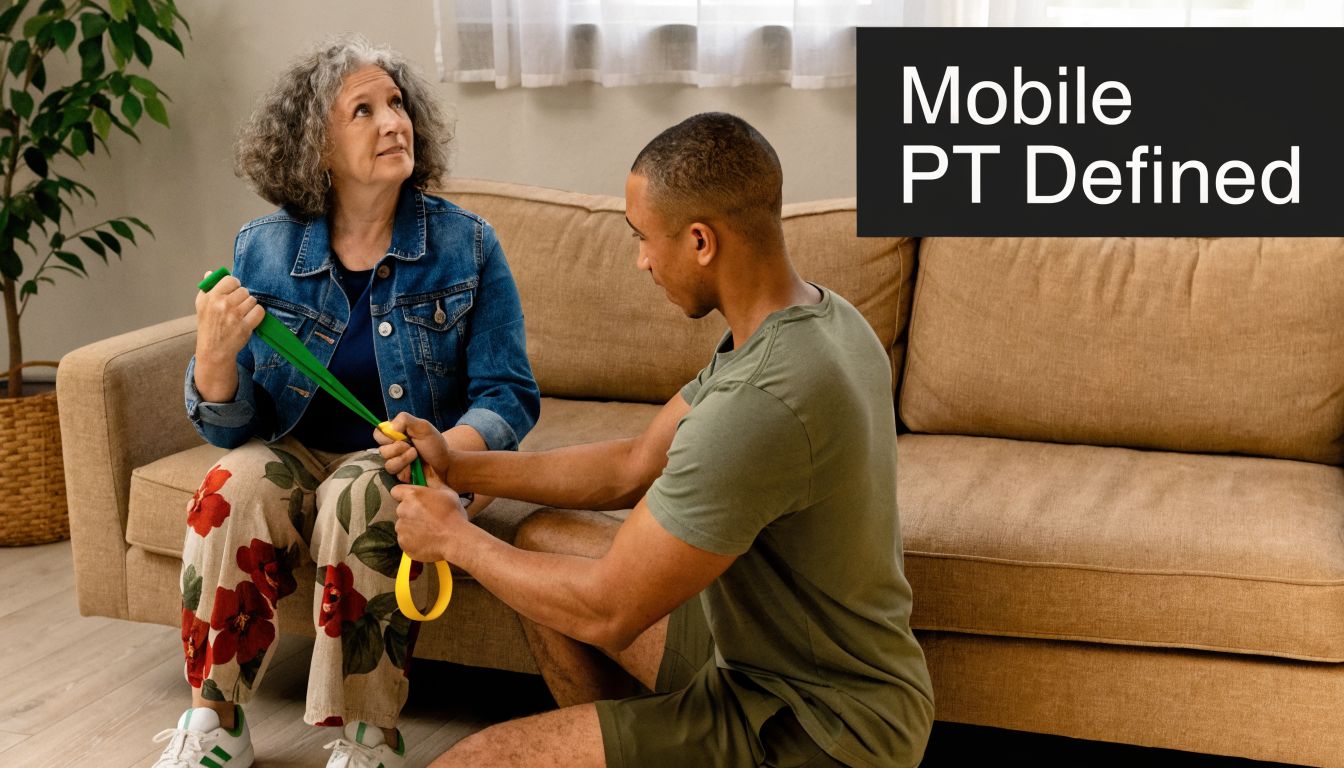
Think of mobile physical therapy as a modern house call for movement problems. A licensed physical therapist comes to your home and provides the same kind of clinical thinking you'd expect in a traditional setting, but the treatment happens where you walk, sit, sleep, bend, and recover.
What happens during mobile PT
Mobile physical therapy is still in-person care. It isn't just a therapist watching you on a screen. Your therapist can assess joint motion, muscle strength, balance, gait, transfers, pain triggers, swelling, and movement patterns in real time. Treatment may include hands-on techniques, guided exercise, mobility work, balance drills, posture correction, and a home program.
That distinction matters because many patients confuse mobile PT with telehealth.
Here's the simplest way to separate them:
| Type of care | Where it happens | What it includes |
|---|---|---|
| Mobile physical therapy | In your home | Hands-on, in-person treatment plus exercise and functional training |
| Telehealth PT | Through phone or video | Remote coaching, exercise review, symptom check-ins |
| Hybrid care | Home, clinic, or both | A combination based on your needs and recovery stage |
Why the home setting changes treatment
A clinic can show how you move in a controlled space. Your home shows how you function.
A therapist may notice that your pain spikes when you rise from a low couch, not a standard-height treatment table. They may see that your balance worsens at the bathroom threshold, that your walker doesn't fit well through a hallway turn, or that the stairs are a primary barrier to independence. Those details shape better decisions.
Home rehab lets the therapist solve the movement problem in the place where the problem keeps happening.
That's why mobile PT can be especially useful for patients dealing with practical mobility barriers, recent surgery, fall risk, or pain that's tied to specific daily activities. It makes treatment less abstract. Instead of practicing a movement “in theory,” you practice the exact task that's limiting your life.
The Key Benefits of Choosing At-Home Rehab
The obvious benefit of mobile physical therapy is convenience. You don't have to drive, arrange a ride, wait in a lobby, or spend your limited energy getting to and from treatment. But the deeper advantage is clinical. At-home rehab often removes the friction that causes people to miss visits or skip exercises.
An observational study of a mobile program found that each additional weekly message from a physical therapist increased patient-recorded weekly workouts by 11%, according to Wall2Wall Sports Rehab's summary of the mobile PT research. That finding matches what many therapists see in practice. When support is close, clear, and easy to access, patients tend to stay engaged.
Better carryover to real life
In a clinic, you might practice stepping over a foam hurdle. At home, you practice getting over the lip of your shower, turning safely in a narrow hallway, or managing the distance from bed to bathroom at night. Those are different challenges.
That real-world carryover is one of the strongest arguments for at-home care. The exercise isn't just therapeutic. It's directly connected to the task you need to do tomorrow morning.
A few examples:
- For seniors: treatment can focus on the exact surfaces, turns, and transitions that raise fall risk at home
- For post-op patients: the therapist can teach safer bed mobility, transfers, and stair negotiation in the space being used every day
- For back pain: body mechanics can be corrected during real tasks such as sitting at a home workstation, loading the dishwasher, or lifting laundry
- For active adults: exercise plans can be built around the equipment and schedule you'll use
More focused one-on-one care
Home visits also change the pace of treatment. There's no crowded gym floor and no bouncing between several patients in one hour. The therapist's attention stays on one person, one environment, and one set of goals.
That level of focus can make it easier to adjust the session in real time. If one movement causes symptoms, the therapist can modify it on the spot. If fatigue is the main issue, the visit can be structured around pacing and recovery. If family members are involved, they can learn how to help safely.
Practical advantage: When treatment happens in your own space, the plan usually becomes simpler to follow because it fits your life instead of interrupting it.
For patients comparing options, it can also help to look at other home-based support models. Services like Carevo's personalized rehabilitation programs show how rehab can be adapted around the person rather than forcing every person into the same schedule and location.
Is Mobile PT a Good Fit for You
Not everyone needs physical therapy at home. But for some patients, it's a very good match. The easiest way to answer that question is to look at the kind of problem you're dealing with and the stage of recovery you're in.
One important point first. Orthopedic rehabilitation accounts for 59% of all physical therapy in the United States, covering issues like back pain, sciatica, and post-surgical recovery, according to Aprila ABA's physical therapy statistics overview. That matters because many of the conditions commonly treated with PT are also the ones that respond well to targeted at-home care.
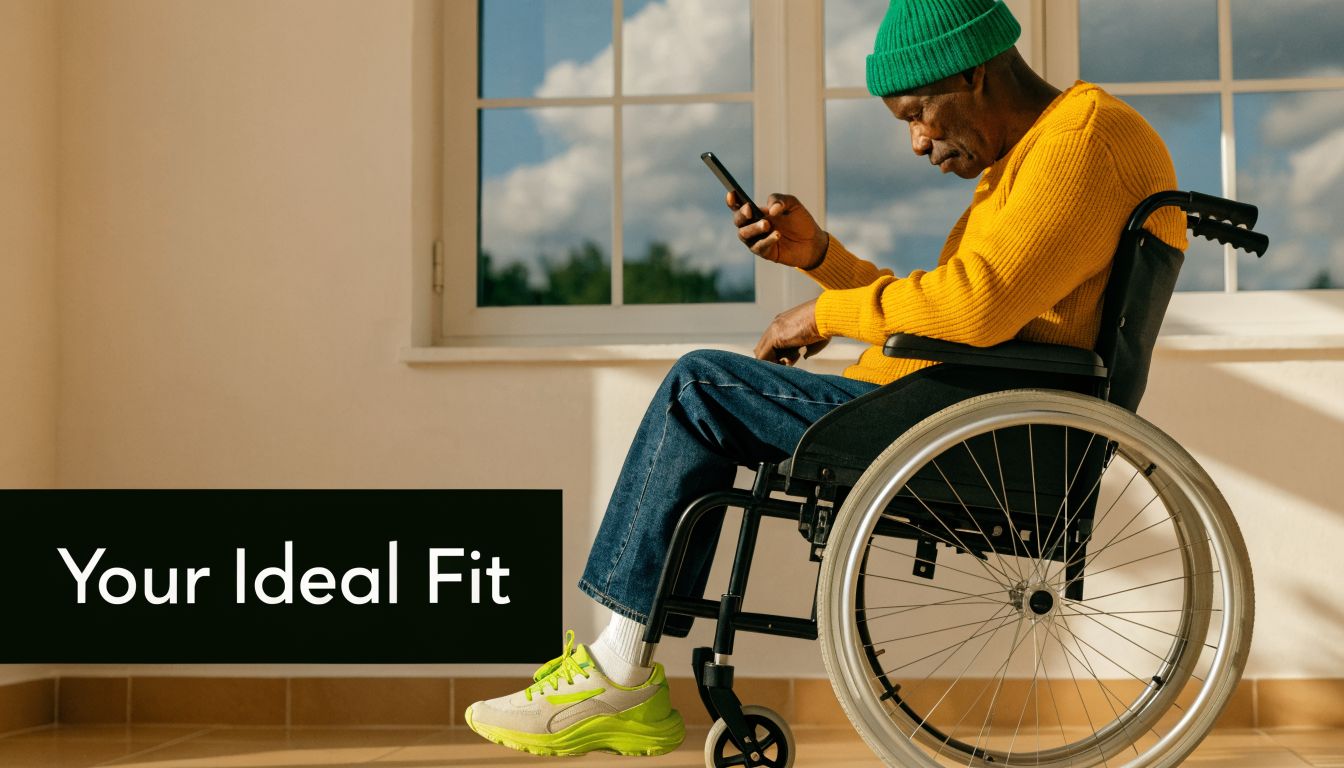
Patient profiles that often benefit
Consider these familiar scenarios.
A senior adult feels mostly fine sitting down, but turns unsteady when getting up from a soft chair, stepping into the bathroom, or walking outside on uneven ground. For that person, mobile PT can target the exact moments where falls are most likely to happen.
A patient just had a knee replacement and can walk short distances, but getting dressed, climbing steps, and getting into the car still feels overwhelming. Early home visits can build momentum while pain, swelling, and fatigue are still limiting travel.
A working adult has low back pain that flares after long hours at a laptop or repeated bending at home. In that case, mobile physical therapy can be useful because the therapist sees the chair, desk, counter height, and movement habits that are feeding the problem.
A person recovering after an auto accident may have neck pain, headaches, stiffness, or general movement intolerance. When transportation is inconsistent or sitting in a car increases pain, home-based sessions can keep treatment going instead of letting recovery stall.
Signs it may be the right choice
Mobile PT is often worth considering if any of these apply:
- Travel makes symptoms worse: getting to the clinic leaves you more painful, fatigued, or swollen
- Home tasks are the main problem: stairs, transfers, shower safety, bed mobility, or walking around the house are your biggest barriers
- You need a safer starting point: balance deficits or recent surgery make the home environment more appropriate early on
- Your schedule is the obstacle: you're willing to do rehab, but logistics keep causing missed visits
When it may not be the best fit
Some patients do better in a clinic from the beginning. That can include people who need larger equipment, more intensive supervised exercise progression, or access to multiple services during one visit. Others may start with mobile PT and transition later.
That's often the smartest way to think about it. Not as a permanent label, but as the right setting for this phase of recovery.
Mobile Therapy vs Clinic Care
Mobile physical therapy and clinic-based therapy are both valid. The better choice depends on what you need right now, not on which model sounds more modern.
For some patients, home care removes barriers and improves carryover. For others, a clinic offers tools and structure that make progression easier. The key is to compare the setting to your goals, symptoms, and daily realities.
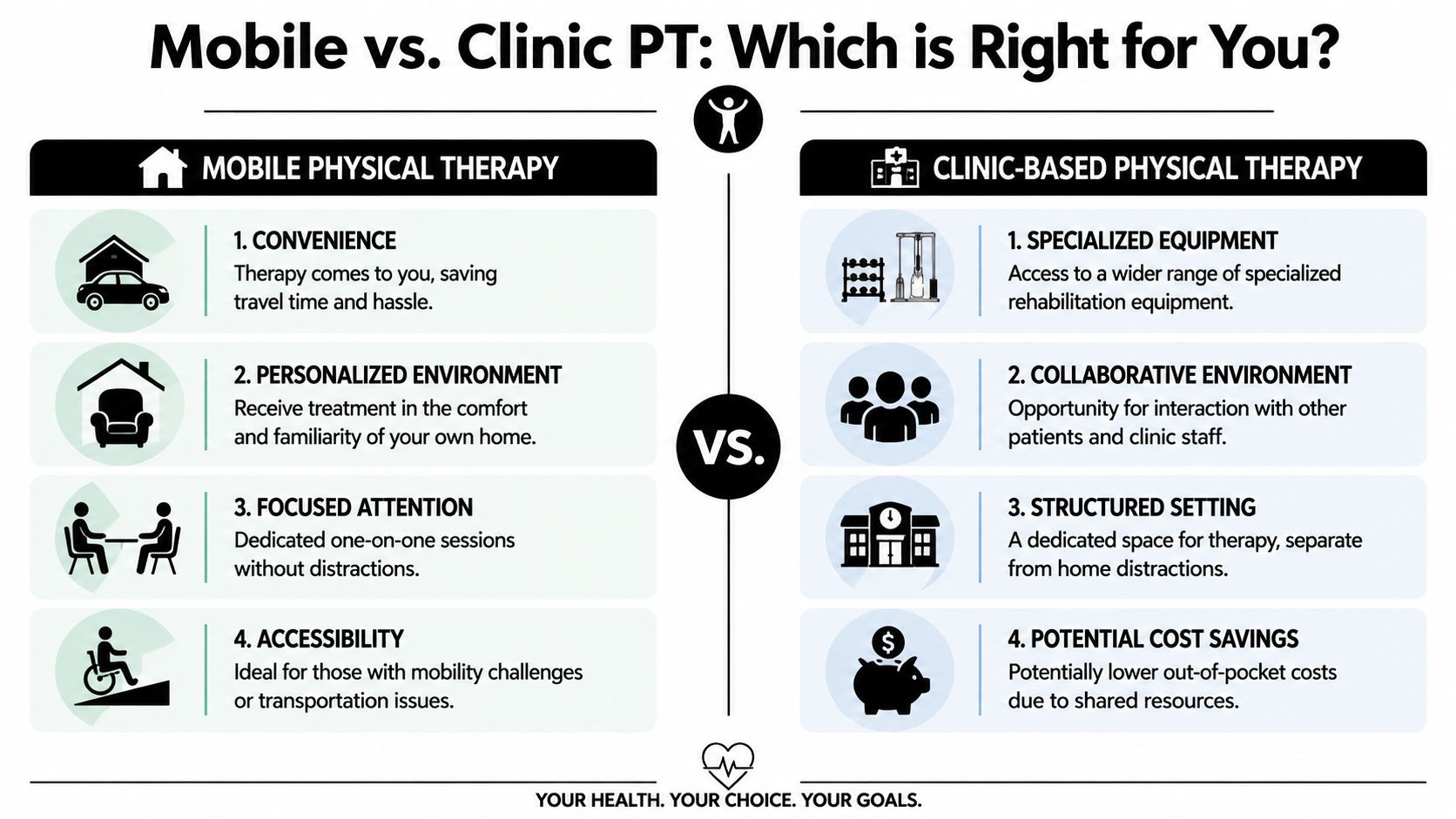
A side by side view
| Consideration | Mobile physical therapy | Clinic care |
|---|---|---|
| Environment | Your therapist sees the exact space where pain or mobility problems happen | Treatment happens in a controlled rehab setting |
| Access | No commute, no transportation barrier | Better if you prefer leaving home for focused treatment |
| Equipment | Portable tools and bodyweight-based progressions | Easier access to larger rehab equipment |
| Functional training | Strong for stairs, transfers, home safety, and daily movement tasks | Strong for structured strengthening and conditioning |
| Attention | Usually highly focused one-on-one care | May vary by clinic flow and scheduling model |
| Best phase | Often useful early after surgery or when mobility is limited | Often useful when progressing strength, endurance, or complex exercise loads |
What mobile PT does especially well
At-home care is strongest when the treatment goal is tied closely to daily function. That includes getting in and out of bed, managing pain during household tasks, improving gait safety, and rebuilding confidence after a fall or surgery.
It also helps when the home itself contains the barriers. A therapist can adjust furniture setup, walking routes, or transfer strategy in ways that aren't visible in the clinic.
The right environment can speed learning. If the problem happens at home, practicing the solution at home often makes sense.
What clinic care often does better
Clinic care can be the better setting when a patient needs more space, more equipment, or a more structured workout environment away from household distractions. Some people also like the mental separation. They feel more focused in a space dedicated to rehab.
There's also a practical side. Depending on insurance and provider setup, clinic care may sometimes be easier financially for a patient. That's one of the trade-offs worth discussing before starting.
The middle ground often works best
A lot of recoveries don't fit neatly into one category. A patient may begin with mobile PT because travel is difficult, then shift to clinic visits when strength work becomes more advanced. Another patient may stay mostly in clinic but use a short period of home visits after a setback or surgery.
That flexibility is often where the best outcomes happen. Use the setting that solves the biggest problem in front of you.
Your First Mobile Physical Therapy Visit Explained
Patients often feel better once they understand how the first visit looks. Mobile physical therapy is not informal or improvised. A high-quality session is structured, clinical, and customized to what you require that day.
What the therapist does first
The session usually starts with conversation and observation. Your therapist asks about your symptoms, medical history, injury or surgery, activity level, goals, and what daily tasks are hardest right now. Then comes the movement assessment.
That assessment may include:
- Pain review with details on what increases or eases symptoms
- Mobility testing such as walking, bending, reaching, stairs, or transfers
- Strength and balance checks based on your condition and safety level
- Home setup review if furniture, flooring, steps, or room layout are affecting function
From there, treatment begins. Depending on the problem, that may involve hands-on work, guided stretching, neuromuscular re-education, exercise instruction, gait training, or strategies to reduce strain during daily tasks.
If you've never done PT before, it may help to compare this to a broader overview of what a typical physical therapy session looks like. The format changes by setting, but the clinical purpose is the same.
How the home program is built
The best home plans are simple enough to follow and specific enough to matter. Your therapist shouldn't hand you a long list of random exercises and hope for the best. The plan should match your condition, your environment, and your schedule.
Many mobile PT providers now use apps that support patient-recorded videos, completion tracking, and symptom feedback. Research summarized in this review on app-based exercise prescription in physical therapy found that these tools can improve home exercise adherence by 20% to 30% compared with paper handouts. That's useful because adherence is often the difference between partial improvement and durable change.
You might record an exercise, rate the difficulty, note whether pain changed, and get adjustments before the next visit. That gives both patient and therapist better information than guessing.
A strong program isn't the one with the most exercises. It's the one you can perform correctly and consistently.
Paperwork and communication
Before or during the first visit, expect intake forms, insurance questions, consent documents, and scheduling details. Patients often underestimate how much smoother care feels when that paperwork is organized well.
Even though it's written for another hands-on profession, BuildForm's massage therapy guide offers a useful look at how clear intake forms improve communication, save time, and reduce confusion before treatment begins. The principle applies well to mobile rehab too.
Some providers also use remote monitoring tools between visits, especially when they want a closer view of how consistently a patient is moving and recovering at home. When used well, that technology supports care instead of replacing it.
Navigating Insurance and Costs
Insurance questions can decide whether a good plan happens, so it's worth being direct. Mobile physical therapy is often covered when it's medically appropriate, but coverage details can vary by payer, diagnosis, provider, and billing pathway.
What patients should verify early
Before starting, ask for specifics. Don't settle for “we take your insurance” if your case involves an auto claim, workers' comp, or a recent surgery with multiple providers involved.
Check these points:
- Visit coverage: ask whether mobile physical therapy is covered under your plan
- Authorization requirements: some plans want approval before treatment starts
- Referral rules: your policy may require paperwork from a physician or specialist
- Patient responsibility: ask about co-pays, coinsurance, deductibles, and anything not covered
If you're paying out of pocket or using limited benefits, it also helps to review a general explanation of physical therapy cost without insurance so you understand how clinics usually structure fees and payment expectations.
Where claims can get complicated
Medicare Part B commonly covers medically necessary therapy services, but not every claim pathway is equally smooth. Cases tied to auto accidents or workers' compensation often involve more documentation and more room for delay.
According to Coastal Mobile Therapy's reimbursement overview, a 2025 APTA survey found that auto accident and workers' comp claims had only 62% reimbursement success, which can leave patients with unexpected costs if benefits aren't verified ahead of time.
That doesn't mean you should avoid care. It means you should ask better questions before the first appointment.
A practical way to protect yourself
Use this short checklist when you call:
| Ask this question | Why it matters |
|---|---|
| Is mobile PT billed differently from clinic PT under my plan? | Some plans apply different rules by setting |
| Do I need prior authorization? | Missing approval can delay or deny payment |
| Who handles claim submission? | Clarifies whether the provider or patient does the paperwork |
| What happens if the claim is denied? | You need to know the appeal or payment process upfront |
Ask this directly: “What will I likely owe if my claim is processed as out of network, denied, or only partially covered?”
That one question often uncovers the information patients needed all along.
Getting Started with MedAmerica in Deerfield Beach
If mobile physical therapy sounds like a better fit for your current stage of recovery, the next step is choosing a provider that can match clinical skill with practical follow-through. That matters because at-home care only works when the therapist can evaluate carefully, adapt treatment in real time, and keep the plan focused on meaningful progress.

For patients in Deerfield Beach and nearby communities, MedAmerica Rehab Center offers the kind of broad rehab perspective that helps when recovery isn't one-dimensional. Since 1995, the clinic has provided patient-centered care for orthopedic pain, post-surgical rehab, balance training, fall prevention, sports injuries, auto accident cases, and workers' compensation recovery. That multidisciplinary background can be especially helpful when a patient's needs change over time and care has to stay coordinated.
A good first step is learning what separates a strong rehab provider from an average one. This guide on how to choose a physical therapist gives a practical framework for evaluating experience, communication style, treatment philosophy, and overall fit.
When you call, be ready to describe three things clearly:
- What problem brought you in
- What daily activities are hardest right now
- Whether home visits, clinic visits, or a mix sounds most realistic
That kind of clarity helps the scheduling team direct you toward the right starting point. Good rehab begins with the right setting, but it succeeds because the plan is personalized and the expectations are clear.
Frequently Asked Questions About Mobile PT
Do I need special equipment or a lot of space
Usually, no. Most sessions can be done with a sturdy chair, a small open area, and simple portable tools the therapist brings or recommends. Therapists are used to adapting exercises to real homes, not idealized workout rooms.
Is the quality of care lower than in a clinic
Not necessarily. The quality depends more on the therapist's evaluation, treatment decisions, communication, and follow-up than on the address where care happens. For certain patients, home care can improve treatment quality because the therapist sees the exact movement problems and safety issues that don't show up in a clinic.
Can I combine home visits with clinic visits
Yes, and for many people that's a very smart approach. Some patients start at home when pain, travel, or fall risk makes that safer. Then they transition into clinic care later for more advanced strengthening or broader access to other services. Others do the reverse and use home visits temporarily when a setback or surgery makes travel harder.
A mixed plan is often useful when recovery changes over time. Early on, the priority may be safe mobility in the house. Later, the priority may shift to endurance, higher-level strength work, or sport-specific progression.
The best care model is the one that matches your current barrier. If the barrier changes, the setting can change too.
What should I wear for a mobile PT visit
Wear comfortable clothing that lets you move easily and gives the therapist access to the area being treated. For knee, hip, or ankle issues, shorts or loose pants help. For shoulder or neck problems, a T-shirt or athletic top usually works well. Supportive shoes are helpful if walking or balance work is part of the session.
Will family members or caregivers be involved
Sometimes, and that can be very helpful. If a spouse, adult child, or caregiver helps with transfers, reminders, or exercise setup, the therapist may teach them how to assist safely. That support can improve consistency and reduce confusion between visits.
If you're dealing with pain, mobility loss, post-surgical limitations, or balance concerns in Deerfield Beach, MedAmerica Rehab Center can help you figure out whether mobile physical therapy, clinic-based care, or a hybrid plan makes the most sense for your recovery. Reach out to schedule an appointment and get a treatment plan built around how you live and what you want to get back to.
MedAmerica Rehab · Deerfield Beach
Talk to a clinician about your pain
Physical therapy, chiropractic, acupuncture and shockwave therapy under one roof, since 1995. Same-day appointments are available.
Mon–Thu 8:00 AM – 6:30 PM · Fri 8:00 AM – 3:00 PM