

How to Prepare for Knee Replacement Surgery
You're probably reading this because the surgery date is on the calendar, the knee still hurts, and the list of things to do feels bigger than the relief you're hoping for. That's normal. The fastest way to feel less overwhelmed is to turn the process into a sequence of concrete steps, starting with the medical milestones, then the exercises that support recovery, then the home and medication details that keep small problems from becoming big ones.
Your Pre-Surgery Timeline and What to Expect
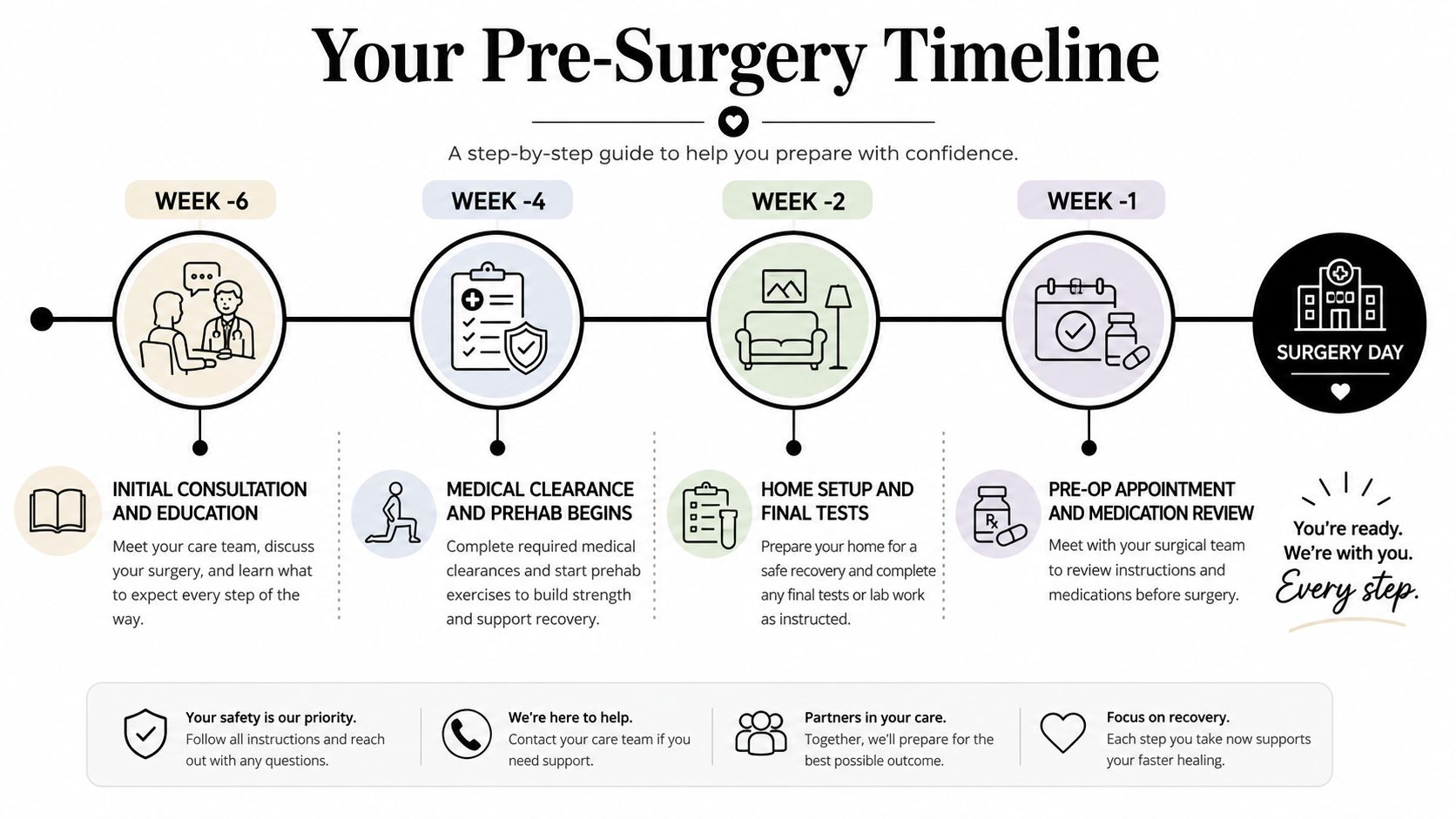
The first mistake many people make is treating how to prepare for knee replacement surgery like a single appointment instead of a process. In reality, the work starts weeks before the operating room, and the people who do best usually follow a simple order, medical clearance first, movement second, home setup third.
Start with the weeks that matter most
A practical way to think about the runway is 2 to 6 weeks before surgery. That's when medical clearance, medication reconciliation, and pre-op education fit best, followed by stopping NSAIDs and supplements about 7 days before surgery and following fasting instructions the night before, as described in NCBI's knee replacement preparation guidance. That same window is when you want to arrange home help, mobility aids, and outpatient physical therapy so you're not scrambling after discharge.
Practical rule: If a task affects clearance, pain control, or safe walking after surgery, it belongs on the early timeline, not the night before.
What belongs in each phase
- Weeks 6 to 4: Get your medical questions answered, review your health history, and start prehab exercises if your team recommends them.
- Weeks 4 to 2: Confirm home support, organize the bathroom and bedroom, and finish any needed lab work or clearances.
- Week 1: Recheck medication instructions, pack for the hospital, and confirm arrival time and fasting rules.
- Surgery day: Follow the final bathing, skin, and fasting instructions exactly, because that's not the day to improvise.
If the idea of reorganizing your whole house feels excessive, start with the areas you use most. A good pair of knee pain insoles can also be a useful short-term comfort tool while you're still walking on a painful joint, and a curated option is available in the knee pain insoles collection.
Medical Optimization Milestones You Need to Hit
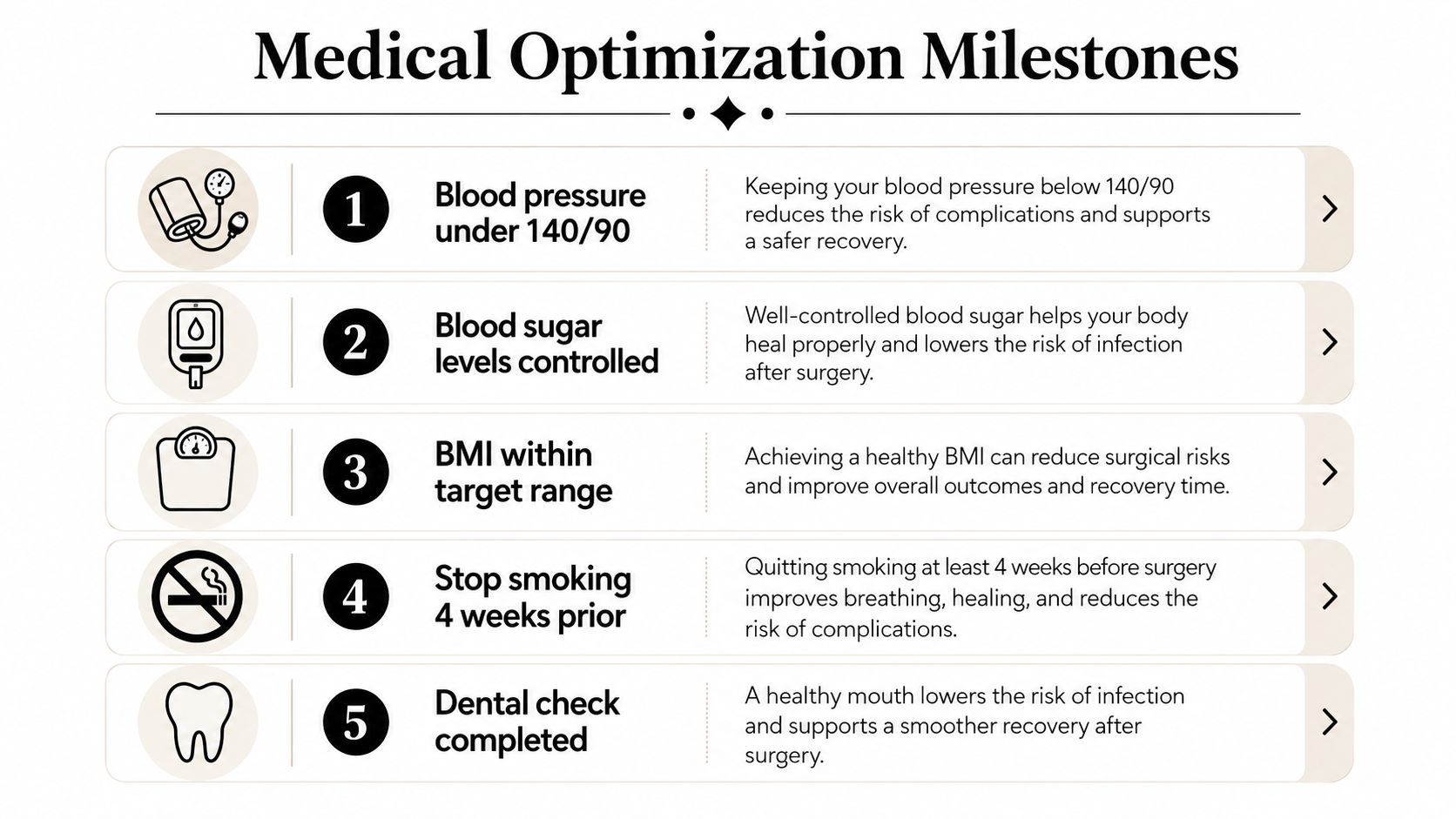
Before anyone clears you for surgery, they're trying to answer a simple question. Are you in the best possible shape to heal well and avoid preventable complications? That's why the evidence-based prep work is less about vague “be healthy” advice and more about measurable targets.
The numbers your team may actually use
An Australian guideline on pre-operative optimization for hip and knee arthroplasty recommends aiming for a body mass index under 40 kg/m², a glycated hemoglobin of 53 mmol/mol, or 7%, or lower for diabetes, and smoking cessation at least 4 weeks before surgery. The same guideline says hemoglobin should be checked routinely, anemia should be corrected before arthroplasty, albumin under 3.5 g/dL should prompt dietitian referral, and patients with poor dentition should get a dental review before surgery, all of which are described in the RACGP pre-operative optimization guideline.
These aren't arbitrary hoops. They're markers of whether your body has enough reserve for the stress of surgery and early rehabilitation.
Why these milestones matter in real life
Blood sugar control matters because uncontrolled diabetes makes recovery harder to manage. Hemoglobin matters because anemia leaves you with less oxygen-carrying capacity when your body is trying to repair tissue. Albumin matters because low protein status can signal poor nutrition, which can slow wound healing and make rehab feel harder than it should.
Important: If you smoke, the safest move is to stop early enough that the surgical team can document at least 4 smoke-free weeks before the procedure.
Dental health and nutrition often get skipped in casual checklists, but they're not minor details. If you've got a tooth problem, unexplained weight loss, poor appetite, or known anemia, bring it up early instead of waiting for pre-op day. That gives your surgeon, primary doctor, and dentist time to coordinate rather than delay the case later.
Prehab Exercises That Actually Improve Your Recovery
People often ask whether exercise is worth it when the knee already hurts. The honest answer is yes, but only if the program is targeted. Random activity can flare symptoms, while quadriceps strength and knee range of motion are worth protecting because preoperative function shapes the recovery path.
Focus on movement you can repeat
The basics are straightforward. Straight leg raises, gentle cycling if your knee tolerates it, and controlled range-of-motion work are commonly used because they train the muscles around the joint without requiring aggressive loading. The goal isn't to “work through” severe pain, it's to keep the muscles that will matter most after surgery from deconditioning.
If you want a simple set of movement ideas to compare with what your therapist recommends, this guide to low-impact workouts for knee pain can help you stay active without defaulting to high-impact exercise.
A simple prehab structure
- Quadriceps activation: Tighten the front of the thigh and straighten the knee with control.
- Gentle cycling: Keep the motion smooth and low resistance if the bike feels comfortable.
- Heel slides: Bend and straighten the knee to maintain motion.
- Sit-to-stand practice: Use a chair to rehearse the mechanics of getting up safely.
These movements aren't about fitness bragging rights. They're about keeping basic joint mechanics usable enough that post-op walking, transfers, and stairs don't feel foreign.
Here's one thing I tell patients often. If an exercise increases swelling for the rest of the day, it's too much right now. The right dose should leave you feeling worked, not wrecked.
For a sample home exercise sequence, you can also review this knee strengthening exercise guide and compare it with your surgeon or therapist's instructions.

Managing Medications and Reducing Infection Risk
The last stretch before surgery is where small medication errors can create big headaches. Bring every prescription, over-the-counter drug, vitamin, and supplement into one list, then match each item to the surgeon's instructions instead of relying on memory or routine.
Sort medications by their risk level rather than by routine habit
UCSF advises holding some anti-inflammatory medications for 7 days before surgery and using an antimicrobial skin cleanser for the 2 nights before surgery, the night before surgery, and the morning of surgery, while AAOS patient guidance says to shower or bathe the night before, avoid shaving the surgical area, remove makeup and nail polish, and not eat or drink after midnight, all of which appear in AAOS joint replacement preparation guidance. If you take a blood thinner, do not estimate the timing on your own. Have the prescribing clinician and the surgeon settle the plan together.
A practical reference can help you understand why timing matters, especially with anticoagulants, such as this Lovenox half-life guide, but the stop and restart schedule still needs individualized medical direction.
Skin prep: why it matters more than you might expect
Johns Hopkins advises optimizing diabetes, anemia, nicotine use, and skin integrity before surgery, including avoiding sunburn, open wounds, scratches, and rashes, and those principles line up with the broader infection-prevention mindset in UCSF's knee replacement preparation guidance. If the skin near the planned incision is irritated, call the team early rather than waiting to see whether it clears up on its own.
Do this early: Tell every prescriber what the surgeon told you to stop, then let one clinician reconcile the final list so you do not end up with conflicting instructions.
If you want a practical review of wound care basics after surgery, this PT wound care resource is a useful companion to the surgeon's discharge instructions.
Setting Up Your Home for a Smooth Recovery
One patient I worked with had the right walker, the right medication list, and the wrong house. The problem wasn't the surgery. It was a living room with loose cords, a bathroom with no grab bars, and a bedroom upstairs that forced too many painful stair trips in the first days home. She fixed the layout before surgery and told me afterward that the recovery felt dramatically more manageable, not because the knee hurt less, but because everything else was easier.
Build the recovery path before you need it
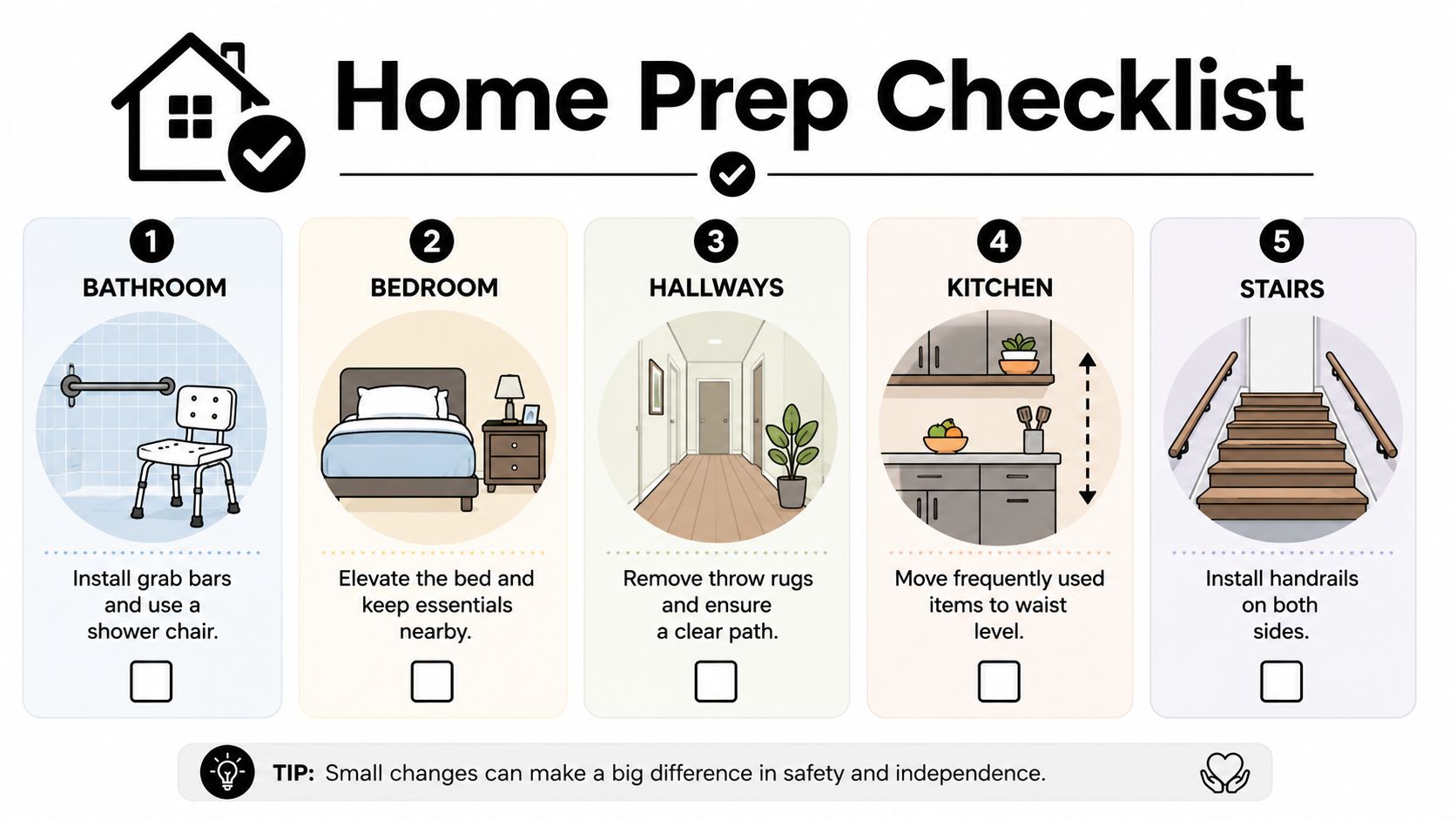
Start with the walking route. Remove throw rugs, tuck away cords, and clear narrow pathways so a walker or crutches aren't catching on anything. Then look at the bathroom, because that's where a lot of awkward early transfers happen.
Make the most-used spaces easy to reach
- Bathroom: Install grab bars and use a shower chair if balance is shaky.
- Bedroom: Keep essentials near the bed and, if needed, use a main-floor sleeping setup.
- Kitchen: Move frequently used items to waist height so you're not reaching or bending.
- Stairs: Make sure handrails are secure on both sides if your home has them.
The point isn't to make your house look medical. It's to remove the little obstacles that cost energy when walking and bending are already uncomfortable.
Don't leave caregiver planning as an afterthought
Ask one person to help with rides, another to help with meals, and a third only if needed for errands or pet care. That's usually easier than asking one family member to do everything. If you live alone, line up help before surgery instead of trying to negotiate it while you're tired and sore.
What to Pack and Day-of-Surgery Logistics
The morning of knee replacement should feel organized, not rushed. Your job is to arrive with only what helps, follow the facility's instructions, and avoid last-minute surprises that can delay surgery or make discharge harder.
Keep the bag simple
Bring loose clothing, slip-on shoes, ID and insurance cards, and a phone charger. If you already use a cane, walker, brace, or other mobility aid, ask the surgical facility whether it should come with you, since some centers want you to bring the device you'll use after surgery for a quick fit check or mobility review. If you have been given a compression device or knee brace for after surgery, pack it only if your team told you to bring it, because some hospitals provide their own equipment and some do not.
Keep the bag small enough to carry with one hand. A heavy bag is one more thing to manage while you are checking in, changing clothes, and moving through pre-op.
Follow the check-in routine without improvising
Follow the fasting and shower instructions exactly as your surgeon's team gave them. AAOS joint replacement preparation guidance tells patients to avoid food and drink after midnight before surgery, and the rest of the morning routine is usually just as specific: wear clean, loose clothing, skip makeup and nail polish, and use the pre-op bathing instructions your team provided.
A knee replacement morning usually includes a few predictable steps. You arrive at the assigned time, check in, meet the pre-op nurse, confirm your procedure and side, review medications and allergies, and go through final preparation before heading to the operating room. Family access depends on the facility, so confirm whether someone can stay with you before surgery, wait nearby, or meet you after the procedure.
For knee surgery, the hospital may also ask about items that affect early walking and swelling control. If you have a walker, compression sleeve, brace, or any device your surgeon specifically prescribed for after surgery, bring it only if you were told to do so. Some teams also want to see the exact footwear you will use at home, because safe, stable shoes matter once you start standing and walking again.
Bring one practical question with you, not ten scattered ones. Ask, “Is there anything left I need to stop, wash with, or bring today?” That keeps the conversation focused and reduces the chance that you miss a small instruction that affects the schedule.
If any medication instruction still feels unclear, call the pre-op number while you are at home and confirm it before you leave. Day-of-surgery is the wrong time to guess about a blood thinner, a diabetes medication, or whether a supplement should have been stopped.
After surgery, the handoff matters just as much as the check-in. If you want to know what rehab usually looks like once you leave the facility, review this physical therapy after knee surgery resource before surgery so the first follow-up visit feels familiar rather than uncertain.
Planning Your Recovery Support and Next Steps
The people who recover well usually don't treat rehab as a separate phase. They line up the next step before surgery so the handoff from hospital to home to outpatient care feels continuous, not disjointed.
Why the next appointment matters
Outpatient physical therapy gives you a place to keep rebuilding motion, walking tolerance, and confidence after the joint replacement. For a closer look at what that post-op phase involves, review this physical therapy after knee surgery resource before your operation so you know what questions to ask.
Pain management planning belongs here too. You want to know who handles medication changes, what counts as normal soreness, and which symptoms should trigger an immediate call to the surgeon. That kind of clarity lowers anxiety because you're not guessing when recovery gets uncomfortable.
Ask these questions before you schedule care
- How soon can therapy start after surgery?
- Will the plan be adjusted if swelling or stiffness is limiting motion?
- Who coordinates with the surgeon if something isn't progressing as expected?
- What home exercise plan should continue between visits?
A multidisciplinary clinic can help because rehab after knee replacement isn't just one thing. It's movement retraining, pain control, incision awareness, swelling management, and progressive return to daily tasks.
MedAmerica Rehab Center supports that broader recovery picture with pre-surgical preparation and post-operative physical therapy designed around your needs, which fits well for patients who want a smoother transition from surgery to walking, strengthening, and daily life.
If you're getting ready for knee replacement and want a plan that connects prehab, recovery support, and clear next steps, visit MedAmerica Rehab Center. Their team can help you prepare before surgery and stay on track after it, so you're not trying to figure out the rehab process alone.
MedAmerica Rehab · Deerfield Beach
Talk to a clinician about your pain
Physical therapy, chiropractic, acupuncture and shockwave therapy under one roof, since 1995. Same-day appointments are available.
Mon–Thu 8:00 AM – 6:30 PM · Fri 8:00 AM – 3:00 PM