
Back of Knee Pain Exercises: A Guide to Relief & Recovery
You feel it when you stand up from the couch. You notice it going down stairs, walking downhill, or trying to fully straighten your leg after sitting too long. It isn't the common ache around the kneecap that most articles talk about. It's a tighter, stranger pain tucked into the back of the knee.
That difference matters. The best back of knee pain exercises are usually not the same ones given for general knee pain. Posterior knee pain often responds better to movements that calm irritated tissue, improve gentle motion, and strengthen the hamstrings, calf, and glutes without overloading the joint. Daily habits matter too. If you exercise well but keep sitting, walking, or standing in ways that keep irritating the same area, progress stalls.
That Nagging Pain Behind Your Knee Is Not Imaginary
Pain in the back of the knee is easy to second-guess. Many people wonder if they just slept on it wrong, stretched awkwardly, or need to “work through it.” But posterior knee pain is real, and it often behaves differently from pain at the front of the joint.
That's one reason generic advice misses the mark. A 2024 systematic review in the Journal of Orthopaedic & Sports Physical Therapy found that 68% of patients with posterior knee pain reported worsening symptoms after following generic, anterior-dominant exercise protocols, which reinforces why targeted care matters for this part of the knee. Mainstream knee programs often lean heavily on quad-focused work. That can be helpful for some problems, but it doesn't automatically address the structures at the back of the knee.
Why generic knee advice can backfire
The back of the knee is a crowded area. Hamstring tendons attach there. The calf crosses there. The popliteal region can feel compressed when you sit too long or push into end-range motion too aggressively. If your exercise plan is built for the wrong part of the knee, you may be training around the problem instead of helping it settle.
Practical rule: If an exercise consistently increases pain behind the knee during the movement or later that day, it's not the right starting point for you.
Knee discomfort is also common enough that you shouldn't feel unusual for dealing with it. Globally, 10 to 60% of people may experience knee pain, with about one in four U.S. adults over 45 reporting regular discomfort according to knee pain prevalence data. That doesn't mean every case is the same. It does mean you're far from alone.
What this guide does differently
This article stays focused on the back of knee pain exercises that make the most sense when the posterior part of the joint is the problem. It also covers something many exercise lists skip. You need a way to sit, walk, and move through the day without repeatedly poking the same irritated tissue.
That combination usually works better than a random list of “best knee exercises.”
Why the Back of Your Knee Hurts and When to Worry
Most back-of-knee pain doesn't come from one dramatic moment. It often builds from irritation, overload, stiffness, or repeated compression. When people point to the back crease of the knee, I usually think first about a handful of common possibilities.
Common reasons posterior knee pain shows up
Hamstring tendon irritation is a frequent one. The hamstrings attach near the back of the knee, and they can become sensitive when you've been doing too much hill walking, sprinting, bending, or returning to exercise too quickly.
Calf strain or tightness can also refer pain to the same area. The gastrocnemius crosses the knee, so a calf that's overloaded or stiff can make the back of the knee feel sore, tight, or pinchy.
A Baker's cyst may create pressure, fullness, or a bulging sensation behind the knee. Some people describe it less as sharp pain and more as tightness when they bend or straighten the leg.
Other cases involve the popliteal region itself, joint irritation, or a movement pattern where the knee keeps getting pushed into positions it doesn't tolerate well.
How symptoms often behave
Posterior knee pain tends to be irritated by a few patterns:
- After sitting too long: The knee stays bent, and the area can feel stiff or compressed when you first stand.
- Walking downhill or down stairs: These positions can increase demand on the back of the leg.
- Trying to fully straighten the knee: Some people feel a pull, block, or pinch at end range.
- Sudden acceleration or sport: Fast changes of pace can aggravate the hamstring or calf.
Pain location matters. Front-of-knee exercises aren't always wrong, but they aren't always enough when the pain sits clearly behind the joint.
Red flags that need medical attention
Most cases improve with the right plan, but some symptoms deserve prompt evaluation. Seek medical care if you have:
- A swollen calf with warmth, redness, or unusual tenderness
- Sudden severe pain after a pop or injury
- Inability to bear weight
- A knee that locks and won't move normally
- Rapid swelling
- Fever or feeling ill along with knee swelling
- Numbness, significant weakness, or changes in foot color
If any of those are happening, don't rely on home exercise alone.
Phase 1 Calm the Area with Gentle Mobility Exercises
When the back of your knee is reactive, the first job isn't “building strength.” It's reducing threat. Gentle movement improves circulation, decreases stiffness, and helps the knee tolerate motion again. A 2020 review on the pain-relieving qualities of exercise in knee osteoarthritis found that therapeutic exercise can reduce pain intensity by 30 to 40% in many patients, supporting exercise as a first-line option when selected well and dosed correctly through this review on exercise for knee pain relief.
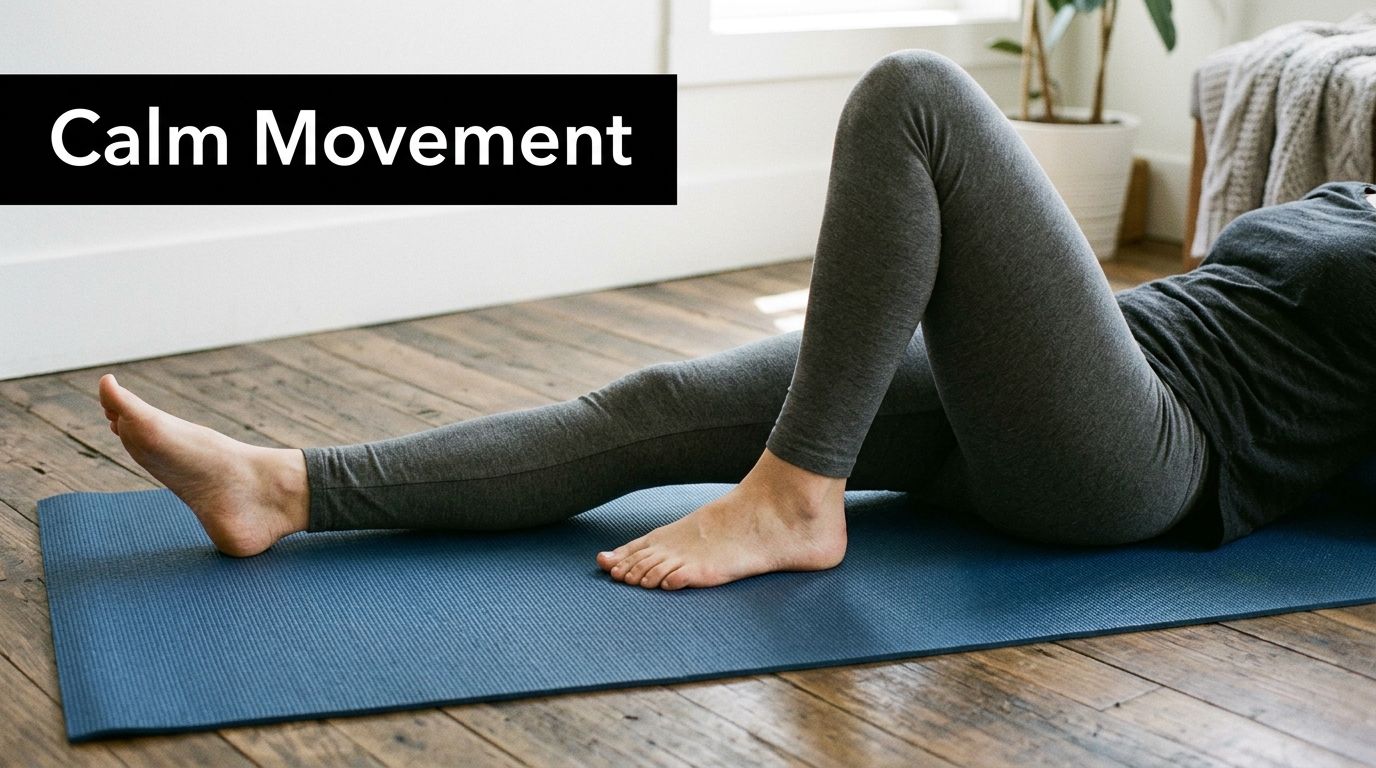
If your knee is irritated, stay with movements that feel controlled and tolerable. This phase should not produce sharp pain.
Heel slides
This helps if the knee feels stiff after rest and doesn't like bending or straightening fully.
- Lie on your back with both legs out straight.
- Slowly slide the heel of the sore side toward your body.
- Stop before the back of the knee feels pinched or guarded.
- Slide the leg back out slowly.
Dosage: Try a small set of smooth repetitions, then stop and reassess how the knee feels.
What you should feel: Mild stiffness easing with motion. You should not feel a jab behind the knee.
Seated knee extension glide
This is useful when the knee feels sticky as you try to straighten it after sitting.
- Sit near the edge of a chair.
- Straighten the sore knee slowly until you feel a light stretch.
- Pause briefly.
- Lower it back down with control.
Dosage: Use a gentle rhythm and keep the range comfortable.
What you should feel: Light tension, not a forced pull. If the back of the knee grabs, reduce the range.
Ankle pumps with the leg supported
This is a simple way to reduce stiffness without directly stressing the knee.
- Lie down or sit with the leg supported.
- Point the foot away from you.
- Pull the toes back toward you.
- Keep the knee relaxed.
What you should feel: Circulation and easing of calf tightness.
A few practical guardrails
- Move often, not aggressively: Short sessions usually work better than one long session.
- Stay out of sharp pain: Discomfort is one thing. A catching or stabbing sensation is another.
- Use support when needed: A pillow under the calf or thigh can make movement easier early on.
If you need more ideas for gentle joint motion, MedAmerica's guide to range of motion exercises is a helpful companion.
For cardio while you're trying to avoid aggravating the knee, lower-impact options often fit better than pounding through walks on hills. If you're comparing choices, this workout comparison for 2026 fitness goals gives practical context on walking versus elliptical training.
Phase 2 Build Support with Targeted Strengthening
Once the knee is less irritable and you can move it with better confidence, strengthening becomes the next lever. The point isn't to hammer the joint. It's to give the knee better support from the muscles that control it, especially the hamstrings, glutes, and calf.
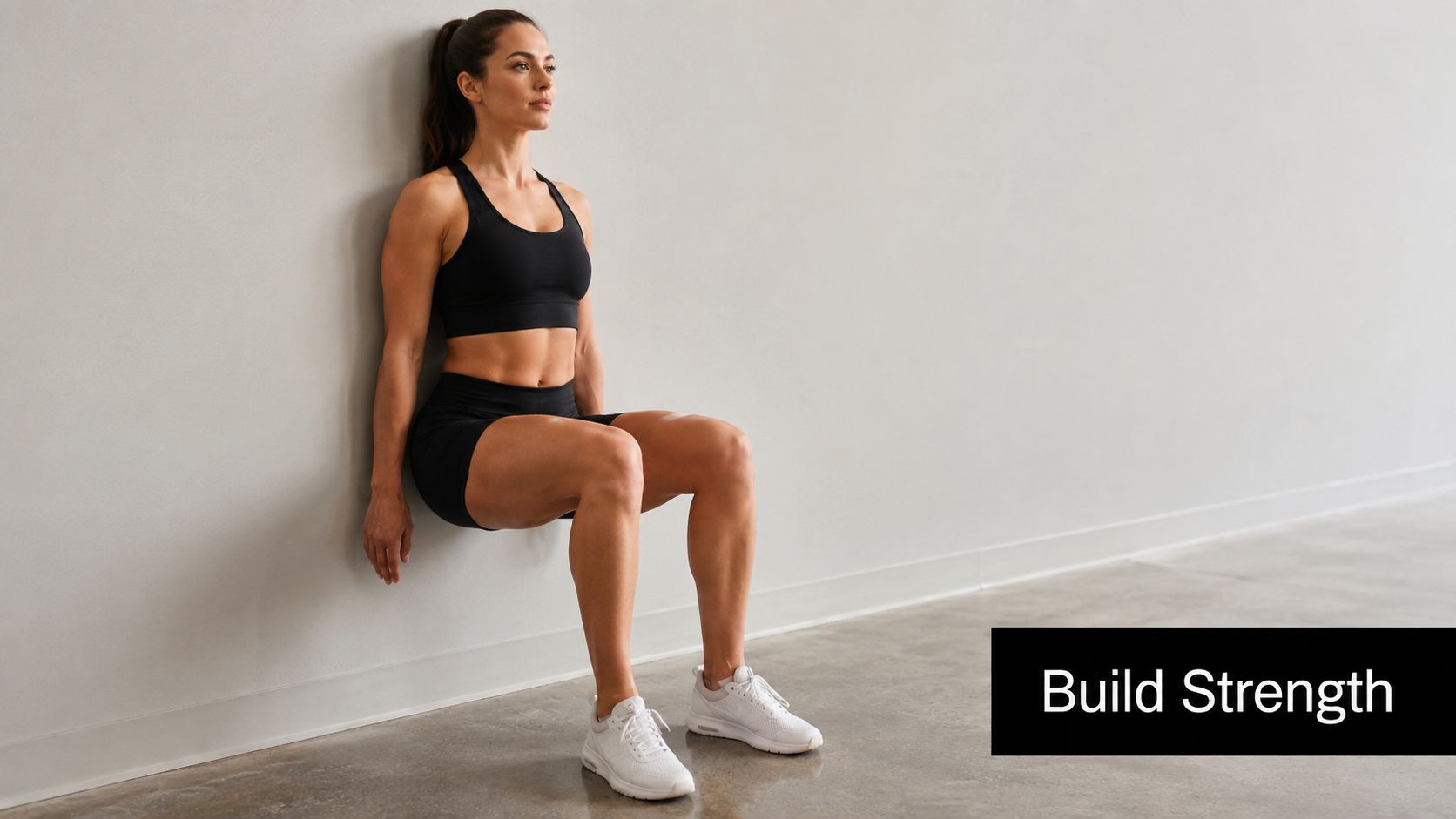
Weakness in the posterior chain often leaves the back of the knee doing too much passive work. When the hamstrings and glutes aren't helping enough, tendons and joint structures can take more strain than they should.
Standing hamstring curl
This is one of the most useful back of knee pain exercises when done correctly. The standing hamstring curl, performed for 3 sets of 10 to 15 repetitions, has shown a 78% success rate in reducing posterior knee tenderness after 6 weeks in the exercise protocol demonstrated in this standing hamstring curl reference video.
Here's how to do it with the details that matter.
- Stand on a low step or stable surface and hold onto a wall, counter, or chair for balance.
- Keep your pelvis neutral. Don't tip forward.
- Bend the knee and bring your heel toward the glute on the same side.
- Pause for 1 second at the top.
- Lower the leg slowly back to vertical.
Key form point: Keep the motion at the knee. Don't cheat by bending at the hip. That “hip flexion deviation” changes the exercise and reduces the hamstring focus.
During the lowering phase: Let the knee return to straight, but not rigidly locked.
Dosage: 3 sets of 10 to 15 reps.
What you should feel: Work in the back of the thigh. You should not feel a compressive pinch in the joint.
If you feel the exercise more in your low back than your hamstring, reset your posture and make the range smaller.
Glute bridge
The bridge helps because the glutes support the entire leg chain. A stronger hip often means less strain around the knee.
- Lie on your back with both knees bent and feet flat.
- Tighten your lower abdomen gently.
- Press through your heels and lift your hips.
- Stop when your body forms a comfortable line from shoulders through knees.
- Lower with control.
What you should feel: Effort in the glutes and back of the thighs, not cramping in the hamstring.
Supported calf raise
Posterior knee pain sometimes improves when the calf gets stronger and less reactive.
- Stand with light support from a counter.
- Rise onto your toes slowly.
- Pause briefly.
- Lower all the way down with control.
Use a small range at first if the back of the knee is sensitive.
A brief visual demo can help with exercise flow and pacing:
What often works and what often doesn't
| Approach | Usually helps | Often aggravates |
|---|---|---|
| Form | Controlled reps | Fast, sloppy reps |
| Range | Comfortable range first | Forcing end-range motion |
| Progression | Build gradually | Jumping into squats, hills, or running too soon |
| Focus | Hamstrings, glutes, calf | Only front-of-thigh work |
There's still room for quad strength in a full knee program. If you want examples that fit that part of rehab, this guide to quad exercises for knee discomfort can complement posterior work without replacing it.
For a broader home progression, MedAmerica also shares five exercises you can do to strengthen your knees.
Beyond Exercises Modifying Daily Habits for Lasting Relief
This is the piece many people miss. You can perform the right back of knee pain exercises every morning, then spend the rest of the day sitting with the knee compressed, locking the leg while standing, and striding downhill in a way that keeps irritating the same tissue.
That cycle keeps people stuck. A 2025 APTA survey found that patients who received daily habit modification guidance along with exercises had a 55% higher adherence rate and 38% lower pain recurrence than those who only got exercise lists. Exercise matters. Daily mechanics decide whether those exercises get a chance to work.
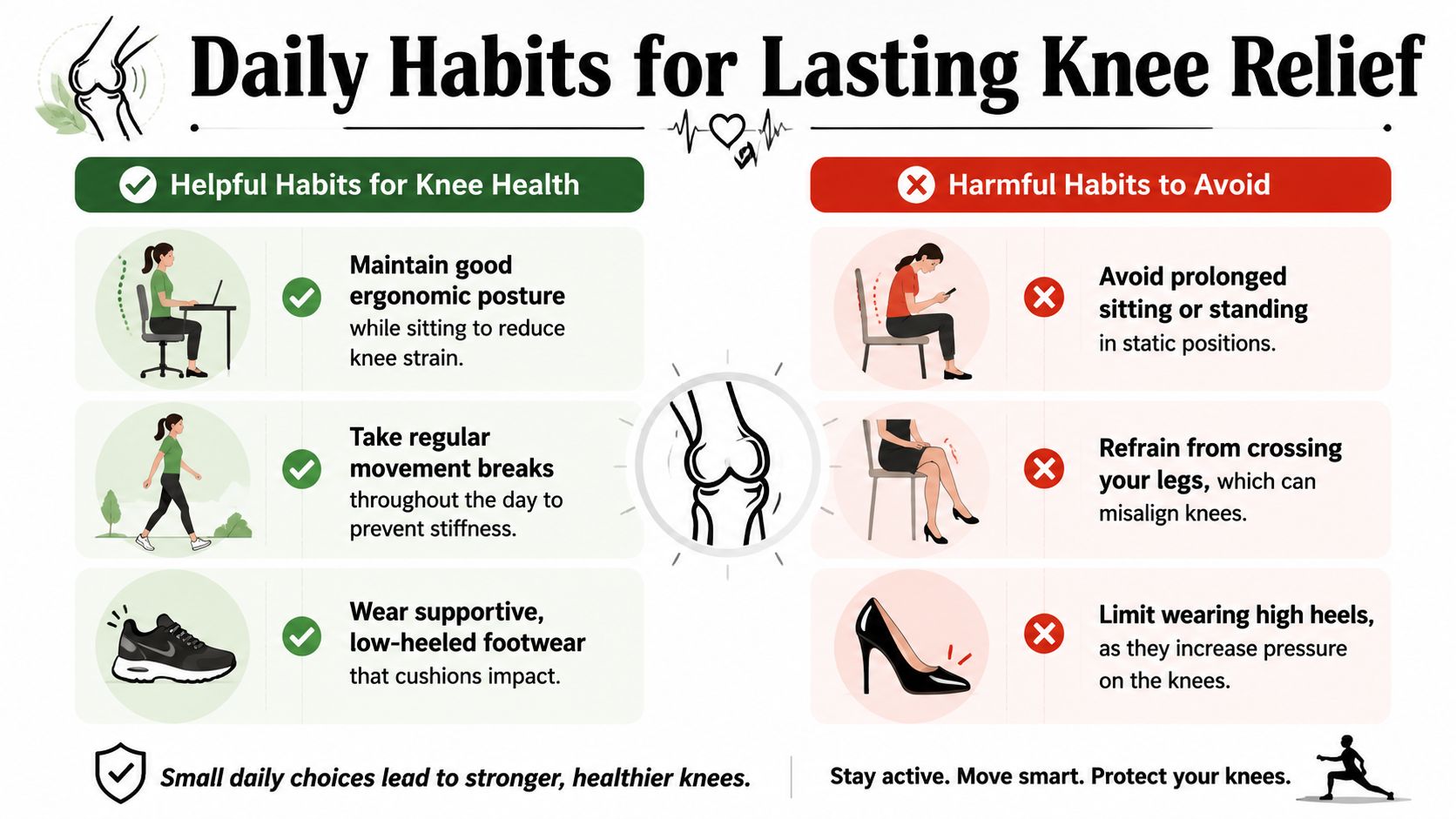
Simple habit changes that reduce posterior knee stress
- Change sitting positions often: Don't stay planted with the knee bent in the same angle for long stretches. Straighten the leg out periodically and stand up for a short walk.
- Avoid locked-knee standing: Keep a soft bend in the knees when standing at the sink, in line, or at a standing desk.
- Shorten your stride on hills: Long downhill steps can load the back of the knee more than people realize.
- Use stairs with control: Lead with the less painful leg when going down if symptoms are flared, and use the rail.
- Choose supportive shoes: Cushioned, stable footwear usually beats unsupportive sandals or high heels when the knee is sensitive.
Daily scenarios that matter more than people think
At your desk: Sit high enough that your knee doesn't feel jammed. If the chair edge presses into the back of the leg, adjust your seat or place your feet differently.
During walks: Flat ground is often better tolerated than hills early on. If distance is fine but inclines flare symptoms, it's not a fitness problem. It's a load-management problem.
For exercise days: Pair your strengthening work with lower-impact conditioning. If you want a gentle cardio option that spares the joints, this overview of a low-impact workout for weight loss offers a practical example.
Small changes repeated every day beat the perfect exercise session followed by eight hours of aggravation.
Your Path Forward When to Progress and When to See a PT
Progress when the knee gives you a clear green light. If Phase 1 movements feel smooth and no longer leave the back of the knee more irritated afterward, start adding Phase 2 strengthening. If strengthening feels fine during the session and doesn't increase symptoms over the next day, keep building gradually.
Pull back if pain becomes sharper, swelling increases, or your knee starts feeling less trustworthy instead of more stable. That usually means the dose, exercise choice, or movement pattern needs adjusting.
A physical therapist can sort out what's driving the pain. That matters when symptoms are stubborn, when you can't tell whether the hamstring, calf, or joint is the main issue, or when your progress keeps stalling. If surgery is part of your history or future plan, support may also look different, and resources on physical therapy after knee surgery can help you understand that path.
The right plan should make your knee feel more predictable, not more confusing.
If back-of-knee pain is limiting your walking, exercise, or daily routine, MedAmerica Rehab Center can help you move forward with a personalized, non-surgical treatment plan. Their team provides hands-on care, targeted therapy, and clear guidance so you can reduce pain, restore mobility, and get back to the activities you enjoy with more confidence.
MedAmerica Rehab · Deerfield Beach
Talk to a clinician about your pain
Physical therapy, chiropractic, acupuncture and shockwave therapy under one roof, since 1995. Same-day appointments are available.
Mon–Thu 8:00 AM – 6:30 PM · Fri 8:00 AM – 3:00 PM