
Joint Movement Physical Therapy for Better Mobility
You wake up with a stiff knee, struggle to reach a shelf because your shoulder won't rotate, or take the first steps of the day with a guarded back. The instinct is usually to stretch harder. Sometimes that helps. Often, the core issue is that the joint, surrounding muscles, and nervous system aren't coordinating movement well enough for the task you need to perform.
Joint movement physical therapy takes a more practical approach. A physical therapist identifies what restricts movement, uses targeted hands-on techniques when appropriate, and pairs them with exercises that help you control the available range. The priority isn't perfect mechanics for their own sake. It's reducing symptoms, restoring useful movement, and helping you walk, climb stairs, lift, reach, or return to sport with more confidence.
Understanding Joint Movement Physical Therapy
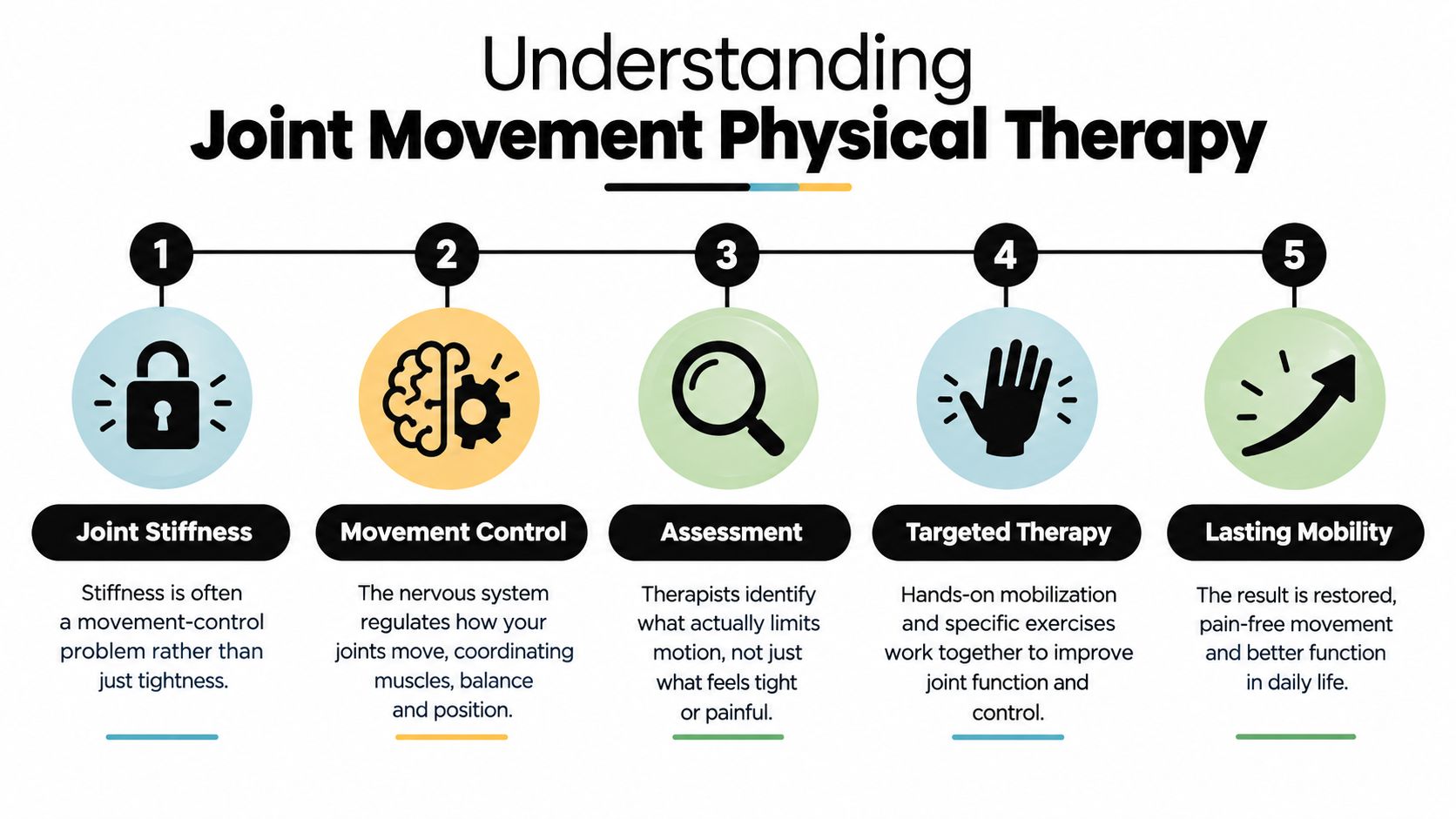
A person with knee arthritis may say, “My knee feels tight,” but that description doesn't tell us whether the limitation comes from pain, swelling, muscle guarding, reduced joint glide, weakness, or fear of loading the leg. Those factors can look similar during a casual stretch, yet each one calls for a different treatment decision.
Joint movement physical therapy combines clinical assessment, joint mobilization, movement retraining, and progressive exercise. The therapist watches how you stand, transfer weight, rise from a chair, climb steps, or reach overhead. Range of motion matters, but it isn't the entire examination. A joint can move farther during a passive test yet remain difficult to use during an active task.
Why stretching alone may fall short
Stretching lengthens muscles and can make movement feel easier for a while. It won't necessarily address a stiff joint capsule, poor load tolerance, protective guarding, or weak control at the end of a movement. That's why a therapist may use a gentle mobilization first, then ask you to actively move through the newly available range.
This approach has deep roots. A 2024 historical review of joint mobilization in physical therapy notes that joint mobilization practice dates to the early 1900s. A separate historical account described manipulative treatment as far older, tracing it to 460–385 BCE, when Hippocrates used gravity-based methods for scoliosis. Modern practice has changed considerably, but the underlying idea remains familiar, restore useful movement through controlled, clinically directed force.
For people managing arthritis, stiffness, or reduced activity, broader guidance on physical therapy for arthritis can help explain how mobility work fits with strengthening and daily function. In the clinic, the plan is individualized. One person may need pain-calming movement and confidence with weight bearing. Another may need shoulder rotation, scapular control, and gradual overhead loading.
Practical rule: A better movement is one you can control and use, not merely one that looks correct during a passive test.
Assessment and Hands-On Mobilization Techniques
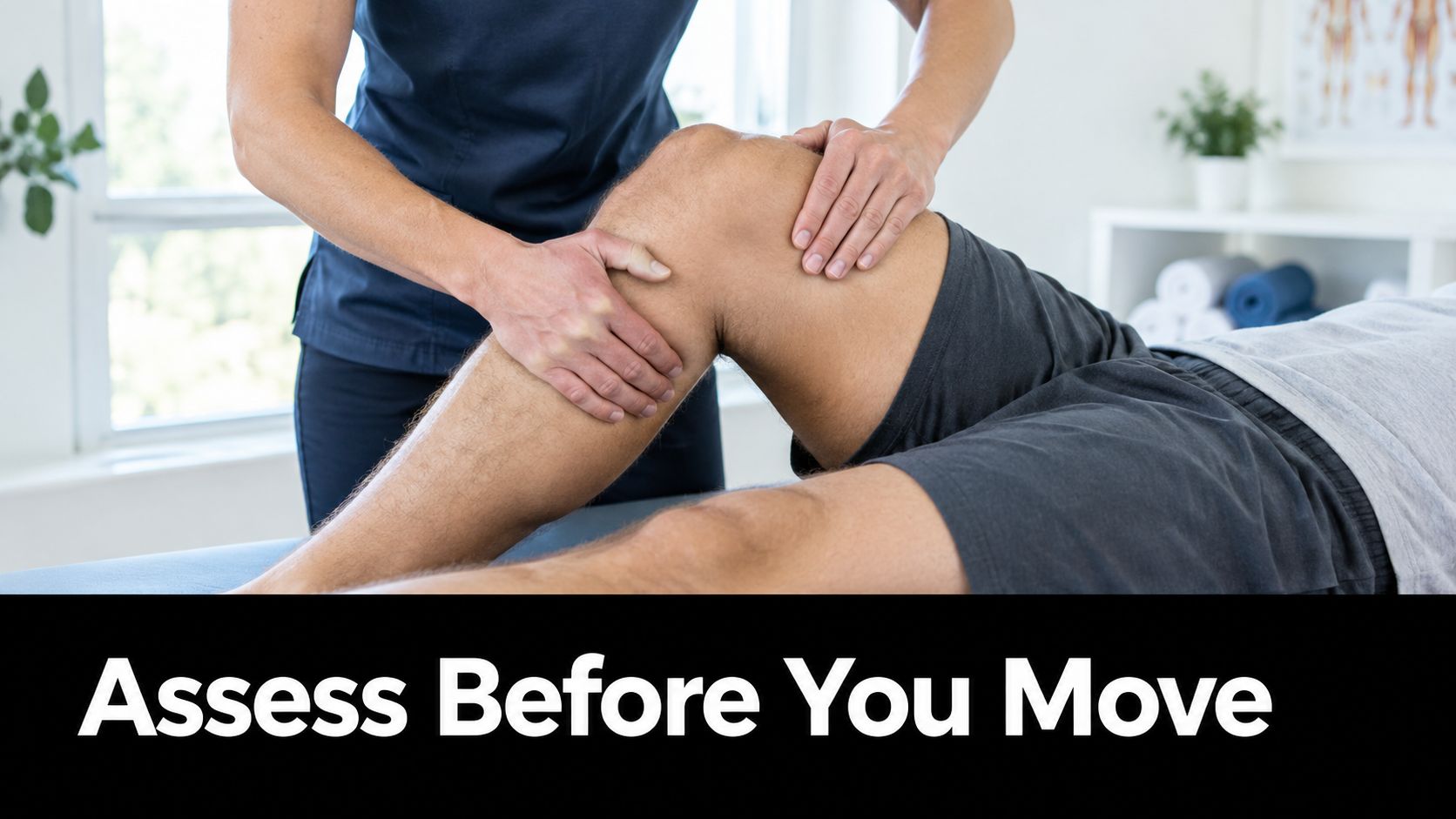
A useful assessment starts by answering a specific question: what stops this joint from performing the task you care about? The therapist reviews your history, observes the painful activity, compares sides when appropriate, and tests active and passive motion. Strength, balance, coordination, swelling, tenderness, and neurological symptoms can all influence the treatment choice.
What the examination looks for
A therapist may assess:
- Joint direction: Whether flexion, extension, rotation, or a gliding motion is restricted.
- Muscle response: Whether surrounding muscles tighten or guard when the joint is challenged.
- Task tolerance: How the restriction affects walking, reaching, transfers, stairs, or lifting.
- Irritability: Whether symptoms settle quickly after movement or remain aggravated.
- Control and confidence: Whether you can use the range actively without collapsing, compensating, or avoiding load.
Hands-on mobilization uses slow, controlled pressure or oscillating movements directed at the joint. The purpose may be to reduce discomfort, ease guarding, improve the way joint surfaces glide, or prepare the area for exercise. A shoulder that feels blocked during rotation may respond to a carefully selected glide, while a recently irritated knee may need a gentler approach that emphasizes comfort rather than forcing range.
Manual treatment isn't a standalone repair. It often creates a short-term opportunity to move more comfortably, and the exercise that follows teaches your body to use that change. Patients looking for a wider overview of manual physical therapy techniques should still view hands-on care as one part of a complete plan.
When mobilization isn't the right first move
A painful joint doesn't automatically need more motion. If the joint is unstable, highly irritable, acutely swollen, or affected by a condition requiring medical evaluation, pushing mobility can make symptoms worse. The therapist may instead prioritize protection, positioning, gentle active movement, or referral for further assessment.
The strongest clinical decision is often a modest one. If a technique improves your ability to perform a meaningful task without provoking symptoms, it has a place. If it produces temporary looseness but no better function, it may need to be changed or discontinued.
Targeted Exercises with Progressions and Modifications
Exercises work best when they match your current tolerance and your real daily demands. A knee exercise selected for a recreational athlete may be inappropriate for someone who struggles to stand from a chair. The movement itself isn't automatically good or bad. Load, speed, range, support, and recovery determine whether it helps.
Start with control, not ambition
For knee osteoarthritis, a therapist may begin with comfortable knee bends, sit-to-stand practice, supported weight shifts, or low-load strengthening. The initial target is often a smoother transfer of weight and better tolerance for daily movement. If symptoms remain manageable, the plan can progress toward deeper squats, step-ups, stair practice, or balance work.
For shoulder stiffness, the sequence may look different. Active-assisted elevation with a table, wall, or cane can let you explore motion without demanding full strength immediately. Later, the therapist may add active reaching, resistance-band work, and functional lifting. A painful pinch or sharp increase in symptoms is a reason to modify the position or range, not a challenge to force through.
Post-injury and post-surgical rehabilitation require even tighter coordination with healing restrictions. A practical guide to post-surgical care from Midwest Pain can provide general context, but your surgeon and therapist determine what loading and movement are appropriate for your procedure.
How progression actually happens
A sensible progression usually changes one variable at a time:
- Comfortable range: Move within a range you can control without sharp pain or escalating symptoms.
- Active control: Reduce assistance and make the joint do more of the work.
- Controlled resistance: Add a band, cable, weight, or bodyweight demand when the movement remains steady.
- Functional position: Practice the task that matters, such as stepping up, reaching, turning, or carrying.
- Variable demand: Introduce changes in speed, surface, direction, or fatigue only when the basic pattern is reliable.
The range-of-motion exercise guide can supplement a clinician-designed program, but it shouldn't replace an assessment when pain, surgery, or instability is involved.
A movement that requires less range but improves your confidence and daily function is often more useful than a larger movement you can't control.
Modifications make the program fit the person. A chair can reduce balance demands. A shorter step can reduce knee loading. A towel or pulley can assist shoulder movement. Slower repetitions can reveal whether the joint is controlled or whether momentum is masking the limitation.
Building a Sustainable Home Program and Pain Management Routine
The most effective home program is one you can repeat on an ordinary day, including days when work, caregiving, or fatigue compete for your attention. A short routine that combines mobility, strength, and a functional task is usually easier to maintain than a long list of disconnected exercises.

Use a repeatable daily rhythm
Pair movement with something already anchored in your schedule. You might perform gentle joint motion after waking, practice strengthening after lunch, and take a brief walk after dinner. The exact schedule matters less than choosing a routine that doesn't depend on motivation appearing at the perfect time.
Pain management should support movement, not become a way to avoid all activity. Heat may help some people feel less stiff before exercise. Ice may feel useful after an aggravating activity. Neither should be treated as a universal rule, and neither replaces graded loading when the joint can tolerate it.
A flare calls for adjustment rather than abandonment. Reduce the range, resistance, repetitions, or speed, and keep a tolerable version of the movement if your clinician has approved that approach. Complete rest can be appropriate during some acute problems, but prolonged avoidance can also increase stiffness and reduce confidence.
Track function instead of chasing perfect numbers
Write down practical markers:
- How easily you get out of a chair.
- Whether you can reach a shelf or fasten clothing.
- How long you can walk before symptoms change.
- Whether stairs feel more secure.
- How quickly discomfort settles after activity.
A pain management physical therapy program can help connect symptom strategies with exercise progression when pain is interfering with consistency.
The video below demonstrates a movement-based approach that may help you think about pacing and controlled mobility:
If your symptoms repeatedly worsen after the routine, or your function isn't changing despite consistent practice, the answer isn't necessarily more effort. It may be time to reassess the diagnosis, exercise selection, or loading strategy.
Understanding the Evidence Behind Joint Mobility Treatment
Joint mobilization has been studied across several conditions, but the evidence doesn't support a universal promise. Results depend on the diagnosis, the technique used, the comparison treatment, and whether the desired outcome is pain relief, mobility, strength, or function.
A systematic review of shoulder dysfunction included 15 randomized controlled trials with 704 participants, while another review of chronic pain mobilization literature analyzed 14 studies involving 812 participants. These reviews show a substantial quantitative research base, but they don't mean every patient responds in the same way or that hands-on treatment should replace exercise.
What condition-specific findings show
For shoulder impingement syndrome, a systematic review and meta-analysis found that adding joint mobilization to traditional physical therapy reduced pain by a mean difference of 1.72 and increased active range of motion by 14.49. Mobilization also outperformed sham mobilization for pain, with an MD of 0.67, and active range of motion, with an MD of 8.56. However, it wasn't superior to physical therapy plus exercise, which matters clinically because mobilization may add value in some plans without being essential for every patient. (PLOS ONE review)
Knee osteoarthritis shows a different pattern. A systematic review and meta-analysis reported significant improvements in pain severity, with an SMD of -1.69, and WOMAC scores, with an SMD of -0.74, compared with control. It didn't show superiority for knee flexion or extension mobility. (Knee osteoarthritis review)
Function deserves equal billing
For chronic low back pain, a review found moderate-quality evidence that thrust-based mobilization can produce small-to-moderate pain reduction and likely reduce disability, with benefits persisting at 3 and 6 months follow-up. (JOSPT review) Neck pain is less settled. A 2025 meta-analysis concluded that evidence was very low certainty for pain and disability improvement from manual joint mobilization techniques.
These findings support a measured conclusion. Movement quality can matter, but the best progress markers often include pain reported by the patient and functional ability, not joint angles alone. A knee may feel and function better without a dramatic change in measured flexion, while a larger range may have little practical value if you can't control it during walking or reaching.
Recognizing Red Flags and Knowing When to Seek Care
Mild stiffness that eases with gentle movement can often be managed with a sensible home program. Sudden severe pain, a joint that repeatedly gives way, new numbness or weakness, marked swelling, or a rapid loss of function deserves professional attention rather than a harder stretching session.
Seek prompt medical guidance after a significant injury, especially when you can't use the limb normally, the joint appears deformed, or symptoms are escalating. After surgery, follow the surgeon's restrictions and contact the care team if pain, swelling, wound concerns, or loss of function changes unexpectedly.
Discomfort versus a warning signal
Rehabilitation can create manageable soreness or a temporary awareness of a working muscle. Concerning symptoms are sharper, worsening, associated with neurological changes, or persistent beyond the expected response to activity. A therapist can help you distinguish a tolerable training response from a sign that the movement, dose, or diagnosis needs review.
Don't keep testing a painful movement just to prove that you can tolerate it. Early assessment can identify whether the limitation is muscular, joint-related, neurological, or connected to a more serious injury. That clarity prevents you from spending weeks repeating an approach that doesn't match the problem.
How MedAmerica Rehab Center Supports Your Recovery
Generic mobility advice gives you exercises. A clinical rehabilitation plan connects those exercises to an examination, symptom response, and measurable daily goals. At MedAmerica Rehab Center, care may combine personalized physical therapy with chiropractic care, acupuncture, or shockwave therapy when those services fit the patient's presentation and goals.
That model differs from treating every stiff joint with the same stretch. A patient recovering from orthopedic surgery may need protected range and progressive strengthening. Someone after an auto accident may need pain management, mobility work, and functional retraining. An older adult may need gait, balance, transfer, and fall-prevention training alongside joint exercises.
The clinic serves Deerfield Beach and nearby communities with a patient-centered approach to joint pain, arthritis, sports injuries, accident rehabilitation, and post-surgical recovery. The practical question remains the same throughout care: can you move with less pain and more control in the situations that matter to you?
MedAmerica Rehab Center provides individualized physical therapy, hands-on treatment, targeted exercise, and complementary rehabilitation services for people working to restore joint movement and function. Visit MedAmerica Rehab Center to request an evaluation and discuss a recovery plan built around your symptoms, mobility, and daily goals.
MedAmerica Rehab · Deerfield Beach
Talk to a clinician about your pain
Physical therapy, chiropractic, acupuncture and shockwave therapy under one roof, since 1995. Same-day appointments are available.
Mon–Thu 8:00 AM – 6:30 PM · Fri 8:00 AM – 3:00 PM