
Laser Therapy for Pain: How It Works and Who It Helps
You're doing the right thing by looking past the buzzwords. If pain has kept coming back after rest, pills, stretching, or a few rounds of therapy, it's normal to wonder whether laser therapy is real medicine or just another clinic gadget with a polished name. The honest answer is that laser therapy for pain is a legitimate clinical tool, but it works best when it's used for the right problem, with the right dose, as part of a broader rehab plan.
Living with Pain and Exploring New Options
A lot of people come in after months of living around pain instead of through it. They've stopped picking up groceries with one hand, turned slowly in bed to protect a sore back, or skipped the run, gym class, or weekend activity that used to feel automatic. By the time they ask about laser therapy, they're not looking for a miracle, they're looking for something that helps them move again without making the problem worse.
That's where laser therapy earns a fair hearing. In clinic settings, it's used as a non-invasive option for people with stubborn back pain, neck pain, sciatica, arthritis flare-ups, and sports injuries that keep flaring when tissue stays irritated. It's not experimental, and it's not the same thing as heat-based treatment. It's a targeted light therapy that aims to change what's happening inside the tissue, not just mask the pain.
The key is expectation. Patients usually do better when they see laser as part of a plan, not the whole plan. If you've been frustrated by treatments that only help while they're on, or only after you stop moving, this is a different conversation.
How Laser Therapy Actually Works Inside Your Cells
Laser therapy works through photobiomodulation, which means light energy changes cellular behavior. The simplest way to think about it is like charging a battery. Specific red to near-infrared wavelengths pass through the skin, get absorbed by cellular chromophores, and influence the mitochondria, especially cytochrome c oxidase. That process increases ATP production, modulates reactive oxygen species and nitric oxide, and shifts the local environment toward less inflammation and better tissue repair, according to the mechanistic review in the medical literature (PMC review on photobiomodulation).
Why dose matters more than marketing
The science only works if the light reaches the right target in the right amount. That's why wavelength, fluence, and exposure time matter so much. A device sold as a wellness gadget may look similar to clinical equipment, but if it can't deliver the intended energy to the tissue, it won't do the same job.
Practical rule: if a treatment claims to work for everything, it usually isn't being specific enough to be credible.
There's also a reason clinicians care about settings instead of just turning the device on. Too little energy can underdose the tissue, while the wrong application can miss the main pain generator altogether. In a trained setting, the therapist matches the parameters to the body region, the tissue depth, and the clinical goal, whether that's calming an acute flare or supporting a tendon that's been slow to settle.
For acute inflammatory pain, the mechanism is especially relevant. Published review material describes reductions in inflammatory signaling such as PGE2 and COX-2, along with changes in nociceptive signaling that can make movement less painful (Bjordal acute pain meta-analysis PDF). That's why the treatment is usually discussed as a biologic support for healing, not a heat source.
What the Clinical Research Shows About Pain Relief
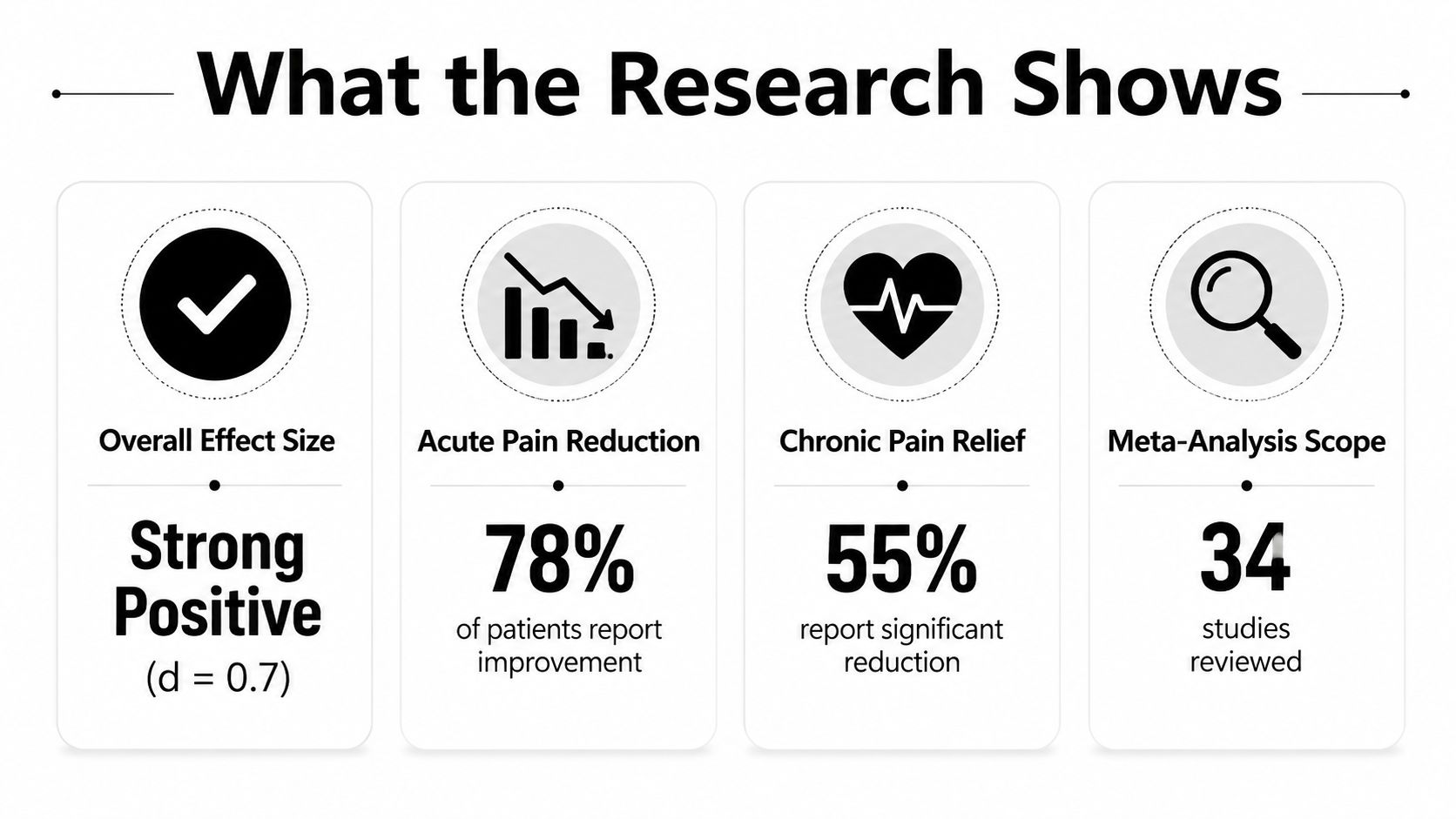
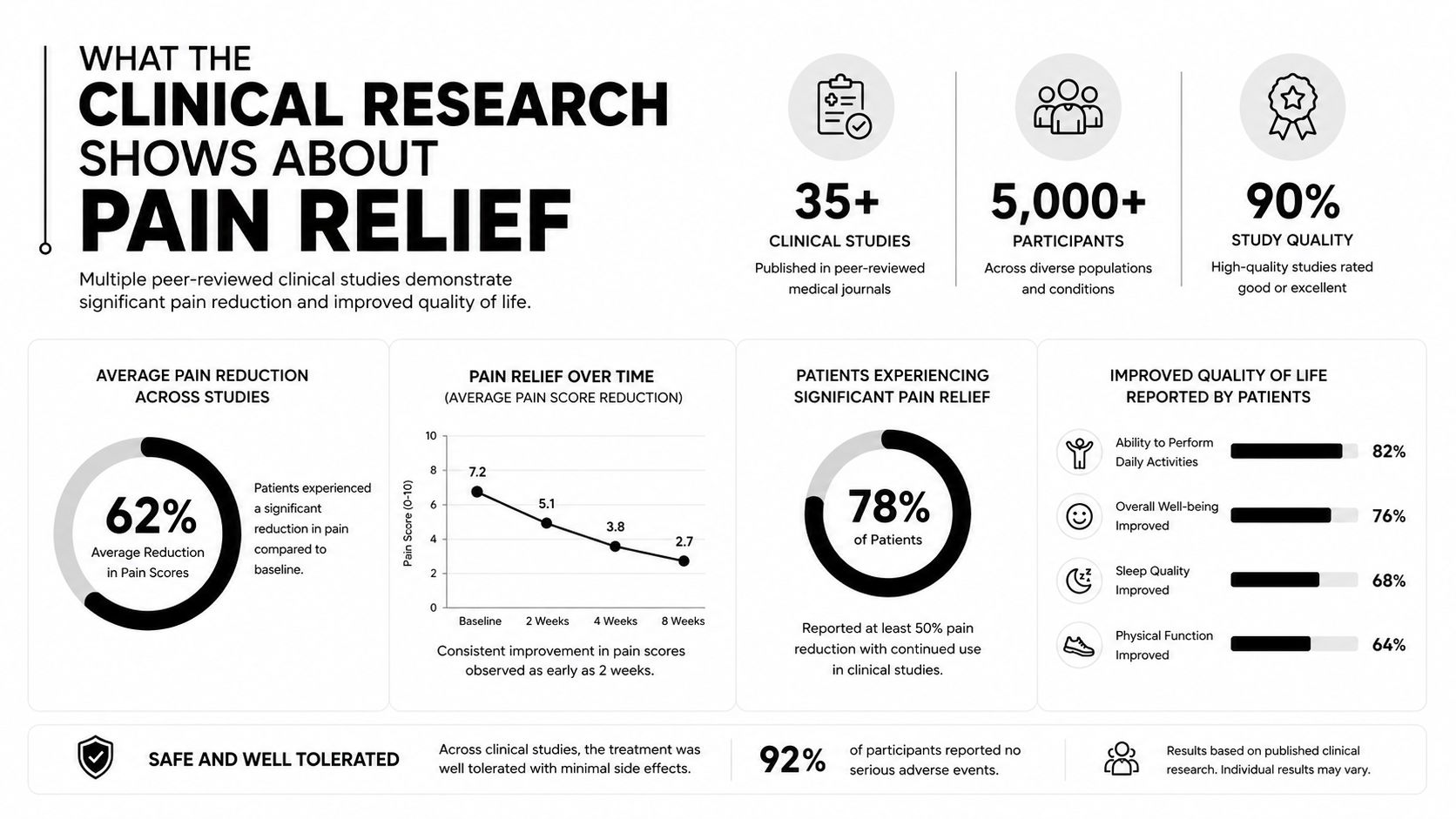
The strongest argument for laser therapy is not the branding, it's the pooled clinical data. A 2010 meta-analysis of laser phototherapy for pain pooled 52 effect sizes from 22 studies and found a statistically significant overall effect size of d = +0.84 with a 95% CI of 0.44 to 1.23. Even after excluding an outlier, the benefit remained significant at d = +0.66 with a 95% CI of 0.46 to 0.86. The authors also reported a fail-safe number of 348, meaning a large number of additional null or negative studies would be needed to erase the observed benefit (2010 meta-analysis).
That doesn't mean every patient gets the same result. It does mean the signal is real enough to take seriously, especially for pain conditions where inflammation and tissue irritability are part of the picture. The practical takeaway is simple. This is not just testimonial medicine, there is measurable evidence that laser therapy can reduce pain across multiple conditions.
A more recent review strengthens that case for selected musculoskeletal problems. A 2024 systematic review and meta-analysis of randomized trials found that high-intensity laser therapy improved pain by 14.1 mm on a 100-mm visual analog scale across 17 RCTs, improved cervical extension by 3.9 degrees across 9 RCTs, and reduced disability by 8.3% on the neck disability index across 12 RCTs (2024 HILT review). The same paper also reported chronic low back pain improvement with a mean difference of -1.01 across 11 studies with 736 patients.
A pain score drop on paper can sound abstract, but in the exam room it often means less guarding, easier dressing, and less hesitation when someone bends, reaches, or turns. The point isn't that laser replaces rehab. The point is that better pain control can make rehab possible.
Conditions That Respond Best to Laser Therapy
A patient who comes in with a clearly irritated tendon, a swollen ankle, or a shoulder that flares every time they reach overhead is often the kind of case where laser therapy earns its place. Pain that is localized, inflammatory, and tied to one tissue target tends to respond best. Acute sprains, tendon irritation, post-surgical swelling, neck and shoulder pain, and some arthritis flare-ups can fit that pattern. In those cases, the aim is to quiet the tissue enough to make movement, sleep, and rehab work more tolerable.
That matters because photobiomodulation is usually most useful as a strategic adjunct. It can lower pain and tissue irritability, but the durable gains usually come from pairing that pain relief with exercise, joint work, and movement retraining. In clinic, that means using laser to open a window where a patient can load the joint better, move with less guarding, and do the work that changes function.
Where it's often most useful
- Acute injuries: A fresh sprain or strain often has a strong inflammatory component, so the tissue may be more responsive to a pain-calming approach.
- Post-surgical recovery: When swelling and soreness are blocking early motion, laser can help a patient take part in rehab more comfortably.
- Neck and shoulder pain: These areas often combine tissue irritation with movement avoidance, so reducing pain can help restore function.
- Certain sports injuries: Tendons and soft tissue that keep flaring may respond when the main issue is local inflammation and overload.
Some body regions are less predictable. Chronic low back pain is the classic example. An AAOS summary of the literature described insufficient data to either support or refute low-level laser therapy for low back pain, which is why laser makes more sense there as a carefully chosen adjunct than as a universal fix (AAOS summary). If the pain is diffuse, long-standing, and driven by multiple factors, laser alone usually won't solve it.
For readers comparing modalities, a good overview of the broader low-level approach can be useful, especially if you want the terminology broken down before a consultation. A practical low level laser therapy guide can help frame the vocabulary before treatment decisions are made. If you're comparing options like shockwave therapy and laser, the choice often comes down to tissue type, irritability, and what your rehab plan needs most, not which device sounds newer. See the differences in a focused shockwave therapy overview.
Common Misconceptions About Laser Pain Treatment
The biggest myth is that laser therapy is just a fancy heat treatment. That's not how photobiomodulation works. The benefit comes from light-triggered cellular signaling, not from burning or cooking tissue, which is why treatment settings and tissue targeting matter so much.
Another common mistake is expecting one session to erase years of pain. That's rarely how soft tissue or joint pain behaves. A good response often builds over several visits, especially when the tissue has been irritated for a long time or the pain pattern has become protective.
People also assume laser replaces exercise. It doesn't. It can make exercise tolerable again, which is a very different thing. If pain has been keeping you from doing the movements that restore strength and mobility, laser may help lower the barrier, but the rehab work still has to happen.
Low-level and high-intensity are not the same experience
Low-level laser therapy and high-intensity laser therapy are both forms of photobiomodulation, but they are not identical in how they're delivered. The distinction matters because treatment depth, dosing strategy, and the clinical goal all change the way a therapist chooses the tool. That's also why clinic-grade devices and trained application matter more than buying a consumer device and hoping for the same result.
Pain relief is useful only if it leads to better movement, better loading, and better participation in rehabilitation.
That's the trade-off with laser. Used well, it can reduce irritability enough to let a patient progress. Used poorly, or used with the wrong expectations, it can become just another passive modality that feels nice but doesn't change the problem.
What to Expect During a Laser Therapy Session
A first session is usually straightforward. You're positioned comfortably, the therapist identifies the painful area, and both you and the clinician wear protective eyewear. The laser handpiece is moved over the skin, directly over the treatment area, and the session is non-invasive from start to finish.
Most patients don't feel much beyond a gentle warmth, and some feel nothing at all. The experience shouldn't be sharp, poking, or painful. If the area is especially tender, the therapist may adjust the approach so the session stays comfortable while still delivering the intended dose.
For a broader pain care plan, laser often sits beside manual therapy and exercise rather than replacing them, which is why many patients benefit from reviewing a clinic's overall pain management approach before starting. A useful starting point is the pain management physical therapy page, especially if you're trying to understand how light-based treatment fits into a full rehab plan.
What a typical visit feels like
- Check-in and screening. The therapist reviews your pain pattern, recent imaging if you have it, and any safety concerns.
- Treatment setup. The skin over the area is exposed so the light can reach the tissue.
- Application. The clinician moves the device methodically over the target tissue.
- Rehab pairing. If appropriate, the session is followed by movement, exercise, or manual therapy so the pain reduction gets put to work.
If you're asking how many visits people usually need, the honest answer is that it depends on the condition, the tissue, and the dose strategy. What matters more is whether you're trending toward better motion, less guarding, and more tolerance for daily activity. That's the sign the treatment is doing something useful.
Is Laser Therapy Right for You
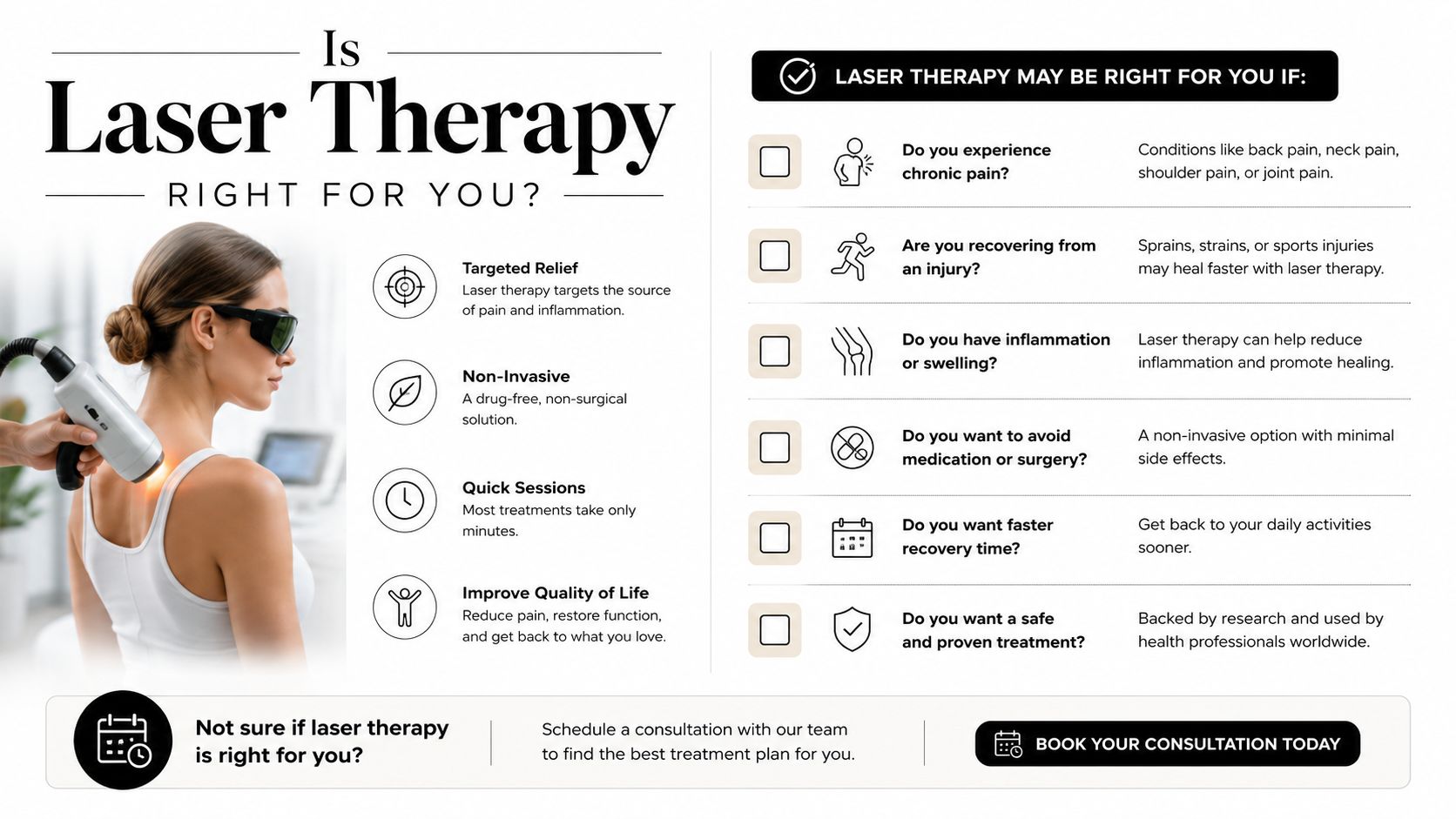
Laser therapy tends to make the most sense for people with localized inflammatory pain, recent injury, post-surgical soreness, or pain that keeps getting in the way of rehab. It can also be a smart option when the goal is to reduce symptoms enough to move, strengthen, and retrain with less irritation. If your pain is broad, complex, or strongly influenced by multiple systems, it may still help, but it's less likely to be the main answer.
Questions worth bringing to a consultation
- What is the treatment goal? Pain reduction, swelling control, or better movement all call for slightly different thinking.
- What body area is being treated? Localized tissue problems are usually the best fit.
- How does laser fit with exercise and manual therapy? If the plan doesn't include active rehab, the benefit may be limited.
- Are there any safety issues? Laser isn't appropriate over certain conditions, including active cancer, pregnancy over the treatment area, and some photosensitive situations.
A second useful comparison is with other recovery tools. If you've already looked into acupuncture for pain, the choice often comes down to what kind of input your body tolerates best and what your rehab plan needs at this stage. You can also review acupuncture for pain relief if you're weighing different non-drug options.
If you're ready to see whether laser therapy belongs in your treatment plan, schedule an evaluation with MedAmerica Rehab Center in Deerfield Beach. Their team can assess your pain pattern, explain whether laser is a good fit, and build a plan that matches your recovery goals. Visit MedAmerica Rehab Center to take the next step.
MedAmerica Rehab · Deerfield Beach
Talk to a clinician about your pain
Physical therapy, chiropractic, acupuncture and shockwave therapy under one roof, since 1995. Same-day appointments are available.
Mon–Thu 8:00 AM – 6:30 PM · Fri 8:00 AM – 3:00 PM