
Back Pain Physical Therapy: A Patient’s Guide to Relief
You wake up, roll out of bed, and feel that familiar catch in your lower back again. Maybe it flares when you sit too long at work, twist to pick up groceries, or try to play with your kids. Back pain has a way of shrinking your day until every movement feels like a decision.
That's why back pain physical therapy matters. It gives you a structured way to understand what's happening, calm irritated tissues, and rebuild the strength and movement you need to function again. Back pain is also a central part of rehab care, not a side issue, because one industry summary reports that 34% of all therapy cases are for back pain and 59% of physical therapy care overall is focused on orthopedic rehabilitation, while early physical therapy for low back pain was associated with $1,202.29 lower average 2-year LBP-related costs than delayed therapy, with mean costs of $1,828.24 versus $3,030.53 physical therapy statistics and cost data.
For many people, the hardest part is not pain itself, it's not knowing what to do next. A good plan replaces guessing with clear steps, and that's where recovery starts to feel manageable again.
Your Path from Back Pain to Lasting Relief
Back pain often starts in ordinary moments. A parent bends over a crib and feels a sharp pull. An office worker stands up after a long meeting and needs a moment before the spine settles. Someone who used to walk the dog every morning starts avoiding the route because the first few minutes hurt too much.
That disruption is why people usually seek care early. Physical therapy gives back pain a plan, not just reassurance. It helps you understand what is likely bothering the area, how to calm it down, and how to rebuild movement in a way that fits real life. Early treatment also tends to reduce the chance that pain turns into a longer, more frustrating pattern.

Why early care changes the tone of recovery
Back pain can create a loop. Pain makes you guard the area. Guarding makes you stiff. Stiffness makes movement feel risky, so you move less, and the back often feels even less ready the next time you try.
Early rehab aims to break that loop with guided activity. A little movement, done in the right way, often tells the body that motion is safe enough to practice again. Rest has a place, especially right after a flare, but prolonged avoidance usually makes the next step feel harder than it should.
At MedAmerica Rehab Center in Deerfield Beach, the first goal is to match care to the way your back pain shows up in your day. That means looking at the motions that trigger symptoms, the positions that calm them, and the demands of work, home, and exercise. If pain science is part of your plan, MedAmerica Rehab Center also uses pain neuroscience education to help explain why pain can linger even after tissues begin to settle.
You should leave the first part of care with a clearer map. Instead of guessing, you get a step-by-step path that helps your back move with more confidence and less fear.
Understanding the Source of Your Back Pain
Back pain often starts with a pattern that needs to be identified before treatment can make sense. Some pain is mechanical, which means it comes from how joints, muscles, tendons, or discs are being loaded and moved. Some pain is more nerve-related, where irritation or compression changes the way symptoms travel into the leg or foot. Other pain is tied to longer-term wear and tear, such as arthritis or degenerative change.
A careful therapist looks first at how the pain behaves. Acute pain usually comes on suddenly and is short term. Chronic pain lasts longer and often involves both tissue sensitivity and movement habits that have developed around the problem. That difference shapes the plan, because a fresh strain and pain that has been present for months rarely need the same approach.
Acute pain versus chronic pain
Acute pain can feel sharp and protective. You may notice it after lifting, twisting, or waking up stiff. Chronic pain can feel quieter at first, yet it often affects confidence, posture, sleep, and the way you move through the day. As pain stays around, the body often starts adjusting around it, which can make normal movement feel less natural.
For chronic low back pain, guidelines support exercise training, manual therapy, and active treatments like yoga, stretching, Pilates, and strength training rather than stand-alone education or passive care JOSPT clinical practice guideline. That does not mean every person follows the same program. It means the diagnosis guides the choices, so the work matches the pattern in front of us.
Why the cause changes the plan
A muscle strain needs calm loading and mobility. A disc-related pattern may call for careful positioning and graded strength work. Nerve-related symptoms may require a therapist to watch how bending, sitting, and walking change your pain. A label on its own cannot show that detail, which is why a professional assessment matters more than guessing from an article or a search result.
Pain can also stay on alert because the nervous system has learned to protect the area. If that idea feels unfamiliar, Pain Neuroscience Education explains how pain can continue even after the first tissue injury begins to settle. The goal is not to dismiss what you feel. It is to help you understand why symptoms can be louder than the amount of tissue irritation would suggest.
The main point is simple. Back pain is real, but it does not follow one script. A skilled physical therapist looks at the pattern, the triggers, and the body's response, then builds care around that picture.
How Physical Therapy Treats Back Pain
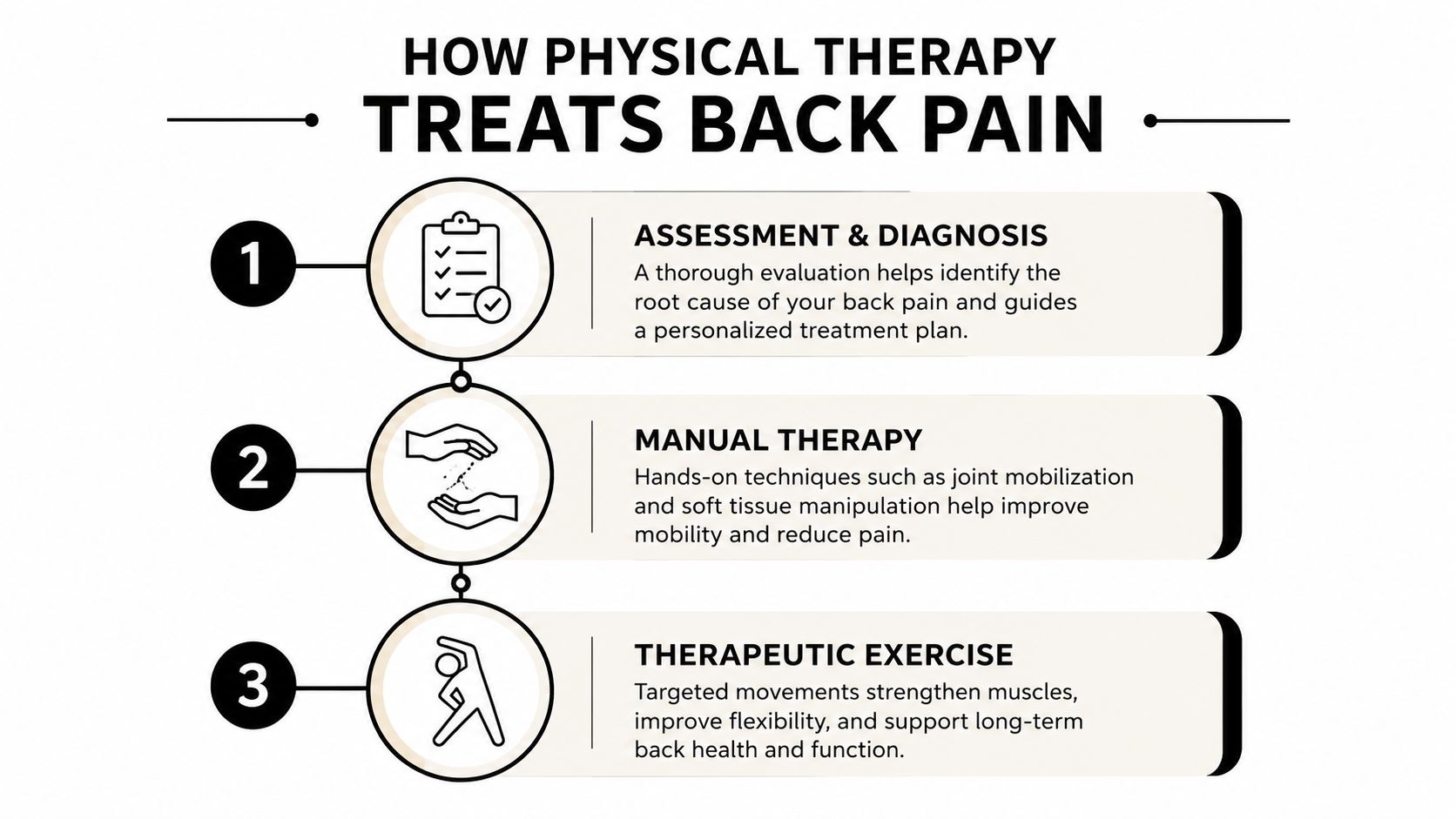
A sore back can make simple tasks feel uncertain, getting out of bed, bending to tie a shoe, or standing long enough to finish a meal. Back pain physical therapy breaks that cycle by combining hands-on care, targeted exercise, and clear education so you can move with more confidence during treatment and in daily life. For acute low back pain, a 2024 systematic review and expert consensus that included 21 systematic reviews and 21 randomized controlled trials recommended spinal manipulative therapy and low-level laser therapy, while for sub-acute low back pain it supported core stability exercise, spinal manipulative therapy, and massage 2024 consensus review.
Manual therapy to reduce stiffness and pain
Manual therapy covers joint mobilization, soft tissue work, and other hands-on techniques that help the spine move more comfortably. For chronic low back pain, the 2021 JOSPT clinical practice guideline supports thrust or nonthrust joint mobilization to reduce pain and disability. Many people with back pain are guarding so strongly that even small movements feel restricted, and gentle manual work can start to lower that guarding.
Hands-on care is not a cure by itself. It works best when it lowers pain enough for you to exercise well. In plain terms, it creates a better opening for movement, and movement is what changes the long-term picture.
Exercise that builds support instead of fear
Therapeutic exercise teaches your body to accept load again. For chronic low back pain, guideline-supported options include trunk muscle strengthening and endurance, specific trunk muscle activation, aerobic exercise, aquatic exercise, and general exercise JOSPT clinical practice guideline. The list is wide because different backs need different starting points.
A back that is highly irritated may begin with small, controlled motions. A back that is steadier may move sooner into strengthening and conditioning. The goal is not the hardest workout. The goal is the right dose for your current tolerance.
The early plan often feels simple. Then it becomes more demanding as your back learns that movement is safe again.
Education that makes the treatment stick
Education helps the progress last. Therapists teach body mechanics, pacing, sleep-position ideas, and how to handle flare-ups without stopping all activity. A guideline review of low-back-pain care also emphasizes exercise, education, self-management, and returning to normal activities rather than bed rest.
At MedAmerica Rehab Center, that approach is explained in a patient-centered way, so your plan can include therapy, chiropractic care, acupuncture, or shockwave therapy when appropriate. If you want to see how a visit is usually organized, our guide to what a typical physical therapy session looks like walks through the process step by step. The value is not in adding everything at once. It is in choosing the pieces that fit your situation and helping you understand why each one belongs there.
Your First Visit at MedAmerica Rehab Center
Your first visit should feel organized, not intimidating. At MedAmerica Rehab Center, the process is built around a same-day, patient-centered start, so you can get answers without dragging the problem out for weeks. The clinic also works with insurance-friendly processes, which helps remove one more barrier before treatment even begins.
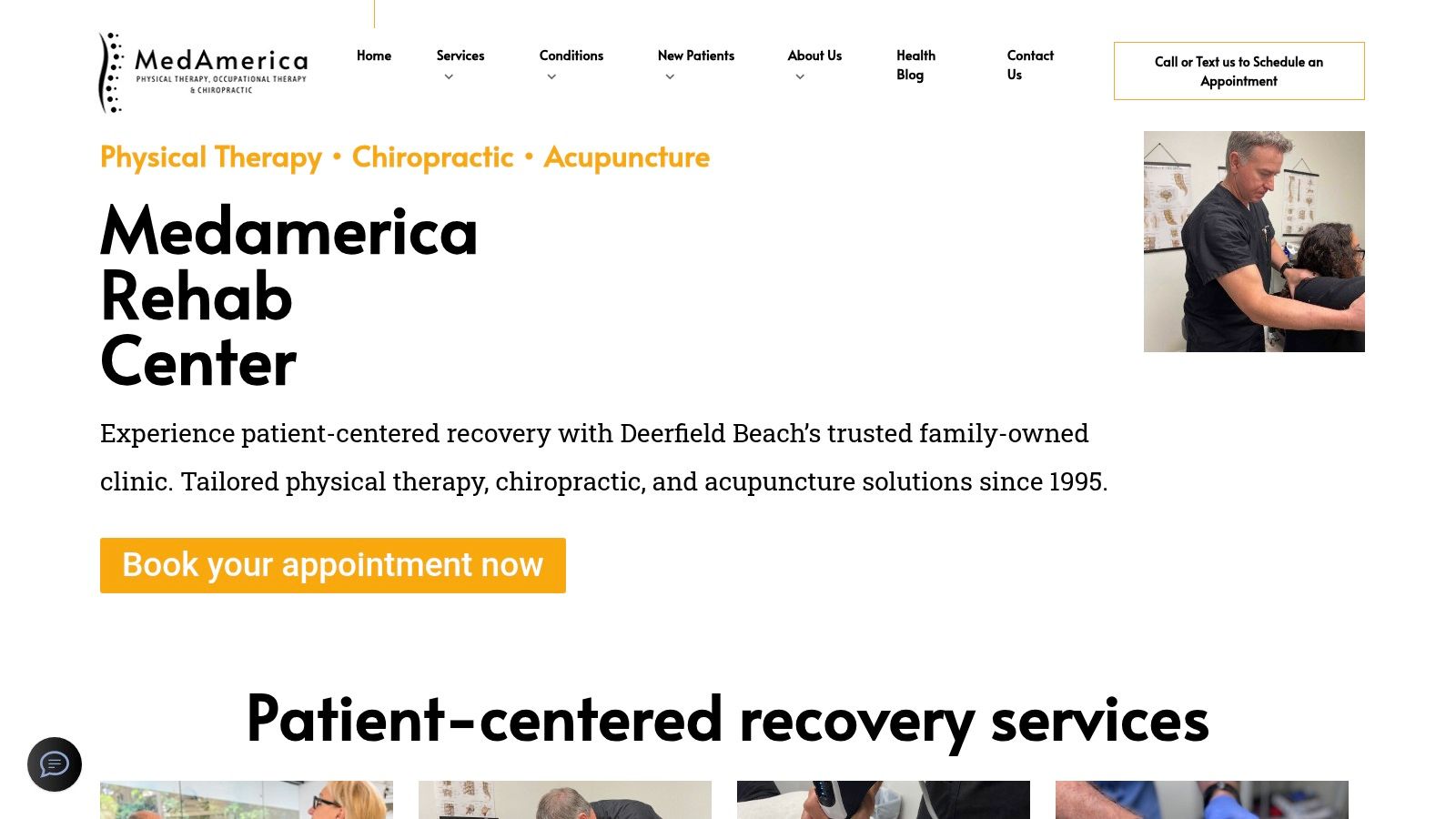
When you arrive, the therapist listens first. Expect questions about when the pain started, what movements make it worse, what activities you've stopped doing, and what you want back in your life. Then comes the movement exam, which may include posture, walking, bending, trunk control, and strength checks.
That first exam is not about proving how bad your pain is. It's about figuring out what your back can do safely right now. A good therapist uses that information to build a plan that fits your current tolerance instead of assuming you should already be doing advanced exercises.
What the plan usually starts to answer
You should leave the evaluation knowing a few concrete things.
- What seems to be driving your pain, whether that looks mechanical, nerve-related, or a mixed pattern.
- What movement is safe to start with, so you're not guessing at home.
- What your home program will focus on, so the work between visits is clear.
- How the clinic will measure progress, so improvement is based on function, not just a feeling.
How the visit stays practical after you leave
The in-clinic plan is meant to connect directly to daily life. That might mean learning how to stand from a chair without flaring pain, how to get through a workday with fewer symptoms, or how to keep walking without tightening up. If you want a sense of the flow before you come in, MedAmerica Rehab Center also explains a typical visit in more detail in its guide to what a typical physical therapy session looks like.
Later in the appointment, you'll usually leave with a clear next step, not a vague promise.
That structure matters because back pain recovery works better when you know exactly what to do next and why.
Safe and Simple Home Exercises for Back Health
Home exercises should feel controlled, not heroic. The goal is to wake up stiff joints, improve spinal motion, and give your core a chance to support you again. If any movement spikes pain sharply, stops you from breathing normally, or sends symptoms far down the leg, stop and check with a therapist before continuing.

Three gentle movements that often help
- Pelvic tilts: Lie on your back with knees bent. Gently flatten your low back into the floor, then release. Keep the movement small and smooth. This helps you find spinal motion without forcing a stretch.
- Cat-cow: Start on hands and knees. Slowly round your back, then let it return to a neutral curve. Move with your breath and keep the motion easy. This is useful when your back feels stiff after sitting.
- Bird-dog: From hands and knees, reach one leg back and the opposite arm forward, then return to start. Keep your hips level. This trains control, not speed.
- Knee-to-chest stretch: Bring one knee toward your chest while the other leg stays bent or extended. Hold only as long as it feels comfortable. This can ease a tight lower back on some days.
If you want more exercise ideas, the clinic's guide to best exercises for lower back pain can help you compare simple options with the ones a therapist may choose in person.
How to know you're doing enough
A good home routine usually leaves your back feeling a little looser or more awake, not worse for the rest of the day. Start with slow reps, then watch the response later that day and the next morning. If symptoms settle quickly, you're probably in the right range.
Practical rule: Small improvements repeated often beat aggressive workouts that leave you more guarded the next day.
These exercises are not a replacement for assessment, but they give you a safe starting point while you're getting care. They also help you see a key principle of recovery, your back usually responds better to guided movement than to total rest.
The Proven Success of Physical Therapy
A back that has been hurting for weeks or months can start to feel like it has its own rules. You bend, it complains. You sit too long, it tightens. Physical therapy gives that pattern a clear plan instead of guesswork, and that is a big reason it has a strong place in modern low back pain care. Guideline reviews support exercise, manual therapy, education, self-management, and a return to normal activity for persistent symptoms, and current guidance for chronic low back pain also points toward exercise-based care and joint mobilization guideline review of low-back-pain care, JOSPT clinical practice guideline. That is why PT belongs in first-line care.
Success is not just a smaller pain score on paper. It can mean you finish a workday with less guarding, lift your child without bracing first, or walk farther before your back starts to complain. Those changes matter because they show your body is tolerating normal life again, and that usually gives you more room to keep improving.
The process works better when it is repeated with purpose. A clinic visit can show you how to move, but the home plan is where those movements become habits your back can rely on. The people who tend to do well are the ones who treat therapy like learning a skill, not waiting for a quick fix.
The front desk also plays a part in whether care stays on track. Smooth scheduling, clear intake, and quick follow-up support, including systems that help with receptionist services for PT clinics, can make it easier to get started and keep appointments from slipping through the cracks.
The larger lesson is simple. PT works best when it is active, individualized, and continued long enough for your body to adapt. It is not about chasing perfect posture or doing endless stretches. It is about giving your back enough practice to handle real life again.
Your Back Pain Questions Answered
Is physical therapy supposed to hurt? The work should feel manageable, even if it is unfamiliar. Some exercises can feel tight, demanding, or mildly uncomfortable because your body is learning to move again, but sharp pain or pain that keeps climbing means the plan needs to be adjusted. A skilled therapist stays within a range your body can handle and uses your response to guide each session.
How long does treatment usually take? That depends on the source of the pain, how long the symptoms have been present, and how consistently you follow the plan. Back pain that is new often settles sooner, while pain that has been present for a while usually takes more time and repetition. Your therapist should explain the likely path based on your exam, not give you a one-size-fits-all answer. That helps you understand what is changing and why the pace may be different from someone else's.
Do I need a doctor's referral first? That depends on the clinic and your insurance plan, but many people can contact a physical therapy clinic directly to ask what is allowed. If you are unsure, the front desk can help you figure out the next step before you schedule. At MedAmerica Rehab Center, that first conversation is often the place where the process starts to feel less confusing.
Can telehealth help with back pain? Sometimes it can. Telehealth is useful for education, exercise coaching, and follow-up when getting to the clinic is difficult. It does not replace hands-on care in every situation, especially when the therapist needs to assess movement closely, but it can still help some patients stay on track and keep practicing their plan between visits telehealth PT review.
What if my pain has been there for months? You can still improve. Long-lasting back pain often responds to exercise training, manual therapy, and a plan that teaches your body how to move with less guarding. The focus changes from only calming symptoms to rebuilding confidence, tolerance, and daily function, one step at a time. That is often how patients start to feel safer bending, lifting, and returning to the activities they have been avoiding.
If you want a clear plan instead of more guessing, MedAmerica Rehab Center offers patient-centered physical therapy in Deerfield Beach with individualized treatment, hands-on care, and same-day access when available. Reach out, and the team can help you sort out what may be driving your back pain and what recovery can look like from here.
MedAmerica Rehab · Deerfield Beach
Talk to a clinician about your pain
Physical therapy, chiropractic, acupuncture and shockwave therapy under one roof, since 1995. Same-day appointments are available.
Mon–Thu 8:00 AM – 6:30 PM · Fri 8:00 AM – 3:00 PM