
Therapy Hand Gloves for Pain Relief and Recovery
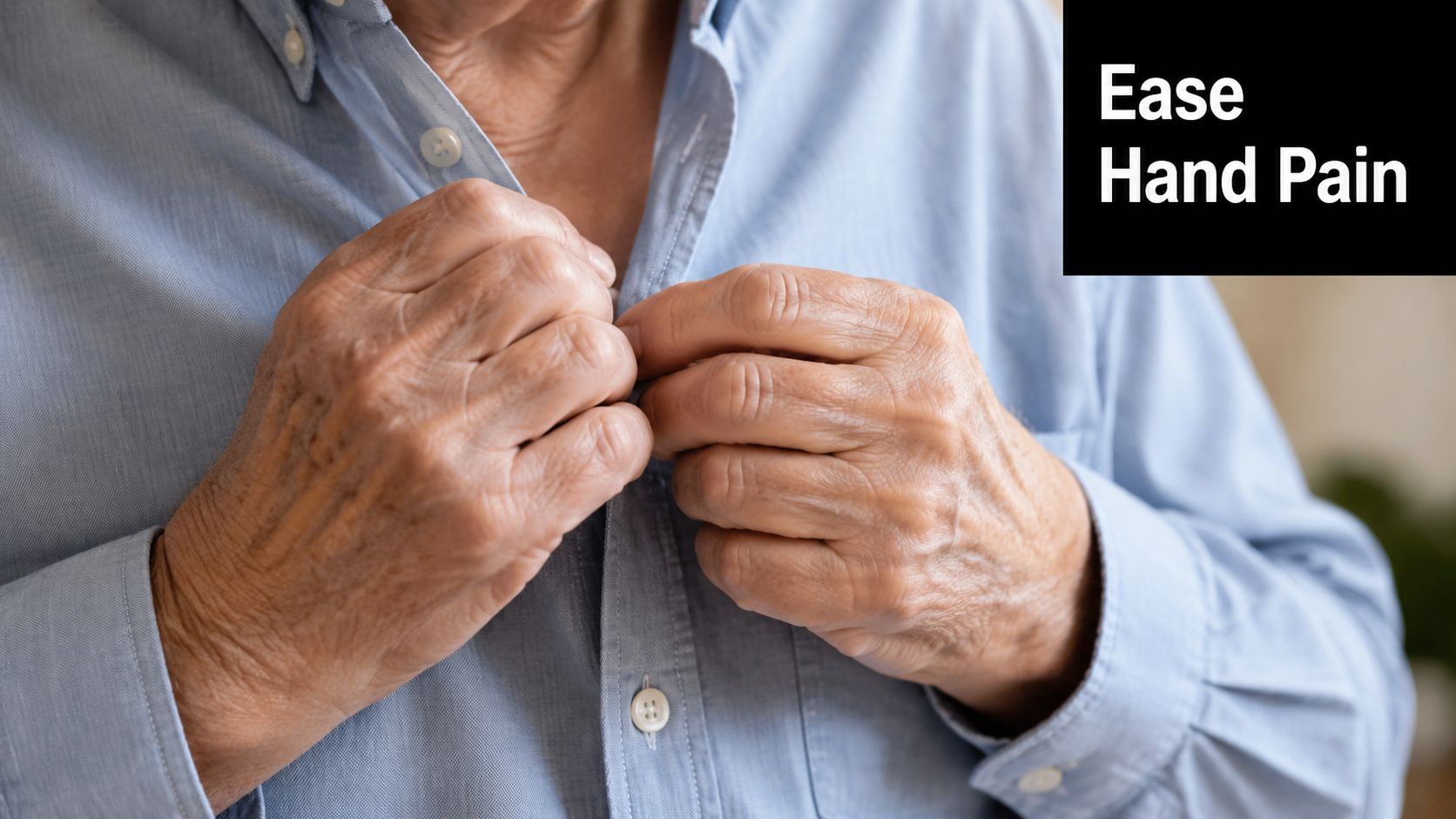
The first clue is usually small. You struggle to button a shirt, twist open a jar, or grip a coffee mug without that familiar ache in your knuckles, and by midday your hands feel swollen, stiff, or just plain tired. Therapy hand gloves can feel like a simple solution, but the question is sharper than most product pages admit, are they therapeutic, or are they just expensive warm gloves?
For a lot of people, the answer is somewhere in the middle. In hand arthritis and rheumatoid arthritis, gloves have a long history as a conservative, non-drug option for chronic symptoms, and the evidence shows they can help with dexterity, pain, stiffness, and swelling in some users, even if the response isn't identical from one person to the next review of gloves for rheumatoid arthritis evidence synthesis on rheumatoid arthritis therapy gloves. That's why they're worth understanding before you buy.
The best way to think about them is practical, not magical. Some gloves help mainly by warming the hand, some provide gentle compression, and some are engineered to assist movement in a more active way. If your hands are hurting now, the goal is not to sell you on a cure, it's to help you figure out whether a glove can make daily life easier, and whether you'd be better served by pairing it with exercise, splinting, or hands-on therapy.
Your Hands Deserve Relief
The frustrating part of hand pain is how ordinary it makes everything feel hard. A zipper catches. A pill bottle twists in your fingers and won't budge. Even lifting a grocery bag can remind you that your hands are not moving the way they used to. That kind of strain wears people down fast, especially when it happens every morning before the day has even started.
Therapy hand gloves enter that picture as a low-friction option. They don't demand a big commitment, they slip into daily routines, and for many people they offer enough comfort to make tasks feel less taxing. In arthritis care, that matters because these gloves have been used for years as a conservative way to ease chronic hand symptoms rather than replace other treatment rheumatoid arthritis glove review.
The key is to set your expectations correctly. If your pain comes with swelling, stiffness, and that heavy “my hands just don't want to open” feeling, a glove may take the edge off. If you need your grip strength or fine hand control to come back, the glove alone usually won't do all the work.
Practical rule: if a glove makes your hand feel more usable, keep it in the toolbox. If it makes you feel locked in, itchy, or more fatigued, the fit or the type is wrong.
A lot of people reach for a brace first because they want immediate relief. That makes sense. But hand support works best when it matches the symptom you're trying to calm down, not just the part of the body that hurts. If you're already doing hand-eye work or coordination practice, a resource like proven coordination drills can complement glove use by keeping the hand active while symptoms settle.
How Therapy Gloves Support Your Hands
Think of a good therapy glove as a gentle, supportive hug for your joints. It's not there to immobilize your hand the way a rigid splint would. Instead, it aims to make the hand feel less reactive, less puffy, and a little more cooperative during the day or overnight, depending on why you're wearing it.
Compression, warmth, and support
Compression can help the hand feel more contained, which many patients describe as less “busy” or less swollen. Warmth is the other obvious mechanism, and for stiff hands it often matters more than people expect. The best available evidence summary found that many users with arthritis may be getting most of the benefit from the warmth itself, which is one reason ordinary loose-fitting gloves can sometimes feel just as helpful as a special product NIHR evidence summary on arthritis gloves.
There's also a mild stabilizing effect. A glove can remind you to move more deliberately, especially if pain has made you guard the hand and hold it awkwardly. Research into rheumatoid arthritis gloves found that multiple studies reported improved dexterity when gloves were worn, even though the clinical effect wasn't uniform across designs and groups rheumatoid arthritis glove review.
That's the important nuance. A glove doesn't magically rebuild the hand. It can reduce irritation enough that moving feels more possible.
What that means in daily life
For some people, the benefit is simple comfort during chores, typing, or resting. For others, the glove works best when it creates a window for better movement, especially if it's combined with therapy exercises, splinting, or task practice. If you're trying to rebuild control after an injury or neurologic issue, a glove may support the process, but the recovery work still has to happen.
Key Benefits for Arthritis Edema and Neuropathy
The strongest evidence for therapy hand gloves sits in symptom control, not miracle-level restoration. In rheumatoid arthritis, the pattern is consistent enough to matter clinically, pain, stiffness, and swelling often improve, but hand function and grip strength usually need other interventions if you want bigger gains evidence synthesis on rheumatoid arthritis therapy gloves. That distinction helps you use the glove for the right job.
Arthritis and morning stiffness
Arthritic hands often feel worst after rest. A glove can help the hand feel warmer and less resistant when you first start moving, which is why some people wear them in the morning or during quiet periods at home. The literature on rheumatoid arthritis gloves supports improved symptom relief, even when the functional payoff is modest evidence synthesis on rheumatoid arthritis therapy gloves.
Edema and a puffy, heavy hand
When swelling is the main problem, gentle compression can be useful for symptom management. The glove's value here is less about strength and more about containment, helping the hand feel less ballooned and more comfortable while you move it. That said, swelling that persists or worsens should be assessed, because a glove isn't a substitute for figuring out why the edema is happening.
Neuropathy and altered hand sensation
Neuropathy is trickier. A glove won't restore nerve function, but some people like the added warmth and the sense of input it gives them. If your hands feel numb, clumsy, or unpredictable, the glove may help with comfort during light activities, though it shouldn't be expected to solve sensation loss.
For exercises that build hand skill, the resistance work in hand exercise putty can be a useful companion when your therapist wants active strengthening instead of passive support.
Post-op or recovery periods
After surgery or injury, gloves are usually about comfort, swelling management, and making movement more tolerable, not about replacing a formal rehab plan. If your hands need to relearn force production or coordinated motion, a glove can be one part of the setup, but not the whole solution.
A Guide to Different Types of Therapy Gloves
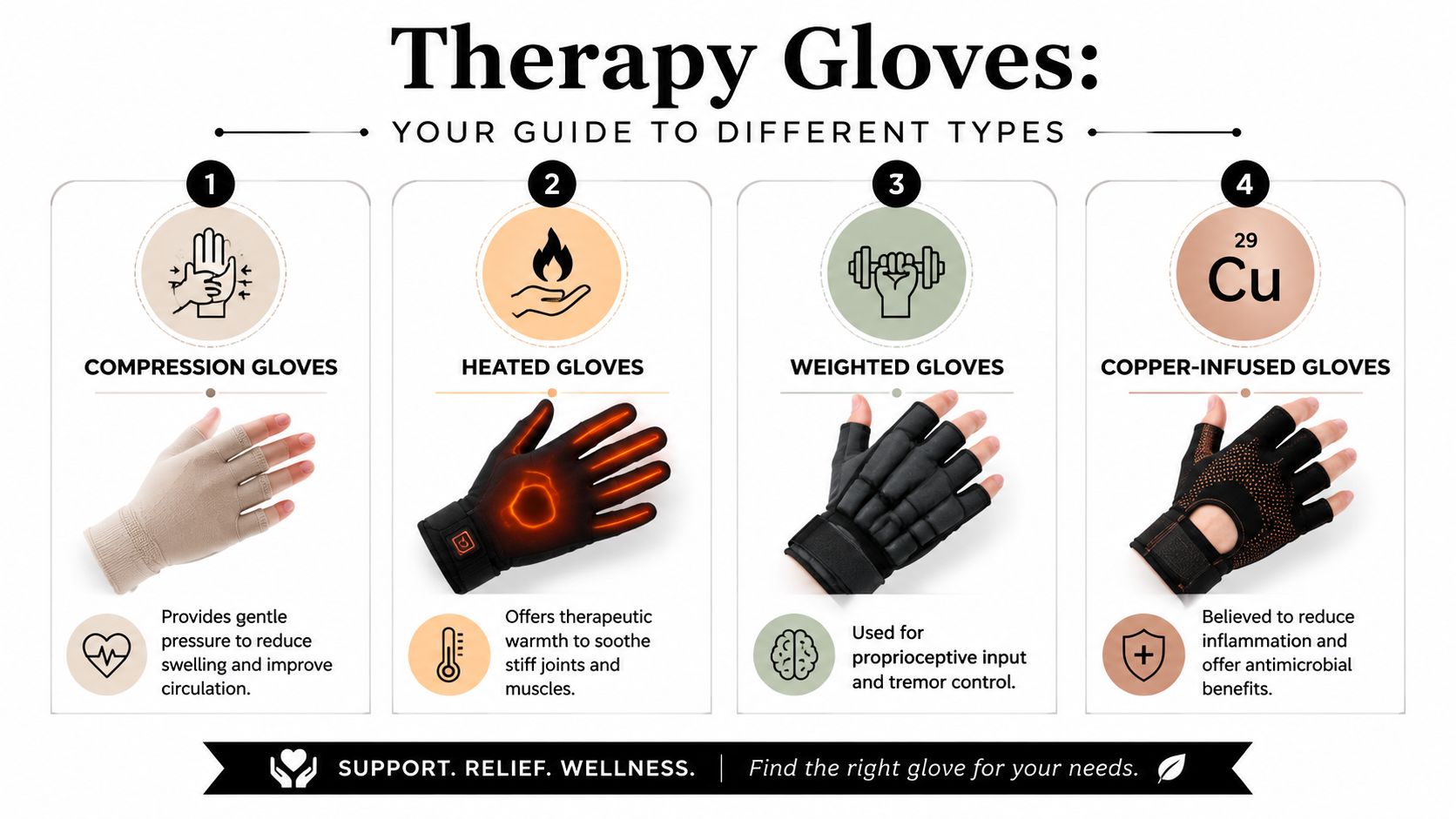
Not all therapy hand gloves do the same job, and that's where buyers get tripped up. Some are basically soft compression sleeves with finger coverage. Others are built for warmth, dexterity, or tech-assisted movement. The right choice depends on whether you want comfort, symptom control, or actual rehab assistance.
Compression gloves
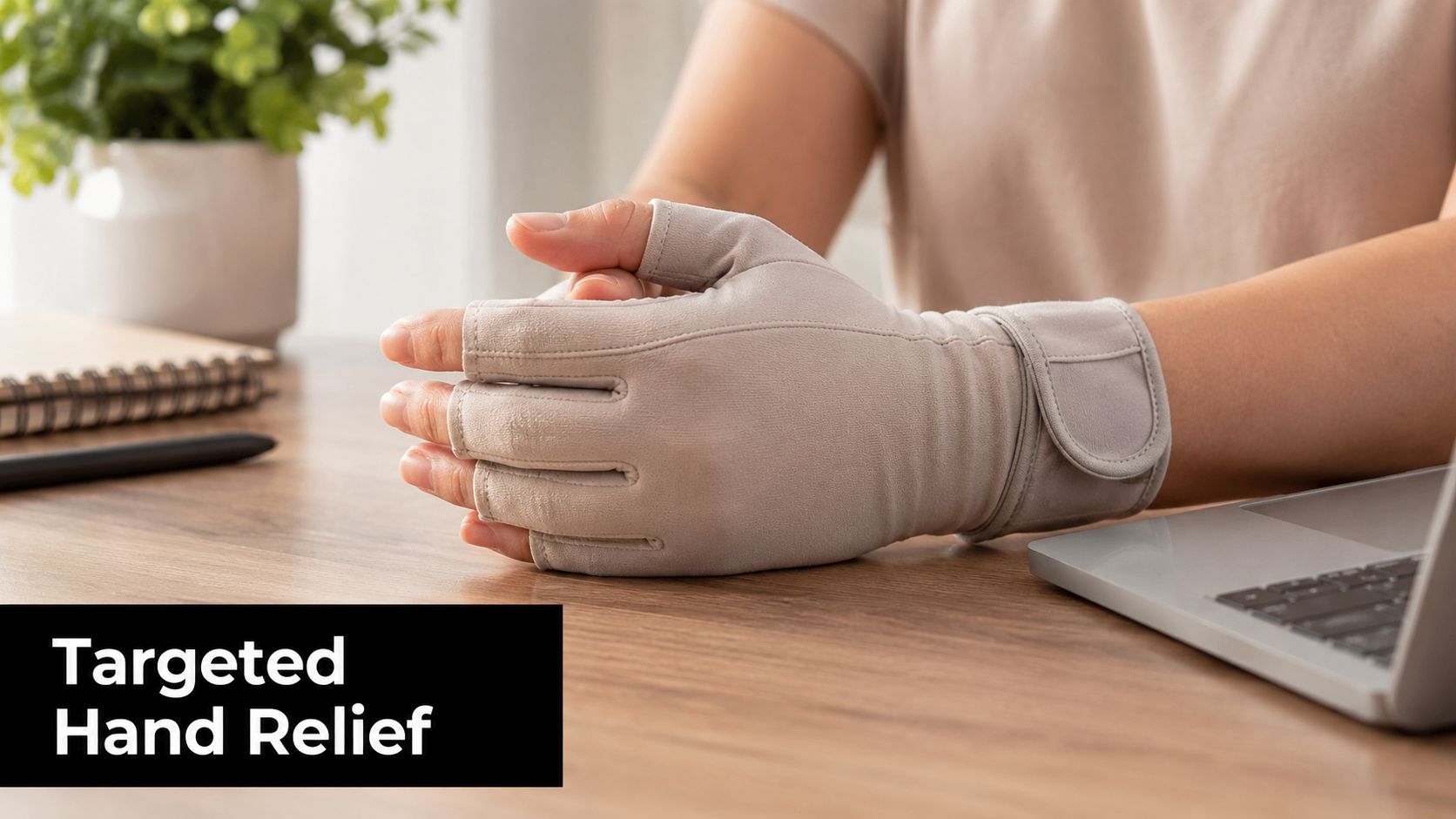
These are the classic option, usually made from stretchy fabric such as nylon and spandex blends. Their job is simple, apply gentle pressure, reduce the sense of swelling, and make the hand feel more supported during rest or activity. They're often the first choice for arthritis flares and general stiffness.
Thermal gloves
Thermal styles lean into warmth, sometimes with materials marketed around copper or ceramic fibers. The evidence matters here, because warmth may be doing most of the work for many users rather than any special material claim NIHR evidence summary on arthritis gloves. If a cheap ordinary glove feels as good as a branded “therapy” glove, that's not unusual.
Fingerless versus full-finger designs
Fingerless gloves preserve dexterity, which helps if you need to type, button, write, or grip small items. Full-finger designs cover more surface area and may feel better when warmth is the priority. The trade-off is always the same, more coverage can mean less precision.
Soft-robotic exogloves
The category starts moving beyond passive support. A 2024 home-use study of a soft-robotic glove reported improvements in grip strength and hand-function tests after six weeks, with no serious adverse events and an average total use of 33.0 hours, or about 47 minutes per day therapy gloves market analysis and home-use study summary. That same market analysis estimated the therapy gloves market at over USD 3.5 billion in 2024 and projected it to reach USD 6.6 billion by 2034, which reflects how much the field has expanded same source.
The engineering side is stricter than most shoppers realize. For advanced hand-therapy exogloves, published design criteria indicate at least 5 N per finger to support most daily activities, which shows these devices are meant to do real mechanical work, not just feel supportive design criteria for hand-therapy exogloves.
How to Choose and Size Your Therapy Gloves
The best glove is the one you'll wear. A glove that feels nice for two minutes but cuts off circulation, slips around, or blocks tasks is the wrong glove, even if the label sounds impressive. That's why material, compression, and fit matter more than marketing language.
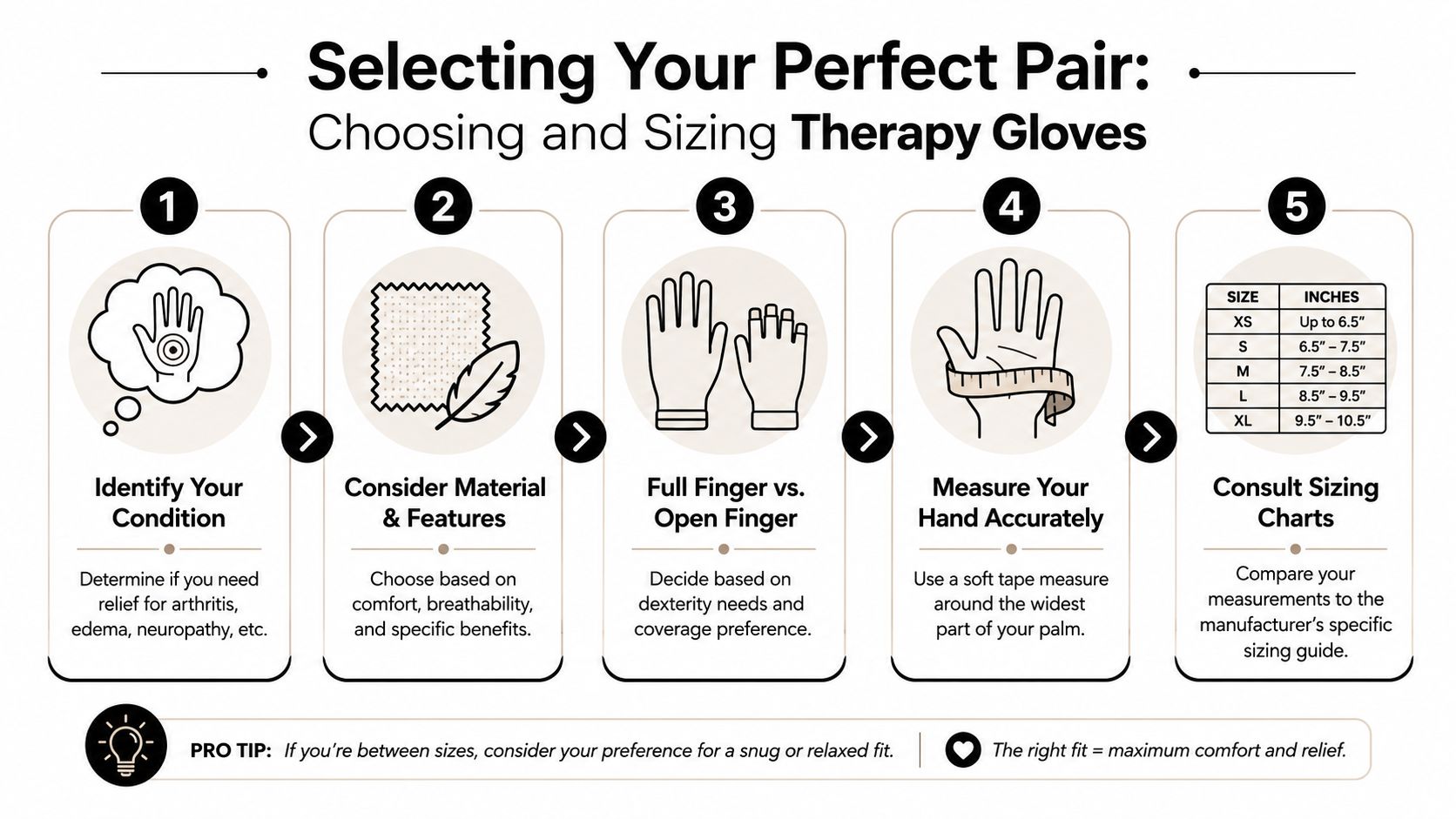
Start with your symptom pattern
If stiffness and aching are the main issue, warmth-friendly gloves may be enough. If swelling is the problem, compression becomes more relevant. If you need to use your hands for tasks, open-finger styles usually make more sense than full coverage.
Check the fit before you check the features
Fit controls comfort. Measure the widest part of your palm with a soft tape measure, then compare it with the manufacturer's chart, not just a generic small, medium, large label. A glove that's too tight can feel worse than no glove at all.
Choose support based on the task
If you mostly need daytime function, prioritize dexterity. If you're using the glove for rest or symptom calming, prioritize warmth and a snug but not restrictive feel. If you're looking at advanced rehab devices, remember that published design work for exogloves emphasizes finger force output as a core requirement, not a luxury feature design criteria for hand-therapy exogloves.
Practical rule: if your fingers tingle more, color changes, or the glove leaves deep marks, it's too tight. If it slides around, it's too loose.
If you're also comparing support options for the thumb, a separate device like a MetaGrip thumb brace may be more specific than a glove, especially when the pain is centered at the base of the thumb rather than across the whole hand.
Best Practices for Wearing and Caring for Your Gloves
The glove only helps if you wear it in the way your hand tolerates best. For some people that means short daytime use during flare-ups. For others it means longer wear when swelling or stiffness is the main complaint. The right schedule is the one that reduces symptoms without making the hand feel trapped.
A few habits make a big difference:
- Wear them for the right reason: use compression styles for swelling and stiffness, and use thermal styles when warmth is what your hands respond to best.
- Check the skin regularly: look for redness, pressure lines, itching, or numbness after removal.
- Keep the fabric clean: wash according to the label so the fibers keep their shape and stretch.
- Dry them gently: air-drying is usually safer than heat, which can break down elasticity.
If you're wearing gloves during light activity, keep the task simple at first. Typing, folding towels, or gentle household work is usually more realistic than forceful gripping. If your hands get more painful as you wear them, stop and reassess the fit or the type.
Night wear can help some people with stiffness, but only if it stays comfortable. A glove shouldn't wake you up, bunch at the knuckles, or make your fingers feel cold. The moment it becomes irritating, it's no longer serving its purpose.
FAQ and When to Consult a Hand Therapist
Are these just expensive warm gloves?
Sometimes, yes, warmth is the main benefit. That's not a weakness, it's just the reality for many arthritis users, and one NIHR evidence summary found that special arthritis gloves were often no better than looser-fitting alternatives, with only small pain improvements overall NIHR evidence summary on arthritis gloves. If warmth is what helps you, an ordinary glove may be enough.
Can they help with pain and swelling?
Yes, especially when the goal is symptom control. In rheumatoid arthritis, evidence shows improvement in pain, stiffness, and swelling, but better hand function usually needs more than gloves alone evidence synthesis on rheumatoid arthritis therapy gloves.
Should anyone avoid them?
If a glove increases numbness, leaves deep marks, changes finger color, or makes your hand feel colder, it's not the right choice. That kind of response means the fit, material, or pressure is off, and you should stop using it until it's checked.
When should you see a hand therapist?
If your pain is stopping you from using the hand normally, if swelling keeps returning, or if you're losing grip strength or dexterity, you need a plan that goes beyond passive support. A therapist can match the glove to the problem, then pair it with the exercises, splinting, or movement retraining that change function.
For hands that need more than comfort, the right next step is a personalized assessment through hand physical therapy. If you're in Deerfield Beach and you want clear guidance on whether a glove is enough, or whether something more specific is needed, reach out to MedAmerica Rehab Center and get your hands evaluated before the problem gets harder to reverse.
A CTA for MedAmerica Rehab Center.
MedAmerica Rehab · Deerfield Beach
Talk to a clinician about your pain
Physical therapy, chiropractic, acupuncture and shockwave therapy under one roof, since 1995. Same-day appointments are available.
Mon–Thu 8:00 AM – 6:30 PM · Fri 8:00 AM – 3:00 PM