
Hamstring Injury Recovery: A Step-by-Step Guide
You push off to sprint, step into a deep lunge, or reach awkwardly to grab something from the floor. Then it hits. A sharp pull in the back of your thigh, sometimes with a sudden pop, and your leg instantly feels weak, tight, or unreliable.
That moment creates the same questions every time. How bad is this? Should you rest completely? How long will hamstring injury recovery take? The frustrating part is that hamstrings often feel “almost better” before they're ready. That's why so many people reinjure them.
A good recovery plan does more than settle pain. It rebuilds strength, restores control, and prepares the hamstring for real-life demands like walking fast, climbing stairs, lifting, cutting, and sprinting. Generic advice like “rest and stretch” misses the part that matters most. You need the right exercise at the right phase.
That Sudden Pop in Your Thigh What Now
You feel a sharp catch in the back of the thigh, maybe even a pop, and the leg immediately loses trust. Some people can still walk, but every step feels guarded. Others limp right away or notice the muscle tighten up within minutes.
In the clinic, that first description matters. A hamstring strain can be a small muscle injury that settles with the right progression, or a larger tear that needs closer medical follow-up. What I watch for early is not just pain level, but how the leg handles basic load. Can you walk without a clear limp? Can you straighten the knee comfortably? Does the back of the thigh feel weak, unstable, or suddenly bruised?
A mild strain usually feels like a pull or tight spot in the muscle belly. You can often keep walking, but faster strides, stairs, or bending forward remind you it is there. A moderate injury tends to bring more obvious weakness and a protective limp. A more severe tear can make normal walking difficult and may come with rapid bruising, swelling, or a strong snapping sensation.
What we usually see clinically
Symptoms in the first day do not always predict the full recovery time. That is one reason hamstrings get people into trouble. The leg often calms down before the tissue is ready for faster walking, hills, lifting, or sport.
Here is the practical pattern we see most often:
| Injury pattern | What it often feels like | General recovery direction |
|---|---|---|
| Mild strain | Tightness, soreness, cautious walking | Often improves quickly, but still needs a graded rebuild |
| Moderate strain | Clear pain, limp, weakness with stairs or longer stride | Usually needs structured rehab and progressive strengthening |
| Severe tear | Major pain, bruising, obvious loss of function | Often needs medical assessment and closer supervision |
One trade-off shows up early. Resting too aggressively can reduce pain in the short term, but it also lets strength and coordination drop off. Pushing too soon creates a different problem. You may feel good enough to stretch hard or jog, then flare the injury because the hamstring has not regained load tolerance yet.
That is why modern hamstring recovery goes beyond rest and stretching. Early on, the goal is to calm the area and restore comfortable movement. After that, the work shifts toward rebuilding strength, then adding eccentric loading and neuromuscular control so the hamstring can handle real speed, deceleration, and longer stride lengths again. If you need help using cold therapy for pain in the first day or two, this guide to ice packs in physical therapy explains where it fits.
The first decision
Get assessed promptly if you heard a loud pop, saw quick bruising or swelling, cannot bear weight normally, or feel a clear defect in the muscle. Those signs raise more concern for a larger tear or tendon involvement.
If the injury seems milder, do not rely on pain alone. A hamstring can feel much better while still lacking the strength and control that prevent reinjury. A phased plan gives you a safer path back.
Immediate Steps for the First 72 Hours
The old advice was simple. Rest, ice, compression, elevation, and wait. That approach still has pieces that can help, but it's incomplete. More recent guidance recognizes that early movement can be superior to rigid rest for low-grade injuries, while also noting there is “no consensus on the optimal order of exercise progression” for non-athletes, as discussed by Cleveland Clinic's hamstring injury overview.
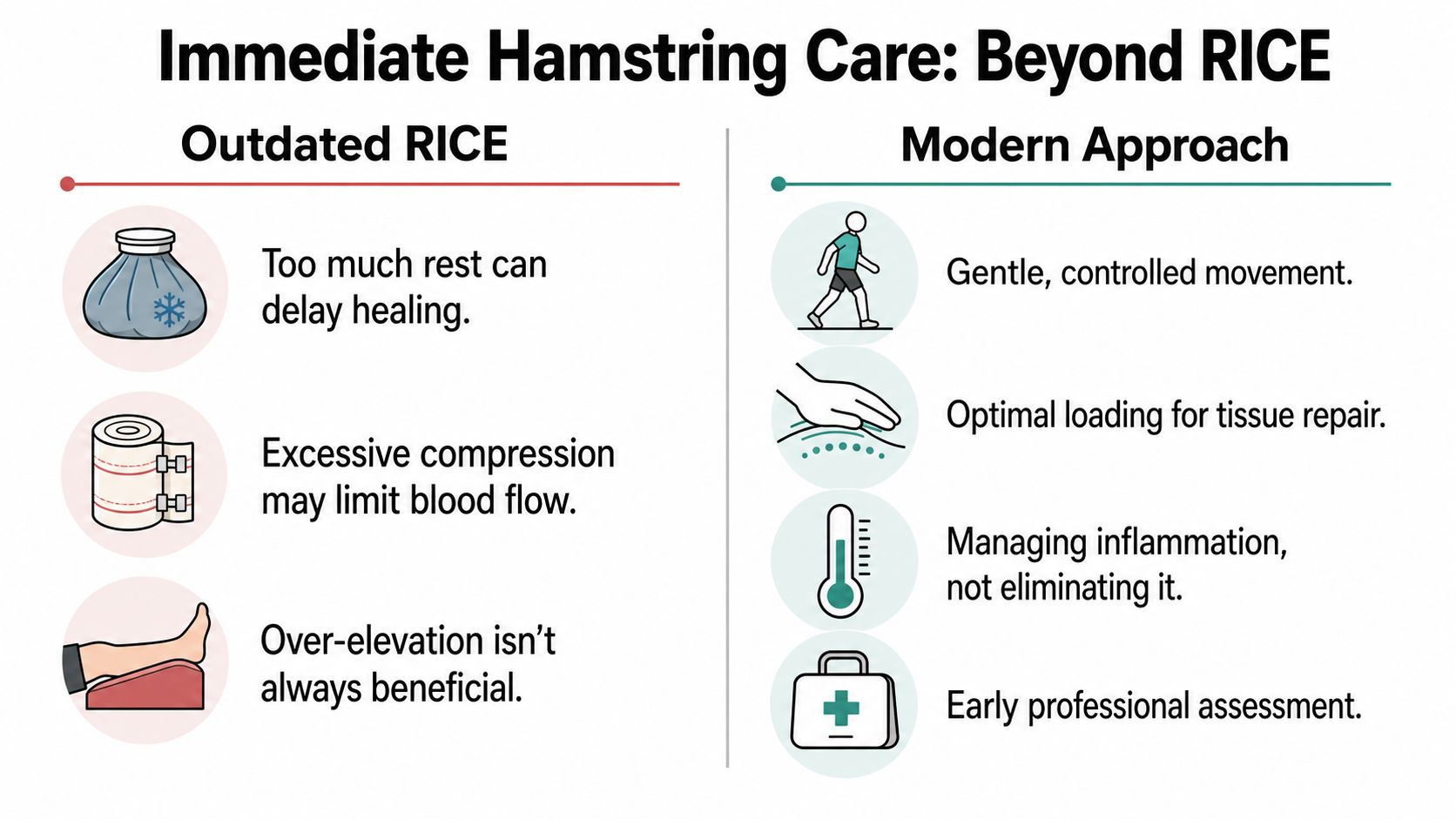
What to do right away
The first few days are about protecting the injury without shutting the leg down completely.
- Reduce the load: Stop sprinting, jumping, deep hinging, and any movement that creates sharp pain.
- Walk carefully: If you can walk without a major limp, short easy walking is often better than total inactivity.
- Use compression for comfort: A light wrap or sleeve can help you feel more supported.
- Use ice strategically: Ice can calm pain, but it shouldn't become the whole treatment plan. If you want a practical breakdown of when cold therapy helps, this guide on ice packs in physical therapy is useful.
How to read your symptoms
Pain quality matters.
Sharp, stabbing, or catching pain means stop and reduce the demand.
A mild ache or gentle pulling sensation during controlled movement can be acceptable if it settles quickly afterward.
That distinction keeps people from making two common mistakes. One is doing nothing because every sensation feels scary. The other is pushing into aggressive stretching because “it's just tight.”
Practical rule: In the first 72 hours, choose movement that leaves the leg feeling the same or slightly better afterward, not worse.
What doesn't work well
A few habits tend to slow things down:
- Complete bed rest: It can make the leg stiffer, weaker, and more guarded.
- Hard stretching into pain: Early stretching can pull on healing fibers before they're ready.
- Testing it repeatedly: Trying to jog “just to see” often irritates the injury.
- Ignoring your gait: Limping all day creates compensations at the hip, low back, and calf.
A simple first 72-hour checklist
- Protect the tissue by avoiding painful stride length and explosive movement.
- Keep gentle motion in the system with brief, comfortable walking if tolerated.
- Manage symptoms with compression, rest breaks, and ice as needed for pain.
- Watch for red flags such as severe bruising, major weakness, or inability to bear weight.
- Plan your next phase instead of waiting for the leg to magically normalize.
The first few days aren't about doing more. They're about doing the right amount.
The Early Rehab Phase to Restore Mobility and Control
After the first few days, the hamstring usually needs more than protection. It needs guided movement, light loading, and better coordination so the healing tissue does not stay guarded. This phase often starts once walking is easier and resting pain has settled, but the exact timing depends on how irritable the strain still is.
Clinical guidance from the American Academy of Orthopaedic Surgeons on hamstring muscle injuries supports a gradual return to motion and strength rather than forcing aggressive stretching early.
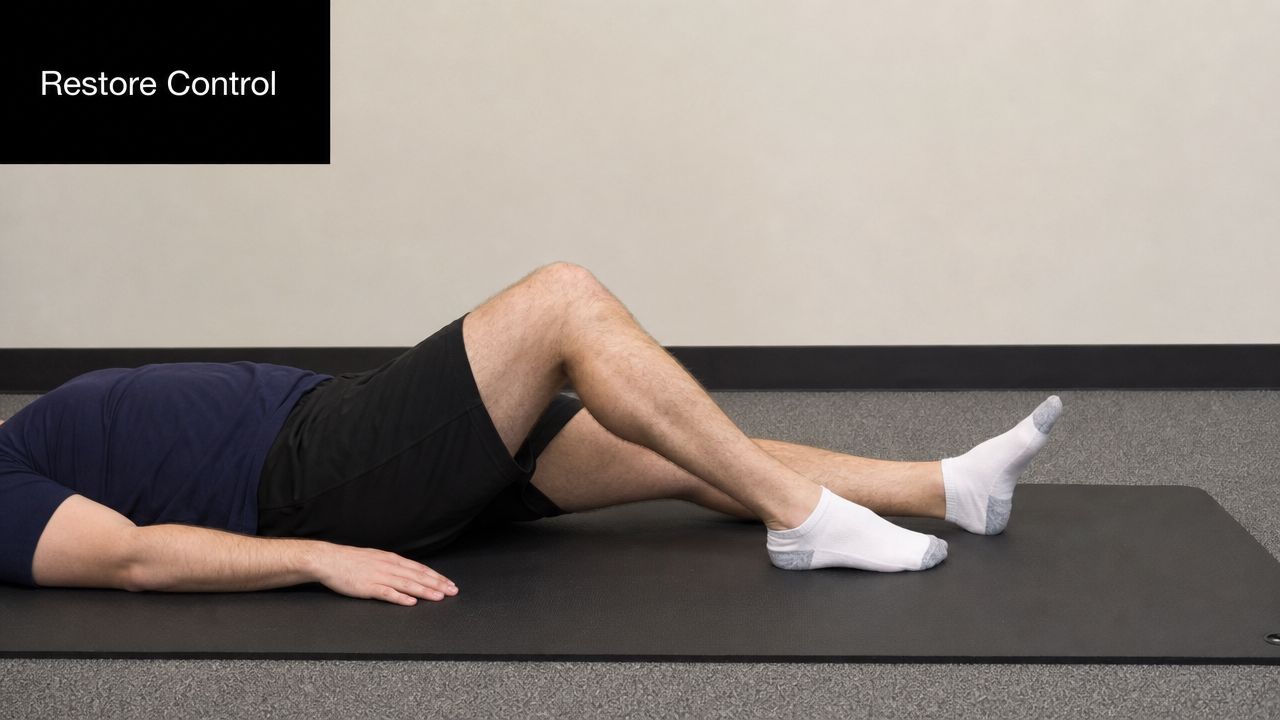
What this phase should feel like
Early rehab should feel calm and repeatable. The hamstring may still feel aware, stiff, or mildly tight, but the exercises should not create a sharp pull, a protective spasm, or symptoms that linger for hours afterward.
I tell patients to watch the quality of the movement as much as the pain level. Smooth bending, steady breathing, and less hesitation matter here. If the leg tenses up and you start bracing through your jaw, shoulders, or low back, the drill is too demanding or the range is too large.
Exercises that usually fit well here
Good choices are simple, controlled, and easy to dose:
- Heel digs: Lie on your back with knees bent and gently press the heel into the floor. This gives the hamstring a low-threat isometric load.
- Short-range bridges: Raise the hips only to the point where the hamstrings stay engaged without cramping.
- Active knee flexion: Bend the knee through a comfortable range in standing or lying face down.
- Supported hip hinges: Use a wall, counter, or dowel to practice a shallow hinge and restore coordination between the trunk, hips, and hamstrings.
- Pelvic control drills: Small pelvic tilts and trunk position work can reduce unnecessary tension along the back of the thigh.
For readers who want a few basic lower-body drills to pair with this stage, these leg strengthening exercises for early rehab progressions can be a useful starting point.
A common mistake here is chasing the sensation of a big stretch. Early on, that usually irritates the area more than it helps. Isometrics, small bridges, comfortable mobility work, and normal walking are usually better tolerated than deep forward folds, ballistic stretching, sprint drills, or max-effort strengthening.
Signs you're ready to progress
Progress shows up in daily function before it shows up in performance. Walking looks more normal. Stairs feel less guarded. Sitting down and standing up stop triggering that immediate protective grab in the back of the thigh.
The exercises also start to feel cleaner. Heel digs, bridges, and basic hip hinge work become easier to control, and any mild soreness settles by the next day instead of stacking up.
This stage looks modest, but it is where re-injury prevention starts. If mobility returns without control, the leg may feel better at rest and still be unprepared for faster movement. Getting activation, coordination, and tolerance to light load in place now makes later eccentric strengthening and neuromuscular work much more effective.
Building Strength for a Full Recovery
Strength work is where recovery becomes durable. You need enough force production to handle daily activity, but you also need the hamstring to tolerate load while it lengthens. That second piece is why eccentric training matters so much.
A systematic review found that rehabilitation programs using eccentric exercises, isometric drills for sprint-specific demands, and neuromuscular control drills are highly effective for hamstring rehabilitation and reducing reinjury risk, as reported in this PubMed review on hamstring rehab.
Early in this phase, it helps to think in layers. First wake the muscle up. Then load it. Then challenge it under longer muscle lengths and more demanding movement.
A clear visual helps: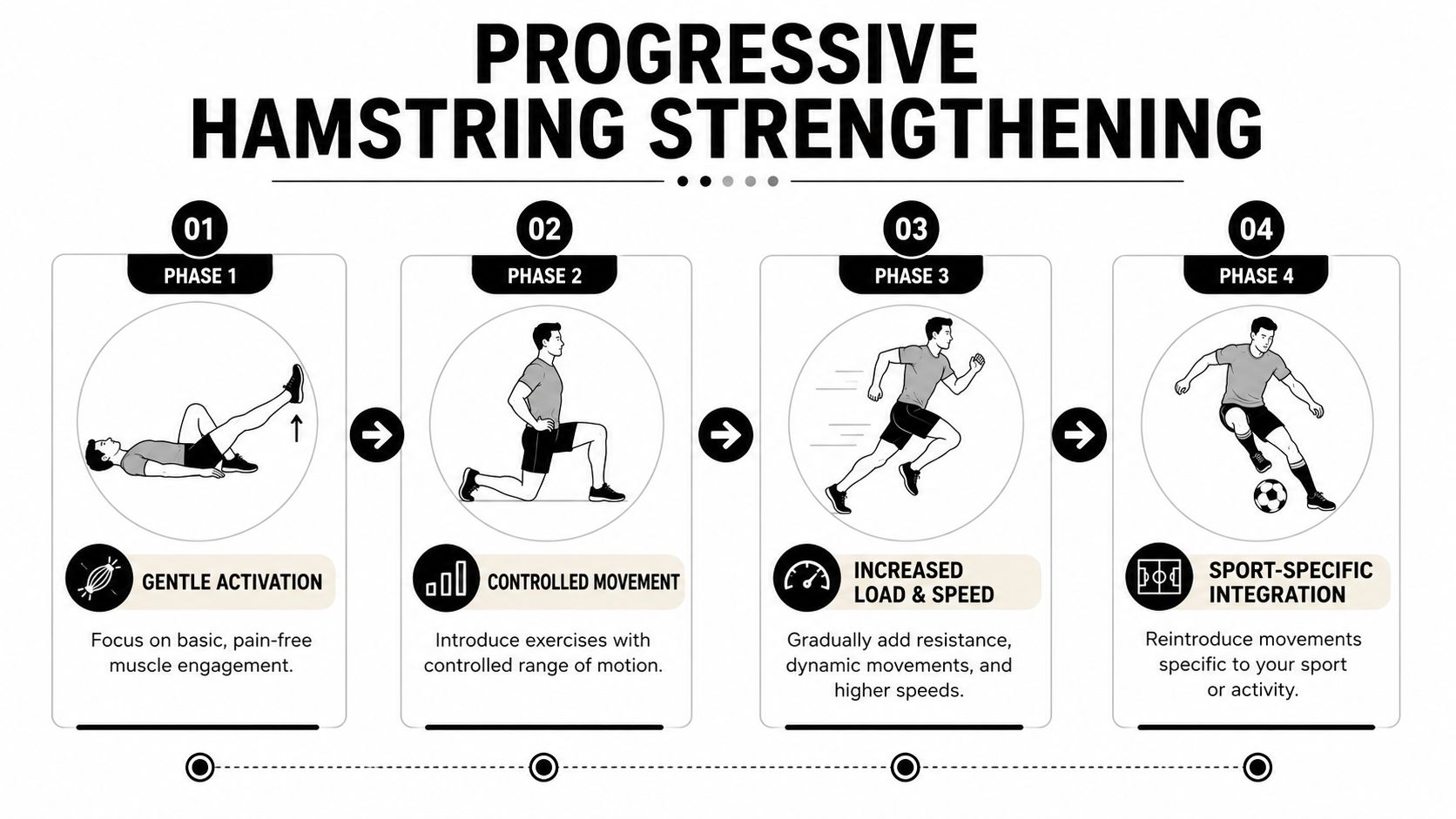
Start with simple strength
The first layer is basic strength that you can control well.
- Glute bridge progressions: Double-leg bridge, then bridge holds, then feet-raised versions.
- Hamstring curl patterns: Use a machine, bands, or sliders if available.
- Supported hip hinge work: Bodyweight Romanian deadlift patterns help restore the hamstring's role at the hip.
- Isometric holds: Longer holds can improve tolerance without the irritation some people feel from motion.
If you want more leg strengthening ideas that complement this phase, these four exercises to strengthen your legs fit well alongside hamstring-focused work.
Why eccentric work is different
A hamstring usually gets hurt when it's lengthening under load, not when it's shortening. That's why concentric-only rehab often leaves a gap. You may feel stronger on easy curls and still struggle when taking a long stride, decelerating, or lowering into a hinge.
Eccentric work trains the muscle to manage force while lengthening. In practice, that means slower lowering, more control at end range, and better resilience when life gets fast.
The “secret weapon” in hamstring injury recovery isn't a fancy machine. It's a progressive eccentric plan done with patience.
A practical progression
Here's a useful way to organize this stage:
Stage one with low complexity
Use exercises that are easy to set up and easy to control.
- Slider hamstring curls
- Bridge walkouts
- Slow lowering from a short-range RDL
- Isometric split-stance holds
Stage two with more length and load
Once the leg tolerates stage one, increase the demand.
- Romanian deadlifts with light resistance
- Single-leg bridge variations
- Longer-lever bridge holds
- More challenging slider variations
Stage three with advanced eccentric focus
At this stage, more demanding drills come in.
- Nordic hamstring curl progressions
- Single-leg RDLs
- Lengthened-position hamstring resistance
- Faster but controlled hinge patterns
A lot of people know Nordics by name but perform them too aggressively. Start with a short range, controlled lowering, and assistance as needed. The goal is quality, not dramatic struggle.
For a movement demo and training ideas, this video is a helpful reference:
What progress should look like
Strengthening is working when the leg handles more without becoming irritable later that day or the next morning. You should notice smoother stairs, stronger push-off, and less apprehension with longer steps.
The wrong approach usually looks like this:
- Doing heavy strength work while basic walking still flares symptoms
- Skipping isometrics because they seem too easy
- Returning to running before the hamstring tolerates loaded hinging
- Chasing soreness as proof the workout “worked”
Good rehab isn't random. It stacks the right stress in the right order.
Advanced Rehab and Preventing Reinjury
Pain-free doesn't mean game-ready. That's the hard truth with hamstrings. These injuries come back often when people stop rehab as soon as walking, jogging, or gym work feels normal.
The recurrence problem is real. Hamstring strain injuries recur in about 30% of cases, and a meaningful share happen in the first 2 weeks after return to sport, according to this review of recurrence risk and return-to-sport criteria. The same source notes important benchmarks before full return, including eccentric and isometric hamstring force within 10% of the opposite side and a hamstring-to-quadriceps ratio of at least 65%.
Why strength alone isn't enough
A hamstring doesn't work in isolation. It has to coordinate with the trunk, pelvis, glutes, and the rest of the leg while speed changes, direction changes, and fatigue build. That's why someone can test “strong enough” in one position and still strain the muscle during a sprint, awkward step, or fast deceleration.
This is the phase where you build resilience, not just tissue healing.
What advanced rehab should include
Use a mix of tasks that challenge balance, control, and force transfer:
- Single-leg hinge patterns: Single-leg RDLs are excellent because they train hamstrings, glutes, balance, and pelvic control together. If you want a thoughtful breakdown of why unilateral work matters, Telomyx single leg training is a useful read.
- Trunk stabilization drills: Dead bugs, carries, anti-rotation presses, and split-stance control work help stop the pelvis from becoming sloppy under load.
- Progressive agility: Start with planned direction changes and controlled footwork before reactive drills.
- Running rebuilds: Don't jump straight to hard sprints. Build from short accelerations and technically sound strides.
Returning because the leg is quiet at rest is one of the fastest ways to end up back at the starting line.
Return to sport is a checklist, not a feeling
For active adults and athletes, the final phase should answer hard questions:
| Question | What you want to see |
|---|---|
| Is strength symmetrical enough? | The injured side is close to the uninjured side |
| Can you decelerate well? | No sharp pain, no hesitation, good trunk control |
| Can you handle speed? | Gradual exposure without next-day flare-up |
| Can you perform your real activity? | Sport or work-specific movement looks normal |
The same review emphasizes another practical benchmark. Athletes should accumulate high-speed running exposure above 5.5 m/s before full game participation in order to reduce reinjury risk. Even if you're not a competitive athlete, the principle still applies. You need graded exposure to the exact demands that caused the injury in the first place.
Common mistakes in the final phase
- Going from rehab drills to full-speed effort too quickly
- Ignoring asymmetry because daily life feels fine
- Skipping deceleration and change-of-direction work
- Stopping strengthening once running returns
A full recovery means the hamstring can tolerate force, length, speed, and unpredictability. Anything less is only partial recovery.
When You Need Professional Guidance from MedAmerica Rehab
Some hamstring injuries clearly need expert evaluation right away. A loud pop, severe bruising, major swelling, or inability to bear weight normally should move you out of self-management mode. Those signs can indicate a more significant tear or tendon involvement, and the earlier you identify that, the better your decisions become.
Even milder strains can get tricky. The confusing part of hamstring injury recovery is that symptoms often improve faster than capacity. That's where professional guidance changes the outcome. A structured rehab plan can sort out whether your main limitation is pain, mobility, strength, trunk control, running mechanics, or confidence.

What a therapist adds beyond exercise sheets
The best rehab isn't just a list of stretches printed from the internet.
Research in the British Journal of Sports Medicine shows that rehabilitation including “neuromuscular control, progressive agility, and trunk stabilization” is more effective at minimizing reinjury than standard strength training alone, as outlined in this BJSM article on hamstring rehabilitation. That kind of progression is hard to dose well on your own, especially when you're trying to decide what level of pain is acceptable and when to advance.
A therapist can help with:
- Accurate grading: Mild strain, larger strain, or possible tendon issue
- Exercise dosing: Choosing the right movement, range, and load for your phase
- Movement analysis: Spotting limp patterns, pelvic instability, or compensation
- Return planning: Building from daily activity to work, sport, or gym demands safely
Why local clinic quality matters
Good physical therapy also depends on communication. You want clear expectations, measurable progress, and a plan that evolves as your leg changes. If you're curious what that process looks like, this overview of a typical physical therapy session gives a good sense of how structured rehab is supposed to feel.
It also helps when clinics communicate well before you ever walk in the door. For healthcare practices trying to make patient education easier to find online, resources like AI-powered SEO for physiotherapists show how clinics can publish clearer guidance and reach people earlier in the recovery process.
The right time to get help isn't only when you've failed. It's when you want a cleaner, safer path back to normal activity.
If your hamstring pain keeps lingering, keeps returning, or keeps making you second-guess simple movement, outside guidance is often the fastest way forward.
If you're dealing with a recent pull, a lingering strain, or a hamstring that keeps tightening up every time activity increases, MedAmerica Rehab Center can help you recover with a plan that matches the actual phase of healing. Our team in Deerfield Beach focuses on hands-on care, targeted exercise progression, and practical return-to-activity guidance so you can rebuild strength, restore confidence, and lower the risk of another setback.
MedAmerica Rehab · Deerfield Beach
Talk to a clinician about your pain
Physical therapy, chiropractic, acupuncture and shockwave therapy under one roof, since 1995. Same-day appointments are available.
Mon–Thu 8:00 AM – 6:30 PM · Fri 8:00 AM – 3:00 PM