
Effective Knee Ligament Injury Treatment Exercises
You twist, hear or feel something in the knee, and then the next few hours get blurry. Swelling starts. Walking feels awkward. Stairs suddenly look like a bad idea. It's common to end up searching for knee ligament injury treatment exercises while wondering one thing first: “Should I be moving this, or leaving it alone?”
That confusion is normal. The right exercise at the right time helps recovery. The wrong exercise, done too early or pushed too hard, can make an irritated knee feel less stable and more painful. The difference usually isn't the exercise itself. It's the timing, the load, and whether your knee is ready for it.
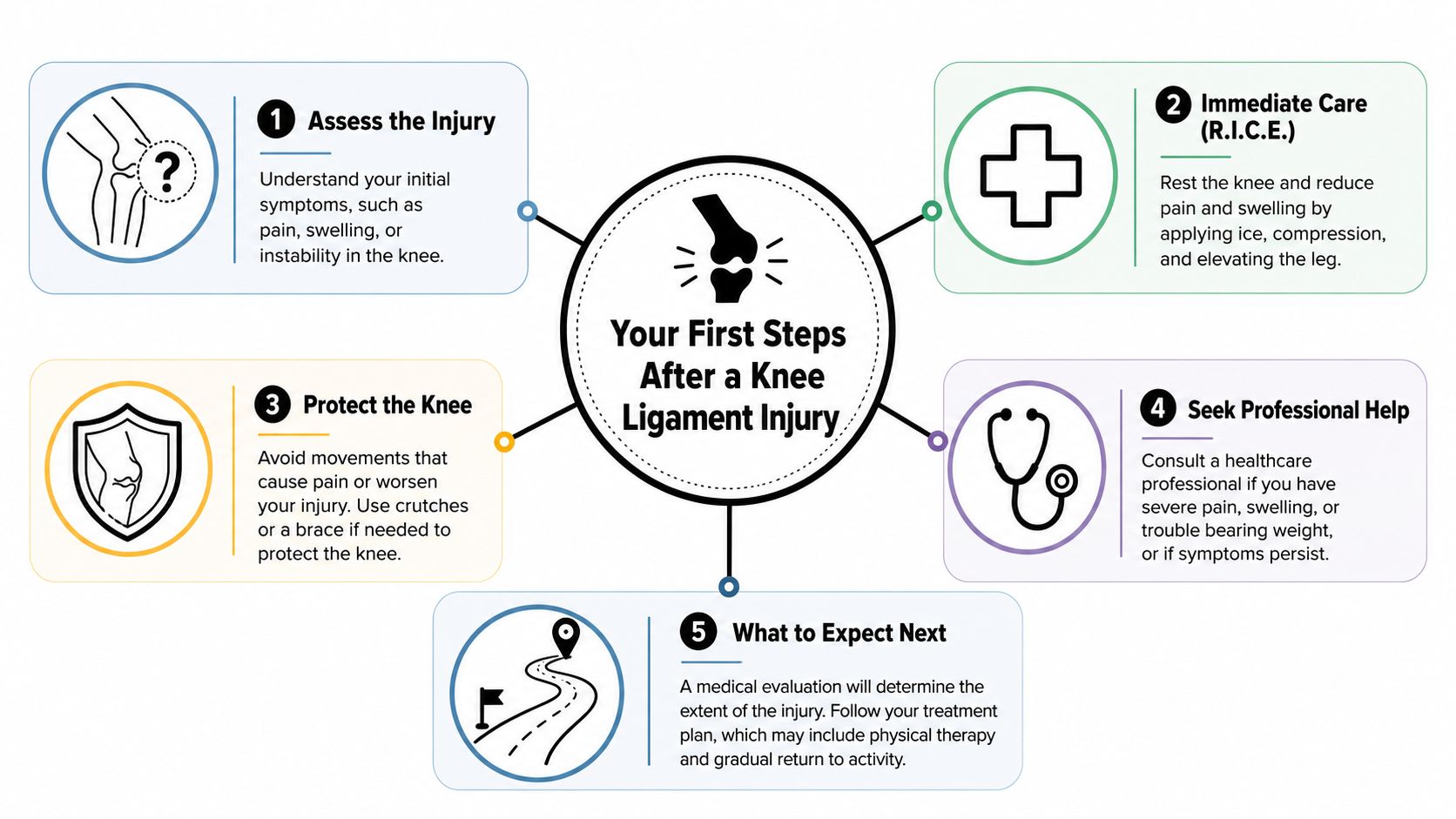
Your First Steps After a Knee Ligament Injury
The knee depends on four major ligaments. The ACL helps control forward movement and rotation of the shin. The PCL helps resist backward movement. The MCL supports the inner side of the knee, and the LCL supports the outer side. When one of these structures gets stressed or torn, people often describe a pop, a buckle, sharp pain with twisting, or a sense that the knee doesn't quite trust them.
Why generic exercise lists fall short
Most online lists skip the part that matters most. They tell you what movements exist, but not when to use them, what symptoms mean you're not ready, or how an MCL sprain differs from an ACL injury. That gap matters because progression should match both the specific ligament and the stage of healing. A guide on rehab exercises for knee ligament injuries points out that patients often ask how soon they can run again, yet generic advice rarely separates timelines by injury type or severity.
A sore but stable knee and an unstable twisting knee are not the same rehab problem. A mild ligament sprain often tolerates earlier movement. A more significant injury may need more protection before loading picks up. That's why random “top ten” routines often disappoint people. They mix early-stage exercises, strengthening drills, and return-to-sport work into one pile.
Practical rule: Don't judge an exercise by how impressive it looks. Judge it by whether your knee can do it with control, acceptable pain, and no increase in swelling afterward.
What helps in the first day or two
Start simple. If the knee is swollen, painful, and feels unreliable, your first decisions should center on protection.
- Reduce irritation: Avoid twisting, pivoting, deep squatting, and fast direction changes.
- Support walking if needed: If you're limping heavily, using a brace or crutches for a short period can protect the joint.
- Watch the response: More swelling, increasing pain, or repeated buckling usually means you need a professional evaluation.
- Think in phases: Early rehab is about calming things down. Strength and balance come later, then sport or life-specific training after that.
A good rehab plan gives your knee a sequence. First calm it. Then restore motion. Then build strength. Then train control. Then return to the activities that matter to you.
Phase 1 Acute Care and Gentle Motion
You wake up the morning after the injury, put your foot on the floor, and the knee feels stiff, swollen, and uncertain. At that point, the job is simple. Calm the joint down, restore a little motion, and keep the muscles engaged without stirring things up.
Use RICE with a purpose
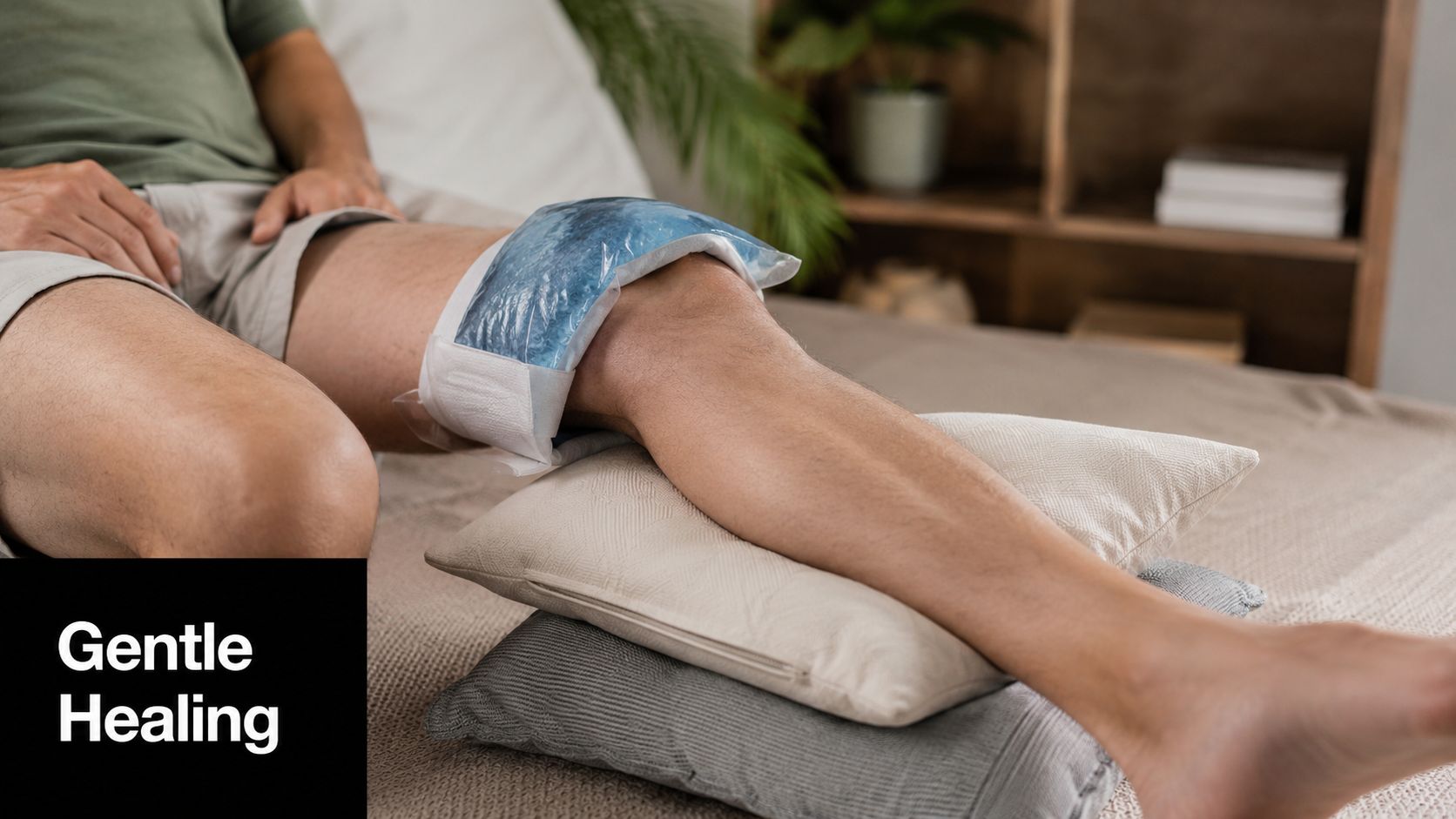
Early care often starts with RICE: rest, ice, compression, and elevation. A clinical review on knee ligament rehabilitation describes this as a common starting point in the acute stage, along with protective bracing and early quadriceps activation when needed.
Use each part for a reason, not out of habit:
- Rest: Reduce movements that trigger pain, buckling, or a sense that the knee is shifting.
- Ice: Settle symptoms so walking and gentle exercise feel more manageable.
- Compression: Limit swelling with an elastic wrap or sleeve if it feels comfortable.
- Elevation: Help the knee decongest after being on your feet.
If the knee gets more swollen after routine walking around the house, scale the day back. That is often a sign the tissue is not ready for that amount of load yet.
Early exercises that are usually well tolerated
Phase 1 is not just about waiting. It is also the right time to start basic neuromuscular work. That means teaching the muscles to switch on again, especially the quadriceps, so the knee does not become more stiff and poorly controlled while pain settles.
A short home routine is usually enough:
Quad sets
Sit or lie with the leg straight. Tighten the front of the thigh as if you are gently pressing the knee down. Hold for 5 to 10 seconds and repeat 10 to 15 times. The goal is a clean contraction, not a hard effort.Heel slides
Lie on your back and slowly slide the heel toward you, then back out. Stay in a comfortable range. A mild stretch is fine. Forcing the bend is not.Ankle pumps
Move the foot up and down for a minute or two. This helps circulation and gives you a low-stress way to keep the leg active during the protective stage.
If you want a few simple visuals for related early knee work, this guide to exercises you can do to strengthen your knees can help, but keep your focus on low-irritation movements first.
Stop or reduce the exercise if you feel a sharp catch, a shifting sensation, or more swelling later that day.
How to judge whether you are ready to progress
A phased plan helps more than a random exercise list. In Phase 1, progress is based on response, not motivation.
Good signs include:
- Less swelling by day's end
- Better ability to fully straighten the knee
- Easier short-distance walking
- Stronger quad contraction during exercises
- No increase in pain or puffiness after the routine
If those markers are improving, you are usually getting close to Phase 2. If the knee still reacts strongly to basic motion, stay with the gentler plan a bit longer. A mild sprain may move through this stage quickly. A more significant ligament injury often needs more protection before loading increases.
Early progress is significant because it sets up everything that follows. A quieter knee with better motion and better muscle activation is much easier to strengthen safely than a swollen, guarded one.
Phase 2 Building a Foundation with Early Strengthening
Once swelling is settling and gentle motion feels manageable, it's time to ask the muscles around the knee to do more work. This is the point where many home programs either become too aggressive or stay too timid. Your knee needs load, but it needs the right amount.
The pain rule that keeps people on track
A useful benchmark in early strengthening is the 3/10 pain rule. A step-by-step rehab framework from Atlantic Physical Therapy's guide to knee rehab loading advises reducing the load if pain goes above 3/10 during or after exercise. The same guide describes starting with 1 to 2 low-stress exercises and building from there, progressing to more demanding movements like full squats only when pain-free.
That gives you a simple filter. Mild effort discomfort can be acceptable. Sharp pain, lingering soreness that ramps up later, or increased swelling means the dose was too high.
Foundational exercises that usually make sense here
Start with a small menu. You don't need eight exercises at once.
| Exercise | Why it helps | What to watch |
|---|---|---|
| Straight leg raise | Builds quadriceps control without much knee motion | Keep the knee straight and don't let the back arch |
| Hamstring curl | Starts rebuilding support behind the knee | Stop if it triggers joint pinching |
| Partial squat | Trains everyday patterns like sitting and standing | Keep it shallow and controlled at first |
| Weight shifts | Reintroduces confidence on the injured leg | Avoid collapsing inward at the knee |
How to do them at home
- Straight leg raise: Lie on your back with one knee bent and the injured leg straight. Tighten the thigh, then lift the straight leg a short distance and lower with control.
- Hamstring curl: Stand while holding a counter, bend the knee gently, and lower slowly.
- Partial squat: Hold onto a sturdy surface, sit the hips back slightly, and keep the motion shallow at first.
For more examples of basic strengthening options, a simple home guide to exercises to strengthen your knees can help you visualize movement choices without jumping ahead too fast.
Load check: Your knee should feel worked, not threatened. If you finish and the joint feels looser, more swollen, or less trustworthy later that day, trim the range, reps, or resistance.
What doesn't work well in this phase
A few common mistakes slow people down:
- Jumping straight to deep squats: Depth adds demand quickly, especially if your control isn't there yet.
- Training through instability: Strengthening doesn't fix a movement if the knee keeps wobbling during it.
- Adding too many new drills at once: If the knee reacts badly, you won't know which exercise caused it.
- Comparing sides too early: The injured leg may lag for a while. That's normal.
In practical terms, this phase is about building enough baseline strength that your knee can handle bodyweight tasks without guarding or compensating. The muscles are part of the treatment, but so is your decision-making. Good rehab at home is less about motivation and more about dosage.
Phase 3 Advanced Strength and Neuromuscular Control
A stronger leg isn't always a safer leg. Many people regain basic strength and still feel unsure on stairs, uneven ground, or quick turns. That's where neuromuscular control comes in. This is your brain and body working together to sense joint position, react to movement, and keep the knee lined up under load.
Why balance work matters more than people think
After a ligament injury, the problem often isn't just weakness. Timing gets disrupted. The knee may drift inward during a squat, the foot may slap the ground harder than expected, or the body may rush to the uninjured side. A review on keeping knee ligaments aligned and protected notes that neuromuscular control and proprioception training are critical for preventing re-injury, and that rehab should include agility and plyometric work early in the strengthening phase rather than treating it as an afterthought.
This is one of the biggest gaps in generic knee ligament injury treatment exercises. People get told to “strengthen the knee,” but they don't get taught how to land, decelerate, or control rotation.
Start with control before speed
Try these in order:
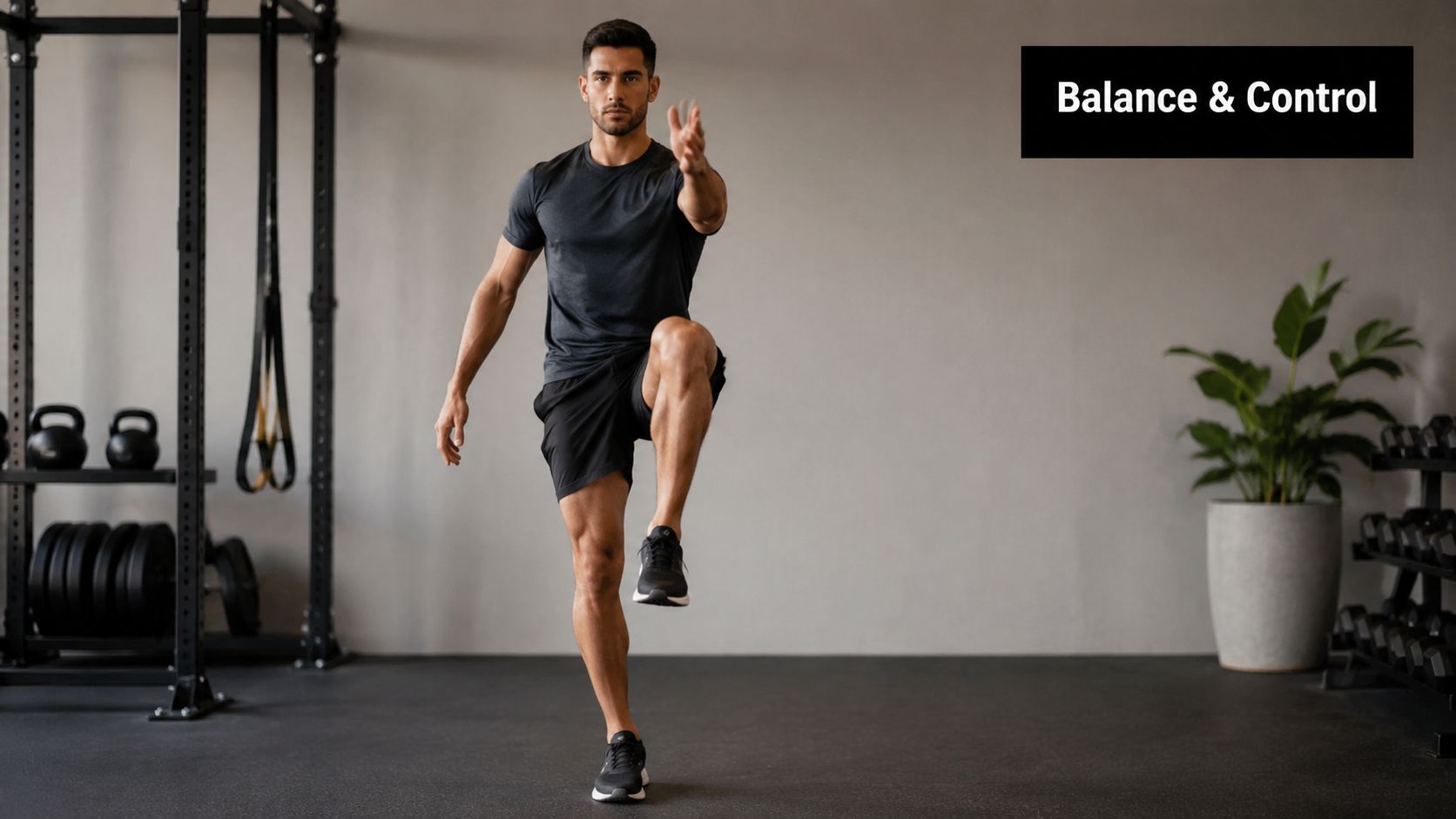
- Single-leg stand: Stand on the injured leg near a counter or wall. Keep the pelvis level and the knee softly bent.
- Single-leg reach: From that same position, reach the free leg lightly in different directions.
- Step-down: Stand on a step, lower the opposite heel toward the floor, then return up with control.
- Balance board or unstable surface work: Only after the basic single-leg stance looks steady.
Each drill should train alignment. The knee shouldn't cave inward, the trunk shouldn't swing wildly, and the foot shouldn't grip the floor in panic.
For a more detailed overview of what therapists mean by this training category, neuromuscular reeducation is the clinical process of restoring better movement patterns, coordination, and joint awareness.
Use eccentric work to rebuild braking ability
A lot of knee symptoms show up during lowering, not lifting. Going downstairs, sitting down, landing from a jump, and slowing after a jog all require eccentric control, which means the muscle is working while lengthening.
That's why slow lowering drills matter:
- Sit-to-stand with slow descent
- Step-downs with a controlled lowering phase
- Split squat lowering only if alignment stays clean
These aren't glamorous, but they retrain the body to absorb force instead of dumping it into the knee joint.
A visual demonstration can help when you're learning balance progressions and control drills:
Balance work isn't filler. It's where many knees go from “I can do exercises” to “I trust this leg again.”
When light plyometric work belongs
If the knee tolerates single-leg control, good squatting mechanics, and controlled step-downs, light jumping drills may enter the program. That might mean small two-leg hops, soft landings, and low-level directional drills. The point isn't height. The point is quiet, aligned landings.
What doesn't work here is rushing to speed ladders, box jumps, or sport drills when the basics still look shaky. If the knee caves in on a step-down, it won't clean itself up just because the exercise got more athletic.
Phase 4 Return to Sport and Life-Specific Training
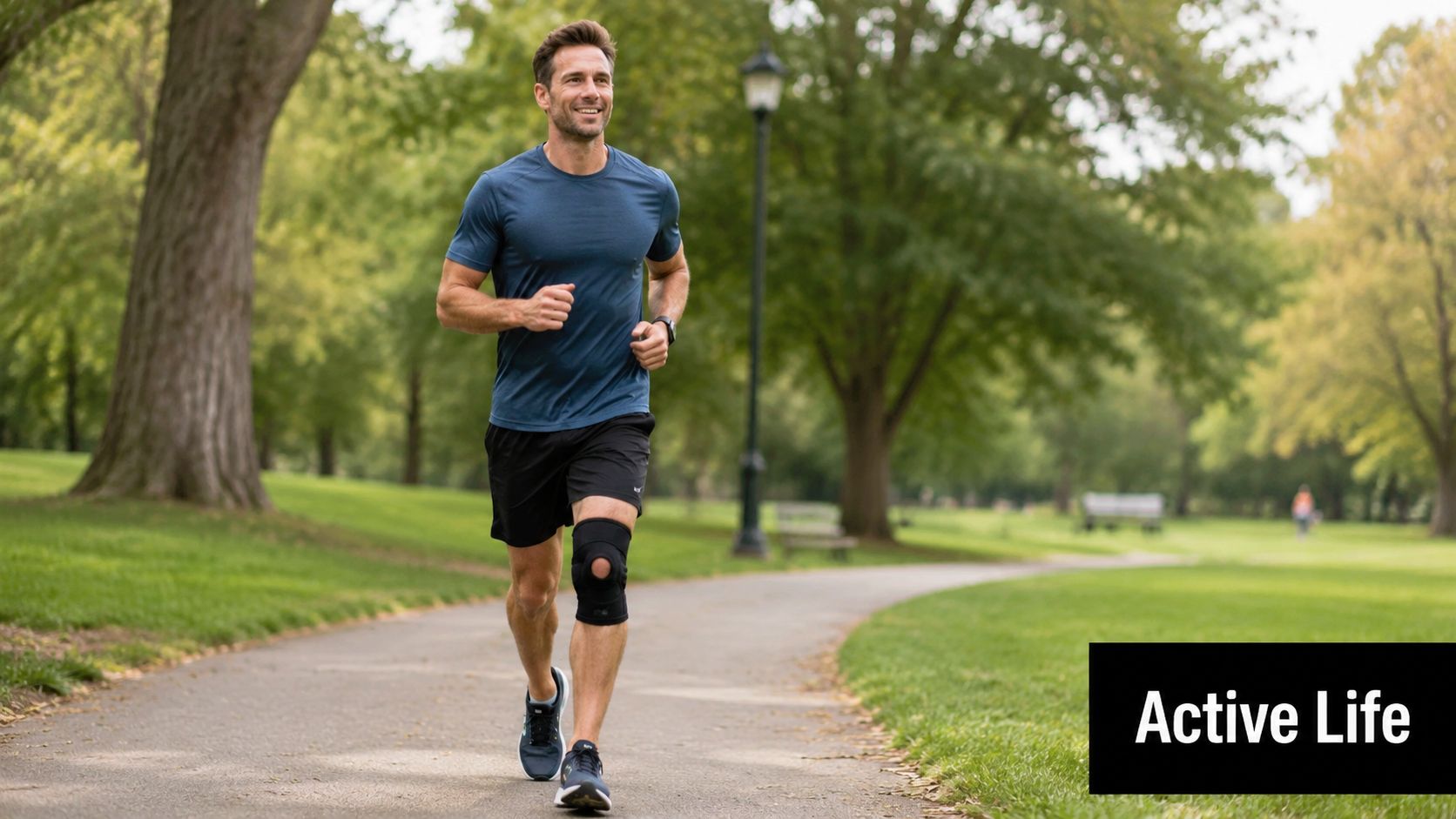
You see this phase in real life when the knee feels fine during exercises, then gets exposed by a quick pivot, a long work shift, or a run that includes hills. That gap matters. The goal now is not to do harder exercises for the sake of it. The goal is to prepare the knee for the exact loads, speeds, and positions your day or sport demands.
Use milestones, not the calendar
A knee that feels "pretty good" can still be underprepared for cutting, contact, uneven ground, or repeated jumping. Progression works better when it is tied to function.
A 2023 JOSPT clinical concept paper on ACL injury prevention and rehab reports that exercise-based prevention programs can reduce ACL injury rates by 53% when they include the right mix of components. It also highlights practical benchmarks such as reaching a single-leg hop distance at least 90% of the uninjured side before full sport progression. The same paper supports a return process that checks strength, movement quality, and control, not just pain levels.
Many people tend to rush. Mild sprains may move through this phase sooner. Higher-grade injuries, combined injuries, or post-surgical knees usually need a slower build. If swelling returns, the knee gives way, or landing form gets sloppy as you fatigue, the answer is not to push harder. The answer is to lower the demand, clean up the movement, and build back up.
Match the drills to your real life
Return-to-life training should resemble your actual demands as closely as possible.
- For runners: Start with walk-jog intervals on flat ground. Progress distance before speed if your stride stays even and the knee stays quiet later that day and the next morning.
- For court or field sports: Begin with planned shuffles, deceleration drills, and controlled cuts. Add reaction-based drills later, because an unplanned change of direction asks much more from the knee.
- For physically demanding work: Practice loaded carries, repeated step-ups, lifting from floor to waist height, and turn-and-carry patterns that match your job.
- For older adults: Train stairs, uneven surfaces, quick direction changes, and balance recovery. These tasks often matter more than running or jumping.
A good framework for this stage is return-to-play decision making for sport and activity progression, especially if you are trying to decide when to add speed, contact, or unpredictable movement.
Know when to progress
Use response-based checkpoints after each new layer of training:
| Sign | What it suggests |
|---|---|
| No increase in swelling later that day or the next morning | The workload matched the knee's current capacity |
| No limp during or after activity | You are loading both legs more evenly |
| Stable knee position during cutting, landing, or stepping | Control is holding up under higher demand |
| Confidence on the injured leg without guarding | Trust is improving along with function |
One honest test matters here. If you can finish the drill only by stiffening up, shortening your stride, or protecting the knee the whole time, you are not ready for the next progression yet.
Bracing, confidence, and the last stage of rehab
A brace can help some people during the first few weeks back to jogging, work tasks, or sport drills. That can be a reasonable short-term tool if it improves confidence and does not become something you rely on for every session. The trade-off is simple. A brace may help you feel safer, but it does not restore strength, timing, or coordination.
Keep the prevention work in. Hips, trunk control, deceleration, and landing mechanics still matter after pain settles down. Stopping rehab as soon as the knee feels better is one of the common reasons people plateau, flare up, or lose confidence when life gets faster and less predictable.
Working with a Physical Therapist for Your Recovery
A home program works best when it matches the knee in front of you. A physical therapist adds real value by checking ligament stability, spotting compensation patterns early, and adjusting the plan before a small setback turns into a longer delay.
That matters because knee ligament injuries do not all behave the same way. An MCL sprain, a partial ACL injury, and a combined ligament and meniscus problem can all cause pain and instability, but they do not progress on the same schedule. The right exercises also change with severity. Some people need to spend more time restoring motion and quad control. Others are ready to load sooner but still need close work on balance, timing, and single-leg control.
In clinic, I often see people get stuck in one of two places. They either stay too cautious and never load the leg enough to rebuild trust, or they push ahead because pain has settled down even though control is not ready yet. Good rehab sits in the middle. It uses clear goals for each phase and changes based on swelling, movement quality, and how the knee responds over the next day.
A therapist is especially helpful when:
- The knee still feels unstable even though basic exercises are getting easier
- Range of motion is limited, stiff, or painful
- Single-leg tasks show the knee drifting inward or the trunk shifting to compensate
- You need help deciding whether to progress, hold steady, or scale back
- Your job or sport requires cutting, pivoting, kneeling, lifting, or uneven ground
Hands-on treatment can also help calm pain and improve motion, but the bigger value is guidance. You get feedback on technique, a phased plan with clear progress markers, and a better sense of what your knee can handle right now.
Some people also ask about recovery support beyond exercise. If you are comparing options, Nutrition Geeks' best knee supplements offers a practical consumer overview.
For people in South Florida, MedAmerica Rehab Center is one option for building a personalized plan that combines hands-on treatment with structured exercise progression. If your knee keeps swelling, still feels loose, or you have hit a plateau, an assessment can save a lot of guesswork.
Common Questions About Knee Ligament Rehab
How long before I can run again
A common scenario is feeling pretty good with daily walking, then wondering if that means running is safe. Running usually comes back after the knee handles the phase before it well. You want a normal walking pattern, low swelling, full or near-full motion, and solid control with single-leg work before you test jogging. The timeline depends on the ligament, the grade of injury, and whether the knee stays calm the next day after loading.
Should I wear a brace all day
A brace can help early, especially if the knee feels loose or your clinician wants to protect healing tissue. It can make walking and daily tasks feel safer.
The trade-off is that a brace does not rebuild strength, timing, or trust in the leg. As the knee gets more stable, the goal is usually to rely less on the brace and more on your muscles and movement control.
Is soreness after exercise normal
Usually, mild muscle soreness is fine. A little ache in the muscles for a day is different from joint swelling, sharp pain, catching, or a knee that feels less stable after the session. Those signs mean the program needs adjusting.
If you are also looking at recovery support beyond exercise, Nutrition Geeks' best knee supplements offers a practical consumer overview for comparing ingredients and evidence.
What if my knee feels strong but still shaky
That usually means the problem is not raw strength alone. The knee may still need better neuromuscular control. In plain terms, the leg has to react well during real movement, not just produce force in a simple exercise.
This is why rehab progresses in phases. Early strength matters, but later phases should also include balance, controlled lowering, direction changes, and single-leg tasks that match your sport or daily routine. If the knee looks steady in drills and stays settled afterward, that is a better sign to progress than strength alone.
If your knee still hurts, feels unstable, or you are not sure whether to progress, schedule an evaluation with MedAmerica Rehab Center. A licensed rehab team can assess the injury, adjust your exercise plan, and help you return to daily activity, work, or sport with more confidence.
MedAmerica Rehab · Deerfield Beach
Talk to a clinician about your pain
Physical therapy, chiropractic, acupuncture and shockwave therapy under one roof, since 1995. Same-day appointments are available.
Mon–Thu 8:00 AM – 6:30 PM · Fri 8:00 AM – 3:00 PM