

Neck Pain Treatment Chiropractic
You wake up and turn your head toward the alarm. A sharp pull runs from the base of your skull into your shoulder. Later, sitting at your desk, the same spot tightens again. By evening, checking your blind spot while driving feels like work. Neck pain often starts like that. Not dramatic, just persistent enough to interfere with sleep, focus, workouts, and small everyday movements.
Often, the initial response doesn't involve seeking a long-term solution. They try a heating pad, change sleeping positions, stretch a little, and hope it settles down. Sometimes it does. Sometimes it keeps coming back, or it shifts from a dull stiffness to something that limits work and daily life.
That's usually the point when people start searching for neck pain treatment chiropractic options. They want relief, but they also want to know what's causing the problem, what treatment fits their situation, and whether neck treatment is safe. Those are the right questions.
The Persistent Ache That's More Than Just a Nuisance
A lot of neck pain isn't caused by one dramatic injury. It builds from repetitive strain, long hours at a screen, awkward sleeping positions, stress-related muscle tension, or an old accident that never fully settled. The result is the same. You feel stiff in the morning, guarded through the day, and frustrated that simple movements are starting to feel unreliable.
In practice, many patients say the same thing in different words. They didn't think the pain was serious enough to address at first. Then it started affecting sleep, driving, reading, lifting, or working at a computer. That's when neck pain stops being an annoyance and starts becoming a quality-of-life problem.
Neck pain is also one of the most common reasons people seek chiropractic care. Recent survey data indicates that 24 percent of all chiropractic patients specifically seek treatment for neck pain, making it second only to back pain as a reason for visiting a chiropractor, according to this chiropractic statistics summary.
Why small habits matter
Pain isn't always created in the clinic. A lot of it shows up from what you repeat every day.
- Sleep setup: A pillow that keeps your neck bent too far up or down can leave the muscles irritated for hours.
- Phone posture: Looking down for long periods loads the neck and upper back.
- Desk position: A monitor that's too low or too far off-center can keep one side of the neck working harder than the other.
If your pain is worst in the morning, your sleep setup deserves attention. A practical place to start is Woodstock Outlet's pillow advice, which walks through how pillow height and sleeping position can affect neck comfort.
Neck pain that keeps returning usually needs more than temporary relief. It needs a reasoned plan.
Chiropractic care is one non-surgical option people commonly choose because it focuses on movement, joint function, muscle tension, and day-to-day mechanics, not just numbing symptoms for a few hours.
Understanding Chiropractic Care for Neck Pain
Chiropractic care for the neck isn't just about making something crack. Its purpose is to assess how the cervical spine, nearby joints, muscles, and movement patterns are functioning, then decide what kind of care makes sense for that specific patient.

It starts with diagnosis
Think of your neck like a set of moving parts that need to glide well together. If one joint becomes restricted, the surrounding muscles often tighten to protect the area. Over time, that can create a pattern of stiffness, pain, reduced rotation, headaches, or pain radiating into the shoulder blade.
A chiropractor's first task is to figure out what type of neck pain you have. Mechanical neck pain behaves differently from nerve irritation, inflammatory conditions, or pain linked to trauma. That's why an exam matters more than guessing based on symptoms alone.
A good first visit looks at things like:
- Range of motion: Does turning, bending, or extending the neck reproduce the problem?
- Muscle tone: Are certain muscle groups guarding or overworking?
- Joint restriction: Do specific spinal segments feel limited?
- Function: Which activities are being disrupted?
If you want a simple explanation of what an adjustment is supposed to do mechanically, this overview of how chiropractic adjustment works is a helpful starting point.
The goal is better movement, not just less pain
Pain matters, but it isn't the only thing that guides care. The neck may hurt because a joint is moving poorly, because muscles are overactive, because posture is stressing one region, or because several factors are stacking on top of each other.
That's why chiropractic care usually focuses on three practical goals:
| Focus | What it means for the patient |
|---|---|
| Identify the driver | Find out whether the problem is mostly joint-based, muscle-based, posture-related, or trauma-related |
| Restore motion | Improve the way the neck and upper back move so irritated tissues can calm down |
| Improve function | Help you sleep, drive, work, and exercise with less guarding and better control |
Practical rule: The right treatment should make your neck move more naturally, not just feel briefly distracted from pain.
This is also where patient preference matters. Some people are comfortable with manual adjustment. Others want a gentler approach. Both can be appropriate, depending on the findings.
Core Chiropractic Treatments for Neck Pain
Neck treatment isn't one technique. It's a set of tools, and the clinician chooses among them based on exam findings, your comfort level, and how irritable the condition is.
Spinal adjustment when joint restriction is the main issue
A spinal adjustment is a specific, controlled movement applied to a restricted joint. In the neck, the purpose is usually to restore motion and reduce the protective muscle guarding that builds around a stiff segment.
Some patients hear a popping sound and worry that something is grinding or shifting violently. That sound is not bones rubbing together. It's the release of gas within the joint. The sound is not the goal. Better movement is the goal.
Adjustment tends to fit patients who have clear mechanical restriction, tolerate manual care well, and don't have reasons to avoid thrust-based techniques.
Mobilization when you want a gentler option
Mobilization is slower, gentler, and lower force. Instead of a quick thrust, the doctor guides the joint through controlled movement or sustained pressure. This can be a better first choice when the neck is very sensitive, the patient is apprehensive about cracking, or the condition responds better to gradual input.
For many people, this is the key decision point. They assume chiropractic neck care only means high-velocity adjustment. It doesn't.
According to the American Chiropractic Association's patient guidance on neck pain and chiropractic, chiropractors may combine manipulation with mobilization, massage, or rehabilitative exercises depending on individual needs. The same guidance notes that for patients who are worried about or have contraindications to traditional high-velocity adjustments, gentle mobilization, soft tissue work, and exercise-based care are effective first-line options.
Soft tissue work and exercise when muscles are driving the problem
Sometimes the neck joint isn't the biggest issue. The bigger problem is muscle overload in the upper trapezius, levator scapulae, scalenes, or suboccipital muscles. In those cases, soft tissue treatment and targeted exercise may do more than repeated adjustments alone.
A practical care plan may include:
- Soft tissue therapy: To reduce muscle tone and tenderness in overworked areas.
- Movement retraining: To improve how the neck and shoulder blades work together.
- Home exercises: To keep the gains from treatment visits instead of losing them between sessions.
How clinicians decide which one to use
The best approach usually depends on what the exam shows.
- Choose adjustment first when joint restriction is clear, symptoms are mechanical, and the patient is comfortable with that approach.
- Choose mobilization first when pain is acute, the neck is guarded, or the patient strongly prefers a non-thrust option.
- Choose exercise-heavy care first when posture, deconditioning, or repeated strain patterns are keeping the problem alive.
That's the part many articles skip. The question isn't “Is neck adjustment good or bad?” The better question is “Which tool fits this neck, this person, and this stage of recovery?”
Does Chiropractic for Neck Pain Actually Work
A common pattern in practice is this: the pain starts as stiffness after sleep or a long day at a desk, then turning your head while driving becomes annoying, and a week later the neck still feels stuck. At that point, the question is not whether care sounds appealing. The question is whether it improves pain and function enough to justify the time and cost.
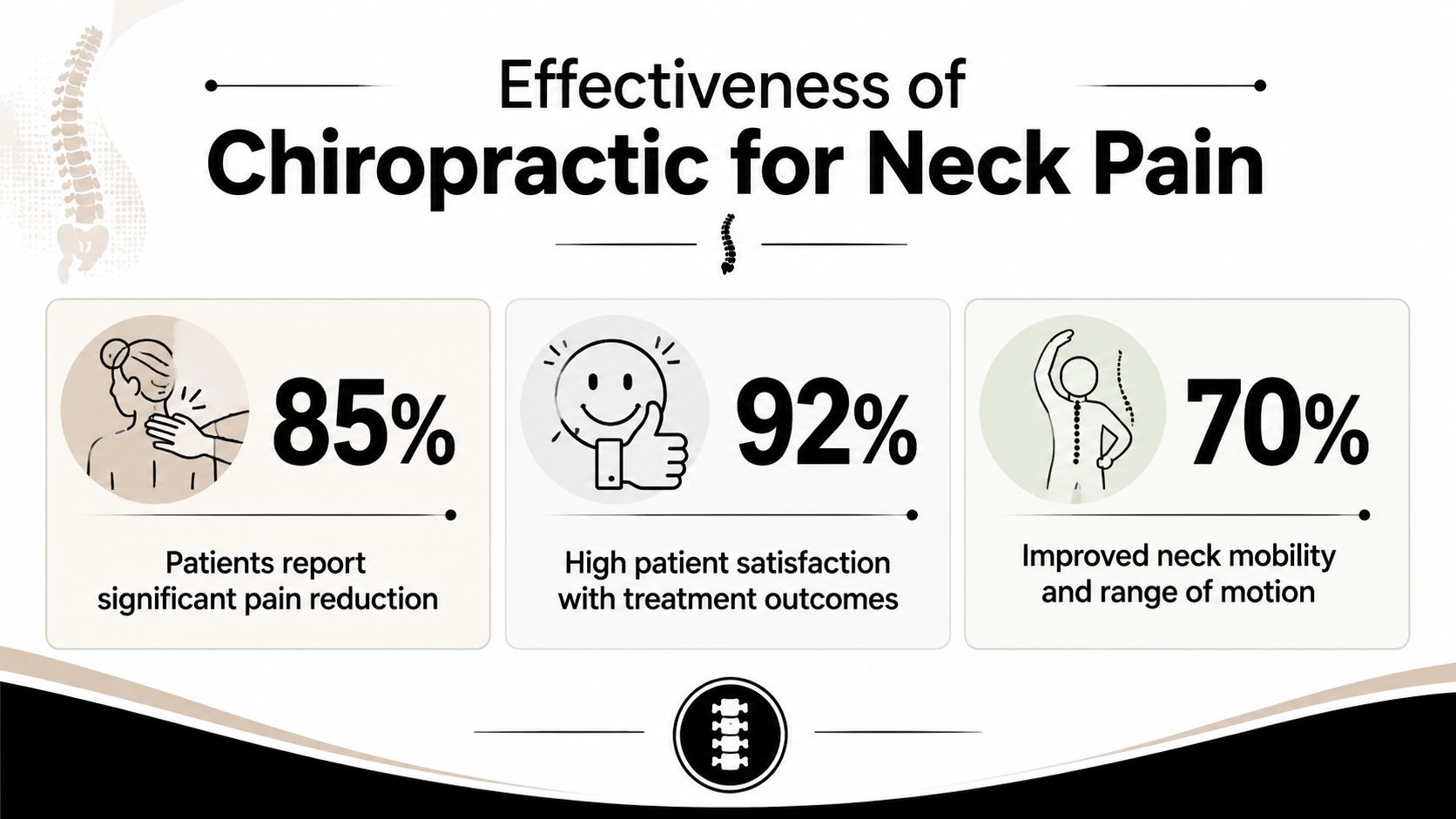
For mechanical neck pain, research supports chiropractic care as a reasonable conservative option. One of the better-known studies was a major NIH-funded clinical trial summarized by the American Chiropractic Association in its review of what research shows. In that trial, 272 participants with mechanical neck pain were assigned to chiropractic spinal manipulative therapy, pain medication, or home exercise recommendations. After 12 weeks, about 57 percent of the chiropractic group reported at least a 75 percent reduction in pain, compared with 33 percent in the medication group and 48 percent in the exercise group.
Those numbers matter because they reflect the actual choices patients make.
Medication can help calm symptoms, especially early on, but it does not correct joint restriction, muscle guarding, or movement patterns that keep the neck irritated. Exercise is part of good care, but in an acute flare, some patients need hands-on treatment first so they can move well enough to do the exercises correctly and without fear. That is one reason chiropractic care often fits best as part of a plan, not as a stand-alone fix.
The same trial also reported meaningful long-term results. After one year, roughly 53 percent of the drug-free groups, including chiropractic patients, still reported at least a 75 percent pain reduction, compared with 38 percent of those who relied on medication.
That does not mean every neck problem should be adjusted. It means chiropractic care has evidence behind it for the right type of case, especially mechanical neck pain with joint restriction, muscle tension, and pain that changes with movement or position. In practice, results are usually better when treatment is paired with mobility work, posture correction, and a home program that matches the cause of the problem.
Post-traumatic neck pain is a separate decision. After a collision, the tissues involved and the recovery timeline are often different from an ordinary strain. If your symptoms started after a crash, our guide to chiropractic care after car accident explains how those cases are evaluated and why technique choice matters more.
Research supports chiropractic care as a primary conservative option for mechanical neck pain, especially when the treatment matches the diagnosis.
Is Chiropractic Care for Neck Pain Safe
Safety concerns around the neck are reasonable. Patients should ask about them. Good clinicians should answer clearly.

The first thing to understand is that proper neck care is not pain-only driven. It is findings-driven. If the exam doesn't show objective problems such as restricted motion, weakness, muscle hypertonicity, or functional limitation, treatment may not be appropriate. If the presentation suggests something more serious, referral is the correct step.
When you should get medical evaluation first
According to expert guidance summarized in Healthline's review of chiropractic for neck pain, if a patient presents with objective red flags such as fracture, suspected organic disease, or progressive neurologic symptoms, immediate referral to a medical physician is the standard of care.
In plain language, you should seek medical evaluation promptly if your neck pain involves signs like:
- Recent significant trauma: especially after a fall, sports injury, or car accident
- Progressive weakness or numbness: symptoms that are worsening, not stabilizing
- Severe unusual headache: especially if it feels sudden, intense, or different from your normal pattern
- Fever or systemic illness: neck pain with signs that suggest infection or another medical cause
- Loss of coordination or major neurologic change: trouble with balance, grip, walking, or bowel and bladder function
These aren't reasons to panic. They are reasons not to self-diagnose.
What an appropriate safety screen looks like
A responsible chiropractor should check more than where it hurts. They should evaluate how it moves, whether neurologic symptoms are present, how the pain started, and whether the clinical picture fits straightforward mechanical neck pain.
That screening process matters because many neck complaints are appropriate for conservative care, but not all of them are.
A practical safety framework looks like this:
| Clinical finding | Typical next step |
|---|---|
| Mechanical stiffness without red flags | Conservative care may be appropriate |
| Marked fear of adjustment | Use gentler non-thrust options if appropriate |
| No objective findings beyond pain | Reassess, monitor, discharge, or refer |
| Red-flag symptoms | Medical referral first |
If a clinician can't explain why you're a good candidate for treatment, that's a reason to pause and ask more questions.
Temporary soreness can happen after hands-on treatment, just like it can after exercise or soft tissue work. What matters most is proper patient selection, sound examination, and choosing the right technique for the right person.
What a Full Chiropractic Recovery Plan Involves
Most neck problems don't improve from one isolated visit. They improve through a sequence. First you calm the irritated tissues. Then you restore motion. Then you build enough strength and control that the problem is less likely to return.
That's also what modern guidelines support. Evidence-based guidance for chronic neck pain gives the strongest recommendations to a multimodal program that combines manipulation or mobilization with therapeutic exercise and patient education, as outlined in these evidence-based chiropractic guidelines for chronic neck pain.
Early care focuses on reducing irritation
At the start, the goal is usually to make the neck less reactive. That may involve manual treatment, soft tissue work, temporary activity changes, and a few simple movements that keep the area from stiffening further.
This phase should not feel random. Each visit should connect to a functional problem you're trying to solve, such as painful rotation, sleep discomfort, or pain after computer work.
Mid-stage care shifts toward active rehab
Once the pain settles, passive treatment alone usually isn't enough. The next step is teaching the neck, upper back, and shoulder girdle to work better together.
That often includes:
- Mobility drills: For the cervical and thoracic spine if motion is limited
- Postural retraining: So the neck isn't constantly carrying avoidable load
- Strengthening work: Especially for the deep neck flexors and scapular stabilizers
- Home practice: Short routines done consistently, not occasional marathon sessions
If you're looking for examples of at-home movement ideas, these proven neck pain relief exercises can help you understand the kind of simple, repeatable work that often supports recovery.
Long-term progress depends on what you do between visits
A complete plan includes patient education. That means understanding how to set up your workstation, how to pace activity during flare-ups, and which stretches or drills should become part of your routine.
For patients who need guided home support, neck pain relief stretches can be a useful resource to pair with in-clinic care.
The best neck treatment plan is not the one with the most visits. It's the one that helps you need less help over time.
That's the purpose of a full recovery plan. It shouldn't leave you dependent on treatment. It should leave you more capable.
Your Next Step at MedAmerica Rehab Center
When people look for neck pain treatment chiropractic, they're usually trying to solve three problems at once. They want pain relief. They want a clear explanation. They want to know they're choosing something appropriate and safe.
That only happens when care starts with assessment, not assumptions. The neck has to be examined carefully. The treatment choice has to fit the findings. And the plan has to go beyond a single technique.

What coordinated care looks like
Some patients do well with adjustment-focused treatment. Others need a gentler manual approach, more exercise-based rehab, or added support for post-accident pain patterns. A multidisciplinary clinic can match treatment more closely to what the case requires.
At MedAmerica Rehab Center, chiropractic care is one part of a broader treatment model that may also include physical therapy, acupuncture, and structured rehabilitation, depending on the patient's presentation and goals. That matters because neck pain often overlaps with posture, muscle imbalance, old injuries, headaches, or work-related strain.
What to expect from the first step
A useful first visit should answer practical questions:
- What type of neck pain is this
- Am I a good candidate for conservative treatment
- Which technique fits me best
- What should I do at home
- What signs mean we should change course or refer out
Those answers give patients something more valuable than a quick treatment. They give them a plan.
If your neck pain has been interrupting sleep, limiting movement, or making work and driving uncomfortable, getting evaluated is a reasonable next move. The goal isn't just to feel better for a day or two. The goal is to understand the problem and start the right kind of recovery.
If you're ready to get your neck checked properly and leave with a clear plan, schedule a visit with MedAmerica Rehab Center. The right next step isn't guessing whether your pain will fade on its own. It's getting an evaluation that tells you what kind of care fits, what doesn't, and how to move forward safely.
MedAmerica Rehab · Deerfield Beach
Talk to a clinician about your pain
Physical therapy, chiropractic, acupuncture and shockwave therapy under one roof, since 1995. Same-day appointments are available.
Mon–Thu 8:00 AM – 6:30 PM · Fri 8:00 AM – 3:00 PM