

Neck Pain Relief Stretches You Can Do Today
That stiff, nagging neck often shows up at the most ordinary moments. You wake up after sleeping in a strange position. You finish a long stretch at the computer and realize you've been rubbing the base of your skull for the last hour. Or you look down at your phone, then look up and feel that familiar pull from your neck into your shoulder.
Most mild neck pain responds well to a calm approach. Gentle movement helps tense muscles relax, encourages better motion, and often makes the area feel less guarded. In the clinic, the people who do best usually aren't the ones who force big stretches. They're the ones who move softly, stay consistent, and pay attention to what their body is telling them.
Finding Relief from Nagging Neck Pain
A lot of neck pain starts with everyday habits, not dramatic injuries. Hours at a laptop, driving with tense shoulders, stress, or one awkward night of sleep can leave the muscles around the neck feeling tight and overworked. The result is that dull ache, the feeling that turning your head is harder than it should be, or the sense that your upper traps are doing all the work.

Gentle stretching can help because it gives tight tissues a chance to lengthen without a fight. It also helps you reset posture and reduce the “protective bracing” that often builds up when your neck has been irritated for a while. If your neck discomfort also seems tied to head pain, these osteopathic insights on headaches offer useful context on how neck tension and headaches can overlap.
At MedAmerica Rehab, we usually remind patients that the goal isn't to “crack” or “release” the neck. The goal is smoother, less guarded movement. If you want a broader look at how guided rehab fits into neck and back recovery, this physical therapy overview for back and neck pain is a helpful next read.
Gentle movement usually works better than aggressive stretching when the neck is irritated.
What relief should feel like
A useful stretch creates a mild pulling sensation, not sharp pain. You may feel warmth, easing, or a gradual sense that turning your head is getting simpler. That's the response you want.
If a movement causes pinching, radiating pain, or a strong increase in symptoms, back off. Neck pain relief stretches should calm things down, not stir them up.
Four Gentle Stretches for Neck Pain Relief
Start in a seated position or stand tall with your shoulders relaxed. A practical protocol uses gentle side-bending, rotation, and chin-tuck work with short, controlled holds. For example, side tilt can be held 20 to 30 seconds per side, chin tucks 5 seconds for 5 to 10 repetitions, and rotation 15 to 20 seconds per side, with all movement staying in a pain-free range and the shoulders kept relaxed, as described in this neck stretching protocol.
Right below is a simple visual guide you can follow at home.
The chin tuck reset
This is one of the most useful movements for people with desk posture or “tech neck.”
- Sit tall and look straight ahead.
- Gently draw your chin backward, as if making a soft double chin.
- Don't tip your head down.
- Hold for 5 seconds.
- Repeat 5 to 10 times.
This movement targets the deep support muscles in the front of the neck and helps unload the overworked muscles at the base of the skull.
The side tilt stretch
This stretch works well when one side of your neck feels shorter or tighter than the other.
- Start position: Sit with both shoulders dropped and relaxed.
- Movement: Slowly bring one ear toward the same-side shoulder.
- Hold: Stay there for 20 to 30 seconds.
- Switch sides: Repeat on the other side.
Keep your nose facing forward. If your chin drifts up or down, the stretch changes and usually becomes less comfortable.
Practical rule: Breathe steadily and never stretch into sharp pain.
A quick video demonstration can make the setup easier if you're more of a visual learner.
The gentle neck rotation
Rotation helps when checking blind spots in the car feels stiff, or when turning to one side is harder than the other.
Sit upright and slowly turn your head to one side until you feel a light stretch, not strain. Hold for 15 to 20 seconds, return to center, and repeat to the other side. Keep your jaw loose and shoulders quiet while you move.
This shouldn't feel forced. A smaller range done smoothly is better than pushing to the end.
The shoulder roll release
This one isn't a direct neck stretch, but it helps because neck tension often lives with shoulder tension.
Try this sequence:
- Lift gently: Raise both shoulders a little.
- Roll back: Circle them backward in a smooth motion.
- Drop down: Let them settle away from your ears.
- Repeat: Perform several slow rolls, then pause and notice whether your neck feels less loaded.
Patients often skip this one because it seems too simple. It matters. When the upper trapezius stays clenched all day, even a good neck stretch won't feel as effective.
Essential Safety Rules for Neck Stretching
The biggest mistake people make with neck stretching is treating it like hamstring work. The neck doesn't respond well to brute force. If you yank on it, hold too long, or chase a deep stretch, you can irritate the very tissues you're trying to calm.
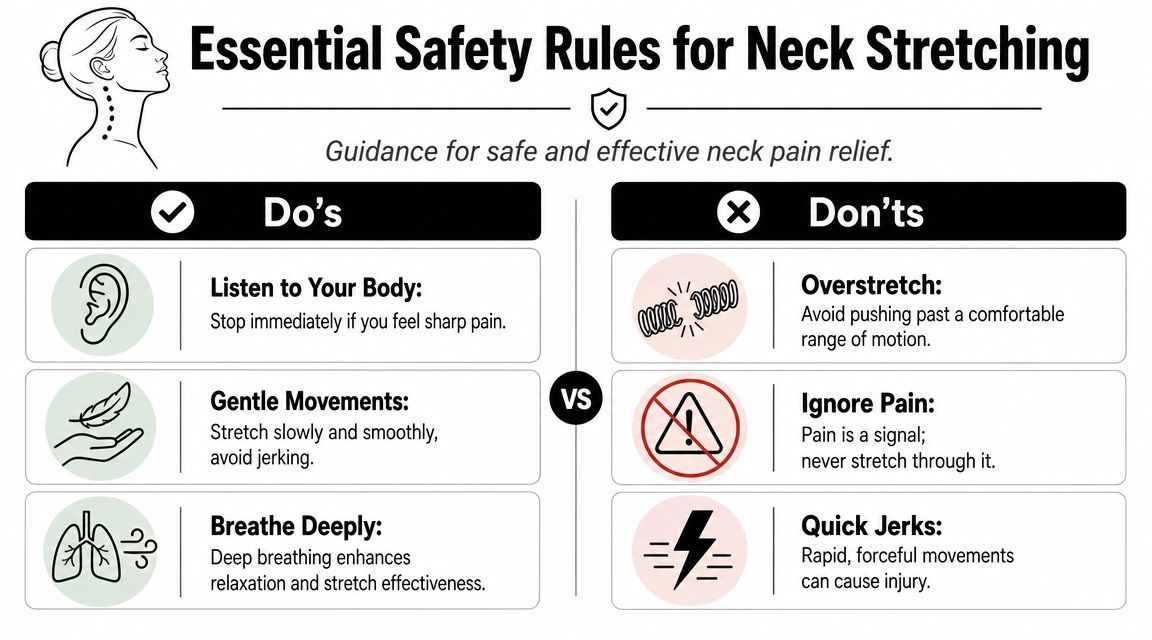
A common set of pitfalls includes tilting the head forward during chin tucks, overpulling into the stretch, and holding stretches too long or too aggressively, which can shift the load to irritated cervical tissues instead of improving control, as explained in these physiotherapy notes on neck exercise mistakes.
What to do instead
Use a safety-first mindset every time you stretch.
- Move slowly: Start the motion, pause, and let the muscles settle.
- Stay in a comfortable range: Mild tension is fine. Sharp, electric, or pinching pain isn't.
- Keep breathing: If you catch yourself holding your breath, you're probably pushing too hard.
- Relax the shoulders: A neck stretch done with shrugged shoulders often misses the point.
This same idea shows up in other parts of the body too. If you've ever looked at Lake City Physical Therapy insights on stretching irritated muscles, the message is similar. Gentle control usually beats aggressive pulling.
Modifications for seniors and sensitive necks
If you're older, balance is limited, or your neck feels especially guarded, do the routine in a sturdy chair with a backrest. That gives your body support and keeps the effort focused where you want it.
A few practical adjustments help:
| Situation | Better approach |
|---|---|
| You feel unsteady standing | Perform all stretches seated |
| You have mild arthritis stiffness | Use a smaller range and slower speed |
| Your shoulders tense up quickly | Place your hands on your lap and exhale before each rep |
| One side is more painful | Spend less time there and don't try to match the other side |
Stop the stretch if symptoms spread into the arm or become sharper as you hold it.
The neck likes precision. It doesn't need intensity.
Building Your Daily Neck Care Routine
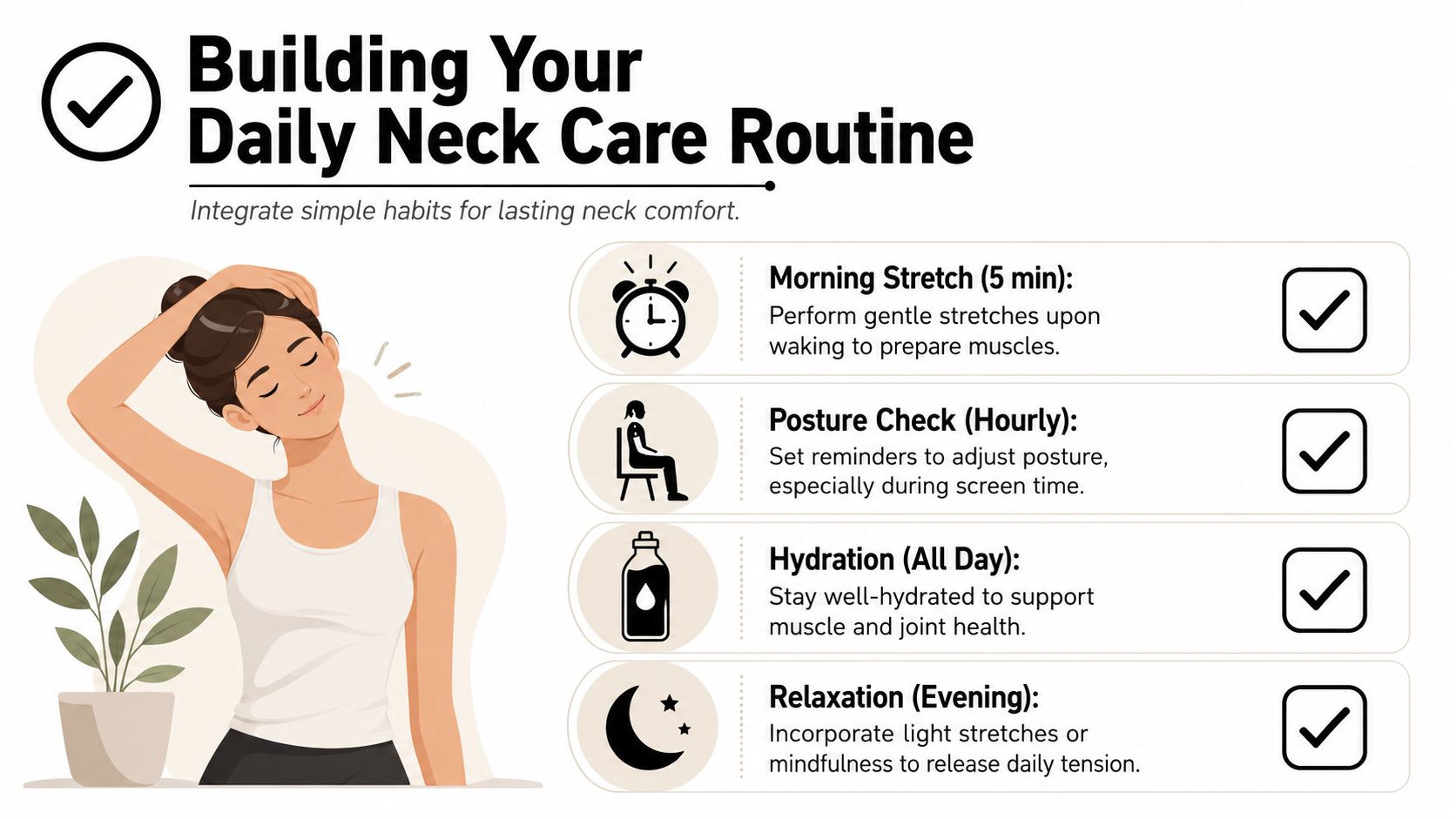
Relief usually comes from regular practice, not one long session done once in a while. Evidence from Mayo Clinic guidance notes that a regular neck-and-shoulder stretching program performed for 4 weeks can decrease neck and shoulder pain, improve neck function, and improve quality of life, which is why consistency matters in real life, not just effort on a single day, according to this Mayo Clinic neck stretching guidance.
A simple morning reset
Use this when you wake up stiff or before you start work.
- Begin with shoulder rolls: A few slow reps to drop tension.
- Add chin tucks: Controlled reps to wake up posture muscles.
- Finish with side tilts: Gentle holds on each side.
This works well because it restores motion without asking too much from a stiff neck first thing in the morning.
An end of day unwind
Use this after computer work, driving, or stress-heavy days.
- Start with gentle neck rotation to each side.
- Follow with side tilts.
- End with a quiet seated posture and relaxed breathing for a moment before standing up.
Some people also do better when they pair movement with broader wellness habits at work. If your neck tightness builds during the workday, these ideas around employee yoga classes can spark a few practical routines for mobility breaks and stress reduction. If nighttime discomfort is part of the problem, this guide on how to sleep with neck pain for lasting relief can help you support the progress you're making during the day.
Red Flags That Mean You Should See a Professional
Home stretching is appropriate for many mild cases of stiffness and muscular tension. It's not the right plan for every kind of neck pain.
A useful decision point comes from a 2025 systematic review and meta-analysis. It found that stretching was significantly associated with lower pain scores after 1 week in a pooled sample of 625 patients, with a reported standardized mean difference of -2.43, supporting the idea that neck pain relief stretches can produce measurable benefits within days to weeks. If your pain isn't improving or is worsening after a week of gentle, consistent stretching, that's a strong reason to seek professional evaluation, based on this systematic review of neck stretching outcomes.
Signs that need more than DIY care
Watch for these red flags:
- Pain after an accident: Especially after a car crash, fall, or sudden impact
- Numbness or tingling: Symptoms traveling into the arm or hand
- Noticeable weakness: Trouble gripping, lifting, or controlling the arm
- Severe headache or unusual symptoms: Especially if the headache feels different from your usual pattern
- Worsening pain: Symptoms that intensify instead of easing with a gentle program
If you're wondering whether an underlying spine condition may be part of the picture, these symptoms of degenerative discs in the neck can help you understand what deserves a closer look.
Your Path to Lasting Neck Pain Relief
A good at-home plan is simple. Use gentle neck pain relief stretches, stay in a comfortable range, and repeat them often enough that your body starts to trust the movement again. For many people, that combination is enough to settle everyday stiffness from posture, stress, or sleep position.
What doesn't work well is forcing the neck, chasing a dramatic stretch, or ignoring symptoms that are clearly changing for the worse. If the pain keeps returning, travels into the arm, or never quite feels muscular, the next step should be a proper assessment. In those situations, MedAmerica Rehab Center is one option for a more individualized plan that may include physical therapy, hands-on care, and guided exercise based on the actual source of your symptoms.
The main goal is lasting relief, not temporary loosening. When you know which movements help, which ones aggravate things, and when it's time to stop self-treating, you put yourself in a much better position to recover well.
If neck pain is limiting your sleep, work, or daily routine, MedAmerica Rehab Center can help you figure out what's driving it and what to do next. A focused evaluation can clarify whether you're dealing with simple muscular tension, postural strain, or something that needs more targeted care.
MedAmerica Rehab · Deerfield Beach
Talk to a clinician about your pain
Physical therapy, chiropractic, acupuncture and shockwave therapy under one roof, since 1995. Same-day appointments are available.
Mon–Thu 8:00 AM – 6:30 PM · Fri 8:00 AM – 3:00 PM