

How To Sleep With Neck Pain for Lasting Relief
You go to bed tired, finally find a position that seems tolerable, and then wake up with a neck that feels locked up. Turning your head to check a blind spot hurts. Looking down at your phone hurts. Even getting out of bed can feel like a project.
That pattern is frustrating because it makes sleep feel like part of the problem instead of part of the recovery. The good news is that how to sleep with neck pain usually comes down to a few fixable factors: sleep position, pillow height, body support, and what your muscles are doing before you fall asleep.
A complicated overhaul isn't usually necessary. Instead, better alignment, less twisting, and a setup that supports the neck are needed, preventing it from holding tension all night. Small changes can make bedtime less aggravating and mornings less stiff.
Waking Up to Neck Pain Is a Choice You Can Change
A common scenario goes like this. You wake up, roll to one side, and immediately feel a sharp reminder at the base of your neck or along the top of the shoulder. You stretch, shrug, maybe rotate your head a little, and hope it loosens up after a shower. Sometimes it does. Sometimes it follows you through the whole day.
That doesn't always mean something serious is happening. It often means your neck spent hours in a poor position and your muscles never got a chance to relax. When that repeats night after night, the body starts to expect morning stiffness.
Sleep should be a recovery window. If your head is pushed too far forward, dropped too low, or turned to one side for hours, your neck tissues don't get that recovery. They stay loaded. That's when people start saying, "I slept all night, but I still woke up sore."
What changes the outcome
The main target is neutral alignment. Your neck should rest in a position that looks close to your standing posture, not cranked, bent, or propped up too high. That usually means one of three things:
- Changing your sleep position so your neck isn't twisted
- Adjusting your pillow so it fills the space you have
- Using support pillows to keep the rest of your body from pulling the neck out of line
Poor sleep posture can become a nightly trigger. Better support can become a nightly treatment.
If you're reading this after another rough night, start with one encouraging fact. Your bedtime habits are modifiable. You don't have to keep guessing, and you don't have to accept morning neck pain as normal.
The Best and Worst Sleeping Positions for Neck Pain
Your sleep position can either calm an irritated neck or keep it loaded for hours. I tell patients to judge a position by one standard. Can you stay there with your head centered and your neck supported, without long periods of twisting or side bending?
For that reason, back sleeping and side sleeping are usually the best options. Stomach sleeping creates the most problems for the cervical spine.
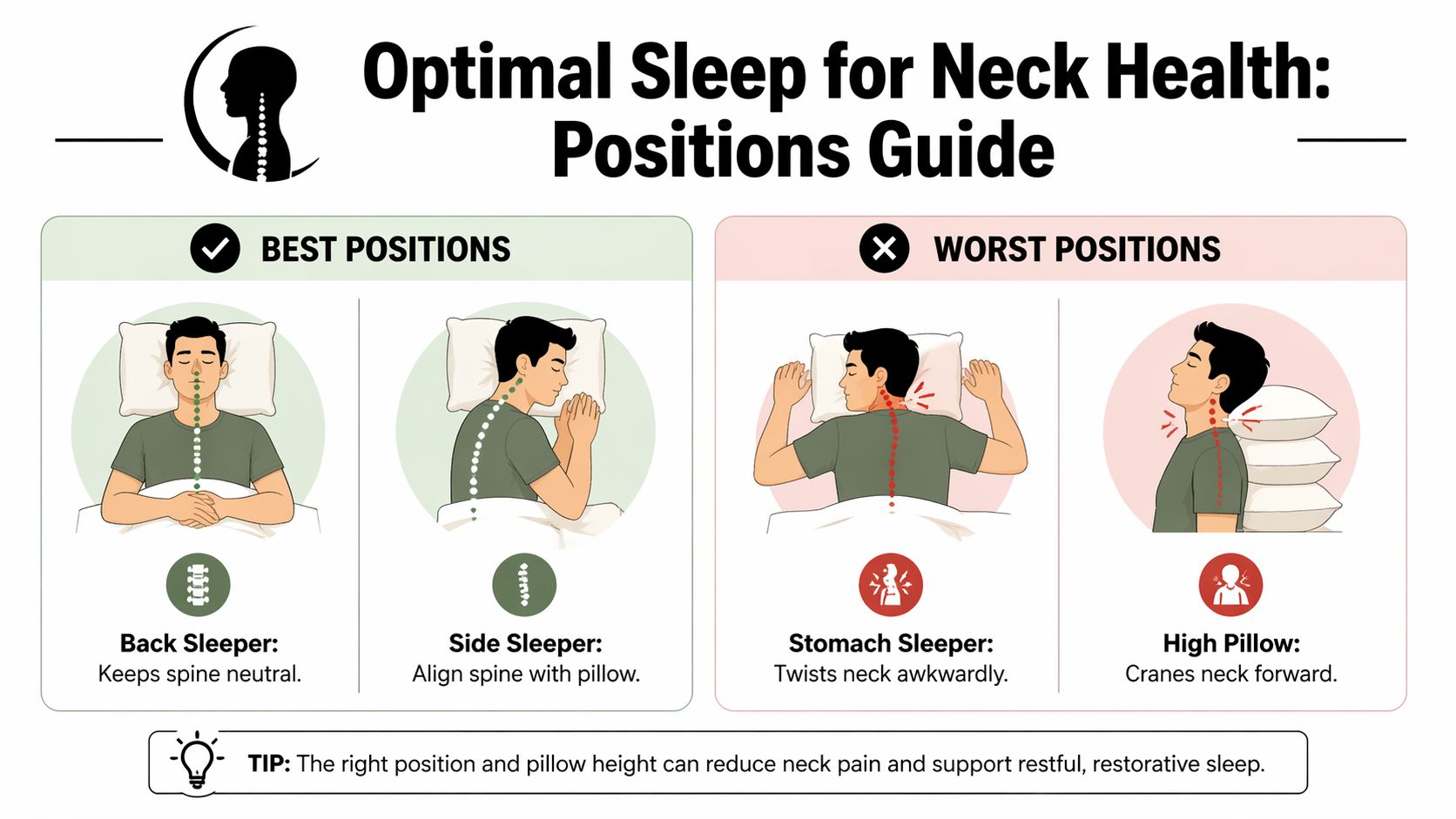
Back sleeping gives the neck the easiest workload
Back sleeping usually gives the neck the clearest path to a neutral position. Research summarized by Sleep Foundation's guidance on the best sleeping position for neck pain notes that stomach sleeping tends to worsen neck pain, while back sleeping supports more neutral spinal alignment when the neck is properly supported.
The trade-off is simple. Back sleeping helps only if the pillow supports the natural curve of the neck without pushing the head too far forward. A pillow that is too thick bends the neck into flexion. A pillow that is too flat leaves the neck hanging without support.
Many patients do best with a modest pillow and a small roll under the lower neck. If you are still experimenting, resources on finding the best pillows for neck pain can help you compare shapes and loft, but the test is whether your neck stays relaxed and centered through the night.
A pillow under the knees can also help some back sleepers stay comfortable. It reduces pull through the low back and pelvis, which often makes it easier to stay in position instead of drifting into a partial twist.
Side sleeping can work very well with the right setup
Side sleeping is often the most realistic choice for adults who do not tolerate back sleeping. It can be excellent for neck pain if the head stays level and the neck is not hanging toward the mattress or pushed away from it.
The key problem is the gap between the ear and the outside of the shoulder. If that space is underfilled, the neck bends sideways all night. If it is overfilled, the neck bends the opposite way. Either one can leave you stiff by morning.
A side-sleep setup usually works best when you:
- Keep your nose pointed straight ahead, lined up with the center of the chest
- Use a pillow that fully fills the ear-to-shoulder gap
- Place a pillow between the knees to limit trunk and pelvic rotation
- Use a body pillow if you tend to roll forward and twist through the upper back
For one-sided neck pain, sleeping on the opposite side often feels better because it reduces direct compression through the sore side of the neck and shoulder.
Quick check: If someone looked at you straight on while you were side sleeping, your head should appear level with the rest of your spine.
Stomach sleeping usually backfires
Stomach sleeping keeps the neck turned for long stretches because you have to rotate your head to breathe. That position increases stress on the joints, muscles, and soft tissues of the neck.
This is the position I ask patients to change first when morning pain is a recurring problem. Even sleeping on your stomach for part of the night can be enough to trigger stiffness, headaches, or pain that spreads toward the top of the shoulder blade.
Some patients say stomach sleeping feels better on the low back or helps them fall asleep faster. That is a real trade-off. Comfort at bedtime does not always mean recovery overnight. If the neck is flared up every morning, the position is costing you more than it is helping.
What to do if you keep rolling onto your stomach
Do not force a perfect change on the first night. Set up the bed so stomach sleeping is less available.
Try this:
- Start on your side or back so your first sleep cycle begins in a better position.
- Hug a body pillow in front of you to make a full roll onto the stomach harder.
- Place a pillow behind your trunk to block the return to that position.
- Keep head support controlled and not overly tall, since bulky pillows can push the neck into awkward angles as you turn.
Habit change usually works better in stages. If you have tried for a few weeks and still wake up in a painful position, that is a good time to get a physical therapist involved. At MedAmerica Rehab Center, we often combine position training with hands-on treatment and, when appropriate, coordinated care such as chiropractic treatment or acupuncture to calm symptoms faster.
Sleeping Position Comparison for Neck Health
| Position | Impact on Neck | How to Optimize |
|---|---|---|
| Back | Usually the least stressful because it supports a more neutral cervical posture | Use a cervical pillow or small neck roll and avoid pushing the head forward |
| Side | Can be highly supportive when the pillow fully fills the ear-to-shoulder gap | Keep the head level, keep the nose facing forward, and add a pillow between the knees |
| Stomach | Usually the most aggravating because the neck stays rotated for hours | Transition away from it gradually with body pillow support and position barriers |
Your Guide to the Right Pillow and Mattress Setup
A pillow can calm an irritated neck, or keep it irritated for eight hours. In clinic, I see the same pattern often. People buy a “neck pain pillow,” but the main issue is usually fit. The right setup depends on your sleeping position, shoulder width, mattress give, and whether the pillow keeps its shape after you settle into it.
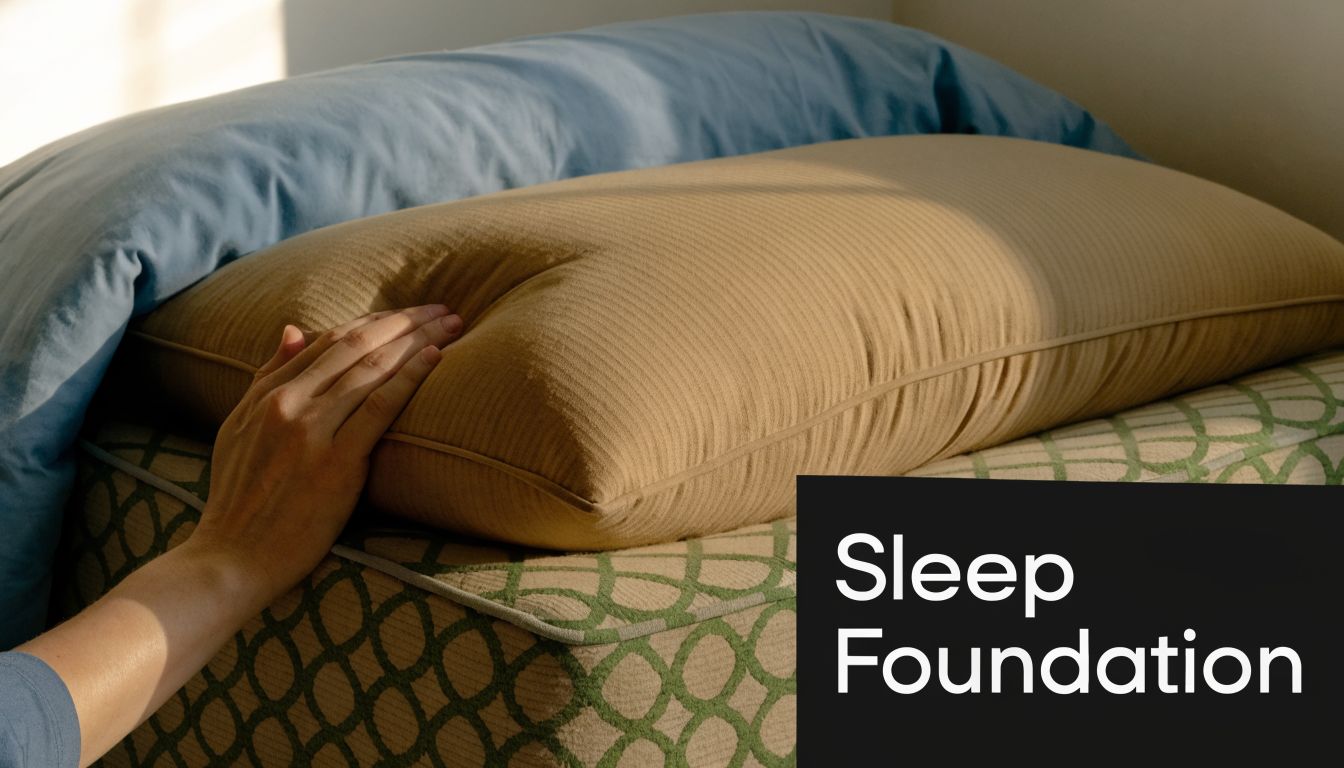
How to choose the right pillow height
For side sleeping, pillow height should fill the space between the ear and the outside of the shoulder without tipping the head up or letting it fall down. Research summarized by Limitless Physical Therapy's guidance on sleep positions for neck pain notes that side-sleep pillow height should match the ear-to-shoulder distance and that pillows that collapse too much can strain the muscles along the side of the neck.
Use this home check tonight:
- Lie on your side in your usual sleep position.
- Let your shoulder and head fully settle into the mattress and pillow.
- Check whether your nose stays in line with the center of your breastbone.
- Ask someone to look from the front, or use your phone camera. Your head should look level, not side-bent.
- Notice how the pillow feels after a few minutes. A pillow that starts high and then flattens out is often the wrong choice.
Broad shoulders usually need more loft. A softer mattress may also change the amount of pillow height you need because the shoulder sinks farther into the bed.
Back sleepers need a different setup. The goal is gentle support under the curve of the neck, with enough cushioning under the head to keep the chin from poking upward or being forced toward the chest. If you wake with tight upper traps or feel like your head is being pushed forward, the pillow is often too tall or too thick behind the skull. If shoulder tension is part of your pattern, these tips for relieving tight shoulders that feed into neck strain can help you troubleshoot the problem more completely.
Material matters, but shape retention matters more
The fill inside the pillow matters less than whether it holds the right height through the night. A feather pillow may feel comfortable at first and still fail to support the neck once it compresses. A contoured foam or resilient latex pillow may feel firmer, but that firmness often keeps the neck in a better position for longer.
Here is the trade-off with common options:
Feather or down
Soft and moldable. Often a poor match for side sleepers who need consistent height.Memory foam
Better at holding shape. Often useful for back sleepers and side sleepers if the loft matches body size and mattress softness.Latex or rubber-style pillows
More springy and resistant to flattening. A good option for people who move a lot or want support that rebounds quickly.
If you want a shopper-focused breakdown before buying, this guide on finding the best pillows for neck pain covers practical buying points that work well alongside the alignment checks above.
Your mattress affects your neck more than you may think
The mattress sets the base. If your trunk drops into a dip or your shoulder gets jammed upward because the surface is too firm, your neck has to compensate.
A mattress may be contributing if you notice one or more of these patterns:
- Your shoulders and hips sink at different rates, leaving your spine curved when you side sleep
- You sleep better on a different surface, such as a guest bed, hotel bed, or even a firm couch
- You keep stacking, folding, or scrunching pillows to make the bed tolerable
- There is a visible sag or body impression where your torso settles every night
Medium to medium-firm tends to work well for many adults because it supports the trunk without feeling rigid, but there is no single mattress that fits every body type. Heavier frames often need more support. People with sharper shoulders or hips may need a little more pressure relief. The best test is simple. Your neck should feel quiet when the rest of your body is supported.
A five-minute setup check
Before bed, check these four points:
| Checkpoint | What you're looking for |
|---|---|
| Head position | Head stays level, not tipped up, down, or to one side |
| Neck support | The natural curve of the neck is supported without pushing the chin forward |
| Shoulder comfort | The shoulder is not being shoved into the neck or pinned under your body |
| Whole-body alignment | Rib cage, trunk, and pelvis stay stacked instead of twisting or sagging |
If your pillow only works when you bunch it, fold it, or keep fixing it during the night, it is not supporting your current sleep position well enough. At MedAmerica Rehab Center, we often help patients sort this out with a quick movement and posture assessment, then match home changes with physical therapy, chiropractic care, or acupuncture when symptoms need more than a bedding fix.
A Pre-Sleep Routine to Ease Neck Tension
A good sleep setup helps only if your muscles are willing to let go. Many people bring the whole day into bed with them. Hours of desk posture, driving, stress, and shoulder tension leave the upper trapezius, scalenes, and the muscles around the shoulder blades working harder than they should.
Research discussed in the Sleep journal supplement on ergonomic cervical pillows found that a twelve-month study of an ergonomic cervical pillow reduced pain intensity by an average of 40 to 60% and disability scores by 35 to 50%. The same source notes that poor positioning can raise muscle load, and that supine positions with hands on the forehead can increase trapezius activity by up to 30% compared with neutral arm placement. The takeaway is practical. Position matters, but so does what your muscles are doing before you try to sleep.
A simple routine that helps the neck settle
You don't need an intense stretching program before bed. In fact, aggressive stretching often irritates a sensitive neck. Keep it gentle.
Try this routine in a calm room with slow breathing:
Warm the area first
Use a warm shower or a warm compress over the neck and upper shoulders for a few minutes. Heat often helps tight muscles relax before you lie down.Do chin tucks slowly
Sit tall and draw your head straight back as if making a double chin. Don't look down. Hold briefly, then relax. This encourages a more neutral head position without cranking the neck.Stretch the upper trapezius carefully
Sit on one hand, tilt your head away, and stop at a mild stretch. You should feel length along the side of the neck, not a sharp pull.Loosen the chest and front shoulders
If your shoulders round forward all day, the neck often compensates. A doorway chest stretch can help reduce that pull.
Put your arms in a quiet position
A lot of people lie on their back with both hands high on the chest or forehead. That can increase muscle activity around the neck and shoulders. A better option is to let the arms rest lower, with the shoulders supported and relaxed.
If shoulder tension is part of your picture, this guide on tight shoulders and how physical therapy can help can help you connect shoulder stiffness with your neck symptoms.
The best bedtime stretch is the one that leaves the area calmer. If a movement creates guarding, tingling, or a headache, back off.
For readers who also want to understand common supplement questions around wind-down routines, this article on Ashwagandha and magnesium offers a useful overview. Supplements can be part of a broader sleep conversation, but they don't replace mechanics. If your neck is twisted or unsupported, no capsule fixes that.
Add breathing so the neck stops bracing
Stress changes muscle tone. People who clench their jaw, raise their shoulders, or breathe shallowly through the upper chest often carry that pattern straight into bed.
Use one minute of slow breathing:
- Inhale gently through the nose.
- Let the ribs expand instead of lifting the shoulders.
- Exhale longer than you inhale.
- Drop the tongue from the roof of the mouth and unclench the jaw.
If you want guided movement, this short video can help you ease into a calmer state before bed.
Advanced Strategies for Acute Neck Pain Flares
Most advice about how to sleep with neck pain assumes you can tolerate lying flat. During an acute flare, that may not be true. People with cervical radiculopathy, fresh post-surgical irritation, or a strong arthritis flare sometimes feel worse the moment they recline fully.
In those cases, short-term upright or semi-upright sleeping can be a useful workaround instead of a last resort.

When a recliner works better than a bed
According to Edison Spine Center's discussion of sleeping positions for back and neck pain, recent rehab trials from 2024 to 2025 found that short-term recliner sleeping produced a 35% pain reduction for people with acute cervical radiculopathy or post-surgical pain compared with flat positions. The same source recommends an optimal recline angle of 30 to 45 degrees, plus a horseshoe pillow for neck stability and lumbar support to reduce lower back strain.
That makes sense clinically. A semi-upright position can reduce the stress some patients feel when the head and neck are fully horizontal. It can also make it easier to get in and out of position if mobility is limited.
How to set it up correctly
A recliner only helps if you prevent slumping.
Use these pieces together:
- A recline angle in the recommended range so you're supported without folding forward
- A horseshoe or travel pillow to keep the head from falling to one side
- A small lumbar support so the low back doesn't collapse
- Arm support with pillows if your shoulders tend to pull downward and tension the neck
This should be temporary. Recliner sleeping can get someone through a difficult stretch, but it isn't usually the best long-term answer for whole-spine comfort.
Use cold when the area feels hot and irritated
Acute flares often come with inflammation, sharpness, or a burning quality rather than simple tightness. In that scenario, cold can be more helpful before bed than heat.
If you want a safe, simple overview of timing and technique, this guide to ice pack physical therapy use explains how clinicians think about cold for irritated tissues.
If lying flat sharply increases arm pain, numbness, or neck pain during a flare, a short trial of supported recliner sleeping can be a reasonable bridge until the irritation calms down.
When to See a Physical Therapist for Your Neck Pain
Home care is useful. It isn't the whole answer when symptoms keep returning, spread into the arm, or stop responding to simple changes. Night pain can come from a poor pillow, but it can also come from joint irritation, nerve sensitivity, postural overload, a shoulder problem, or the aftermath of an accident.
The first step is knowing when self-management is enough and when it isn't.
Signs you shouldn't ignore
Get prompt medical evaluation if neck pain comes with symptoms such as:
- Radiating pain into the arm or hand
- Numbness or tingling
- Noticeable weakness
- Severe headache that feels unusual for you
- Pain after a fall, collision, or other trauma
- Loss of balance, clumsiness, or rapidly worsening symptoms
Those signs suggest the issue may involve more than routine muscular strain.
When therapy makes more sense than more guesswork
If you've already changed pillows, modified positions, and improved your bedtime routine but still wake up stiff or sore, the next useful question is not "What else can I buy?" It's "What is driving this pattern?"
A physical therapist can look at the full chain. That includes neck mobility, shoulder mechanics, thoracic stiffness, workstation posture, sleep posture, and whether a nerve or joint is being irritated. A chiropractor may help address joint restrictions. Acupuncture may help settle pain and muscle guarding. The best plan depends on why your neck is hurting, not just where.
For a broader look at how clinicians approach these problems, this article on how physical therapy helps with back and neck pain gives a helpful overview of what treatment can involve.
What a good first visit should feel like
A quality evaluation shouldn't feel rushed or mysterious. You should leave understanding what structures seem irritated, what positions help, what positions aggravate things, and what your first few steps are.
A clinician may check:
| What they assess | Why it matters |
|---|---|
| Neck range of motion | Helps identify movement limits and painful patterns |
| Shoulder and upper back mobility | These areas often contribute to neck overload |
| Sleep setup details | Pillow height and position may be a nightly trigger |
| Neurologic symptoms | Important when pain travels, tingles, or weakens the arm |
| Daily habits | Desk work, driving, lifting, and stress all affect recovery |
Treatment often works best when it combines more than one tool. Hands-on therapy can calm irritated tissues. Targeted exercise can improve support and control. Chiropractic care may help in the right case. Acupuncture can be useful when pain, guarding, and sleep disruption are all feeding into each other.
Good care doesn't just reduce pain for one night. It helps you stop recreating the same problem every night.
Frequently Asked Questions About Sleeping with Neck Pain
You don't need a perfect sleep setup by tonight. You need a better one. The biggest wins usually come from getting out of stomach sleeping, matching pillow height to your body, and winding down neck tension before bed instead of carrying it into the night.
How long does it take for a new pillow or sleeping position to work
Some people notice a difference within a few nights. Others need a couple of weeks to adapt, especially if they're changing from stomach sleeping to side or back sleeping. If a setup is clearly making you worse after several nights, reassess the height and position instead of forcing it.
Can a mattress topper help or hurt my neck pain
It can do either. A topper helps if it improves pressure relief without letting your trunk sag too far. It hurts if it changes how much your shoulder or torso sink and throws off the pillow height that used to work.
Is it better to use ice or heat before bed for neck pain
Use heat when the problem feels like stiffness, guarding, or muscle tightness. Use ice when the area feels irritated, sharp, or inflamed, especially during an acute flare. The response matters more than the label, so choose the option that leaves the neck calmer.
Should I wear a neck brace to bed
Usually no, unless a physician specifically advised it. Braces can be appropriate in select medical situations, but routine overnight use often creates dependence and can make the neck feel stiffer over time. Proper support and positioning are generally more effective than immobilization.
If neck pain is stealing your sleep or making mornings miserable, MedAmerica Rehab Center can help you move past trial and error. Our Deerfield Beach team provides physical therapy, chiropractic care, acupuncture, and hands-on treatment plans specific to the underlying cause of your pain so you can sleep better, move easier, and get back to your routine with more confidence.
MedAmerica Rehab · Deerfield Beach
Talk to a clinician about your pain
Physical therapy, chiropractic, acupuncture and shockwave therapy under one roof, since 1995. Same-day appointments are available.
Mon–Thu 8:00 AM – 6:30 PM · Fri 8:00 AM – 3:00 PM