
How to prevent falls in older adults: Prevent Falls: Safety
Taking a walk along the Deerfield Beach pier should be a simple pleasure, not something that fills you with worry. For too many older adults, though, the fear of falling can start to creep in, turning everyday activities into a source of anxiety. This isn't just an overreaction; it's a real concern, and it's time to face it head-on.
The path from feeling fearful to feeling empowered has three parts. First, you need to understand the real risks. Then, you assess where you stand personally. Finally, you take action.
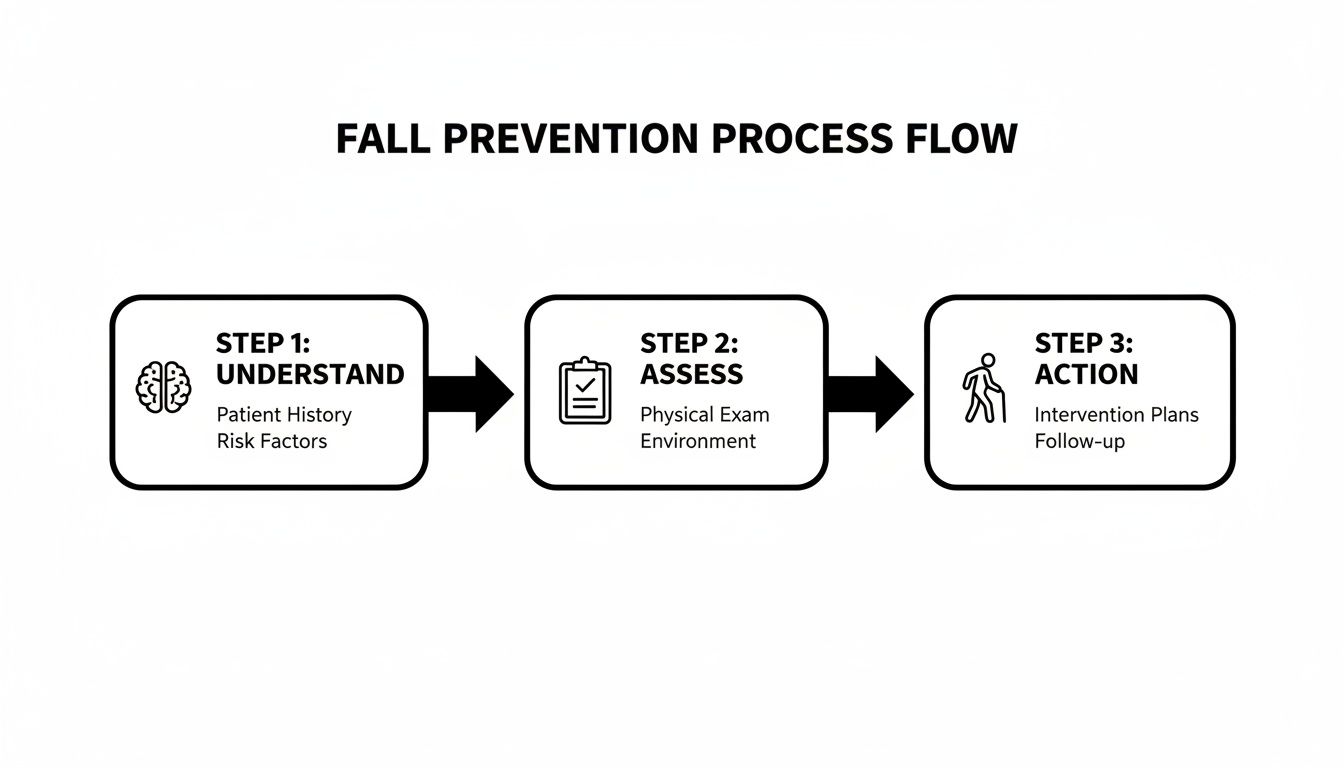
It really is that straightforward. By tackling the root causes, you shift from a place of fear to one of control.
The Numbers Don't Lie—But They Don't Have the Final Say
Let's get the scary part out of the way. The Centers for Disease Control and Prevention (CDC) reports that more than one in four older adults in the U.S. falls each year. That adds up to roughly 36 million falls annually.
Even more troubling is that falling once doubles your chances of falling again. Yet, less than half of seniors who take a tumble ever bring it up with their doctor. If you want to dig deeper, you can explore the full scope of the CDC's fall data and see the national picture.
But these numbers aren't a forecast of your future. They are a wake-up call. Knowing why falls happen is the first step toward stopping them before they start.
Why Do Falls Happen?
Falls rarely come out of nowhere. They're usually the result of a few different factors stacking up over time. I’ve found that when people can pinpoint these factors in their own lives, that’s when real progress begins.
This table breaks down the most common culprits we see in our practice.
Key Factors Contributing to Falls in Older Adults
| Risk Factor Category | Specific Examples | How It Increases Risk |
|---|---|---|
| Physical Changes | Muscle weakness, balance issues, vision or hearing loss, foot pain | Reduces your ability to catch yourself, react to hazards, and stay steady on your feet. |
| Home Environment | Poor lighting, loose rugs, clutter, lack of grab bars in the bathroom | Creates tripping hazards and makes it harder to navigate your own home safely. |
| Chronic Health Issues | Arthritis, diabetes, heart disease, neurological conditions (like Parkinson's) | Can cause pain, numbness, dizziness, or weakness that directly impacts stability. |
| Medication Side Effects | Dizziness, drowsiness, confusion, blurred vision | Side effects from prescriptions or over-the-counter drugs can throw off your balance unexpectedly. |
Recognizing these factors is the key to creating a smart, effective prevention plan.
The goal isn’t to get stuck on the risks. It’s to see them as areas where you can make real, positive changes. Every single one is an opportunity to regain your footing and build a safer, more confident life.
This guide is here to walk you through exactly how to do that. With clear, manageable steps and the support of local experts at MedAmerica Rehab, you can tackle these challenges and keep living the active, independent life you love here in Deerfield Beach.
Your Personalized Fall Risk Assessment
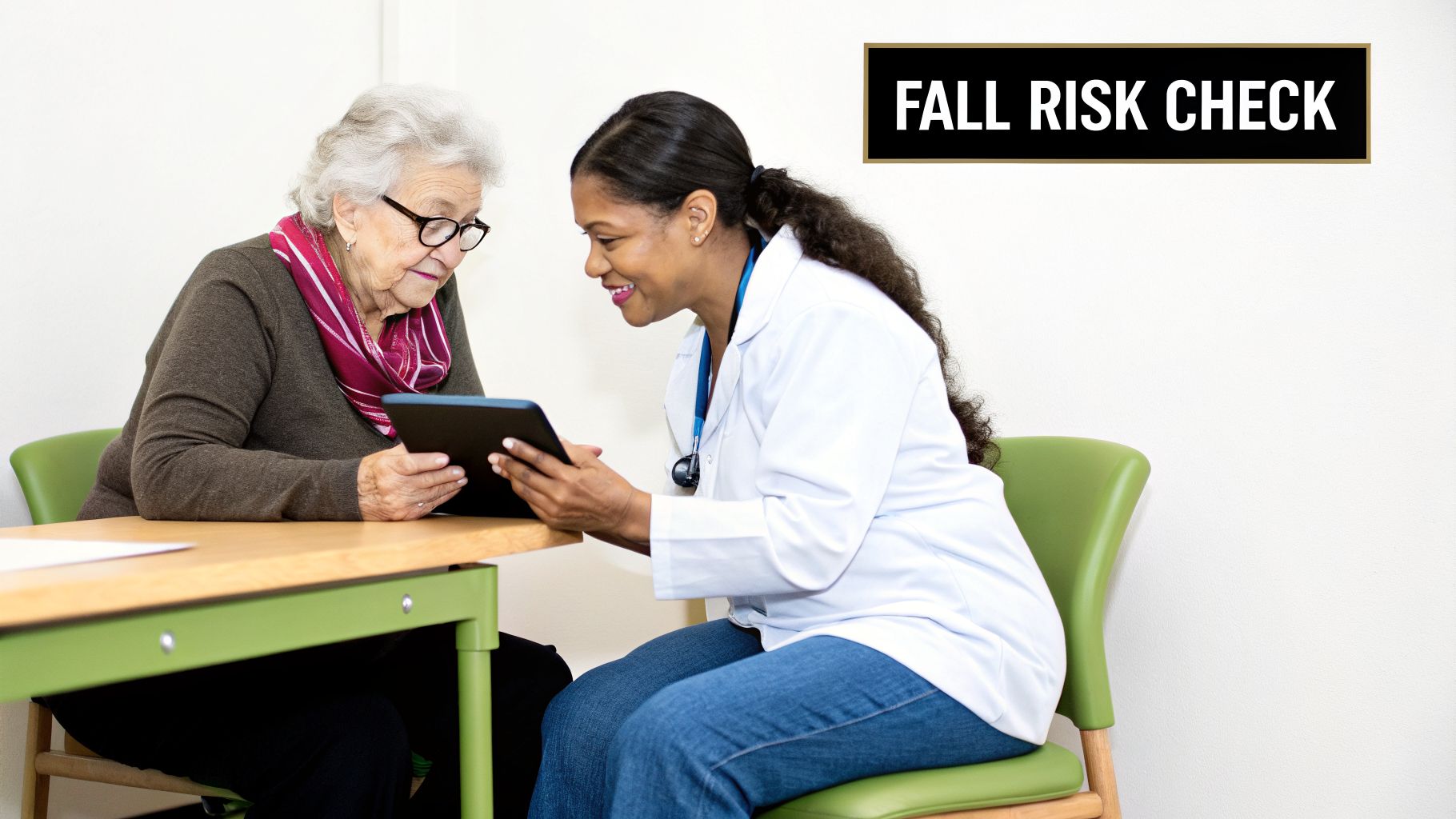
Before we can build a strong fall prevention plan, we first need to understand your unique situation. Think of a fall risk assessment less like a test and more like a strategy session between you and a physical therapist.
There's no pass or fail here. The entire point is to get a clear picture of your specific strengths and challenges. This gives us a starting point, allowing a specialist—like our team here at MedAmerica Rehab—to create a plan that truly works for you and builds lasting stability.
It All Starts With a Conversation
The first thing we'll do is simply talk. This is where we learn about your health history, your daily life, and any concerns you might have. We’ll want to know about any chronic conditions, like arthritis or diabetes, that could be playing a role.
We’ll also dig into your day-to-day routines. Do you ever feel unsteady when getting out of bed? Do you get nervous on stairs? These details give us important clues.
Most importantly, we'll go over every single medication you're taking. That includes prescriptions, over-the-counter drugs, and even vitamins or supplements. Some medications, or even a combination of them, can cause side effects like dizziness or drowsiness that significantly increase fall risk.
A fall risk assessment isn't just about what happens in our clinic; it's about understanding what happens in your daily life. The more we know about your habits, concerns, and health background, the more precise and effective your fall prevention plan will be.
Practical Tests for Real-World Balance
After we talk, we'll move on to a few simple, practical tests. These aren't tough workouts. They are carefully selected movements that show us how your body manages balance, strength, and walking in everyday situations.
You can expect a few common evaluations:
- The Timed Up and Go (TUG) Test: This is a classic in fall risk screening. We'll time how long it takes you to stand up from a chair, walk about 10 feet, turn around, and sit back down. It's a quick, powerful way to see your overall mobility and balance.
- Balance Tests: This might involve standing on one leg for a few seconds (with support right there, of course!) or standing with your feet together—first with your eyes open, then closed. These simple tasks tell us a lot about how well you can maintain your center of gravity.
- Strength Checks: A therapist might gently check the strength in key muscles, particularly in your legs and ankles. This could be as simple as seeing if you can rise from a chair without using your hands.
Each test gives us another piece of the puzzle. For example, if you feel a little wobbly during the TUG test, it tells us we need to focus on both your dynamic balance and leg strength.
Turning Findings Into Action
This is where it all comes together. Your therapist will walk you through the results in plain, easy-to-understand language. You'll see exactly which areas need some attention and, more importantly, why.
This is the opposite of a one-size-fits-all program. Your plan is built just for you, based on what we learned.
If the assessment showed some ankle weakness, your home program will include specific ankle-strengthening exercises. If balance was the main challenge, you’ll get a series of balance drills that gradually get more challenging.
Here at MedAmerica Rehab in Deerfield Beach, our therapists use these detailed assessments to build focused programs that restore stability and, just as importantly, help you get your confidence back—one step at a time.
Building Practical Strength and Balance Daily
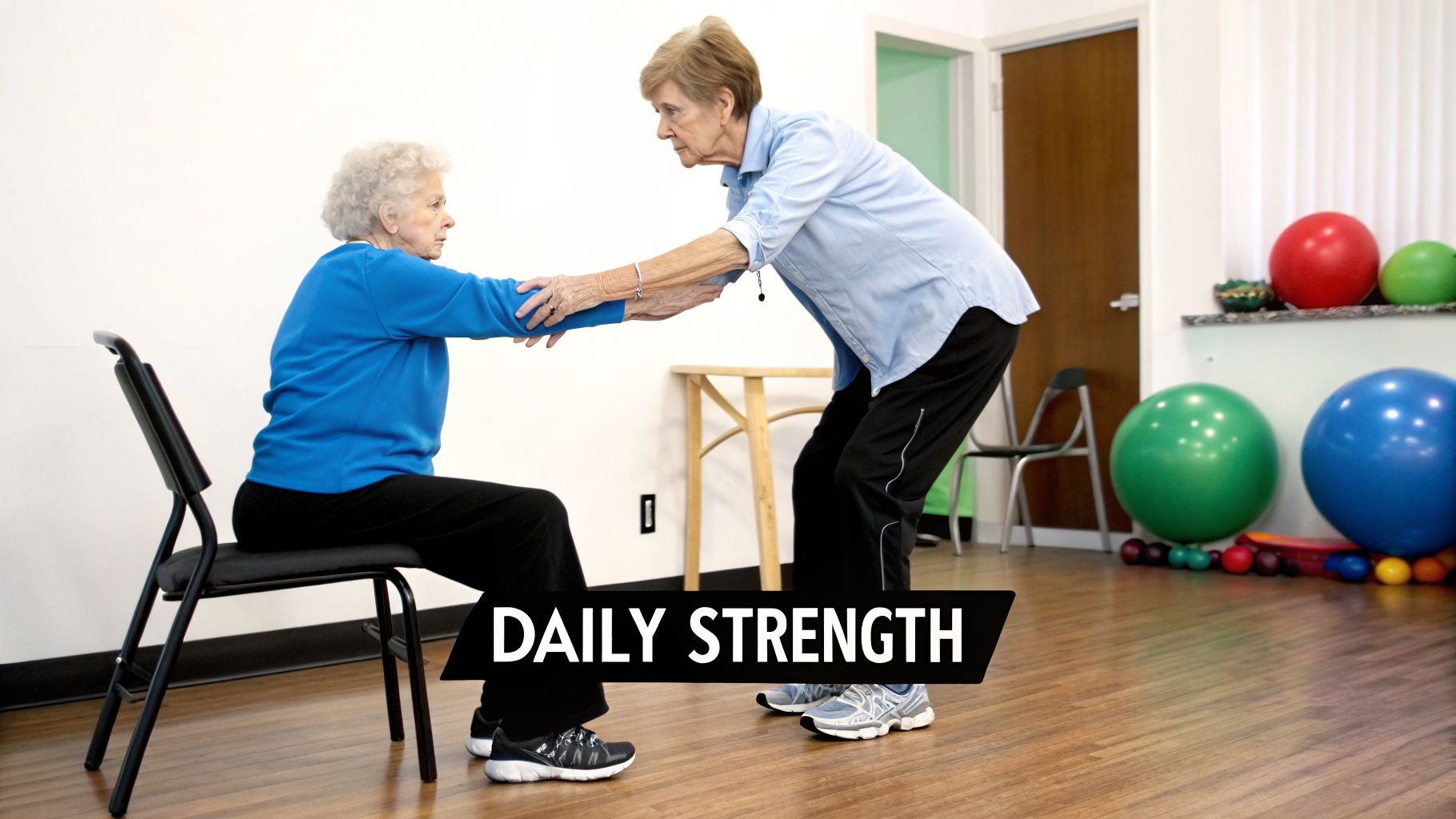
This is where the rubber meets the road—turning what we know about your fall risk into real, everyday stability. We’re not talking about training for a marathon. This is about building the practical strength you need for daily life.
Think about getting out of a low car, reaching for a coffee mug on the top shelf, or walking across a grassy park. Each of those moments demands a quiet partnership between your muscles and your balance.
Spending just a few minutes each day on simple, focused exercises can make a world of difference. The goal is to build a body that reacts confidently and keeps you safe, without you even having to think about it.
Strength Builders For Everyday Confidence
Weak leg and core muscles are a huge factor in many falls. When these muscles are strong, they give you a solid foundation for every single thing you do. These exercises are all about building functional strength you can actually use. Always have a sturdy chair (no wheels!) or countertop nearby for support.
The Sit-to-Stand: This is one of the most important exercises for staying independent. It builds the exact muscles you need to get up from a chair, off the toilet, or out of a car.
- Start by sitting on the edge of a sturdy chair, feet flat on the floor and about hip-width apart.
- Cross your arms over your chest.
- Lean forward, tighten your stomach muscles, and push through your heels to stand up completely.
- Then, with control, slowly lower yourself back down. Aim for 8-10 repetitions.
If standing up is a struggle at first, that’s okay. Use the chair's armrests to help, but try to make your legs do as much of the work as you can. Over time, you'll rely on them less and less.
Heel Raises: This simple move is fantastic for your calf muscles, which you need for a good walking push-off and for making tiny balance adjustments on the fly.
- Stand behind your support chair, holding on for balance.
- Slowly lift your heels off the floor, rising onto the balls of your feet.
- Pause for a second at the top, then slowly lower back down.
- Repeat this 10-15 times.
These movements build more than just muscle—they build the confidence to move freely. For more ideas, check out our guide on how to strengthen your legs with four simple exercises.
Balance Boosters For A Steadier Stance
Balance is a skill. The good news is, like any skill, you can get better at it with practice. When you challenge your balance in a safe way, you’re training your brain and body to work together to keep you centered and upright.
Remember, the goal with balance exercises is not to be perfectly still. Small sways and corrections are your body learning to stabilize itself. Always have a chair or counter within arm’s reach.
Single-Leg Stance: This exercise is a perfect mimic of walking, where you’re briefly on one leg with every single step you take.
- Stand behind your chair, holding on with both hands for support.
- Lift one foot just an inch or two off the floor.
- Try holding that position for 10-20 seconds.
- Then, switch legs and do the same on the other side.
As this gets easier, see if you can hold on with just one hand. Then maybe just a fingertip. Eventually, you might be able to do it with no hands at all, but only move to that next stage when you feel completely safe and confident.
The Power Of Mindful Movement
Beyond specific exercises, some activities are powerhouses for improving strength and balance at the same time. They help you become more aware of your body and how it moves.
| Activity | How It Helps Prevent Falls | Who It's Good For |
|---|---|---|
| Tai Chi | Involves slow, flowing movements that challenge balance and build lower-body strength. It also promotes mindfulness and body awareness. | Anyone looking for a gentle, low-impact exercise that has been proven to reduce fall rates in older adults. |
| Gait Training | A specialized physical therapy program focusing on improving the pattern and safety of your walk. A therapist analyzes your stride and provides specific cues and exercises. | Individuals with an irregular walking pattern, those who shuffle their feet, or anyone who feels unsteady while walking. |
Here at MedAmerica Rehab, our physical therapists often blend these approaches—like gait training and specific balance drills—into a plan that’s just for you. It’s about more than muscle. It’s about teaching your body to move with stability again, whether you're navigating the aisles at Publix or taking a walk along Deerfield Beach.
Making Your Home a Fall-Proof Zone
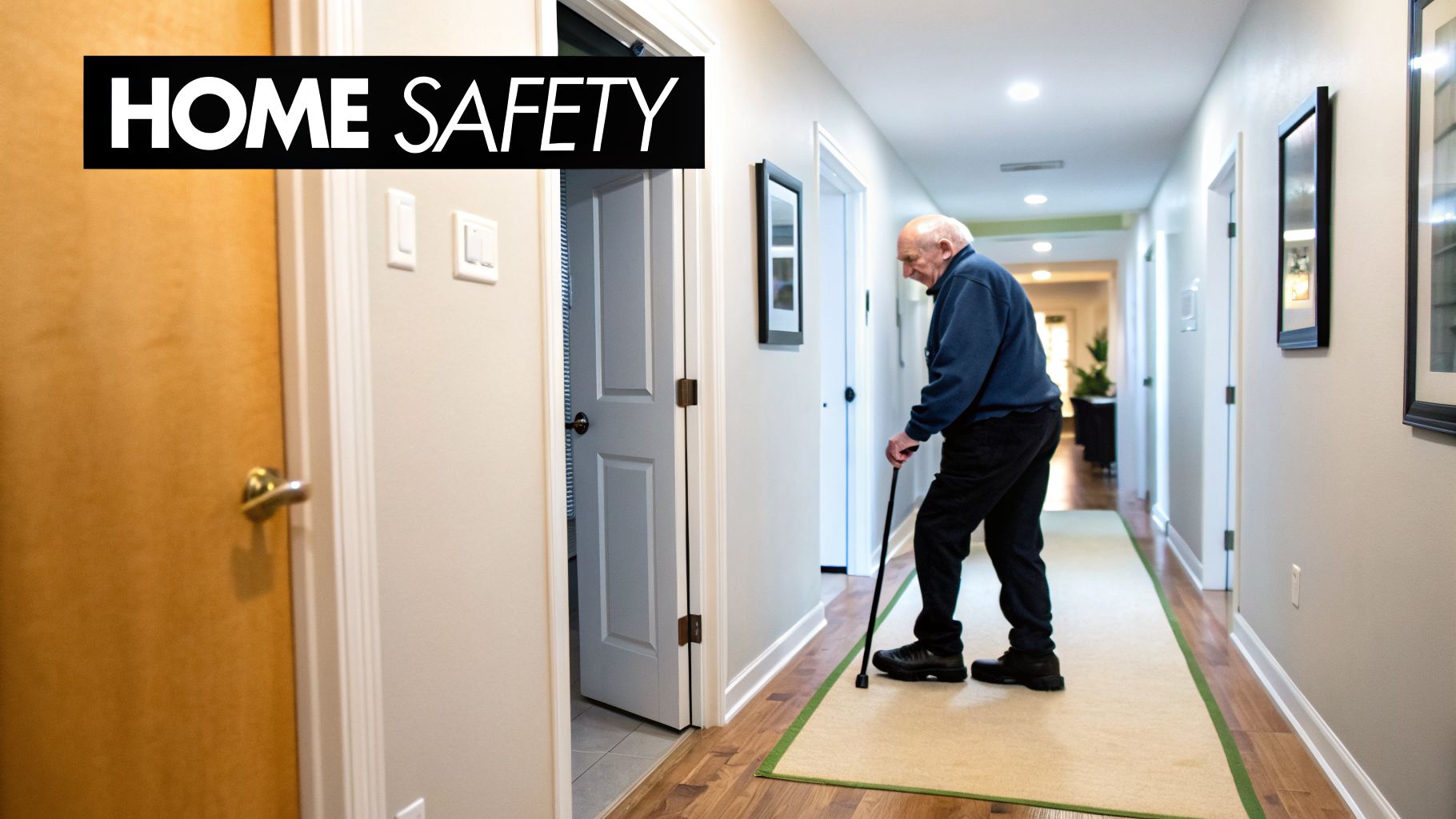
Once you’ve started building strength and balance, the next step is to look at your environment. It’s a strange irony, but the one place we all feel safest—our own home—is exactly where most falls occur. It’s time to walk through your house with a new set of eyes, specifically looking for the hidden hazards that can catch a toe and lead to a serious injury.
Think of it this way: your balance exercises are building your internal stability. These home adjustments build your external stability. They’re the safety net that supports you every single day, and you don’t need a major renovation to make a huge difference.
Start With the Paths You Walk Most
First, let's look at the routes you take all the time. The path from your bed to the bathroom in the middle of the night, or from your favorite chair to the kitchen for a snack. These high-traffic areas are often where the biggest problems lie.
Start by clearing the pathways. This is more than just tidying up. Look for anything that makes you sidestep or walk around it—a stack of books, a stray phone charger cord, or a small end table that juts out. Every little obstacle is a potential trip waiting to happen.
One of the most common culprits we see in our practice is the simple throw rug. They add color and comfort, but their loose edges are notorious for snagging a foot, a cane, or a walker. If you can’t part with them, make sure they are anchored firmly with double-sided rug tape or a quality non-slip backing.
Let There Be (More) Light
Dim lighting can turn a familiar room into an obstacle course, especially after dark. As we get older, our eyes naturally need more light to see clearly, which makes a well-lit home absolutely essential for preventing falls.
Here’s a quick checklist for brightening your space:
- Plug in nightlights. Use automatic, light-sensing nightlights in hallways, bathrooms, and the kitchen. They cast just enough glow for you to see your way without fumbling for a switch.
- Add more lamps. Make sure every room has a light source you can reach easily. A great trick is to put a lamp on the nightstand right next to your bed, so you can turn it on before your feet hit the floor.
- Use brighter bulbs. This is one of the easiest and cheapest fixes there is. Check the maximum recommended wattage for your fixtures and use the brightest bulbs you can.
These small changes give you the confidence to move around your home safely, no matter the time of day.
Home hazards are a very real threat, but they are also a very fixable problem. Research shows that home modifications can cut the risk of falls by 38% for older adults. Tragically, in 2026 alone, over 41,400 Americans aged 65 and older died from falls, with many of these incidents tracing back to simple, preventable hazards at home.
Securing the Bathroom and Kitchen
The bathroom and kitchen need special attention. With their tile floors and the constant presence of water, these rooms are prime locations for a slip.
In the bathroom, the goal is to add stability right where you need it most.
- Install grab bars. These are non-negotiable. Put them inside and outside of the shower and right next to the toilet. Please avoid the suction cup bars—they are not secure enough. Always choose professionally installed, wall-mounted bars for safety.
- Use non-slip mats. A good-quality non-slip mat belongs inside the tub or shower stall. On the floor outside, use a bathmat that has a solid rubber backing.
- Get a shower chair. Sitting while you bathe is a simple change that dramatically reduces your risk of slipping on a wet surface.
An occupational therapist is an expert at spotting these risks and can give you recommendations tailored specifically to your home and your needs. You can learn more about how our occupational therapy services can help create a safer living space for you or a loved one. For even more room-by-room ideas, check out these excellent strategies to prevent falls at home.
Your Local Partners in Fall Prevention
Trying to prevent falls on your own can feel overwhelming. You can do all the right exercises and still feel like you’re missing a piece of the puzzle. That’s because lasting stability isn't just about one thing—it’s about having a team that understands the whole picture. You shouldn’t have to figure it all out alone.
Here in Deerfield Beach, that’s our entire approach at MedAmerica Rehab. We act as your dedicated partners, bringing together different specialists to find and fix the real reasons behind your instability.
How Our Team Creates a True Safety Net
Think of your stability like a chair. If one leg is weak or wobbly—whether it’s from pain, poor alignment, or muscle loss—the whole chair is unsafe. Our job is to make sure every leg is solid.
Physical Therapy: This is the foundation. Our physical therapists are experts in movement. They'll pinpoint which muscles are weak and design specific exercises to rebuild your leg strength, improve your walking pattern, and sharpen your balance. They teach you how to move safely and with confidence.
Chiropractic Care: Sometimes, the problem starts in your spine or joints. Misalignment can cause stiffness, pain, and even nerve issues that throw off your balance. Gentle chiropractic adjustments can restore proper alignment, helping your body move the way it was meant to.
Acupuncture: Chronic pain makes you move differently. If your back or knees hurt, you'll naturally change your gait to protect yourself, but this often makes you less stable. Acupuncture is a powerful tool for managing pain from conditions like arthritis or sciatica, letting you move more freely without relying on medication.
When these experts work together, nothing gets missed. Your physical therapist might notice a balance issue that the chiropractor can trace to a pelvic imbalance. This teamwork leads to a faster, more complete recovery.
Real Stories From Our Deerfield Beach Community
The best way to see how this works is through the people we’ve helped. Take John, a 78-year-old who came to us after a fall. His hip was in constant pain, and he’d become terrified of walking anywhere by himself. He was skipping his daily walks and missing out on time with friends. His world was getting smaller.
We started with a full team assessment. His physical therapist created a gentle program to build strength back in his hip. At the same time, our chiropractor found a slight imbalance in his spine that was making his gait unsteady.
After just a few weeks of combined therapy, John wasn't just walking without pain—he was walking with his head held high. He told us, "I stopped looking at the ground when I walk. I feel like myself again."
We hear stories like this all the time. People arrive feeling anxious and vulnerable and leave feeling strong and in control. They get back to navigating the grocery store, playing with their grandkids, and just enjoying the Deerfield Beach weather without that constant worry.
A Plan That’s Actually Built for You
Real fall prevention is not a one-size-fits-all handout. It’s a living plan that our team adjusts as you get stronger.
This might mean adding more challenging balance work or using advanced treatments to break down stubborn scar tissue that’s limiting your movement. We work right alongside you, monitoring your progress at every session and fine-tuning your program. To see more about our hands-on philosophy, you can explore our guide to physical therapy for seniors in Deerfield Beach.
Ultimately, this is about more than just avoiding a fall. It’s about having a team of experts who know your name, understand your goals, and are committed to helping you live a full, active life with confidence.
Common Questions About Senior Fall Prevention
It’s only natural to have a few questions after learning about new strategies for fall prevention. In fact, thinking ahead is the single most important step you can take.
Getting clear answers can give you the confidence to move forward. Here are some of the most common questions our team at MedAmerica Rehab hears from our community here in Deerfield Beach.
I Feel Steady on My Feet. Do I Really Need to Worry About This?
That's a great question, and the answer is a firm yes. The absolute best time to start fall prevention is long before you feel unsteady.
Think of your balance and strength like a savings account for your mobility. Every time you do a few simple exercises or go for a walk, you’re making small, regular deposits. You’re building up a reserve that will keep you stable for years.
Many of the things that lead to a fall develop so slowly you might not even notice them:
- Gradual muscle loss is a natural part of aging, but we can slow it way down with the right exercises.
- Small changes in vision can affect your depth perception.
- A new medication could have side effects that aren't obvious at first.
Starting a simple routine now is one of the smartest investments you can make in your future independence. At MedAmerica Rehab, we often work with healthy, active seniors to set a baseline and build smart habits that keep them strong and confident.
Do I Need to Buy Special, Expensive Shoes?
Not at all. This is a common myth we hear all the time. You don’t need to spend a lot of money to find safe, effective footwear. The most important features are actually quite simple.
Look for shoes that have:
- A low, wide heel for a stable base.
- A non-slip sole that provides good grip.
- A snug fit that securely holds your entire foot.
The most dangerous shoes are often the ones we wear around the house. Bare socks have zero traction, and loose, backless slippers can slide right off your feet. Stability, not a high price tag, is what matters most.
How Long Until I See an Improvement in My Balance?
While everyone is different, many of our patients report feeling steadier and more confident within just a few weeks of starting a consistent program.
Real, measurable gains in muscle strength and balance usually take about two to three months of sticking with a plan. Consistency is everything. Even 10-15 minutes of focused exercises each day can make a massive difference.
It’s all about building momentum. Our physical therapists design programs to help you get results safely, and we love celebrating the small wins along the way as you regain your footing.
How Does Osteoporosis Affect My Fall Risk?
This is such an important topic. Osteoporosis, a condition where bones become weaker, doesn't actually make you more likely to fall. What it does is dramatically increase your risk of a serious fracture—like a broken hip—if a fall does happen.
This makes fall prevention non-negotiable for anyone diagnosed with osteoporosis.
The best part? The same exercises we recommend for fall prevention are also fantastic for your bones. Weight-bearing activities like walking or sit-to-stand exercises put gentle stress on your skeleton, which signals your body to build new bone density. Our team at MedAmerica Rehab is experienced in creating safe, effective plans for clients with osteoporosis, so you can build strength without putting yourself at risk.
Ready to take the next step toward a safer, more confident future? The dedicated team at MedAmerica Rehab Center is here to create a personalized fall prevention plan just for you. Contact us today to schedule your consultation.
MedAmerica Rehab · Deerfield Beach
Talk to a clinician about your pain
Physical therapy, chiropractic, acupuncture and shockwave therapy under one roof, since 1995. Same-day appointments are available.
Mon–Thu 8:00 AM – 6:30 PM · Fri 8:00 AM – 3:00 PM