

A Guide to Exercises After Surgery for Faster Healing
The idea of exercising right after surgery can feel a little strange, even counterintuitive. But in modern medicine, we've learned that getting you moving early and safely is actually the fastest way back to your normal life.
Gone are the days of prolonged bed rest. Today, controlled movement is a non-negotiable part of a successful recovery. It helps reduce your pain, prevents common complications, and gets you back on your feet much sooner. This proactive approach is now the gold standard of care.
Why Active Recovery Is Essential After Surgery
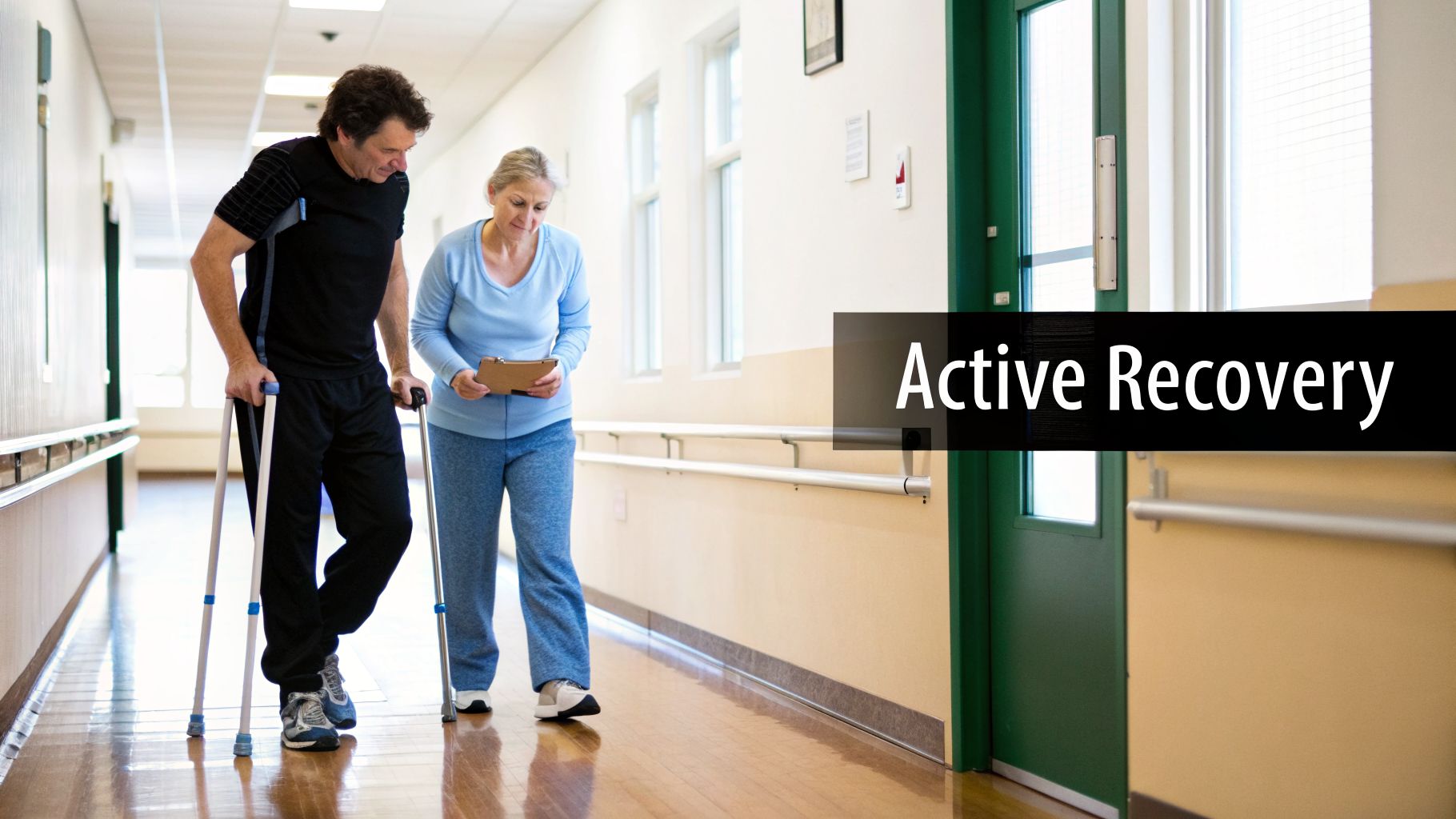
The old advice to simply "rest up" after an operation is officially a thing of the past. We now know that total inactivity can cause more problems than it solves, from muscle loss and stiff joints to dangerous blood clots.
The modern approach, which we call active recovery, flips the script. Instead of passively waiting to heal, you become an active participant in your recovery from day one. A well-designed exercise plan, guided by a professional, works with your body’s healing process, not against it.
The Science of Moving Sooner
This isn't just a new trend; it's a philosophy backed by a powerful clinical framework known as Enhanced Recovery After Surgery (ERAS). ERAS protocols are built around one key principle: safe, early movement leads to better outcomes.
The data is incredibly clear. Research shows that patients who follow these guidelines are often discharged an average of 1.9 days earlier than those under standard care. This is proof that getting you moving safely isn't just a nice idea—it's a clinically proven strategy for a better, faster recovery.
Shifting your mindset from rest to proactive, controlled movement is one of the most important things you can do for a successful recovery. It puts you in the driver’s seat of your own healing journey.
This evidence confirms what we see in the clinic every day: a smart, early start on movement makes all the difference.
Key Benefits of Early Mobilization
So, why is moving so important? Gentle, targeted exercises kickstart several crucial healing mechanisms in your body. Think of it as giving your body the specific tools it needs to repair itself well.
Here are the main benefits we focus on:
- Reduced Swelling and Pain: When you contract your muscles, they act like a natural pump. This helps move excess fluid away from the surgical area, which dials down inflammation and discomfort.
- Prevention of Blood Clots: Lying still for too long is a major risk factor for deep vein thrombosis (DVT), a serious and potentially life-threatening condition. Even simple movements like ankle pumps keep your blood flowing, dramatically lowering this risk.
- Minimized Scar Tissue: Movement helps prevent stiff, restrictive scar tissue from forming around your healing joint or tissues. This is key to getting your full range of motion back.
- Maintained Muscle Strength: It's shocking how quickly muscle can be lost. Just a few days of inactivity can lead to significant weakness. Early exercises help you hold onto that strength, which makes getting back to your daily life so much easier.
To give your body everything it needs for repair and to prepare for more activity, you might also look into supplements for muscle recovery. Your plan will always be personalized, taking into account your specific surgery, age, and overall health to ensure every movement is both safe and effective.
Navigating the First Few Weeks of Your Recovery
The first few weeks after surgery are a delicate time. Your body is channeling all its energy into healing, and your job is to support that process with smart, gentle movement. This isn't the time to push through pain. Instead, it’s all about listening to your body and respecting its new limits.
You’re going to have good days and not-so-good days. A little soreness, stiffness, and fatigue are completely normal—they’re signs your body is hard at work. The focus right now isn't on making huge leaps forward, but on being consistent and safe. This is the foundation for everything that comes next.
It’s also important to be realistic about your timeline. Recovery isn’t a race, and everyone heals at their own pace. A major international study found that only 65.3% of patients returned to completely normal activity levels within 30 days of surgery. That number shifts depending on the procedure, with minor surgeries seeing a 71% return rate compared to just 63.5% for major ones. This shows why a one-size-fits-all plan just doesn't cut it.
Immediate Post-Op Exercises You Can Do in Bed
In those first couple of days, what we call "exercise" will feel more like small, subtle movements. Don't underestimate them. These simple actions are powerful tools for preventing serious complications like blood clots and pneumonia while gently waking your muscles back up.
Your therapist will guide you through these, but here are the cornerstones of what you’ll be doing right away:
- Deep Breathing & Coughing: Anesthesia can make the lungs a bit lazy. Taking slow, deep breaths every hour helps them fully inflate. A gentle cough, while holding a pillow against your incision for support, is key for clearing any fluid.
- Ankle Pumps: This is your number one defense against blood clots. While lying or sitting, just point your toes away from you, then flex them back toward your shin. Try to do 10-15 of these every hour you’re awake.
- Heel Slides: Gently slide your heel toward your butt, bending your knee only as far as it feels comfortable. Then, slowly slide it back down. It's a fantastic first step for restoring motion in your knee and hip.
The most important thing to remember in this phase is: Motion is lotion. Even the smallest movements help lubricate your joints and stop tissues from getting stiff and painful. Every little bit counts.
Listening to Your Body: What Is Normal Discomfort?
You have to learn the difference between the productive discomfort of healing and a real warning sign. The "good pain" feels more like a dull ache or a stretching sensation in the muscles you're working. It should feel manageable and fade away when you rest.
"Bad pain" is a different story. It’s often sharp, stabbing, or throbbing and gets worse when you move. If you feel this, or if you notice a sudden spike in swelling, redness, or warmth around your incision, stop what you’re doing immediately and call your medical team.
Let's take a real-world example from spine surgery. Just getting out of bed is a skill. Your therapist will teach you the log-roll technique to protect your back:
- Bend both of your knees.
- Roll onto your side, keeping your back straight like a log—absolutely no twisting.
- Use your arms to push your upper body up as you swing your legs over the edge of the bed.
This simple technique is a perfect example of how specific, guided movements are critical for a safe recovery. As you get stronger, you might find that aquatic therapy is a great next step, since it lets you move gently with less stress on your joints. You can learn more about the benefits of physical therapy in a pool and how it can help you heal.
Your health before surgery plays a big role in how quickly you bounce back. Someone who was active beforehand will often recover faster than someone who was sedentary. This is why the personalized plan we create at MedAmerica Rehab Center is so vital—we meet you exactly where you are and build from there.
Practical Exercise Routines for Common Surgeries
It helps to see what early exercises look like after surgery. Knowing what to expect can make the first few days feel much more manageable. Of course, every recovery is different, and your physical therapist will be your guide, but these common routines give you a solid picture of the starting line.
Think of these as a preview. Your therapist is there to show you the right way to do each movement, check your form, and make sure you’re working at a level that’s helpful, not harmful.
This simple visual breaks down the three most important things to focus on right after your procedure. It's all about getting back to basics.
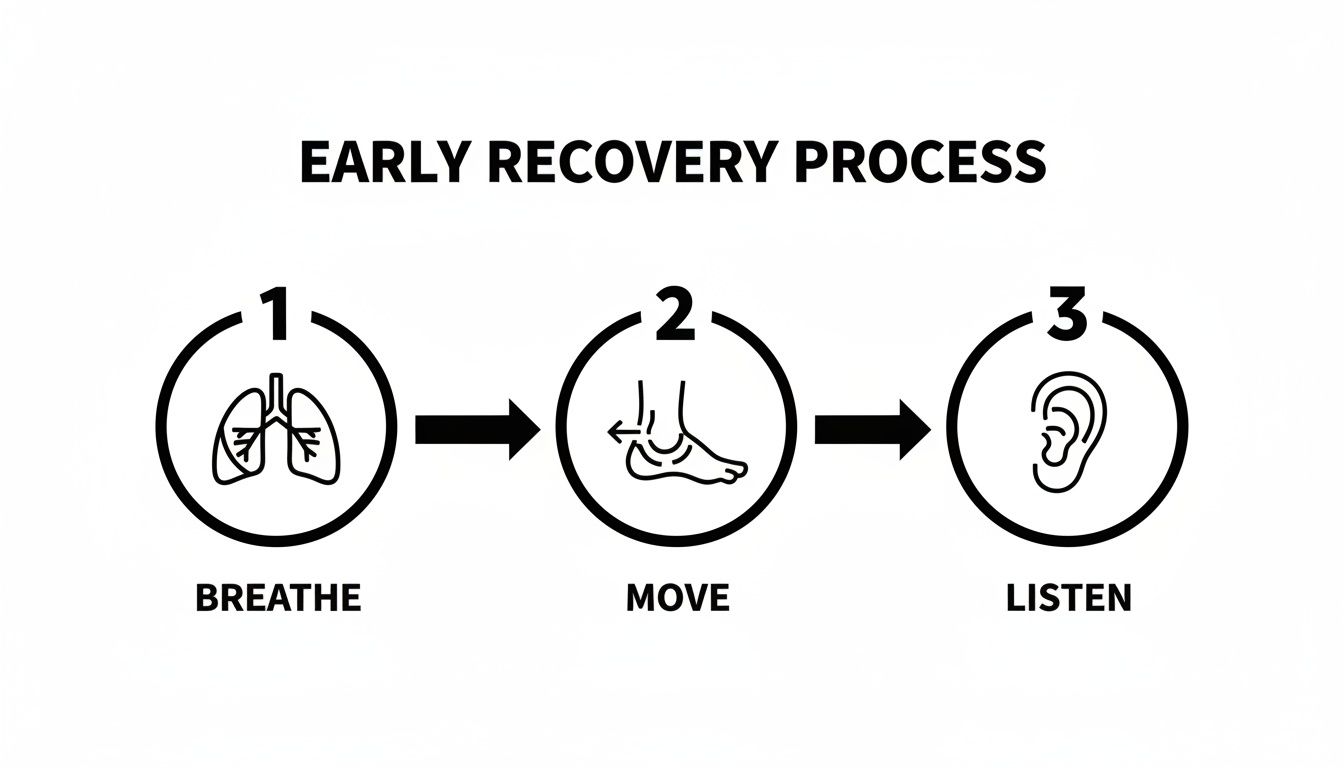
Recovery really does begin with the small things—taking deep breaths for your lungs, wiggling your feet to get blood flowing, and paying close attention to what your body is telling you.
Total Knee Replacement Exercises
After a knee replacement, we have two main jobs: get the knee to straighten and bend again (extension and flexion), and wake up the big quadriceps muscle on the front of your thigh.
Here's how we build up strength and mobility in the early weeks. This table shows a typical progression, but remember, your therapist will adjust the timeline based on your specific healing.
Sample Exercise Progression After Knee Replacement
| Phase | Week | Mobility Exercise | Strengthening Exercise |
|---|---|---|---|
| Immediate | 0-2 | Heel Slides: Gently slide your heel toward your butt to bend the knee. | Quad Sets: Tighten your thigh muscle, pushing the back of your knee into the bed. |
| Early | 2-6 | Stationary Biking (no resistance): Focus on smooth circles to improve bending. | Straight Leg Raises: Lift your straightened leg off the bed, keeping the quad tight. |
| Strengthening | 6-12 | Wall Slides: Lean against a wall and slide down into a shallow squat. | Mini-Squats (with support): Use a counter to perform small, controlled squats. |
These are just a few examples. As your strength and motion improve, we'll introduce more functional exercises to get you back to walking, climbing stairs, and living your life with confidence.
Total Hip Replacement Exercises
With a new hip, the game plan shifts. We focus on getting your glute muscles firing again, restoring smooth hip motion, and most importantly, following your surgeon's hip precautions. These rules—like not crossing your legs or bending past 90 degrees—are critical for protecting the new joint.
Early Phase (Weeks 0-6):
- Glute Squeezes: While lying down, just squeeze your butt muscles together. Hold for 5 seconds. This is the first step to waking up the key stabilizers for your new hip.
- Ankle Pumps: A non-negotiable for circulation. Pump your feet up and down frequently throughout the day to help prevent blood clots.
- Heel Slides: Same as with the knee, this is a gentle way to encourage movement without putting stress on the joint.
Your surgeon’s instructions are law. Whether they used an anterior or posterior approach changes the rules. Your therapist will build your entire program around these precautions to keep your new hip safe.
Intermediate Phase (Weeks 6-12):
- Standing Hip Abduction: Holding a counter for support, stand tall and lift your surgical leg out to the side. The trick is to avoid leaning your whole body.
- Bridging: Lie on your back with your knees bent. Squeeze your glutes and lift your hips, forming a straight line from your shoulders to your knees.
Rotator Cuff Repair and Spinal Fusion
Some surgeries demand an even more careful and specific approach. Rotator cuff repairs and spinal fusions are two perfect examples.
For a shoulder repair, the first few weeks are all about protecting the delicate work the surgeon did. Often, this means your therapist will move your arm for you (passive motion) to prevent stiffness without stressing the tendon. You can get a great overview of the timeline from this guide on Rotator Cuff Surgery Recovery.
As you get ready, it’s also helpful to look ahead. We’ve put together a guide on effective home exercises after rotator cuff surgery that shows how your routine will evolve over time.
Spinal fusion is a whole different ballgame. Here, the absolute priority is protecting the fusion by avoiding all bending and twisting. Your main exercise will be walking, paired with specific drills to activate your deep core muscles and maintain a safe, upright posture.
Building Strength and Restoring Your Function
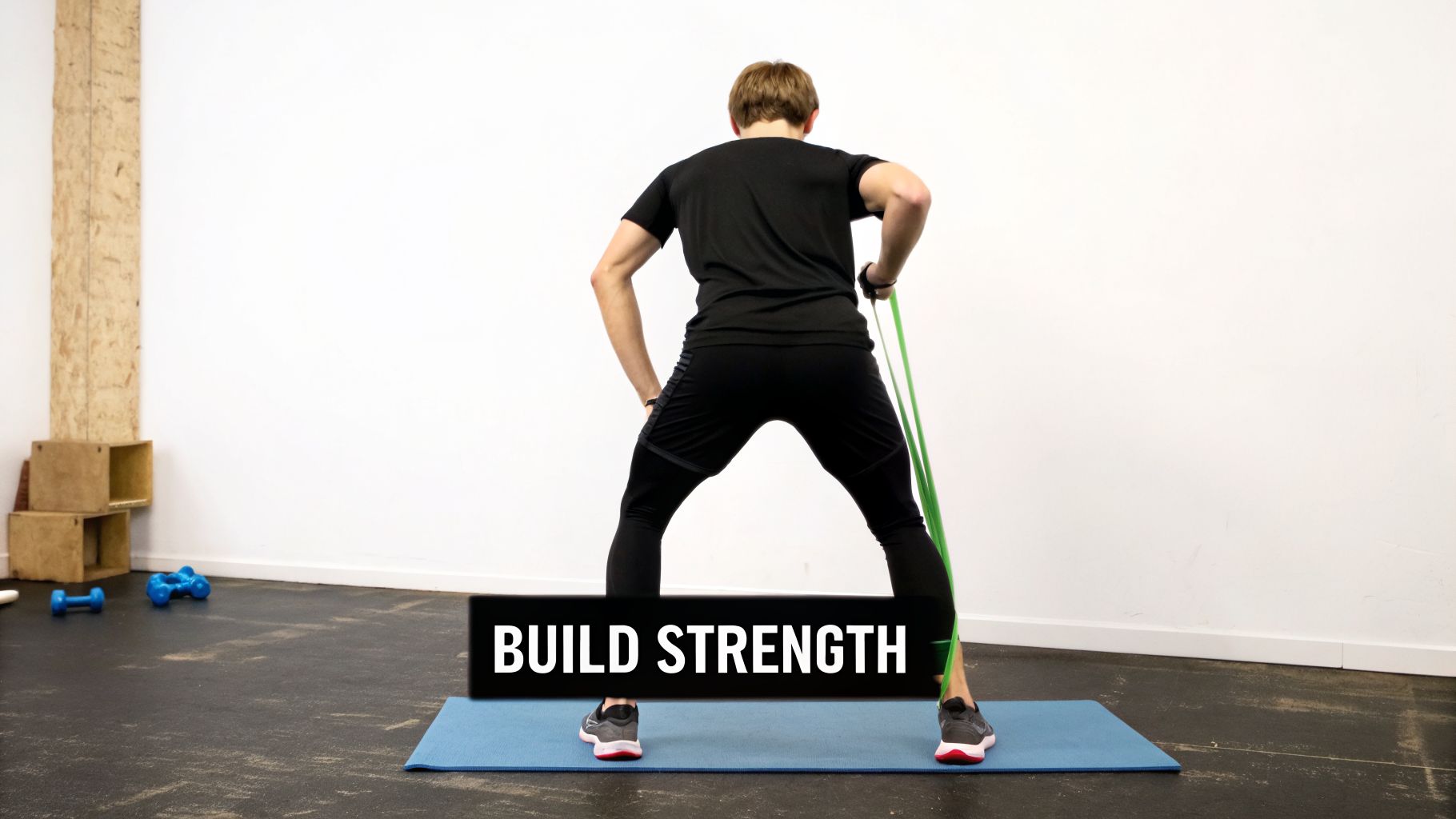
Once you’re past that initial 6-8 week healing window, your recovery starts to get exciting. The focus begins to shift from just protecting the surgical site to actively rebuilding strength and stamina. This is when you finally start to feel less like a patient and more like yourself again.
This stage is all about making a smart transition. We’ll carefully move you from the gentle range-of-motion work you did early on to more challenging exercises that build real, functional strength. The key is adding resistance safely, without overwhelming tissues that are still mending.
Introducing Resistance to Your Routine
This is the point where we begin to carefully load the muscles around your surgical area. Forget about jumping straight into heavy lifting; the goal is progressive resistance. That just means starting light and gradually increasing the challenge as your body gets stronger.
The most common tools we use are simple, effective, and safe when used correctly:
- Resistance Bands: These are fantastic for post-op rehab. They provide consistent tension and allow for endless variations to target specific muscles. A "clamshell" with a band around your knees, for example, is a go-to for waking up weak hip muscles after knee or hip surgery.
- Light Weights: Ankle weights or small dumbbells (1-5 pounds) are perfect for adding a controlled challenge to exercises like straight leg raises or bicep curls without stressing the joint.
- Bodyweight Exercises: Don't underestimate the power of using your own body. Modified squats, lunges, and bridges are fundamental for rebuilding the strength you need for everyday life.
The trick is listening to your body. A little muscle fatigue is a good thing, but sharp pain is a signal to stop. Your physical therapist is your best guide for knowing exactly how and when to progress.
Rebuilding strength isn’t just about the muscles directly impacted by surgery. It’s about strengthening the entire support system around them to create stability and prevent re-injury.
Why Your Core Is Your Best Friend
It doesn't matter what kind of surgery you’ve had—knee, hip, shoulder, or spine—a strong, stable core is non-negotiable for a successful recovery. Think of the muscles in your abdomen and back as the central foundation that supports every single move you make.
A weak core forces other muscles, especially those around your surgical site, to overcompensate. This can lead to poor movement patterns, strain, and even new injuries down the road. A strong core, on the other hand, provides a stable base, allowing your arms and legs to move more efficiently and with far less stress on your healing joints.
Simple exercises you can start with include:
- Bridges: Lie on your back with your knees bent and lift your hips off the floor. This is a great way to activate your glutes and lower back.
- Bird-Dog: On your hands and knees, extend your opposite arm and leg while keeping your back flat. This move is incredible for teaching core stability.
This focus on core control is part of a broader strategy called neuromuscular reeducation. This therapy helps retrain the nerve-to-muscle pathways that may have been disrupted by surgery. You can learn more about how your brain and muscles reconnect through our detailed guide on neuromuscular reeducation. It's a crucial process for regaining smooth, coordinated movement.
Getting Back to Real Life Activities
The ultimate goal of adding exercises after surgery is to get you back to your life. That's why we put such a heavy emphasis on functional exercises—movements that directly mimic the tasks you do every day.
Instead of just doing isolated leg lifts, we'll have you practice activities that translate directly to your daily routine.
- Climbing Stairs: We'll start with a simple step-up and gradually increase the height.
- Carrying Groceries: A "farmer's walk," where you carry a light weight in one hand, is excellent for building core stability and grip strength.
- Getting Up from a Chair: Controlled squats are the best way to practice this essential movement safely and build confidence.
By focusing on these real-world movements, we bridge the gap between healing in the clinic and living your life again. This functional approach ensures you don't just feel stronger—you are stronger in the ways that truly matter.
Of course. Here is the rewritten section, following all your requirements for a human-written, natural tone and expert voice.
Knowing When to Stop: Red Flags and Special Cases in Your Recovery
While we all hope for a smooth, straight-line recovery, the reality is that healing isn't always linear. Bumps in the road happen. The most important skill you can have after surgery is knowing how to listen to your body and spot a real problem before it becomes a major setback.
With an estimated 310 million major surgeries happening around the world each year, we’ve gotten very good at post-operative care. Still, studies show that up to 15% of patients can run into significant issues. This is why following a structured plan for exercises after surgery is so important—it’s about safely navigating the healing process. You can dig into the findings on post-surgical recovery trends to see just how much structured rehab moves the needle.
Stop Immediately If You See These Red Flags
Think of these signs as your body’s emergency brake. If you notice any of them while you’re exercising, stop what you’re doing immediately. Rest, and get in touch with your surgeon or physical therapist.
Trying to "push through" these specific signals can lead to serious complications.
- Sudden, Sharp, or Stabbing Pain: This isn't the familiar, dull ache of a muscle working hard. It’s a sharp, surprising pain that tells you something is wrong.
- A Quick Increase in Swelling or Redness: Some swelling is normal, but if an area puffs up suddenly or feels hot to the touch, it could signal an infection or a serious inflammatory response.
- Calf Pain or Swelling: Pay close attention to this. Any new pain, tenderness, or swelling in your calf muscle is a major red flag for a potential blood clot (DVT). This requires immediate medical help.
- Fever or Chills: These are classic signs that your body is fighting a systemic infection and should never be ignored after surgery.
- Drainage or an Odor from Your Incision: A healing incision should be clean and dry. Any pus, colored fluid, or bad smell is a clear sign of infection.
Your body is an expert communicator during recovery. Productive discomfort feels like a stretch or muscle tiredness that eases with rest. Warning pain is sharp, persistent, and demands your immediate attention.
Special Considerations for Seniors
For older adults, the recovery playbook has a few extra rules. Of course, we want to rebuild strength, but the absolute top priority is preventing falls. A fall after a major surgery like a hip or knee replacement can be devastating, undoing all the hard work of the surgery itself.
At MedAmerica Rehab Center, our approach with seniors is built around safety and confidence:
- Building Better Balance: We start simply, maybe by having you stand on one leg while holding a countertop for support. From there, we slowly progress to more dynamic movements that challenge and train your stability.
- Fixing Your Gait: We watch how you walk to spot any imbalances or limping that might put you at risk. Then, we give you specific exercises to smooth out your stride and improve your confidence on your feet.
- Making Your Home Safer: We also give practical advice on setting up your home for a safe recovery, like removing throw rugs and other trip hazards or installing grab bars in the bathroom.
Auto Accident and Workers Comp Cases
If your surgery was the result of a car accident or an injury at work, your recovery has another layer to it. It’s not just about getting better—it’s also about having clear documentation for your insurance or legal case.
This is where a formal physical therapy program becomes absolutely essential. At every visit, our licensed therapists carefully document every exercise, every measurement, and every bit of progress you make. This creates an official, professional record of the care you received and the effort you put into your recovery. That documentation is often the key to making sure your case is handled fairly and your medical needs are fully covered.
Common Questions About Post-Surgery Exercise
After surgery, it’s completely normal to have a lot of questions. You’re likely feeling a mix of eagerness to get moving and a little uncertainty about what’s safe. It's a road we help patients navigate every single day.
Here, we're tackling the most common questions we hear about exercises after surgery. We'll give you the clear, direct answers you need to feel confident on your path to recovery.
How Soon After Surgery Can I Actually Start Exercising?
This is the number one question on almost every patient's mind. The final word will always come from your surgeon, but you might be surprised to learn that gentle movement often begins within 24 hours of your procedure.
Of course, we're not talking about running a marathon or lifting heavy weights. These first movements are incredibly simple, often done right from your hospital bed. Think ankle pumps, gentle muscle tensing, or deep breathing exercises.
These small actions are surprisingly powerful. They kickstart circulation, which is crucial for preventing dangerous complications like blood clots. More structured, guided exercises with a physical therapist usually begin a few days to a week later, but only after your surgical team gives you the official green light.
What Is the Difference Between Good Pain and Bad Pain?
Learning to read your body’s signals is one of the most important skills you'll develop during recovery. There's a huge difference between the discomfort of healing and a real warning sign.
"Good pain" is that feeling of muscle fatigue or a mild ache from stretching tissues that have been tight. It’s the feeling of a muscle that has done productive work. It should feel manageable and ease up pretty quickly once you rest.
"Bad pain" is a red flag. It’s often sharp, stabbing, or throbbing and tends to get worse as you continue the activity. It might also show up with new swelling, redness, or heat around the surgical site. If you feel this, stop what you're doing immediately.
A physical therapist is an expert at finding that sweet spot—challenging you enough to make progress without pushing you into the danger zone. We teach you how to listen to your body and respond the right way.
Can I Just Do These Exercises on My Own?
While a guide like this is a great place to start understanding the process, going it completely alone can be risky. There’s a reason working with a licensed physical therapist is the standard of care.
A therapist does so much more than just hand you a sheet of exercises. We are your recovery coach, clinical expert, and safety net.
- Correcting Your Form: Even a tiny mistake in how you perform an exercise can put unwanted stress on a healing joint or incision. A therapist gives you that real-time feedback to make sure every single movement is safe and actually helping you heal.
- Personalizing Your Progression: Recovery is never one-size-fits-all. A good therapist knows exactly when to push you a little harder and, just as importantly, when to pull back. Your plan should adapt to your body’s unique healing pace.
- Using Hands-On Techniques: Physical therapists also use manual therapy—skilled, hands-on techniques—to help manage pain, reduce swelling, and restore joint mobility in ways that exercises alone simply can't.
This personalized guidance is what turns a generic list of exercises into a powerful, results-driven recovery plan designed just for you.
How Long Will It Take for Me to Fully Recover?
Recovery is a journey, not a race. Everyone’s timeline is different, and comparing your progress to someone else’s is one of the worst things you can do for your own morale.
Several key factors will shape your personal recovery timeline:
- The Type of Surgery: A minor arthroscopic procedure might have you feeling close to normal in 4-6 weeks. A major joint replacement, on the other hand, can take 6 months to a year to get back to 100%.
- Your Pre-Surgery Health: Your fitness level and overall health before the operation play a huge role in how quickly your body can bounce back.
- Your Consistency: This one is on you. How diligently you stick with your rehab plan and do your home exercises has a direct and massive impact on your results.
Your physical therapist is your best resource here. We can give you realistic milestones based on your specific surgery, your progress in the clinic, and your personal goals. We’ll help you celebrate the small wins and stay motivated for the long haul.
Navigating your recovery with the right support makes all the difference. At MedAmerica Rehab Center, our dedicated team of licensed therapists provides the expert, one-on-one guidance you need to heal correctly and get back to the life you love. If you're preparing for surgery or starting your recovery in the Deerfield Beach area, let us build a personalized plan for you. Visit us at https://www.medamericarehab.com to schedule your appointment and take the first step toward a stronger, healthier future.
MedAmerica Rehab · Deerfield Beach
Talk to a clinician about your pain
Physical therapy, chiropractic, acupuncture and shockwave therapy under one roof, since 1995. Same-day appointments are available.
Mon–Thu 8:00 AM – 6:30 PM · Fri 8:00 AM – 3:00 PM