
Stingers in Football: Quick Guide to Recognition, Diagnosis, and Rehab
A stinger is that sharp, electrifying jolt of pain that shoots from the base of the neck down into one arm after a hard hit. Anyone who’s played football has likely seen it happen. A player makes a tackle, gets up slowly, and is shaking their arm as if trying to get the feeling back.
It’s a sensation often described as a "lightning bolt" or a "burner," and while it usually fades quickly, it’s a nerve injury that should never be ignored.
What Are Stingers in Football and Why Do They Occur

To understand a stinger, picture a bundle of electrical cables running from the side of your neck, across your shoulder, and down into your arm. This is the brachial plexus—a complex network of nerves that controls every feeling and movement in your arm and hand.
A stinger happens when that bundle of nerves gets suddenly stretched, pinched, or hit head-on during a play. That sudden force disrupts the nerve signals for a moment. It's not a muscle pull; it's a nerve shock, which explains that unique, jarring sensation.
The Mechanics of the Injury
On the field, this injury usually happens in one of three classic scenarios. Each one puts a sudden, intense force on the brachial plexus, triggering that infamous jolt.
- Traction (Stretching): This is the most common cause. It happens when a player's head is pushed forcefully to one side while their shoulder is pushed down and away in the opposite direction. Think of a tackler whose head gets caught on a ball carrier's hip, stretching the neck away from the shoulder. The nerves are pulled taut like a rubber band.
- Compression (Pinching): This occurs when there's a direct blow to the area right above the collarbone. The impact can squeeze the brachial plexus nerves between the hard plastic of the helmet and the shoulder pads.
- Direct Blow: Sometimes, a forceful hit can strike the nerve bundle directly in an area that isn't well-protected by pads. This causes a direct contusion to the nerves themselves.
A stinger is basically a temporary "short circuit" in the arm's nerve supply. The signals between the brain and the arm get scrambled for a few seconds or minutes, causing the distinct pain, numbness, and weakness players feel.
Stingers are incredibly common in football. While official NCAA stats show an injury rate of 2.04 stingers per 10,000 game or practice exposures, anyone around the sport knows the real number is much higher. Many studies suggest the career prevalence rates are between 49% and 65% for college players because so many incidents go unreported. Athletes often try to just "shake it off" and get back in the game, but understanding the high prevalence of underreported football stingers is key to managing them safely.
Stinger Symptoms At a Glance
Recognizing a stinger right away is critical for a player's safety. The signs are pretty unmistakable and show up immediately after the impact. Here's a quick breakdown of what a player typically feels.
| Symptom Type | Common Description |
|---|---|
| Pain | A sharp, burning, or "electric shock" sensation shooting down the arm. |
| Sensation | Numbness or a "pins and needles" feeling in the arm, hand, or fingers. |
| Motor Function | A feeling of weakness or a "dead arm" that is hard to lift or use. |
These symptoms almost always happen on just one side—the arm on the side of the impact. While the feeling can be intense and alarming, the symptoms of a classic stinger are short-lived, usually lasting just a few seconds to a couple of minutes before disappearing completely.
Recognizing Stinger Symptoms and Serious Red Flags
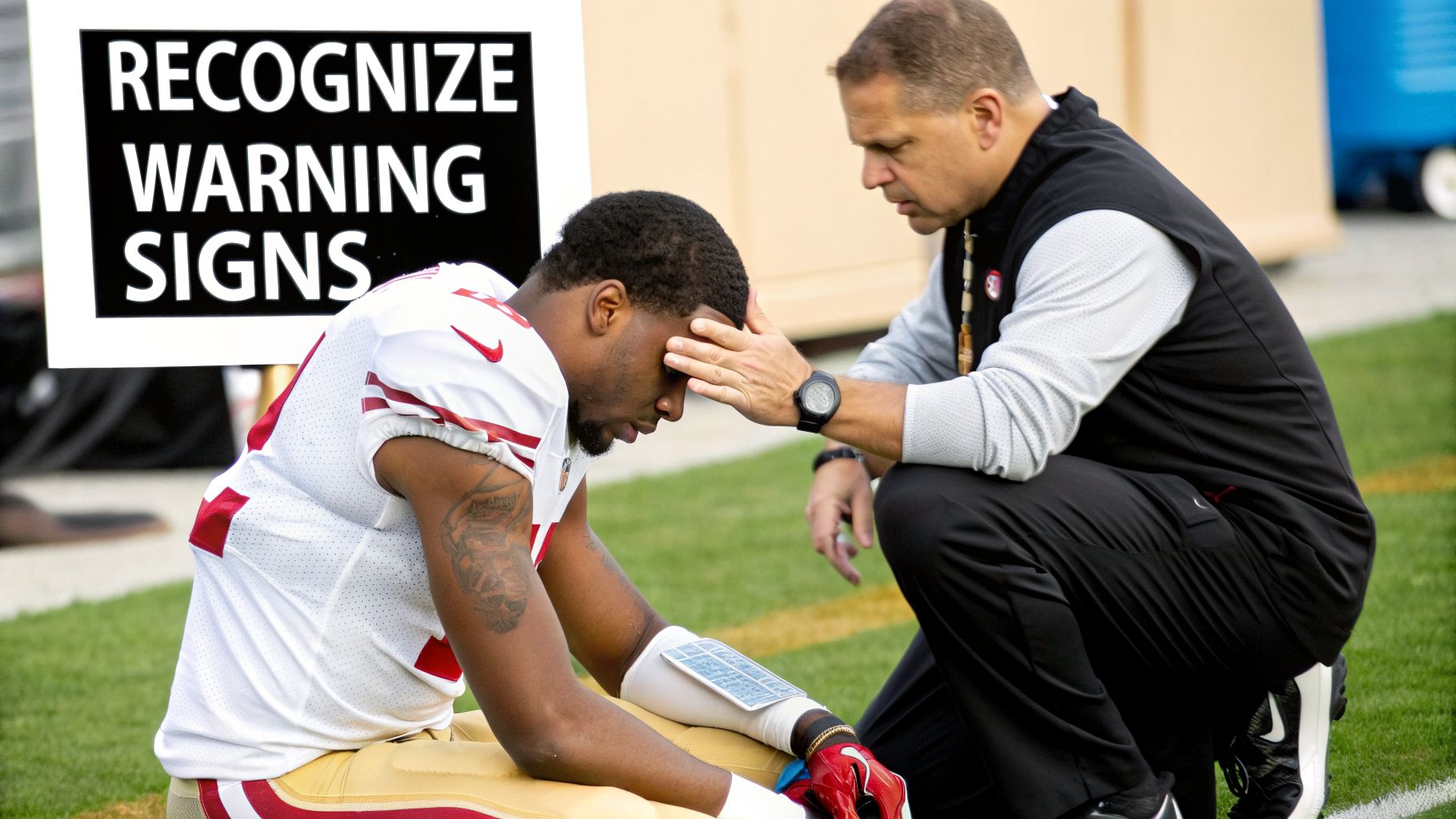
The immediate shock of a stinger is unmistakable, but what happens next is what truly matters. Knowing how to read the signs—and how to tell a routine stinger from a serious injury—is a non-negotiable skill for every player, coach, and parent on the sideline.
Most stingers are intense but temporary. Think of it like a lightning strike that briefly shorts out the wiring to one arm. The system reboots quickly, but some symptoms tell you the problem is much bigger than a momentary glitch.
Classic Signs of a Stinger
A standard stinger has a very specific and tell-tale cluster of symptoms. If a player reports these sensations in one arm right after a hit, it's a good bet they’ve experienced a brachial plexus injury.
- Burning or Shocking Pain: This is the signature symptom. Athletes often describe it as a "bolt of lightning" or a "hot poker" shooting from the shoulder area straight down the arm.
- Immediate Arm Weakness: The arm might suddenly feel "dead" or incredibly heavy. The player will find it hard to lift their arm or make a fist with their usual strength.
- Numbness and Tingling: A wave of "pins-and-needles" often follows the initial shock, much like the feeling you get when your arm falls asleep.
For a routine stinger, these symptoms hit their peak almost instantly and then start to fade out just as fast. Strength and normal sensation should return within a few seconds to a couple of minutes. That rapid recovery is the key sign of a simple, uncomplicated stinger.
But when that pattern changes, your attention is required.
Serious Red Flags That Demand Immediate Attention
Not every nerve issue on the field is a simple stinger. Some signs point to a much more dangerous injury to the neck or even the spinal cord, and these demand an immediate medical check. If you see any of the following red flags, the athlete is done for the day and needs to be seen by a professional.
The rule on the field is simple and absolute: "When in doubt, sit them out." An athlete's long-term health is always more important than the next play.
Never, ever ignore these warning signs:
- Symptoms in Both Arms: Stingers are a one-sided event. If there’s pain, weakness, or numbness in both arms, the injury is likely centered in the neck or spinal cord.
- Persistent Neck Pain: While the stinger's pain radiates down the arm, significant and lasting pain in the neck itself is a major red flag for a possible fracture, disc injury, or dislocation.
- Prolonged Weakness or Numbness: If that "dead arm" feeling or tingling doesn't clear up within a few minutes, the nerve injury is more severe than a simple stretch. This points to serious compression or damage.
- Loss of Consciousness or Altered Mental State: A hit hard enough to cause a stinger can also cause a concussion. Confusion, memory loss, dizziness, or a blackout are all signs of a medical emergency.
- Loss of Bladder or Bowel Control: This is a rare but critical signal of a severe spinal cord injury and requires immediate emergency care.
Catching these differences on the sideline is the first and most important step in protecting a player from a temporary injury becoming a permanent one.
How a Stinger Is Properly Diagnosed
Figuring out if it's "just a stinger" is about more than naming the injury. It’s about quickly and confidently ruling out something much more serious with your neck or spine. The whole process starts right there on the field, just seconds after a big hit, and often continues in the clinic.
This diagnostic journey begins with an on-field check by an athletic trainer or team doctor. Their first job is to spot any red flags while checking how the player is doing right now. They're looking for specific signs to know if this is a simple stinger or a more urgent problem.
The On-Field Sideline Check
The sideline check is a fast but absolutely critical screening. A trainer will ask what the athlete felt and then run through a quick set of tests to see how the nerves are functioning.
This usually involves:
- Checking Neck Movement: The trainer will ask the player to carefully move their head up, down, and side to side. Any major pain or being unable to move the neck is a huge warning sign.
- Assessing Arm Strength: The player will be asked to lift their arm, squeeze their hand into a fist, and push against the trainer's resistance. The trainer is comparing the injured arm's strength to the other one to see how much weakness there is.
- Testing Sensation: The trainer will touch the player's arm and hand, checking for any numbness or that tell-tale "pins and needles" feeling.
If symptoms show up in both arms, if there is serious neck pain, or if full strength and feeling don't come back within a few minutes, the player needs to be pulled from the game immediately for a more complete medical evaluation.
Clinical Examination and Imaging
Back in the clinic, a doctor will do a much more thorough neurological and physical exam. This helps sort out a standard stinger from other issues that can feel similar, like a herniated disc or cervical radiculopathy (a pinched nerve in the neck).
The doctor will use specific strength tests for different muscle groups and carefully map out any areas of numbness to figure out exactly which nerves were affected. For a straightforward stinger, this detailed exam is often all that’s needed for a diagnosis.
For most athletes, especially at the pro level, a stinger is a very brief problem. NFL data shows that 76.41% of stingers led to zero missed playing time. For those who did miss time, it was for an average of just under five days. Learn more about the impact of stingers on professional players.
Imaging tests like X-rays or MRIs usually aren't necessary for a first-time, simple stinger that goes away quickly. An X-ray might be done to check for fractures or alignment problems in the spine if there's a lot of neck pain. But an MRI becomes critical when symptoms are severe, don't resolve, or when a player gets stingers over and over again. You can learn more about when an MRI or X-ray might be necessary in our detailed guide.
An MRI gives a crystal-clear view of the brachial plexus and the spinal cord. It helps us find underlying problems like nerve root compression or a herniated disc that could be making an athlete more prone to stingers in football.
Building Your Comprehensive Stinger Rehabilitation Plan
Getting over a stinger—or several—isn’t about sitting on the bench and waiting. It's an active process. A good rehab plan is your playbook for healing the irritated nerve and building the resilience to prevent it from happening again. It’s a journey that takes you from immediate rest to targeted exercises that get you back on the field, stronger than before.
The process starts the second you’re off the field. The first 24 to 48 hours are all about letting the nerve settle down and managing inflammation. This means zero football activities. You have to avoid any movement that brings back that zinging sensation. Applying an ice pack to your neck and shoulder for 15-20 minutes at a time can calm the brachial plexus and reduce swelling.
Phase 1: Initial Recovery and Pain Management
Once the sharp, immediate symptoms begin to fade, the focus shifts. Now, the goal is to get your pain-free range of motion back. It’s a gentle reintroduction to movement, and you have to listen to your body. If you feel any stinging or tingling, that's your signal to back off immediately.
Slow, controlled neck stretches are perfect for this early stage. Never force them.
- Neck Tilts: Slowly bring your ear toward your shoulder. Hold it for 15-20 seconds as long as there's no pain, then switch sides.
- Neck Rotations: Gently look over one shoulder, hold for a few seconds, and return to the middle before repeating on the other side.
For managing the unique nerve pain from stingers, some athletes explore options like using TENS for nerve pain relief to help manage symptoms during this phase. Once you can move your head and neck fully without pain, you’re ready for the most important part of recovery: building strength.
This diagnostic flowchart shows how we get to that point, starting with the on-field assessment.
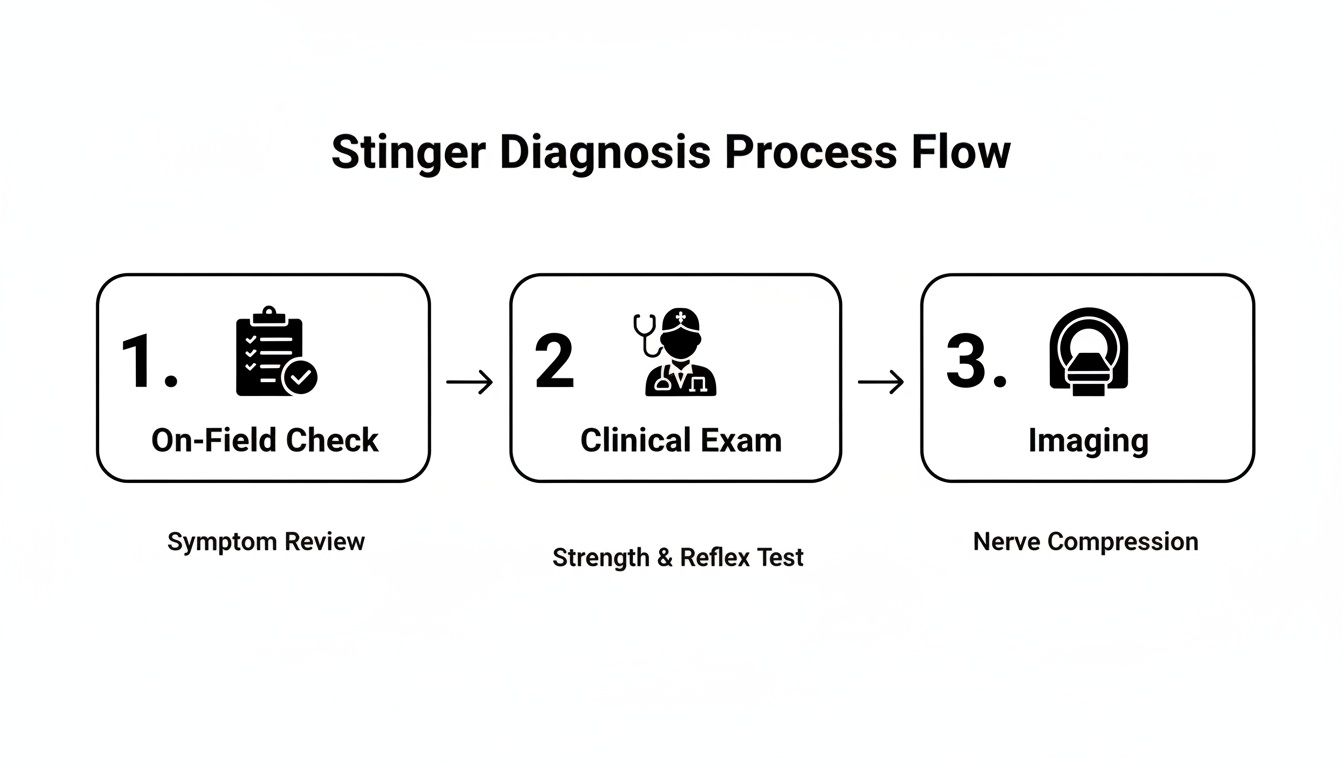
It’s a step-by-step process to make sure nothing more serious is going on before we create a rehab plan.
Phase 2: Building Strength and Stability
This is where real prevention starts. Your best defense against future stingers is a strong set of muscles in your neck, shoulders, and upper back. Think of these muscles as a natural shock-absorbing system for the brachial plexus. A targeted strengthening program is the heart of any solid stinger rehab plan.
A physical therapist will tailor a program for you, but it will likely include exercises like these:
- Isometric Neck Strengthening: Place your hand on your forehead and press, using your neck muscles to resist so your head doesn't move. Hold for 5-10 seconds. Do the same thing pressing on the side and back of your head.
- Shoulder Shrugs: Grab some dumbbells or a resistance band and slowly lift your shoulders up toward your ears. Squeeze at the top, then lower them back down. This is a direct hit on the trapezius muscles, which are key for neck and shoulder stability.
- Rows: With bands or a cable machine, pull your hands toward your torso, focusing on squeezing your shoulder blades together. This builds up the rhomboids and other upper back muscles that are crucial for good posture.
The ultimate goal of rehabilitation is to create a muscular "helmet" around your neck and shoulders. Stronger muscles are better equipped to absorb the forces of a big hit, protecting the delicate nerves of the brachial plexus from being stretched or compressed.
Complementary Therapies for Full Recovery
While physical therapy builds the foundation, other treatments can be game-changers for a full recovery. An approach that tackles the injury from multiple angles often gets the best results by addressing pain, alignment, and nerve function all at once. You can see how our team creates personalized recovery plans by integrating different types of sports therapy.
Different therapies have different jobs. This table breaks down what each one brings to the table for stinger recovery.
Rehabilitation Therapies for Stingers
| Therapy | Primary Goal | Example Techniques |
|---|---|---|
| Physical Therapy | Restore motion and build protective strength | Isometric exercises, rows, shoulder shrugs, stretches |
| Chiropractic Care | Improve spinal alignment and nerve pathway function | Spinal adjustments, soft tissue mobilization |
| Acupuncture | Reduce pain and promote nerve healing | Needling specific points along energy meridians |
Chiropractic adjustments can help make sure the vertebrae in your neck are aligned correctly, removing any structural issues that could make the nerves more vulnerable. At the same time, many athletes find that acupuncture helps with lingering nerve pain and seems to speed up the healing process.
By combining these strategies, you’re not just treating the injury—you’re building a stronger, more resilient foundation for a safe and confident return to the game.
How to Prevent Future Stingers and Return to Play Safely

Getting over a stinger is just one part of the puzzle. The real goal is making sure it doesn't happen again, so you can stay in the game and off the sidelines. The best defense is a proactive one, focused on building a more resilient body.
The most powerful strategy is building what we call a “natural neck roll.” By strengthening the muscles around your neck and shoulders, you create your own shock-absorbing armor that protects those vulnerable nerves from the heavy forces of a tackle.
Building Your Natural Neck Roll
Your mission is to build up the muscles in your neck, shoulders, and upper back—especially the trapezius. Stronger muscles are far better at absorbing impact, which means less force gets shot down to the nerves of the brachial plexus.
A smart exercise plan will include:
- Neck Resistance Training: Use your hand or a band to apply gentle pressure to your head while you fire your neck muscles. Push forward, back, and side-to-side without letting your head move (this is called an isometric). This directly builds the small, stabilizing muscles that protect your cervical spine.
- Shoulder Shrugs: With dumbbells in hand or using resistance bands, slowly lift your shoulders up toward your ears, pause at the top, and lower them back down with control. This is the single best way to target the big trapezius muscles that act as a protective pad.
- Upright Rows: This exercise hits both your shoulder muscles (deltoids) and your traps. It contributes to overall shoulder girdle stability, which is essential for preventing the kind of stretching force that causes most stingers in football.
Adding a good stretching routine is also a huge help. You can check out this guide on stretches to add to your strength training routine to boost flexibility and cut down on recovery time.
Of course, a well-rounded conditioning program is always vital for an athlete. Staying durable and prepared for the game is how you prevent common sports injuries across the board.
Improving Technique and Equipment Fit
Strength is your foundation, but how you use it on the field matters just as much. Poor tackling form is a direct path to getting a stinger. There’s an old coaching rule that couldn't be more true here: "see what you hit."
Keeping your head up—and never leading with the crown of your helmet—is the golden rule for nerve safety. This one adjustment keeps your neck out of those extreme, pinched positions and dramatically lowers your risk for both compression and traction injuries.
Finally, make sure your gear is actually protecting you. Loose shoulder pads or a wobbly helmet can shift on impact, failing to do their job and sometimes even making the injury worse. Have your athletic trainer or coach give you a professional fit to ensure everything is snug before you hit the field.
Your return to play happens only when you are 100% symptom-free and have all your strength and range of motion back. Trying to play through any weakness or tingling is setting yourself up for a much worse injury that could have serious consequences.
Universal Return-to-Play Criteria
The decision to get back on the field has to be guided by clear medical benchmarks, not the clock or the pressure to win. An athlete is only cleared to return when every single one of these conditions is met.
- Complete Resolution of All Symptoms: This is non-negotiable. There can be absolutely no leftover pain, numbness, tingling, or burning, whether you're resting or moving.
- Full Range of Motion: You must have your complete, pain-free range of motion back in your neck and shoulder. You should be able to tilt and turn your head without any issue.
- Full and Symmetric Strength: A trainer or PT has to confirm that the strength in your affected arm and shoulder is equal to your uninjured side. This is checked with hands-on resistance tests for all the key muscle groups.
Stepping back onto the field before you hit these marks is a gamble you should never take. A stinger is your body's warning shot; listening to it with smart prevention and a patient return is what separates a smart athlete from a sidelined one.
Common Questions About Football Stingers
When a player goes down with that tell-tale arm shake, it's natural for questions to pop up. Stingers are jarring, and players, parents, and coaches need clear answers. Let's tackle some of the most common concerns to help everyone make safer decisions on and off the field.
Can Football Stingers Cause Permanent Damage?
A one-off stinger that clears up in a minute is usually not a cause for long-term worry. The real concern is with repeat stingers. Each new injury can pile on, adding to the cumulative damage to the nerve.
Think of it like a wire that keeps getting bent back and forth in the same spot. The first time, it's probably fine. But bend it again and again, and eventually, it's going to fray and break. Nerves can react the same way under repeated stress.
This buildup of damage can lead to serious, lasting problems. We're talking about chronic arm or shoulder pain, weakness that hurts your game, and even muscle atrophy, where the arm muscles start to shrink because they aren't getting the right signals from the nerve.
This is exactly why a full recovery and a smart prevention plan are non-negotiable. Playing through symptoms or getting back on the field too fast just sets you up for the next one, creating a dangerous cycle. A proper evaluation after any stinger is the key to breaking that cycle and protecting your future in the sport.
Are Some Players More Prone to Getting Stingers?
Yes, absolutely. Some athletes are at a much higher risk, either because of their position or their individual physical traits and habits.
Position is one of the biggest factors.
- Linebackers and Defensive Backs: They are constantly making high-speed, open-field tackles that can easily stretch or compress the brachial plexus.
- Running Backs and Fullbacks: These players often lower a shoulder to break through the line or block, putting that whole area at risk for a hard impact.
- Linemen: While their contact is more about sustained pushing, one bad-angle block or a mistimed hit can cause a classic stinger.
Beyond the position you play, your personal risk factors are huge. If you've had one stinger, you're far more likely to have another. Other big contributors include weak neck and shoulder muscles, poor tackling technique (like leading with your head down), or wearing shoulder pads and helmets that don't fit right.
What Is the Difference Between a Stinger and a Pinched Nerve?
At first, they can feel scarily similar. Both can bring on sharp, shooting pain and numbness. The real difference comes down to the cause, the location, and how long the symptoms stick around.
Think of your body's wiring. A stinger is like a sudden power surge that trips a breaker to just one room (your arm). The jolt comes from a direct hit or stretch to the main bundle of nerves in your shoulder—the brachial plexus. The power goes out for a moment, causing that shocking pain and weakness, but it usually comes back on its own within seconds or minutes.
A pinched nerve in the neck, which doctors call cervical radiculopathy, is more like a frayed wire right at the fuse box (your spine). The problem is actually in your neck, where a nerve root is being squashed by something like a herniated disc or a bone spur. This creates a much more constant problem.
Pain from a pinched nerve tends to stick around for days or weeks and often gets worse when you turn your head a certain way. A stinger, on the other hand, is all about that explosive, but very brief, set of symptoms.
When Should I See a Doctor for a Stinger?
Knowing when to get professional help is the most important part of dealing with stingers. It all depends on how bad the symptoms are and how long they last.
You need to seek immediate medical attention if you see any of these red flags:
- Symptoms like pain, weakness, or numbness in both arms at the same time.
- Any severe or nagging pain in the neck itself.
- Symptoms that don't completely go away within a few minutes.
- Any loss of consciousness, memory loss, or confusion.
Even for a simple, first-time stinger where the symptoms vanish right away, getting it checked out by a doctor or physical therapist is a smart move. They can make sure it's just a stinger, rule out other issues, and give you a specific plan to keep it from happening again.
If you've had multiple stingers, seeing a doctor isn't optional—it's essential. This pattern means there's an underlying problem with strength, stability, or your technique that has to be fixed. Continuing to play without getting it addressed is a major risk that could lead to a much more serious injury down the road.
At MedAmerica Rehab Center, our experienced team of physical therapists and chiropractors specializes in diagnosing and treating sports injuries like football stingers. We design personalized rehabilitation plans to not only resolve your current symptoms but also build the strength and resilience needed to keep you safely in the game. If you're dealing with a stinger or want to learn how to prevent one, schedule your appointment today.
MedAmerica Rehab · Deerfield Beach
Talk to a clinician about your pain
Physical therapy, chiropractic, acupuncture and shockwave therapy under one roof, since 1995. Same-day appointments are available.
Mon–Thu 8:00 AM – 6:30 PM · Fri 8:00 AM – 3:00 PM