
Muskego Health and Wellness: A Resident’s Complete Guide
You're trying to make a sensible health decision for your household, but the search results aren't making it easy. One family member needs help with recurring back pain, another wants support managing stress, and an older parent is beginning to move more cautiously. The question isn't which Muskego clinic offers the most services. It's which type of care fits the need, how quickly you can access it, and what questions will help you choose well.
Muskego health and wellness is best understood as a connected set of choices, from primary care and preventive visits to rehabilitation, behavioral health, movement, and support for older adults. This guide gives you a practical way to evaluate those choices without treating a directory listing as a complete care plan.
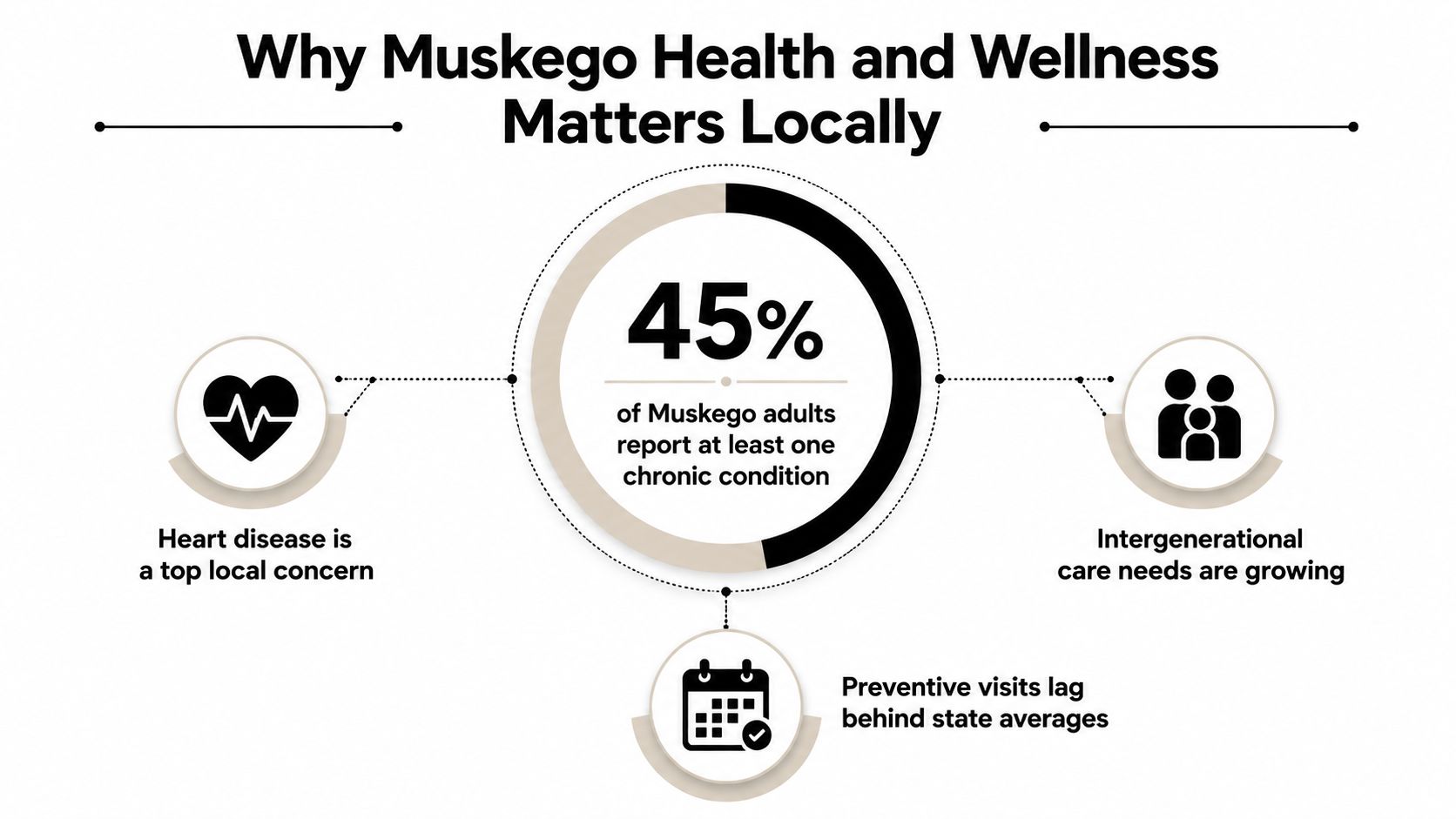
Why Muskego Health and Wellness Matters Locally
Sarah is balancing work, school schedules, and an aging parent. Her father has started moving more slowly around the house, while her teenage daughter is having difficulty managing stress. Sarah herself keeps postponing a physical because commuting and family responsibilities make appointments difficult to fit into the week.
That household needs several kinds of support at once. A teenager may need a routine checkup or counseling. A working adult may need preventive screening and help with posture or recurring pain. An older parent may benefit from mobility work, fall-prevention guidance, or assistance coordinating appointments. Wellness becomes practical when those needs are mapped together rather than handled as disconnected searches.
Muskego's local profile points to an established suburban community with both family and aging-related needs. A Waukesha County health assessment profile listed Muskego at 24,946 residents, with 5,952 households, 4,098 family households, and 15.60% of residents age 65 or older (Waukesha County health assessment profile). The same profile reported a median household income of $51,909 and a poverty rate of 2.50%, details that help explain why residents may prioritize convenient, coordinated services while still comparing coverage and out-of-pocket costs.
Build a local care map
A useful map starts with four questions:
- Who handles routine care? Identify a primary care clinician for checkups, medications, and ongoing conditions.
- Who helps with function? Know where to turn for physical therapy, chiropractic care, or other rehabilitation when pain limits movement.
- Who supports emotional health? Keep counseling, therapy, school support, or caregiver resources in view.
- Who helps older family members stay independent? Look for senior programming, transportation resources, home support, and memory-care guidance.
Muskego residents may also travel toward Milwaukee or use larger regional networks for specialty appointments. That makes access, referrals, records, and appointment timing just as important as the service name on a website. A nearby provider is useful only if the practice accepts your insurance, communicates clearly, and can offer the kind of visit you need.
Understanding the Core Health and Wellness Services
Start by sorting your need into the right care tier. Primary care works like a general mechanic for your health. A family medicine clinician checks the overall system, treats common problems, manages long-term conditions, reviews medications, and notices when a symptom needs closer attention.
Primary care is usually the right starting point for an annual physical, blood pressure concerns, diabetes management, preventive screening discussions, or a new symptom that is not an emergency. The clinician may order testing, provide treatment, or refer you to another professional when the problem requires focused expertise.
Four care categories
Specialty care focuses on one area of the body, much like a physician who dedicates practice to a particular organ system or condition. A cardiologist, orthopedist, neurologist, or gastroenterologist may evaluate concerns outside primary care. Muskego residents may reach specialists through regional systems such as Ascension SE Wisconsin or ProHealth Care, but referral rules and network participation vary by plan.
Behavioral health includes counseling, psychotherapy, psychiatric care, and support for anxiety, depression, grief, family strain, or substance use. A therapist may provide talk therapy, while a psychiatric clinician may evaluate medication needs. School counselors and telehealth providers can add flexibility for adolescents and busy parents.
Allied wellness services support movement and daily function. This group can include physical therapy, chiropractic care, acupuncture, massage therapy, nutrition counseling, and exercise coaching. Muskego Health & Wellness Center publicly lists chiropractic care, acupuncture, massage therapy, functional medicine, and neuromuscular rehabilitation among its services (Muskego Health & Wellness Center services).
Practical rule: Choose the first professional based on the problem you need solved, not on the broadest service menu.
These categories often overlap. A primary care clinician may refer someone to physical therapy for movement retraining, a counselor for persistent stress, or a specialist for further evaluation. Active rehabilitation can complement hands-on treatment, and this overview of chiropractic and physical therapy explains why combining approaches may be more useful than relying on one technique alone.
Before booking, confirm the provider's credentials, availability, communication style, referral requirements, and coverage. That check matters for Muskego families balancing work, children's schedules, and care for older relatives. Choosing well begins with identifying the right tier, then matching the provider to the visit you need.
Key Wellness Pillars for Muskego Residents
A Muskego family can use several kinds of support at once. A teenager may need sport-specific training, a parent may need counseling that fits a workday, and an older relative may need help staying steady at home. These needs point to three connected pillars: movement, mental health, and support for older adults.
Movement and fitness
Fitness can begin with a walk near Little Muskego Lake, a local trail, a park program, YMCA-connected activities, or a studio offering youth athletics and senior-friendly classes. The right choice depends on ability, schedule, weather tolerance, and motivation.
A person recovering from an injury may need supervised exercise rather than an open gym. An older adult may benefit from controlled strength and balance work. A teenager might participate more consistently in a team or sport-specific setting. Each option addresses movement, but the starting point should match the person's goal and current ability.
Mental and emotional health
Muskego residents may find support through school-based counseling in Muskego-Norway schools, outpatient therapists, telehealth, or community groups. Telehealth can suit a parent who cannot regularly leave work. Grief and caregiver groups add social connection that individual therapy does not replace.
Use the first visit to check fit. Ask whether the provider works with your age group, offers practical appointment times, explains privacy rules for minors, and has a response plan for urgent concerns. Clear answers make it easier to choose a provider for a child, busy adult, or family caregiver.
Support for older adults
Services for older residents may include Muskego Senior Center programming, transportation to medical visits, in-home care, and resources for families responding to memory changes. Ask exactly what each service includes. Transportation, companionship, personal care, medication reminders, and skilled nursing address different needs and should not be treated as interchangeable.
| Pillar | Common Services | Typical Access Points in Muskego | Best For |
|---|---|---|---|
| Movement | Walking groups, fitness classes, physical therapy, exercise coaching | Parks, studios, YMCA programs, rehabilitation clinics | Mobility, strength, recovery, youth activity |
| Mental health | Counseling, school support, telehealth, caregiver groups | Schools, outpatient practices, churches, community programs | Stress, grief, anxiety, family support |
| Senior services | Center programming, transportation, home support, memory resources | Muskego Senior Center, county resources, home-care agencies | Independence, social connection, caregiver planning |
Some residents also consider complementary products as part of a broader routine. If you are researching cannabinoids, review a careful resource such as CBD for a holistic lifestyle and ask a qualified clinician about possible interactions, particularly when prescription medication is involved.
People seeking organized help with exercise, nutrition, sleep, and behavior change can review wellness coaching programs. Coaching can provide accountability, while medical evaluation remains the right path for diagnosis, symptoms, and treatment decisions.
Practical Preventive Care Habits That Actually Stick
Prevention works better as a repeatable rhythm than as a single annual appointment. A physical matters, but so do the small actions that help you notice changes early, keep treatment on track, and make healthy choices easier on busy days.
Start with anchors
Attach a new habit to something you already do:
- Morning routine: Drink water and review the day's medication plan before leaving the kitchen.
- Calendar routine: Reserve a recurring health hour for booking appointments, checking referrals, or answering portal messages.
- Monthly routine: Review medications, refill timing, home blood pressure readings if recommended, and questions for your clinician.
- Seasonal routine: Check whether you're due for an annual physical, dental cleaning, immunization, or age-appropriate screening.
- Movement routine: Add a walk near Idle Hour Park or another familiar route after dinner, unless pain or medical limitations require a different plan.
A clinician can help you decide which screening schedule applies to your age, history, and risk factors. Local pharmacies may offer flu-shot clinics, and the Waukesha County Public Health immunization schedule can help residents identify questions to bring to a pharmacist or primary care office.

A manageable week
On Monday, put your annual visit on the calendar. On Tuesday, take a short walk after dinner. On Wednesday, update your medication list. On Thursday, send one portal question. On the weekend, prepare an easy snack and check whether a family member needs help arranging an appointment.
A preventive habit should be small enough to repeat and specific enough to remember.
Desk work can affect comfort and movement. Use this guide to improve posture at your desk and treat the workstation as part of your health environment, not as a separate issue.
Use the following video as another starting point for practical wellness education, then confirm any medical advice with your own clinician.
How to Choose the Right Wellness Provider
A polished website doesn't tell you whether a provider is the right fit. Use the same screening process for a primary care office, therapist, chiropractor, personal trainer, or rehabilitation clinic.
Four questions to compare
Credentials: Confirm the professional's license and scope of practice through the Wisconsin Department of Safety and Professional Services. Ask what training applies to your specific concern, particularly if you're considering hands-on treatment, supplements, or exercise after an injury.
Access: Check location, weekday hours, telehealth availability, parking, online booking, and expected response time. Muskego Health & Wellness Center's public booking page shows extended weekday access and online scheduling (Muskego Health & Wellness Center booking page). Availability can still change, so call if the website doesn't clearly state whether the practice is accepting new patients.
Fit: Notice whether the provider listens, explains options in plain language, and adapts care for children, working adults, older adults, or caregivers. You should be able to ask questions without feeling rushed.
Cost clarity: Ask whether the provider is in-network, whether a referral is required, what the first visit includes, whether HSA or FSA payment is accepted, and whether sliding-scale options exist. Public listings can conflict. For example, WebMD lists Muskego Health & Wellness Center as “Accepting New Patients: No,” while other public information shows office hours and a booking page (WebMD practice listing). Treat intake status as something to verify directly.
| Provider Type | Best For |
|---|---|
| Primary care physician | Routine care, prevention, chronic-condition management |
| Nurse practitioner | Many primary care needs, follow-up care, health education |
| Chiropractor | Musculoskeletal concerns and movement-related care within scope |
| Counselor or therapist | Emotional health, coping skills, grief, family concerns |
| Personal trainer | Fitness structure, strength, and activity accountability |
For a broader framework on evaluating chiropractic care, residents can review this Aspen Falls Wellness chiropractor selection guide. Before booking, ask three direct questions: Are you accepting new patients for my type of visit? What should I expect to pay? What happens if my symptoms need another level of care?
What to Expect at Your First Visit
The first visit usually begins before you enter the exam room. When you call or book online, describe the main concern, how long it has been present, what makes it better or worse, and whether you need a routine, urgent, or follow-up appointment.
Bring your insurance card, identification, medication and supplement list, relevant records, and a short family history. These details help the team understand possible risks, prevent medication confusion, and decide whether outside records or testing may matter.
The appointment flow
A medical assistant may record vital signs and confirm your forms. The provider then takes a history and performs an examination when appropriate. In plain language, this means discussing your symptoms and background, then checking the parts of your health that relate to the concern.
The visit may include age-appropriate screening discussions or referrals. Depending on your history, the clinician might discuss a mammogram referral, colonoscopy referral, or a depression questionnaire such as the PHQ-9. Those decisions should be individualized, so ask why a screening is recommended and what happens after the result.
Before you leave: Ask for the plan in writing, including medications, exercises, referrals, testing, warning signs, and the next follow-up.
You can ask for a chaperone during an examination, request a same-day lab draw if the office offers that service, and bring a family member if you want help remembering instructions. Tell the clinician if you're uncomfortable, confused, or concerned that the plan doesn't match your priorities.
Afterward, read the patient portal message carefully. Check whether referrals were sent, labs were ordered, and follow-up was scheduled. Call the office if an instruction is unclear or symptoms change. If something feels urgent or severe, use appropriate emergency services rather than waiting for a routine callback.
Your Next Steps Toward Better Health in Muskego
Wellness isn't a one-time decision. It's the result of choosing a sensible starting point, returning for follow-up, and making daily habits easier to maintain.
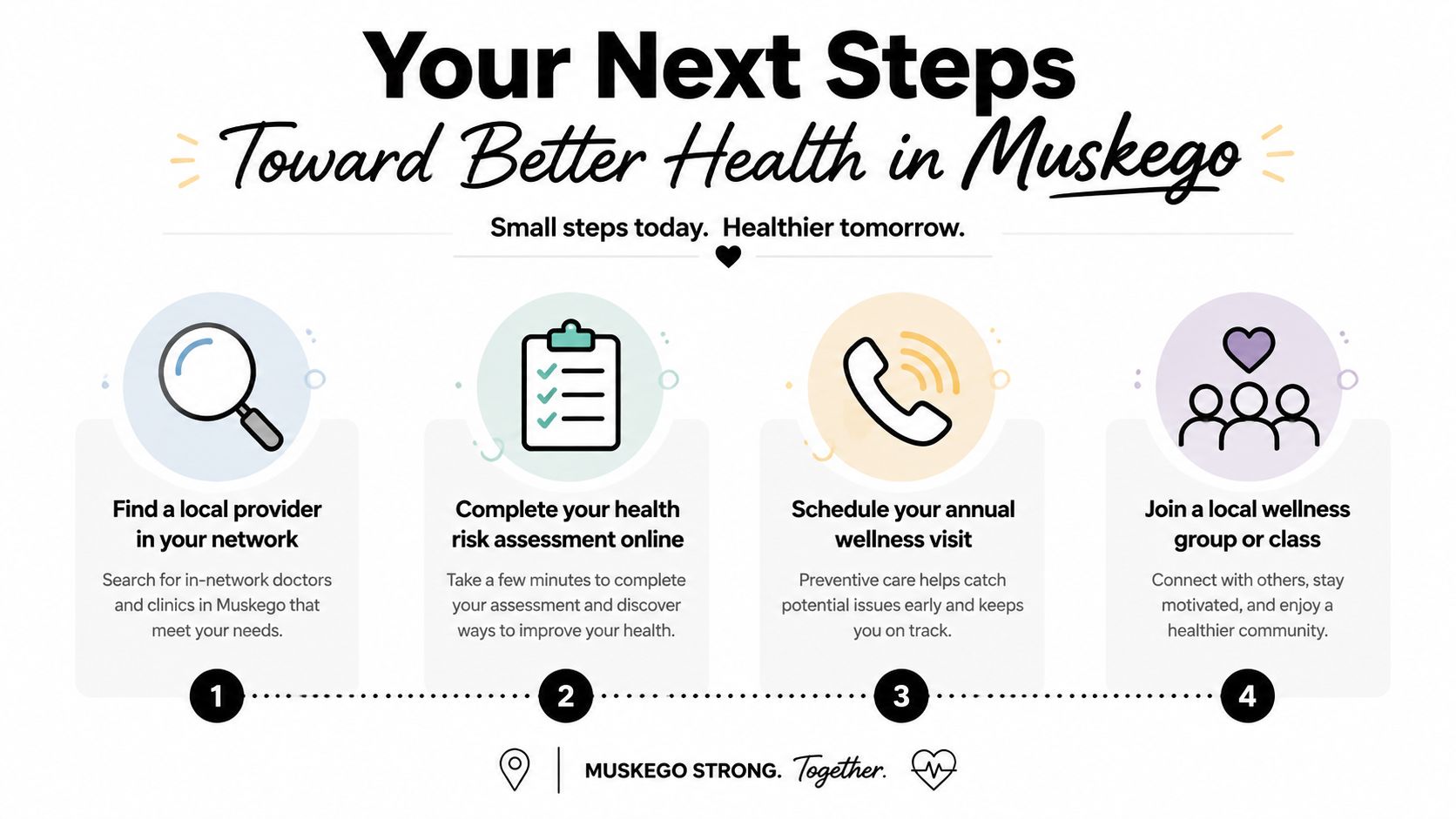
Save this checklist and complete it in order:
- Confirm primary care: Identify a primary care provider in Muskego or nearby Waukesha County, then verify network status and new-patient availability.
- Choose one preventive task: Schedule the screening, physical, dental visit, immunization discussion, or medication review that is currently due.
- Try one local support: Within the next month, test a walking group, senior program, fitness class, therapy option, or rehabilitation service that matches your needs.
- Create a personal health folder: Keep medication lists, immunization records, test results, referral details, insurance information, and questions in one accessible place.
- Review the provider fit: After the first visit, decide whether the clinician communicated clearly, respected your preferences, explained costs, and gave you a realistic follow-up plan.
Use local contacts to keep the plan grounded. The Muskego Senior Center can help older adults and caregivers identify programming and community support. Muskego public health resources can guide immunization questions, while ProHealth Care and other regional systems may help with primary or specialty referrals. Always confirm hours, eligibility, coverage, and intake status directly because public listings may change.
A neighborhood walk, consistent sleep routine, therapy appointment, or mobility exercise may seem modest on its own. Repeated choices like these can make it easier to remain active, respond to symptoms earlier, and support the people in your household.
MedAmerica Rehab Center offers patient-centered physical therapy, chiropractic care, acupuncture, and rehabilitation services for pain, mobility limitations, injuries, balance concerns, and recovery needs. Visit MedAmerica Rehab Center to learn how its multidisciplinary team can help you move more comfortably and build a practical plan for better function.
MedAmerica Rehab · Deerfield Beach
Talk to a clinician about your pain
Physical therapy, chiropractic, acupuncture and shockwave therapy under one roof, since 1995. Same-day appointments are available.
Mon–Thu 8:00 AM – 6:30 PM · Fri 8:00 AM – 3:00 PM