

Migraine Therapy Guidelines: A Practical Roadmap
You've had the headache before. It starts behind one eye, builds with nausea and light sensitivity, and forces you to cancel work or ordinary plans. You take an over-the-counter medicine, perhaps visit urgent care when that fails, and then return to the same routine without anyone asking how many migraine days you have each month or whether prevention should be part of the plan.
That pattern is exactly where migraine therapy guidelines can help. They aren't a prescription for every patient, but they give you and your clinician a common decision framework for choosing acute treatment, considering prevention, coordinating rehabilitation, and recognizing when a headache needs urgent medical evaluation.
Why Migraine Guidelines Matter More Than You Think
A patient can spend years treating migraine attack by attack. One appointment addresses nausea, another focuses on neck tightness, and another renews an acute medicine. Meanwhile, nobody asks whether the overall burden now warrants prevention.
The treatment gap has persisted for years. More than one-third of people with migraine were estimated to need preventive therapy, yet only approximately 3% to 13% were using it, according to the American Academy of Family Physicians summary of migraine prevention guidance. Screening based on guideline principles helps identify attacks that have become a recurring disability rather than an occasional inconvenience.

The shift from a drug list to a burden assessment
Earlier approaches often centered on a limited set of conventional preventive medicines. Guideline development now addresses behavioral treatment, cardiovascular safety with triptans, prevention, acute care, and newer therapies. The practical question is How much is migraine interfering with this person's life, and which treatment fits their risks, preferences, and access?
That question matters in rehabilitation as well as medical care. A patient may have migraine alongside cervical pain, jaw symptoms, poor movement tolerance, sleep disruption, or deconditioning. These factors do not explain every attack, and they should not reduce migraine to “just a neck problem.” They can increase disability, however, and may support coordinated physical therapy, exercise, acupuncture, medical prevention, or a combination.
Treatment should match the burden, not just the symptom of the day.
Practical rule: A recurring headache deserves a burden assessment, not just another refill.
For someone in Deerfield Beach, the next appointment is more productive with a record of headache days, symptoms, acute medicines, missed activities, and previous treatments. Guidance from U.S., U.K., and VA/DoD sources can then support a decision about acute care, prevention, rehabilitation, or specialist referral.
The Core Framework Every Patient Should Understand
Guidelines become easier to use when you separate treatment into two jobs.
Acute therapy treats an attack that's happening now. Preventive therapy aims to reduce future migraine burden, improve function, or make attacks easier to manage. Many patients need both. A preventive medicine doesn't replace an acute plan, and a reliable rescue medicine doesn't necessarily address a pattern that is disrupting life every week.
Start with frequency, then add disability
Current U.S. recommendations advise offering preventive treatment at 4 or more migraine or severe-headache days per month, or when migraine disrupts work or ordinary activities, rather than waiting for acute treatment to fail. The threshold is summarized in the NICE migraine recommendations, which also emphasize treatment selection based on suitability, benefits, and risks.
Frequency alone isn't enough. A person with fewer attacks may still need prevention if each attack is disabling, prolonged, difficult to treat, or associated with substantial medication use. Conversely, someone with frequent but mild symptoms may need a different conversation from someone who can't work, drive, exercise, or care for family during attacks.
A useful appointment summary includes:
- Headache days: Count each day with migraine or severe headache.
- Functional impact: Record missed work, interrupted sleep, canceled plans, and reduced activity.
- Acute treatment: List what you take, how often, and whether it works.
- Treatment burden: Note nausea, sedation, cognitive effects, cost, injections, and other concerns.
- Associated symptoms: Include aura, vomiting, light sensitivity, neck pain, dizziness, or jaw symptoms.
Read evidence grades as decision signals
A strong recommendation doesn't mean a treatment is right for everyone. It means the evidence and clinical judgment support offering it in the relevant situation. A weaker recommendation may reflect less certain evidence, a narrower population, or more variable outcomes. “May help” shouldn't be treated as equivalent to a high-confidence recommendation, but it also shouldn't be dismissed without considering safety and fit.
Here's a simple example. If migraine occurs on at least four days each month and causes missed work, prevention deserves discussion even if an acute medicine sometimes helps. If the attacks are accompanied by neck pain and movement restriction, a rehabilitation assessment may be useful alongside medical care, but it shouldn't delay evaluation of new or unusual neurological symptoms.
The framework is a decision tree, not a drug menu. It asks what is happening, how much it costs you, what has already been tried, and which risks matter most.
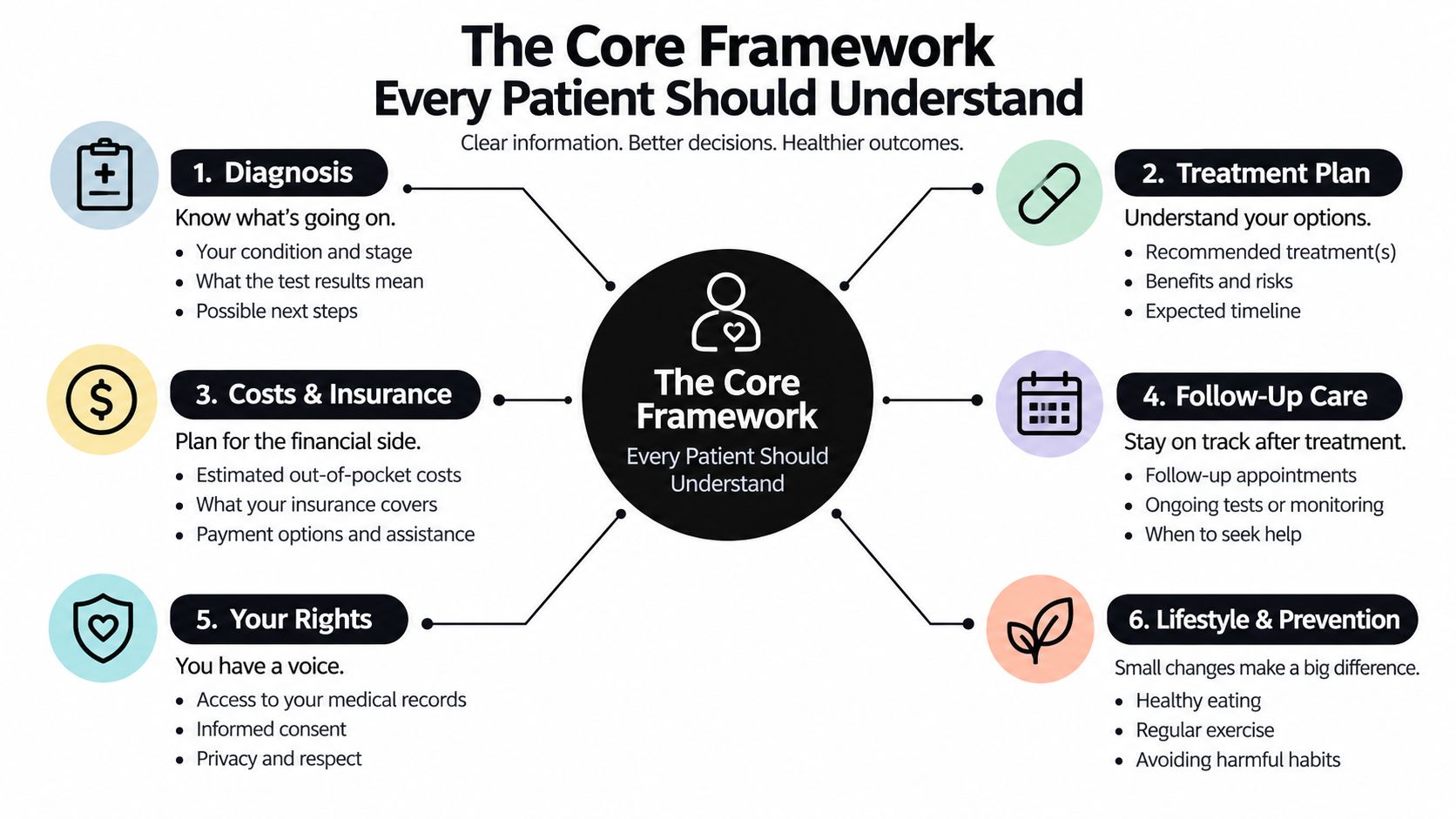
A short visual overview can help patients distinguish attack treatment from prevention and supportive care:
First-Line Acute and Preventive Options in Current Guidelines
Medication guidance differs slightly by country and organization, but the central principle is consistent: choose an effective treatment that matches the attack pattern, medical history, tolerability, and patient preference.
NICE recommends acute combination therapy with an oral triptan plus either a nonsteroidal anti-inflammatory drug or paracetamol. It also allows monotherapy with an oral triptan, NSAID, 900 mg aspirin, or paracetamol when a patient prefers one medicine. For prevention, NICE recommends considering propranolol, topiramate, or amitriptyline after discussing benefits, risks, and suitability.
Those medicines involve trade-offs. Propranolol may be unsuitable for some people with respiratory or cardiovascular concerns. Topiramate can raise concerns about cognitive effects, mood, or pregnancy. Amitriptyline may help selected patients with sleep or pain problems, but sedation and other adverse effects can limit its use. The right choice depends on the individual, not on a universal ranking.
Where newer preventive therapies fit
CGRP-targeting treatments have changed the prevention conversation. The group includes monoclonal antibodies such as erenumab, fremanezumab, galcanezumab, and eptinezumab, along with oral gepants such as atogepant and rimegepant. The American Headache Society's 2023 position supports CGRP-targeting therapies as first-line preventive options, rather than reserving them only for people who have failed older drugs.
The VA/DoD guideline strongly recommends erenumab, fremanezumab, or galcanezumab for episodic or chronic migraine, while it gives weaker recommendation strength to eptinezumab and atogepant. The distinction reflects differences in recommendation methodology and evidence certainty, not a simple declaration that one patient will respond better to one product.
For chronic migraine, onabotulinumtoxinA remains a guideline-supported preventive option. Delivery method matters. Some patients prefer an oral medicine, others prefer a monthly or quarterly injectable approach, and others may prioritize avoiding systemic side effects.
| Option class | Examples | Guideline role | Best fit patient |
|---|---|---|---|
| Acute triptan-based treatment | Oral triptan, sometimes combined with an NSAID or paracetamol | Treats an active attack | A patient who can take oral medicine and has a suitable migraine pattern |
| Traditional prevention | Propranolol, topiramate, amitriptyline | Established preventive choices | A patient whose comorbidities and tolerability profile fit the medicine |
| CGRP monoclonal antibodies | Erenumab, fremanezumab, galcanezumab, eptinezumab | First-line preventive options in current U.S. guidance | A patient seeking targeted preventive treatment and able to manage access and follow-up |
| Oral gepants | Atogepant, rimegepant | Newer preventive options with guideline-specific differences | A patient who prefers oral targeted therapy |
| OnabotulinumtoxinA | Injectable preventive treatment | Supported for chronic migraine | A patient with chronic migraine who is appropriate for this treatment pathway |
Patients comparing nonprescription devices or comfort measures can also review this guide to migraine relief options, while remembering that consumer products don't replace diagnosis, preventive assessment, or prescribed treatment.
The Non-Drug Side of the Guidelines Most Articles Skip
Medication can be necessary, but it isn't the entire plan. Recent evidence reviews have examined acupuncture, aerobic exercise, manual therapy, yoga, psychological therapy, biofeedback, and neuromodulation. The findings are mixed in strength and design, yet the evidence doesn't support dismissing non-drug care as irrelevant.
Reviews report that aerobic exercise, manual therapy combined with medical treatment, and yoga showed moderate-to-large ranges of effect in some outcomes, while acupuncture produced a small reduction in monthly headache days, as described in this recent evidence review. That wording matters. These approaches may help, but they shouldn't automatically replace medication when migraine is frequent or disabling.

What a sensible rehabilitation trial looks like
A rehabilitation plan should have a defined target. Rather than booking indefinite passive treatment, agree on what you're testing and how you'll judge it.
- Exercise: Begin with an achievable aerobic routine that respects current fitness, exertion tolerance, and symptom triggers.
- Manual therapy: Use cervical or thoracic techniques when examination identifies relevant stiffness, sensitivity, or movement impairment.
- Acupuncture: Consider it as an adjunct when the patient prefers it and no contraindication applies.
- Education: Address pacing, sleep regularity, hydration, workload, and the difference between a trigger and an early symptom.
- Measurement: Track headache days, disability, acute-medication use, and treatment tolerability.
A trial can be adjusted according to the patient's response and the clinician's plan. The important point is to define a review date rather than assuming that more treatment is always better.
Neck and jaw symptoms deserve careful interpretation. They can accompany migraine, contribute to overall pain sensitivity, or represent a separate problem. Resources on TMJ and tension headaches can help patients understand why jaw clenching and tension-type symptoms may coexist, but those symptoms shouldn't be used to diagnose migraine without a proper history.
At a multidisciplinary clinic, physical therapy for headaches may include movement assessment, targeted exercise, manual techniques, and education. The role is supportive and measurable: improve function, reduce relevant musculoskeletal contributors, and coordinate with the prescribing clinician when medication or specialist input is needed.
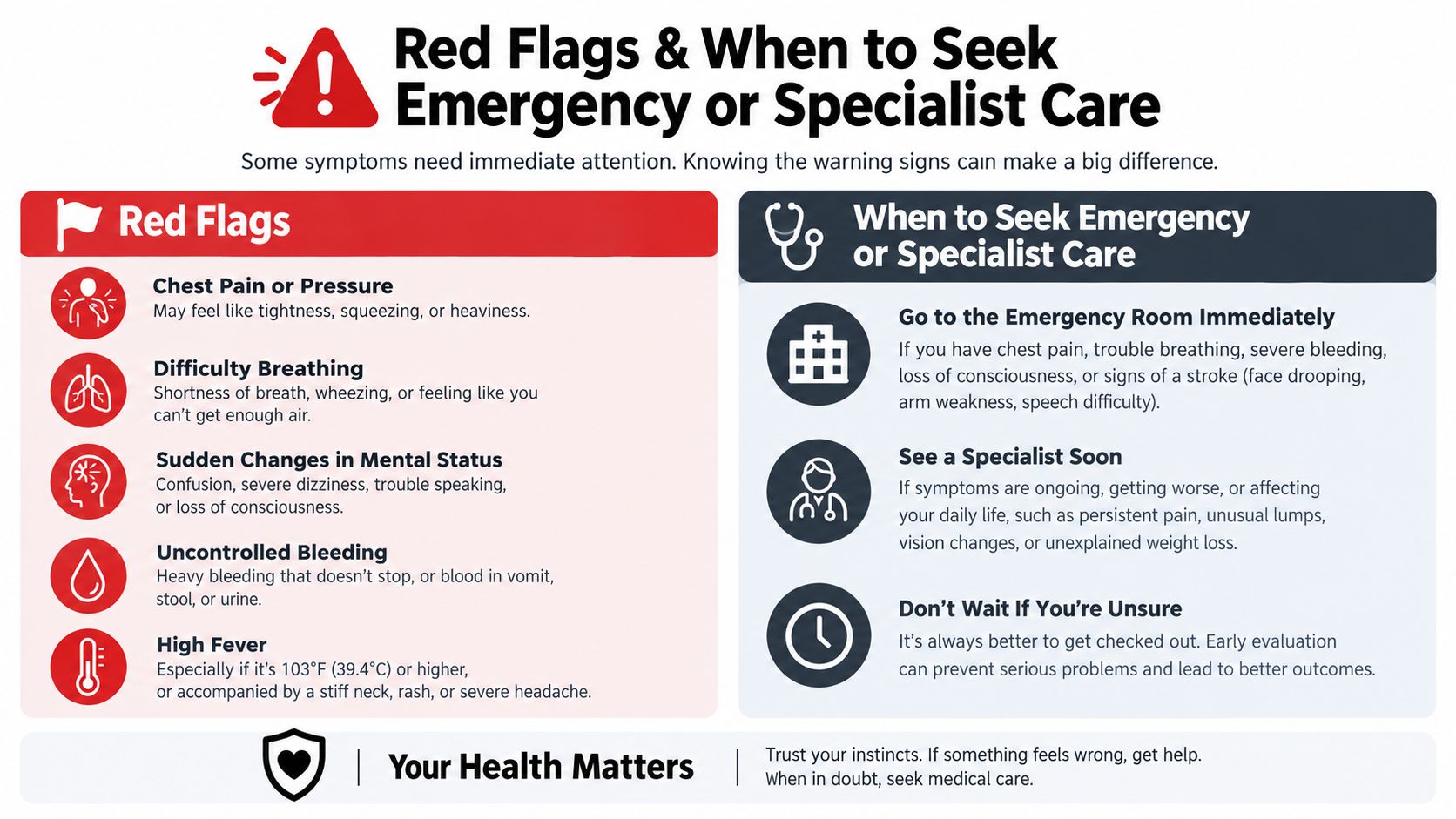
Red Flags and When to Seek Emergency or Specialist Care
A headache that matches your established migraine pattern usually calls for a different response from a sudden, unfamiliar, or rapidly worsening headache. Seek medical assessment before beginning rehabilitation when the presentation could reflect another condition.
Go to emergency care for a headache that becomes severe suddenly, particularly when it reaches maximum intensity within a short time. Other warning signs include:
- New neurological symptoms: Weakness, confusion, fainting, persistent speech difficulty, or a new visual or sensory deficit.
- Fever or systemic illness: Headache with fever, stiff neck, marked illness, or other signs of infection.
- Recent head injury: A new or worsening headache after trauma needs prompt medical assessment.
- Major pattern change: A headache unlike your usual migraine, one that progressively worsens, or a new headache later in life requires evaluation.
- Concerning associated symptoms: Repeated vomiting, altered alertness, or symptoms that continue beyond your established pattern.
Referral is different from emergency care
A primary care clinician or neurologist may refer you to a headache specialist when preventive treatments have not provided adequate control, side effects prevent continued use, medication overuse is suspected, or the diagnosis remains uncertain. New daily persistent headache also warrants specialist assessment rather than a routine musculoskeletal treatment plan.
Emergency treatment follows a separate decision pathway. The American Headache Society's guidance identifies intravenous prochlorperazine and greater occipital nerve blocks as Level A treatments for adults needing emergency-department care, while hydromorphone is a Level A option clinicians should not offer. The AHS emergency-treatment update summarizes the move toward evidence-specific, non-opioid acute treatment.
A neck-focused session is appropriate only after medical assessment has addressed urgent causes. If persistent headache occurs alongside cervical symptoms, information about constant headaches from neck pain can help you prepare questions for your clinician. Sudden pain, unusual neurological symptoms, or any warning sign above requires urgent medical care instead.
How a Multidisciplinary Rehab Clinic Fits Into Modern Care
A rehabilitation clinic can fill a practical gap between a medication visit and daily life. The clinician may assess cervical movement, thoracic posture, jaw tension, vestibular symptoms, breathing patterns, strength, conditioning, and the way activity affects symptoms. That assessment doesn't prove that the neck caused migraine. It identifies modifiable problems that may add to disability or make recovery from an attack more difficult.
The care plan may include physical therapy, chiropractic care, acupuncture, exercise instruction, or lifestyle counseling. The appropriate combination depends on the examination and the patient's medical plan. Someone with migraine and restricted cervical movement needs a different approach from someone whose main concern is post-concussion dizziness, jaw loading, or fear of exercise.
What the first visit should accomplish
A useful first visit should clarify:
- What has already been diagnosed: Migraine, tension-type headache, post-traumatic headache, cervical pain, or another condition.
- What needs medical follow-up: New symptoms, medication problems, or a preventive plan that hasn't been addressed.
- Which physical findings are relevant: Mobility limits, weakness, sensitivity, balance deficits, or poor movement tolerance.
- What outcome will be measured: Headache days, activity tolerance, disability, medication use, or specific movement goals.
- How care will be coordinated: The rehabilitation clinician should communicate concerns and progress to the prescribing or primary care team when appropriate.
Acupuncture can be considered when a patient prefers a needle-based adjunct and the clinician identifies a reasonable role for it. Information about acupuncture points for headache can help patients prepare questions, but point selection and treatment decisions should come from a qualified practitioner rather than a self-treatment chart.
MedAmerica Rehab Center offers physical therapy, chiropractic care, acupuncture, and related rehabilitation services in Deerfield Beach. In migraine care, the clinic's role is to address relevant movement and pain factors, support activity and self-management, and work alongside medical providers rather than replace diagnosis or prescribing.
Putting the Guidelines to Work This Week
Don't wait for the next severe attack to reconstruct your history from memory. Start a simple record now, using a calendar or headache diary.
For each day, note whether you had migraine or severe headache, what symptoms appeared, what acute medicine you used, and whether work or ordinary activity was affected. Add a short description of sleep, exercise, neck or jaw symptoms, and any unusual change in the pattern. You don't need a perfect diary. You need enough information to show whether the problem is occasional, frequent, disabling, or becoming harder to control.
Bring that record to your primary care clinician, neurologist, or rehabilitation provider and ask direct questions:
- Do my headache days or disability justify preventive treatment?
- Is my acute treatment appropriate for the way my attacks present?
- Could medication use be contributing to ongoing headaches?
- Are my neck, jaw, balance, or movement symptoms relevant to rehabilitation?
- Do I need a headache-specialist referral?
The most useful plan often combines three layers: treatment for the attack, prevention for the pattern, and non-drug care for function and contributing symptoms. Guidelines don't remove the need for judgment. They make the important questions harder to overlook.
If you're in Deerfield Beach and your migraine care needs a rehabilitation component, contact a clinic with your headache diary, medication list, previous imaging or specialist notes, and a clear description of your goals. If you have a red flag, skip the rehabilitation appointment and seek urgent medical evaluation.
MedAmerica Rehab Center provides individualized physical therapy, chiropractic care, acupuncture, and rehabilitation support for headaches, neck pain, post-concussion symptoms, and related movement limitations. Visit MedAmerica Rehab Center to learn about available services in Deerfield Beach and request an appointment that can be coordinated with your medical migraine care.
MedAmerica Rehab · Deerfield Beach
Talk to a clinician about your pain
Physical therapy, chiropractic, acupuncture and shockwave therapy under one roof, since 1995. Same-day appointments are available.
Mon–Thu 8:00 AM – 6:30 PM · Fri 8:00 AM – 3:00 PM