

Pain Relief Through Hands on Physical Therapy
You've rested. You've tried heat, ice, maybe pain medication. You move a little differently now to avoid the sharp pull in your back, the pinch in your shoulder, or the stiffness in your knee. The problem is that pain often changes how you sit, walk, sleep, and exercise long before it goes away.
That's usually when people start looking for hands on physical therapy. They want something more specific than general advice and more active than waiting it out. They want to know what a therapist does with their hands, whether it helps, and what the first visit will feel like.
That's a smart question to ask. Hands-on care can be very helpful, but the best results usually come when skilled manual treatment is paired with the right exercises, a clear plan, and realistic guidance about recovery.
What Is Hands-On Physical Therapy
Hands-on physical therapy is exactly what it sounds like. A licensed physical therapist uses skilled touch to assess how your joints, muscles, fascia, and movement patterns are working, then applies manual treatment to improve how those tissues move and feel.
For many patients, that matters because pain isn't always just about weakness. Sometimes a joint is stiff. Sometimes muscles are guarding and tightening. Sometimes tissue restrictions change the way you bend, turn, reach, or walk. A therapist's hands can pick up details that machines and generic workouts can't.
It's a treatment method and a way of evaluating you
A good manual therapist doesn't just start pressing on sore spots. They first look at how you move, where motion stops, what reproduces symptoms, and what eases them. That process helps separate the painful area from the actual driver of the problem.
For example, neck pain may involve joint stiffness, muscle spasm, and movement habits all at once. Knee pain may involve reduced motion after surgery plus weakness that developed because walking became uncomfortable. Hands-on care gives the therapist a precise way to test those pieces in real time.
Practical rule: The most useful manual treatment is targeted. It should match a movement problem, not just a pain location.
What hands-on care is meant to do
Evidence-based hands-on physical therapy is usually part of a broader rehabilitation plan, not a stand-alone treatment. Therapists combine manual techniques with active exercise because manual therapy can reduce pain and improve short-term mobility, while exercise helps turn those gains into better function and longer-term tissue loading tolerance, as described in this discussion of hands-on physical therapy and exercise.
That's an important expectation to set early. If your back feels looser after treatment, that's useful. But the lasting benefit comes from teaching your body how to keep that improvement through strengthening, mobility work, balance, posture, and daily movement strategies.
What patients often notice first
Patients often notice one of these changes first:
- Less resistance with movement so turning your head or standing up feels easier
- Reduced pain sensitivity during everyday tasks
- A clearer understanding of what's happening and what to do next
Relief matters. So does a plan. The combination is what usually moves recovery forward.
Common Hands-On Physical Therapy Techniques
Manual therapy includes several techniques, but they all serve a simple purpose. They help a stiff area move, help an overworked area calm down, or help your body tolerate motion again.
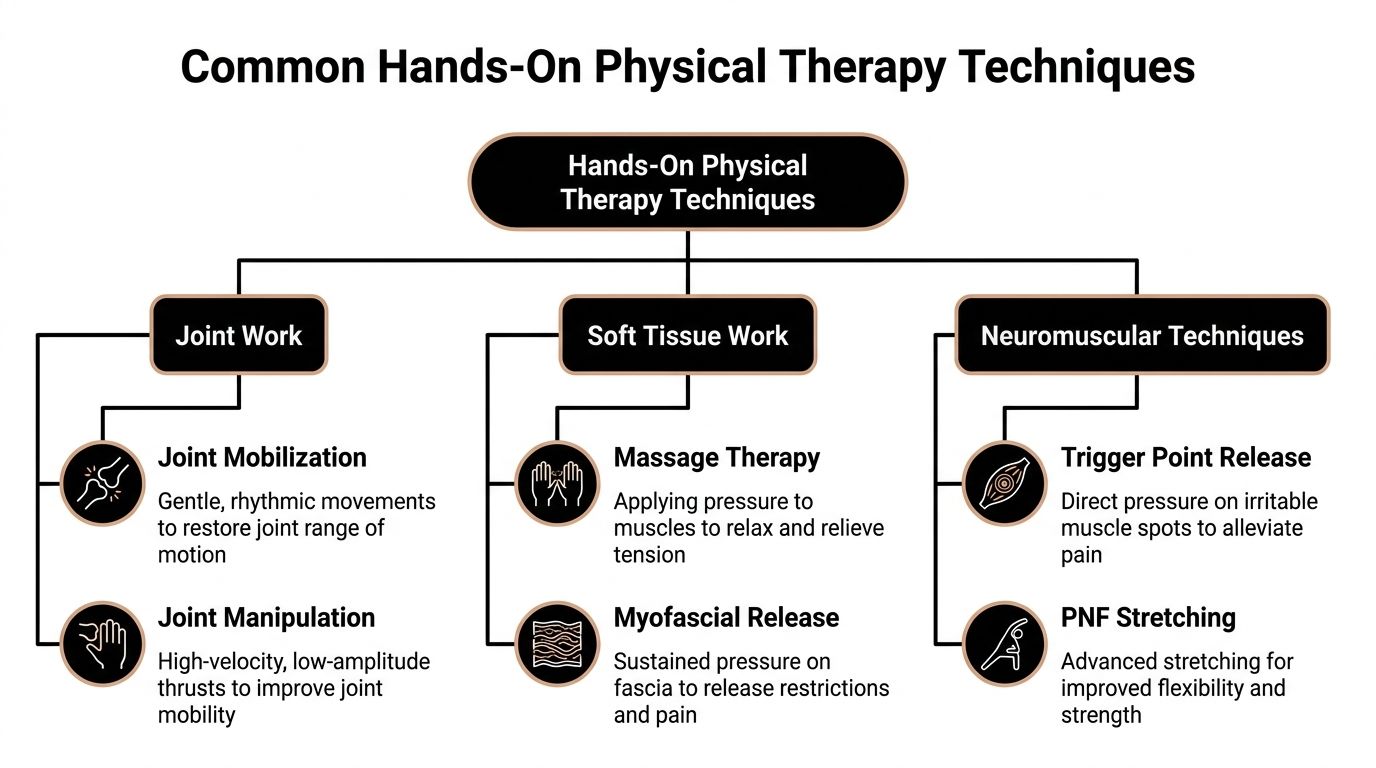
In orthopaedic manual physical therapy, clinicians use techniques such as joint mobilization, manipulation, passive stretching, and soft-tissue work to address joint stiffness, muscle spasm, and tissue restriction. The intended effect is a direct change in local biomechanics and neuromuscular tone, which can improve range of motion and reduce pain in problems such as back or neck strain, knee osteoarthritis, and post-surgical recovery, as explained in this overview of orthopaedic manual physical therapy techniques.
Joint work
Think of a stiff joint like a hinge that still works but doesn't glide well.
Joint mobilization uses gentle, repeated movements to help that joint move more freely. Therapists often use it when a shoulder, neck, ankle, or spine segment feels restricted but irritable.
Joint manipulation is different. It uses a quicker, smaller movement to improve joint mobility. It isn't appropriate for everyone, and it should only be used when the therapist has examined you carefully and decided it fits your condition.
Soft tissue work
Muscles and connective tissue can become tight, guarded, or sensitive after pain, injury, or surgery. That's where soft tissue treatment comes in.
A therapist may use:
- Massage-based techniques to reduce muscle tension and improve comfort
- Myofascial work to address tissue restrictions that limit motion
- Trigger point release to calm especially tender, overactive spots in muscle
- Passive stretching to improve flexibility where muscles or surrounding tissue resist movement
This is less about “breaking up knots” and more about changing how tissue feels and responds so movement becomes easier.
Neuromuscular techniques
Some hands-on care focuses on how your nervous system and muscles coordinate.
That can include guided stretching, resisted movement patterns, or therapist-assisted positioning to help your body relearn motion with less guarding. These techniques are often useful when someone says, “I can move there, but it feels tight, shaky, or unsafe.”
The hands-on part should have a job. It should prepare you to move better, not replace movement.
If you want a clearer look at the methods therapists may use, MedAmerica Rehab Center outlines several manual physical therapy techniques patients commonly ask about.
Conditions That Benefit from Manual Therapy
Many people don't come to therapy with a technical diagnosis in mind. They come in saying, “My back keeps locking up,” or “My shoulder still won't reach overhead,” or “I thought I'd be further along after surgery.” Manual therapy is often helpful because it meets those everyday frustrations at the movement level.
When pain and stiffness are linked
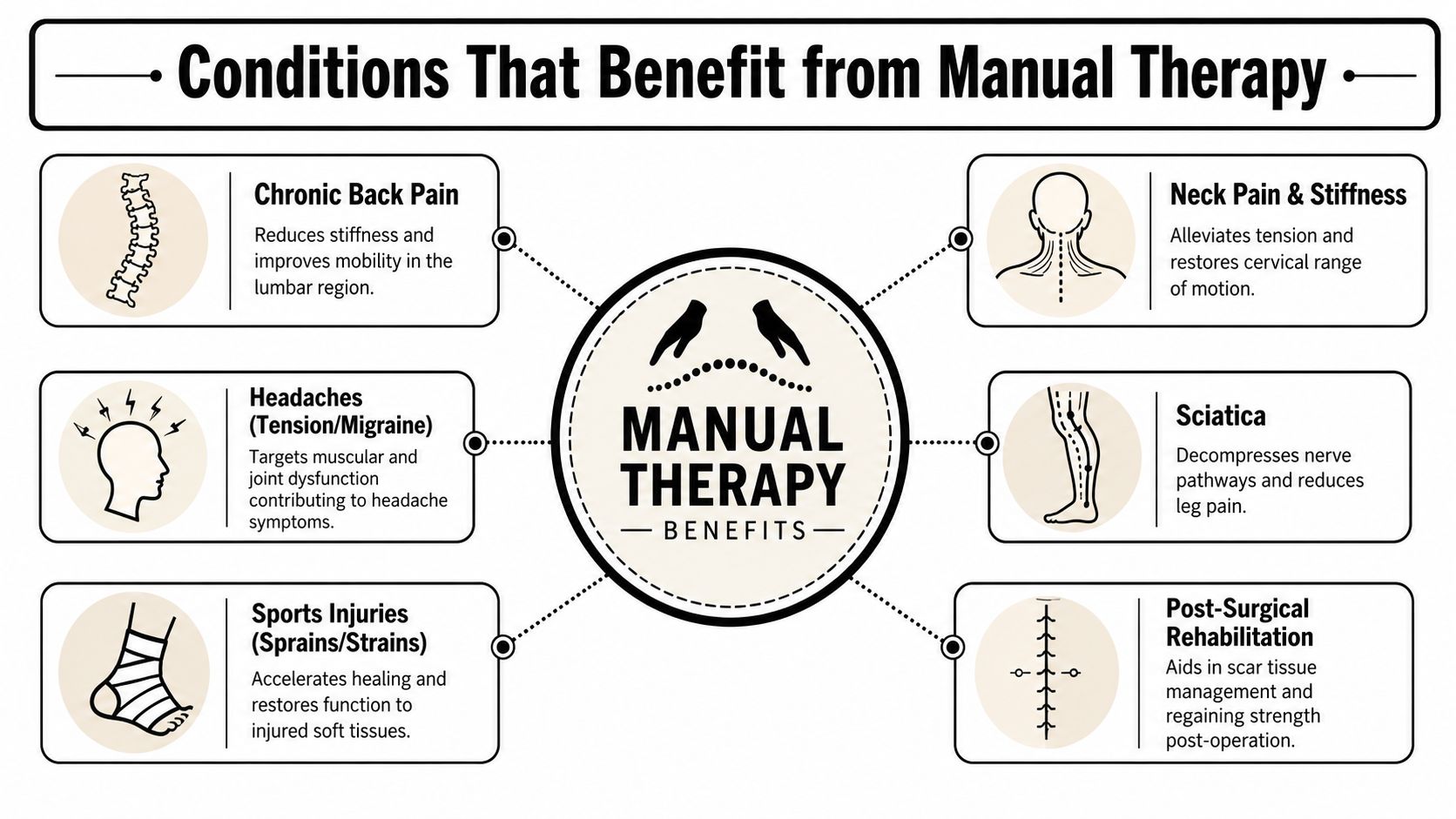
A person with chronic low back pain may not need aggressive treatment. Often, they need the painful area to stop guarding, the hips and spine to move more normally, and a gradual return to bending, walking, and lifting.
Neck pain often follows a similar pattern. A patient may feel a pulling sensation when checking blind spots while driving or a headache that builds after desk work. In that case, soft tissue work and gentle joint treatment can make movement less threatening, which creates room for corrective exercise.
After surgery or injury
Post-surgical patients usually notice stiffness before strength. A knee may feel blocked when trying to bend. A shoulder may feel tight around scarred or healing tissue. Careful hands-on treatment can support motion while the therapist also rebuilds strength and confidence.
The same applies after sprains, strains, car accidents, and sports injuries. Once the initial flare settles, people often need help restoring normal movement quality, not just waiting longer.
A few common examples include:
- Sciatica symptoms where restricted movement and muscle guarding make sitting, standing, or walking more uncomfortable
- Arthritic joints that feel better when motion is introduced gradually and precisely
- Shoulder stiffness that limits reaching, dressing, and sleeping comfortably
- Headache patterns tied to the neck and upper shoulders where tissue tension contributes to symptoms
Recovery is easier when treatment matches the phase you're in. Early care may focus on calming pain. Later care should help you move, load, and function again.
If you're preparing for a procedure or helping a family member after one, practical home setup matters too. This guide on preparing your home for recovery is useful because even a strong therapy plan works better when daily movement at home is safer and simpler.
Your First Visit at MedAmerica Rehab Center
Patients arrive at a first physical therapy visit with two concerns. They want pain relief, and they want to know if anyone is finally going to explain what's going on in plain language.
At MedAmerica Rehab Center, that first step usually starts before you ever walk through the door. The front desk team helps with scheduling, basic paperwork, and insurance questions so you're not left guessing about logistics before treatment begins.

What happens in the evaluation
Your first session is typically one-on-one with a licensed provider. You'll talk through what hurts, when it started, what makes it worse, what helps, and what you're trying to get back to. That might be work, sleep, walking the dog, lifting a grandchild, getting through a shift, or returning to the gym.
Then comes the physical exam. This often includes movement testing, posture and gait observation, strength checks, and gentle hands-on assessment to identify stiffness, irritation, weakness, or compensations. The goal isn't to rush into treatment. The goal is to understand the problem clearly enough to treat it well.
Many patients find that the exam itself is reassuring. Someone is finally watching how they move instead of focusing only on a scan or a symptom label.
What treatment may feel like on day one
If hands-on treatment is appropriate, the therapist may start with a small amount during the first visit. That could include joint mobilization, soft tissue work, assisted stretching, or guided movement to reduce pain and improve motion.
You may also start a few simple exercises right away. Not a long routine. Just the ones that fit your current tolerance and support the gains from treatment.
A lot of clinics are working to improve the patient side of care, not just the clinical side. If you've ever wondered what makes a visit feel organized, respectful, and less stressful, these patient experience strategies are a helpful outside perspective on the details patients notice.
How the plan is built with you
A strong first visit should leave you with answers to practical questions:
- What do you think is driving my pain
- What are we trying to improve first
- What will I be doing between visits
- What should I expect after treatment today
That clarity matters. It helps patients stick with care and avoid the feeling that therapy is just a series of random appointments.
For a closer look at what ongoing care can involve, this page on what a typical physical therapy session looks like gives a useful overview of the visit flow after the initial evaluation.
Later in the process, seeing the environment and approach in action can help make everything feel more familiar.
How to Choose the Right Physical Therapist
Choosing a therapist isn't just about finding someone nearby. It's about finding a clinic that makes care understandable, practical, and appropriate for your condition.
One important point often gets overlooked. In a study of physical therapy access in an underserved urban community, the main barriers were financial issues, incomplete knowledge of PT services, and poor proximity to clinics, which means many patients are asking a more urgent question than “What technique do you use?” They're asking whether they can realistically get to care, afford it, and understand if it fits their situation, as discussed in this analysis of barriers to physical therapy access.
Questions worth asking before you book
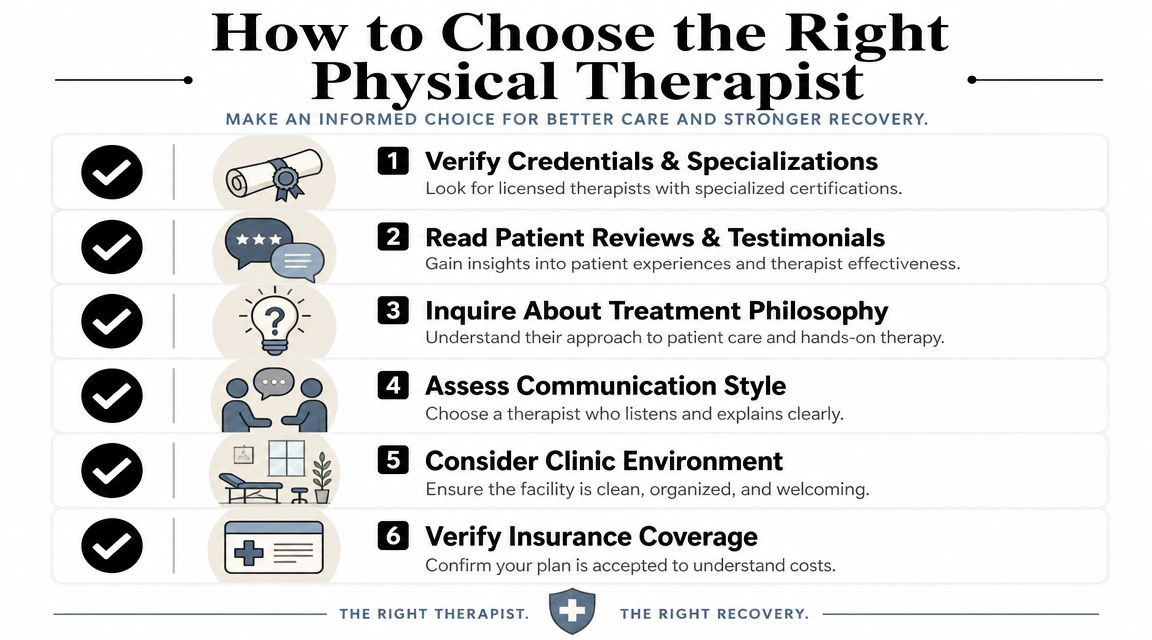
These questions usually tell you more than a long service list:
- How clear are they about insurance and payment? A good clinic should explain the basics without making you chase answers.
- Can they explain what they treat? You shouldn't need a medical background to understand whether they help with your issue.
- Is the location workable for your schedule and mobility? Consistency matters in rehab, so convenience is part of quality.
- Do they combine hands-on care with active rehab? That usually signals a more complete approach.
- Do they listen well? If a therapist interrupts, rushes, or gives vague answers during the first interaction, that usually doesn't improve later.
Signs of a strong fit
A good therapist should be able to tell you what they're treating, why they're choosing a technique, and what you should do between visits. They don't need to promise miracles. They do need to communicate clearly.
A clean, organized environment also matters. So does the feeling that your session is individualized rather than recycled from patient to patient.
Here's a quick comparison:
| What to look for | Why it matters |
|---|---|
| Clear scheduling and insurance communication | Reduces stress before care starts |
| Thorough evaluation | Improves treatment precision |
| Hands-on treatment plus exercise | Supports both relief and function |
| Plain-language explanations | Helps you follow the plan |
| Realistic expectations | Builds trust and consistency |
If you want a patient-focused checklist, MedAmerica Rehab Center provides guidance on how to choose a physical therapist that aligns with the questions many people wish they'd asked sooner.
Frequently Asked Questions
Is hands-on physical therapy painful
It shouldn't feel harsh or uncontrolled. Some techniques create a feeling of pressure, stretching, or mild soreness, especially if the area has been stiff for a long time. But there's a difference between productive discomfort and pain that makes your body brace harder.
Tell your therapist what you're feeling in the moment. Good hands-on care is responsive. If your muscles tighten, your pain spikes, or symptoms linger in an unhelpful way afterward, treatment should be adjusted.
“You should feel involved in the process, not like something is being done to you without your feedback.”
How is it different from massage or chiropractic care
Massage can be helpful for relaxation and muscle tension, but physical therapy starts with a movement exam and uses treatment to support a broader rehab plan. The focus isn't only on feeling better during the session. It's on helping you move, function, and tolerate daily activity better over time.
Chiropractic care and physical therapy may both use hands-on methods, but physical therapy commonly integrates manual treatment with exercise progression, functional training, and recovery planning around work, sport, surgery, or daily tasks.
Is manual therapy enough on its own
Usually, no. That's one of the biggest misconceptions patients bring into care.
Existing consumer content rarely answers the deeper question of when manual therapy is useful and when it functions mainly as short-term pain modulation. The clearest guidance emphasizes that physical therapy's core remains therapeutic exercise and functional training, with hands-on care serving as an adjunct rather than the whole treatment, as noted in this discussion of manual therapy versus the broader role of exercise in physical therapy.
That doesn't make manual therapy less valuable. It makes its role more honest. If treatment reduces stiffness and pain, that opens a window. Exercise, movement practice, and load progression help keep that window open.
How will I know it's working
Progress doesn't always mean pain disappears immediately. Often it looks like this first:
- You move with less hesitation
- Daily tasks bother you less
- You recover faster after activity
- You understand what flare-ups mean and how to respond
Those are meaningful signs that your body is changing, even before everything feels normal.
Start Your Recovery in Deerfield Beach
Hands-on physical therapy can be a powerful part of recovery when it's used for the right reasons and paired with the right plan. It can reduce pain, improve motion, and help you feel more confident in your body again. What it shouldn't be is mysterious, rushed, or disconnected from the things you need to do each day.
If you live in Deerfield Beach or a nearby community and you're dealing with back pain, neck pain, sciatica, arthritis, post-surgical stiffness, or an injury that just isn't resolving, getting evaluated can bring clarity as much as relief. A good first visit should help you understand the problem, the next step, and what recovery can realistically look like.
If you're ready to take that next step, contact MedAmerica Rehab Center to request an appointment and ask about scheduling, insurance, and what to expect at your first visit. You can also call (954) 420-8887 to speak with the clinic directly.
MedAmerica Rehab · Deerfield Beach
Talk to a clinician about your pain
Physical therapy, chiropractic, acupuncture and shockwave therapy under one roof, since 1995. Same-day appointments are available.
Mon–Thu 8:00 AM – 6:30 PM · Fri 8:00 AM – 3:00 PM