

Deerfield Beach Chiropractor Health and Wellness Guide 2026
You wake up in Deerfield Beach, swing your legs out of bed, and feel that familiar pull in your low back. Or maybe it's the neck stiffness that starts after an hour at the computer. For some people, it's sciatica that makes a short drive feel longer than it should. For others, it's the soreness that never fully settled down after a car accident, a lifting injury, or surgery.
Individuals don't ignore these problems because they don't care. They ignore them because life is busy, pain comes and goes, and they hope rest will fix it. Sometimes it does. Often, it doesn't. Mechanical pain tends to linger when the joint that should move well is moving poorly, and the muscles around it start working overtime.
That's where chiropractor health and wellness becomes useful. Not as a last resort. Not as a one-time crack-and-go visit. It works best when you treat it the same way you treat exercise, sleep, and nutrition. It's part of how you keep your body functioning well.
Your Path from Pain to Wellness Starts Here
A lot of patients start in the same place. They aren't looking for a philosophy. They want to bend over without bracing, turn their head while driving, or get through a workday without their shoulder and neck tightening by noon.
Chiropractic care has become a mainstream choice for that kind of problem. In the U.S., the share of adults who saw a chiropractor in the past year rose from 9.1% in 2012 to 10.3% in 2017, according to the CDC's national health data brief on complementary health use. That matters because it reflects what many clinics see every week. People use chiropractic care routinely for musculoskeletal issues, not only when they feel out of options.
What wellness looks like in real life
Wellness care sounds abstract until you tie it to daily function:
- Desk workers need their neck and upper back to tolerate long hours without constant tension.
- Parents and caregivers need to lift, carry, and twist without flaring their back.
- Active adults want to train, walk, swim, or play pickleball without recurring joint pain.
- Older adults often need better mobility and confidence, not just less pain.
That shift matters. A chiropractor health and wellness plan isn't just about reducing symptoms. It's about helping your body move with less strain so normal activity stops feeling like recovery.
Most people don't need more willpower. They need a plan that matches the way their body actually moves.
Sleep is part of that plan too. If shoulder or upper back pain is waking you up, positioning matters more than people think. A practical guide on sleep advice for shoulder pain can help you reduce nighttime irritation while you work on the underlying mechanical problem.
Why this matters before pain gets worse
The earlier you address a movement problem, the easier it usually is to calm the irritated tissues around it. When you wait too long, your body builds compensation patterns. Hips stiffen. Shoulders shrug. Low back muscles guard. Then the original issue starts affecting everything around it.
That's why a proactive approach works better than chasing flare-ups. Good chiropractic care fits into a broader rehab mindset. Restore motion. Reduce stress on irritated tissues. Build better support around the area. Then keep the gains.
Understanding How Chiropractic Care Works
Chiropractic is often described as “back cracking.” That description misses the point.
Chiropractors primarily assess and treat mechanical dysfunction in the spine and related joints using spinal manipulation or adjustment, which aims to restore joint mobility and reduce compensatory loading on surrounding muscles and soft tissues, as described in the Bureau of Labor Statistics overview of chiropractors. In plain language, the goal is to help a stiff or restricted joint move more normally so the tissues around it stop absorbing stress they were never meant to carry.
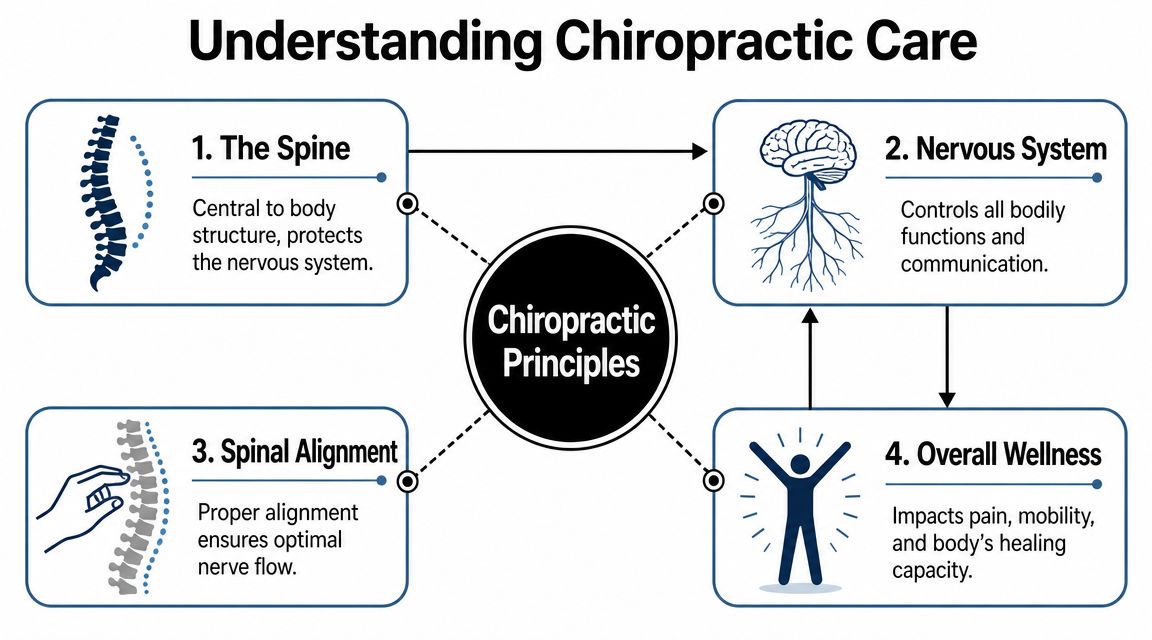
Think of it like tuning an instrument
A body in pain often isn't broken. It's out of tune.
If one segment of the spine or one joint in the pelvis loses motion, nearby muscles tighten to protect it. Other joints start moving too much to make up for that restriction. Over time, your body can still function, but it does so inefficiently. That's when everyday movements begin to feel heavier, tighter, or more painful than they should.
An adjustment is a precise manual input to a restricted joint. The intent isn't force for its own sake. It's to improve motion where motion is lacking.
What changes after an adjustment
When the right area is treated, patients often notice a few practical shifts:
- Movement feels easier because one region isn't dragging the rest of the body into compensation.
- Muscle guarding eases since the tissues no longer have to splint around the same restriction.
- Posture improves naturally because the body isn't fighting against as much asymmetry.
- Exercise becomes more productive because the joint can now move through a cleaner pattern.
That last point is important. Adjustments help, but they don't replace strength, endurance, and motor control. They create an opening. What you do with that opening determines whether results last.
Why the nervous system still matters
People sometimes hear that the spine affects the nervous system and assume that means chiropractic is making broad claims about every health condition. A more practical way to understand it is this: the spine houses and protects the nerve pathways that coordinate movement, sensation, and reflexive muscle activity. When a joint is stiff and tissues are irritated, the body changes how it moves and perceives load.
That's why better mechanics can improve how you feel and function. Not by magic. By reducing mechanical stress and helping the body organize movement more efficiently.
Practical rule: The best adjustment is the one that improves what you can do afterward, walking, turning, lifting, sitting, sleeping, or training.
If you want a clearer breakdown of what happens during treatment, this explanation of how a chiropractic adjustment works gives a useful patient-level overview.
Evidence-Based Benefits for Health and Wellness
Good care should produce changes you can feel and explain. Less pain. Better motion. Better tolerance for work, exercise, sleep, and normal daily tasks.
The strongest evidence in chiropractic care tends to center on musculoskeletal pain, especially back pain. In one comparative-effectiveness trial cited by the American Chiropractic Association, 94% of patients receiving manual-thrust manipulation achieved at least a 30% reduction in back pain, compared with 54% of medical-care recipients, and patient satisfaction for chiropractic care reached 90% for acute patients in the same evidence summary from the ACA's key facts page.
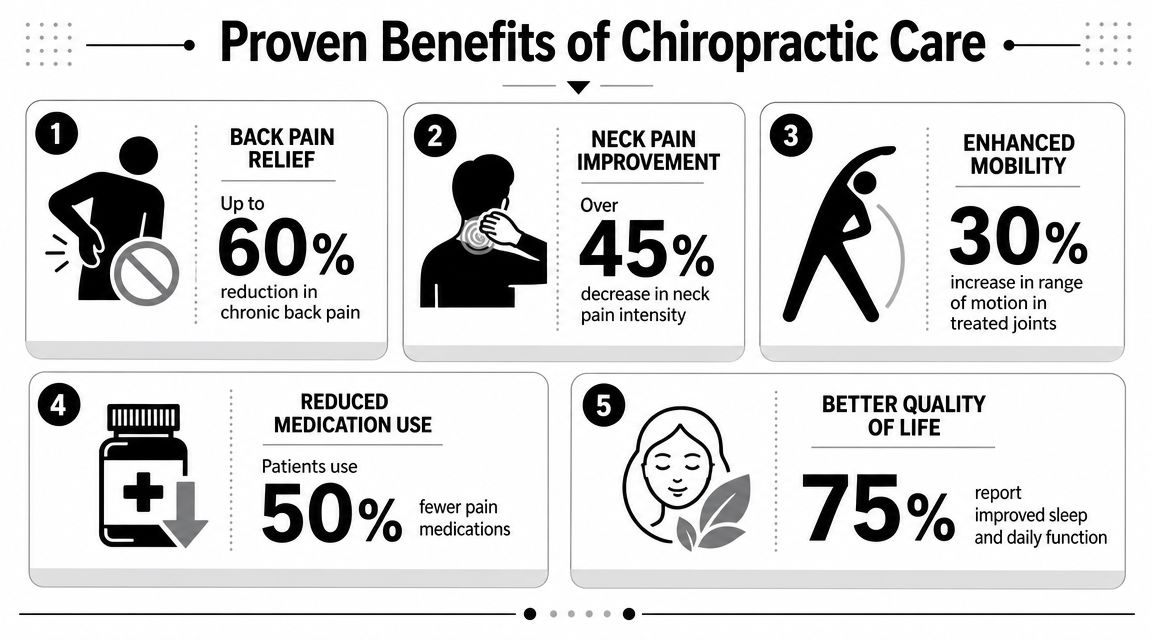
What those numbers mean in practice
Those results don't mean every condition responds the same way. They do mean chiropractic care has a strong place in conservative treatment for the right patient.
A few reasons it tends to work well for mechanical pain:
| Focus area | Why it matters clinically |
|---|---|
| Joint mobility | Restricted joints often drive protective muscle tension and altered movement patterns. |
| Pain-sensitive tissues | When load is distributed better, irritated muscles and soft tissues usually settle faster. |
| Function | People care about outcomes they can live with, sitting longer, sleeping better, turning the head, lifting safely. |
| Patient experience | High satisfaction usually reflects feeling heard, examined properly, and treated with a clear plan. |
What chiropractic does well, and what it doesn't
Chiropractic care does well when the problem is mechanical. That includes many cases of low back pain, neck stiffness, some headaches linked to neck dysfunction, and joint-related movement limits.
It does not work well as a substitute for proper diagnosis. If the pain source is inflammatory, traumatic, infectious, or neurologic in a progressive way, manipulation alone is not the answer. Patients do best when providers know the difference.
Evidence matters, but fit matters just as much. The right treatment for the wrong problem is still the wrong treatment.
That's why the best chiropractor health and wellness approach is evidence-based and selective. It doesn't promise everything. It targets the cases where biomechanics, movement quality, and conservative care can make a meaningful difference.
An Integrated Team Approach to Healing
An adjustment can restore motion. It can't, by itself, rebuild endurance in a deconditioned core, retrain balance after surgery, or calm every soft-tissue trigger point that developed around an injury. That's why integrated rehab works better than isolated treatment for many patients.
The most useful model is simple. One therapy opens the door. Another helps the body keep the change.
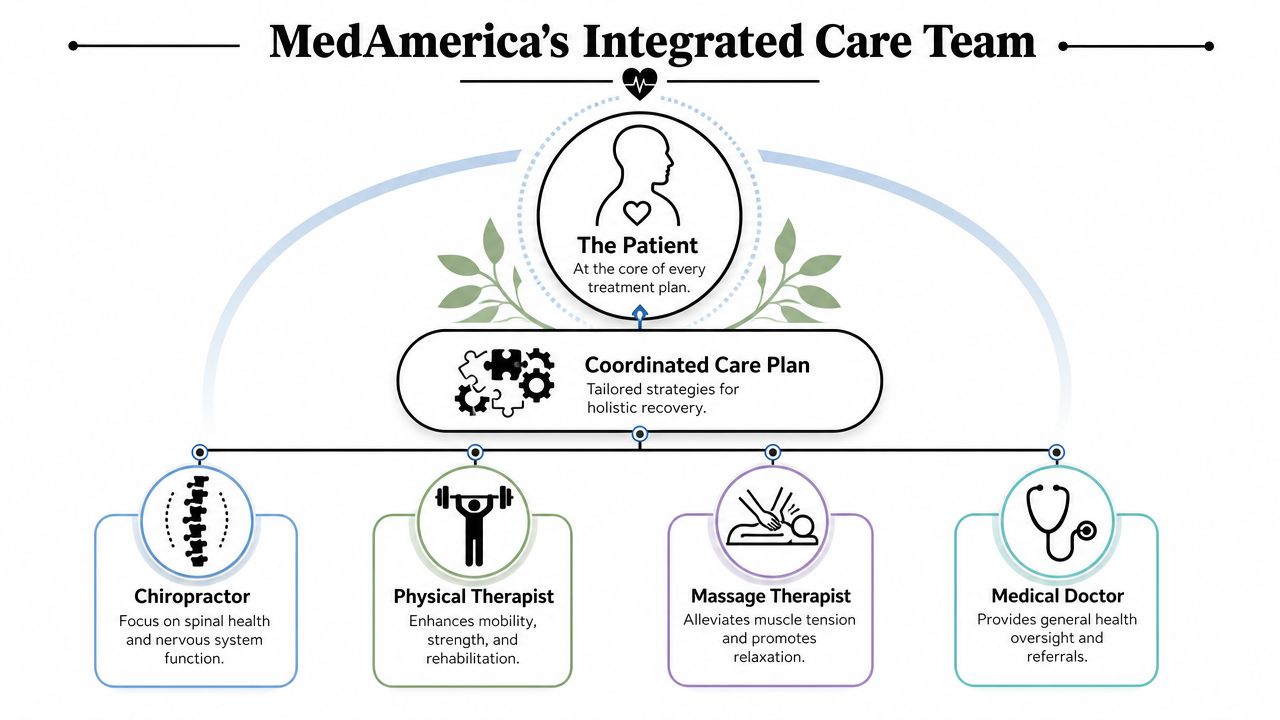
How the pieces fit together
A coordinated rehab plan often looks like this:
- Chiropractic care first: A restricted spinal or pelvic joint is treated to improve motion and reduce mechanical strain.
- Physical therapy next: Once movement improves, targeted exercise builds control so the body doesn't slide back into the same compensation.
- Soft-tissue treatment as needed: Massage or hands-on muscle work can reduce guarding that keeps a joint from staying mobile.
- Medical oversight when appropriate: If symptoms don't behave mechanically, another provider may need to evaluate medication issues, imaging needs, or specialty referral.
A common example with sciatica
Take a patient with leg pain from low back irritation. If the lumbar spine and pelvis are moving poorly, the body often shifts load into one side. Glute strength drops off. Hamstrings and paraspinals tighten. Sitting gets worse, and walking becomes uneven.
In that case, a chiropractor may improve motion in the involved segments. That creates a short window where the patient can finally perform strengthening and nerve-friendly movement drills without as much guarding. If calf tension or piriformis spasm keeps pulling the area back into irritation, soft-tissue work can help reduce that extra load.
That's the value of coordinated care. Each discipline handles a piece of the same problem.
Where a multidisciplinary clinic can help
For patients who want several services under one roof, MedAmerica Rehab Center's combined chiropractic and physical therapy approach reflects this model. The practical advantage isn't branding. It's communication. When providers work from the same treatment plan, the exercises, manual care, and activity progression tend to support each other instead of competing.
What doesn't work as well
Fragmented care creates predictable problems:
- Too much passive treatment and not enough strengthening.
- Exercise without mobility work when a joint restriction is blocking the pattern.
- Repeated adjustments without addressing lifting mechanics, posture, or work demands.
- Referral delays when red flags are present but the case is treated like routine back pain.
A strong rehab plan doesn't ask one therapy to do every job. It matches the tool to the stage of healing.
What to Expect on Your First Visit to MedAmerica
Most first-time patients are less worried about the treatment than the unknowns. Will anyone listen? Will they rush me? Will I be adjusted right away even if I'm not comfortable with that yet?
A good first visit should answer those questions before treatment begins.

The visit usually starts with your story
The first part is conversation. Not filler. Useful clinical information.
Your provider needs to know what hurts, what makes it worse, what eases it, how long it's been happening, and whether there was a clear trigger like a crash, lift, fall, surgery, or sports injury. They also need to know what you want back. Sleeping through the night, walking without limping, sitting at work, returning to the gym, or getting through the day with less fear of movement.
Then comes the exam
A thorough exam usually includes:
- Movement testing to see which motions provoke symptoms and which ones are limited.
- Orthopedic and neurologic screening to check strength, reflexes, sensation, and symptom patterns.
- Palpation and joint assessment to identify areas of stiffness, guarding, and tenderness.
- Functional observation such as posture, gait, sit-to-stand pattern, or how you bend and rotate.
Treatment decisions should be based on this, not on a generic template.
A careful exam often reassures patients before treatment ever starts. People feel better when they understand what's happening and why.
If you want a preview before booking, this guide on what to expect at a first chiropractic visit walks through the process in patient-friendly language.
Treatment is based on findings, not pressure
Sometimes an adjustment is appropriate on the first day. Sometimes the better move is soft-tissue treatment, guided exercise, activity modification, or referral for another opinion before manipulation. The right answer depends on the exam.
That also means you should expect explanation. A clinician should tell you what they think is going on, what the treatment options are, and what the early goals look like.
This short video gives a helpful sense of the visit flow many patients want clarified before they come in:
What helps patients feel comfortable
Patients usually do better on day one when they:
- Wear easy-to-move-in clothing so movement testing is simple.
- Bring imaging or reports if they've had prior scans, surgery, or specialist visits.
- Write down key questions instead of trying to remember them during the exam.
- Say clearly what they're nervous about, whether it's pain, popping sounds, prior injuries, or insurance logistics.
A first visit should feel collaborative. You're not there to be talked into care. You're there to get examined properly and decide on the next step with clear information.
Maintaining Your Wellness Beyond the Clinic
The clinic can reduce pain and restore movement. Your daily habits decide whether those gains stick.
That's the part many patients underestimate. The body learns from repetition. If you sit in the same slumped posture, ignore hip stiffness, skip recovery sleep, and return to lifting poorly, symptoms usually come back. If you build better movement into the day, you lower the chance of repeating the same flare-up.
A simple home checklist that actually helps
Try this as a baseline routine:
- Change position often: If you work at a desk, stand up regularly, walk a short lap, and reset your posture before stiffness builds.
- Open the hips and chest: Tight hip flexors and rounded shoulders often feed low back and neck strain.
- Do a brief mobility circuit: A few minutes of controlled spinal rotation, hip mobility, and shoulder movement can keep joints from getting sticky.
- Train support, not just stretch: Stretching feels good, but long-term stability usually comes from strengthening the muscles that hold alignment under load.
- Protect sleep setup: Pillow height and sleeping position affect how the neck, shoulder, and low back recover overnight.
Keep the plan realistic
For many, an elaborate routine isn't necessary. They need something they'll repeat.
A workable approach might be a short morning mobility sequence, a posture reset midday, a walk after dinner, and two or three strength sessions a week. That's enough to reinforce many of the improvements made in care.
The best wellness routine is the one you'll still do on a busy Tuesday.
Nutrition and joint support
Food won't replace treatment for a mechanical problem, but hydration, protein intake, and a generally anti-inflammatory eating pattern can support tissue recovery. Some patients also ask about supplements for joint comfort and long-term support. If you're sorting through options, this guide to best joint health supplements is a practical starting point for questions to discuss with your clinician.
A chiropractor health and wellness plan works best when care in the clinic and habits at home are pulling in the same direction.
Frequently Asked Questions About Chiropractic Care
When should I see a chiropractor, and when should I see another specialist first
This is the most important question.
Mainstream clinical guidance treats chiropractic as part of a medical team, not as a replacement for triage. The Cleveland Clinic notes that red flags that may require a different specialist first include progressive neurologic symptoms, fracture risk, or signs of infection, while most mechanical pain is suitable for conservative care in its overview of chiropractic treatment and when it fits.
A simple rule helps. If your pain is linked to posture, lifting, stiffness, or movement and there's no major trauma or worsening nerve loss, conservative care is often a reasonable starting point. If you have increasing weakness, numbness that's progressing, fever with back pain, suspected fracture, or severe trauma, get medical evaluation first.
What is the popping sound during an adjustment
It isn't bones grinding or “going back into place” in a dramatic way. The sound is commonly related to pressure changes in the joint. Some adjustments make that sound. Some don't. The presence or absence of a pop doesn't tell you whether treatment worked.
What matters is whether movement improves and symptoms calm down afterward.
Will I need to keep going forever
No responsible clinician should make that decision on day one.
Some people need short-term care to settle an acute flare. Others with recurrent stiffness, demanding jobs, prior injuries, or chronic movement problems may choose occasional maintenance because they function better that way. The right plan depends on your goals, your exam findings, and how your body responds.
How do scheduling and communication usually work
Practical access matters more than clinics admit. People in pain don't want to chase phone tags, wait days for a callback, or guess what paperwork to bring. That's one reason some practices use tools like Rosie's chiropractic answering service to make scheduling and patient communication more consistent outside standard front-desk flow.
At a minimum, a clinic should make it easy to verify insurance, explain first-visit steps, and tell you what kind of provider you're booked with and why.
If you're dealing with back pain, neck stiffness, sciatica, post-accident symptoms, or recovery after surgery, the next step doesn't need to be complicated. MedAmerica Rehab Center provides chiropractic care, physical therapy, acupuncture, and related rehabilitation services in Deerfield Beach, with treatment plans built around the problem being treated and the function you want back.
MedAmerica Rehab · Deerfield Beach
Talk to a clinician about your pain
Physical therapy, chiropractic, acupuncture and shockwave therapy under one roof, since 1995. Same-day appointments are available.
Mon–Thu 8:00 AM – 6:30 PM · Fri 8:00 AM – 3:00 PM