
Cara Heating Pads: Safe Pain Relief for Deerfield Beach
After a long day at a desk, a drive home, or time spent lifting and reaching, many Deerfield Beach residents reach for a heating pad before they do anything else. Warmth feels inviting when your lower back is stiff, your shoulders are tight, or arthritis has made a joint difficult to move.
That instinct can be useful, but a heating pad works best as part of a deliberate home-care plan. Cara heating pads may provide comfortable, controlled warmth, yet the right body area, setting, timing, and follow-up movement matter more than just turning the heat on. At our Deerfield Beach rehab clinic, we use heat to prepare patients for mobility and exercise, not to replace assessment or active rehabilitation.
Why Heat Therapy Works for Common Pain
We see the same pattern every day. Someone arrives after hours of computer work with a rigid neck, or after an old sports injury with a lower back that feels locked. They often report that warmth helps them relax almost immediately. That soothing response is real, but it isn't the same as repairing an injured structure.
Heat warms the skin and superficial tissues, encourages local blood flow, and can reduce the feeling of muscle guarding. A guarded muscle stays partially contracted because the body is trying to protect a painful area. Gentle warmth can make that tension easier to release, which may help you move with less discomfort. The benefit is usually greatest when heat is followed by walking, stretching, or prescribed exercise.
Clinical rule: Heat should make movement easier. If it only allows you to stay still while the underlying problem continues, the treatment is incomplete.
Heat or cold depends on the problem
Heat generally suits muscle stiffness, chronic joint discomfort, and recurring back tension. Cold is often more appropriate when swelling, acute irritation, or a recent impact is prominent. Applying heat to a freshly injured, visibly swollen area may increase discomfort rather than settle it.
For low-back pain, the strongest practical support favors steady, low-level warmth that allows movement, rather than very hot, brief applications. Reviews report improvements in pain and function, while also noting that the evidence base remains limited and needs stronger trials. That makes technique and clinical judgment important, especially when pain travels into a leg, causes weakness, or includes persistent numbness.
The growing consumer interest reflects this shift toward home symptom management. One industry estimate places the global heating-pad market at $61.25 billion in 2025, projecting $65.71 billion in 2026, equivalent to 7.3% year-over-year growth, with a projected $81.48 billion by 2029. These are market projections, not proof that a pad will resolve your condition, so choose the device for safe use and pair it with an active plan. Read the heating-pad market estimate.
Understanding Heating Pad Types and Best Uses
The best pad depends on the body area and what you'll do after applying it. A flat electric model may be comfortable across the lumbar region, but it can be awkward around a wrist or shoulder. A small pack may fit a joint better, yet lose warmth sooner or require reheating.
Electric pads for steady home treatment
Electric pads provide consistent, adjustable warmth and are practical when you're resting at home. They suit broad areas such as the lower back, upper back, or thigh, particularly when the aim is to warm tissue before mobility work. Check that the control is easy to reach and that the pad has overheat protection and automatic shutoff.
Typical major-market electric devices operate between 50 and 105 watts, with common temperature ceilings around 158 to 176°F and automatic shutoff timers around two hours. Those specifications describe device benchmarks, not a recommendation to use the highest setting or the longest cycle. Review the evidence and device benchmarks for superficial heat.
Moist heat and microwavable packs
Moist heat can feel more penetrating for stubborn muscle stiffness because damp warmth transfers through the surface efficiently. Use a manufactured moist-heat insert according to its instructions, or place a suitable barrier between your skin and a warm pack. Never apply a microwavable pack directly from the microwave without checking for uneven hot spots.
Microwavable gel packs are useful for the neck, shoulder, or wrist because they can conform to smaller areas. For carpal tunnel symptoms or wrist strain, a contoured pack is usually more practical than a flat pad that leaves gaps around the joint.
Disposable and chemical wraps
Disposable wraps are portable and convenient during travel or a workday. Their trade-off is limited control. You can't always fine-tune the temperature, and the wrap may continue producing warmth after you decide the area has had enough.
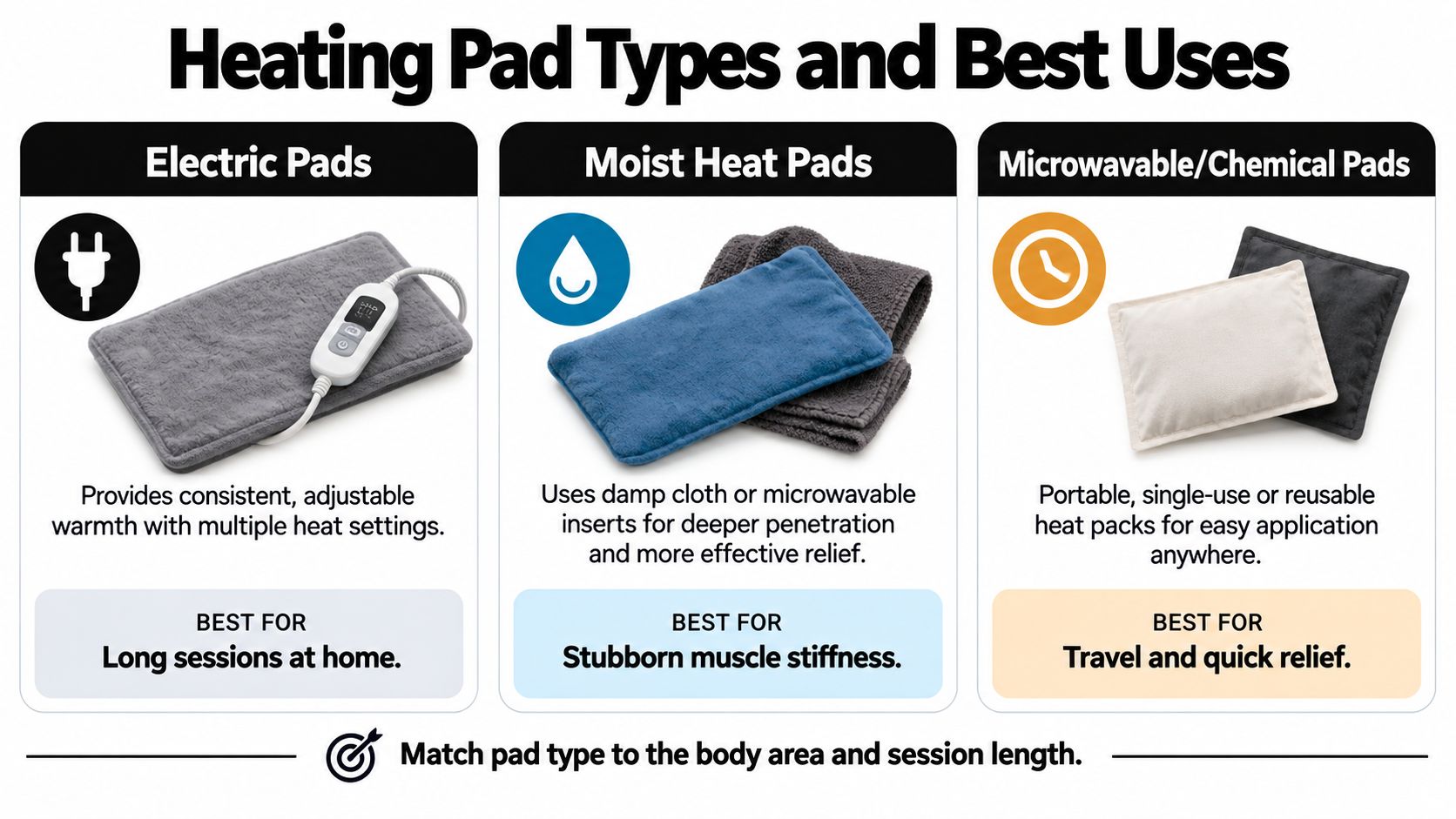
A useful selection test is simple: choose the most controllable pad that fits the painful area, then plan movement after the application rather than treating warmth as the entire intervention.
Applying Heat Correctly by Body Area
Placement matters as much as the product. A pad that sits unevenly can create a hot spot, while one that covers the wrong structure may relax nearby muscles without addressing the area that limits movement.
Lower back
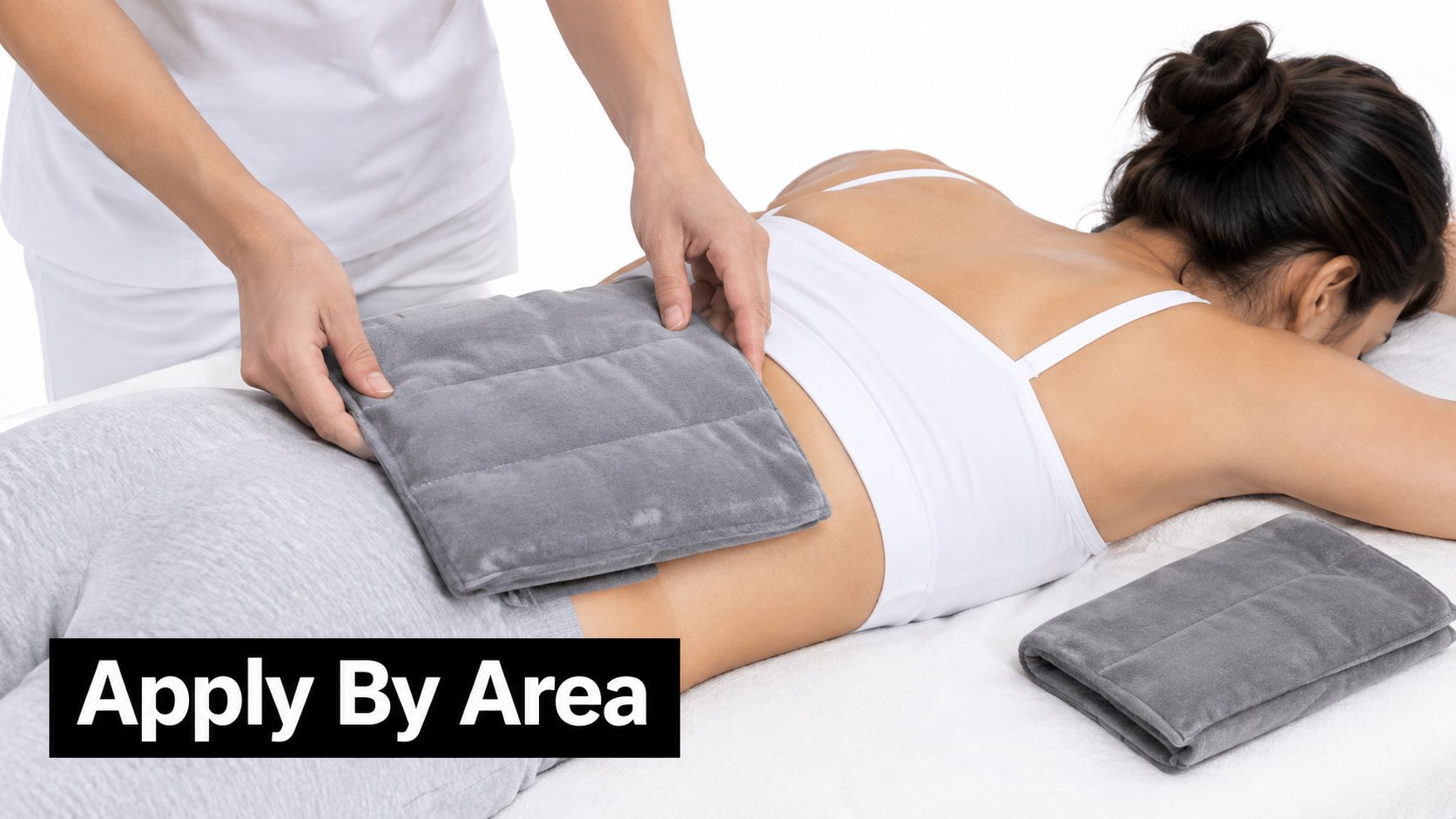
For recurring low-back stiffness, use a wrap or pad that maintains comfortable, even warmth across the lumbar region. Secure a wrap without tightening it so much that it restricts breathing or movement. Stay mobile during or immediately after the application, with an easy walk or the exercises prescribed for you.
Avoid lying on top of an electric pad. Your body weight can compress the device and concentrate heat against the skin. A thin clothing layer or manufacturer-approved barrier can also reduce direct thermal exposure.
Neck and shoulders
A small contoured pack is easier to position than a large flat pad. Place it across the tight muscles beside the neck and over the shoulder, while keeping the head in a neutral position. Don't force your neck into flexion over the pack, since that posture can maintain the very strain you're trying to reduce.
After warmth, try gentle shoulder blade movements or an easy neck range-of-motion exercise. Stop if pain becomes sharp, radiates into the arm, or produces increasing tingling.
Wrist and forearm
Carpal tunnel symptoms require restraint. Evidence for locally applied heat in chronic pain conditions is limited, so heat shouldn't be treated as a stand-alone solution. A contoured pad or moist-heat option can target the wrist and forearm, but use a moderate setting and stop when the device timer ends rather than increasing the temperature to chase relief. Review practical guidance on heat and chronic pain00372-1/fulltext).
For a swollen ankle or another recent injury, compare heat with cold and follow condition-specific guidance such as when to use ice and when to use heat for an ankle sprain. Heat isn't automatically appropriate just because the area hurts.
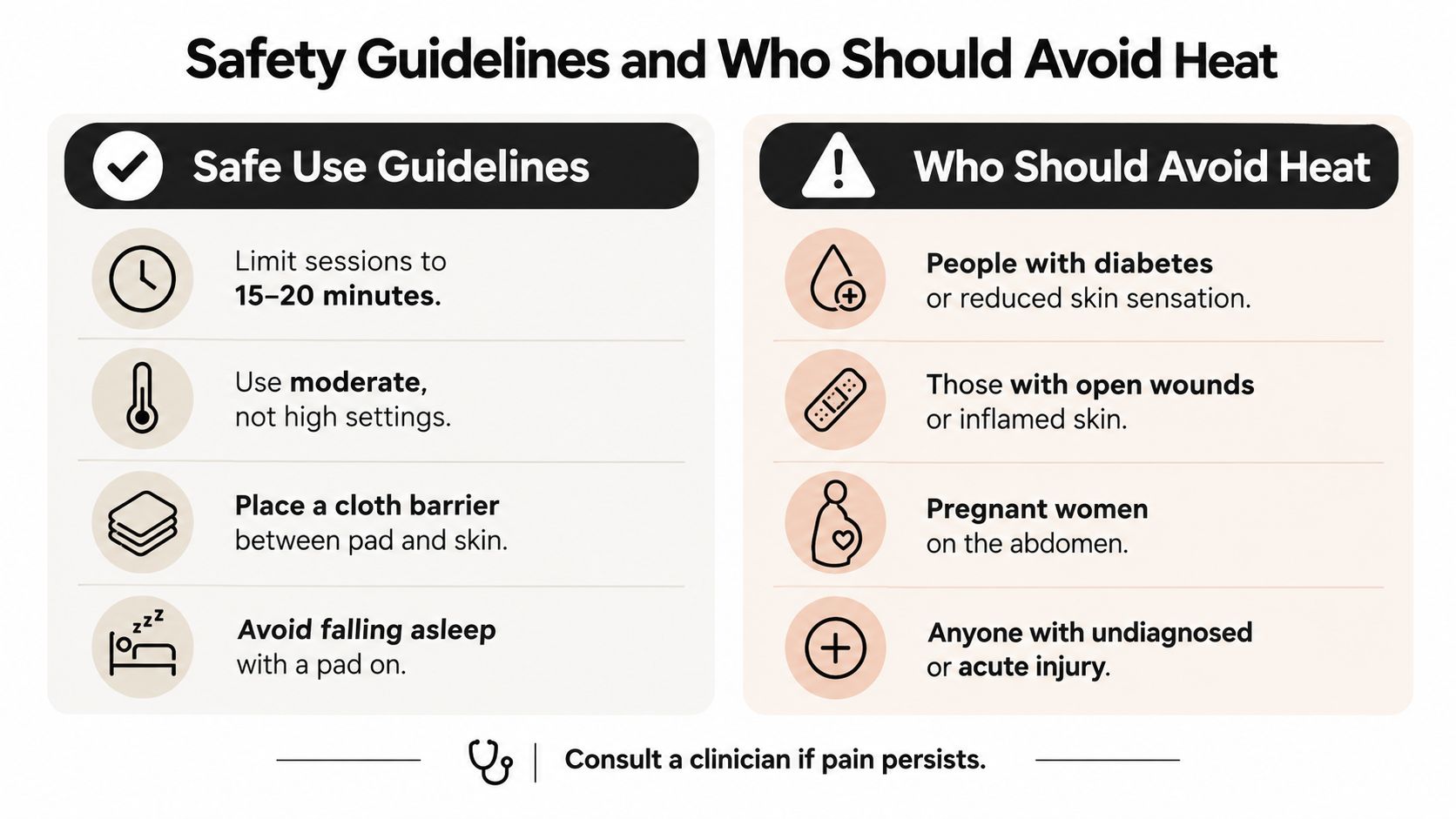
Safety Guidelines and Who Should Avoid Heat
Heat injuries often happen gradually. A person may fall asleep, fail to notice a hot spot, or keep using the pad because the discomfort feels tolerable. That risk increases when sensation or circulation is impaired.
Independent medical literature describes heating-pad injuries that include deep tissue damage, rhabdomyolysis, and acute kidney injury. A review of burns from body-heating devices concluded that better education and labeling could prevent many injuries. Review the safety information on heating-pad injuries and prevention.
People who need particular caution
Cara's product guidance stresses automatic shutoff after 60 minutes and warns against use by people with diabetes, paralysis, poor circulation, or anyone who is sleeping or unconscious unless closely attended. Older adults with reduced sensation also need careful supervision because skin damage may develop before the person feels excessive heat.
Don't use a heating pad over open wounds, damaged skin, or an area you can't monitor. Ask a clinician before applying heat to an undiagnosed injury, an acutely swollen joint, or the abdomen during pregnancy.
Stop when the skin gives you a warning
Remove the pad immediately if you notice burning, unusual redness, numbness, blistering, mottled skin, or worsening pain. A comfortable sensation is the target. More heat isn't more therapeutic, and skin color may not return to normal quickly after an injury.
Use a barrier when appropriate, inspect the skin after treatment, and keep the control within reach. Practical guidance on heat packs in rehabilitation can help you understand how clinicians use thermal modalities without allowing them to replace active care.
Combining Heating Pads with Physical Therapy
Heat has its greatest value when it changes what you can do next. In rehabilitation, moderate warmth may reduce guarding enough for a patient to perform a stretch, activate a weak muscle, or walk with a more natural stride. The exercise creates the lasting training effect. The pad makes the starting point more manageable.
A practical sequence looks like this:
- Check the symptom pattern. Don't heat an area that is newly swollen, numb, or showing unexplained neurological symptoms.
- Apply controlled warmth. Keep the setting comfortable and remain awake and able to monitor your skin.
- Move afterward. Use the mobility drills, strengthening exercises, or walking plan provided by your therapist.
- Reassess the response. Relief that lasts through movement is more useful than relief that disappears as soon as the pad is removed.
This approach is relevant after orthopedic surgery, during recovery from an auto accident, and with recurring conditions such as sciatica or arthritis. Heat can reduce stiffness before activity, but it can also temporarily dull pain. Don't use that temporary comfort to push through weakness, sharp pain, or symptoms that travel down an arm or leg.
Home use has become a major part of conservative pain management. One industry estimate reports that about 65% of consumers prefer non-invasive thermal therapy over pharmaceutical options, while home use represents approximately 55% of heating-pad demand. See the industry estimates on consumer preferences and home use. Preference doesn't replace diagnosis, but it reinforces the need to teach patients how to use these tools responsibly.
Quick Decision Guide for Common Pain Conditions
Use the table as a starting point, not as a substitute for an examination. Temperature controls vary between devices, so select a low to moderate setting that feels soothing rather than hot. If pain is new, severe, radiating, or associated with weakness or loss of sensation, get professional guidance before relying on home heat.
| Condition | Recommended Pad Type | Temperature Setting | Duration | Timing |
|---|---|---|---|---|
| Recurring low-back stiffness | Electric wrap or broad, flexible pad | Low to moderate, steady warmth | A short monitored session | Before walking or prescribed mobility work |
| Neck and shoulder tension | Small contoured microwavable or moist-heat pack | Moderate and comfortable | Brief application with skin checks | Before gentle range-of-motion exercises |
| Arthritis-related stiffness | Flexible gel pack or controllable electric pad | Low to moderate | Short session, then reassess | Before activity, especially after rest |
| Carpal tunnel symptoms | Contoured wrist or forearm pack | Moderate, never maximum | Stop when the device timer cycles off | Before gentle movement, not as stand-alone treatment |
| Post-surgical recovery | Only the modality approved by your surgeon or therapist | Clinician-directed | Follow the prescribed protocol | Use around the rehabilitation plan, not over unhealed or altered skin |
For arthritis, heat may fit into a broader routine that includes joint-friendly strengthening, mobility work, sleep support, and medical evaluation. Patients comparing non-drug options may also find useful background in this resource on natural arthritis remedies and peptides, but supplement or peptide discussions shouldn't replace an individualized treatment plan.
Carpal tunnel deserves particular caution because tingling and numbness can signal nerve compression rather than simple muscle tightness. Locally applied heat may offer comfort, but persistent or worsening symptoms, grip weakness, or symptoms that interfere with sleep warrant evaluation.
For post-surgical patients, the incision, sensation, circulation, and surgeon's instructions determine whether heat is appropriate. Don't place a pad over an incision or use warmth to conceal a complication. A clinician can help you choose between heat, cold, exercise, manual therapy, and other rehabilitation options.
At MedAmerica Rehab Center, our Deerfield Beach team combines individualized physical therapy with hands-on care and prescribed movement for back pain, arthritis, carpal tunnel symptoms, and post-surgical recovery. Schedule an evaluation if home heat provides only temporary relief, or visit the clinic to build a safer plan that connects symptom control with measurable mobility goals.
MedAmerica Rehab · Deerfield Beach
Talk to a clinician about your pain
Physical therapy, chiropractic, acupuncture and shockwave therapy under one roof, since 1995. Same-day appointments are available.
Mon–Thu 8:00 AM – 6:30 PM · Fri 8:00 AM – 3:00 PM