
Back Pain Relief Pills: Safe Use & Therapy Options
You wake up, swing your legs off the bed, and your back grabs. Maybe it happened after yard work, a long drive, lifting a laundry basket, or seemingly for no clear reason at all. The first thought is usually simple: what pill can I take so I can get through the day?
That instinct makes sense. When your back hurts, you want relief fast. Back pain relief pills can help, especially when pain is new, sharp, or tied to irritation and inflammation. But as a physical therapist, I also see the other side. Many people keep rotating through ibuprofen, naproxen, acetaminophen, or stronger prescriptions while the underlying problem stays in place.
Pills can reduce symptoms. They usually don't fix why your back is overloaded, stiff, weak, irritated, or moving poorly. If you understand that difference early, you can use medication more safely and make better decisions about when to stop chasing temporary relief and start solving the problem.
Why Reaching for a Pill Is Only Half the Story
A lot of back pain starts with a small moment that turns into a bigger problem. You bend, twist, carry, sit too long, sleep awkwardly, or get up too quickly. Then the muscles tighten, the joints feel blocked, and every movement seems to remind you something is wrong.
That's when many people head straight to the medicine cabinet.
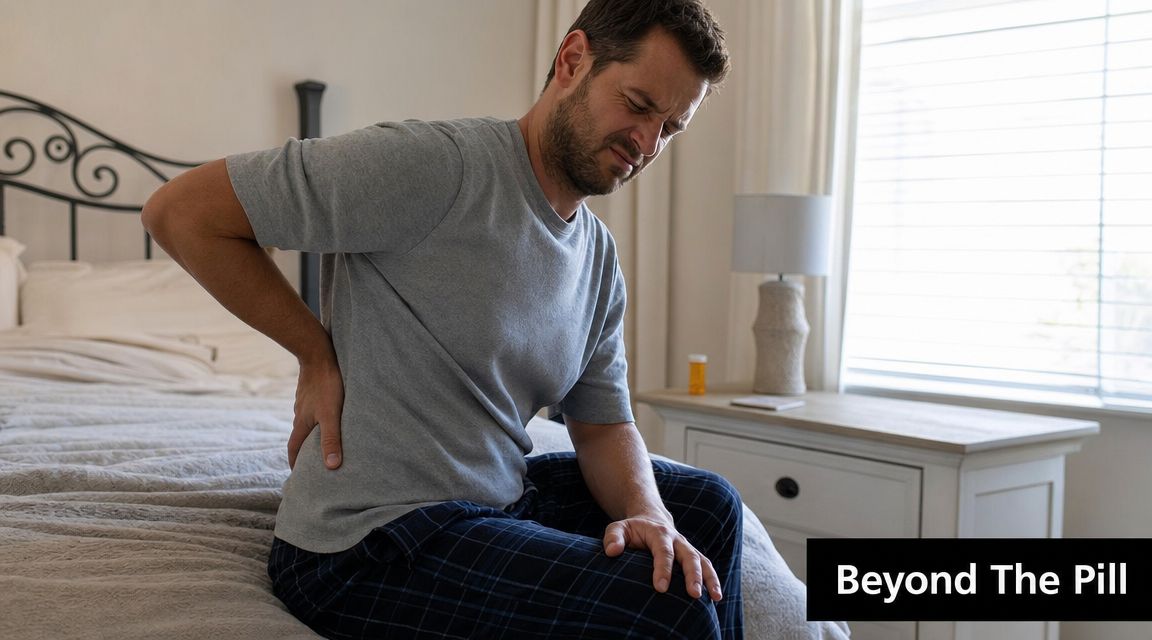
For short-term relief, that can be reasonable. A major evidence review found that NSAIDs, acetaminophen, and skeletal muscle relaxants have good short-term effectiveness for low back pain, with benefits commonly measured as a 10 to 20 point improvement on a 100-point pain scale or a relative risk of 1.25 to 2.00 for clinically significant pain relief. The same review also found insufficient evidence to name one medication as clearly superior overall, and it concluded that systemic corticosteroids are ineffective for low back pain (evidence review of low back pain medicines).
What pain relief pills can do
Medication can make it easier to:
- Get through the workday when pain is flaring
- Sleep a little better during an acute episode
- Move enough to avoid guarding and stiffness
- Participate in rehab instead of avoiding all activity
That matters. Pain control has value.
What pills usually cannot do
They usually can't correct:
- A movement problem such as poor hip mobility or repeated bending strain
- Muscle imbalance in the trunk, glutes, or legs
- Joint stiffness that keeps forcing your lower back to compensate
- Nerve irritation that needs evaluation, positioning changes, or targeted treatment
- A sleep setup issue, where it helps to restore spinal alignment with a better mattress instead of relying on another dose before bed
Pills are often a bridge. Trouble starts when people mistake the bridge for the destination.
That's the practical mindset I want patients to have. Use medication carefully when it helps, but keep asking the more important question: what is driving the pain in the first place?
Navigating Over-the-Counter Back Pain Pills
If you're standing in the pharmacy aisle looking at labels, the two main over-the-counter choices are usually NSAIDs and acetaminophen. They're both pain relievers, but they don't work the same way, and they aren't equally useful for every kind of back pain.
NSAIDs often make more sense for acute back pain
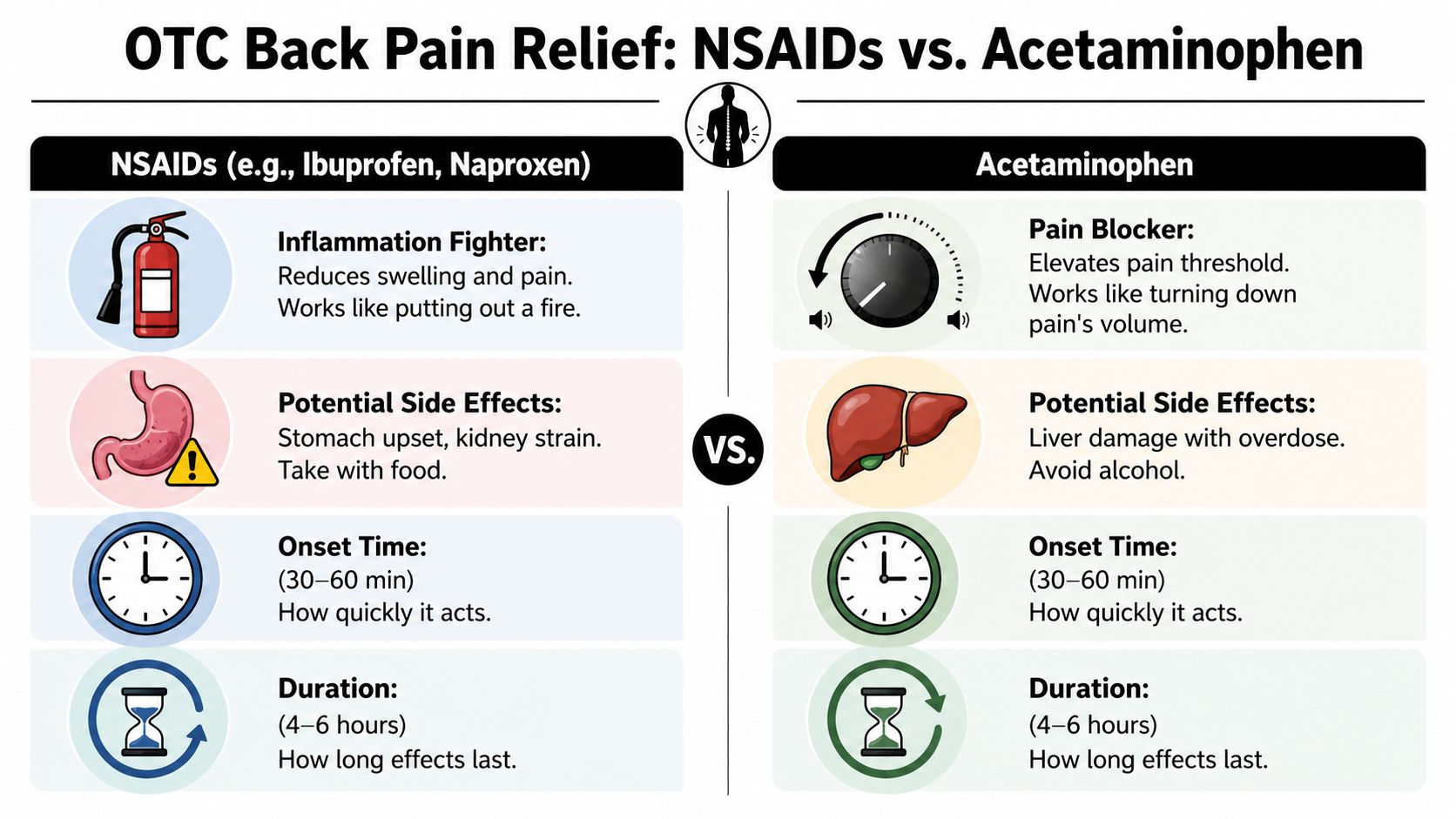
NSAIDs include familiar products like ibuprofen and naproxen. Think of them as the better option when your back pain has an inflammatory component. If the area feels irritated, sore after a strain, or more painful with movement after overdoing it, these are often the first pills people try.
A GoodRx clinical review notes that NSAIDs are the best-supported first-line back pain relief pills for many patients because they reduce the inflammatory component of pain. The same review also notes that acetaminophen is no longer a first-line recommendation for chronic low back pain because findings showed it was not effective for treating lower back pain (GoodRx review on pain relievers for back pain).
Acetaminophen works differently
Acetaminophen doesn't target inflammation the way NSAIDs do. A simple way to explain it is this: if NSAIDs act more like putting out a small fire, acetaminophen acts more like turning down the pain volume. Some people prefer it when they can't tolerate NSAIDs well, but it's usually a less convincing choice when the back pain seems tied to swelling or tissue irritation.
Here's the side-by-side view:
| Option | Common examples | Best fit | Main caution |
|---|---|---|---|
| NSAIDs | Ibuprofen, naproxen | Pain with an inflammatory feel, recent strain, soreness that worsens with activity | Can irritate the stomach and may not be ideal for some people with kidney or other medical issues |
| Acetaminophen | Tylenol | Mild to moderate pain when NSAIDs aren't a good fit | Too much can injure the liver |
How I explain the choice to patients
If your back flared after lifting, twisting, sports, or a physically demanding day, an NSAID often fits the pattern better. If you mainly want a gentler pain reliever and inflammation doesn't seem to be the dominant issue, acetaminophen may be considered.
Practical rule: Choose the pill based on the pattern of pain, not the brand name you recognize fastest.
Neither option is a magic fix. If a pill helps you move, walk, and tolerate gentle activity, that's useful. If you keep needing it because the same bend, chair, mattress, commute, or movement pattern keeps setting you off, the medication is helping the symptom while the problem keeps reproducing itself.
Understanding Prescription Back Pain Medications
When over-the-counter medication isn't enough, a clinician may consider prescription options. For back pain, the two categories patients ask about most are skeletal muscle relaxants and opioids. They're used for different reasons, and both come with trade-offs that matter.
Muscle relaxants for spasm-driven pain
Muscle relaxants are usually considered when the back is extremely tight, guarded, or in obvious spasm. Patients often describe this as a back that “locks up” or feels impossible to loosen. In that setting, a muscle relaxant may make it easier to sleep, change positions, or begin gentle movement again.
The key point is duration. The evidence for these medications supports short-term effectiveness, not open-ended use. That same major review found short-term benefit for skeletal muscle relaxants along with NSAIDs and acetaminophen, but it also concluded that the evidence didn't show one medication was clearly best overall because benefits have to be weighed against harms.
Opioids for severe pain and limited situations
Opioids are stronger pain medications that blunt pain signaling. In practice, they're generally reserved for severe pain, usually when the situation is acute and more conservative options haven't been enough.
That doesn't mean they're the right answer for ordinary mechanical back pain. In rehab settings, the concern is straightforward: a person may feel temporarily more comfortable, but still move poorly, brace heavily, avoid activity, and lose strength while the underlying issue continues.
The real-world trade-offs
Prescription medication can help in the right setting, but patients do best when they understand what each category is and is not meant to do:
- Muscle relaxants may help when spasm is dominating the picture, but drowsiness can limit how useful they feel during the day.
- Opioids may reduce severe acute pain, but they aren't a good substitute for restoring movement and function.
- Neither category corrects mechanics, posture tolerance, lifting strategy, or deconditioning.
If your pain pattern overlaps with arthritis, it may also help to understand how clinicians think about prescription options for arthritis pain relief, because back symptoms sometimes sit beside broader joint pain issues rather than existing on their own.
A useful question to ask your clinician is not just “What can I take?” but “What problem are we treating with this medication?” If the answer is spasm, inflammation, or short-term severe pain, the plan makes more sense. If the answer is merely that you still hurt, it may be time to reassess the diagnosis and the treatment strategy.
Using Back Pain Medication Safely and Effectively
Medication works best when it's used with clear limits. Many problems happen because people double up on active ingredients, stretch “short-term” use into a routine, or keep taking pills while assuming they're harmless because they're common.
In U.S. population data, 10.7% of adults aged 20 and over reported using one or more prescription pain medications in the past 30 days during 2015 to 2018. The same verified guidance notes that for back pain, acetaminophen is commonly recommended first for mild to moderate pain with a daily ceiling of 3,000 mg to reduce liver injury risk. For severe acute back pain, one source notes the CDC recommends using opioids for fewer than 3 to 7 days, and MedlinePlus advises not using narcotics for more than 1 to 2 weeks unless directed otherwise by a clinician (CDC data brief and related prescribing guidance).
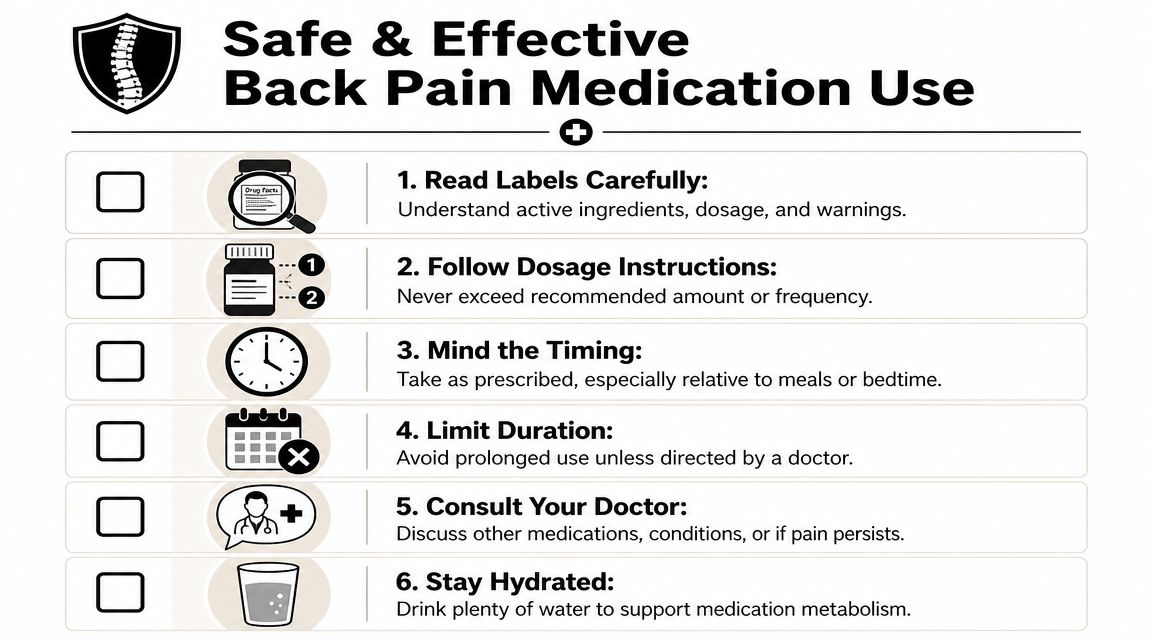
Six practical safety rules
- Read the active ingredient, not just the brand name. Many combination products can overlap more than people realize.
- Respect acetaminophen limits. The ceiling listed above matters because accidental overuse can harm the liver.
- Use the shortest effective window. If you need stronger medication longer than expected, that's a reason to check the diagnosis.
- Watch for stomach issues with NSAIDs. If a medicine upsets your stomach, that isn't trivial.
- Expect drowsiness with some prescriptions. Muscle relaxants and opioids can affect alertness.
- Bring your full medication list to appointments. Safe decisions are much easier when your clinician can see the whole picture.
A short visual refresher can help if you're sorting through labels and timing:
What safe use looks like in daily life
Safe use isn't just about dosage. It's also about purpose. If the pill lets you take a short walk, do your exercises, change positions more comfortably, or get through a temporary flare, that's a good use. If it becomes the only strategy, the risk goes up while the benefit often plateaus.
For people who want a broader refresher on medication handling and ensuring safe healthcare practices, general safety checklists can be useful, especially when multiple prescriptions are involved.
A medication plan should make you safer and more functional. If it only keeps you numb enough to delay care, it's not doing its full job.
Recognizing When Pills Are Not the Answer
This is the turning point many people miss. A pill may be reasonable at the beginning of a flare, but there's a point where repeating the same strategy stops being sensible. When pain keeps returning, spreads, or starts interfering with normal life, you need more than symptom control.
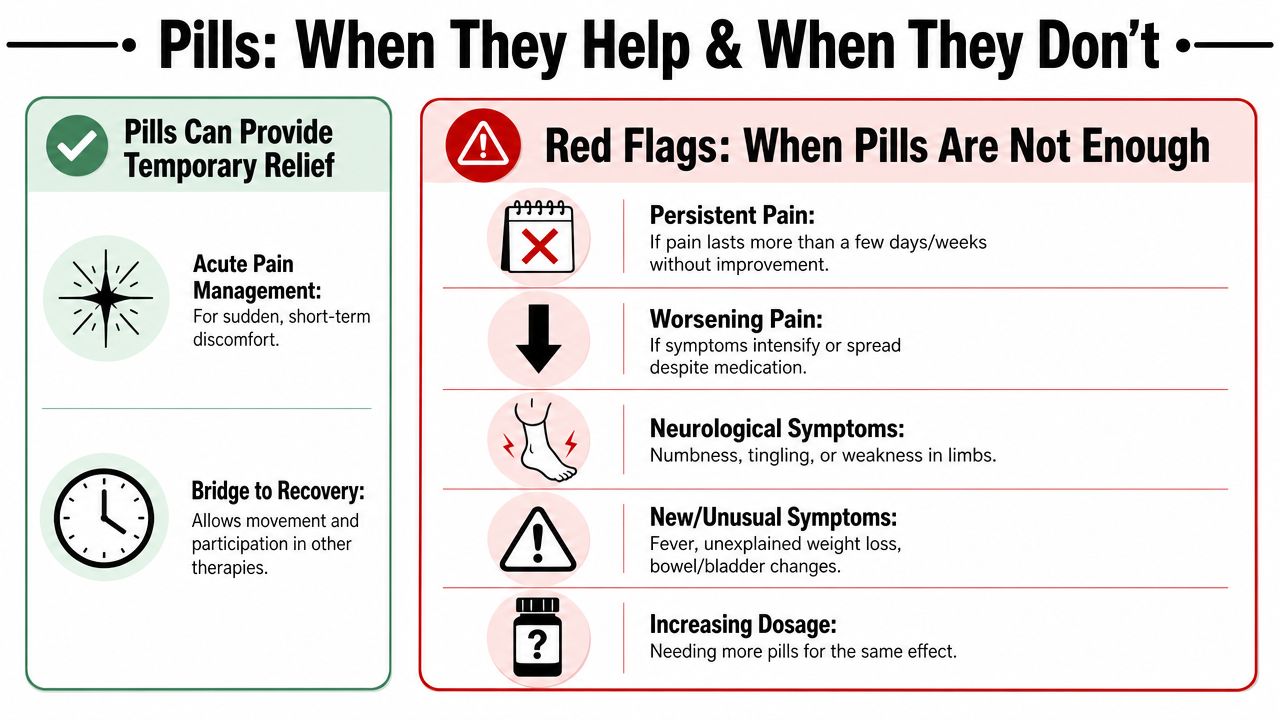
Harvard Health notes that if back pain does not improve after about a week of OTC treatment, or if it disrupts sleep, work, or includes leg symptoms, weakness, or bowel or bladder changes, people should seek medical care. The same guidance emphasizes that medications may offer short-term relief, but physical therapy and exercise are key next steps for mechanical or chronic pain (Harvard Health guidance on back pain treatment).
Signs you've moved beyond self-treatment
Watch closely for these patterns:
- Pain that lingers past the early flare phase and doesn't meaningfully settle
- Pain that wakes you up or ruins workdays, even after trying over-the-counter relief
- Pain running into the leg, especially when it feels sharp, burning, or electric
- Weakness or sensory changes, such as numbness or a heavy-feeling leg
- Bowel or bladder changes, which need prompt medical attention
Why more pills may be the wrong escalation
Chronic and recurring back pain often has a mechanical driver. That could mean poor trunk control, stiff hips, repeated bending overload, nerve irritation, guarding after injury, or a mismatch between your daily demands and your body's current capacity.
In those cases, the better question isn't “What stronger pill is next?” It's “What keeps provoking this?” For some people, sleep setup is part of that pattern, and practical sleep surface guidance on finding the right mattress for back pain can be one small piece of the bigger puzzle.
If you're at the point where medication is only buying a few hours of relief, it makes sense to shift toward treatments that target the cause. A conservative starting place is learning more about how to relieve lower back pain naturally, especially when the issue seems tied to stiffness, posture tolerance, weakness, or repeated daily aggravation.
When back pain changes your sleep, work, or nerve symptoms, the goal should shift from masking pain to restoring function.
Get Lasting Back Pain Relief in Deerfield Beach
The most helpful way to think about back pain relief pills is this: they can calm things down, but they rarely rebuild what your back needs. Lasting improvement usually comes from restoring motion, reducing irritation, improving strength, and changing the patterns that keep bringing pain back.
That's where hands-on care and guided rehab matter. A treatment plan may include soft tissue work for guarded muscles, mobility treatment for joints that aren't moving well, progressive core and hip strengthening, walking progressions, posture changes, and symptom-specific exercise. If nerve pressure is contributing, the plan often includes position strategies and movement choices that reduce aggravation instead of feeding it.
What root-cause care can address
Non-drug care is often aimed at problems medication can't correct:
- Weak support muscles that leave the low back doing too much work
- Restricted mobility in the hips, thoracic spine, or pelvis
- Poor movement habits during lifting, reaching, sitting, and sleeping
- Persistent sciatica-type symptoms that need targeted evaluation
- Fear of movement, which can insidiously keep pain going by reducing activity and strength
A practical local next step
If you live nearby and your pain keeps cycling, a clinic that offers physical therapy and related conservative care can help sort out whether your issue is mostly mechanical, nerve-related, post-injury, or mixed. In Deerfield Beach, one local option is physical therapy in Deerfield Beach, where treatment may include exercise-based rehab, manual care, and other non-surgical approaches based on how your symptoms behave.
The right next step usually isn't dramatic. It's getting examined, identifying what movements trigger or relieve symptoms, and building a plan that helps you function with less dependence on medication. That may also include chiropractic care, acupuncture, or other conservative treatments when they fit the presentation.
If your back pain is recent, pills may help you settle the flare. If it's been hanging on, spreading, or disrupting your life, don't keep asking your body to live on temporary relief. Ask for treatment that helps it move better.
If you're tired of rotating through back pain relief pills and want a plan that focuses on the cause of your pain, MedAmerica Rehab Center offers conservative care for back pain, sciatica, arthritis, injury recovery, and mobility problems in Deerfield Beach. Reach out to schedule an appointment and find out whether hands-on treatment, guided exercise, or a combined rehab approach fits your symptoms.
MedAmerica Rehab · Deerfield Beach
Talk to a clinician about your pain
Physical therapy, chiropractic, acupuncture and shockwave therapy under one roof, since 1995. Same-day appointments are available.
Mon–Thu 8:00 AM – 6:30 PM · Fri 8:00 AM – 3:00 PM