
ACL Injury Rehabilitation: Phases, Timelines, and Recovery
You plant your foot to change direction during a basketball game, feel a sharp pop, and watch your knee buckle underneath you. Within minutes, the joint starts swelling, and ordinary questions become urgent: Is the ACL torn? Do you need surgery? Should you walk on it? How long before you can run again?
ACL injury rehabilitation isn't a single exercise plan or a countdown to a return date. It combines protection, mobility, strength, balance, movement quality, confidence, and sport-specific preparation. The right path may involve structured rehabilitation without immediate reconstruction, or it may include surgery followed by many months of progressive training. The decision should reflect your knee's stability, associated injuries, activity goals, and objective testing, not pressure to choose the fastest-looking option.
The First 72 Hours After an ACL Injury
The player on the basketball court usually knows something serious happened, but the sideline can't confirm exactly what. The safest first step is to stop playing, avoid twisting, and let trained staff assess pain, swelling, visible deformity, circulation, and sensation. If the knee feels unstable, crutches can reduce the chance of another buckle while you arrange medical care.
A swollen knee may reflect bleeding inside the joint, irritation from a sprain, a fracture, or associated meniscus and ligament damage. Ice, compression, and elevation can help control symptoms during this early period. You can find practical guidance on using an ice pack during physical therapy, but cold treatment shouldn't replace an examination.
What happens at urgent care
An urgent-care or emergency clinician may order an X-ray when a fracture needs to be excluded. X-rays don't show the ACL itself, but they can identify bone injury or other findings that change the immediate plan. A hinged brace may be appropriate when the knee needs support during walking, although the clinician or therapist should decide how and when to use it.
Don't force a straight-leg raise or repeatedly test weight bearing on the first day. Severe swelling can temporarily inhibit the quadriceps, so an inability to lift the leg doesn't prove the ACL is completely torn. Likewise, pain and guarding can make a stable knee look unstable, while a determined athlete may temporarily walk better than expected despite significant internal damage.
What the orthopedic visit adds
At the first orthopedic appointment, the clinician will review the injury mechanism, examine joint motion and stability, and consider whether the meniscus or other ligaments may also be involved. An MRI is commonly used to confirm ACL status and assess the menisci, cartilage, bone bruising, and neighboring ligaments.
The first 72 hours are mainly about protection and information gathering. Get the knee examined, control swelling, use support as instructed, and avoid making a surgery decision before the imaging and physical examination provide a clearer picture.
What the ACL Does and How It Tears
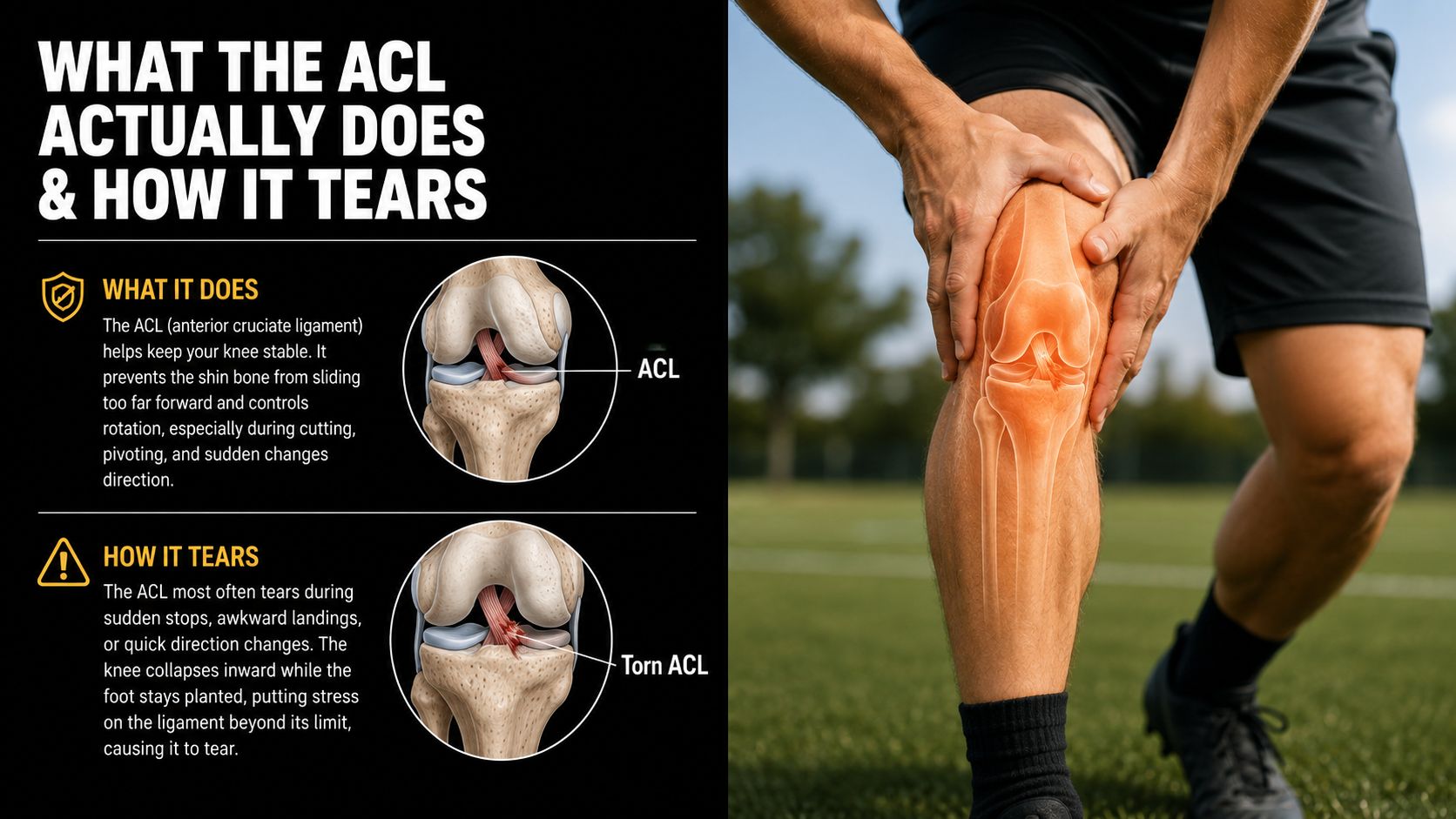
The anterior cruciate ligament is one of two crossing ligaments inside the knee. It prevents the shin bone from sliding too far forward beneath the thigh bone and limits excessive rotation when you cut, land, or decelerate. Its job is less like producing movement and more like setting boundaries for movement when force changes quickly.
The ACL works with the menisci, muscles, joint shape, and other ligaments to keep the knee centered. If one part of that system is injured, the knee may still move, but it can lose control during pivoting, sudden stops, or awkward landings. That distinction helps explain why walking ability alone does not show whether the knee is ready for sport.
Tear location affects the conversation
Clinicians may describe a tear by where the ligament failed:
- Proximal tear: The injury is closer to the ligament's attachment on the thigh bone.
- Mid-substance tear: The ligament tears through its central portion, a common pattern in non-contact injuries.
- Distal avulsion: The ligament pulls away near its attachment on the shin bone, sometimes taking a small piece of bone with it.
They also describe severity. A sprain means the ligament is stretched or damaged without complete disruption. A partial tear leaves some fibers intact. A complete tear usually creates greater mechanical instability, particularly during pivoting.
How the injury happens
A non-contact tear often occurs with the foot planted while an athlete cuts, lands with poor control, stops suddenly, or rotates as the knee collapses inward. A contact injury can push the knee beyond its normal position. It may also combine ACL damage with an MCL sprain, meniscus tear, or other trauma.
The injury mechanism gives the clinician clues about the forces involved, but it does not determine the entire prognosis. MRI findings and hands-on stability testing still matter. An isolated ACL injury may follow a different rehabilitation plan from an injury involving a meniscus repair, bone bruising, or multiple ligaments.
Associated damage can change weight-bearing restrictions, exercise selection, bracing, and the timing of surgery. Those details also shape the questions worth asking at each visit, including which movements are safe now and what tests should be passed before activity increases. Rehabilitation should therefore match the actual injury pattern rather than follow a generic ACL protocol.
Choosing Between Non-Operative and Post-Surgical Rehab
Immediate reconstruction isn't automatically the right first move for every person with an ACL tear. A rehabilitation-first approach can be reasonable for someone with a partial tear, useful passive stability, lower pivoting-sport demands, or a willingness to modify activities. Recent reviews have reported that rehabilitation-first care can produce similar long-term patient-reported outcomes to early reconstruction in many acute ACL ruptures, with delayed surgery reserved for persistent instability, as summarized in this review of ACL management.
That doesn't mean surgery is unnecessary for active people. A complete tear with repeated giving way, a reparable meniscus injury, combined ligament damage, or a goal of returning to cutting and jumping sports may make reconstruction more appropriate. The deciding question is often not just, “Can I live with this knee?” It is, “Can this knee safely meet the demands I want to place on it?”
The two paths in practical terms
| Factor | Non-Operative Rehab | Post-Surgical Rehab |
|---|---|---|
| Main purpose | Restore strength, control, mobility, and confidence while managing instability | Protect the graft while restoring motion, strength, control, and sport capacity |
| Best fit | Selected patients with manageable instability and adaptable activity goals | Patients with persistent instability, high-demand pivoting goals, or associated injuries requiring surgery |
| Early priorities | Swelling control, full motion, quadriceps activation, and safe walking | Incision and graft protection, swelling control, motion, quadriceps activation, and surgeon-specific precautions |
| Bracing and crutches | Used when instability or symptoms make support necessary | Used according to the surgical protocol and functional progress |
| Long-term consideration | Pivoting sports may remain limited if instability persists | A graft restores a mechanical structure, but it still requires progressive rehabilitation and testing |
| Key trade-off | Avoids surgical risks but may not control instability during demanding movement | Adds surgical recovery and graft-specific considerations but may better support high-demand goals |
Graft selection also deserves a direct discussion. Surgeons may use a patellar tendon, hamstring tendon, quadriceps tendon, or donor tissue, depending on your anatomy, sport, previous surgery, and clinical judgment. Each option has different considerations, including the tissue site that supplies the graft and the exercises that may need to be introduced cautiously.
Watch the following educational video as a starting point, then discuss your individual findings with your orthopedic clinician and therapist.
If surgery is chosen, review the surgeon's protocol with your physical therapist before beginning exercises. A detailed ACL surgery rehabilitation protocol can help you understand why restrictions differ after an isolated reconstruction versus a reconstruction combined with meniscus repair.
The Five Phases of ACL Injury Rehabilitation
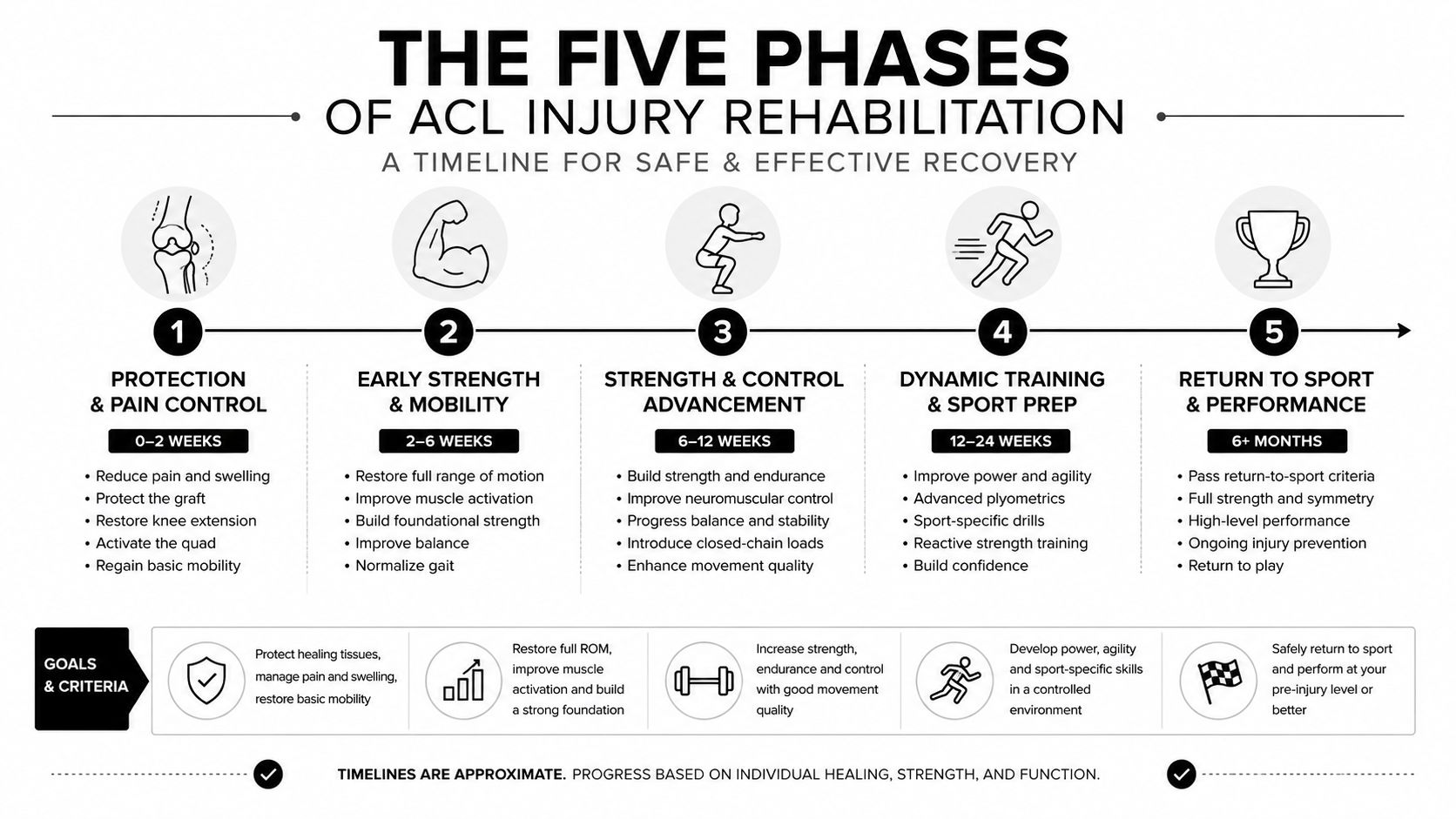
The phases below provide a roadmap, not a rigid calendar. Progression depends on swelling, range of motion, strength, movement quality, the surgical procedure, and any precautions from your surgeon. A person with an isolated injury may advance differently from someone with a meniscus repair or a hamstring graft.
Phase 1 focuses on protection and motion
During the first 0 to 2 weeks, the priorities are reducing swelling, restoring knee extension, regaining comfortable flexion, and waking up the quadriceps. Heel props, gentle heel slides, ankle pumps, and quad sets are common examples when approved by your care team. Crutches remain useful until you can walk without a limp and control the leg safely.
A straight-leg raise without a lag can be an important early sign of quadriceps control, but it shouldn't be forced. Success means the knee is becoming calmer and straighter, walking is improving, and exercises don't create a lasting symptom flare.
Phase 2 rebuilds basic strength
Around weeks 2 to 6, therapy may progress toward bodyweight squats, supported split-stance work, step-ups, bridges, stationary cycling, and balance drills. The therapist watches whether you shift weight away from the involved leg, let the knee collapse inward, or lose control as fatigue develops.
The aim isn't to collect exercises. It's to improve the quality of ordinary movement so that the knee can tolerate progressively greater loading.
Phase 3 develops capacity
During months 2 to 4, strengthening usually becomes more demanding. Leg presses, squats, hip hinges, hamstring work, calf raises, single-leg balance, and controlled step-downs can build the force and coordination needed for running later. Hamstring loading may need modification or delay after a hamstring graft.
Single-leg work deserves deliberate attention because two-legged exercises can hide compensation. This resource on unilateral training for real strength offers useful context for training each side rather than letting the stronger limb do most of the work.
Phase 4 introduces athletic movement
From months 4 to 9, an appropriate program may add plyometrics, landing practice, a graded running progression, acceleration and deceleration, lateral movement, and change-of-direction drills. The therapist should increase one challenge at a time, monitor the knee's response, and correct poor landing mechanics before adding speed or complexity.
Phase 5 prepares you for your actual sport
During months 9 to 12 and beyond, rehabilitation becomes more specific. A soccer player may need controlled cutting, ball work, and repeated efforts. A basketball player may need jumping, landing, defensive slides, and reactive decisions. A recreational skier may need a different blend of balance, rotation, and endurance.
The final step is not merely completing a date on the calendar. It is demonstrating that strength, hopping, movement quality, confidence, and sport-specific capacity meet the demands of your activity. A practical knee ligament injury treatment exercise guide can supplement professional instruction, but it shouldn't replace individualized progression.
Return-to-Sport Testing and Clearance Criteria
A calendar can tell you how much time has passed. It can't tell you whether your operated leg can absorb force, whether you trust it during an unexpected movement, or whether your landing strategy exposes you to unnecessary stress. Current guidance therefore favors criteria-based clearance, using strength, hop performance, clinical findings, patient-reported outcomes, and movement quality rather than time alone. Many studies still use 6 months as a minimum time threshold, but the evidence also shows that athletes are often not tested against guideline criteria and fewer than half are cleared using practice-guideline-based testing, as reported in this review of return-to-sport testing.
The testing pillars
Strength testing often uses dynamometry to compare quadriceps and hamstring output between limbs. Published quadriceps thresholds vary widely, from approximately 1.23 Nm/kg to 3.40 Nm/kg when torque is normalized to body mass, so one absolute number shouldn't decide clearance. The clinician should consider side-to-side symmetry, test reliability, body size, sport demands, and whether the athlete can produce force repeatedly, as discussed in this review of quadriceps strength assessment.
Hop testing can include single, triple, crossover, and timed hops. The clinician observes distance or time, but also watches trunk position, knee alignment, landing stiffness, balance, and confidence. A similar result on both sides can still be misleading if the athlete uses poor mechanics on both legs.
Psychological readiness belongs in the same conversation as physical capacity. Fear can cause an athlete to underload the surgical leg, while overconfidence can lead to reckless progression. Patient-reported tools such as the ACL-Return to Sport after Injury scale help the team discuss confidence, fear of reinjury, and readiness rather than treating those experiences as a character issue.
Ask for interpretation, not just scores. A test result is useful only when your therapist explains what it means for your sport and what still needs work.
| Domain | Test | Target threshold |
|---|---|---|
| Strength | Quadriceps and hamstring dynamometry | Compare side-to-side symmetry, absolute output, test quality, and sport demands. Do not rely on one universal cutoff. |
| Hopping | Single, triple, crossover, and timed hop battery | A commonly used symmetry target is above 90 percent, but movement quality and control must also be acceptable. |
| Movement quality | Single-leg landing, squat, step-down, and Y-Balance assessment | No single universal number decides clearance. Look for controlled alignment, stable trunk position, and repeatable mechanics. |
| Clinical status | Range of motion, effusion, ligament examination, and pain response | The knee should be clinically stable and tolerate progressive loading without a concerning response. |
| Psychological readiness | ACL-RSI or structured readiness discussion | Confidence and fear should support the intended activity, not merely satisfy a calendar date. |
A surgeon should remain involved, but a physical therapist, strength professional, and sports medicine clinician can add valuable perspective when the goal is a demanding return.
Common Mistakes and Red Flags During ACL Rehab
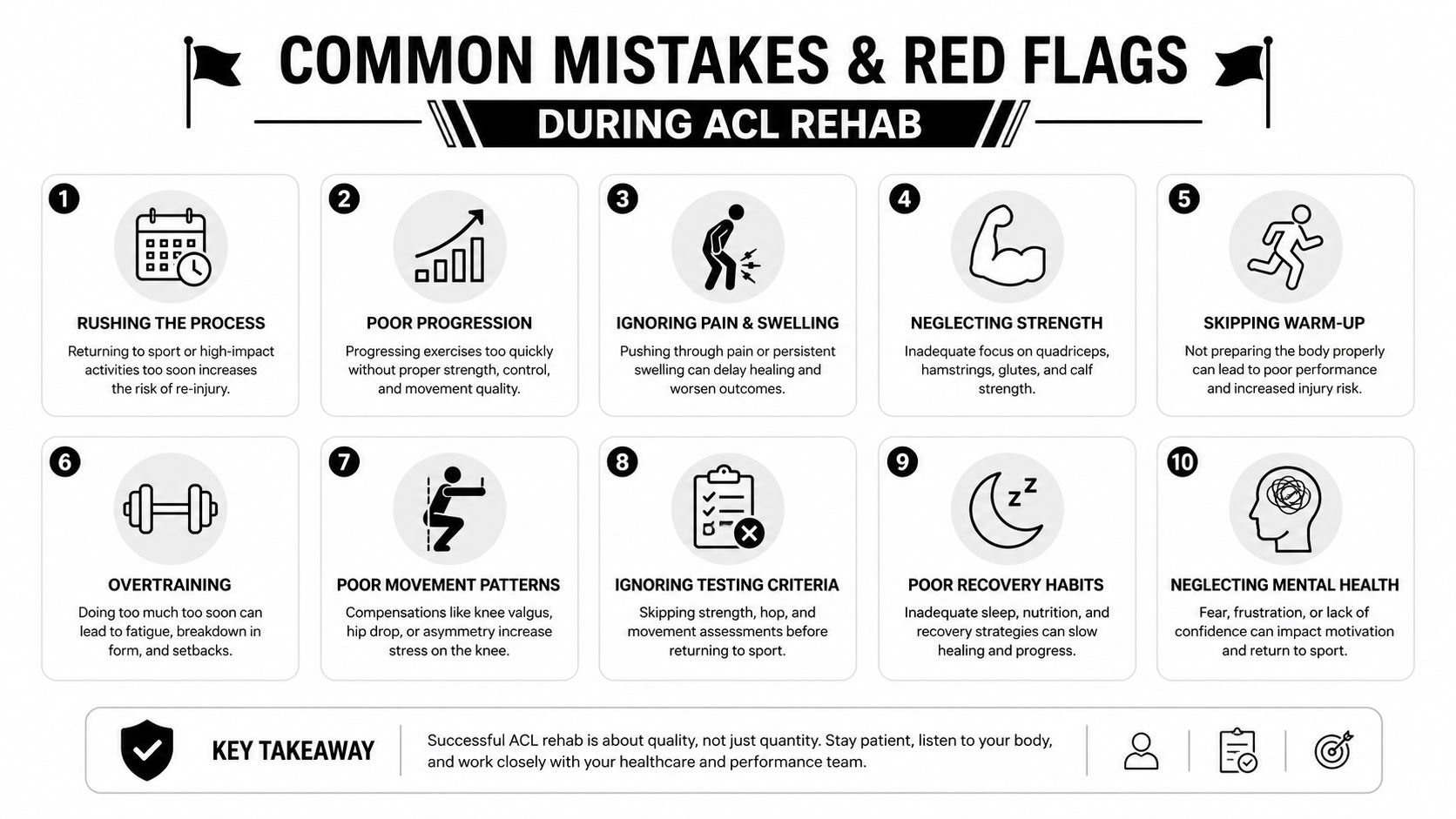
A common mistake is treating surgery as the beginning of rehabilitation. Prehabilitation matters because a swollen, stiff, poorly controlled knee can make early postoperative work more difficult. Before reconstruction, ask whether you can safely improve extension, flexion, quadriceps activation, walking, and swelling control without aggravating the injury.
A brace also isn't a substitute for strength or judgment. It may provide support or restrict unwanted motion, but it doesn't mean the knee is ready for cutting, jumping, or a heavier gym program. Chasing weight-room numbers while the involved leg still shifts, collapses, or tires quickly builds capacity on top of poor control.
Call the clinic about warning signs
Contact your surgeon or rehabilitation team promptly if you experience:
- New giving way: The knee buckles during walking or a normal transfer.
- Sudden motion loss: You lose terminal extension or develop new locking.
- A palpable shift: You feel a new pop, slide, or internal movement that wasn't part of your usual symptoms.
- Worsening swelling: Effusion keeps escalating instead of settling after activity modification, ice, compression, and elevation.
- Possible infection: Fever, increasing redness, drainage, or feeling unwell after surgery requires medical guidance.
Psychological traps can be quieter. Fear of reinjury may cause months of underloading, while a burst of confidence during the fourth month can tempt an athlete into running, cutting, or jumping before the knee has earned those tasks.
Reinjury risk has shaped modern ACL standards. One widely cited study found that 30 percent of people returning to level I sports within the first 2 years after reconstruction sustained reinjury, compared with 8 percent among those returning to lower-level sports, as reported in this study of return-to-sport risk. That history supports staged loading, objective testing, psychological preparation, and honest conversations about whether the planned activity is worth the remaining risk.
What to Expect From Visits and How MedAmerica Supports You
An initial physical therapy evaluation often includes a detailed history, movement assessment, range-of-motion testing, strength screening, swelling review, and a home program. The therapist should also review the surgical report or orthopedic restrictions when applicable, because a reconstruction alone has different precautions from a reconstruction combined with meniscus repair.
Early visits usually emphasize swelling control, extension, quadriceps activation, gait, and safe transfers. Later sessions can shift toward progressive resistance, single-leg control, running mechanics, plyometrics, sport-specific drills, and formal readiness testing. Your home program is not an optional add-on. It supplies the repeated practice that clinic visits alone can't provide.
Planning the practical details
Before treatment begins, ask the clinic and insurer about authorization, copay responsibilities, visit limits, and whether testing requires separate approval. Scheduling should account for work, transportation after surgery, and the need for help during the early period. A therapist may also offer exercise-review check-ins when an in-person visit isn't practical, depending on clinic policy and clinical appropriateness.
MedAmerica Rehab Center provides physical therapy for knee injuries, including strengthening, mobility, stretching, balance work, hands-on treatment, and sports rehabilitation. Its clinicians can coordinate progress with the surgeon's protocol and use strength or performance assessments when available, helping connect early symptom control with later return-to-sport preparation.
| Recovery phase | Visits per week | Session length | Primary focus |
|---|---|---|---|
| Initial evaluation | Determined after assessment | 60 to 75 minutes | History, examination, precautions, baseline function, and home plan |
| Early protection | Often scheduled regularly | Set by the clinic and clinical needs | Swelling, motion, quadriceps activation, gait, and safe daily movement |
| Strength development | Adjusted to progress | Set by the clinic and program demands | Progressive loading, balance, single-leg control, and conditioning |
| Return-to-sport preparation | Tapered as independence improves | Set by testing and sport needs | Running, plyometrics, change of direction, and readiness assessment |
The exact schedule should follow your symptoms, surgery, insurance, work demands, and response to loading. More frequent care can be useful when movement is changing quickly, while later visits may focus on testing, progression, and solving specific performance limitations.
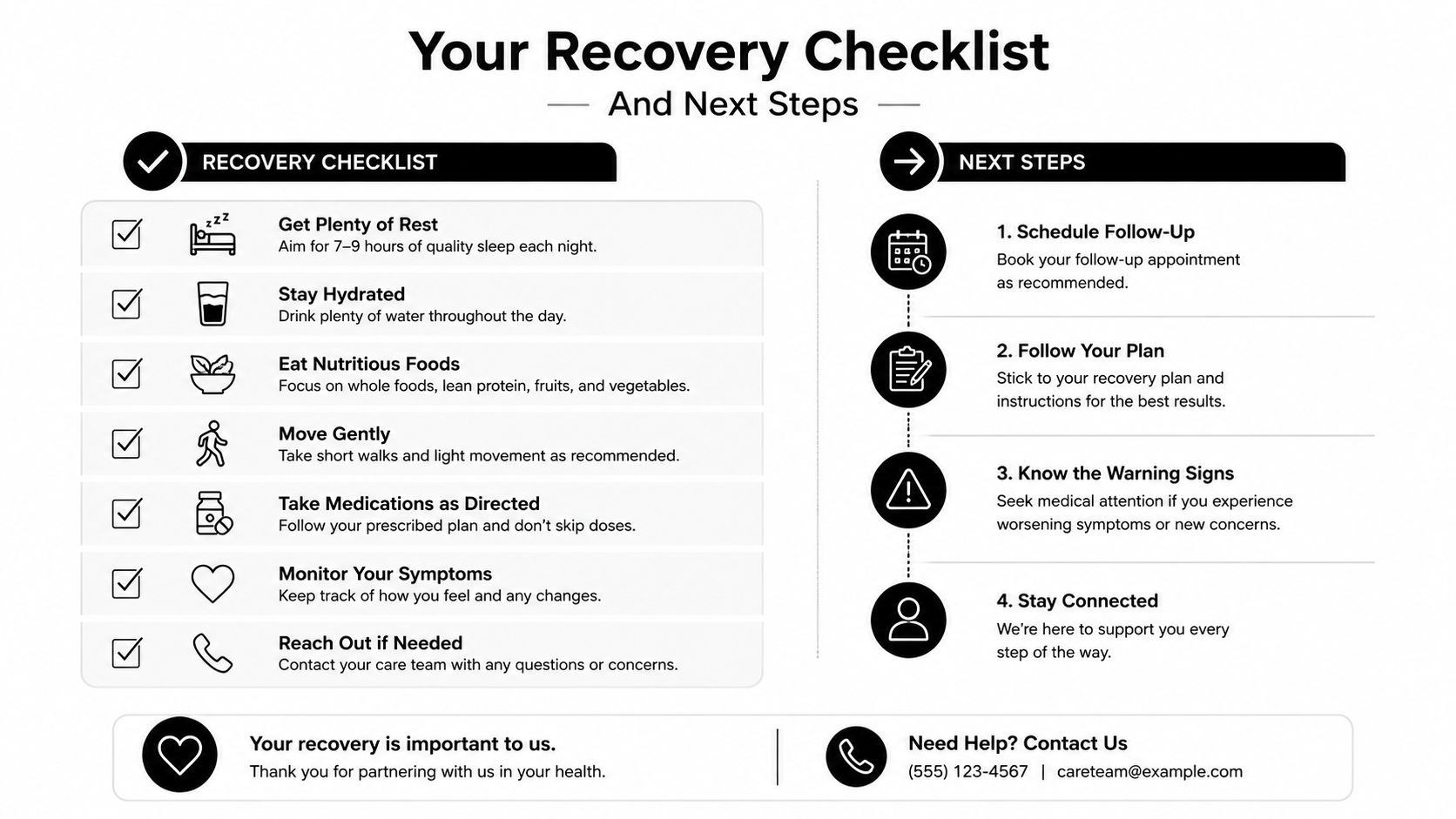
Your Recovery Checklist and Next Steps
Take this checklist to your next orthopedic or therapy appointment:
- Clarify the diagnosis: Ask whether the ACL tear is partial or complete and whether the MRI shows meniscus, cartilage, bone, MCL, or other ligament injury.
- Discuss the path: Ask whether structured rehabilitation first is reasonable for your stability and goals, and what finding would make delayed surgery necessary.
- Set motion goals: Confirm how you'll restore extension and flexion, and whether the knee is progressing toward the motion of the uninjured side.
- Track strength: Ask how quadriceps and hamstring output will be measured and compared, rather than relying on appearance or exercise weight.
- Plan testing: Request a hop battery, landing and movement-quality assessment, clinical examination, and psychological readiness discussion before clearance.
- Know the warning signs: Call the clinic about new locking, giving way, fever, sudden motion loss, or swelling that doesn't respond to the prescribed plan.
Return-to-sport decisions should reflect demonstrated capacity, not a date that happens to appear on a calendar. Your surgeon, physical therapist, and consistent home practice form the working team, and your job is to report symptoms and complete each progression with control.
MedAmerica Rehab Center can assess your knee, build an individualized ACL rehabilitation plan, and guide you from early mobility through strength and return-to-sport preparation. Visit MedAmerica Rehab Center to schedule an evaluation and start tracking the milestones that matter for your recovery.
MedAmerica Rehab · Deerfield Beach
Talk to a clinician about your pain
Physical therapy, chiropractic, acupuncture and shockwave therapy under one roof, since 1995. Same-day appointments are available.
Mon–Thu 8:00 AM – 6:30 PM · Fri 8:00 AM – 3:00 PM