

Adhesion Release Methods: 7 Options Compared
A patient may feel that an injury has healed, yet still struggle to reach overhead, turn comfortably, or move without pain. After surgery, trauma, or inflammation, scar-like tissue can form where it restricts the normal glide of nearby tissues. But not every tight or painful area is an adhesion, and the word can describe very different problems, from internal bands that tether abdominal organs to restrictions around a shoulder joint or nerve.
That distinction matters. A technique that helps free abdominal tissue during an operation isn't interchangeable with hands-on treatment for sore muscles, and treating a suspected adhesion without confirming what's causing the symptoms can waste time or add risk. Evidence for manual methods is especially limited: improvements may reflect changes in mobility or pain sensitivity rather than the physical destruction of scar tissue, and definitions and measurement methods for fascial adhesions aren't standardized, as discussed in this review of fascial adhesion treatment.
The right approach depends on the location, density, and severity of the restriction, along with what the patient needs to do again. Below are seven adhesion release methods, from hands-on care to image-guided procedures and open surgery. If you're weighing breast implant-related tightness, understanding Baker grades for capsular contracture can help clarify a different type of capsular problem. The best next step is the one matched to your diagnosis and goals, not the one with the most dramatic name.
1. Open Adhesiolysis (Laparotomy Adhesion Lysis)
Open adhesiolysis is an operation to separate internal adhesions through an abdominal incision. It gives the surgeon direct access to scar bands and organs, which can matter when adhesions are dense, widespread, or difficult to approach safely with smaller instruments. The trade-off is a larger incision and a more demanding recovery than a minimally invasive procedure.
When open access makes sense
Consider a patient with a small-bowel obstruction and several prior abdominal operations. If the obstruction doesn't resolve with nonoperative care, the surgeon may need to open the abdomen to locate the affected bowel, divide the bands, and check the bowel's condition. Open access may also be chosen when a planned abdominal operation requires the surgeon to work through extensive scar tissue.
That scar tissue can make later operations more technically difficult. A systematic review and meta-analysis of abdominal surgery found that previous surgery added an average of 15 minutes to operative time. The same review estimated that adhesive small-bowel obstruction occurred after 2% of abdominal operations, a figure that describes the reviewed operations rather than an individual patient's personal risk.
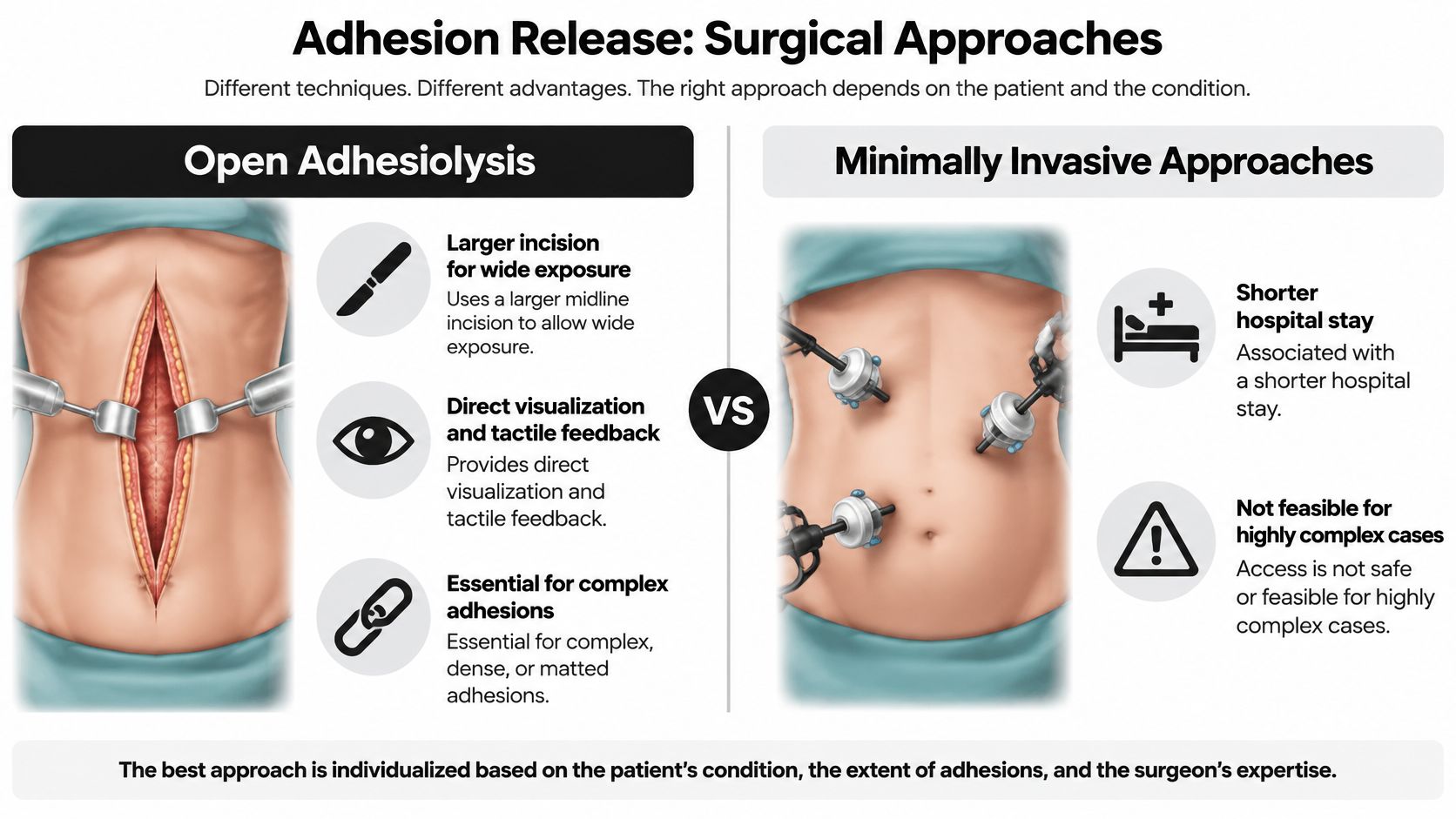
During surgery, the surgeon may use sharp scissors, careful blunt dissection, or both. Each band has to be separated without damaging the bowel or other nearby structures. Ask how the team will limit further tissue injury and whether an adhesion barrier is suitable for your operation. One meta-analysis of 938 patients found that a sodium hyaluronate–carboxymethylcellulose barrier reduced bowel-obstruction risk by 65% compared with no barrier. That result applies to the barrier and patient groups analyzed, not to every operation or adhesion problem.
For recovery: Follow your surgeon's instructions for walking, food, fluids, and activity. Once your surgical team clears you, rehabilitation can address strength and movement. A guide to myofascial release therapy explains a hands-on approach to soft-tissue mobility, which is different from surgically separating internal abdominal adhesions.
2. Laparoscopic Adhesiolysis
Laparoscopic adhesiolysis uses a camera and instruments inserted through small abdominal incisions. It can be an option when the surgeon expects to reach the problem safely without a large incision. Smaller access points can reduce incision-related burden, but they don't make the procedure risk-free or guarantee a shorter recovery for every patient.
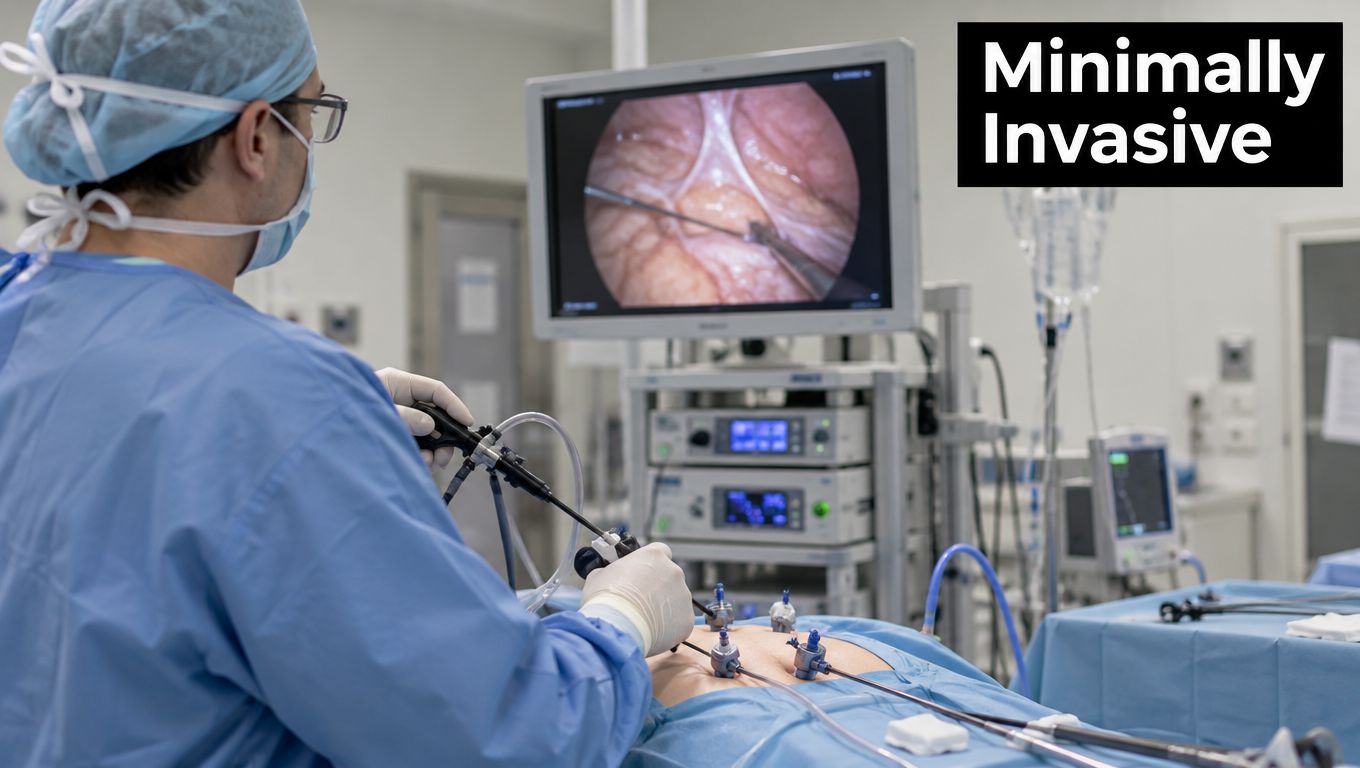
A typical case might be a patient with a recurrent partial bowel obstruction, where the surgeon judges that the adhesions can be approached laparoscopically. Another might involve pelvic pain after gynecologic surgery, but pain alone doesn't prove that an adhesion is the cause or mean that operating will help. A review of laparoscopic adhesiolysis for adhesion-related chronic pain reported short-term improvement in about 70% of patients, while concluding that the evidence didn't support routine surgery for everyone with chronic pain. The review of adhesiolysis and postoperative adhesions reinforces why diagnosis and patient selection matter.
Plan for a change of approach
The surgeon may need to switch from laparoscopy to an open operation if the adhesions obscure safe access or make it difficult to see and protect nearby organs. Ask what would prompt that change and how the team will explain the decision. Conversion isn't necessarily a complication. It can be the safer route when the view or working space isn't adequate.
After surgery, follow your discharge instructions and begin walking when your care team says it's safe. Increase activity gradually rather than returning straight to heavy lifting or strenuous exercise. Contact the surgical team promptly about fever, increasing abdominal pain, or incision redness. Once cleared, a therapist can help rebuild core and hip strength, but rehabilitation doesn't substitute for urgent assessment of possible surgical complications.
3. Energy-Based Adhesiolysis (Electrosurgical and Ultrasonic Dissection)
During adhesiolysis, a surgeon may choose an energy device to divide tissue. Electrosurgical instruments use electrical energy; ultrasonic instruments use vibration. Some can also help control bleeding as the surgeon works. These tools are not a separate diagnosis or a guaranteed improvement over scissors. They're options the surgeon selects based on the tissue, nearby anatomy, and the task.
The patient this may suit
Consider a patient whose surgeon finds a vascular adhesion during laparoscopic bowel surgery. An energy device may help divide the band while controlling small-vessel bleeding. For a thinner band close to a delicate structure, the surgeon may prefer a different instrument or a more cautious technique. The decision is about control and safety in that specific location, not about using the most advanced device available.
Heat is the key trade-off. Energy can injure bowel, nerves, or blood vessels if it spreads beyond the target, so the surgeon must keep the working area visible and use the device deliberately. Ask what type of device is planned and how the team will protect nearby structures. The answer should relate to your anatomy and operation, not just the device's name.
After surgery, follow activity limits while tissues heal and report new or worsening symptoms to your care team. Unusual abdominal pain, fever, or swelling needs prompt medical advice, particularly after an operation involving bowel or nearby organs. Don't try to judge the cause at home or assume that a symptom is ordinary soreness.
A practical distinction: The tool may change how a surgeon divides an adhesion. It doesn't remove the need to confirm that releasing it is likely to help, or to handle nearby tissue carefully.
Once your surgeon clears you for rehabilitation, gentle movement and progressive exercise can help restore normal activity. A therapist may work on posture, strength, or movement patterns, but hands-on soft-tissue care cannot release internal abdominal bands in the way surgery can.
4. Hydrodissection-Assisted Adhesiolysis
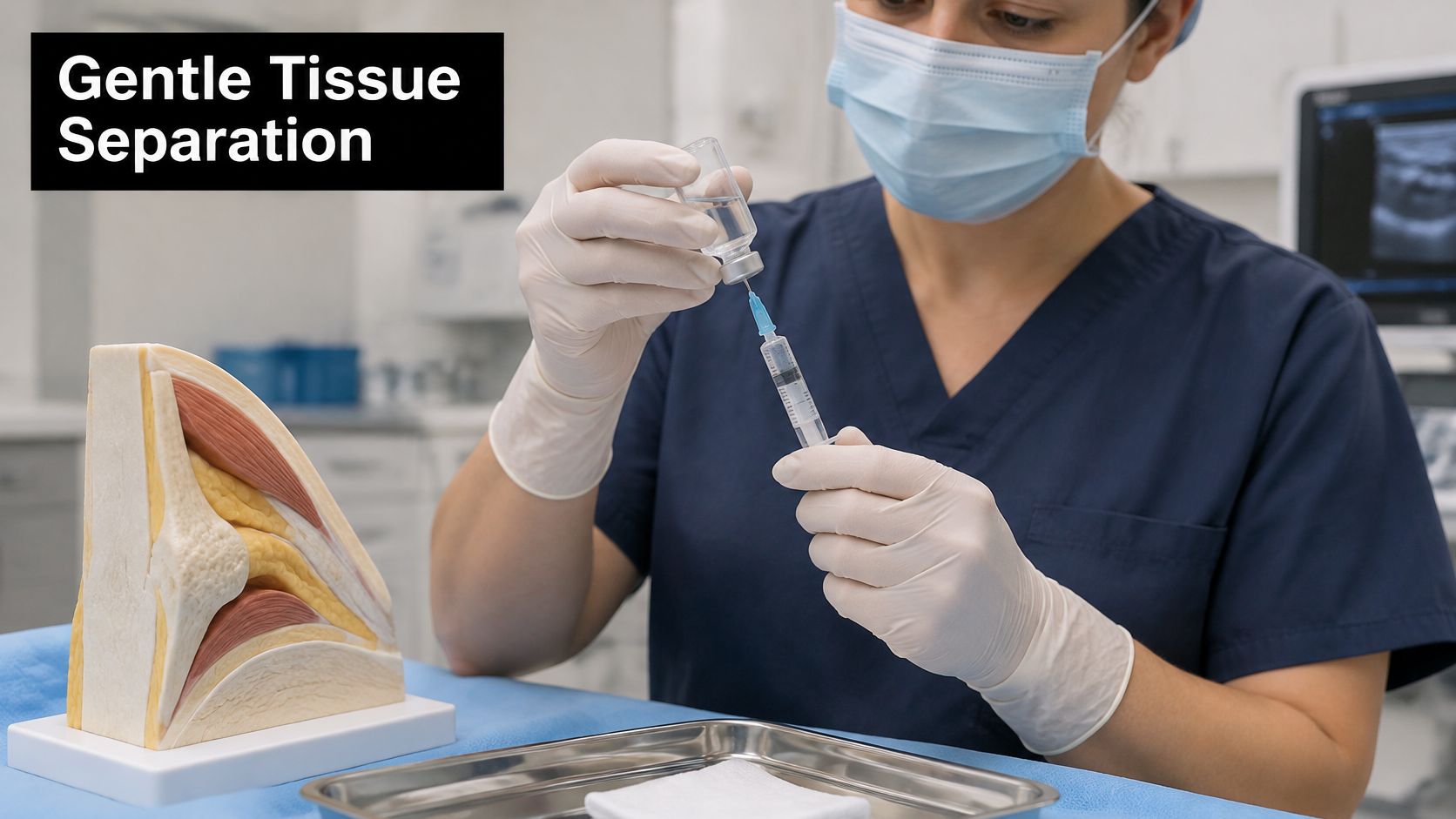
Hydrodissection uses fluid to help separate tissue planes. Depending on the procedure, a clinician may inject sterile fluid near a restriction to lift or cushion tissues and make the target easier to identify. It can be used in surgical or percutaneous settings, but it doesn't mean that the fluid alone will resolve every adhesion.
A pelvic procedure offers a useful example. If the surgeon needs to work near the ureter or bowel, fluid-assisted separation may help define the tissue planes and create space. In a percutaneous soft-tissue procedure, an image-guided clinician may use fluid around a targeted structure. The method, equipment, and risks differ by anatomy and setting, so ask what the clinician is treating and how they'll confirm the target.
What the fluid can and can't do
Hydrodissection can help create a plane between tissues. It doesn't guarantee that a nerve, tendon, or organ will move normally afterward, and it doesn't establish that an adhesion caused your symptoms in the first place. Ask what improvement would count as success, whether imaging will guide the procedure, and what other explanations for your symptoms have been considered.
The technique is only as appropriate as the diagnosis and the clinician's ability to reach the intended area safely. Afterward, report swelling, increasing discomfort, or other unexpected symptoms to your care team. For a soft-tissue procedure, follow the specific instructions about movement, ice, or elevation. Don't apply a general post-procedure rule from another type of treatment to your own case.
A brief demonstration can help you understand how a clinician may approach the procedure, but it isn't a substitute for advice about your anatomy:
5. Arthroscopic Capsular Release and Lysis of Adhesions (Shoulder)
When the shoulder capsule becomes tight and limits motion, the problem is different from scar bands around abdominal organs. Arthroscopic capsular release uses a camera and instruments passed through small portals to cut selected tight portions of the capsule. It may be considered for severe adhesive capsulitis or post-traumatic stiffness when appropriate conservative care hasn't restored useful movement.
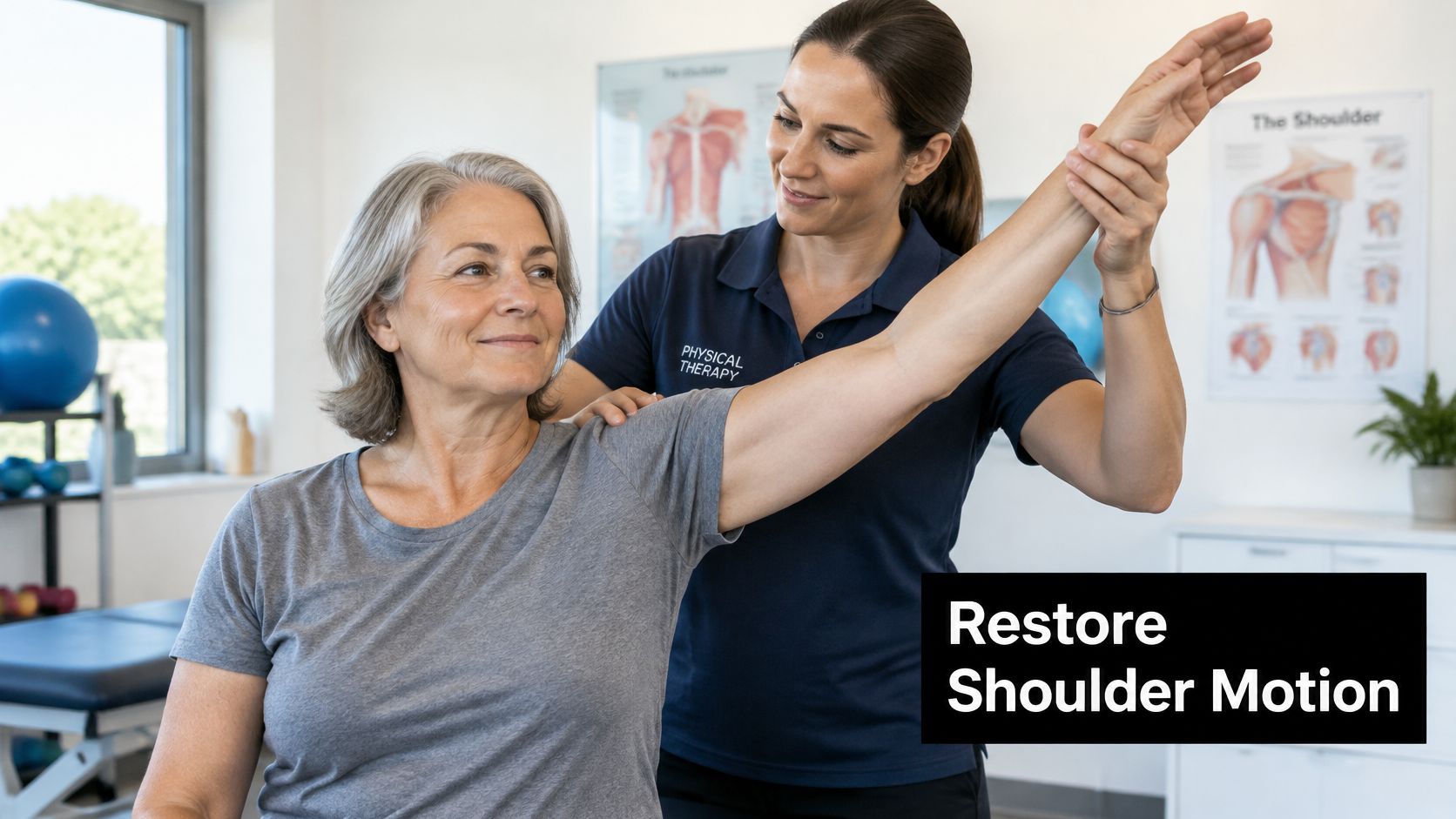
For example, a patient who still can't reach overhead or rotate the arm comfortably after nonsurgical care may discuss release with an orthopedic surgeon. The decision depends on the diagnosis, symptoms, examination, and what the patient has already tried. Manipulation under anesthesia is another possible intervention, but forceful manipulation has potential risks, including tissue injury. A clinical guideline on adhesive capsulitis describes glenohumeral mobilization as a possible way to improve pain and movement, while noting that the recommendation rests on weak evidence. It also reports greater external-rotation improvement with posterior-glide than anterior-glide mobilization in one comparative study, approximately 31 degrees versus 3 degrees after three sessions.
The release is only the start
Surgery can create room for movement, but the patient needs to use that motion as the surgeon permits. Physical therapy commonly focuses on maintaining range of motion, building strength, and returning to daily tasks. The pace depends on the individual case. Don't force a stretch through sharp pain or copy a home exercise from someone with a different operation.
Use the prescribed pain-management plan so that you can take part in therapy, and ask when to begin pendulum or passive range-of-motion exercises. Your therapist and surgeon should coordinate the plan. Learn more about physical therapy after shoulder surgery and discuss which parts apply to your procedure.
6. Peripheral Nerve Neurolysis (External and Internal Neurolysis)
Nerve neurolysis is an operation to free a peripheral nerve that's tethered or compressed by surrounding scar tissue. It's relevant when symptoms and examination point to a specific nerve, such as persistent numbness or tingling in the hand associated with median nerve compression, or symptoms around the elbow associated with ulnar nerve irritation. It isn't a general treatment for unexplained pain.
A typical example is a patient with ongoing median nerve symptoms after prior treatment, where the surgeon identifies a restriction around the nerve and decides that surgical release is appropriate. The surgeon may free the nerve from external scar tissue; in selected cases, the procedure may involve work closer to the nerve's covering. The exact approach depends on where the tethering lies and the condition of the nerve.
Confirm the nerve is the problem
Ask how the diagnosis was established and whether nerve conduction testing or other examination findings support it. Those tests are only part of the clinical picture, but a clear diagnosis helps avoid operating on the wrong structure. Also ask what symptoms the operation is intended to address and which changes may take longer to assess.
After surgery, the surgeon may recommend a splint, gentle nerve-gliding exercises, or hand therapy. Follow the instructions rather than testing the nerve with repeated, forceful stretches. A therapist can work on dexterity, grip, and functional use as healing allows. Sensation may not return immediately, especially if the nerve has been compressed or injured for a long time, so ask what progress to monitor and when to follow up.
Neurolysis has a narrower purpose than treating general muscle tightness. If the main complaint is back pain, neck pain, or a broad area of tenderness, a clinician should first determine whether a peripheral nerve is involved. The right treatment depends on the source of symptoms, not on the presence of the word “adhesion.”
7. Percutaneous Epidural Adhesiolysis (Racz Procedure and Related Techniques)
Percutaneous epidural adhesiolysis is an image-guided procedure for selected patients with persistent spinal pain when epidural scar tissue may be contributing to nerve irritation. A clinician guides a thin catheter toward the target area and may deliver fluid or medication through it. It's a procedure, not the same as open spinal surgery, and it shouldn't be chosen just because a person has had back surgery or continues to have pain.
Who might consider it
A possible candidate might have continuing sciatica after spine surgery, with examination and imaging that support epidural fibrosis near the symptomatic nerve. The clinician should explain what evidence points to scar tissue, what other causes have been considered, and how the team will judge whether treatment helped. If imaging doesn't show a relevant target, ask what diagnosis the procedure is intended to address.
Results should be measured in practical terms, such as changes in leg pain, walking tolerance, or a specific activity that matters to you. Don't treat an image finding alone as proof that a procedure will work. Ask about potential complications and the instructions for activity afterward, including when to resume bending, lifting, and rehabilitation.
Know when to seek urgent help: After a spinal procedure, report fever, a severe headache, new leg weakness, or a change in bladder or bowel control right away.
When your physician clears you, physical therapy can help build strength and mobility in a graded way. Plan rehabilitation around your symptoms and restrictions rather than jumping into heavy lifting. Guidance on physical therapy after back surgery can help you prepare questions for your care team.
Adhesion Release Methods at a Glance
| Method | Invasiveness | Typical Indication | Recovery Timeframe |
|---|---|---|---|
| Open Adhesiolysis (Laparotomy Adhesion Lysis) | Highly invasive; larger abdominal incision | Complex or dense adhesions, including adhesion-related bowel obstruction | Several weeks |
| Laparoscopic Adhesiolysis | Minimally invasive; small abdominal incisions | Suitable patients with less-dense adhesions causing pain or partial obstruction | Light activity in days to a few weeks |
| Energy-Based Adhesiolysis (Electrosurgical and Ultrasonic Dissection) | Varies; used in open or minimally invasive surgery | Dividing adhesions where controlled cutting and bleeding reduction are needed | Depends on the primary operation |
| Hydrodissection-Assisted Adhesiolysis | Varies; used in surgical and percutaneous procedures | Separating delicate or unclear tissue planes near organs or nerves | Usually short for percutaneous procedures; varies for surgery |
| Arthroscopic Capsular Release and Lysis of Adhesions (Shoulder) | Minimally invasive; small arthroscopic portals | Severe frozen shoulder or post-traumatic shoulder stiffness | Several months, with structured physical therapy |
| Peripheral Nerve Neurolysis (External and Internal Neurolysis) | Surgical; often performed with microsurgical instruments | Nerve compression or tethering from scar tissue | Weeks to months; nerve recovery may take longer |
| Percutaneous Epidural Adhesiolysis (Racz Procedure and Related Techniques) | Minimally invasive; image-guided catheter, no open incision | Chronic back or leg pain associated with epidural scar tissue | Usually return to daily activities within a few days |
Choosing the Right Release Method, and Rehabilitating After It
The right adhesion release method depends on which tissue is restricted, where the restriction sits, how dense it is, and what you want to do again. An abdominal obstruction may call for a surgeon to separate internal bands. A stiff shoulder may need a different assessment and, in selected cases, capsular release. A patient with suspected nerve tethering needs a nerve-focused evaluation. These aren't interchangeable problems, and a treatment that's suitable for one can be irrelevant or risky for another.
Start by asking your clinician to name the structure they think is involved and explain what findings support that conclusion. Ask what the treatment is intended to change, what alternatives are available, and what would count as a meaningful result. For hands-on care, be cautious of promises to physically “break up” internal adhesions. Manual treatment may support mobility or ease symptoms, but those effects aren't proof that scar tissue has been destroyed.
Rehabilitation should match both the procedure and your stage of healing. Depending on your clinician's instructions, a plan may include manual therapy, targeted stretching, graded strengthening, and supportive modalities. The aim is to restore useful movement, build tolerance for everyday tasks, and protect the result of surgery without pushing healing tissue too hard. After abdominal or spinal procedures, follow the surgeon's restrictions; after shoulder surgery, protect the motion gains with the therapy plan your surgeon approves.
At MedAmerica Rehab Center, a family-owned Deerfield Beach clinic serving the community since 1995, care can include hands-on manual therapy, strengthening exercises, stretching, and supportive modalities customized to the patient. The clinic provides physical therapy and supports pre- and post-surgical recovery. For an adhesion-related concern, rehabilitation can help address movement and function, while diagnosis and decisions about surgery or image-guided procedures belong with the appropriate medical specialist.
Don't choose a method based on a label or a promise of permanent release. Bring your symptoms, prior imaging, and treatment history to a clinician who can match the plan to the tissue involved, then coordinate rehabilitation with your medical team. If you're ready to work on mobility after a diagnosis or procedure, schedule a same-day appointment to build a recovery plan around your specific condition.
MedAmerica Rehab Center offers individualized physical therapy that may include manual therapy, stretching, strengthening exercises, and supportive modalities. Visit MedAmerica Rehab Center to discuss a recovery plan for your adhesion-related symptoms or post-surgical mobility goals.
MedAmerica Rehab · Deerfield Beach
Talk to a clinician about your pain
Physical therapy, chiropractic, acupuncture and shockwave therapy under one roof, since 1995. Same-day appointments are available.
Mon–Thu 8:00 AM – 6:30 PM · Fri 8:00 AM – 3:00 PM