
How to Prevent Falls and Stay Active
You take a familiar route to the bathroom, catch your toe on the edge of a rug, and recover before you hit the floor. The injury may be minor, but the mental impact can be immediate. You start holding the walls, avoiding stairs, turning down walks, or waiting for someone else to help you stand.
That loss of confidence deserves attention, but it shouldn't lead to inactivity. Learning how to prevent falls means improving your physical capacity, adjusting your surroundings, reviewing health factors, and rebuilding trust in your own movement. Home modifications matter, but they can't replace the balance reactions, leg strength, and walking control that help you recover when the unexpected happens.
Why Fall Prevention Requires an Active Strategy
A near-fall often exposes a problem that was developing subtly. Your legs may have weakened after an illness or surgery. Arthritis may have shortened your stride. A medication may make you lightheaded when you stand. Poor lighting or clutter can turn a manageable movement challenge into a dangerous one.
Falls are a major global public-health problem. The World Health Organization's falls fact sheet estimates that falls cause about 684,000 deaths worldwide each year, making them the second leading cause of unintentional injury death. More than 80% of those deaths occur in low- and middle-income countries, and adults over age 60 have the highest fatal-fall rates. The WHO also estimates that 37.3 million falls annually require medical attention, while falls account for more than 38 million disability-adjusted life years lost each year.
In the United States, the burden is especially serious for older adults. The CDC's fall-prevention data reports that more than one out of four adults age 65 and older falls each year. In 2024, falls caused more than 43,000 deaths among adults in that age group, along with about 4.5 million emergency-department visits.
Why “being careful” isn't enough
Being cautious can help you slow down, but caution doesn't restore a weak hip, improve foot placement, or teach your body to react to a sudden loss of balance. Sitting more may feel protective after a scare, yet reduced activity can leave you with less strength and less confidence the next time you need to step over an obstacle or turn quickly.
A safer approach combines physical training with practical risk reduction:
- Build capacity: Train the hips, thighs, ankles, trunk, and balance reactions.
- Remove avoidable hazards: Improve lighting, clear walkways, and secure support points.
- Review health factors: Discuss dizziness, vision changes, pain, and medications with a clinician.
- Plan after a fall: Treat a first fall or near-fall as a reason to assess risk, not as an event to hide.
Practical rule: The purpose of fall prevention isn't to make your world smaller. It's to help you move through the world with more options.
Environmental awareness also matters outside the home. Principles used in dynamic venue safety can help illustrate the value of anticipating changing hazards, identifying obstacles early, and choosing a safer route instead of reacting at the last moment. At home, that may mean scanning the floor before turning, using a handrail on unfamiliar stairs, or asking for help when fatigue changes your gait.
The right goal isn't perfect avoidance. No program can eliminate every unexpected slip. The goal is a body and environment that give you a better chance to stay upright, recover safely, and keep participating in daily life.
Identifying Your Personal Risk Factors
Fall prevention works better when it starts with a specific risk profile rather than a generic list of tips. A person who shuffles because of Parkinson's disease needs a different plan from someone whose main problem is dizziness after standing. Someone recovering from knee surgery may need progressive strengthening, while another person may need vision care, footwear changes, and gait retraining.
Start with the last few weeks of movement, not just your last fall. Ask yourself whether you've begun using furniture for support, avoiding uneven ground, taking shorter steps, or turning more slowly. Notice whether you feel unstable when getting out of a chair, stepping into a shower, carrying laundry, or walking while talking.
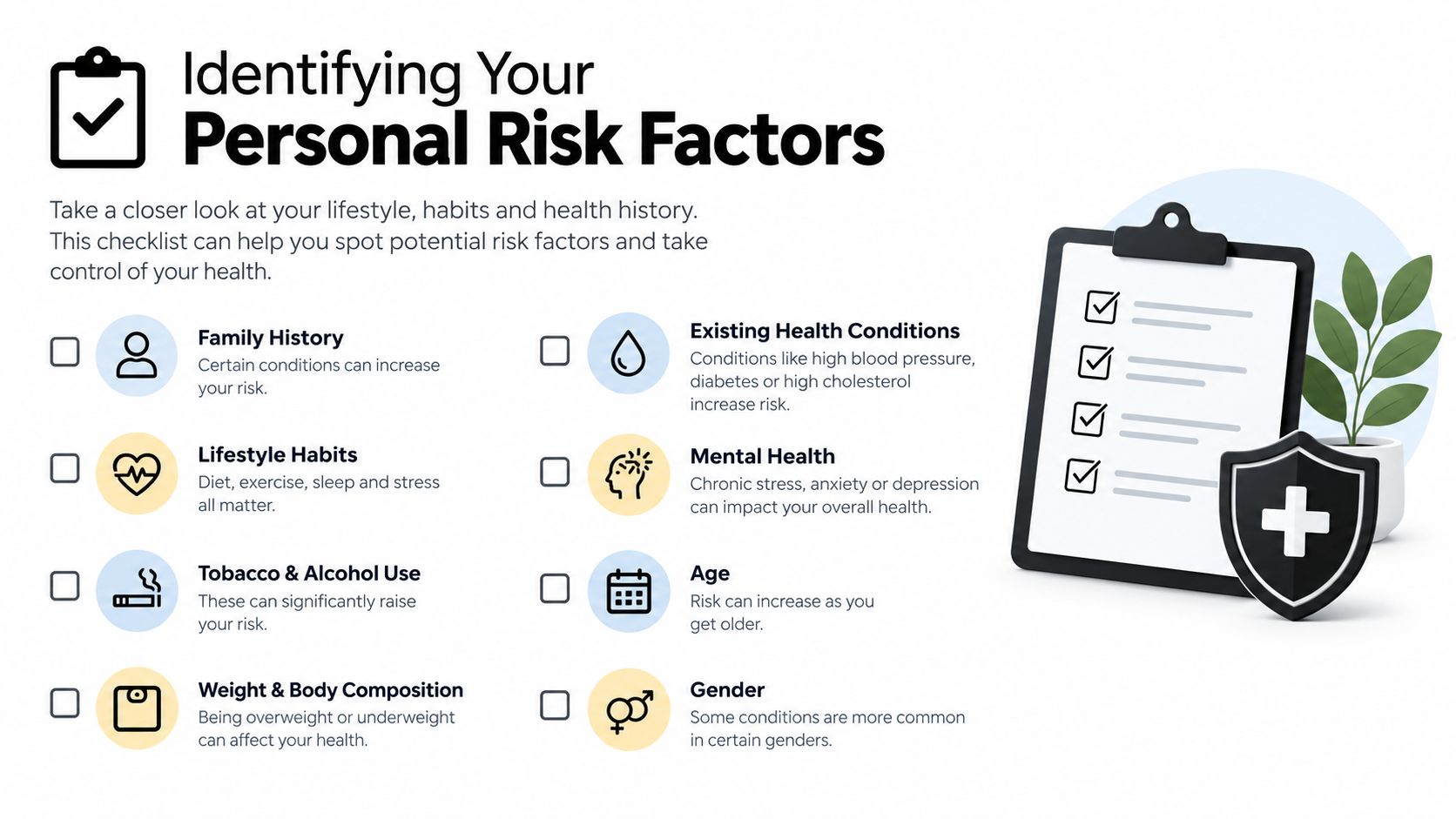
A practical self-screen
Use these observations to decide whether you should arrange a professional assessment:
- Walking pattern: A shuffle, reduced foot clearance, hesitation before turning, or frequent toe catching deserves evaluation.
- Balance control: Feeling unsteady with your feet close together, during a direction change, or when visual information is reduced can point to a balance or sensory deficit. Don't test difficult positions alone.
- Transfers: Pushing heavily through your arms to rise from a chair may indicate reduced leg strength or painful joint movement.
- Recent events: Record falls, near-falls, dizziness, blackouts, and moments when your knee or ankle gives way.
- Footwear: Check whether shoes fit securely, have a stable sole, and stay attached during a step. Loose slippers, socks on smooth floors, and worn soles can undermine otherwise good movement.
- Health changes: Report new numbness, weakness, vision problems, vertigo, chest symptoms, or medication-related drowsiness promptly.
A clinical fall risk assessment for older adults typically looks beyond whether you can walk across a room. A physical therapist may observe gait speed and step quality, sit-to-stand mechanics, joint range of motion, lower-body strength, foot sensation, posture, and your ability to recover during controlled balance tasks. The clinician also considers pain, prior injuries, assistive-device fit, and the demands of your home.
Separate normal aging from treatable limitations
Slower movement doesn't automatically mean that a fall is inevitable. Weak calf push-off, poor ankle mobility, reduced hip control, and fear-driven stiffness are often modifiable. A person may look cautious because they lack confidence, but the underlying issue may be weakness that makes every step feel uncertain.
Bring a complete medication list, including over-the-counter products and supplements, to your appointment. Mention falls even if you didn't get hurt. A near-fall can reveal a change in balance, sensation, strength, or alertness that warrants attention.
Don't perform challenging balance drills from an online video without support if you've already fallen or feel unstable. A railing, countertop, or trained professional can provide a safer starting point while you learn which movements expose your particular weakness.
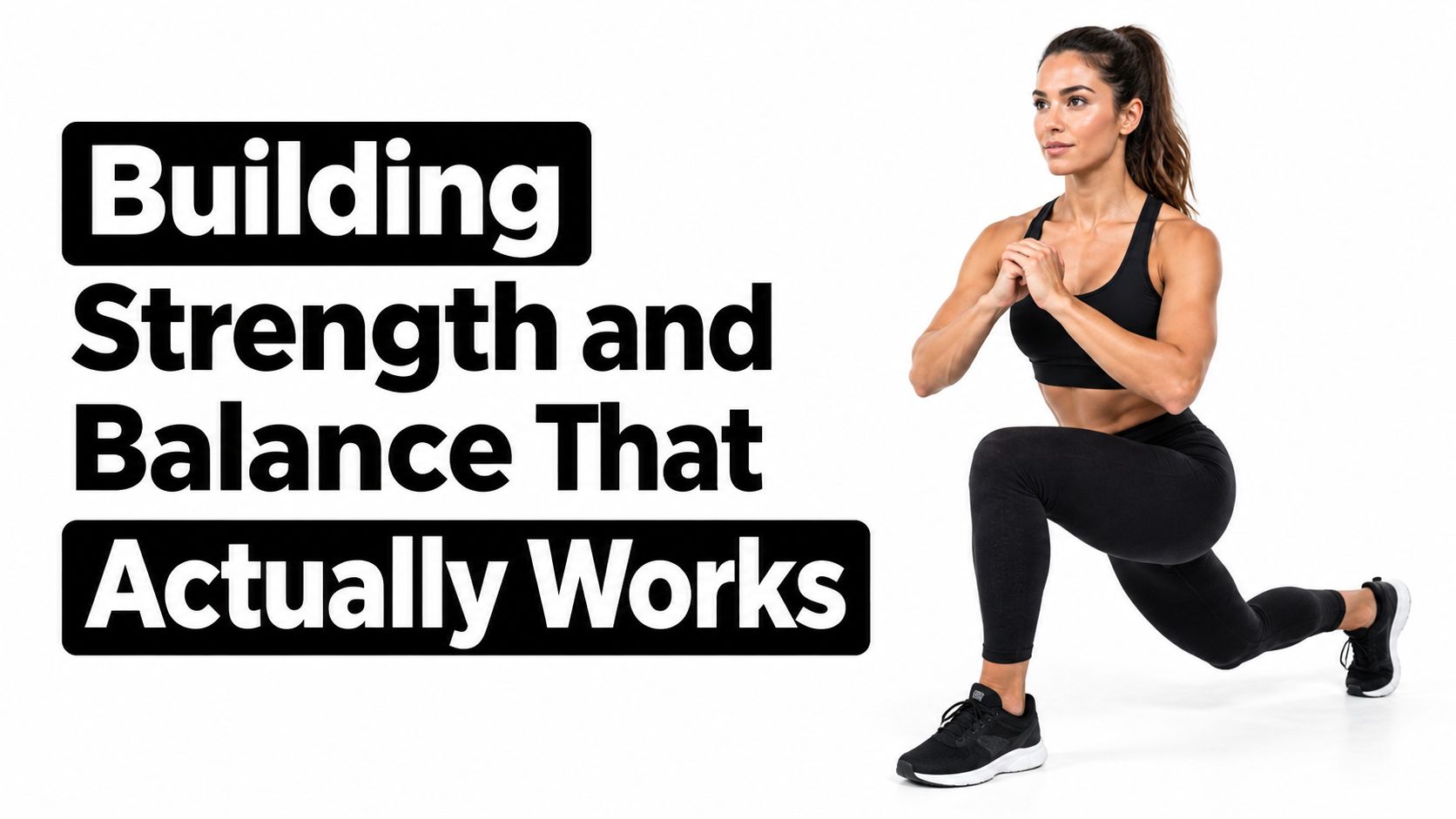
Building Strength and Balance That Actually Works
A daily walk is valuable for endurance and general health, but walking alone usually doesn't challenge balance in the way fall-prevention programs need. Normal walking lets you repeat a familiar pattern on a predictable surface. Falls often happen when you turn, step sideways, recover from a trip, reach outside your base of support, or respond to a moving person or pet.
The strongest evidence supports structured exercise for community-dwelling older adults. A major systematic review found that exercise reduced the overall rate of falls by 24%, based on 7,920 participants across 39 studies, as reported in the British Journal of Sports Medicine review. Programs combining balance and resistance work reduced falls by 34%. These findings don't mean every exercise class produces the same result. The type, challenge, supervision, progression, and ongoing participation all matter.
Progress balance instead of repeating easy drills
A useful progression begins with control and gradually introduces uncertainty:
- Stable stance: Stand with feet comfortably apart and practice shifting weight without gripping tightly.
- Narrower base: Move toward a narrow stance, then tandem stance, with secure support nearby.
- Single-leg loading: Shift weight fully onto one leg, first with light hand support and later with less assistance when appropriate.
- Stepping practice: Step forward, backward, and sideways, returning to a stable position each time.
- Reactive work: Practice quick but controlled stepping responses, direction changes, and carefully supervised perturbations.
The exercise should be challenging enough that you must actively organize your posture, not so difficult that you repeatedly lose control. A licensed physical therapist can adjust the speed, support, surface, and number of repetitions to match your abilities.
Strength training should support the same movements. Sit-to-stands develop the ability to rise from a chair. Step-ups relate to curbs and stairs. Split-stance work and lunges train the control needed when one foot lands ahead of the other. Calf raises, hip abduction, and trunk stabilization can help address weak links that affect foot clearance and alignment.
Dose and consistency determine the result
Best-practice recommendations described in the review specify at least 2 hours of ongoing training per week for effective balance-focused exercise. That time should include deliberate balance challenges and strengthening, not only comfortable walking.
Maintenance is a common sticking point. In aged-care settings, exercise reduced falls during the intervention period, with a rate ratio of 0.68, but showed little or no lasting effect after the program ended, with a rate ratio of 1.01. The practical lesson is straightforward: stopping when you feel better can remove the protection you built.
Balance training should feel purposeful. If every session is easy, your body has no reason to develop a faster or stronger response.
Pain can complicate training. Someone with arthritis may need shorter bouts, supported positions, or a slower increase in loading. Someone recovering from an accident or surgery may need to restore joint mobility before progressing to quick stepping. Support with daily activities can also matter, and guidance on ADL care can help families coordinate safe bathing, dressing, transfers, and household routines while strength returns.
A structured balance training program for seniors should include measurable progression. Track how much support you use, how smoothly you turn, whether you can rise from a chair with better control, and how confidently you walk in real situations. Those changes are more meaningful than just completing a set number of easy repetitions.
Modifying Your Home Environment for Safety
Your home should support a natural walking pattern, not force you to squeeze between furniture, reach for unstable objects, or cross dark rooms. A room-by-room audit is most useful when you walk through the home at the times when risk is highest, such as early morning, after bathing, or when carrying groceries.
Start with the route you use most
Walk from the bed to the bathroom, then from the bathroom to the kitchen or living room. Look for anything that interrupts your foot path:
- Floor coverings: Remove loose throw rugs or secure them with appropriate nonslip backing. A rug that curls at the edge remains hazardous even if it looks attractive.
- Cords and clutter: Route electrical cords along walls, clear shoes and pet toys, and keep packages off the floor.
- Furniture placement: Create a wide, direct path. Don't rely on a lightweight table or rolling chair as a balance aid.
- Floor transitions: Mark or repair uneven changes between carpet, tile, and wood. Step changes can be hard to detect when lighting is poor.
- Pets: Use a consistent location for bowls, toys, and beds so animals and their supplies don't appear unexpectedly in the walking path.
Nighttime deserves its own plan. Add layered lighting in the bedroom, hallway, and bathroom, with switches or motion-activated lights that you can reach without walking through darkness. Keep glasses, a phone, and necessary items close to the bed so you don't rush or lean awkwardly.
Fix the high-risk rooms
The bathroom combines wet surfaces, transfers, and tight spaces. Install grab bars where you need to push or pull, especially near the toilet and bathing area. A towel rack isn't designed to support body weight. Consider a shower seat, nonslip surface, and handheld showerhead if standing for the entire shower is tiring.
In the kitchen, move frequently used items between shoulder and waist height. Clean spills immediately, keep counter areas illuminated, and never use a chair as a step stool. On stairs, secure the handrail, improve lighting at both ends, keep every step clear, and avoid carrying loads that block your view.
Outside, inspect entry steps, walkways, and driveway surfaces. Repair uneven areas and improve lighting near doors. If stairs are becoming a major barrier, a product such as a Lift Buddy chair lift may be part of a broader plan for getting up safely after a fall, but it shouldn't replace medical evaluation or a strategy to reduce future falls.
A home fall-prevention plan can help organize these changes around your actual mobility needs. The most useful modification is the one that addresses a repeated task, not the one that merely adds equipment.
Managing Medications and the Fear of Falling
A person can have adequate strength and still fall because dizziness, drowsiness, or a sudden blood-pressure drop changes how they move. Prescription drugs and over-the-counter products may affect alertness or steadiness, especially when a medication has recently been added, stopped, or changed.
Don't stop a medication on your own. Instead, ask your physician or pharmacist to review the full list, including sleep aids, pain medicines, allergy products, blood-pressure drugs, and supplements. Bring questions about timing and symptoms:
- Do you feel dizzy after a dose or when standing?
- Have you become unusually sleepy or confused?
- Did a near-fall begin after a medication change?
- Are you taking more than one product that causes drowsiness?
- Should you rise more slowly or monitor symptoms at a particular time?
A useful review connects the symptom to the activity. “I feel lightheaded” is important, but “I feel lightheaded when I stand from the toilet at night” gives the clinician a clearer starting point. Your provider may decide that the dose, timing, combination, or underlying condition needs attention.
Fear can change the body you rely on
After a fall, many people move less. They stop walking outdoors, avoid stairs, and decline social activities. That response is understandable, but prolonged avoidance can reduce leg strength, shorten walking tolerance, and make the next movement feel even less secure.
A physical therapist can break the cycle with graded exposure. You may begin with supported weight shifts, controlled chair rises, and short walks in a predictable setting. As your control improves, the therapist can add turns, obstacles, variable surfaces, and everyday tasks. Each successful repetition gives you evidence that movement can be managed safely.
Fear of falling also deserves direct discussion. A 2026 systematic review of frail older adults found that fall-prevention interventions improved fear of falling, physical performance, frailty scores, chair-stand performance, grip strength, knee-extension strength, and depression. Prevention therefore supports confidence and function, not only injury avoidance.
Use a cane, walker, or rollator when a clinician recommends and fits it correctly. An assistive device is a tool for maintaining participation while your capacity improves. It becomes risky when the height is wrong, the device is used inconsistently, or you lean on it without learning the movement pattern it is meant to support.
After a fall, seek appropriate medical advice, especially if you hit your head, develop new pain, cannot bear weight, or experienced fainting or chest symptoms. Then arrange follow-up rather than waiting for another event.
Starting a Professional Fall Prevention Program
Generic advice can't identify why your right foot catches, why your knee collapses during a step-down, or why you lose balance when turning toward the bathroom. A professional evaluation can connect those details to a plan that changes as your movement improves.
A thorough physical therapy assessment may examine:
- Gait and balance: Step length, foot clearance, turning, weight shifting, and recovery strategies.
- Strength: Hip, knee, ankle, and trunk control during standing and functional tasks.
- Mobility: Joint range of motion that affects stride, stair use, and transfers.
- Neurological factors: Sensation, coordination, proprioception, and responses to changes in position.
- Pain and alignment: How arthritis, spinal symptoms, post-surgical weakness, or an old accident alter movement.
- Daily demands: The rooms, stairs, work tasks, hobbies, and community activities you need to manage.
The plan should start at a level where you can succeed safely, then progress the challenge. That might include supervised balance drills, lower-body resistance work, gait training, transfer practice, and education for family members. A therapist may also recommend an assistive device, home changes, or coordination with your physician.
Treat the cause, not only the stumble
Pain often limits the training needed to restore balance. If back pain, sciatica, arthritis, or a post-accident injury makes you unload one side, repeatedly practicing balance without addressing that limitation may produce little progress. Depending on the evaluation, a multidisciplinary clinic may combine physical therapy with chiropractic care, acupuncture, or shockwave therapy for selected pain and mobility problems.
MedAmerica Rehab Center offers individualized physical therapy, balance and gait training, chiropractic care, acupuncture, and shockwave therapy, along with fall-prevention care. Its team serves people managing conditions such as arthritis, orthopedic recovery, accident-related injuries, and mobility loss, with treatment selected around the person's findings rather than a generic exercise sheet.
The best time to begin isn't after confidence disappears. A first fall, repeated near-falls, new weakness, or growing reliance on furniture gives you a practical reason to schedule an assessment. Bring your medication list, a description of recent events, and the activities you want to regain. A clear target, such as walking to the mailbox, managing stairs, or bathing without fear, helps the clinician build a plan you can follow.
Long-term prevention isn't a single appointment or a short burst of exercise. It is a continuing combination of strength, balance practice, sensible home design, medical review, and timely follow-up. With the right progression, many people can become more capable and more willing to move, which is exactly what independence requires.
MedAmerica Rehab Center provides personalized physical therapy, balance and gait training, chiropractic care, acupuncture, and shockwave therapy to help address pain, weakness, and movement problems linked to fall risk. Visit MedAmerica Rehab Center to request an evaluation and start a practical plan for moving more safely and staying active.
MedAmerica Rehab · Deerfield Beach
Talk to a clinician about your pain
Physical therapy, chiropractic, acupuncture and shockwave therapy under one roof, since 1995. Same-day appointments are available.
Mon–Thu 8:00 AM – 6:30 PM · Fri 8:00 AM – 3:00 PM