
Physical Therapy Upper Back Pain: A Complete Recovery Guide
You've probably tried the obvious fixes already. You stretch between meetings, press a lacrosse ball into the muscles between your shoulder blades, roll over a foam roller, and perhaps even replace your office chair. The tight band returns by afternoon, often with aching, burning, or stiffness when you turn, reach, or take a deep breath.
That pattern is common in people searching for physical therapy for upper back pain. The problem usually isn't a lack of effort. Stretching and self-massage can reduce symptoms briefly, but they rarely rebuild thoracic mobility, scapular coordination, or the endurance needed to tolerate a full workday. A physical therapist looks beyond the painful spot and examines how your neck, ribs, shoulders, breathing, posture, and movement habits work together.
Why Upper Back Pain Deserves More Attention
A desk worker may finish the day with a familiar ache between the shoulder blades. Massage loosens it, stretching feels helpful briefly, and a new chair changes little. After months of this cycle, it is easy to conclude that the muscles need stronger release.
Thoracic pain is less common than neck or low back pain, but it still creates a meaningful clinical burden. A systematic review found one-year prevalence estimates ranging from 3.5% to 34.8%, with lifetime estimates from 15.6% to 19.5%, depending on the population and definition used (systematic review of thoracic spine pain). Broader summaries have reported point prevalence as high as 72.0% in certain groups and under certain definitions. The wide range reflects differences in how studies define and identify thoracic pain.
Thoracic complaints account for about 5% of referrals in outpatient pain clinics, according to the review. That proportion is small beside neck and low back cases, yet physical therapists still encounter upper-back pain regularly.
Why passive relief often fades
Rolling, massage, heat, and stretching can settle a sensitive area and make movement easier for a short time. They do not usually train the body to tolerate the demands that provoke symptoms, including sustained sitting, reaching, lifting, or repeated shoulder movement.
A patient may leave the treatment table feeling better but still lack the endurance and coordination to control the shoulder blades during daily activity. The same workload then brings the symptoms back.
Practical rule: Short-term relief is useful when it creates room to move, strengthen, and practice better control.
A structured physical therapy for upper back pain program addresses that gap with active progression rather than passive care alone. The therapist identifies whether joint stiffness, limited thoracic mobility, poor scapular control, low postural endurance, neck referral, rib movement, or several factors are maintaining the problem. Treatment may combine mobility work with scapular strengthening, movement retraining, and gradual exposure to work or exercise demands.
That approach takes more effort than repeated massage, but it targets the reason symptoms return. The goal is not to make the area feel looser during an appointment. It is to help the upper back handle ordinary activity with less irritation and better control.
Understanding the Thoracic Spine and Upper-Quarter
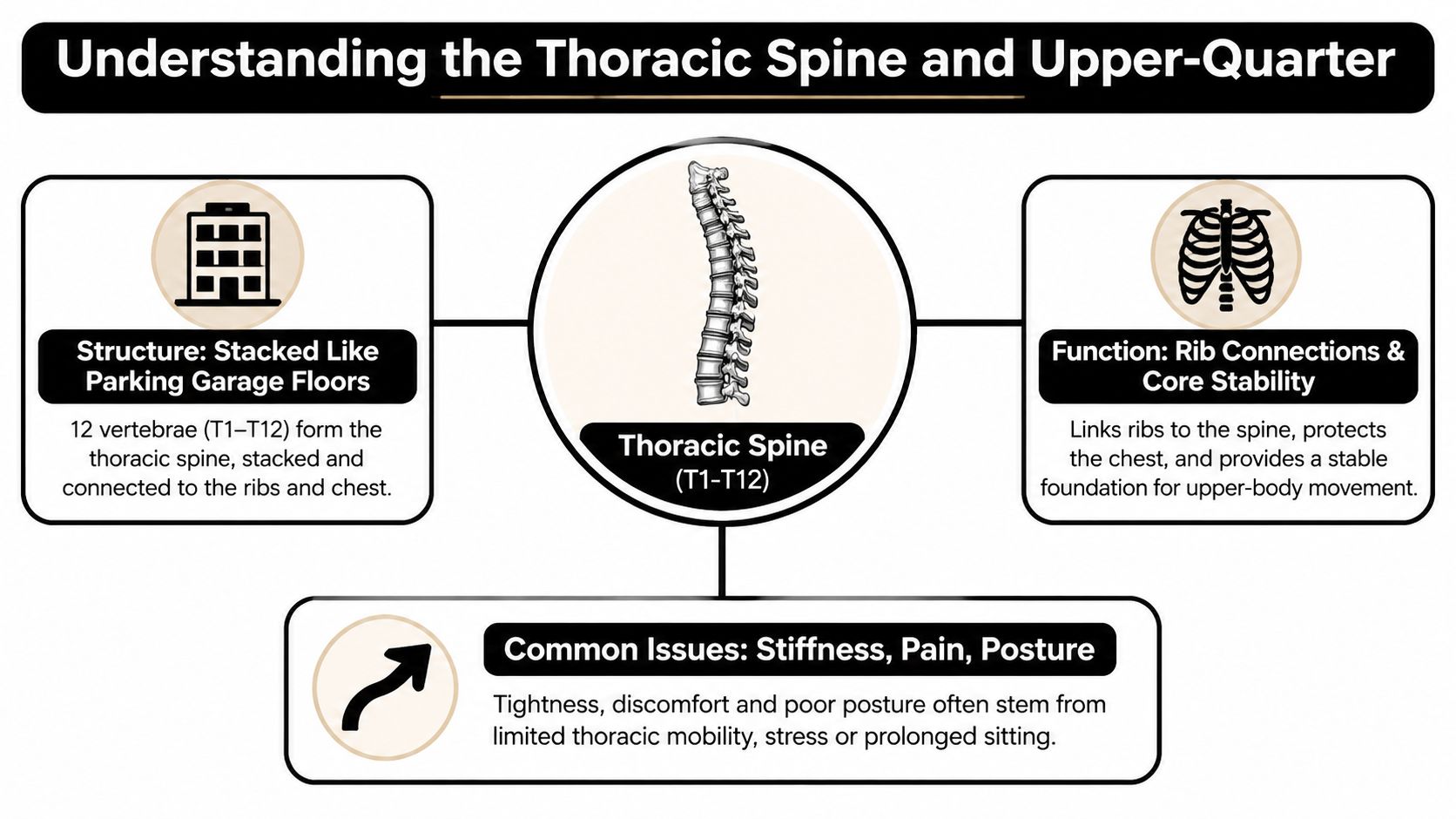
The thoracic spine forms the middle section of the back, running from T1 through T12. Each vertebra connects with a pair of ribs, creating a stable framework around the chest. That structure helps protect internal organs and supports breathing, while also limiting motion compared with the neck.
The mid-back still contributes to extension, rotation, and side bending. Rib movement affects how each direction feels, so stiffness in one pattern does not prove that the entire thoracic spine is restricted. Someone may struggle to sit upright or extend backward yet rotate reasonably well to one side. A physical therapist examines these movements separately before choosing treatment.
The neighboring regions matter
The upper thoracic spine meets the lower neck at the cervicothoracic junction, while the lower thoracic spine transitions into the lumbar region at the thoracolumbar junction. Symptoms felt between the shoulder blades can reflect irritation or limited movement at either transition, particularly when the neck or shoulders also feel stiff and overloaded.
The shoulder blades, or scapulae, do not connect directly to the rib cage through a conventional joint. They glide over the chest wall under the direction of muscles, ribs, and thoracic positioning. A stiff thoracic spine can therefore change how the scapula rests and moves.
Stretching or self-massage may temporarily ease that restriction, but lasting improvement usually requires active control. A structured physical therapy for upper back pain program pairs thoracic mobility with scapular strengthening and postural endurance, rather than relying on passive relief alone.
The muscle system works as a team
Several muscle groups share responsibility for controlling the scapulae and thoracic spine:
- Rhomboids: Draw the shoulder blades toward the spine and support scapular control.
- Middle and lower trapezius: Stabilize the scapulae during pulling, lifting, and overhead movement.
- Thoracic erector spinae: Maintain upright posture and assist spinal extension during sustained positions.
- Serratus anterior: Helps the scapula rotate and stay connected to the rib cage during reaching.
- Upper trapezius and levator scapulae: Assist shoulder and neck movement, but may become overworked when other stabilizers contribute poorly.
A restriction in the thoracic spine can alter scapular motion. Poor scapular control can then increase demand on the neck and upper-back muscles. For that reason, a useful evaluation examines the cervical spine, shoulders, ribs, breathing pattern, and functional tasks, not only the painful mid-back area. The aim is to identify which movement and endurance deficits keep symptoms returning.
What Causes Upper Back Pain and Why It Lingers
A typical workday can reveal the pattern. After hours of sitting, the head and shoulders drift forward while the thoracic extensors work to keep the trunk upright. Muscles around the shoulder blades stay loaded, producing an ache, pressure, or a familiar knot by the end of the day.
Rounded shoulders can further reduce scapular efficiency. Upward rotation and retraction become harder, while the serratus anterior and lower trapezius contribute less than needed. The upper trapezius and levator scapulae then take on more work during computer use, driving, and repeated reaching.
Common drivers in daily life
| Cause | Primary Driver |
|---|---|
| Prolonged sitting | Sustained thoracic flexion and low postural endurance |
| Forward-head posture | Greater demand on the neck and upper-back extensor muscles |
| Rounded shoulders | Altered scapular position and reduced movement efficiency |
| Weak scapular stabilizers | Poor control during reaching, lifting, and overhead activity |
| Repetitive work | Repeated loading without enough recovery |
| Stress-related breathing | Increased contribution from accessory respiratory muscles |
| Rib or joint dysfunction | Local restriction and pain with movement or breathing |
| Thoracic disc irritation | Irritation from spinal structures that may require medical assessment |
A desk posture guide for improving sitting alignment can help identify workstation habits that add strain. Changing the chair alone, however, will not restore reduced strength or movement control.
Why stretching doesn't solve the whole problem
Stretching relieves the feeling of tightness, but if thoracic segments do not extend well or scapular control is poor, the overload returns once the stretch ends. A massage ball may provide similar short-term relief without improving the endurance needed for sitting, reaching, or lifting.
That is why a structured physical therapy for upper back pain program targets thoracic mobility, scapular control, and postural endurance together. Active retraining requires more effort than passive care, but it addresses the movement and load-management deficits that keep symptoms recurring.
Myofascial pain may improve as treatment builds muscle endurance, soft-tissue tolerance, and coordinated movement. In a controlled study of upper-back myofascial pain, improvement was statistically significant from week 1 through week 6, with reported improvement at treatment's end of 67.86% in one group and 78.13% in the other (controlled study of exercise for upper-back myofascial pain). The findings support combining exercise with mobility work instead of relying on isolated stretching.
Less common causes require attention when symptoms do not follow a straightforward mechanical pattern. Thoracic disc irritation, rib dysfunction, inflammatory conditions, fractures, and neurological problems may require medical assessment. Deep breathing, coughing, arm movement, or pain traveling around the ribs can also change the clinical picture.
How Physical Therapy Treats Upper Back Pain
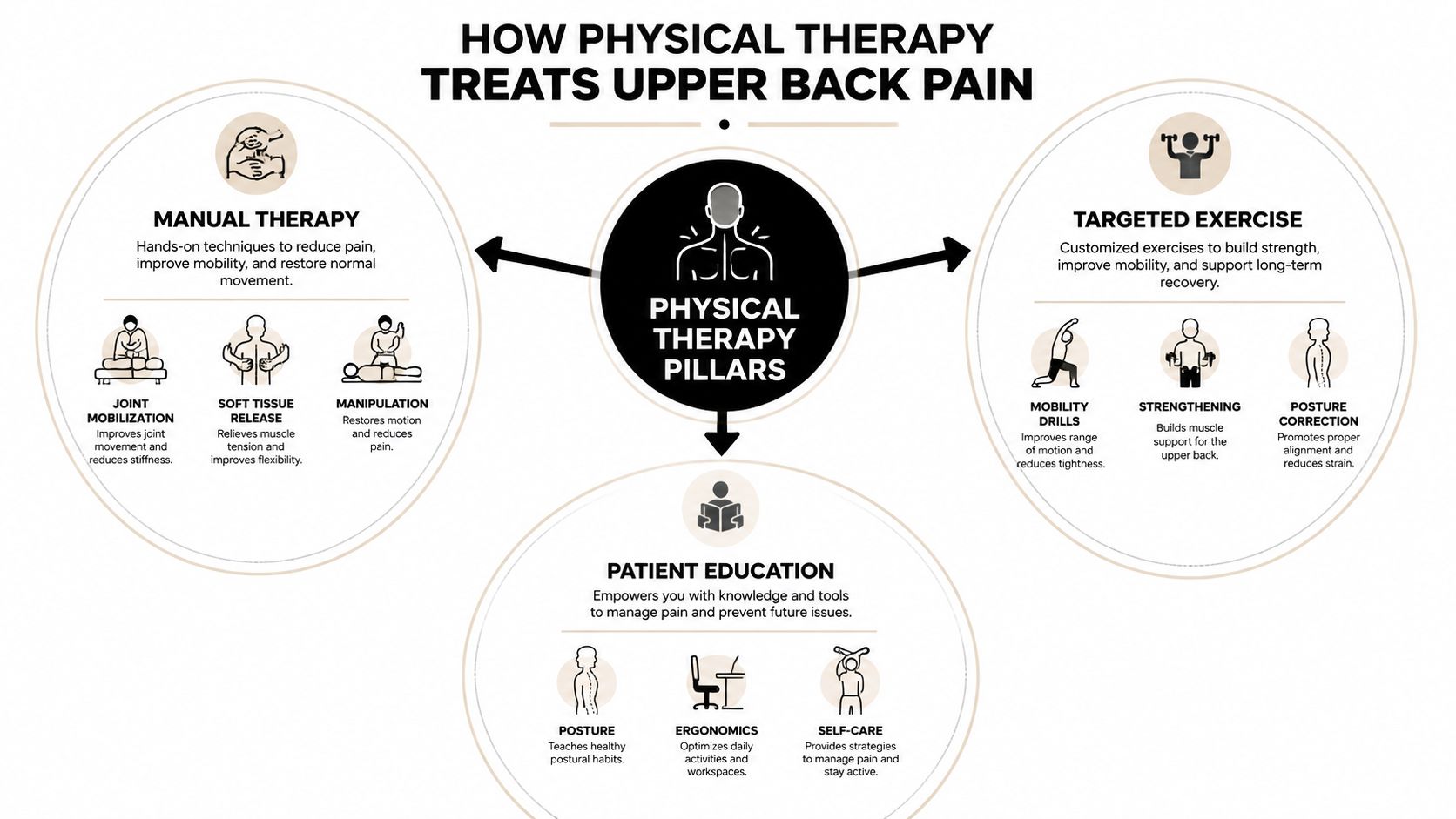
A productive appointment connects hands-on care to the movement a patient needs outside the clinic. The therapist may use manual therapy to make a restricted motion more comfortable, then follow it with exercise and education while that change is available. This approach helps patients practice usable motion instead of relying on relief that ends when the appointment does.
Manual therapy creates room to move
A therapist may choose thoracic or rib mobilization, soft-tissue work, or carefully selected manipulation when stiffness and pain restrict movement. Manual therapy can lower sensitivity and temporarily improve motion, giving the patient a better starting point for the active exercises that follow. Its value is greatest when the patient uses that window to build control and tolerance.
Evidence for thoracic and cervicothoracic manual therapy is supportive but limited. A systematic review found the clearest benefit in short-term pain and functional improvement, while longer-term evidence was weaker because relatively few studies continued beyond 26 weeks (systematic review of thoracic and cervicothoracic manual therapy). Manual treatment therefore works best as a catalyst within rehabilitation, rather than as the entire recovery plan.
Exercise changes capacity
The active program may include thoracic extension and rotation, scapular strengthening, serratus anterior work, deep neck flexor training, breathing exercises, and functional lifting. The therapist adjusts resistance, range, speed, and volume according to symptoms, examination findings, and daily goals.
Strength and endurance work matter when pain returns during long desk sessions or repeated reaching. Training should help the body tolerate those positions and tasks. Chasing perfect posture every moment is less useful than developing the capacity to change position, maintain control, and continue activity without a flare.
Education connects treatment to real life
A therapist may review workstation layout, screen height, arm support, driving posture, sleep positions, and lifting or reaching technique. Useful guidance is specific. Patients might alternate positions, use brief movement resets, support the forearms, and avoid staying in one posture for too long.
Heat, electrical stimulation, taping, or dry needling may help selected patients manage pain or muscle guarding. These options can make movement practice easier, but loading and motor retraining remain the part that builds capacity. For additional context on upper back pain solutions, discuss which options fit your symptoms with a clinician. A separate overview of how physical therapy supports back and neck pain recovery explains why therapists often assess the neck, thoracic spine, and shoulders together.
A Sample Upper Back Rehab Routine
The following progression is an example of how a therapist might organize care. It isn't a diagnosis or a universal prescription. Your starting point should depend on your symptoms, examination findings, medical history, and ability to perform each movement without compensation.
| Week | Focus | Key Exercises | Sets x Reps | Progression Cue |
|---|---|---|---|---|
| 1 | Pain relief and mobility reset | Cat-camel, foam roller extensions, thoracic rotations | 1 to 2 sets of 6 to 10 | Keep motion comfortable and controlled |
| 2 | Scapular control | Scapular squeezes, prone Y-T-W lifts, low rows | 2 sets of 8 to 12 | Reduce shrugging and improve shoulder-blade control |
| 3 | Postural endurance | Wall angels, isometric holds, serratus punches | 2 to 3 sets of 8 to 12 or brief holds | Maintain alignment as fatigue develops |
| 4 | Integrated strengthening | Resisted rows, dead bugs, farmer carries | 2 to 3 sets of 8 to 12 or short carries | Add resistance only if symptoms remain settled |
Start with motion you can control
Cat-camel and thoracic rotations can introduce movement without demanding heavy resistance. Foam roller extensions may help someone who feels restricted through the mid-back, but the movement should come from the thoracic region rather than excessive arching through the lower back.
Perform the first phase consistently and keep the range moderate. Mild muscular effort can be acceptable, but sharp pain, spreading symptoms, dizziness, or worsening symptoms that last into the next day are reasons to stop and seek guidance.
Build the shoulder-blade foundation
Scapular squeezes are simple, but they shouldn't become a forceful pinching exercise. Prone Y-T-W lifts and low rows challenge the middle and lower trapezius while teaching the shoulder blades to move without the neck taking over.
During week two, quality matters more than resistance. If the shoulders creep toward the ears or the lower back arches to complete the movement, reduce the range or load.
Add endurance, then function
Wall angels, serratus punches, and isometric holds train the ability to maintain control during sustained activity. In the final phase, resisted rows, dead bugs, and farmer carries connect the upper back to the trunk and hips, which is more relevant to lifting, carrying, and work tasks than isolated stretching.
A useful upper-back exercise reference can supplement a therapist-directed home plan. If you manage fitness content or need Smarcomms fitness industry solutions, keep the same standard of clarity in exercise communication. Readers need dosing, purpose, and safety cues, not a random list of movements.
Recovery Timelines and When to Seek Help
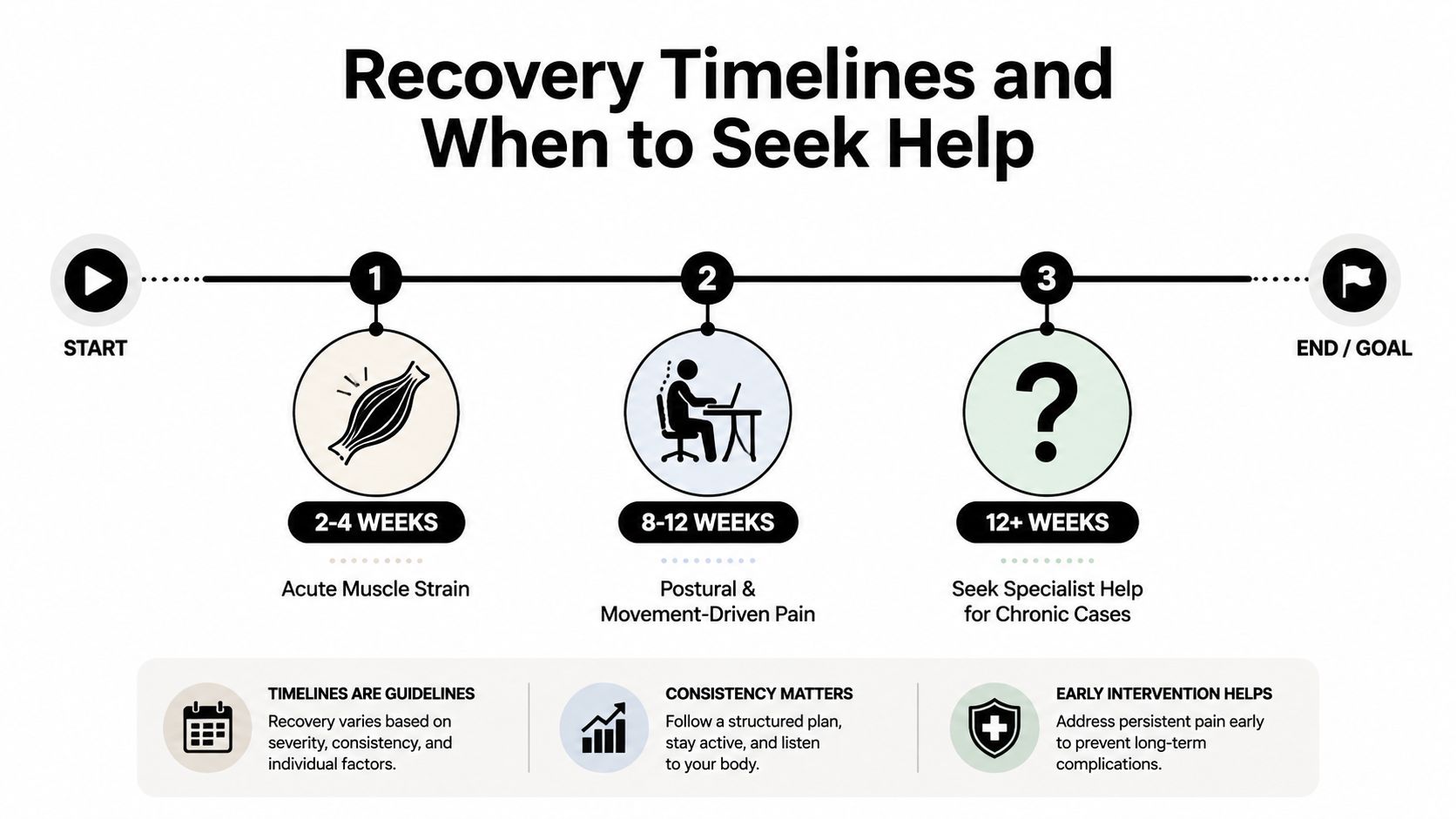
Recovery depends on the source of pain, how long it has been present, your general health, and whether you can modify the aggravating workload. A straightforward muscle strain may settle over a shorter period, while postural and movement-driven pain often needs consistent strengthening and habit changes before it becomes reliable.
For planning purposes, acute muscle strain is often discussed in the range of two to four weeks, postural or movement-driven cases may require eight to twelve weeks, and chronic or disc-related problems can take three to six months. These are general clinical timeframes, not promises, and they aren't drawn from the prevalence evidence cited earlier.
A normal response versus a warning sign
Some soreness after new strengthening is expected, particularly when previously underused muscles begin working. Your symptoms should generally remain manageable and return toward baseline rather than escalating steadily with each session.
Seek prompt medical evaluation for symptoms that suggest something beyond routine mechanical pain:
- Neurological changes: Numbness, weakness, or pain radiating into an arm.
- Systemic symptoms: Fever or unexplained weight loss.
- Unusual night pain: Pain that persists regardless of position or movement.
- Serious trauma: Symptoms following a significant fall, collision, or direct impact.
- Loss of bladder or bowel control: Treat this as an urgent warning sign.
A physical therapist can screen for concerning findings and refer you when needed. Don't use a home exercise program to delay evaluation when symptoms are progressive, unexplained, or accompanied by neurological or systemic changes.
The MedAmerica Rehab Center Approach
A program should begin with an examination, not a preset stretch routine. At MedAmerica Rehab Center, physical therapists and rehabilitation clinicians can assess thoracic mobility, scapular mechanics, posture, ergonomic stress, breathing patterns, and functional limitations before selecting treatment.
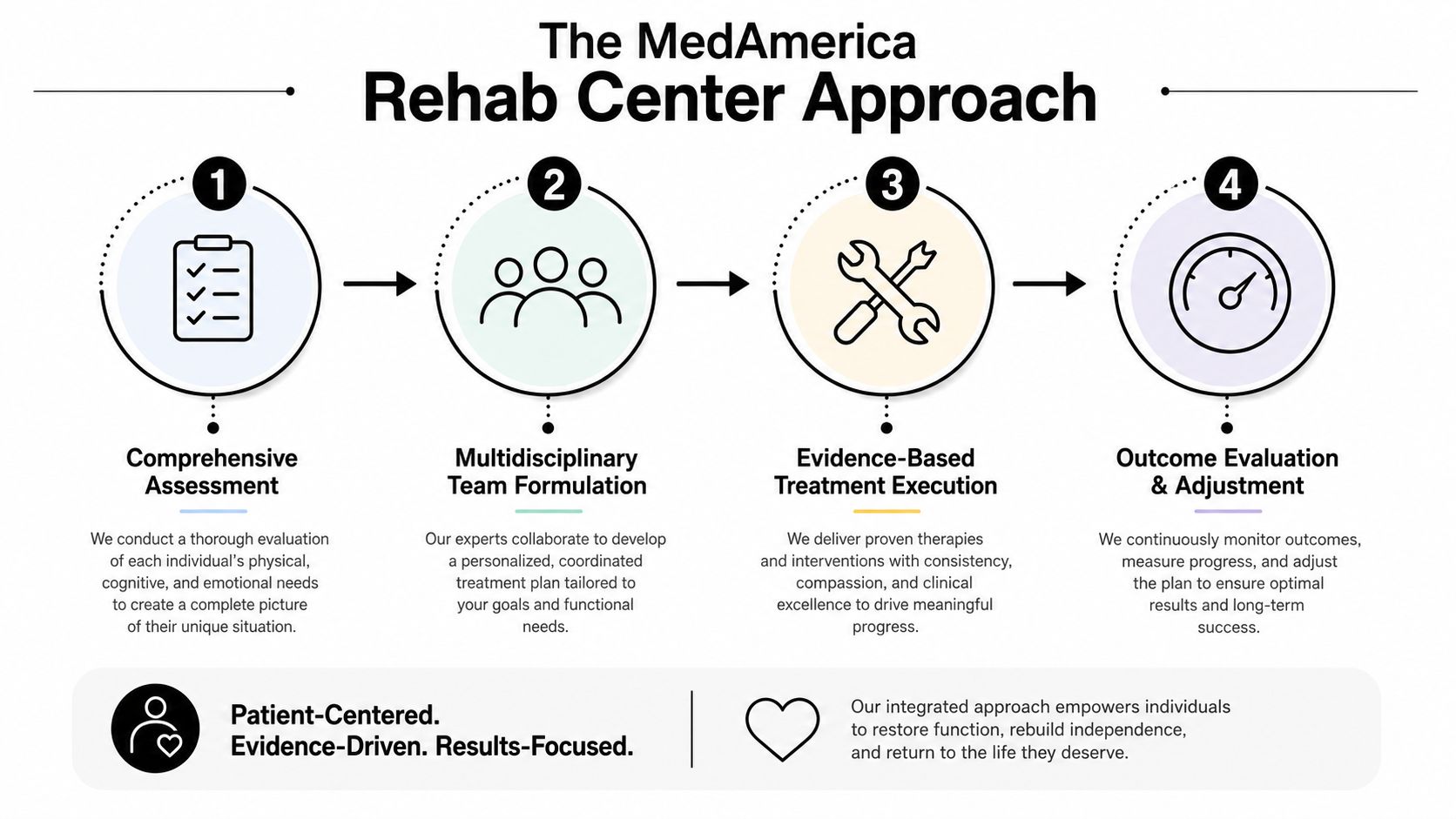
The clinical logic is straightforward. Hands-on thoracic treatment may reduce pain and improve motion, progressive exercise builds capacity, neuromuscular retraining improves scapular control, and education helps you apply those changes at work, during exercise, and at home. The plan should change as your tolerance improves, rather than keeping you dependent on passive care.
This approach is especially relevant when symptoms overlap across the neck, upper back, and shoulders. A person who cycles, lifts overhead, drives for work, or spends long hours at a desk may need different loading strategies for each activity. The therapist's job is to connect the impairments found during assessment with the tasks you need to resume.
If stretching and self-massage haven't solved your upper-back pain, schedule an evaluation at MedAmerica Rehab Center to identify the movement, strength, and workload factors keeping symptoms active. The Deerfield Beach team offers individualized physical therapy and rehabilitation care designed to restore thoracic mobility, scapular control, and practical endurance.
MedAmerica Rehab · Deerfield Beach
Talk to a clinician about your pain
Physical therapy, chiropractic, acupuncture and shockwave therapy under one roof, since 1995. Same-day appointments are available.
Mon–Thu 8:00 AM – 6:30 PM · Fri 8:00 AM – 3:00 PM