

Rheumatoid Arthritis Management: A Practical Guide for 2026
You wake up with fingers that feel locked, wrists that look puffy, and a level of fatigue that doesn't match yesterday's activity. Perhaps the stiffness eases later, then returns after sitting still. You may be wondering whether you should rest, exercise, request stronger medication, or wait it out.
Those questions matter because rheumatoid arthritis management isn't limited to reducing pain. Modern care aims to control immune-driven inflammation early, protect joints, preserve strength, and keep daily activities possible. The most durable plan usually combines disease-modifying treatment, regular monitoring, and rehabilitation customized to how your joints are functioning today.
Recognizing Rheumatoid Arthritis and Taking Control
Consider a common pattern. A person notices swollen knuckles, prolonged morning stiffness, and unusual exhaustion. They blame work, aging, or poor sleep and continue using the hands normally. Weeks later, more joints become painful, and ordinary tasks such as opening jars, walking downstairs, or turning a key require conscious effort.
That experience can feel confusing because rheumatoid arthritis often develops gradually. Symptoms may fluctuate, but improvement on a quiet day doesn't prove the underlying inflammation has stopped. Warmth, swelling, stiffness after inactivity, and fatigue deserve medical attention, particularly when they recur or affect both sides of the body.
Rheumatoid arthritis is an autoimmune disease, not just a collection of sore joints. A 2024 review reported worldwide prevalence ranging from 0.5% to 1.5%, while a clinical summary placed prevalence in North America at 0.5% to 1% (2024 clinical review). Those figures describe a substantial chronic disease burden, but they don't predict exactly how your condition will behave.
What effective management is meant to achieve
Successful care has several connected aims:
- Control inflammation: Reduce active synovitis rather than only masking discomfort.
- Protect function: Maintain the ability to grip, walk, reach, dress, work, and sleep.
- Limit treatment harm: Review infections, vaccinations, bone health, cardiovascular risks, and medication monitoring.
- Adapt rehabilitation: Change exercise intensity when joints are actively inflamed, then rebuild capacity as symptoms settle.
Treatment has moved from limited symptom relief toward structured, guideline-based care. The historical shift included glucocorticoids transforming care in 1949 and low-dose methotrexate becoming the first-line anchor drug in 1985, as described in the same 2024 review (RA treatment history and current strategy).
Feeling overwhelmed doesn't mean you're failing. Ask for a clear diagnosis, a measurable treatment target, and a rehabilitation plan that matches your current abilities. Medication addresses the inflammatory driver. Physical and occupational therapy address the movement, strength, endurance, and task problems inflammation creates. Neither part replaces the other.
Understanding How Rheumatoid Arthritis Affects Your Body
Your joints contain a thin protective lining called the synovium. In rheumatoid arthritis, the immune system misidentifies this lining as a threat. A useful analogy is a security system that keeps sounding the alarm and sending guards after the building's own staff. The resulting inflammation thickens the joint lining, creates swelling and warmth, and can eventually injure cartilage, bone, tendons, and ligaments.
That process explains why pain relief alone isn't enough. An anti-inflammatory pain medicine may make movement more comfortable, but it doesn't provide the disease-modifying control needed to reduce the risk of ongoing joint injury. Osteoarthritis follows a different pattern, generally involving mechanical wear and tissue changes rather than an immune system attacking the synovium. Only a qualified clinician can distinguish the conditions reliably, often using your history, examination, blood tests, and imaging.
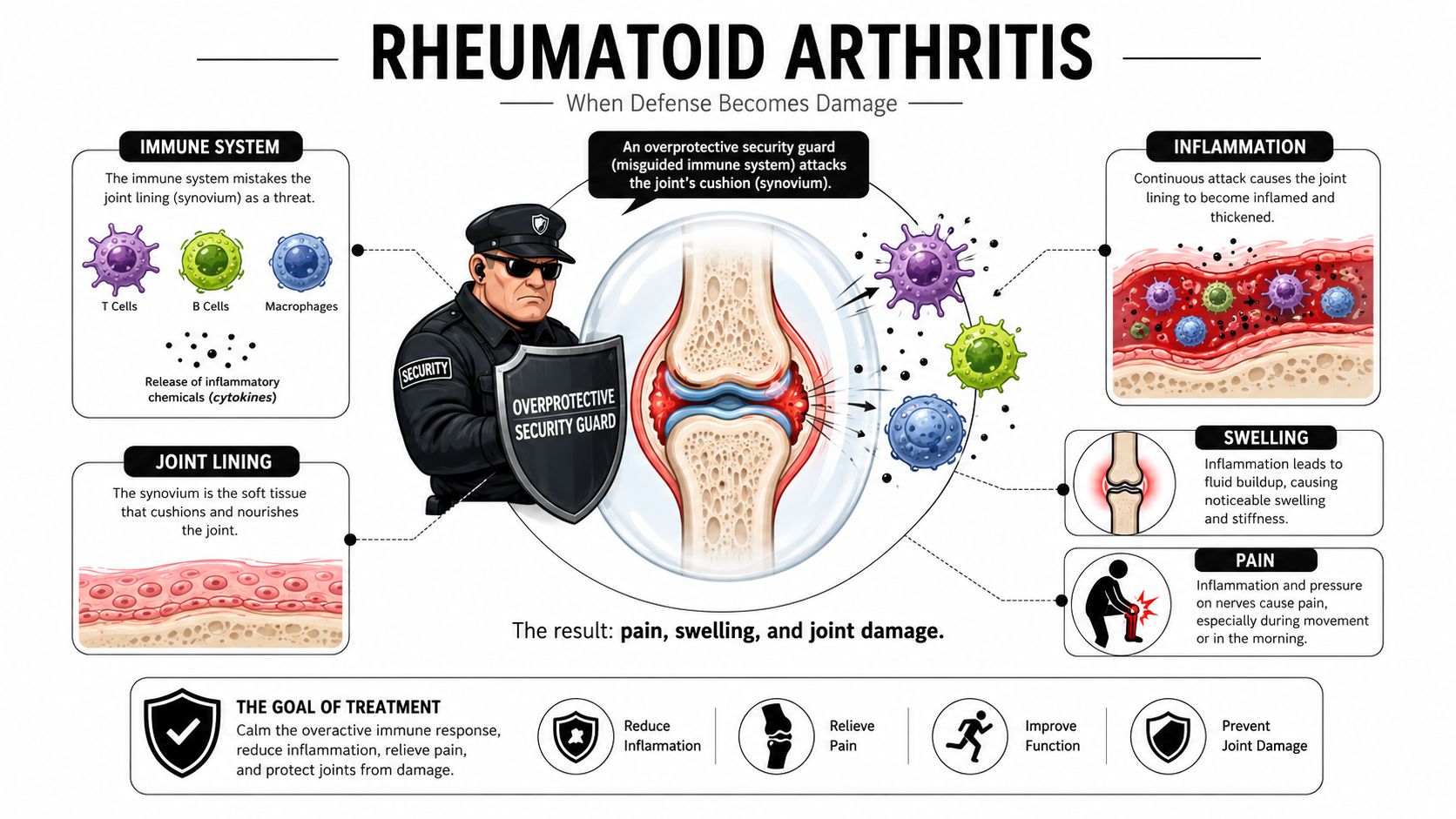
How symptoms tend to appear
RA commonly affects the hands, wrists, and feet, although shoulders, elbows, knees, ankles, and other joints can also become involved. Symptoms may include:
- Morning stiffness: Stiffness after waking or inactivity can last longer than expected and may improve only gradually with movement.
- Visible inflammation: Swelling, warmth, and tenderness may make rings, shoes, or ordinary clothing uncomfortable.
- Whole-body effects: Fatigue, malaise, reduced appetite, or low-grade illness feelings can accompany joint symptoms.
- Changing activity: Flares can temporarily intensify pain and stiffness, while quieter periods may allow more normal movement.
RA is systemic, meaning the immune and inflammatory process can affect more than the joints. People may need assessment for associated concerns involving general health, medications, sleep, mood, and organ systems. That doesn't mean every patient will develop complications. It does mean rheumatoid arthritis management should be broader than treating an isolated knee or hand.
Why early assessment matters
Inflamed joints can lose motion and strength when swelling persists. Pain may also cause protective movement patterns, such as gripping less firmly, avoiding stairs, or holding a shoulder still. Those adaptations can become functional problems even when inflammation later improves.
A rheumatology assessment helps determine whether symptoms reflect RA and how active the disease is. Rehabilitation then gives you practical ways to preserve movement while medical treatment works on the immune process.
Modern Treatment Strategies and Medication Options
The central question in current rheumatoid arthritis management isn't, “Can you tolerate the symptoms?” It's, “Is disease activity low enough to protect your joints and function?” Treat-to-target care aims for clinical remission, or low disease activity when remission isn't achievable, with therapy adjusted when inflammation remains active (NICE rheumatoid arthritis recommendations).
Specialist teams may use composite measures such as DAS28 and monitor disease activity and C-reactive protein regularly until the target is reached. If swelling and inflammatory activity persist, leaving treatment unchanged because pain has partially improved may not be appropriate.
The medication ladder has several routes
Methotrexate remains the conventional DMARD anchor. It may be adjusted, combined with another conventional DMARD, or paired with a biologic when a single medicine isn't enough. A meta-analysis found that adding methotrexate to biologic therapy improved the relative ACR50 response at six months by 32%, with about 11 additional responders per 100 patients, compared with biologic treatment without methotrexate in the analyzed evidence (BMJ meta-analysis).
Biologic DMARDs target specific inflammatory pathways and may be delivered by injection or infusion. Targeted synthetic DMARDs, including JAK inhibitors, are oral therapies that influence immune signaling. JAK inhibitors require especially careful individualized review because cardiovascular, malignancy, and thrombotic risks need to be weighed alongside potential benefits, as reflected in recent guideline discussions (APLAIR 2025 RA management update).
Corticosteroids can provide rapid relief while a DMARD begins working, but they're generally used as short-term bridge treatment rather than a permanent foundation. Every DMARD also increases infection risk, so vaccination review and safety monitoring belong in the treatment conversation, not as afterthoughts.
| Treatment category | Practical role | Main trade-off |
|---|---|---|
| Conventional DMARDs | Build long-term disease control | Effects and tolerability vary, and monitoring is required |
| Biologic DMARDs | Target specific immune pathways | Infection precautions, injection, or infusion considerations |
| JAK inhibitors | Offer targeted oral therapy | Requires risk-based specialist selection |
| Corticosteroids | Provide short-term inflammatory relief | Prolonged exposure creates important health risks |
Medication may take time to show its full effect, and finding the right regimen can involve adjustment. Don't stop or change treatment without speaking with your prescriber. For general supportive information, you can also review this top joint aid products guide, but supplements shouldn't replace DMARD treatment and may interact with prescriptions.
For practical information about prescription-based arthritis pain care, see MedAmerica's arthritis pain relief prescription resource.
A short visual overview of structured escalation and monitoring appears below.
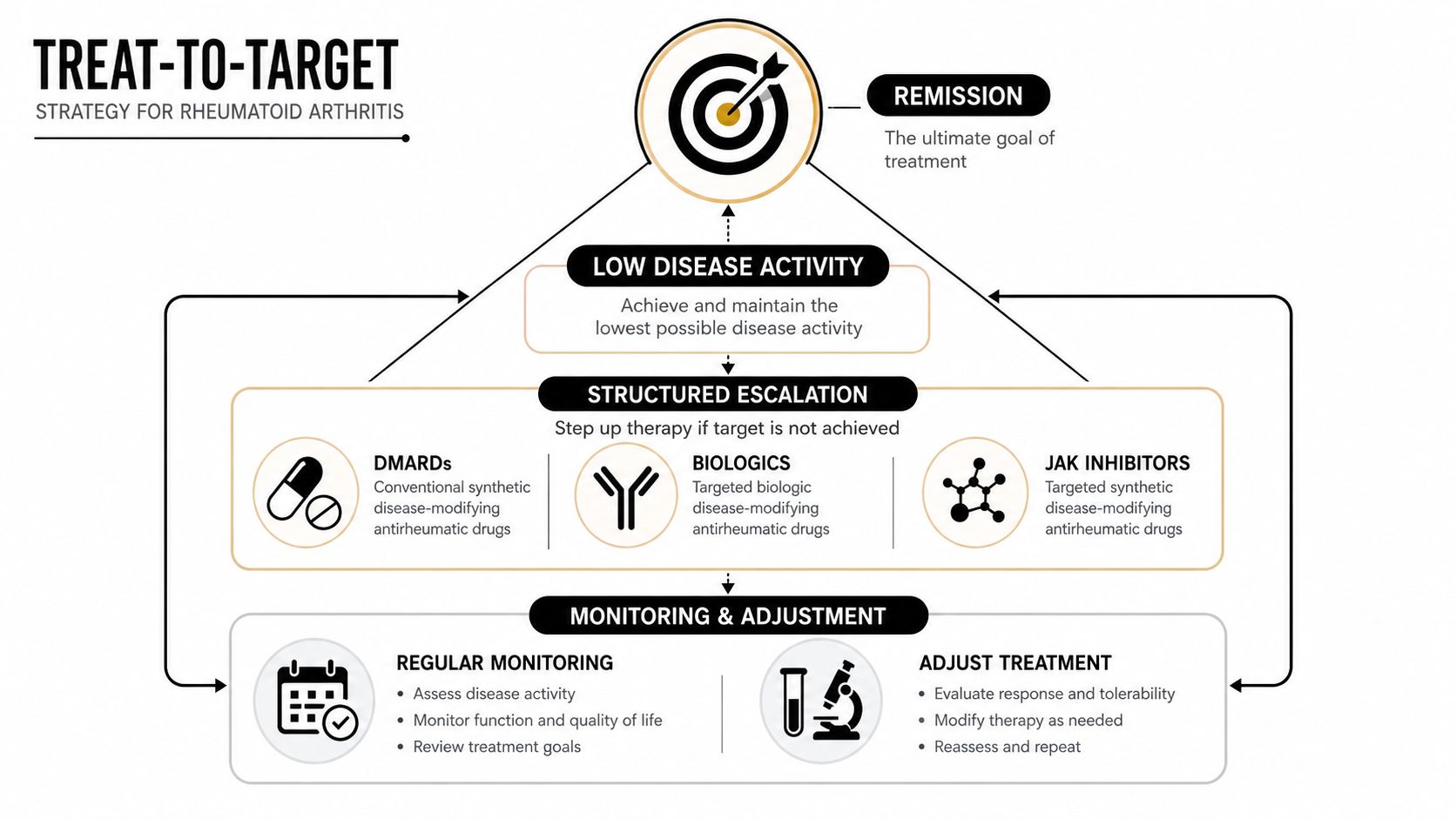
This video can help reinforce the difference between symptom control and disease-modifying treatment.
Common Misconceptions About RA Medications and Remission
A patient who feels better may reasonably ask, “Can I stop?” Another may ask for steroids indefinitely because they work quickly. Both questions deserve a careful answer, not reassurance based on a single good week.
Steroids are not a safe long-term fallback
Corticosteroids can reduce inflammation quickly, which makes them useful during selected flares or while slower treatments take effect. The trade-off becomes less favorable with prolonged use. Guidance discourages extended corticosteroid treatment because of bone loss, infection risk, and metabolic complications (Arthritis Foundation discussion of updated RA guidance).
That doesn't mean you should abruptly stop a prescribed steroid. It means the care team should define why it's being used, what the exit plan is, and which disease-modifying strategy will control inflammation afterward. If you keep needing steroids to function, that's a reason to review the underlying plan.
Remission means control, not a cure
Remission is an important treatment target, but it doesn't reliably mean the immune disease has disappeared. Recent guidance supports cautious tapering in selected people with sustained remission, while full withdrawal commonly carries relapse risk. The 2025 BSR guidance specifically states that withdrawal of targeted therapies in sustained remission isn't recommended, as summarized in the recent management update linked above.
A safer discussion includes:
- How stable is remission? Review symptoms, examination findings, inflammatory markers, and function.
- What would tapering involve? Dose reduction or longer intervals may be considered under supervision.
- What is the flare plan? Know whom to contact and which symptoms require prompt review.
- What risks matter personally? Infection history, bone health, pregnancy plans, cardiovascular factors, and other conditions can change the balance.
Infection precautions are part of responsible care
All DMARDs can increase infection risk, but that doesn't automatically make them unsuitable. Vaccination review, laboratory monitoring, screening where indicated, and prompt attention to infection symptoms help clinicians manage that risk. Tell your rheumatology team about fevers, persistent cough, unusual wounds, or exposure concerns rather than skipping doses.
Practical rule: Feeling better is a reason to review the plan, not a reason to discontinue it independently.
Rehabilitation and Self-Management Strategies That Work
Medication can quiet the inflammatory process, but it doesn't automatically restore range of motion, muscle capacity, confidence, or efficient movement. Rehabilitation fills that gap with carefully dosed activity. The right exercise should leave you feeling worked, not punished.
Match movement to disease activity
On a relatively calm day, begin with gentle range-of-motion work for the joints affected by RA. Slow finger glides, wrist circles, ankle pumps, shoulder movements, and controlled knee bends can reduce guarding and maintain available motion. A physical therapist should modify these exercises if a joint is unstable, significantly swollen, or painful through the available range.
Strengthening supports joints by improving the capacity of surrounding muscles. Start with low resistance, controlled repetitions, and positions that don't force painful compression. Isometric contractions, resistance bands, sit-to-stand practice, and light functional lifting may be appropriate, but the exact choice depends on joint involvement and disease activity.
Low-impact aerobic work can include walking, cycling, water exercise, or another activity you can repeat consistently. If you're building a routine, you can use this resource to track low impact workouts and record how your body responds.
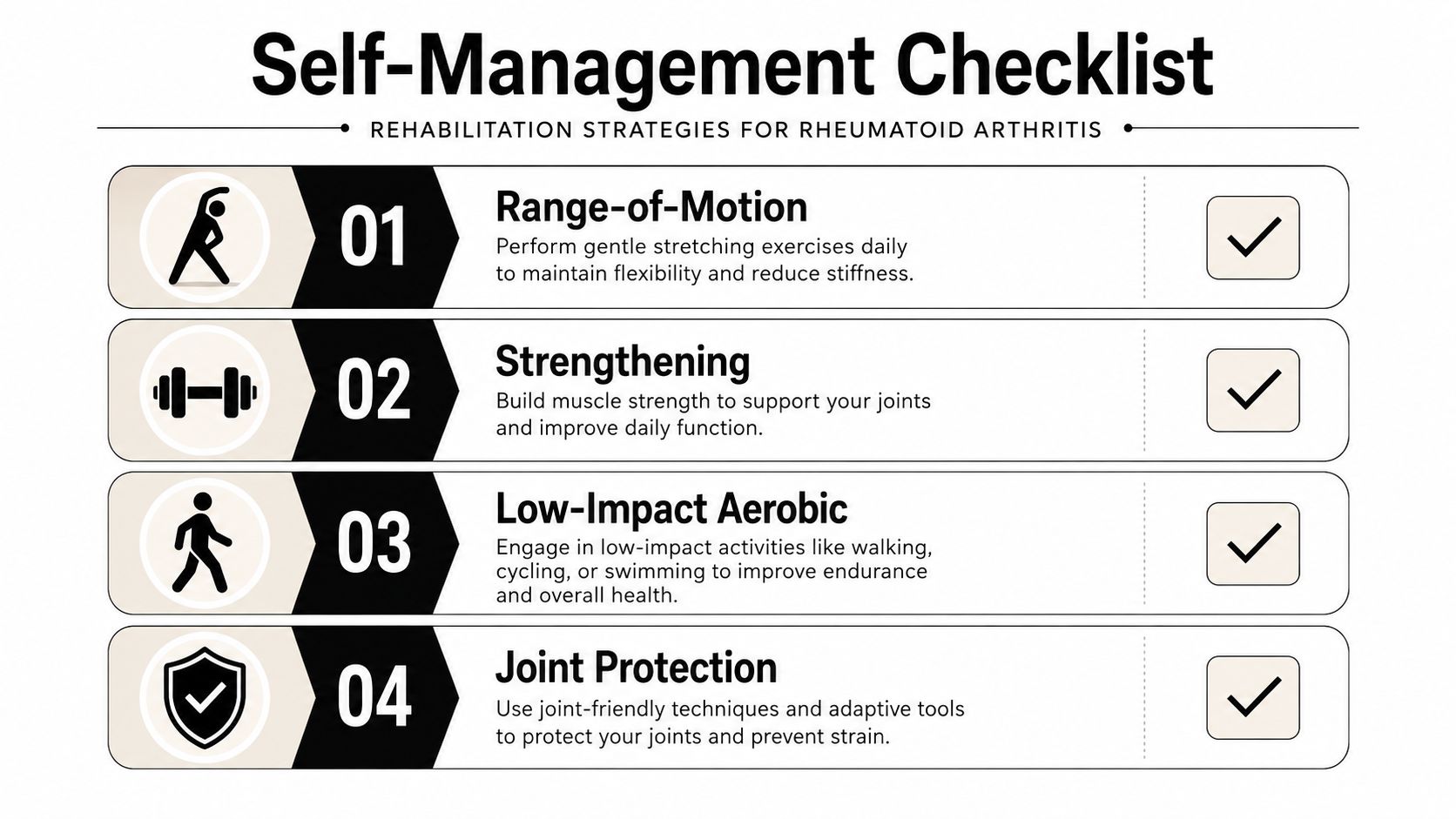
Use symptoms as information
Heat often helps morning stiffness and prepares tissues for gentle movement. Cold may be more comfortable after activity or during a warm, swollen flare. Protect the skin, keep sessions brief, and stop if numbness, discoloration, or worsening pain develops.
Pacing matters. Break demanding chores into smaller blocks, alternate hand-heavy and lower-body tasks, and use larger joints when possible. Jar openers, wider handles, carts, splints, and ergonomic changes can reduce unnecessary strain. Occupational therapy is especially useful when hand pain interferes with cooking, dressing, typing, or work.
A flare doesn't always require complete rest. Reduce resistance, shorten the session, choose comfortable range-of-motion exercises, and prioritize sleep and recovery. However, marked swelling, sudden loss of function, severe unremitting pain, or a hot joint with systemic illness needs medical assessment rather than a harder workout.
For individualized arthritis rehabilitation, review MedAmerica's physical therapy for arthritis service. Nutrition, sleep, stress management, and smoking cessation can support overall health, but they shouldn't be presented as substitutes for disease-modifying care.
Why Multidisciplinary Care Produces Better Outcomes
Medication and rehabilitation solve different problems. Rheumatology treatment targets immune activity and reduces the biological drivers of joint damage. Physical therapy addresses mobility, strength, endurance, balance, and movement confidence. Occupational therapy focuses on hand function, joint protection, adaptive equipment, and the practical demands of home and work.
A person can have controlled inflammation and still struggle to lift a saucepan because the wrist has lost motion. Another may have manageable knee symptoms but avoid walking because the quadriceps have weakened. A medication adjustment alone may not retrain those patterns. Likewise, exercise can't substitute for treatment when persistent synovitis is actively damaging joints.
What each professional contributes
- Rheumatology: Confirms disease activity, selects and monitors DMARDs, manages flares, and reviews systemic risks.
- Physical therapy: Doses mobility, strengthening, aerobic conditioning, manual techniques, and assistive strategies around current symptoms.
- Occupational therapy: Modifies daily tasks, protects small joints, and addresses hand function, work tolerance, and energy conservation.
- Primary care and other specialists: Coordinate vaccination, bone health, cardiovascular care, mental health, and related medical needs.
This coordinated model is particularly valuable when symptoms remain active despite treatment, new joints become involved, medication side effects interfere with adherence, or ordinary activities become difficult. Bring functional examples to appointments. “My hand hurts” is useful, but “I can't turn the car key or hold a coffee cup safely” gives the team a clearer rehabilitation target.

MedAmerica Rehab Center in Deerfield Beach combines physical therapy, chiropractic care, acupuncture, and advanced modalities such as shockwave therapy for selected musculoskeletal problems. Its role in RA care is functional support, not replacement of rheumatology treatment. Patients seeking a connected provider network can also explore coordinated care providers.
“The best rehabilitation plan is the one that respects inflammation while still protecting your ability to move.”
Building Your Personal RA Management Framework
A workable plan should fit your real week, not an idealized schedule. Track three categories in a notebook or phone: symptoms, treatment, and function. Record which joints are swollen or stiff, how fatigue affects the day, when medication changes occur, and what tasks become easier or harder.
Function often reveals progress more clearly than pain alone. Note whether you can walk farther, grip household objects, climb stairs, sleep through the night, or complete work with fewer breaks. Share patterns rather than isolated bad days with your care team.
Prepare for each appointment
Bring an updated medication and supplement list, recent symptoms, questions about side effects, and examples of functional changes. Ask direct questions:
- What is my current disease activity target?
- Which findings would lead you to adjust treatment?
- How will we monitor safety?
- What should I do if I develop an infection or flare?
- Can physical or occupational therapy address my specific limitations?
- If remission continues, would cautious tapering be appropriate, and how would relapse be detected?
Keep rehabilitation flexible. On stable days, practice mobility, strengthening, and aerobic conditioning. During active inflammation, reduce load and focus on comfortable movement, pacing, and medical communication. Your therapist can help you distinguish ordinary exercise effort from a sign that the plan needs modification.
Chronic illness also affects motivation, identity, sleep, and mood. Choose small repeatable actions, involve supportive people, and ask for help when uncertainty or anxiety becomes difficult to manage. Modern rheumatoid arthritis management can support an active, fulfilling life, but it works best when you participate in monitoring, communicate early, and treat rehabilitation as part of care rather than an optional extra.
If you're in Deerfield Beach and persistent arthritis symptoms are limiting movement, bring your medication plan and functional concerns to a rehabilitation consultation. A clinician can help identify safe exercise, joint-protection, and mobility strategies while you continue coordinating disease treatment with your rheumatology team.
MedAmerica Rehab Center offers individualized physical therapy, chiropractic care, acupuncture, and selected advanced modalities to help people with arthritis preserve mobility and manage functional limitations. Visit MedAmerica Rehab Center to discuss your symptoms, arrange an evaluation in Deerfield Beach, and build a rehabilitation plan that works alongside your medical care.
MedAmerica Rehab · Deerfield Beach
Talk to a clinician about your pain
Physical therapy, chiropractic, acupuncture and shockwave therapy under one roof, since 1995. Same-day appointments are available.
Mon–Thu 8:00 AM – 6:30 PM · Fri 8:00 AM – 3:00 PM