
Neck Pain Treatment at Home: Quick & Lasting Relief
You wake up, turn your head toward the alarm, and feel that sharp pull along one side of your neck. Or the day ends, you stand up from your desk, and suddenly your neck feels stiff, heavy, and hard to move. Many in Deerfield Beach have had some version of this. It's frustrating because neck pain can make ordinary things feel awkward fast. Driving, checking blind spots, working on a laptop, even sleeping become harder than they should be.
The good news is that most mild to moderate neck pain responds well to smart self-care at home. The key is using the right strategy at the right time. Fresh pain needs a different approach than pain that keeps returning week after week. If you treat those two situations the same way, you can stay sore longer than necessary.
A practical neck pain treatment at home usually has two parts. First, calm things down. Then build support so the pain is less likely to come back. That second part is where a lot of people miss the mark. They stretch, feel temporary relief, and stop there. For many cases, especially ongoing stiffness and recurring soreness, the neck also needs better stability.
That Familiar Twinge Understanding Your Neck Pain
Neck pain often shows up in ordinary moments. You back out of the driveway and realize checking your blind spot hurts. You look down to answer a text and feel a pull at the base of your neck. After a minor car accident, the soreness may not even start until later that day or the next morning, when the muscles tighten and turning your head suddenly feels limited.
That pattern matters because neck pain is not one single problem. A fresh irritation from sleeping awkwardly, a desk-heavy week, or a sudden twist usually behaves differently from the neck pain that keeps coming back. Post-auto accident neck pain adds another layer. Even a low-speed collision can leave the muscles guarded and the joints sensitive, so home care has to be gentler and more deliberate at first.
In the clinic, I usually find a few repeat contributors. The head stays forward for hours. The upper traps stay tense. The deeper support muscles do too little work. People often focus on stretching because it feels good in the moment, but recurring neck pain is often also a stability problem.
Many sore necks are irritated, overloaded, or under-supported, not seriously damaged.
That distinction changes the plan. A tight neck does not always need more pulling and more stretching. It often needs calmer movement first, then light isometric work so the neck can tolerate daily life without flaring up again. Isometrics are especially useful after an auto accident or after repeated episodes of stiffness because they build support without asking the neck to move through a large range right away.
Acute pain and recurring pain need different goals
With newer pain, the priority is settling the irritation and keeping the neck from getting stiffer. With recurring pain, the long-term fix is usually better control. That means improving how the neck muscles hold the head up during driving, computer work, sleep, and exercise.
This is also why random internet stretches can miss the mark. If a muscle is guarding because the area feels unstable, stretching alone may give short relief and no lasting change. A better home program pairs mobility with low-force strengthening at the right time.
What home care can realistically do
Good home care can reduce pain, keep stiffness from snowballing, and help the neck regain tolerance for normal activity. It can also address the common triggers that set off repeat episodes, especially poor desk posture, phone posture, and weak endurance in the muscles that support the neck.
For simple muscle tension, heat can feel soothing. Some people also like topical options for short-term comfort, such as Explore Wellness Apothecary patches. Comfort measures can help, but they do not replace rebuilding support.
That is the part many home guides skip. Relief matters. Stability is what helps the relief last.
Your First 48 Hours Immediate At-Home Care
You wake up, turn your head to check the alarm, and feel that sharp pull along one side of your neck. By lunchtime, it is tighter, angrier, and starting to spread into the top of the shoulder. That first day matters because the wrong kind of self-care can keep an irritated neck stirred up.
Early treatment has one job. Calm things down without letting the neck get stiff and protective.
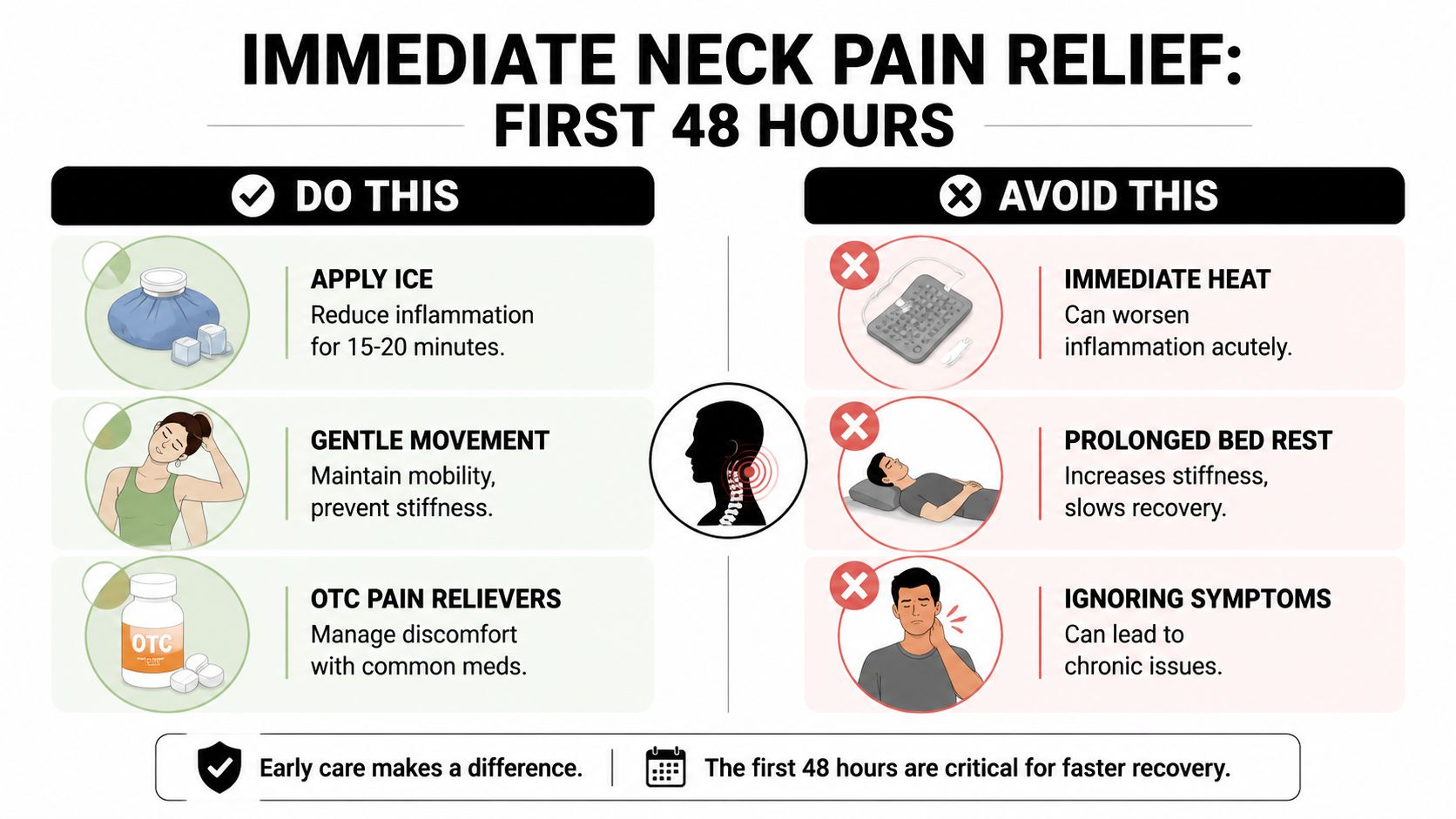
For fresh neck pain, start with cold, light movement, and relative rest. Save heat and strengthening for later.
What to do right away
Fresh pain usually responds best to less intensity and better pacing.
Use cold for the first 48 hours
Wrap an ice pack or cold pack in a thin towel and place it on the sore area for up to 15 minutes at a time. Repeat a few times through the day as needed. Ice should cool the area, not burn the skin.Keep your body moving
Short walks, position changes, and easy daily activity help more than lying down for hours. Gentle neck motion is fine if it stays in a comfortable range. Do not force rotation or side bending.Use nonprescription pain relief only if it fits your medical history
Over-the-counter medication can help some adults stay comfortable enough to sleep and move. It is not the main treatment, and it is not a good choice for everyone, especially if there is a history of stomach, kidney, bleeding, or blood pressure issues.Reduce the motions that keep poking the problem
Skip heavy lifting, overhead work, long phone sessions, and quick head turns. Driving less for a day or two can help if checking mirrors is painful.
If your neck pain started after a car accident
This needs a little more caution.
After a minor auto accident, many people assume they just have stiffness and try to stretch it out right away. I usually tell patients to hold off on aggressive stretching during that early window. Whiplash-type irritation often comes with muscle guarding, and pulling hard on a guarded neck can make it clamp down more.
Use the same early plan of cold, gentle motion, and activity modification. Watch for red flags such as worsening headache, dizziness, arm numbness, unusual weakness, nausea, or pain that keeps climbing instead of settling. If those show up, get checked promptly. For safer ideas later in recovery, these neck pain relief stretches and exercise guidelines can help you understand what to add and what to avoid.
When to switch to heat
Once the sharp, irritated feeling starts to settle, heat often becomes more useful than ice. That is usually after the first couple of days, when stiffness and muscle tension are the bigger complaint.
Good options include:
- A warm shower
- A warm compress
- A low-setting heating pad
- Heat patches used after the early inflammatory stage
Some people like wearable heat during desk work or commuting. If you're looking for a simple option, Explore Wellness Apothecary patches only after that initial acute window has passed.
What to avoid in the acute phase
The first 48 hours are not the time to test how much your neck can tolerate. They are the time to settle symptoms and protect motion.
| Avoid | Why it backfires |
|---|---|
| Heavy stretching | Irritated tissue often responds with more guarding and soreness |
| Heat on day one if the area feels hot and inflamed | It can increase throbbing and irritation |
| Long periods in bed or on the couch | Stiffness builds fast, especially in the upper back and neck |
| Pushing through sharp pain | Sharp pain usually means the load or motion is too much right now |
One practical rule works well here. If a position or activity leaves your neck calmer and easier to move a few minutes later, keep it. If it leaves you sharper, tighter, or more guarded, scale it back.
The long-term fix is not in these first 48 hours. Early care is about settling the flare so the neck is ready for the next step, which is rebuilding support with the right kind of strengthening, especially isometrics.
Building a Stronger Neck Stretches and Isometric Exercises
Stretching can help. It often reduces tension and gives quick relief. But if your neck pain keeps returning, stretching alone usually isn't enough.
Chronic neck pain often stems from deep cervical muscle weakness that stretching alone cannot resolve. Isometric exercises, where the neck pushes against hand resistance without moving, have shown superior outcomes in reducing pain and improving stability. A recommended protocol is performing 20-second holds in four directions, repeated three times daily, as described in this clinical exercise overview on isometric neck work.
That's the shift many home guides miss. A stronger, steadier neck usually tolerates work, driving, and daily life better than a neck that only gets stretched.
Start with motion, not force
If your neck is still stiff, begin with gentle mobility before you add resistance.
Try these slowly:
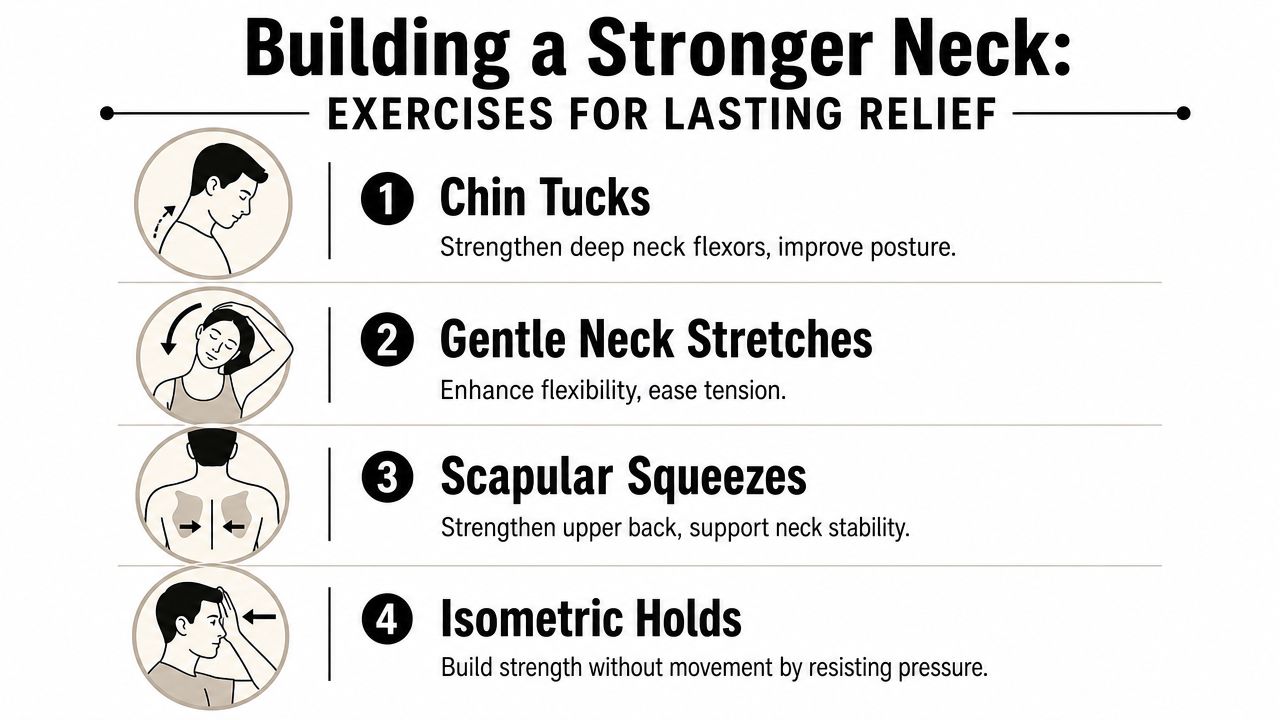
- Chin tucks: Sit tall and glide your chin straight back. Don't tip your head up or down.
- Easy head turns: Turn right and left only into a comfortable range.
- Shoulder rolls: Roll the shoulders back to reduce upper trapezius tension.
- Scapular squeezes: Gently draw the shoulder blades together and down.
If you want a visual reference for simple movement drills, this page on neck pain relief stretches can be a helpful starting point.
Relief matters, but stability is what usually keeps neck pain from recycling.
The isometric routine that matters most
Isometric work means your muscles engage without visible movement. That makes it useful when the neck needs support but doesn't tolerate big motions well.
Forward hold
Place your palm on your forehead. Press your head gently into your hand without letting the head move. Keep your jaw relaxed and shoulders down.
- Hold for 20 seconds
- Use moderate pressure
- Repeat three times
Backward hold
Place both hands behind your head. Press backward into your hands without tipping your head.
This should feel steady, not shaky. If you notice your ribs lifting or your low back arching, reduce the effort.
Side hold
Put your right hand against the right side of your head. Press sideways into the hand without bending your neck. Repeat on the left.
- Hold each side for 20 seconds
- Repeat three times per side
How to do them correctly
The details matter more than people think.
| Exercise point | What to do |
|---|---|
| Pressure | Use moderate effort, not maximum force |
| Posture | Keep shoulders relaxed and chest quiet |
| Breathing | Don't hold your breath |
| Pain response | Mild effort is fine. Sharp pain means stop |
A simple home sequence
For many people, this is a practical routine once acute pain has settled:
- A few gentle chin tucks
- Easy shoulder rolls
- Scapular squeezes
- Isometric holds forward, backward, right, and left
- Finish with relaxed breathing and posture reset
If your neck pain is chronic, this strengthening-focused approach is often more useful than repeating side bends all day. The deep neck muscles and the upper back need to help hold your head in a better position. Otherwise, the larger surface muscles do too much work, tighten up, and complain again tomorrow.
Your Daily Habits Ergonomics and Posture Fixes
You finish a workday, stand up, and feel that familiar pull at the base of your neck. Then you wake up the next morning and it is still there. That pattern usually points to repeated daily strain, not just one bad movement.
Home treatment works better when the rest of your day stops irritating the same tissues. A few smart changes in how you sit, use your phone, drive, and sleep often do more for steady improvement than stretching at random. This matters even more after an auto accident, because a recovering neck tends to react to long periods of poor positioning faster than a healthy one.
Desk setup that reduces daily strain
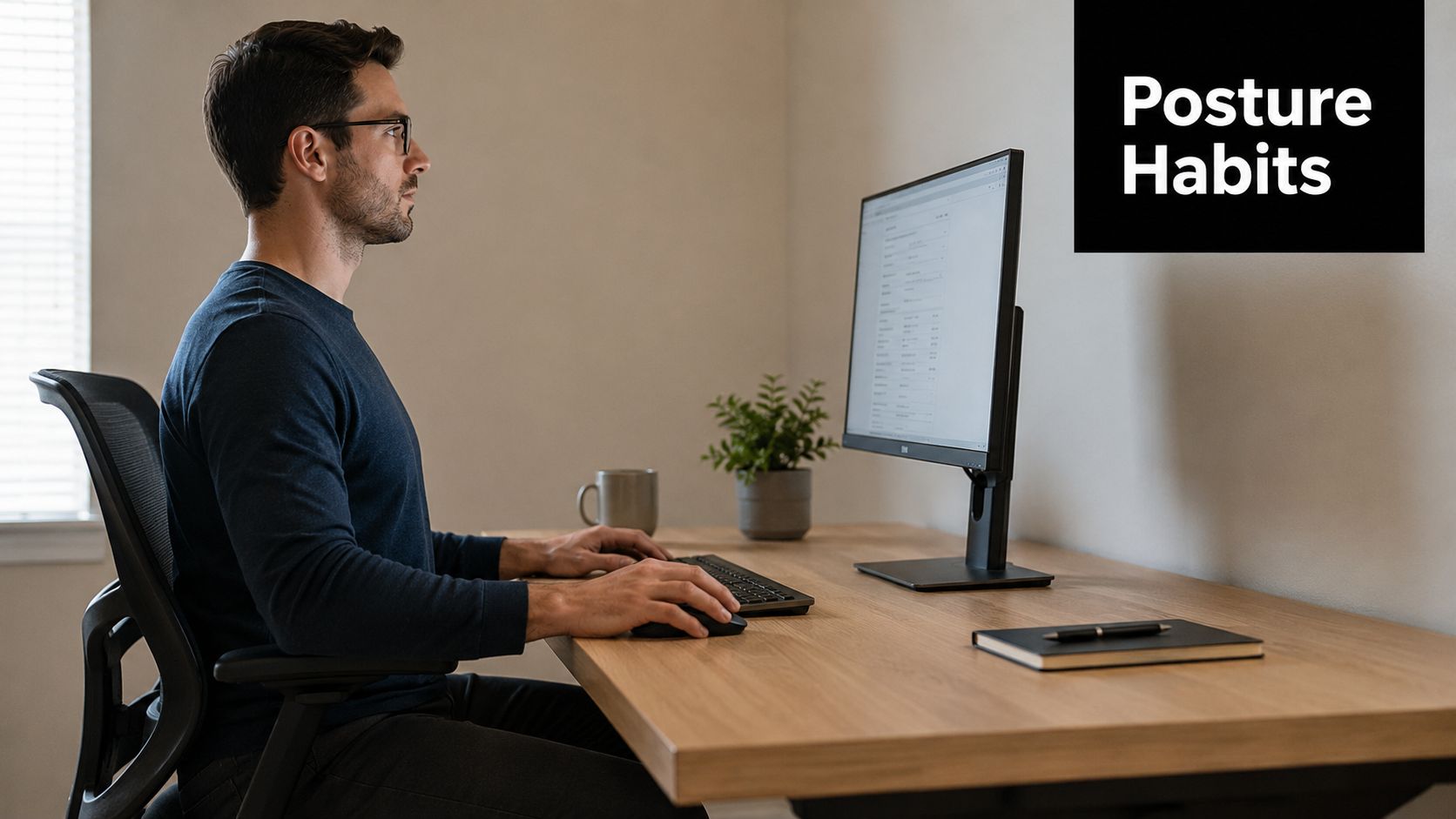
Desk pain usually comes from duration more than drama. The head creeps forward, the upper back slumps, and the shoulders tighten a little at a time.
Set up your workspace so your body does less correcting all day:
- Monitor height: Put the top third of the screen near eye level.
- Keyboard and mouse: Keep them close so your elbows stay by your sides.
- Chair support: Sit back into the chair instead of perching on the edge.
- Feet: Keep both feet flat on the floor or on a footrest.
- Arm support: Let your forearms rest lightly instead of reaching forward all day.
- Phone calls: Use speakerphone or a headset. Do not trap the phone between your ear and shoulder.
One more point I give patients all the time. Your posture does not have to look perfect. It has to be easy to maintain. A decent setup you can tolerate for hours beats a forced upright posture that leaves you stiff in twenty minutes.
Your phone habits matter more than one stretch
Looking down at a phone for ten seconds is not the problem. Doing it a few hundred times a day is.
Bring the screen closer to eye level when you can. Support your elbows on a pillow or armrest if you scroll for longer periods. Change position before your neck starts barking at you. That small timing change helps a lot, especially for people with recurring flare-ups or lingering soreness after a car accident.
This is also where isometric work pays off. Better habits reduce irritation. Isometric strengthening helps your neck hold a better position with less effort. That is the long-term piece many people miss.
This short video gives a useful visual on posture habits and neck mechanics:
Driving and commuting can quietly keep symptoms going
People often overlook the car. After an auto accident, this matters even more because driving posture can reproduce the same stiffness and guarded muscle tension you are trying to calm down at home.
A few adjustments help:
- Sit close enough to the wheel that your shoulders stay relaxed.
- Rest your head near the headrest instead of drifting forward.
- Keep both hands in a position that does not force your shoulders to hike up.
- On longer drives, stop and reset your posture instead of staying locked in one position.
If driving increases symptoms, do shorter trips when possible for a week or two. That is not avoiding movement. It is reducing repeated aggravation while the neck builds tolerance again.
Sleep posture can help or hurt recovery
Morning stiffness usually means your sleep setup needs attention. Stomach sleeping keeps the neck turned for hours, and stacked pillows can bend it too far forward or sideways.
For many people, the best starting point is back sleeping or side sleeping with one supportive pillow. If you want more detail, review this expert advice on sleep for neck pain and this guide on how to sleep with neck pain.
If your neck is recovering from a recent crash, do not be surprised if sleep position feels more sensitive than usual. That is common. In those cases, even a good pillow may need a few nights of adjustment, and a small towel roll under the neck can sometimes improve support without adding height.
If your neck hurts most in the morning, check your sleeping position, pillow height, and overnight head support before assuming you just slept wrong.
Common Neck Pain Treatment Mistakes to Avoid
A lot of home routines fail for the same reason. They chase short-term relief and miss the problem that keeps the neck irritated.
Using heat too early
Heat can relax stiff muscles, but timing matters. In the first day or two of a fresh flare-up, especially after a sudden strain or minor accident, irritated tissues often respond better to cold. Heat is usually more useful later, when the sharp irritation has settled and stiffness is the bigger complaint.
Stretching a painful neck too aggressively
A neck that feels tight is often guarding, not physically shortened. If you keep pulling on it, the muscles may tense more and symptoms can linger longer.
Use gentle motion instead. Slow rotations, small nods, easy shoulder movement, and calm breathing usually work better than forcing range. After a car accident, this matters even more. Early whiplash symptoms often need control and stability before deeper stretching.
Letting the rest of the body cheat
Neck exercises do not work well if the shoulders shrug, the ribs flare, or the torso sways to help out. I see this often. People think they are training the neck, but the movement is coming from everywhere else.
A better setup is simple:
- Let the shoulders drop before each rep
- Keep your chest and ribs quiet
- Use a smaller range you can control
- Stop if pain feels sharp, strange, or spreading
Clean reps beat big reps.
Doing only what feels good in the moment
Massage, heat, self-cracking, and stretching can all reduce symptoms for a little while. They are comfort tools. They are not the full program.
Long-term improvement usually comes from giving the neck better support. That means consistent posture changes, upper back strength, and isometric neck work that improves tolerance without stirring things up. If you want a clearer picture of how treatment is built around both pain relief and function, this guide on how physical therapy helps with back and neck pain lays that out well.
Skipping isometrics because they seem too easy
This is one of the biggest mistakes I see with recurring neck pain. Isometric exercises do not look impressive, but they teach the neck to hold steady under light load. That is a big part of what many sore necks are missing.
For patients recovering after an auto accident, isometrics are often safer and more useful early on than repeated end-range stretching. Gentle pressure into the hand in flexion, extension, and side-bending can build control without the extra motion that sometimes aggravates whiplash symptoms. The goal is not to max out effort. The goal is steady, low-irritation strength.
If your home plan only loosens the neck and never helps it stabilize, the pain often returns as soon as normal life picks back up.
When to See a Professional in Deerfield Beach
Home care is appropriate for many mild cases. Still, some neck pain needs a closer look. If symptoms are spreading, intensifying, or tied to an accident, it's smart to get assessed instead of guessing.
Watch for signs that go beyond routine stiffness:
- Pain that keeps worsening instead of easing
- Numbness, tingling, or weakness into the arm or hand
- A severe headache associated with neck pain
- Pain after a car accident or other trauma
- Symptoms that make normal daily function hard despite careful home care
Auto accident and whiplash pain is different
Generic internet advice can become risky. Up to 40% of chronic neck pain cases originate from whiplash, yet most home guides fail to distinguish between mechanical strain and post-traumatic instability. Post-whiplash protocols should focus on stabilization and graded isometrics, not aggressive range-of-motion exercises that can worsen micro-injuries, based on Aurora Health Care's guidance on neck pain and whiplash recovery.
If your pain started after an auto accident, don't assume you should stretch through it. Whiplash can leave the neck feeling stiff and unstable at the same time. In those cases, repeated deep rotations, hard extension stretches, or forcing mobility too early may make things worse.
After a car accident, the safest home program is usually calmer and more controlled than people expect.
What a professional evaluation adds
A good evaluation separates ordinary muscular neck pain from nerve irritation, joint restriction, postural overload, and post-traumatic instability. That changes the treatment plan.
A clinician can also show you what your body is doing during exercise. Many patients think they're working the neck when they're really shrugging, arching, or bracing in ways that keep the problem going. For local readers, this overview of how physical therapy helps with back and neck pain explains what that process looks like in practice.
For people in Deerfield Beach, professional care makes the most sense when your pain follows a collision, keeps recurring, or doesn't match the usual mild strain pattern. In those situations, an in-person exam can help you stop trying random fixes and start using the right progression.
If your neck pain isn't settling down, or it started after an auto accident, MedAmerica Rehab Center in Deerfield Beach offers physical therapy, chiropractic care, acupuncture, and individualized rehab plans that focus on restoring motion, building stability, and reducing pain without unnecessary medication or surgery.
MedAmerica Rehab · Deerfield Beach
Talk to a clinician about your pain
Physical therapy, chiropractic, acupuncture and shockwave therapy under one roof, since 1995. Same-day appointments are available.
Mon–Thu 8:00 AM – 6:30 PM · Fri 8:00 AM – 3:00 PM