
Kinesio Tape for Sports Injuries: A How-To Guide
You tweak your run, your lift, or your pickleball schedule because something still doesn't feel right. The ankle is a little unstable. The front of the knee nags on stairs. Your shoulder pinches when you press overhead. Then you notice the same thing everywhere: bright strips of tape on athletes, training partners, and half the people at the gym.
It's easy to wonder if Kinesio tape is the missing piece.
Sometimes it helps. Sometimes it doesn't do much. That's the part most simple taping tutorials leave out.
Kinesio tape for sports injuries can be useful when you use it for the right reason, apply it well, and keep your expectations realistic. It may give short-term symptom relief, better comfort with movement, or a bit of support while you rehab. It does not repair torn tissue, fix weak muscles, or replace a good recovery plan.
Your Guide to Kinesio Tape for Sports Injuries
A common situation looks like this. Someone rolls an ankle, rests a few days, returns to activity, and realizes the joint still feels uncertain when cutting, landing, or moving fast. Another athlete develops runner's knee and wants something that eases pain enough to keep training while addressing the underlying problem. Someone else gets shoulder pain with bench press or overhead work and hopes tape will “hold things in place.”
That's where Kinesio tape often enters the picture.
The technique has been around for a long time. Kinesio tape dates back to 1979, when Dr. Kenzo Kase developed the original Kinesio Taping method, and the commercial tape became widely known after its introduction in 1988 and its visibility in elite sports, especially around the Beijing Olympics, as summarized in this history of elastic therapeutic tape. Its popularity grew fast. The research support did not grow as quickly.
Practical rule: Tape is most helpful when it solves a specific short-term problem, like making movement feel more comfortable during rehab, not when you expect it to “heal” the injury by itself.
Patients usually want a straight answer. Here it is. If tape reduces pain enough for you to walk better, squat better, or tolerate rehab exercises, it has value. If you put it on and expect it to prevent reinjury on its own or restore full function without strength and mobility work, you'll probably be disappointed.
That's why a better guide starts with the why and when, not just where to stick the strips. Good taping is less about copying a pattern from a photo and more about matching the tape to the problem in front of you.
What Is Kinesio Tape and Is It Right for You?
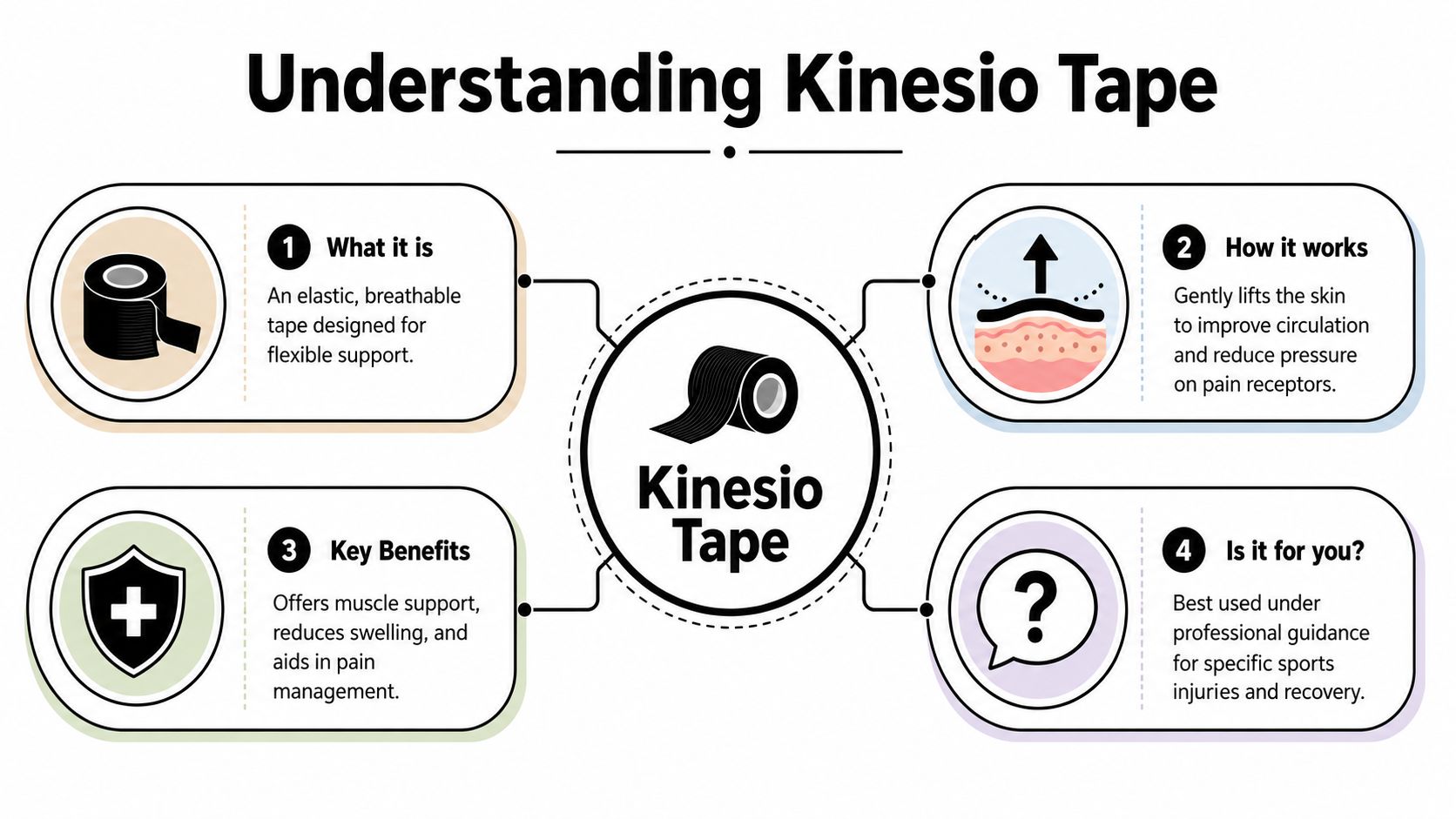
Kinesio tape is an elastic adhesive tape designed to move with your skin and joints. Unlike rigid athletic tape, it doesn't aim to lock a body part down. The usual goal is lighter support while still allowing motion.
People often hear dramatic explanations about circulation, muscle activation, or instant correction. In practice, the most reasonable way to understand it is simpler. The tape may change how the area feels. That sensory input can make movement feel easier, less threatening, or a little more controlled. For some injuries, that's enough to make exercise or sport more tolerable.
What it may do well
There are a few situations where tape can be worth trying:
- Pain modulation: Some people feel less discomfort during movement.
- Swelling awareness: Tape may help remind you to move more carefully around an irritated area.
- Movement confidence: A taped ankle, knee, or shoulder can feel more supported during rehab drills.
- Short-term range of motion changes: In some cases, movement feels easier right away.
That's why tape remains common in clinics and on sidelines.
What the evidence actually says
The evidence is mixed, and that matters. In clinical surveys, 74% of healthcare professionals said they used kinesiology tape for post-injury treatment, 67% for pain modulation, and 60% for neuro-sensory feedback, but a 2012 meta-analysis found inconsistent results for range of motion and strength and said the findings were not strong enough to confirm major clinical value, as reported in this Bath research summary on kinesio taping in sports injuries.
So yes, clinicians use it often. No, that doesn't make it a proven fix for every sports injury.
The best way to think about tape is as a symptom-management tool. It may help you move better today. It may not change the long-term outcome unless your rehab changes the cause of the problem.
Who tends to be a good candidate
Kinesio tape is most reasonable when:
- You have a clear rehab plan: Tape supports the work you're already doing.
- A certain movement is painful but still safe to train: Tape may make that movement more tolerable.
- You want flexible support, not rigid immobilization: It allows activity rather than replacing it.
- You're using it with guidance: A sports-focused rehab plan matters more than the tape itself. If you need help sorting that out, a structured sports injury physiotherapy program is often more useful than another roll of tape.
If you're hoping tape will fix instability, repair a strain, or prevent all future flare-ups, it's probably not the right expectation.
Applying Kinesio Tape Correctly The First Time
Most failed taping jobs have nothing to do with the pattern. They fail because the skin wasn't prepared, the anchors were sloppy, or the tape was stretched too aggressively.
Good setup prevents peeling, itching, and blisters.
Start with skin and tape prep
Before you apply anything:
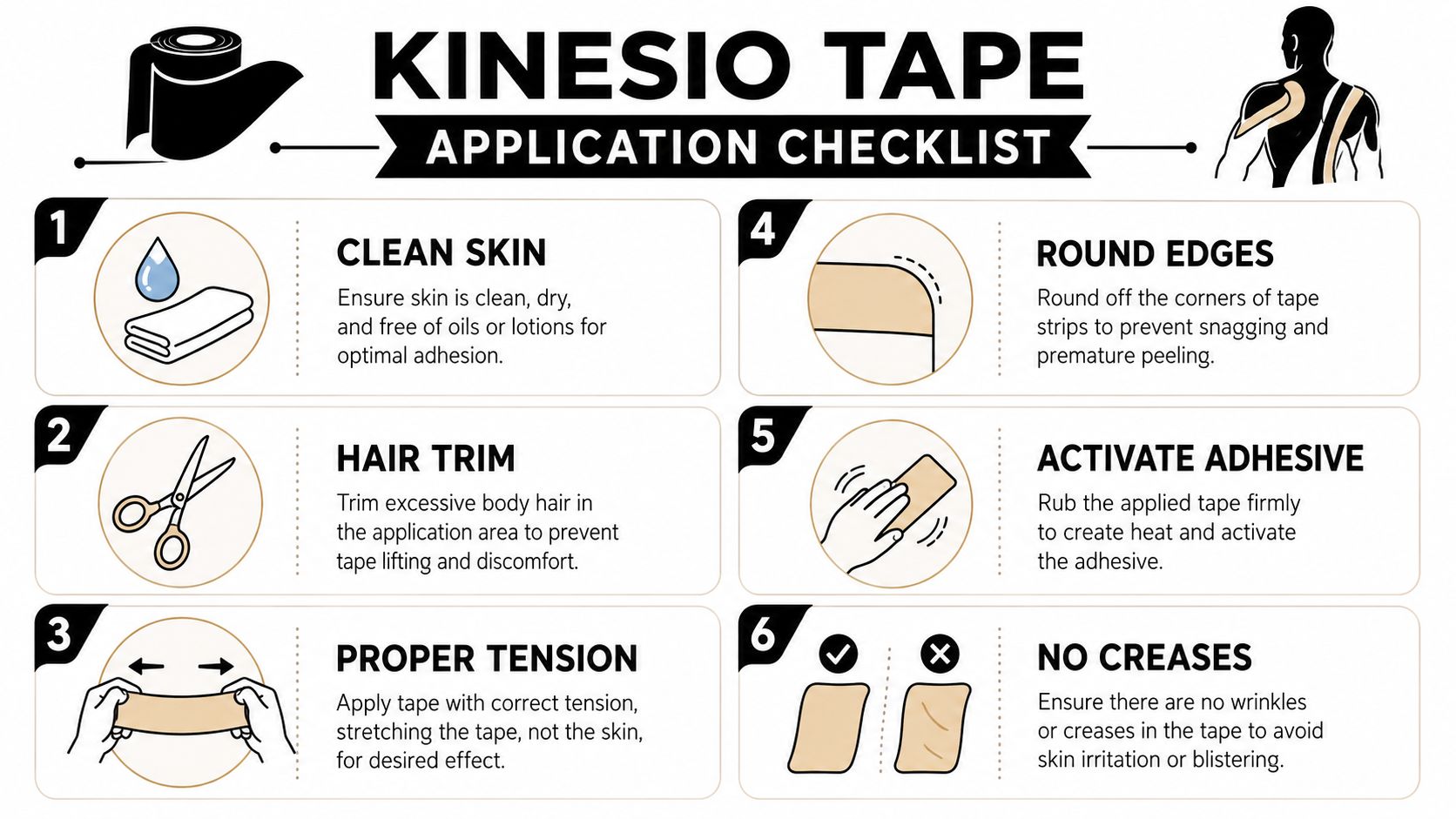
- Clean the skin. Remove lotion, sweat, and oil.
- Dry it completely. Damp skin weakens adhesion.
- Trim excessive hair if needed. You don't need a full shave, but long hair makes tape lift early and removal more uncomfortable.
- Round the corners. This small step helps reduce catching on clothing.
- Measure before peeling the backing. Don't guess the strip length once the adhesive is exposed.
Think in anchors and gentle tension
Overdoing tension is common. That's one of the main reasons tape irritates the skin and feels uncomfortable.
Use these practical rules:
- Anchors get no stretch. The first and last inch or so should lie down gently.
- Use the minimum tension needed for the goal. If light pull works, don't add more.
- Stretch the tape, not the skin. If you yank the skin underneath, you increase irritation risk.
- Rub the tape after application. Heat from your hand helps activate the adhesive.
Kinesio tape can often stay on through showers and exercise and may be worn for up to a week, but the main downside is skin irritation, including blisters, and 5% to 15% of users may be allergic to the adhesive, based on the safety notes summarized in this educational overview on kinesio tape wear time and reactions.
A quick check before you move
After the tape is on, ask yourself three questions:
- Does it feel supportive or just tight?
- Can you move normally, without pinching or pulling?
- Is the skin calm under the tape?
If it feels restrictive, itchy, or sharply uncomfortable right away, remove it and start over.
Taping Techniques for Common Sports Injuries
The most useful taping setups are the ones matched to a clear goal. For one person that's pain relief during squats. For another it's a little more confidence during lateral movement. For someone else it's reducing that “pinch” feeling with overhead use.
Use these as practical starting points, not rigid formulas. If a setup increases pain, causes skin irritation, or doesn't improve movement, stop using it.
Ankle sprain support
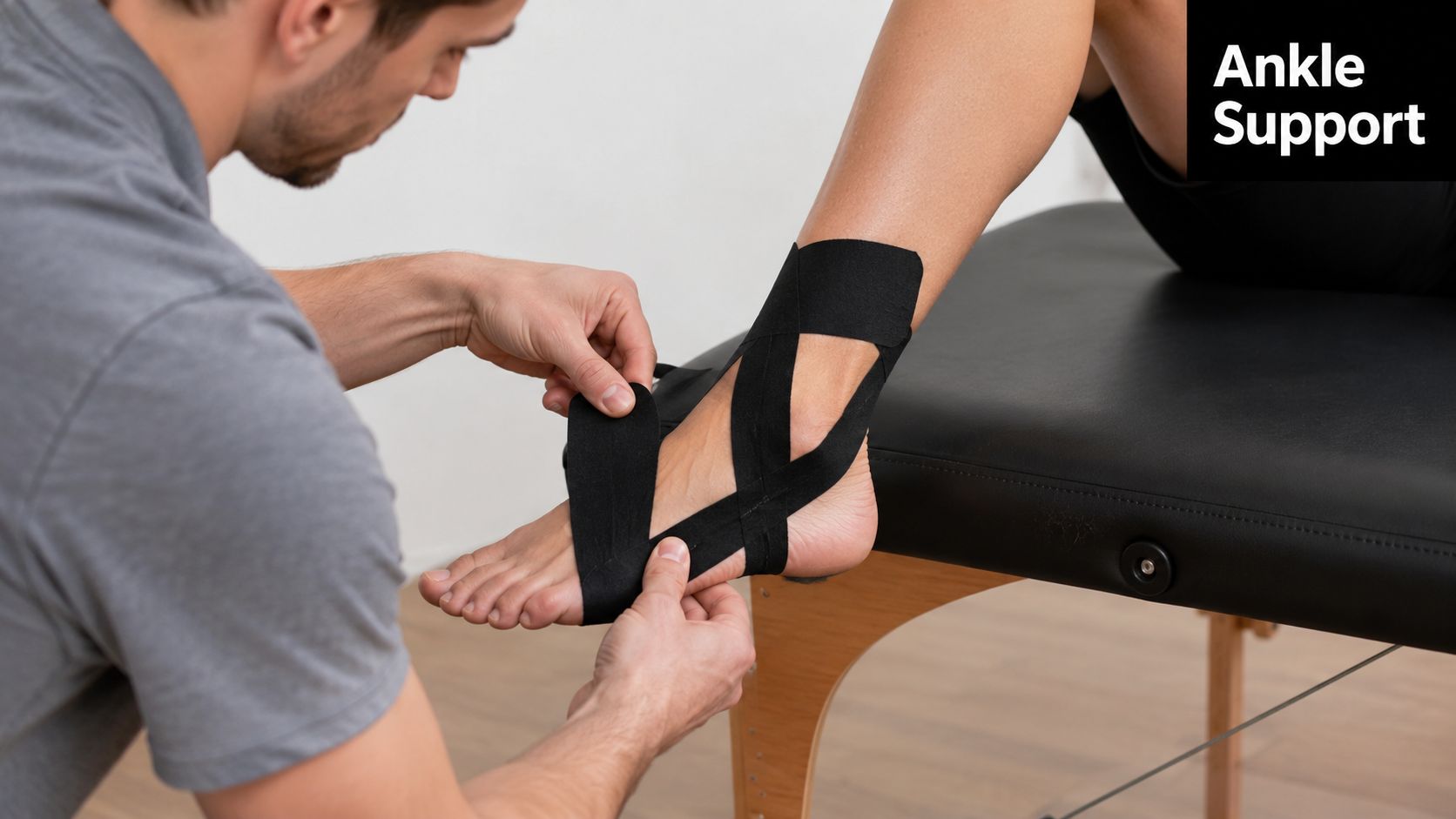
For a mild sprain or a lingering sense of instability, tape can act as a reminder and give light support during return to activity. It should not replace protection when the joint is acutely unstable.
How to apply it
- Sit with the ankle in a comfortable neutral position.
- Cut one long I-strip.
- Anchor the strip on the inside of the midfoot with no stretch.
- Guide the tape under the arch, around the heel, and up toward the outside of the lower leg with light to moderate tension through the middle.
- Finish the top anchor with no stretch.
- Add a second strip across the front or side of the ankle if you want more sensory support.
This setup works best when the goal is confidence and symptom reduction, not rigid control. If you're trying to figure out whether your ankle needs tape, strengthening, balance work, or a more structured recovery plan, this guide on ankle injury recovery can help frame the next step.
If tape lets you walk, hop, or perform rehab drills with less guarding, that's useful. If the ankle still repeatedly gives way, tape isn't enough.
Patellofemoral pain and runner's knee
Front-of-knee pain often responds better to load management and hip and leg strengthening than to anything you place directly on the kneecap. Tape can still help reduce irritation during stairs, squats, or short runs.
One simple approach
- Sit with the knee slightly bent.
- Cut two shorter I-strips.
- Place the first strip along the inner side of the kneecap with very light tension through the middle.
- Place the second strip along the outer side, again keeping the anchors relaxed.
- If the area below the kneecap feels overloaded, add a horizontal strip beneath it with gentle tension.
The goal here is comfort, not forcibly “tracking” the patella into place. If you feel pulling, pressure, or pinching under the kneecap, back off the tension.
Shoulder impingement and overloaded pressing mechanics
Shoulder taping is often less about the tendon itself and more about changing how the shoulder feels during arm elevation. For many active adults, the bigger issue is training selection and shoulder mechanics. If pressing hurts, it can help to temporarily swap painful lifts for alternatives that keep training productive. A useful example is RepStack's guide on bench press alternatives, which gives practical options when shoulder pain flares during pressing work.
Basic shoulder setup
- Start with the arm relaxed.
- Cut one Y-strip and one short I-strip.
- Anchor the base of the Y-strip near the upper outer arm with no stretch.
- Bring one tail toward the front of the shoulder and one toward the back with light tension.
- Place the short I-strip across the most symptomatic area with gentle tension in the middle only.
This can create a sense of support and help some people tolerate reaching or light training better.
A visual demo can help if shoulder or lower-limb taping feels awkward the first time:
Hamstring strain and posterior thigh pain
Hamstring taping is usually aimed at reducing discomfort during walking, jogging, or early return-to-run progressions. It does not protect the muscle from excessive load if you sprint too soon.
Try this sequence
- Lie face down or stand with the hip flexed and the hamstring on gentle stretch.
- Cut a Y-strip long enough to run from just above the back of the knee toward the sit-bone area.
- Anchor the base near the lower hamstring with no stretch.
- Apply each tail upward along the inside and outside borders of the hamstring with light tension.
- Add a short decompression strip across the sore spot if needed.
Keep this application comfortable. If the tape feels like it's digging in when you bend the knee or stride out, remove it and reapply with less stretch.
A simple way to judge whether a taping pattern is working
Don't judge tape by how dramatic it looks. Judge it by function.
| What to test | What you want to notice |
|---|---|
| Walk or jog lightly | Less apprehension, not more stiffness |
| Squat or step down | Lower pain or easier control |
| Reach or lift arm | Less pinch, smoother motion |
| Skin response after activity | No itching, blistering, or sharp redness |
If movement doesn't improve, the pattern may be wrong, or tape may not be the right tool for that injury.
Safe Taping Habits and Common Mistakes to Avoid
Most problems with Kinesio tape come from poor habits, not bad intentions. People leave it on too long, rip it off too fast, stretch it too aggressively, or ignore skin irritation because they assume discomfort is normal.
It isn't.
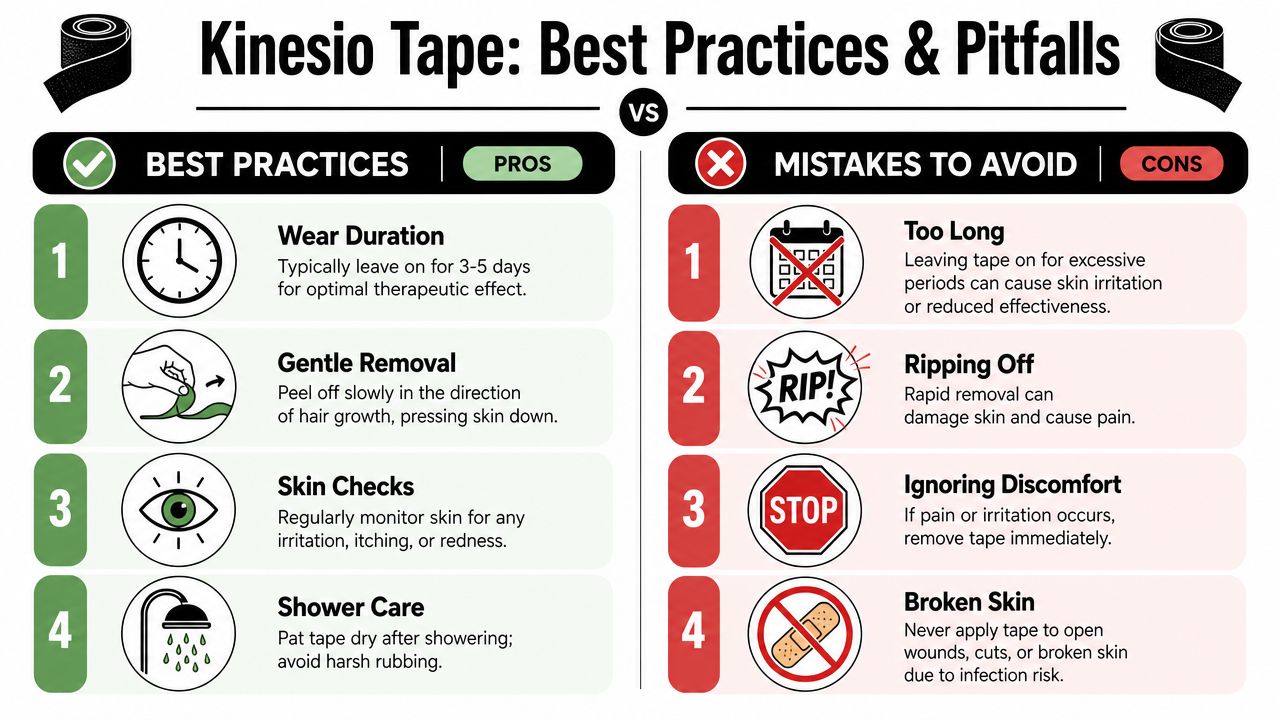
Do this, not that
Use tape in a way your skin can tolerate.
- Leave room for the skin to breathe: If the area has been taped repeatedly, give it a break between applications.
- Remove it slowly: Peel in the direction of hair growth while pressing the skin down.
- Pat it dry after showers: Don't scrub it with a towel.
- Check the edges and the skin daily: Mild awareness is fine. Itching, burning, or blistering is not.
The biggest mistakes I see
A major pitfall is obsessing over complicated tension percentages while missing the basics. Recommendations like 75% to 100% tension for ligaments and lower ranges for other goals are commonly discussed, but they're not always evidence-based, and proper skin prep plus avoiding excessive stretch matters more, as described in this survey of healthcare professionals on kinesiology tape use.
The practical mistakes are usually these:
- Too much stretch: This increases skin irritation and makes the tape feel harsh.
- Tape on broken-down skin: Never put it over open wounds or very fragile skin.
- Ignoring a reaction: Redness that lingers, blistering, or significant itch means remove it.
- Using it to override pain: If you need tape just to push through worsening symptoms, reassess the activity.
Tape should make activity feel safer and smoother. It should not become a way to silence warning signs your body keeps sending.
When to skip tape entirely
Don't apply Kinesio tape if the skin is already damaged, if you've had a prior adhesive reaction, or if the area is so irritable that even light contact is a problem. In those cases, the skin needs calming down before any taping strategy makes sense.
Why Tape Is a Tool Not a Complete Treatment
The strongest case for Kinesio tape isn't that it fixes injuries. It's that it may create a small window where movement feels easier. That can be enough to help someone squat, walk, reach, or train more comfortably while essential rehabilitation efforts occur.
That distinction matters.
A painful knee may still need stronger hips and quads. A sore shoulder may still need better loading choices and scapular control. A recurring ankle sprain may still need balance training, calf strength, and a return-to-sport progression. Tape can sit on top of that plan. It can't replace it.
What the evidence supports
The most defensible use of KT is as an adjunct, not a stand-alone cure. A 2012 systematic review concluded there was little quality evidence for KT over other tapes for injury treatment or prevention, and the most useful expectation is small, short-term symptom relief paired with active rehab, according to this systematic review on kinesio taping evidence.
That's also why patients often do better when they stop asking, “What tape pattern should I use?” and start asking, “What problem am I trying to solve?”
When you need more than a roll of tape
A few signs mean self-taping isn't enough:
- Pain keeps returning when the tape comes off
- You're changing your gait or form to protect the area
- The joint feels unstable
- Strength, mobility, or endurance is clearly dropping
- You're guessing your way back into sport
If you want a useful overview of what a broader rehab role can look like, this article on working with a sports injury physiotherapist gives good context.
When symptoms keep hanging around, a full plan is usually more valuable than another taping tutorial. For people who need that kind of next step, physical therapy for sports injuries can combine exercise progressions, hands-on treatment, movement assessment, and return-to-activity guidance.
Tape has a place. It just isn't the whole answer.
If you're dealing with a sports injury and want a recovery plan that goes beyond temporary symptom relief, MedAmerica Rehab Center offers patient-centered care that can help you identify the underlying source of pain, use tools like taping appropriately, and build a rehab program that supports safe return to activity.
MedAmerica Rehab · Deerfield Beach
Talk to a clinician about your pain
Physical therapy, chiropractic, acupuncture and shockwave therapy under one roof, since 1995. Same-day appointments are available.
Mon–Thu 8:00 AM – 6:30 PM · Fri 8:00 AM – 3:00 PM