
Inflatable Balance Disc: A PT’s Guide to Stability
If you've started feeling less steady on stairs, more cautious on uneven ground, or a little tense every time you step off a curb, you're not alone. Many people don't notice a balance problem as one big event. They notice it in small moments. Reaching for the counter. Pausing before turning. Sitting longer because standing feels uncertain.
An inflatable balance disc can help, but only when it's used the right way. In rehab, this isn't a trendy gadget or a shortcut to better balance. It's a clinical tool. Used well, it helps retrain how your body senses position, controls movement, and reacts to small shifts. Used too soon, or without the right support, it can be more challenge than your system is ready for.
That distinction matters most for seniors, people recovering from injury or surgery, and anyone dealing with dizziness, joint instability, weakness, or nerve-related foot symptoms. The goal isn't to make an exercise harder just because it's harder. The goal is to rebuild confident movement safely.
Regain Your Footing An Introduction to the Inflatable Balance Disc
A lot of patients first ask about a balance disc after a frustrating moment. Their knee feels fine walking in a hallway, but not on grass. Their back stiffens after sitting. They catch themselves grabbing furniture when they turn too quickly. What they usually want isn't a fitness challenge. They want to trust their body again.
That's where the inflatable balance disc can fit in. It gives your body a small, manageable amount of instability, just enough to wake up the muscles and movement sensors that help keep you upright. Think of it as a gentle reminder to your system, not a test of bravery.
In the clinic, it's often used as part of a progression. Some people start seated, using it on a chair to encourage more active posture. Others use it later in recovery for supported standing drills. The disc can meet very different needs, but only if the starting point matches the person.
Practical rule: The best balance exercise is the one you can do with control. If a tool makes you feel unsafe, it's too advanced for today.
What works is steady exposure, clear progression, and attention to form. What usually doesn't work is copying a fitness video, overinflating the disc, or assuming every wobble is helpful. Your balance system improves when the challenge is specific and tolerable.
That makes this a useful tool for the right person. It also makes screening and setup just as important as the exercise itself.
What Is an Inflatable Balance Disc and How Does It Work
An inflatable balance disc is a round air-filled cushion designed to create controlled instability. Instead of giving you a perfectly firm surface, it shifts slightly under your body. That small movement forces your muscles and nervous system to make constant adjustments.
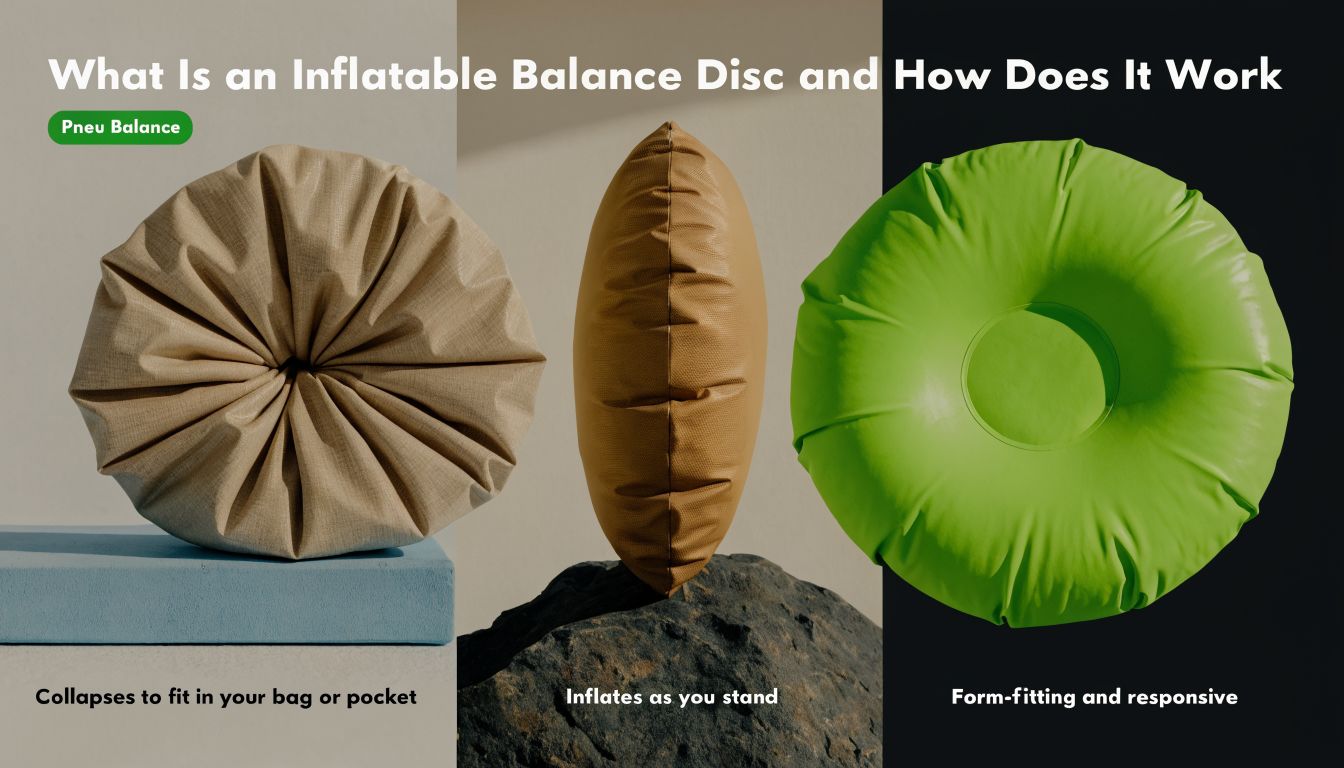
Your body's internal GPS
The easiest way to understand it is to compare pavement and sand. On pavement, your foot lands and the ground stays put. On sand, the surface gives a little, so your ankles, hips, and trunk have to react. A balance disc creates a milder version of that effect indoors.
That reaction is tied to proprioception, which is your body's sense of where you are in space. If you've ever stepped onto an uneven surface and instantly adjusted without thinking, that's proprioception doing its job. In rehab, tools like this can support neuromuscular reeducation, which means retraining the communication between the brain, muscles, and joints.
What the disc is actually built to do
In major product lines, inflatable balance discs are standardized around 14 inches (35 cm) in diameter, a size that's practical for both seated and standing use. A typical model supports up to 250 lbs and inflates from about 1 inch to 2 inches, which creates the controlled instability used for posture work, core activation, and balance training in therapy programs, as shown in the CanDo 14-inch balance disc product listing.
Those details matter. A disc isn't meant to behave like a loose cushion or a large exercise ball. It's meant to give just enough to challenge control without completely taking away your base of support.
A typical rehab disc often has features like these:
- Round, low-profile shape that works on a chair or the floor
- Air-filled chamber that changes feel depending on inflation
- Stable-enough footprint for graded training rather than extreme wobble
- Portable setup so it can be used in a clinic, classroom, or home setting
Why the wobble helps
When the surface moves under you, your body recruits small stabilizing muscles that don't get much attention during simple, straight-line movement. That includes muscles around the ankles, hips, and spine. For someone recovering from injury, this can help restore finer control, not just strength.
A balance disc doesn't teach balance by making you struggle. It teaches balance by giving your body small problems it can still solve.
The Clinical Benefits of Balance Disc Training
The biggest benefit of an inflatable balance disc isn't that it makes exercise feel harder. It's that it gives a therapist a way to make exercise more precise. The amount of challenge can be changed without changing the entire task.
Why adjustability matters in rehab
The disc's inflation level changes how it behaves. Increasing the air volume reduces platform stiffness, increases postural sway, and places more demand on core and spinal stabilizers. That adjustable response is what makes it useful for progressive retraining, as described in this vestibular balance disc overview.
That flexibility matters because rehab patients rarely need the same thing.
- Someone with low back discomfort during sitting may benefit from seated work that encourages subtle trunk activation instead of collapsing into the chair.
- A person recovering from a knee or ankle injury may use the disc to rebuild awareness of joint position during supported standing.
- An older adult with reduced confidence may start with very basic weight shifts before moving to more demanding tasks.
What patients often notice first
In practice, the first improvement usually isn't dramatic. People often notice they feel less rigid. They stop over-gripping the floor with their toes. They turn more smoothly. They sit with less slumping. Those are small wins, but they matter because balance is built from many small corrections done well.
For some people, the disc also fits nicely beside lower-impact movement work. If you're looking for a broader routine that supports mobility and comfort, this guide to holistic joint support through yoga practice can complement a plan focused on control, breathing, and joint-friendly movement.
Better balance is really better coordination
Balance isn't just about standing still. It's about coordinating vision, sensation from the feet and joints, core control, and timing. That's why simple drills on the disc can carry over into daily life.
A few practical examples:
| Situation | How disc training may help |
|---|---|
| Getting up from a chair | Improves awareness of weight shift and trunk control |
| Walking on uneven ground | Challenges the body's ability to respond to small surface changes |
| Standing at the sink or counter | Builds endurance in postural muscles |
| Recovering after lower-body rehab | Helps reconnect strength with position sense |
Patients who are working on age-related balance concerns may also benefit from broader education on improving balance in older adults, because the disc should be one part of a larger strategy, not the whole plan.
Is a Balance Disc Safe for You
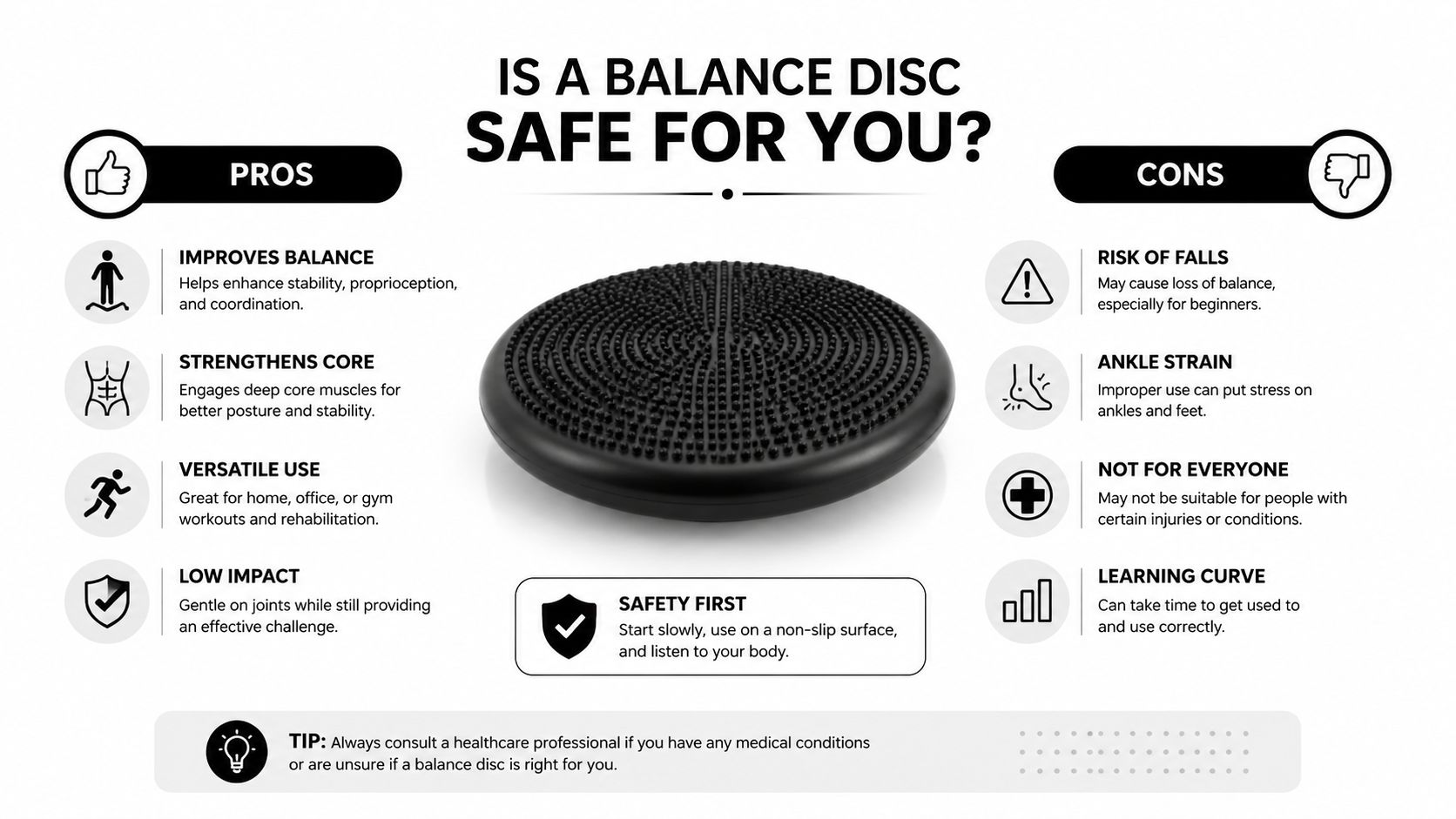
The safest answer to this question is not "yes" for everyone. A balance disc is helpful for some people and a poor choice for others, especially early in recovery. That's the part generic fitness articles usually miss.
Who usually does well with it
This tool often works best for people who have enough baseline control to handle a small amount of instability without panicking or compensating. That can include people with general deconditioning, chronic low back stiffness, or later-stage lower-body rehab when basic standing control has already returned.
It can also work well in seated form for people who aren't ready to stand on an unstable surface but still need trunk activation, posture work, or a gentle sensory challenge.
Who needs caution
A major gap in consumer advice is that not everyone should use a balance disc right away. For rehab patients, especially older adults or those with neuropathy, joint instability, or vestibular issues, using an unstable surface without proper screening and supervision can increase fall risk. Clinical programs progress from stable to unstable surfaces only after a person demonstrates enough control, as noted in this clinical product discussion on balance disc safety concerns.
That means extra caution is important if you have:
- Peripheral neuropathy that reduces feeling in the feet
- Joint instability at the ankle, knee, or hip
- Unmanaged dizziness or vestibular symptoms
- Recent surgery or an acute injury
- A strong fear of falling that causes rigid, unsafe movement
- Difficulty standing on firm ground without support
If any of those apply, don't assume the disc is off-limits forever. It may mean the timing, setup, or version of the exercise needs to change.
If you can't control the movement on solid ground, adding an unstable surface usually makes the wrong thing harder.
What safe use actually looks like
Safe use starts before the first exercise. The setup should reduce fall risk and keep the challenge focused on training, not survival.
Use this checklist:
- Choose the right location. Stand near a sturdy counter or heavy table, not a rolling chair or light furniture.
- Clear the area. Remove rugs, cords, and clutter that could catch your foot.
- Start with supervision if needed. Many people should first try it with a therapist or a trained helper nearby.
- Keep the challenge low. The goal is small corrections, not large wobbling.
- Stop if symptoms escalate. Pain, dizziness, or a sense that you might fall are reasons to stop.
When seated use is the better option
Standing gets most of the attention, but seated work is often the smarter starting point. Sitting on the disc can encourage subtle movement in the trunk and pelvis while keeping the demand lower. That's useful for people with back pain, poor sitting posture, or low confidence in standing balance tasks.
A balance disc is safest when it matches your current level. That's what makes it therapeutic. Without that match, it becomes guesswork.
How to Choose and Set Up Your Inflatable Balance Disc
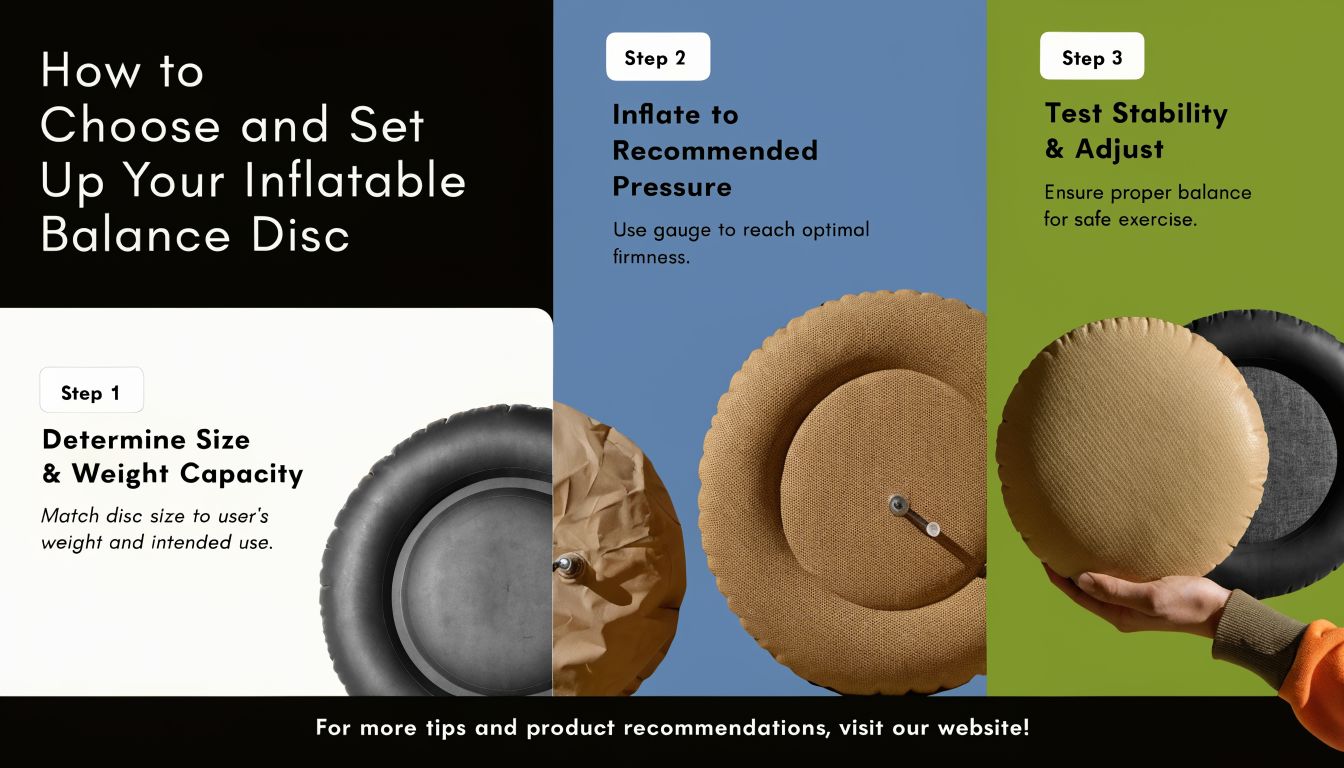
Not all balance discs are identical, but the category has become fairly standardized. Balance discs evolved from a simple rehab tool into a multi-use product commonly available in 14-inch (35 cm) and 24-inch (60 cm) sizes, often made with durable PVC construction and weight limits that can exceed 300 lbs, reflecting their broad use across rehabilitation, education, and fitness, as shown in the CanDo inflatable balance disc product family.
What to look for
A good inflatable balance disc for home rehab should feel sturdy, not flimsy. Many models use a double-sided design with one smoother side and one textured side. That texture can add sensory feedback, which some users find helpful under the feet or while seated.
A simple buying checklist:
- Common size for home use. A 14-inch model is usually practical for chair work and many standing drills.
- Durable material. PVC or gymball-like elastomer materials are common.
- Easy inflation. Look for a disc that works with a standard hand pump or ball needle.
- Surface texture. Some people like the nubby side for sensory input. Others prefer the smoother side first.
Inflation changes the challenge
People often make mistakes at this stage. More air doesn't automatically mean better exercise. It changes the feel of the disc, and for many beginners, too much air makes the task too reactive.
Use this quick guide:
| Inflation feel | What it usually means |
|---|---|
| Softer, less full | More contact with the floor or chair, often easier to control |
| Firmer, more full | Less platform stiffness, more sway, more challenge |
| Very firm for a beginner | Often too unstable too soon |
Start with the disc slightly underfilled. You can always add more air after you prove you can control the easier version.
First setup at home
Before your first session, place the disc on a non-slip surface and test it with your hands or one foot before fully stepping on it. If you're using it on a chair, center it so it doesn't shift. If you're standing, position yourself close enough to support that you can touch it instantly.
A balance disc should feel adjustable and manageable. If it feels like it has a mind of its own, change the setup before you change your effort.
A Progressive Guide to Balance Disc Exercises
The best balance disc program starts below your maximum. That gives your body room to learn. Manufacturer manuals for balance discs recommend progression from two-leg to single-leg stance, and more advanced challenges like head turns or eyes-closed work, showing that the tool is meant for systematic increases in difficulty under clinical guidance, as outlined in this balance disc exercise manual.
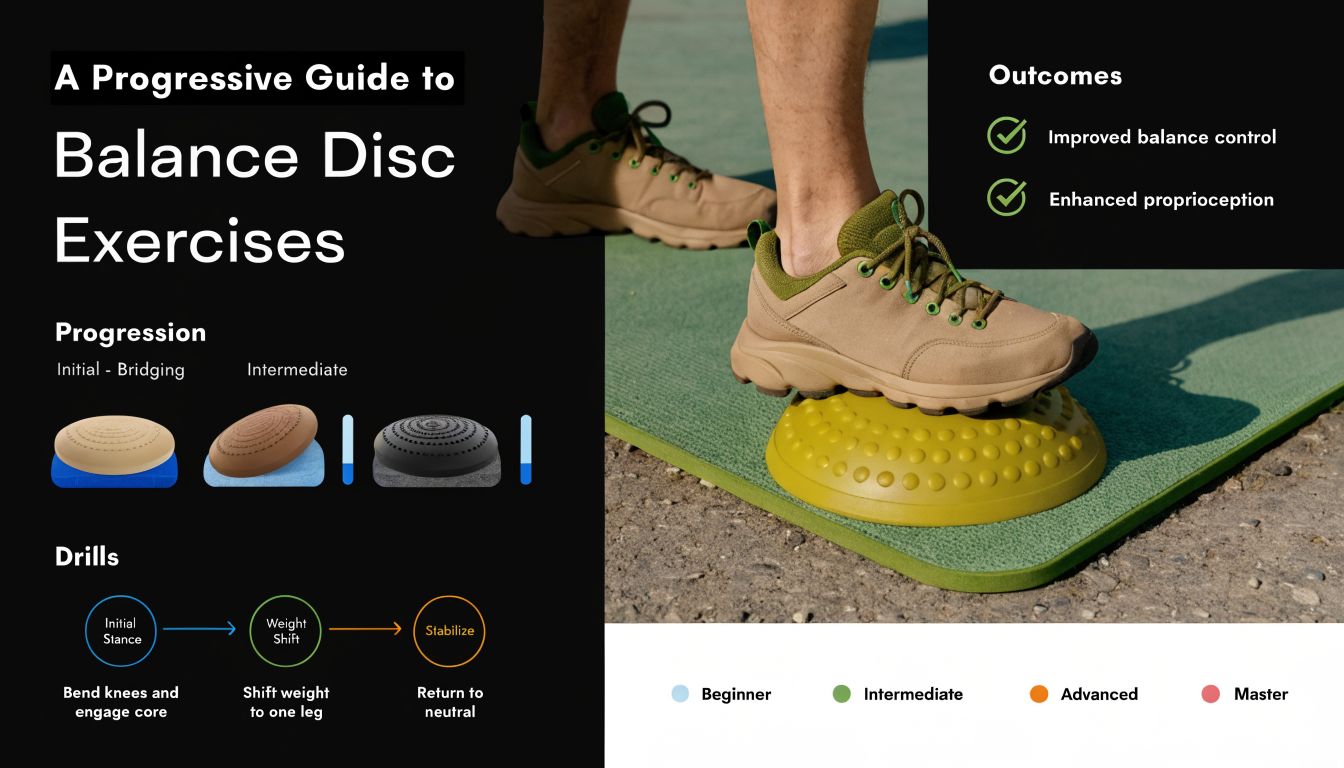
Level 1 seated control
This level works well for people with poor sitting posture, low back stiffness, early deconditioning, or low confidence in standing tasks.
Seated weight shift
Sit on the disc near the front half of a firm chair with both feet flat.
- Sit tall without leaning against the backrest.
- Gently shift your weight a little to the right, then back to center.
- Repeat to the left, forward, and back.
- Keep the motion small and controlled.
PT tip: Don't turn this into a sway. The movement should come from control through the trunk and pelvis, not from collapsing your shoulders.
Seated marching
Sit tall on the disc and slowly lift one foot a little, then set it down and switch sides.
This asks the trunk to stabilize while the legs move. It's a useful starting drill for people who feel unsteady when walking or changing direction.
Seated trunk rotation
Hold your arms crossed over your chest or reach them forward. Rotate gently to one side, then return to center, then to the other side.
This helps train controlled movement around a stable pelvis. It's especially helpful for people who feel stiff turning in a kitchen or getting in and out of a car.
Level 2 supported standing
This is the stage many people picture first, but it shouldn't be the starting point for everyone. Use a sturdy counter or heavy treatment table. Don't practice unsupported just because you think you should.
Two-foot stand
Place the disc on the floor and step onto it with both feet while lightly holding support.
- Stand tall
- Keep your knees soft, not locked
- Let your body make small adjustments
- Breathe normally
A common mistake is gripping too hard with the toes and bracing the whole body. Try to stay tall and calm.
Side-to-side weight shift
While standing with both feet on the disc, move your weight gently toward one leg, then back through center and toward the other.
This helps train control during tasks like stepping, turning, and recovering from minor loss of balance.
Mini squat
With both feet on the disc and hands on support, bend the hips and knees slightly, then return to standing.
Keep it shallow. The point is not leg fatigue. The point is keeping the knees aligned and the trunk controlled while the surface moves under you.
A good rep looks quiet. If your arms are flailing, the exercise is ahead of your current skill.
Level 3 advanced standing drills
Only move here if you can handle Level 2 without grabbing, bouncing, or losing alignment. For many rehab patients, this level is a later goal, not a first-week assignment.
Narrow stance hold
Stand on the disc with your feet closer together than usual. Hold support as needed.
This reduces your base of support and asks for more precise control through the ankles and hips.
Head turns
While standing steadily on the disc, slowly turn your head right and left.
This is useful because real life doesn't happen with your eyes fixed forward. We look around while standing, walking, and talking. If head movement immediately makes you feel dizzy or unsafe, stop and go back to simpler work.
Single-leg touch-down progression
Start with most of your weight on one leg while the other toes lightly touch for help. Hold briefly, then switch sides.
This is often a better bridge than jumping straight into a full single-leg stance. It builds confidence while still challenging control.
How to progress without overdoing it
You don't need a huge menu of exercises. You need the right next step. A well-built home routine often uses only a few drills done consistently.
Progress by changing only one variable at a time:
- Base of support gets smaller
- Hand support gets lighter
- Movement gets more dynamic
- Sensory demand increases, such as adding head turns
- Core demand rises as posture improves
If you're also building trunk strength, these core strengthening exercises pair well with balance work because a stronger, better-coordinated trunk gives you a more reliable base for every standing task.
Signs you should stay at your current level
Moving up too soon is one of the fastest ways to make balance training sloppy. Stay where you are if:
- You hold your breath during the exercise
- Your knees collapse inward
- You need a death grip on the support surface
- You feel pain rather than effort
- You feel rattled after the set, not pleasantly challenged
The disc should challenge you enough to require attention, but not so much that technique disappears. That's how balance retraining becomes useful in daily life.
Frequently Asked Questions About Balance Discs
How long should I use a balance disc at home
Start with short, controlled sessions. Quality matters more than duration. If your form fades, your balance disc session is over, even if you feel motivated to keep going.
Should I wear shoes or go barefoot
It depends on your goals and safety. Bare feet can improve sensory feedback for some people. Supportive shoes may be the better choice if you have foot pain, poor sensation, or need more structure. When in doubt, start with the option that makes you feel steadier.
Can I use an inflatable balance disc at my desk
Some people use one on a chair for more active sitting. That can be useful, but it shouldn't become a passive all-day setup. If you're slouching on it, you're not getting the benefit you think you are. Use it in short periods with good posture.
Is standing always better than sitting on it
No. Seated work is often the smarter choice early on, especially for people with low confidence, back pain, or limited standing tolerance. Standing is only better if you can do it safely and with control.
How do I know if it's too hard
The warning signs are pretty clear. You're grabbing for support, holding your breath, stiffening your whole body, or feeling like you're about to fall. Those aren't signs of productive training. They mean the setup needs to be scaled back.
Can a balance disc replace vestibular rehab or formal physical therapy
No. It can be part of a plan, but it isn't a substitute for diagnosis, screening, or individualized treatment. If dizziness, repeated near-falls, recent surgery, or nerve-related symptoms are part of the picture, you need a more specific evaluation.
If you're dealing with unsteadiness, dizziness, post-surgical weakness, or fear of falling, the team at MedAmerica Rehab Center can help you figure out what kind of balance training is right for you. A good plan doesn't just add challenge. It matches the challenge to your body, your goals, and your stage of recovery so you can move with more confidence and less risk.
MedAmerica Rehab · Deerfield Beach
Talk to a clinician about your pain
Physical therapy, chiropractic, acupuncture and shockwave therapy under one roof, since 1995. Same-day appointments are available.
Mon–Thu 8:00 AM – 6:30 PM · Fri 8:00 AM – 3:00 PM