
How to Treat Repetitive Strain Injury Your Recovery Playbook
That first nagging ache in your wrist, the tingling in your fingers, or the stiffness in your forearm—that’s not just a minor annoyance. It’s your body sending up a flare, telling you to pay attention before a small problem becomes a major one. What you do in those first 24 to 48 hours is critical for heading off chronic pain.
Your First Actions For RSI Relief

The moment you feel that familiar throb, your recovery has already begun. The biggest mistake we see people in Deerfield Beach make is trying to "push through" the discomfort. Ignoring these early warning signs is the fastest way to turn a temporary strain into a long-term issue that sidelines you from work, hobbies, and everyday life.
These injuries aren't trivial. In the UK alone, RSI in the hands and wrists accounts for over 5.4 million lost workdays each year. That’s a staggering number that shows just how disruptive this condition can be when it’s not addressed right away.
First Things First: The RICE Protocol
Your immediate goal is to calm down the irritated tissues. This is where the tried-and-true RICE protocol—Rest, Ice, Compression, and Elevation—comes in. It’s your first line of defense.
Rest: This one is non-negotiable. Stop the activity that’s causing the pain. If you're an office worker, that means stepping away from the keyboard. For a line cook, it means finding a different task for a bit. This isn't about quitting; it's a strategic pause to let your body heal.
Ice: Applying a cold pack for 15-20 minutes every few hours is key. Cold helps constrict blood vessels, which numbs the immediate ache and, more importantly, reduces the swelling that's causing pressure on your nerves and tissues. We cover the specifics in our guide on using ice packs for physical therapy.
Compression: Gently wrapping the area with an elastic bandage helps prevent swelling from building up. Just be careful not to wrap it so tightly that it cuts off circulation—it should feel snug, not constricting.
Elevation: Use gravity to your advantage. Keeping the injured arm or wrist propped up above the level of your heart helps drain excess fluid away from the area. If your wrist is the problem, just prop it on a few pillows while you're sitting on the couch.
To make it easy, here's a simple checklist to follow as soon as you feel that first twinge of pain.
Immediate RSI Self-Care Checklist (First 48 Hours)
| Action | How-To and Why |
|---|---|
| Stop the Activity | Identify the exact task causing pain (e.g., typing, mousing, lifting) and stop immediately. This removes the source of the strain. |
| Apply Ice | Use a cold pack wrapped in a thin towel for 15-20 minutes. Repeat every 2-3 hours. This reduces inflammation and numbs pain. |
| Gentle Compression | Wrap the area with a compression bandage. It should be snug but not painful. This helps control swelling. |
| Elevate the Limb | Prop your arm or wrist on pillows so it's above your heart. This uses gravity to help drain fluid and reduce swelling. |
| Avoid Heat | Do not apply heat for the first 48 hours. Heat increases blood flow and can make inflammation worse. |
| Observe Triggers | Make a mental note of what specific motions or positions cause the pain to flare up. This information is gold for your long-term plan. |
Following these steps in the first two days gives your body the best possible chance to start healing right away.
Beyond RICE: Listen to Your Body
While the RICE protocol is your emergency response, the next step is just as important: observation. Pay close attention to what your body is telling you.
Your body is giving you crucial data. Does the pain sharpen after 30 minutes of typing? Does picking up a carton of milk send a jolt up your arm? Knowing your specific triggers is the key to creating a recovery plan that actually works.
Making these immediate, smart adjustments is how you take control of your recovery. It’s all about being proactive. The choices you make right now set the stage for how quickly—and completely—you can get back to feeling like yourself again.
Building an Ergonomic and Pain-Free Workspace
Once the worst of the pain has calmed down, the real work begins. It’s not just about getting relief; it’s about making sure this injury doesn’t come roaring back. Going right back to the same desk and the same habits that caused the problem in the first place is a recipe for a frustrating cycle of pain.
Your workspace isn't just a place you sit—it's an active player in your recovery. Turning your desk from a source of strain into a supportive, pain-free environment is one of the most powerful moves you can make. It’s not about buying a bunch of fancy, expensive equipment. It’s about making smart, simple adjustments that support your body correctly. Understanding the best desk layout using proven ergonomic principles is the foundation for a setup that works for you, not against you.
The 90-90-90 Rule for Perfect Posture
The cornerstone of a good ergonomic setup is posture, and the easiest way to get it right is the "90-90-90 rule." This isn't just a random guideline; it’s a simple way to put your major joints in a neutral, low-stress position that eases the constant tension of a long workday.
Hips: Sit all the way back in your chair. Your hips should be bent at roughly a 90-degree angle, with your feet flat on the floor (or a footrest) and your thighs parallel to the ground. This simple act stops you from slouching and gives your lower back the support it needs.
Knees: Your knees should also be bent at about a 90-degree angle. You want a small gap—maybe two or three fingers wide—between the back of your knees and the front edge of your chair seat. This helps maintain healthy circulation and avoids pressure on the nerves and blood vessels in your legs.
Elbows: Now, adjust your chair height. With your hands resting on your keyboard, your elbows should form a nice, open 90-degree angle. Your forearms will be parallel to the floor, and most importantly, your wrists will be straight instead of bent up or down.
Getting into this position might feel a bit strange at first, especially if you’re used to hunching or slouching. But stick with it. It takes the load off your muscles and tendons, letting them work without that constant, nagging tension that feeds an RSI.
Positioning Your Monitor and Keyboard
Where your screen and keyboard sit has a direct line to the health of your neck, shoulders, and wrists. These are two of the quickest fixes you can make, and the payoff is huge for both treating and preventing repetitive strain.
First, your monitor. It needs to be directly in front of you, about an arm’s length away. The top of the screen should be at or just a hair below your eye level. That’s it. This stops you from craning your neck forward or looking down all day, which is a massive contributor to "tech neck" and shoulder pain.
Next, look at your keyboard. The goal is to keep your wrists completely straight while you type. If you have to bend your wrists upward to reach the keys, you're putting direct pressure on the carpal tunnel. A simple keyboard tray or even a rolled-up towel under your wrists can make all the difference.
Integrating Movement Breaks Into Your Day
You can have the most dialed-in, perfect ergonomic setup in the world, but it can all be undone by one thing: sitting still for too long. Your body was built to move. We see it in the clinic all the time—static postures are just as damaging as bad ones.
Think of movement as a nutrient for your joints and tissues. Without it, they become stiff and vulnerable. Small, frequent "movement snacks" are more effective than one long break.
This isn't just a nice idea; there's real science behind it. One pilot study found that training workers to take micro-breaks (brief hand relaxation), meso-breaks (short stretches), and macro-breaks (quick walks) led to a significant drop in work-related symptoms in just six weeks.
If you spend your day at a computer, you can get some great ideas from our article on the top exercises for people who sit all day. The real key is to treat these breaks like appointments you can't miss.
Targeted Stretches and Exercises for RSI Recovery
After you've managed to calm down that initial flare-up, the next step is to get things moving again—gently. This isn't about jumping back into your old routine. It’s about carefully reintroducing movement to boost blood flow, regain flexibility, and build some real resilience in the tissues that have been under fire.
Think of it as waking up muscles and nerves that have been overworked and irritated. The golden rule here is to listen to your body. Movement should feel like a welcome release, not a painful chore. If you hit any sharp pain, stop. Progress should always be pain-free.
Gentle Stretches for Wrists and Forearms
The muscles that control your hands and wrists live in your forearms. When they get tight from constant typing or gripping, they yank on their attachment points at the wrist and elbow, leading to things like tennis elbow and carpal tunnel pain. These simple stretches help lengthen those tissues and take the pressure off.
Wrist Flexor Stretch: Hold one arm out straight, palm up. Gently bend your wrist down so your fingers point to the floor. With your other hand, apply just a little pressure to deepen the stretch you feel in your forearm. Hold it for 20-30 seconds. You want a mild pull, never pain. Repeat on the other side.
Wrist Extensor Stretch: Now, do the opposite. Extend your arm with your palm facing down. Gently bend your wrist so your fingers again point toward the floor. Use your other hand to gently pull your fingers back toward you. You'll feel this one along the top of your forearm. Hold for 20-30 seconds, then switch.
And remember, how you sit or stand while you work or exercise is the foundation for preventing strain in the first place.
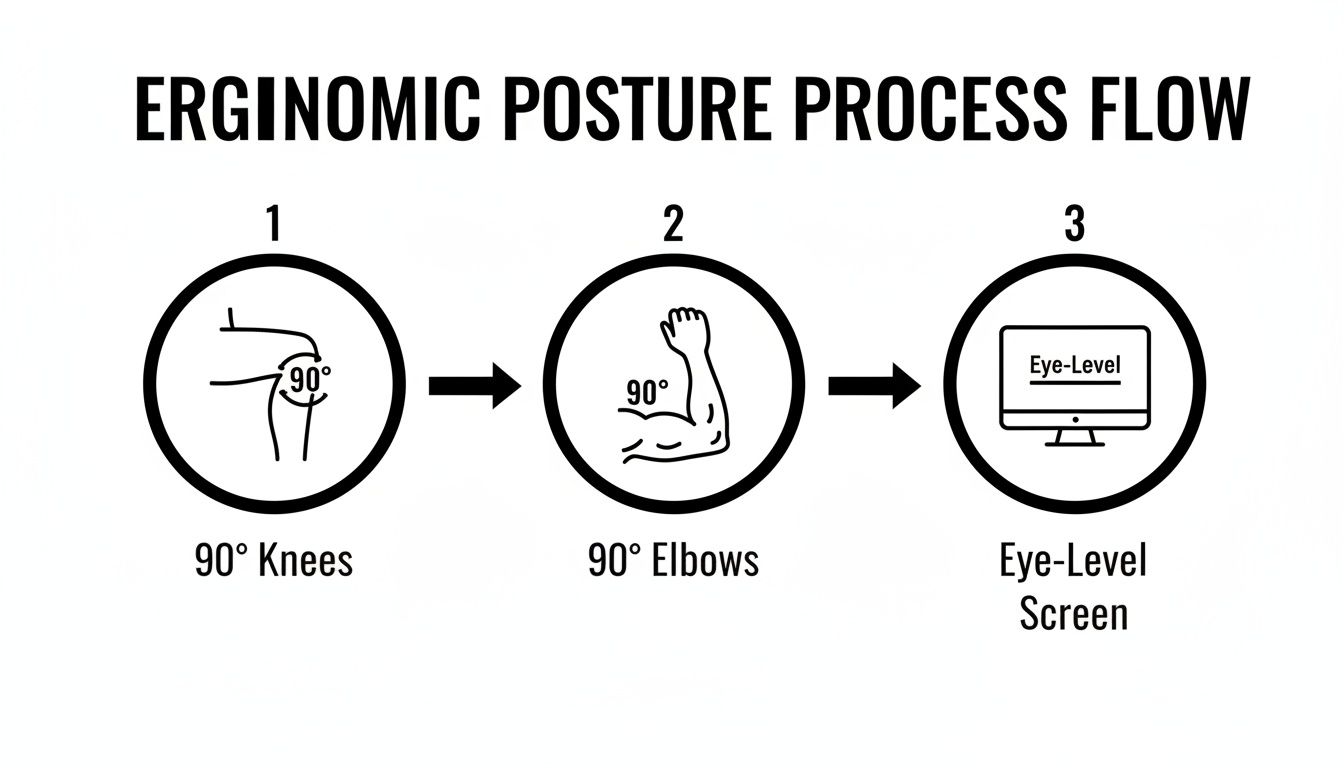
This chart is a great visual reminder of the "90-90-eye level" rule. Keeping your knees, elbows, and gaze properly aligned is one of the easiest ways to reduce daily stress on your body.
Unlocking Nerves with Gentle Glides
When a nerve is getting pinched, like the median nerve in carpal tunnel syndrome, aggressive stretching can sometimes make it angrier. This is where "nerve glides" or "flossing" come in. These aren't stretches; they're gentle movements designed to help the nerve slide more freely through its tunnel.
Think of it like a piece of floss stuck between your teeth. You wouldn't just yank it out. You’d glide it back and forth to work it free. Nerve glides do the same for a "stuck" nerve, encouraging it to move without irritation.
Here's a simple median nerve glide you can try:
- Start by making a loose fist, with your thumb resting on the outside.
- Slowly open your fingers straight, keeping your thumb close to your hand.
- Now, bend your wrist back like you're signaling someone to "stop."
- Gently move your thumb away from your palm.
- With your other hand, you can add a very light stretch to the thumb.
The key is to move smoothly and slowly through these positions. Don't hold any single one for more than a second or two.
Strengthening for Long-Term Resilience
Stretching is great for relief, but strengthening is what prevents RSI from coming back. When muscles are weak, they get tired fast, and that forces your tendons to pick up the slack—a job they aren't built for.
A simple stress ball or some therapeutic putty is a perfect starting point. Just squeezing it gently for a few seconds and then releasing can begin to rebuild your grip strength without overdoing it. Once that feels easy, you can move on to light resistance bands for wrist curls and extensions. The goal is building endurance, not brute force, so think higher reps with very light weight.
Don't forget about your posture! "Tech neck," that forward head position we all fall into, puts a ton of strain on the nerves that run down into your arms and hands.
The chin tuck is a surprisingly powerful exercise to fight this. While sitting or standing tall, just gently pull your chin and head straight back, like you’re trying to make a double chin. You should feel a nice stretch at the base of your skull. Hold that for 5 seconds and do 10 reps. Sprinkling this move into your day can make a massive difference.
When It’s Time to See a Professional for Your RSI
You’ve been trying the ice, the stretches, and maybe you even bought a new ergonomic mouse. But the ache, numbness, or weakness just isn’t letting up. If anything, it’s getting worse, and now it’s starting to get in the way of your work, your hobbies, and even your sleep.
When self-care hits a wall, that's your body's signal to call in a professional. Pushing through persistent pain rarely works. It’s a smart, proactive step to get a deeper look at what’s really going on and move beyond just managing the symptoms to fix the root cause.
The need for effective, hands-on treatment is growing. The RSI treatment market is expected to expand from USD 2.35 billion in 2025 to USD 3.2 billion by 2029, largely due to the demands of modern desk work. This highlights a shift toward evidence-based care that works. For example, a 2004 U.S. study found that combining professional ergonomic training with biofeedback to teach muscle relaxation led to a significant drop in symptoms in just six weeks. You can dig into the market data in this full research report on RSI treatment.
The Power of Hands-On Manual Therapy
One of the most important things a physical therapist brings to your recovery is manual therapy. These are specific, hands-on techniques that can do what stretching alone often can't: release stubborn muscle knots, break down built-up scar tissue, and restore proper movement to your joints.
Imagine you have a tight knot in a rope. Just pulling on both ends—like stretching—can actually make that knot even tighter. A therapist can go in and manually work on that knot, loosening the fibers until the rope moves freely again. That’s what we do with techniques like soft tissue mobilization and joint mobilization for your muscles and joints.
How Chiropractic Care Can Get to the Source
Often, the pain you feel in your wrist or hand didn't actually start there. It can be a downstream problem caused by poor posture or a misalignment in your neck or upper back. This is where chiropractic care can make a huge difference.
If your head drifts forward while you work at a computer, it places a ton of strain on your neck. This can pinch or irritate the very nerves that travel down your arm into your hand, creating symptoms like numbness and tingling that feel a lot like carpal tunnel. Chiropractic adjustments help correct these postural faults, taking pressure off the nerve at its source for more lasting relief. We explain more about this in our guide on how we address carpal tunnel symptoms.
Professional care is not just about treating the site of pain. It’s about looking at the entire kinetic chain—from your spine to your fingertips—to find and fix the underlying dysfunction that’s causing the problem.
Advanced Options for Stubborn Injuries
For chronic tendon issues that just won't heal, a modern clinic can offer more advanced tools. We don't usually start with these, but they can be incredibly effective for breaking a stubborn pain cycle when other treatments haven't been enough.
Acupuncture: This ancient practice is excellent for targeted pain relief. By inserting hair-thin needles into specific points, acupuncture helps calm overactive nerves and encourages your body to release its own natural pain-killing chemicals.
Shockwave Therapy: This non-invasive treatment sends acoustic waves into the injured tissue. It's designed to jump-start your body's own healing response by increasing blood flow, making it a great option for chronic tendon damage in places like the elbow (tennis elbow) or shoulder (rotator cuff).
Understanding what each professional offers can help you decide on the best path forward. A good plan often involves a combination of these approaches, tailored to what your body needs.
Comparing RSI Treatment Modalities
This table breaks down the primary goals of the most common non-surgical treatments for RSI.
| Treatment | Primary Goal | Best For |
|---|---|---|
| Physical Therapy | Restore function, reduce pain, and build resilience through manual therapy and targeted exercise. | Most RSIs, from initial diagnosis to long-term prevention. |
| Chiropractic Care | Correct spinal and postural misalignments to relieve nerve pressure at the source. | RSI with related neck, shoulder, or back pain; postural issues. |
| Acupuncture | Relieve pain and inflammation by stimulating the body's nervous system and natural healing. | Managing pain, especially nerve-related symptoms like tingling. |
| Shockwave Therapy | Stimulate healing in chronic, non-responsive tendon injuries (tendinopathies). | Stubborn tennis elbow, rotator cuff pain, or plantar fasciitis. |
Ultimately, choosing the right treatment starts with a thorough assessment. A specialist can help pinpoint the true source of your RSI and build a recovery plan that gets you back to feeling and moving your best.
Your Long-Term RSI Prevention Strategy
Getting out of pain is a huge win, but staying pain-free is the real goal. We see it all the time: someone feels better, jumps right back into their old routine, and ends up right back where they started. The final, and most important, part of learning how to treat repetitive strain injury is building a smart prevention plan.
This isn't about being fragile or giving up the activities you love. It’s about being strategic. We want to build a body that’s resilient enough to handle your daily life without breaking down.
Safely Ramping Up Your Activities
After you’ve rested and your tissues have started to heal, it’s tempting to go full-throttle. That's one of the biggest mistakes we see, and it’s a fast track to reinjury. Your body isn't conditioned for the old workload just yet. The key is to gradually reintroduce your activities.
Start small. Try the activity for just 15 minutes instead of a full hour. See how your body responds during and after. If you feel good, you can slowly increase the duration by about 10% every few days. This slow and steady approach gives your muscles and tendons time to adapt and get stronger without being overwhelmed.
Think of it like a training program. You wouldn't run a marathon after taking a month off. You’d start with a short jog and build back up. Apply that same patient, intelligent logic to your work and hobbies.
Building Healthy Habits That Stick
Long-term success comes from small, consistent changes that become automatic. You can't just rely on willpower; you need to weave healthy habits into the rhythm of your day.
Make Ergonomics Automatic: Set a recurring calendar alert for the first of the month. Take a quick 2-minute look at your workstation. Is your chair at the right height? Monitor at eye level? This simple audit stops bad habits from creeping back in.
Schedule Your Movement: Don’t wait until you feel stiff. Use your phone or a simple timer to remind you to move. A 5-minute break every hour to get up, walk around, and do a few gentle stretches is one of the most powerful tools against RSI.
Listen to Early Whispers: Pain rarely goes from zero to one hundred overnight. Your body gives you warning signs—a little ache, some morning stiffness, a feeling of fatigue in your hands. Learn to recognize these subtle cues and respond right away with a break or a change of task.
A proactive approach is your best defense. Understanding the root causes and actively avoiding repetitive strain injuries at work are fundamental to staying healthy and productive.
Fortifying Your Body from the Inside Out
Your body's ability to handle strain goes beyond just ergonomics. Your overall wellness plays a massive role in how resilient you are to injury. A body that's well-cared-for is simply less likely to break down.
Stress Management: When you're stressed, your muscles get tight and your posture often slumps, increasing inflammation. Finding healthy ways to decompress, whether it's meditation, deep breathing exercises, or just a walk in the fresh air, can have a direct physical impact.
Anti-Inflammatory Nutrition: The food you eat can either stoke the fires of inflammation or help put them out. Focus on incorporating foods rich in omega-3s (like salmon and walnuts), leafy greens, and colorful fruits to help manage your body's inflammatory response.
General Fitness: A well-rounded fitness routine creates a more durable frame. Regular cardio, strength training, and flexibility work build a body that's ready for action. For example, a strong core and back provide a stable base that takes a surprising amount of pressure off your arms and wrists.
Common Questions About RSI Treatment
Once you start taking steps to treat your repetitive strain injury, a lot of questions naturally come up. As you move from those first few days of self-care into a more structured plan, you'll probably wonder about recovery times, long-term results, and when it’s time to call in a professional.
Here are the answers to some of the most common questions we hear from patients here at our Deerfield Beach clinic.
How Long Does It Take to Recover from Repetitive Strain Injury?
This is usually the first thing people ask, and the honest answer is: it really depends on how severe the injury is and how fast you act. There's a world of difference between a minor flare-up and a chronic issue that's been bothering you for months.
If you catch a mild case of RSI right away, you could feel a lot better within a few weeks. That means you've committed to rest, made some key ergonomic changes, and are doing your gentle stretches consistently.
For more severe or long-standing injuries, the timeline is longer. It can take several months of dedicated physical therapy, consistent exercise, and real lifestyle adjustments to fully get rid of the symptoms and let the tissue heal properly.
The single biggest factor in your recovery time is how quickly you listen to your body. Pushing through the pain almost always turns a short-term problem into a long, frustrating recovery.
Think of it like this: a small campfire is easy to put out. A forest fire is not. Acting early is the most powerful tool you have.
Can RSI Be Cured Permanently?
Yes, you can absolutely get back to a lasting, pain-free life. But it's important to understand what "cured" really means here. Just getting rid of the immediate pain and inflammation is only half the job.
If you get relief but go right back to the same desk setup and habits that caused the injury, the problem is almost guaranteed to come back.
A true "cure" is about adopting a new way of working and moving. The goal is to resolve your current symptoms while giving you the tools and habits to prevent it from happening again.
This means making a long-term commitment to:
- Your Ergonomics: A supportive workspace isn't a one-time fix. It’s an ongoing practice.
- Better Body Mechanics: This applies to everything, from how you hold your phone and type to how you lift a bag of groceries.
- Your Exercises: The strengthening and flexibility work you learn in therapy is your best defense against future strain.
So, while the injury can heal, the underlying risk factors that led to it need to be managed. By sticking with these preventive strategies, you can keep the pain from ever coming back.
When Should I See a Doctor for My RSI Symptoms?
Knowing when to move from self-care to professional help is key. While things like rest and ice are great for initial relief, they can't solve everything. It’s time to see a professional if you notice any of these signs:
- The pain hasn't gotten any better after about a week of rest, ice, and stretching.
- Your pain is severe, constant, or seems to be getting worse.
- You're experiencing significant numbness, tingling, or weakness in your hand or arm. These can be signs of nerve issues that need immediate attention.
- The pain is waking you up at night or making it hard to do simple daily tasks.
Getting a professional diagnosis from a physical therapist or doctor is the fastest way forward. They can figure out exactly what's going on, rule out other problems, and build a treatment plan that's specific to you—which is much more effective than guessing.
Are Wrist Braces and Splints Helpful for RSI?
Wrist braces and splints can definitely be helpful, but they aren't a magic fix on their own. They work by keeping your wrist in a neutral, straight position, which takes pressure off your tendons and nerves. This is especially useful for something like carpal tunnel syndrome.
Many people find that wearing a splint at night helps a lot, as it stops you from curling your wrists while you sleep, which often causes that morning pain and numbness.
But, it's critical to use them as part of a bigger plan.
Relying only on a brace without fixing the root cause can actually make your muscles weaker over time. Think of a brace as a temporary crutch that lets the area rest while you do the real work of strengthening and stretching.
It's always best to get a professional's advice on the right kind of brace for your specific issue and how often you should wear it. A therapist can make sure you're using it to support your recovery, not get in the way of it.
At MedAmerica Rehab Center, our team of experienced physical therapists and chiropractors in Deerfield Beach specializes in creating personalized plans to resolve your pain and prevent it from returning. If you're struggling with RSI symptoms, don't wait for them to get worse. Schedule your appointment today by visiting us at https://www.medamericarehab.com and start your journey back to moving better and feeling better.
MedAmerica Rehab · Deerfield Beach
Talk to a clinician about your pain
Physical therapy, chiropractic, acupuncture and shockwave therapy under one roof, since 1995. Same-day appointments are available.
Mon–Thu 8:00 AM – 6:30 PM · Fri 8:00 AM – 3:00 PM