

Your Guide to Whiplash Injury Physical Therapy for Lasting Recovery
When you're dealing with a whiplash injury, a structured physical therapy program isn't just a good idea—it's the most reliable way to heal. It’s all about reducing pain, getting your neck moving properly again, and building back strength to prevent problems down the road. A good therapist guides you from gentle, early movements all the way to functional exercises that get you back to your life.
Understanding Whiplash and Why Physical Therapy Is Key

Think of your neck as a finely tuned system of muscles, ligaments, and joints, all designed for smooth, controlled movement. Whiplash happens when a sudden, violent force—most often from a car accident—snaps your head back and then forward, pushing it far beyond its normal limits.
That rapid, forceful motion is what damages the soft tissues. It's a classic sprain and strain injury, officially called a Whiplash-Associated Disorder (WAD). It’s not one single issue, but a whole collection of symptoms that stem from that trauma.
The Most Common Causes and Symptoms
While rear-end car accidents are the number one culprit, any sudden impact can disrupt the delicate balance of your neck and spine. To really see why getting treatment is so important, it helps to understand the full picture of whiplash and neck injuries.
Common causes we see include:
- Auto accidents: These are responsible for the vast majority of whiplash cases.
- Sports injuries: A hard tackle in football or a sudden tumble while skiing can easily cause it.
- Physical trauma: Any event that jolts the head and neck unexpectedly.
- Slips and falls: A simple fall can cause your head to whip backward, leading to injury.
Don't be fooled if you feel fine right after the incident; adrenaline is a powerful pain-masker. The real symptoms usually creep in within 24 to 48 hours as inflammation builds. Be on the lookout for neck pain and stiffness, headaches that start at the base of your skull, dizziness, or even blurred vision.
Why Physical Therapy Is the Gold Standard
Just resting or taking pain medication might seem like enough, but ignoring the root cause often leads to chronic pain and stiffness. This is where whiplash injury physical therapy comes in. It’s a hands-on, proven approach that targets the actual injury, not just the symptoms.
Think of a physical therapist as a coach for your body’s own healing. The goal is to carefully reintroduce movement, calm down the inflammation, and retrain your muscles to support your neck correctly. This is the key to avoiding long-term issues.
A skilled therapist never uses a one-size-fits-all approach. We create a personalized recovery plan that evolves with you. It always starts with gentle techniques to reduce your pain and swelling. As you heal, we shift the focus to restoring your full range of motion and building the stability and strength needed for a full recovery.
This structured method is the most effective way to put whiplash behind you for good. To learn more about this process, you might be interested in our guide on how physical therapy helps with back and neck pain.
Your First Whiplash Physical Therapy Appointment Explained

Walking into a physical therapy clinic for the first time after a car accident can feel a little uncertain. We get it. That's why we want to pull back the curtain on that first visit and show you it's a collaborative, supportive first step—not a series of intimidating tests.
Think of your initial whiplash injury physical therapy session as a strategy meeting. It's all about listening to your story, figuring out exactly what's going on, and creating a clear roadmap to get you feeling better.
It all starts with a conversation. Your MedAmerica Rehab therapist will sit down with you to understand the specifics of your accident, the exact symptoms you’re feeling, and most importantly, how this injury is getting in the way of your daily life.
Knowing what matters most to you is the foundation of a successful plan. Are you struggling to work at your desk without pain? Do you want to be able to lift your grandkids again? Your goals become our goals.
The Gentle Physical Assessment
After we talk, your therapist will guide you through a gentle physical evaluation. This isn't about pushing you into pain; it's about gathering clues. The goal is to pinpoint the exact source of your pain and stiffness without causing any extra discomfort.
We'll methodically check several key areas:
- Range of Motion: We’ll ask you to slowly and carefully move your head and neck to see how far you can turn, tilt, and bend. This shows us which movements are restricted by pain or stiffness.
- Pinpointing Pain Triggers: Your therapist will use careful, hands-on touch (palpation) to find specific tender spots in your neck and shoulder muscles. This helps us identify which tissues were most affected.
- Muscle and Nerve Function: We'll use simple strength and reflex checks to make sure your nerves are happy and that the muscles supporting your neck are firing correctly.
This detailed assessment gives us the information we need to build your personalized recovery program. Research shows that without the right care, around 50% of people with whiplash can develop chronic symptoms. This is why our initial evaluation is so thorough; we use evidence-based tools, like those outlined in clinical guides for whiplash-associated disorders on Physio-pedia.com, to make sure your plan is built for the best possible outcome from day one.
Building Your Personalized Plan
With all the information gathered, your therapist will explain everything in plain language. They'll connect the dots between the assessment findings and the symptoms you're experiencing. This is a partnership, and we want you to understand the "why" behind your plan.
Your first visit sets the stage for your entire recovery. It’s about building trust, gathering precise information, and creating a targeted plan that addresses your specific injury and goals. You will leave knowing exactly what comes next.
Finally, we’ll create your initial treatment plan together. This will likely include some gentle hands-on techniques to provide immediate relief, plus one or two simple exercises to start restoring movement safely at home. You’ll leave your first appointment at MedAmerica Rehab with a clear understanding of your injury, a plan in hand, and the confidence that you're on the right path to recovery.
To get a broader sense of how these sessions progress, check out our guide on what a typical physical therapy session looks like.
Core Treatments Used in Whiplash Physical Therapy

Once we have a clear picture of what’s going on, we can start the real work. A good whiplash injury physical therapy plan isn't about one magic technique. It’s about layering different treatments together to calm things down, get you moving again, and build back your strength.
Think of it this way: first, we need to do some damage control by reducing pain and inflammation. Next, we gently restore your neck’s normal mobility. Finally, we build strength to make sure the problem doesn't come back. Each step builds on the last for a recovery that actually sticks.
Your plan will change as you heal. The treatments that provide relief in the first few days are very different from the exercises you’ll be doing a month later to feel 100% again.
Here’s a look at the core components of whiplash rehab.
H3: Manual Therapy to Restore Mobility
Manual therapy is what most people picture when they think of physical therapy—it’s the hands-on care. After a whiplash injury, your neck can feel stiff, guarded, and completely “locked up.” This happens when joints get restricted and the surrounding muscles tighten in a protective spasm.
We use our hands to gently unlock those stiff joints and release muscle tension. The goal is to calm the area down, improve blood flow, and help your neck remember how to move smoothly and without pain.
H3: Therapeutic Exercise for Strength and Stability
While hands-on therapy is great for getting you moving, exercise is what gives your body the strength to stay that way. This is where you become an active partner in your recovery, and it’s the key to preventing future issues.
We always start gently and progress as you get stronger. The focus is usually on three key areas:
- Range of Motion: These are simple, controlled movements—like slowly turning your head side-to-side—designed to restore mobility without stressing the healing tissues.
- Deep Neck Muscle Strengthening: Whiplash often weakens the small stabilizing muscles at the front of your neck. We use specific exercises, like chin tucks, to wake these muscles up and improve your head and neck control.
- Postural Training: Poor posture puts a ton of extra strain on a healing neck. We’ll teach you how to sit, stand, and work with better alignment, which is a huge part of staying pain-free long-term. This process involves retraining the brain-body connection, an approach you can read more about in our guide on what is neuromuscular reeducation.
To give you a clearer idea, here’s how these different therapies work together.
Common Whiplash Physical Therapy Techniques and Their Goals
| Therapy Technique | Primary Goal | How It Helps Your Recovery |
|---|---|---|
| Soft Tissue Mobilization | Pain Relief & Muscle Release | Targeted massage that eases muscle spasms, releases knots, and reduces soreness. |
| Joint Mobilization | Restore Mobility | Gentle, hands-on movements that reduce joint stiffness and improve your neck's range of motion. |
| Therapeutic Exercise | Build Strength & Stability | Specific exercises that strengthen weak muscles and teach your body to support your neck properly. |
| Modalities (e.g., TENS, ESWT) | Accelerate Healing | Technologies that help manage pain, reduce inflammation, and speed up your body's natural repair process. |
Each of these plays a vital role in moving you from the initial pain and stiffness toward a full and lasting recovery.
H3: Advanced Modalities to Accelerate Healing
Along with hands-on care and exercise, we sometimes use special technologies, or "modalities," to manage pain and speed up healing at the cellular level. Think of these as a helpful boost to your core treatment plan.
Some common modalities we use include:
- Therapeutic Ultrasound: This uses sound waves to create gentle, deep heat in the tissues. This helps increase circulation, which can ease pain and kickstart the repair process.
- Electrical Stimulation (TENS or IFC): We place small electrode pads on the skin to deliver a mild electrical current. It sounds intense, but it’s a gentle and effective way to block pain signals and calm muscle spasms.
- Extracorporeal Shockwave Therapy (ESWT): At MedAmerica Rehab, we also offer this powerful treatment for more chronic or stubborn pain. It uses acoustic waves to stimulate blood flow and restart the healing process in areas that have been "stuck."
By blending manual therapy, targeted exercise, and these supportive modalities, we create a plan that addresses your whiplash injury from every angle. This multi-faceted approach is what leads to a faster, more complete, and more durable recovery.
Your Whiplash Recovery Timeline: What to Expect
After a car accident, one of the biggest questions is, “How long will this take to heal?” Recovering from whiplash isn’t like flipping a switch; it’s a journey with clear milestones. Your whiplash injury physical therapy will be mapped out across a few distinct phases, each with its own job to do.
Think of it like building a house. You can’t put up the walls before you’ve laid a solid foundation. Your therapy works the same way, progressing from calming the injury to building back real strength. This approach is the safest and fastest way to get you back to feeling normal.
Phase 1: The Acute Phase (Weeks 1 to 2)
For the first one to two weeks, your body is in damage control mode. This is the acute phase, and it’s all about inflammation, pain, and stiffness. Our main goal isn’t to push you; it’s to calm things down and protect the injured tissues while they start to heal.
Your physical therapist will focus on:
- Pain and Inflammation Control: We’ll use gentle tools like ice, heat, or electrical stimulation to bring down swelling and give you some immediate relief.
- Gentle, Controlled Movements: We will guide you through very small, specific, pain-free movements. The idea is to keep your neck from "locking up" and to promote the blood flow your tissues need to repair themselves.
- Postural Education: You’ll learn the best ways to position your head and neck while sitting, sleeping, and standing to take the pressure off.
A key exercise we start with is the chin tuck. It’s a simple but powerful move that wakes up the deep stabilizing muscles in the front of your neck without putting any strain on the injured areas.
Phase 2: The Subacute Phase (Weeks 3 to 8)
Once the initial, intense pain and swelling have calmed down, you’ll move into the subacute phase. Your neck is less "angry," so we can shift our focus from protection to restoration. This is where we start rebuilding.
The goals now are to get your neck’s full, pain-free motion back and start building a foundation of strength. Your therapy sessions will feel more active and will include:
- Restoring Full Motion: We’ll progress your range-of-motion exercises, gently encouraging your neck to move through its complete, natural arc again.
- Foundational Strengthening: You’ll begin strengthening the deep neck flexors and the important postural muscles in your upper back and shoulders. This builds a strong, stable support system for your neck.
This is the phase where most people feel the biggest turnaround. You’ll start feeling much more like yourself as daily activities get easier and less painful. The progress here is what sets the stage for a full recovery.
Phase 3: Strengthening and Return to Function (Week 9+)
By the time you hit this final phase of your whiplash injury physical therapy, your pain should be minimal or even gone, and your range of motion should feel good. Now, the goal is to build higher-level strength and make your neck resilient so this injury doesn’t become a chronic problem.
Your therapist will start adding more advanced exercises, like:
- Resisted Movements: We’ll use resistance bands or light weights to challenge your neck and shoulder muscles, building the strength you need for lifting, carrying, and other daily loads.
- Functional Exercises: These are exercises that mimic real life. You might practice lifting something from the floor with perfect form or turning to check your blind spot without losing your posture.
- Endurance Training: We work on building up the stamina in your postural muscles so you can get through a long workday without your neck getting tired and sore.
The good news? This structured, active approach works. Studies show that with the right therapy, about 88% of patients see their symptoms resolve within two months. Even better, an impressive 93% reach complete recovery by the three-month mark. You can read the full research about these whiplash recovery findings to see just how effective this kind of early and consistent therapy is.
Your recovery timeline is unique to you, but this three-phase structure is the evidence-based framework that guides a successful return to a pain-free life. Each phase builds on the last, ensuring you not only heal but also become stronger and more resilient than before.
Why Choose MedAmerica for Your Whiplash Recovery
Dealing with the aftermath of a car accident is stressful enough. Figuring out where to go for care shouldn't add to it. You need a team that gets the complexities of a whiplash injury and can give you a clear, supportive path back to feeling like yourself. At MedAmerica Rehab, we've built our reputation in the Deerfield Beach community by combining expert care with a simple, patient-first philosophy.
Our approach to whiplash injury physical therapy is different because we bring our specialists together under one roof. Your recovery isn't just handled by one person. Instead, our physical therapists, chiropractors, and acupuncturists all collaborate on a single plan that treats your injury from every possible angle.
A Team Approach to Healing
Think of your recovery like a puzzle. The physical therapist works on restoring movement and building strength. The chiropractor focuses on proper spinal alignment to take pressure off nerves. The acupuncturist helps manage pain and inflammation naturally. At MedAmerica, these experts are all in the same room, sharing notes to make sure your treatment is always on the right track.
This team-based strategy allows us to:
- Provide Holistic Care: We're not just chasing one symptom. We look at the entire system—joint alignment, muscle function, and pain signals—to help you heal faster.
- Create Truly Custom Plans: Your treatment plan evolves with you. If one therapy isn't getting the results we want, we can pivot and integrate another approach without missing a beat.
- Offer Unmatched Convenience: Forget driving all over town for different appointments. All the care you need is right here in one familiar, supportive place.
This is how we map out the stages of recovery, guiding you from the first day of pain all the way back to full strength and function.
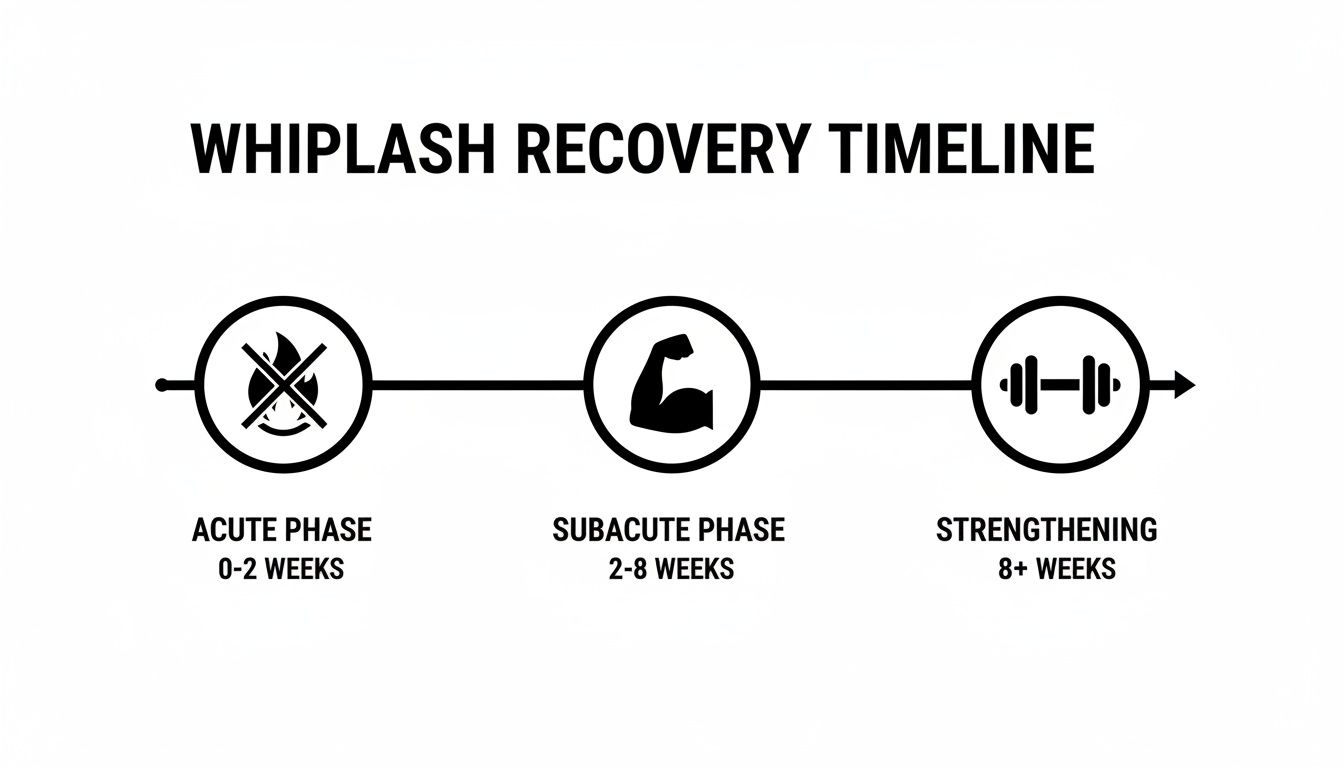
As you can see, the goals of your treatment shift from controlling pain to actively building strength as your body heals.
Prompt Care and a Reputation You Can Trust
We know that after a car accident, time is not on your side. Waiting for care can make the pain worse and slow down your recovery. That's why we promise same-day appointments for accident-related injuries, so you can get an expert evaluation and start feeling better right away.
Since 1995, MedAmerica Rehab has been a trusted part of the Deerfield Beach community. Our reputation is built on one thing: getting results for our patients. We've helped thousands of your neighbors get back to their lives, and we bring that same level of dedication to every single person who walks through our doors.
At MedAmerica, you're not a case number. You're a member of our community, and our only goal is to help you heal naturally, so you can avoid a future of pain medication or invasive surgery.
Our licensed therapists provide hands-on, evidence-based care in a friendly and encouraging atmosphere. We believe in teaching you what's going on with your body and giving you the tools to take control of your own healing. From your first visit to your last, we're your partners, focused on one thing: helping you feel better, move better, and get back to the things you love.
Common Questions About Whiplash Physical Therapy
It’s completely normal to have a lot of questions after an injury. The path to recovery isn’t just about healing your body; it’s also about navigating the practical side of things, like timelines and insurance.
When it comes to whiplash injury physical therapy, we hear many of the same concerns. Let's walk through some clear, straightforward answers to give you the confidence you need to get started.
How Long Does Physical Therapy for Whiplash Take?
This is the first question on almost everyone's mind. The honest answer is: it depends on your specific injury. There’s no single timeline that fits everyone.
For most people with a mild to moderate whiplash injury, a focused physical therapy plan of about 6 to 8 weeks is often enough to dramatically reduce pain and get you moving comfortably again. During this time, you should notice real, steady progress.
It’s important to know the difference between "feeling better" and being "fully recovered." Getting out of pain is the first step, but our ultimate goal is to restore your full strength and function so the problem doesn’t come back.
The good news is that a proactive approach really works. Studies show that with the right therapy, up to 93% of patients can make a full recovery in about three months. More severe cases might take a bit longer to rebuild deep muscle stability and make sure your neck is resilient for good. We’ll give you a clear, personalized timeline after your first visit.
Does Auto Insurance Cover Whiplash Physical Therapy?
Yes, almost always. Florida is a "no-fault" state, which means your own auto insurance policy is the first line of defense for covering medical bills after a crash, no matter who was at fault.
This coverage is called Personal Injury Protection (PIP), and it’s required for every driver in Florida. Your PIP benefits are there specifically to pay for medical care like physical therapy.
There is one crucial deadline you absolutely need to know:
- You must get an initial medical evaluation within 14 days of the accident. If you wait longer than two weeks, you could lose your PIP benefits for the injury. This makes it so important to get checked out right away.
Our team at MedAmerica Rehab deals with auto accident claims every single day. We can verify your insurance benefits and handle the billing directly with your provider, so all you have to focus on is getting better.
What Red Flags Require Immediate Medical Attention?
Most whiplash symptoms—like neck pain, stiffness, and headaches—are best handled with a physical therapy evaluation. However, there are a few “red flag” symptoms that could point to a more serious injury and require a trip to the emergency room.
Please seek immediate medical help if you experience any of these symptoms after an accident:
- A severe headache that just won’t quit
- Difficulty speaking, slurred speech, or trouble swallowing
- Numbness, tingling, or major weakness that spreads into your arms or legs
- Loss of control over your bladder or bowels
- Double vision or other major changes in your sight
- Memory loss or feeling dazed and confused
These could be signs of a more significant spinal or neurological issue. For the typical aches and stiffness of whiplash, a thorough evaluation with one of our physical therapists is the safest and most effective first step.
Can I Just Do Whiplash Exercises at Home?
A home exercise program is a vital part of your recovery, but it’s not a replacement for guided care. The internet is flooded with "whiplash exercises," but doing the wrong movement—or even the right one with bad form—can easily make your injury worse.
Think of it like a prescription. You wouldn't take someone else's medication, and you shouldn't follow a generic exercise routine. Your therapist acts as your personal coach, designing a program that’s safe and effective for your exact stage of healing.
Your customized home program is designed to:
- Support Your In-Clinic Work: The exercises you do at home lock in the gains you make during your hands-on therapy sessions.
- Change as You Heal: As your neck gets stronger and moves better, your therapist will update and progress your exercises.
- Put You in Control: We teach you how to do each movement correctly, giving you the tools to take an active role in your own recovery.
Many people also have questions about the financial side of things beyond their medical treatment. If you're curious about potential compensation for damages and other losses, you can find helpful information on the average settlement for a whiplash injury.
Ready to get a clear plan and start feeling like yourself again? The team at MedAmerica Rehab Center is here for you. We offer same-day appointments for auto accident injuries and will work directly with your insurance to make everything as simple as possible. Call us today to schedule your evaluation and get on the road to recovery.
MedAmerica Rehab · Deerfield Beach
Talk to a clinician about your pain
Physical therapy, chiropractic, acupuncture and shockwave therapy under one roof, since 1995. Same-day appointments are available.
Mon–Thu 8:00 AM – 6:30 PM · Fri 8:00 AM – 3:00 PM