
A Seat for a Walker: Your 2026 Safety & Sizing Guide
Some days the hard part isn't the walking. It's the question in the back of your mind: What happens when I need to sit down and there's nowhere close to rest? That's what stops many people from going a little farther at the grocery store, taking a neighborhood walk, or saying yes to a family outing.
A seat for a walker can change that. Not because it makes someone dependent, but because it gives them a planned place to pause before fatigue, pain, or unsteadiness turns into a problem. In practice, that phrase usually points to one of two things: a rollator with an integrated seat or an add-on seat attachment for a more standard walker.
The difference matters. One option is built as a complete mobility system. The other may be convenient, but it can create safety issues if the walker frame, seat, and sitting method don't match. Good results come from more than buying a seat. They come from fit, brakes, balance, and knowing how to use the device when your legs are tired.
When Walking Requires a Place to Rest
You may be in this exact spot right now. You can still get around, but standing too long makes your back tighten, your knees ache, or your balance feel less certain. You don't want to stop moving. You just want the confidence of knowing you can rest when you need to.
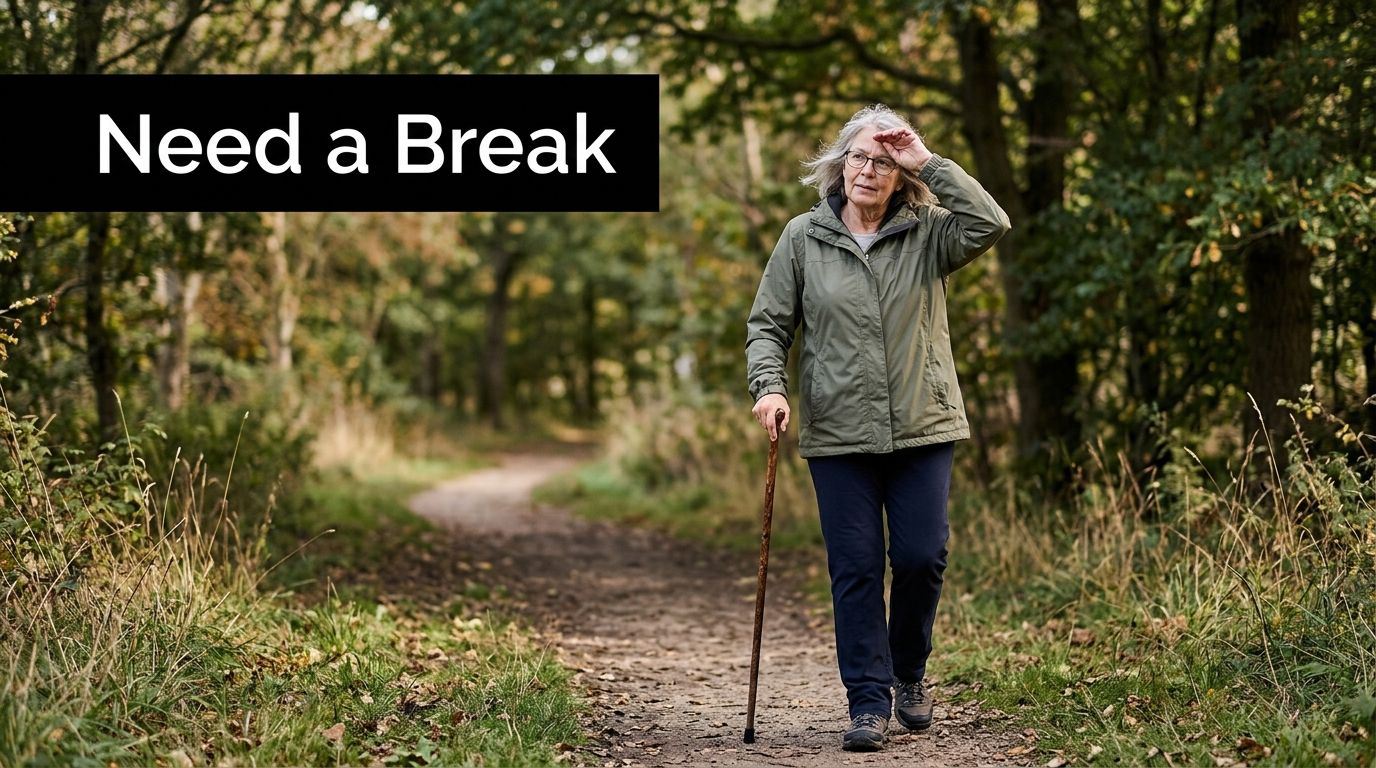
That's why seat-equipped walkers have become so common. The rollator walker market is projected to grow from about USD 117.26 million in 2026 to USD 138.86 million by 2035, according to global rollator market projections. That kind of projected growth tells you this isn't a niche idea anymore. It's a mainstream way people support rest, stability, and independence.
Why the seat matters emotionally and physically
A seat changes the math of going out. Instead of asking, “Can I make it through this errand?” people start asking, “Where would I like to go?” That's a meaningful shift.
In rehab, walking aids work best when they support movement without making the user feel trapped by the device. If you want a simple refresher on the basics of helping someone walk safely, The CNA Guide on ambulation assist gives a useful overview of body positioning, guarding, and safe support during mobility.
A good walker seat doesn't shrink your world. It helps you stay in it longer.
There's also a bigger picture. A seat helps with pacing. Pacing is one of the most practical tools for people with pain, arthritis, fatigue, or reduced balance. If balance is part of the issue, this guide on how to improve balance in elderly adults adds useful context on why rest breaks and mobility support often work better together than either one alone.
Integrated Seats vs Add-On Attachments
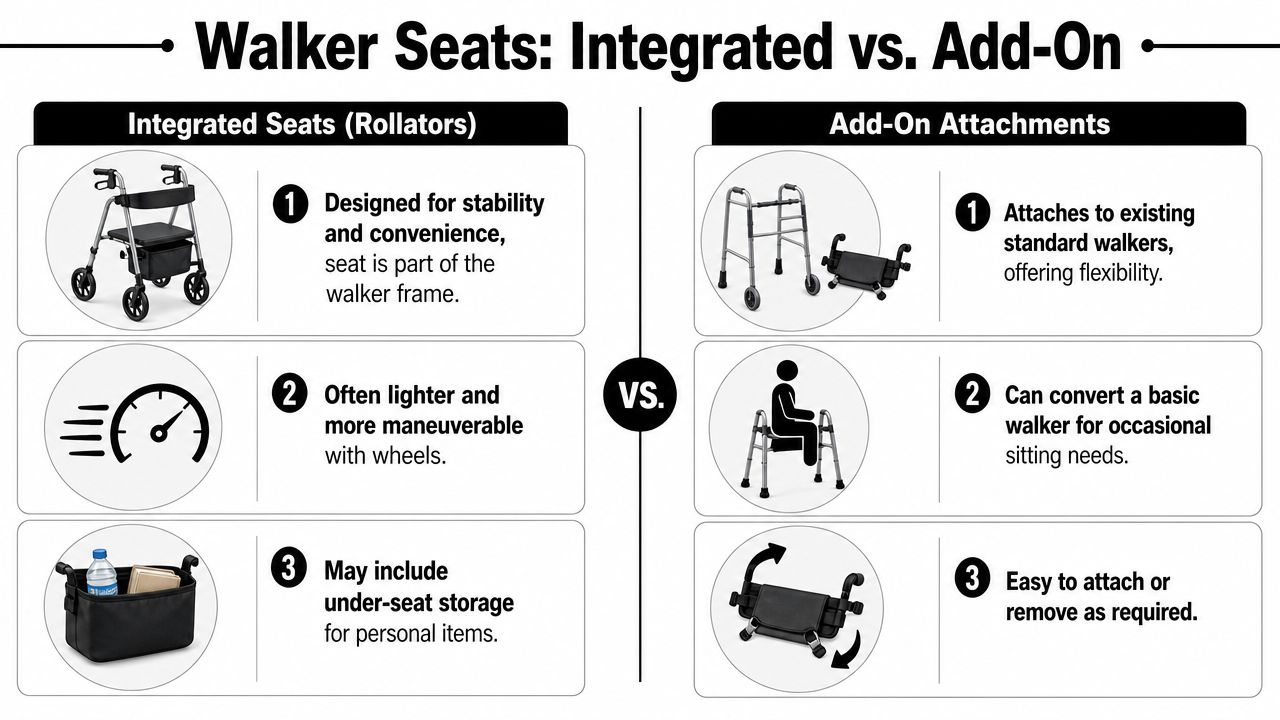
When people say they want a seat for a walker, they're usually talking about two very different setups. One is an integrated seat, most often found on a rollator. The other is an add-on attachment that's placed on a more traditional walker frame.
What an integrated seat does better
A rollator is designed from the start for walking and stopping. The seat is part of the frame, not an afterthought. The braking system, wheel placement, and frame geometry are all meant to work together.
Commercial specifications show why these designs tend to fit a wider range of users. Adjustable-seat rollators often provide seat heights of about 18 to 22 inches, handle heights of roughly 29.5 to 38 inches, and standard load ratings around 250 to 300 pounds, based on rollator specifications from SpinLife.
That doesn't mean every rollator is right for every person. It does mean the product category is engineered around the idea that the user may need to walk, brake, turn, and sit safely with the same device.
Where add-on seats get complicated
Add-on seats appeal to people for obvious reasons. They may seem less expensive, and they let someone keep a walker they already own. For occasional use, that can sound practical.
But convenience can hide a serious mismatch. A standard walker may be excellent for short indoor distances and weight-bearing support during walking, yet not be designed to manage the forces created when a person turns, backs up, lowers down, and then pushes back to standing. Sitting changes how weight moves through the frame.
Here's the plain-language version:
| Option | Main strength | Main concern |
|---|---|---|
| Integrated rollator seat | Built as a complete walking-and-resting system | Still needs correct fit and brake use |
| Add-on seat attachment | Lets you modify an existing walker | Compatibility and sitting safety may be unclear |
Practical rule: If the walker wasn't designed to be sat on, don't assume an attachment makes it safe to use like a chair.
What tends to work in real life
Integrated seats usually work better for people who need regular rest breaks during longer walks, community outings, or appointments. Add-on seats are harder to recommend casually because the frame design, locking points, and transfer method matter so much.
A walker is like a ladder in this sense. If one part isn't rated for the job, the whole setup becomes questionable. The seat may look sturdy, but what matters is whether the entire system stays stable during the most demanding moment, which is often the sit-to-stand transfer.
How to Measure for a Walker Seat
A close fit isn't good enough here. A walker seat that's slightly too low, too wide, or paired with handles at the wrong height can make the user work harder every step and every transfer. That's when people start leaning, reaching, or dropping into the seat instead of moving with control.
Start with seat height
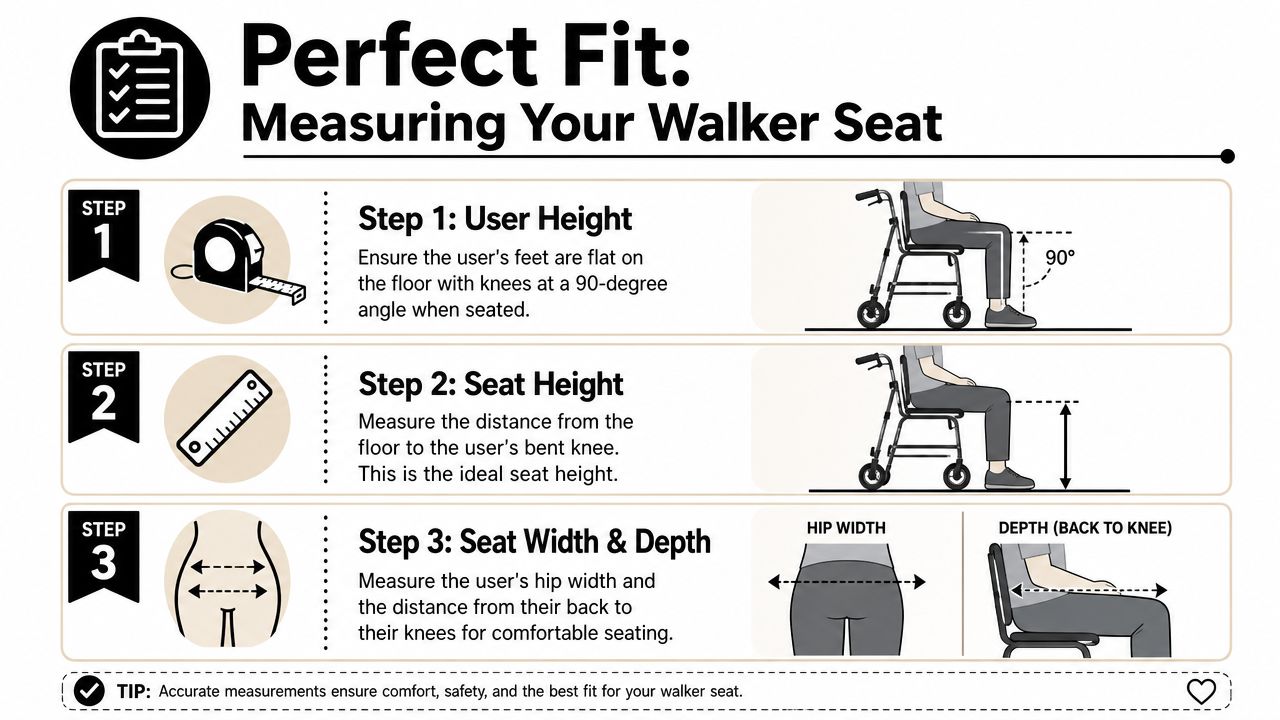
The most important seat measurement is popliteal height, which means the distance from the floor to the area behind the knee when the person is seated. Occupational therapy guidance emphasizes matching the seat to that body measurement because seat height should fit the user's popliteal height. If the seat is too low, the hips and knees have to bend more, and standing up becomes harder and less stable.
Use this quick check:
- Feet flat on the floor: If the feet dangle or barely touch, the seat is too high.
- Knees near a right angle: The legs shouldn't be sharply folded.
- Stand-up test: The user should be able to rise without a big rocking motion or a heavy pull on the walker.
A seat that's too low is like a soft couch that swallows you. It may feel fine for a moment, but getting back up takes much more effort.
This short video shows key positioning ideas during mobility setup and use:
Then adjust handle height
Handle height affects posture more than generally anticipated. If the handles are too low, the person bends forward and loads the back and shoulders. If they're too high, the shoulders rise and the elbows stiffen, which often makes steering less controlled.
A practical clinic check looks like this:
- Have the person stand upright in their usual shoes.
- Let the arms relax naturally at the sides.
- Adjust the handles to about wrist level.
- Recheck while they walk. The elbows should keep a comfortable slight bend, not lock straight.
If you're trying to understand why these walking details matter in rehab, this overview of what gait training is in physical therapy connects device fit with walking pattern, balance, and safety.
Don't skip seat width, depth, and load rating
A good fit isn't only about height. Width and depth matter too.
- Seat width: Too narrow feels pinched and unstable. Too wide can reduce trunk support and make posture sloppy.
- Seat depth: Too shallow doesn't support enough of the thighs. Too deep can push against the back of the knees or encourage slumping.
- Load rating: The walker should be appropriate for the user and anything they routinely carry.
Choose the walker like you'd choose a chair you need to stand up from several times a day, not just a chair you can sit on once.
Ensuring Your Walker and Seat Work Together
Many people assume that if a seat attachment fits onto the walker, it must be safe. That's the wrong test. A safe setup isn't just something that can be assembled. It's something that stays stable during walking, turning, sitting, and standing.
Why fit between parts matters
Independent safety guidance has pointed out a real gap here. Product listings often emphasize convenience, but practical safety for add-on seats depends on working brakes, turning to sit, and proper use, which many shoppers don't see explained clearly.
That's especially important because not every walker frame is meant to support seated loading. A frame may tolerate forward pressure during gait but respond very differently when the user shifts weight backward to sit. That's where tipping, twisting, or frame movement can show up.
A basic compatibility check
Before anyone uses an add-on seat, check these points carefully:
- Frame design: The walker should feel rigid, not loose or flexing side to side.
- Attachment security: The seat should lock firmly without wobble.
- Clearance: Nothing should block normal stepping or strike the legs during gait.
- Surface test: Try the setup on a flat, non-slippery surface first.
- Transfer rehearsal: Practice the turn, backing up, and controlled sit with supervision.
For an integrated rollator, do a simpler pre-use check:
| What to check | What you want to see |
|---|---|
| Brakes | They engage and hold without slipping |
| Wheels | They spin smoothly and don't wobble |
| Folding mechanism | It opens fully and locks securely |
| Seat surface | It's stable and not shifting under pressure |
The red flags people ignore
Watch for a walker that creeps when the brakes are on, folds unevenly, or feels fine walking forward but shaky when the user turns to sit. Those aren't minor annoyances. They're warnings.
If a person has balance problems, recent surgery, significant weakness, or difficulty following a transfer sequence, an improvised seat setup is usually a poor gamble. In those cases, a purpose-built device and a supervised fitting are the safer path.
Safe Practices for Sitting and Standing
The riskiest moment with a walker seat usually isn't while walking in a straight line. It's the transition. People get into trouble when they rush, forget the brakes, or try to sit while still facing forward.
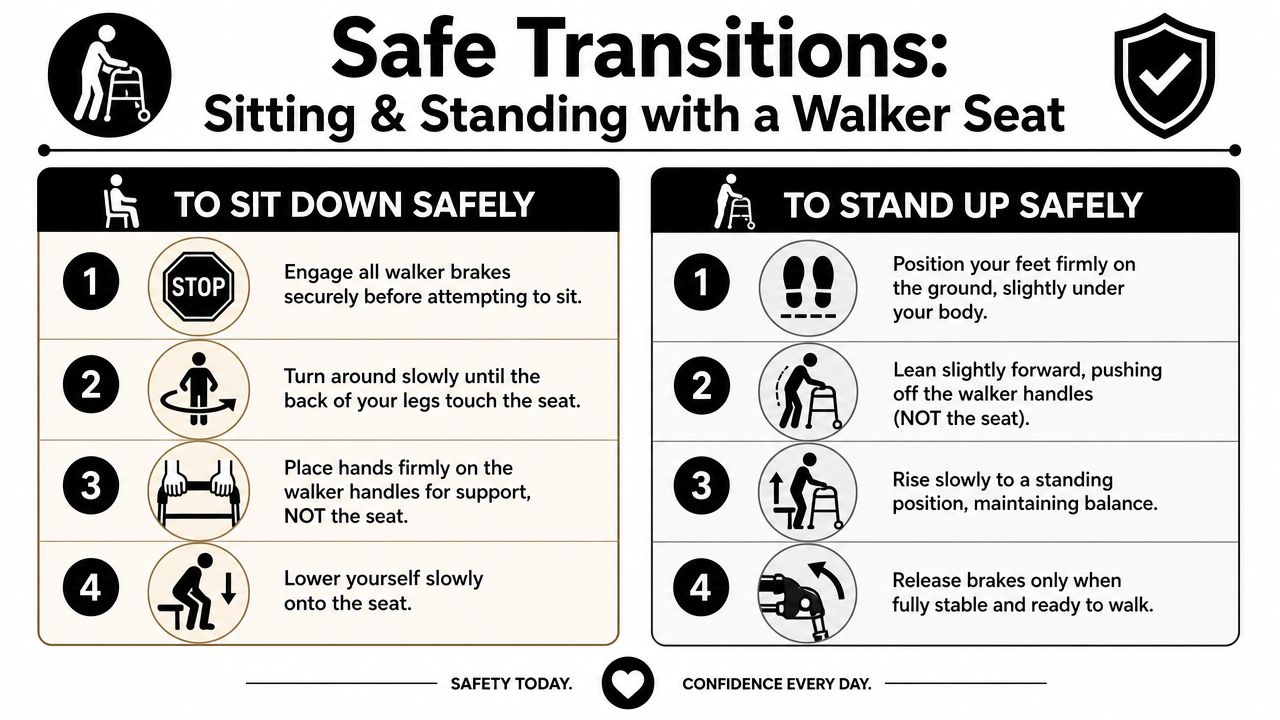
Research on walker-related injuries is a good reminder that a mobility aid lowers risk only when it's used well. Walkers are prescribed to reduce falls, yet an estimated 41,000 U.S. emergency-room visits per year are associated with walker use, and in one fall study 79.4% of incidents involved rollators. The same study found backward falls were 16% more prevalent in rollator users, according to research on falls and walker-related injuries.
How to sit down safely
Use the same sequence every time. Repetition creates a habit, and habit is what protects you when you're tired.
- Stop on level ground. Avoid slopes, thick carpet edges, or uneven outdoor surfaces.
- Lock the brakes fully. Don't just squeeze them. Make sure they are in the locked position.
- Turn all the way around. The back of your legs should touch the seat before you lower down.
- Reach for stable support. Use the walker handles only if that's the correct design for your device and training. If a nearby chair armrest or other stable surface is part of your safe setup, use it.
- Lower slowly. Bend at the hips and knees in control. Don't drop backward.
Back up until you feel the seat against your legs. If you sit before that moment, you're guessing where the chair is.
How to stand up safely
Standing is where many people pull on the wrong part of the device or try to rise before their feet are underneath them.
Use this pattern:
- Scoot forward if needed: Don't try to stand from a slouched position far back on the seat.
- Place feet under you: Your feet should be flat and a little behind the knees, not stretched out in front.
- Lean forward from the hips: Bring your nose over your toes as your weight shifts forward.
- Push up with control: Rise steadily. Don't yank hard on the seat.
- Get stable first: Only release the brakes and start walking once balance is settled.
If leg weakness is part of the problem, working on how to strengthen legs for seniors can make these transfers feel far more secure.
Mistakes that often lead to trouble
A few habits cause problems again and again:
- Forgetting the brakes: The walker rolls away just as the person sits.
- Facing forward to sit: The seat is behind the body, so the user ends up twisting or dropping back.
- Plopping down: Fast descent increases the chance of backward loss of control.
- Standing with feet too far forward: The body can't get over the base of support.
These steps may feel slow at first. Slow is fine. Controlled beats fast every time.
Why a Professional Fitting Matters for Your Safety
A tape measure can give you a starting point. It can't tell you how the person turns, whether they freeze when backing up, how much trunk control they have, or whether arthritis pain makes them lean to one side by the end of the day.
That's why a professional fitting matters. It looks at the moving person, not just the standing body. For someone with severe arthritis, post-surgical recovery, back pain, neurologic changes, or repeated near-falls, those details often matter more than the product specs.
What a therapist notices that shoppers often miss
Guidance for walker setup often treats adjustment like a one-time task. But seat and handle fit may need to change as pain, posture, or gait changes over time, and small changes can alter comfort and stability in a meaningful way.
A clinician will often look at issues such as:
- Walking pattern: Is the walker too far ahead? Does the user shuffle or rush?
- Transfer style: Do they control the descent, or do they fall backward into the seat?
- Posture drift: Are they upright at first, then more flexed after fatigue sets in?
- Home demands: Are they using the device on thresholds, parking lots, or narrow bathrooms?
The right seat for a walker should still be the right seat after pain flares, after a long outing, and after mobility changes. Not just in the store.
When outside help is especially useful
If you or a family member also needs broader support at home, these Australian home healthcare options give a useful example of the kinds of coordinated services families often explore when mobility, safety, and daily function start overlapping.
Professional fitting isn't about making things complicated. It's about reducing guesswork. A walker should make daily life easier. If it adds fear, awkward transfers, or near-misses, the setup needs another look.
If you want expert help choosing, fitting, or safely using a seat for a walker, MedAmerica Rehab Center offers hands-on support for balance training, gait issues, fall prevention, post-surgical recovery, arthritis, and mobility concerns. A skilled rehab team can assess how you walk, how you sit and stand, and whether your walker setup supports real independence instead of just looking good on paper.
MedAmerica Rehab · Deerfield Beach
Talk to a clinician about your pain
Physical therapy, chiropractic, acupuncture and shockwave therapy under one roof, since 1995. Same-day appointments are available.
Mon–Thu 8:00 AM – 6:30 PM · Fri 8:00 AM – 3:00 PM