
Concussion Vestibular Therapy: Regain Balance in 2026
You may be dealing with this right now. You stand up and the floor feels a little late to catch you. A trip to the grocery store feels overwhelming because the lights, shelves, and motion all seem too loud for your brain. Reading a text message makes your eyes work harder than they should. You might even be wondering whether this is normal after a concussion, or whether something is being missed.
It's a frightening place to be, especially because post-concussion dizziness is often invisible to everyone else. From the outside, you may look fine. Inside, your balance, focus, and confidence can feel shaken all at once. The good news is that these symptoms often have a clear explanation, and there's a treatment approach designed specifically for them.
The Lingering Fog After a Concussion
Many people expect a concussion to mean headache, rest, and a few quiet days. What surprises them is the lingering fog. The room may not spin dramatically, but you feel off. Turning your head too quickly can trigger nausea. Walking through a crowded hallway can feel like your body has lost its sense of where “straight ahead” is.
That experience is common, not unusual. One review estimated that 30% to 65% of patients who've had a traumatic brain injury develop vestibular symptoms such as dizziness, nausea, vertigo, balance problems, and gait disturbances, according to this review of vestibular symptoms after traumatic brain injury. In plain language, dizziness after concussion isn't rare. It's a frequent part of recovery.
Some patients also get confused by the terminology. If you've been trying to understand the differences between TBI and concussion, that distinction can help make the medical language less intimidating. A concussion sits within the broader brain injury conversation, and symptoms can still disrupt daily life in a very real way even when scans look normal.
You don't need to “push through” unexplained dizziness after a concussion. When symptoms linger, they deserve a focused evaluation.
Concussion vestibular therapy is one of the main ways clinicians address this problem. It targets the systems that help you keep your eyes steady, your body upright, and your brain oriented in space. If your headaches are part of the picture too, this guide on treatment for post-concussion headaches may also help connect the dots.
The important thing to know is this. Feeling dizzy, foggy, or off-balance after a concussion doesn't mean you're failing to recover. It often means a specific system needs retraining.
Why You Feel Dizzy and Unsteady
Your vestibular system works like an internal GPS. It helps your brain answer basic questions all day long: Am I moving? Which direction is up? Are my eyes stable while my head turns? Can I trust the ground under me?
When that system is working well, you barely notice it. You turn your head while walking and your vision stays clear. You step off a curb and your body adjusts automatically. You move through a busy room without feeling pulled sideways.
A concussion can scramble those signals.
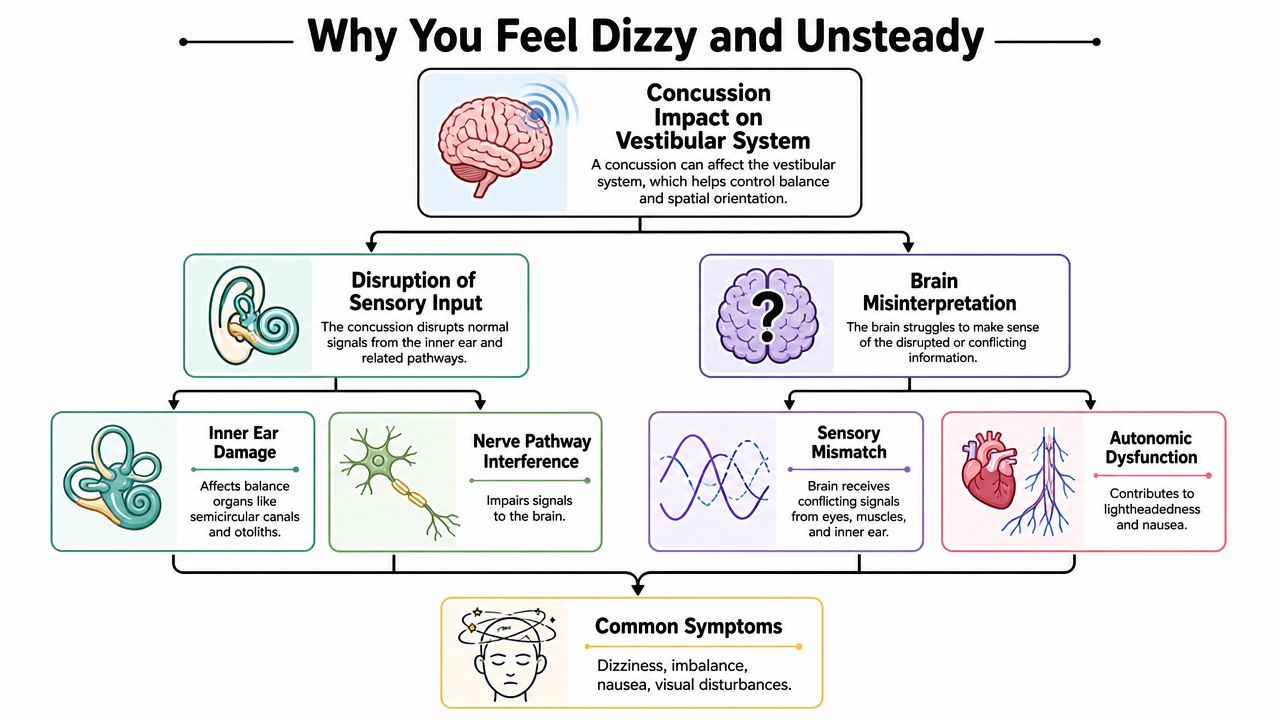
Your brain uses three main inputs
Your sense of balance depends on three information streams working together:
- Inner ear input helps detect head motion and position.
- Visual input tells you what's moving around you and where you are in space.
- Body input from muscles and joints tells you where your limbs and trunk are.
If those three streams agree, your brain feels secure. If they conflict, you can feel dizzy, nauseated, lightheaded, or unsteady.
That's why concussion symptoms often show up in very ordinary moments. Scrolling on a phone may trigger discomfort because your eyes and vestibular system aren't coordinating well. Walking in a warehouse store may feel awful because the visual environment is busy and your brain has trouble sorting motion from background. Quick turns, bending over, and even riding in a car can become surprisingly hard.
Common patterns patients notice
A person with post-concussion vestibular problems may say:
- “I'm fine if I stay still.” Symptoms often show up with motion, especially head turns.
- “Screens bother me.” Eye movements and visual tracking can provoke symptoms.
- “Crowded places feel worse.” More motion in the environment means more sensory demand.
- “I feel disconnected from my body.” Balance confidence drops when the brain stops trusting incoming signals.
Some people also have neck strain after the same injury. That can make the picture messier, because neck stiffness and altered head position can add to dizziness and headaches. This is one reason a generic exercise plan often misses the mark.
Practical rule: If dizziness shows up with head movement, visual motion, or walking in busy settings, the problem often isn't “just fatigue.” It may be a vestibular issue that needs targeted treatment.
If you want another patient-friendly overview of physical therapy for dizziness relief, that resource explains why dizziness often improves when treatment matches the source. For a deeper look at the mechanics behind concussion symptoms, MedAmerica's guide on the vestibular system and concussion lays out how the inner ear, eyes, and brain work together.
The key idea is simple. After a concussion, your internal GPS may still be on, but it may not be calibrated. Vestibular therapy helps recalibrate it.
Your Vestibular Therapy Evaluation
The first visit shouldn't feel like guesswork. A good vestibular evaluation is more like detective work. The goal is to identify which movement, sensory system, or body region is driving your symptoms.
What the therapist wants to know
Expect detailed questions, not just “Are you dizzy?”
A therapist will usually ask when symptoms started, what brings them on, how long they last, whether you feel spinning or more of a floating sensation, and whether reading, driving, walking, or computer work makes things worse. Headaches, neck pain, nausea, light sensitivity, and exercise intolerance also matter because they help shape the treatment plan.
You may also be asked whether symptoms happen in specific positions, such as rolling in bed, looking up, or bending over. That matters because certain patterns point toward specific vestibular problems rather than a broad “post-concussion” label.
What the physical exam often includes
The evaluation usually looks at several systems in the same visit:
- Eye movement testing checks how well your eyes track targets and shift focus.
- Head movement testing looks at whether turning the head causes blurring or dizziness.
- Balance screening may include standing in different positions, sometimes with eyes closed.
- Walking assessment looks for veering, stiffness, slowed gait, or guarding.
- Neck exam checks mobility, tenderness, posture, and whether cervical issues add to symptoms.
- Positional testing may be used when symptoms suggest an inner ear condition such as BPPV.
A specific test like Dix-Hallpike may be included if brief spinning episodes happen with lying down, rolling, or looking up. That's important because some dizziness after concussion comes from a treatable inner ear issue, and that calls for a different treatment than generalized balance retraining.
| Symptom Category | Examples |
|---|---|
| Balance problems | Unsteadiness when standing, drifting while walking, feeling wobbly on stairs |
| Visual symptoms | Blurry vision with head movement, trouble reading, discomfort in busy environments |
| Motion sensitivity | Dizziness with turning, bending, rolling in bed, riding in a car |
| Associated complaints | Nausea, headaches, neck tightness, fatigue, feeling mentally slowed |
A thorough vestibular exam doesn't just confirm that you're dizzy. It sorts out why.
That distinction matters. Someone with gaze instability needs a different plan from someone with positional vertigo. Someone with major neck involvement won't respond well if the neck is ignored. The best evaluation leaves you with a map, not just a diagnosis.
The Four Pillars of Vestibular Rehabilitation
Concussion vestibular therapy works best when it's specific. “Take it easy and wait” may help in the earliest phase, but persistent dizziness usually needs more than rest. Rehabilitation uses repeated, carefully dosed inputs to teach the brain and body how to coordinate again.
Early treatment appears to matter. In a systematic review of early physical therapy and vestibular rehabilitation, one analysis reported that participants receiving vestibular therapy were 10.27 times more likely to be medically cleared to return to sport within 8 weeks of injury, and another study found recovery time was reduced to less than 21 days in athletes, according to this systematic review of early vestibular rehabilitation after sports-related concussion.
Here's what that treatment usually includes.
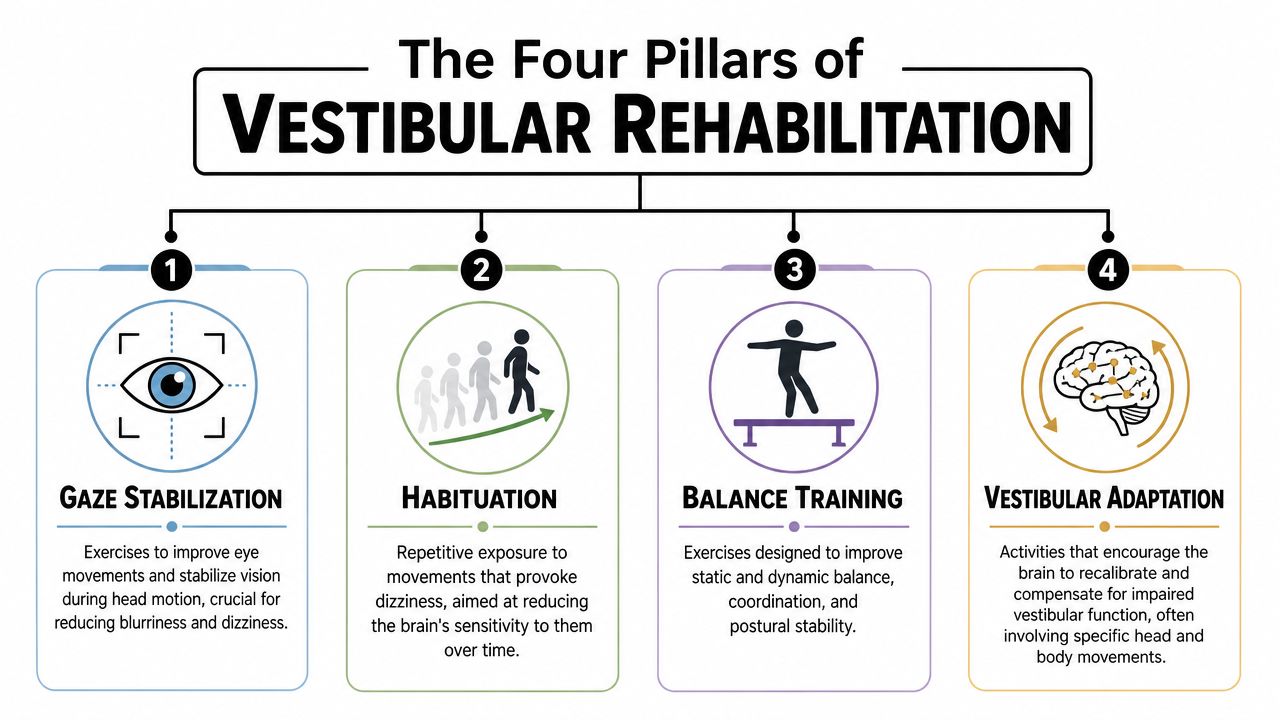
Gaze stabilization
Many patients finally understand why reading signs or turning their head while walking feels so hard. Your eyes and inner ear are supposed to work as a team. After concussion, that partnership may lag or misfire.
Gaze stabilization exercises retrain that connection. A common version has you keep your eyes on a target while moving your head side to side or up and down. It sounds simple. Done correctly, it's precise work.
What works:
- Short, controlled practice with the right speed and symptom level
- Clear targets and good posture
- Progression over time as tolerance improves
What doesn't work:
- Going too hard too soon
- Moving so slowly that the exercise no longer challenges the system
- Doing random eye drills from the internet without knowing the goal
A quick demonstration can help patients visualize the process.
Habituation
Some movements provoke symptoms because the brain has become overly sensitive to them. Habituation uses graded exposure. That means you practice the very motions that trigger mild dizziness, but in a controlled amount.
This isn't the same as overwhelming yourself. It's closer to turning down a car alarm by proving to the system that the signal isn't dangerous.
Examples might include repeated sit-to-stand transitions, turning, bending, or moving through visually busy spaces in a staged way.
The right amount of symptom provocation can help. Too little won't create change, and too much can set you back for the rest of the day.
Balance and gait training
Balance often becomes stiff and cautious after concussion. People widen their stance, avoid turning, or look at the floor constantly. That may feel safer, but it doesn't restore normal movement.
Balance work may include:
- Static balance such as standing with a narrower base of support
- Dynamic balance such as stepping, turning, or walking with head movement
- Dual-task work such as walking while tracking a target or doing a simple mental task
The purpose is confidence plus control. Real life doesn't happen in a quiet therapy room, so the exercises gradually become more functional.
Manual techniques and related body mechanics
Not every symptom comes from the inner ear alone. Many concussion patients also have neck tightness, guarded posture, or headache patterns that amplify dizziness. Hands-on treatment can help when the cervical spine is part of the problem.
That may involve soft tissue work, joint mobility, posture correction, and movement retraining. It's not a side issue. If the neck keeps feeding the brain distorted information about head position, vestibular progress can stall.
The most effective plans usually combine these pillars rather than relying on just one.
Mapping Your Recovery Journey and Outcomes
Most patients want two honest answers. How long will this take, and what does progress look like?
Recovery usually isn't a straight line. Symptoms often improve in layers. A patient may first tolerate reading longer, then walk more confidently in public, then handle faster head movement, and only later return to full exercise or sports. Good days and symptom flares can happen in the same week.
A practical benchmark from a hospital-based concussion program is that vestibular rehabilitation is typically delivered for 4 to 8 weeks with once-weekly sessions, starting with simple exercises and progressing as symptoms fall, according to Nationwide Children's concussion and vestibular rehabilitation program overview.
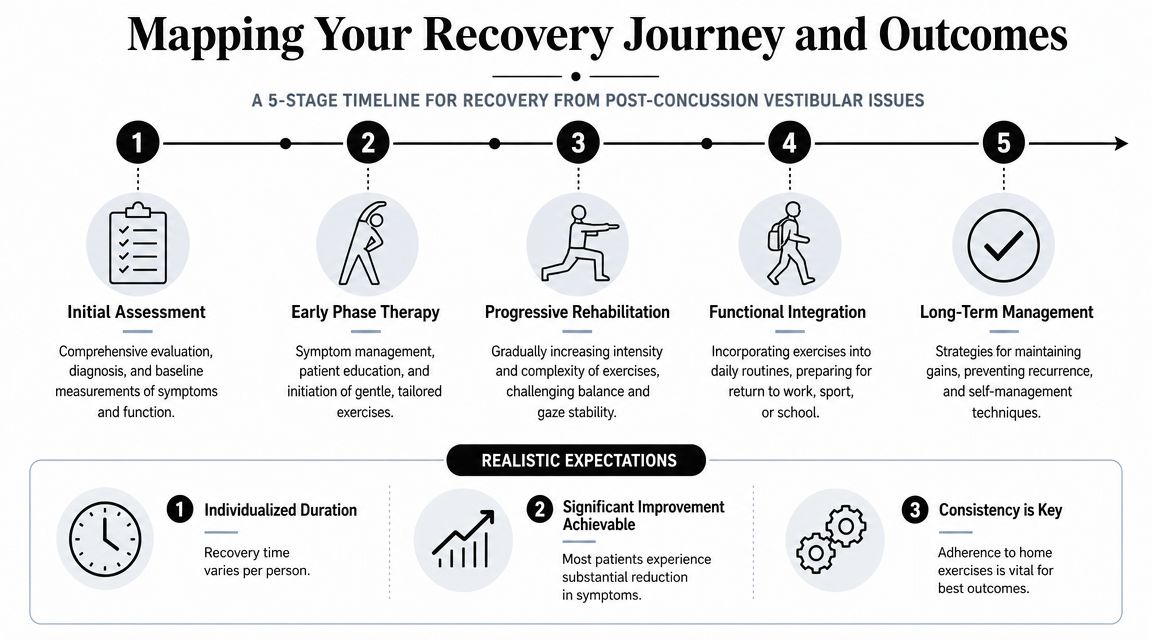
What progress usually feels like
Early improvement often looks modest. You may still feel dizzy, but recovery after an episode is faster. You may still dislike stores or screens, but you tolerate them longer. Those changes matter because they show the system is adapting.
Later, the signs become more functional:
- Daily movement feels less threatening
- Head turns become smoother
- Walking speed and confidence improve
- Work, school, exercise, or driving become more manageable
The pace depends on several factors, including symptom severity, how soon treatment starts, whether neck issues are involved, and how consistently home exercises are done. The right program should challenge you without knocking you flat for the rest of the day.
What helps and what slows recovery
A few habits tend to move people forward:
- Consistent home practice matters more than occasional heroic effort.
- Symptom tracking helps identify patterns and adjust dosage.
- Steady progression beats jumping from total rest to full activity.
Common problems include stopping exercises every time mild symptoms appear, or doing so much that the nervous system stays aggravated. Both extremes can slow progress.
Recovery isn't about waiting for dizziness to disappear before moving again. It's about restoring tolerance, one layer at a time.
If you're looking for one reassuring principle, it's this. Improvement usually comes from repeated, measured exposure and gradual rebuilding, not from avoiding every sensation forever.
The MedAmerica Rehab Approach to Concussion Care
Patients with post-concussion dizziness usually need more than a handout. They need someone to sort through overlapping symptoms, watch how their body responds, and adjust the plan when the pattern changes.
That's where a clinic-based approach becomes useful. At MedAmerica Rehab Center's neuro physical therapy program, care can include one-on-one assessment of balance, gait, visual motion sensitivity, and neck-related factors that often complicate concussion recovery. The point isn't to run every patient through the same routine. It's to match the exercises and hands-on treatment to the problem that's present.
What patient-centered care looks like in practice
A strong concussion vestibular therapy plan should account for daily life, not just clinic performance. Someone trying to return to office work needs a different progression from a high school athlete, a driver, or an older adult worried about falling in the shower.
That means the therapist should ask practical questions:
- What activity is hardest right now
- Which environments trigger symptoms
- How long can you read, walk, drive, or look at a screen
- What goal matters most in the next phase of recovery
Why tailoring matters
The same diagnosis can produce very different treatment plans. One patient may need more gaze stabilization. Another may need positional treatment for vertigo. Another may need the neck addressed before vestibular drills become tolerable.
Since 1995, the clinic has served Deerfield Beach and surrounding communities with a multidisciplinary, patient-centered model. For concussion care, that kind of setup matters because dizziness often overlaps with headache, neck pain, movement fear, and functional limitations. When those pieces are assessed together, treatment tends to make more sense to the patient and become easier to follow.
Your Questions About Vestibular Therapy Answered
Will the exercises make me feel dizzier
Sometimes, yes. Mild symptom provocation is often part of the process. That doesn't mean the exercise is harmful. It means the nervous system is being challenged.
The key is dosage. You shouldn't be pushed into a severe flare that ruins the rest of your day. A therapist adjusts speed, duration, posture, and complexity so the exercise is productive rather than punishing.
Can I do these exercises on my own at home
Home practice is usually a major part of recovery, but it works best after an evaluation. The same symptom, “dizziness,” can come from different causes. If you pick the wrong exercise, you may waste time or aggravate the wrong system.
Once the plan is clear, home work is where a lot of progress happens. Improvement often comes from consistent practice between visits, rather than solely from exercises performed in the clinic.
How is vestibular therapy different from regular physical therapy
General physical therapy often focuses on strength, flexibility, joint mobility, and movement mechanics. Vestibular therapy is more specific. It targets the coordination among the inner ear, eyes, brain, posture, and walking patterns.
That may include head-motion drills, eye stabilization tasks, positional testing, balance retraining, and symptom-guided progression. It's still physical therapy, but with a distinct skill set and a different clinical lens.
What if my neck hurts too
That's common after concussion. Neck stiffness, muscle guarding, and altered head position can all feed into dizziness and headaches. If the neck contributes to your symptoms, treatment should address it directly rather than treating it as an unrelated side issue.
A patient often improves faster when both vestibular and cervical contributors are managed together.
When should I seek urgent medical attention instead of waiting for therapy
Seek immediate medical care if you develop red-flag symptoms after a concussion or a head injury, including:
- Sudden severe worsening headache
- Repeated vomiting
- New weakness or numbness
- Trouble speaking
- Loss of consciousness
- Seizure activity
- Marked confusion or behavior change
- Vision loss or other sudden major neurologic changes
Those signs need prompt medical evaluation. Vestibular therapy is appropriate for many lingering post-concussion symptoms, but it isn't a substitute for emergency assessment when something more serious may be happening.
How do I know it's time to get evaluated
If dizziness, imbalance, motion sensitivity, or visual discomfort keeps interfering with normal life, it's worth getting checked. You shouldn't have to organize your day around avoiding stores, screens, stairs, or head turns. Those are exactly the kinds of limitations concussion vestibular therapy is designed to address.
If you're dealing with dizziness, imbalance, or visual motion sensitivity after a concussion, MedAmerica Rehab Center is one place to get a focused evaluation and a practical plan for what to do next. The right care should help you understand your symptoms, start the right exercises at the right level, and move back toward work, driving, exercise, and daily life with more confidence.
MedAmerica Rehab · Deerfield Beach
Talk to a clinician about your pain
Physical therapy, chiropractic, acupuncture and shockwave therapy under one roof, since 1995. Same-day appointments are available.
Mon–Thu 8:00 AM – 6:30 PM · Fri 8:00 AM – 3:00 PM