

What Does MVA Mean in Medical Terms? a Clear Guide
In most medical contexts tied to injury care, MVA usually means Motor Vehicle Accident. In other medical specialties, MVA can also mean Manual Vacuum Aspiration, a uterine procedure typically used under 12–13 weeks gestation and often taking about 5–15 minutes of procedural time.
If you've just seen “MVA” on an ER note, physical therapy referral, imaging order, or insurance form, that shorthand can feel more confusing than helpful. In most medical contexts, especially emergency and injury-related care, MVA stands for Motor Vehicle Accident. That label matters because it affects how your providers think about your injuries, how your claim gets documented, and how your recovery plan is built.
As a rehab clinician, I can tell you that people often focus on the acronym first and miss the bigger issue. The letters on the chart are really a signal to your care team: this pain started after a crash, the forces on the body were different from everyday strain, and some symptoms may show up later than expected.
Decoding MVA on Your Medical Chart
A lot of patients first notice MVA when they're reading after-visit paperwork at home. It might appear next to neck pain, back pain, headache, shoulder strain, or dizziness. If you were in a collision, the most practical reading is simple: your chart is identifying the cause of injury.
That's useful because medicine relies on context. A sore neck after gardening is evaluated one way. A sore neck after a rear-end collision is evaluated another way. The acronym helps the clinician connect symptoms to a mechanism of injury, and that changes what questions get asked and what red flags get taken seriously.
Why that shorthand matters
“MVA” on a chart is not just clerical language. It helps organize care across urgent care, primary care, imaging, physical therapy, chiropractic care, and insurance paperwork. It tells every provider who opens the record that the timeline starts with a vehicle crash.
A good next step is to pay attention to symptoms that may not have felt serious at the scene. This guide on hidden injury symptoms after a car accident is helpful if your pain, stiffness, headaches, or numbness started later.
The most important question after seeing “MVA” on your chart isn't “What does the acronym mean?” It's “What does this event mean for the rest of my care?”
Context changes the meaning
Medical abbreviations are rarely universal in every specialty. That's why the same three letters can mean different things in cardiology, gynecology, genetics, and trauma care. But if your chart also mentions a collision, impact, driver, passenger, seat belt, airbag, or vehicle damage, Motor Vehicle Accident is almost certainly the intended meaning.
For most injured patients, that's the definition that matters most day to day.
The Primary Meaning Motor Vehicle Accident
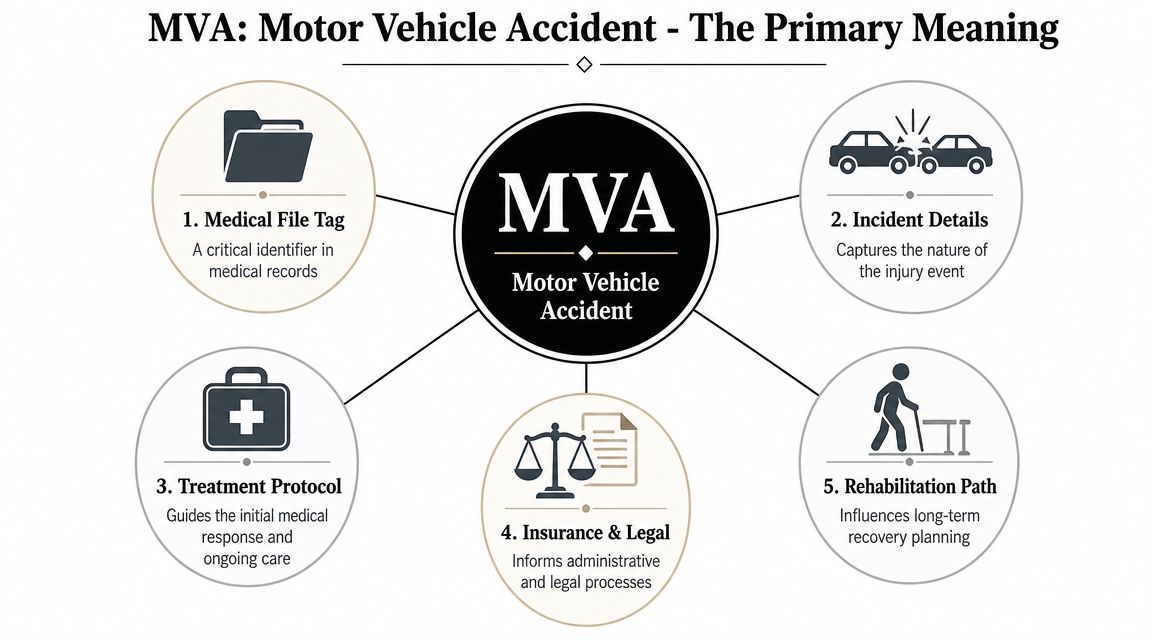
When clinicians use MVA in rehab or injury medicine, they're tagging the origin of the problem. That tag shapes the whole workup. It tells the provider this was not random pain that appeared on its own. It began after a crash, and the body may have absorbed force through the neck, spine, shoulders, hips, knees, or even the jaw.
Think of MVA as a diagnostic tag
A better way to understand it is to think of MVA as a file label on the front of your case. It tells the team, “Start by ruling out the kinds of injuries crashes commonly create.” That includes joint irritation, muscle guarding, ligament strain, nerve irritation, headaches, balance complaints, and movement patterns that became protective after impact.
In practice, that means your provider usually asks very specific questions, such as:
- Where were you sitting: Driver, front passenger, or rear seat can change body mechanics.
- How were you hit: Rear-end, side impact, head-on, or multi-car collisions load the body differently.
- What changed after the crash: Pain, stiffness, tingling, headaches, sleep disruption, or fear with driving all matter.
- What can't you do now: Turning your head, lifting groceries, sitting at work, sleeping through the night, or walking comfortably.
These details aren't filler. They help connect tissue stress to symptom patterns.
What works in early evaluation
The best early assessments are specific and organized. Providers should document the mechanism, symptoms, onset, aggravating movements, and function you've lost. That gives later clinicians a solid starting point.
What doesn't work is vague documentation like “back pain after accident” with no detail. Weak notes make treatment less precise and often create problems with claims and referrals later.
If you're also sorting out the legal side, resources on auto motorcycle accident services can help you understand the documentation side of injury cases without guessing your way through the process.
Practical rule: After a crash, don't describe symptoms only by pain level. Describe what movement causes them and what daily task now feels different.
Why rehab teams care about the label
In physical therapy, the term matters because crash injuries often behave differently from routine overuse problems. A person might have pain when rotating the neck, delayed soreness in the low back, shoulder pain during reaching, or dizziness with position changes. Those patterns often need a careful progression, not a generic handout of exercises.
That's why the answer to what does MVA mean in medical terms is more than a dictionary definition. In injury care, it tells the clinician where the story started and what problems are most likely to need follow-up.
How an MVA Diagnosis Shapes Your Care Journey
Once MVA is attached to your chart, it influences more than treatment. It affects medical communication, referrals, and the paperwork trail that follows you through recovery.

Insurance and documentation
Insurance reviewers usually want a clear link between the crash and the symptoms being treated. That means dates, body regions, exam findings, and follow-up plans need to line up. If your records are scattered, your care can get delayed even when the injury is real.
From a rehab perspective, good documentation should track changes over time. Are headaches easing but neck rotation still limited? Is low back pain improving while sitting tolerance is still poor? Those details help justify ongoing care.
A practical symptom checklist can help patients notice issues they didn't think to mention right away. Pacin Levine's guide to post-accident symptoms is a useful reference if you're trying to organize what changed physically after the crash.
Communication across providers
An MVA diagnosis also helps different clinicians speak the same language. The ER may rule out an emergency. Your primary care provider may address medication or further imaging. A physical therapist may focus on range of motion, strength, gait, and function. A chiropractor may assess spinal mechanics. Each one sees a different piece of the same event.
That coordination works best when you keep your history consistent. Try to be clear about:
| What to report | Why it matters |
|---|---|
| Date of the crash | Keeps all documentation tied to the same event |
| Body areas affected | Helps avoid missing linked problems |
| Symptoms that started later | Delayed issues are common after collisions |
| Daily tasks now limited | Guides treatment goals and progress notes |
Why early rehab often helps
The body often becomes guarded after a collision. Muscles tighten, movement gets smaller, and normal activities start to feel threatening. If that pattern continues, pain can linger longer than it should.
Early rehab tends to work best when it focuses on calm, progressive loading and restoring confidence in movement. What usually doesn't help is swinging between complete rest and pushing through severe pain. Most patients do better with a measured plan that matches symptoms to function.
Don't wait for pain to become constant before asking for help. Stiffness, headaches, and movement avoidance are often enough to justify a proper rehab evaluation.
Disambiguating Other Medical MVAs
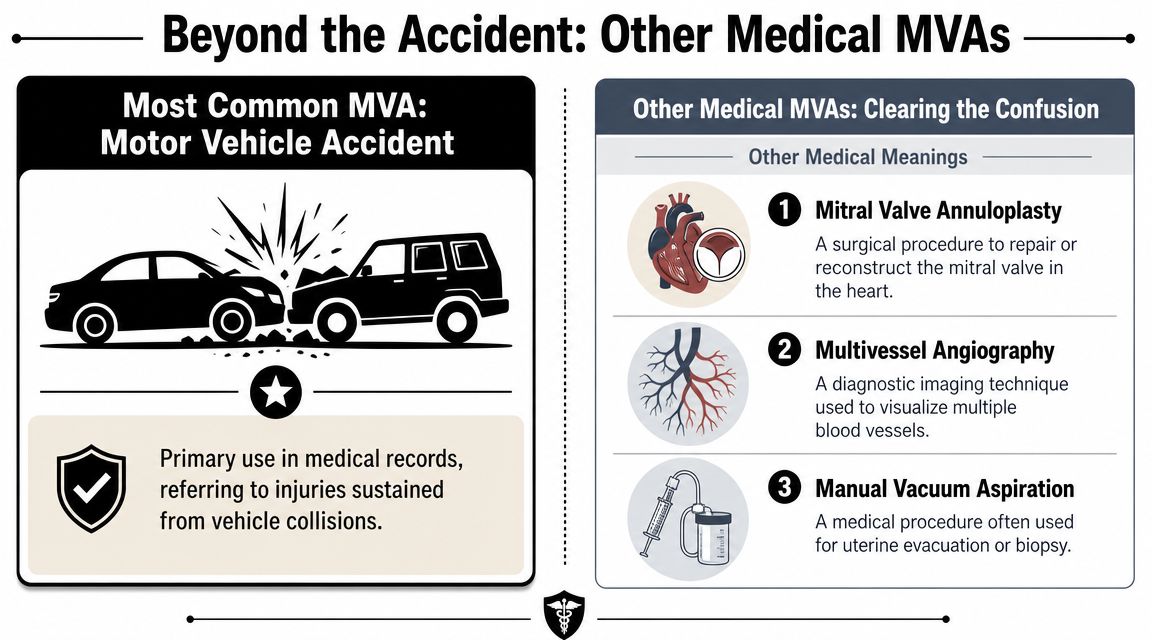
If you searched what does MVA mean in medical terms, you probably noticed that medicine doesn't always make acronyms easy. Outside injury care, MVA can mean something very different depending on the specialty.
Manual Vacuum Aspiration
In gynecology, MVA commonly means Manual Vacuum Aspiration. This is a suction-based uterine evacuation procedure used to remove pregnancy tissue. Major clinical guidance limits routine use to pregnancies under 12–13 weeks gestation, because beyond that point the technique becomes less effective and generally isn't recommended except in specific situations such as molar pregnancy, according to Newcastle Hospitals NHS guidance on Manual Vacuum Aspiration.
Operationally, it's designed for early first-trimester tissue removal and is often completed in about 5–15 minutes of procedural time, with total visit time commonly under 30 minutes in hospital-based pathways, based on that same Newcastle Hospitals NHS Manual Vacuum Aspiration guidance.
A separate clinical resource explains that a key advantage is the use of handheld negative pressure rather than powered suction, which can support bedside or outpatient care with local anesthesia. That same guidance notes a surgical suction setup may use up to 800 millibars of pressure, and reports low but real complication risks including heavy bleeding requiring transfusion <1 in 1000, uterine damage 1–4 in 1000, infection <1 in 100, and retained tissue about 3 in 100 in DKT WomanCare's Manual Vacuum Aspiration guidance.
Microvascular Angina
In cardiology, MVA can mean Microvascular Angina. This is a recognized cardiovascular diagnosis, not just a loose symptom label. A PubMed-indexed review notes it had already been confirmed more than 40 years earlier and describes it as anginal pain without abnormal coronary arteriographic findings or coronary spasm in this review on Microvascular Angina.
That same review explains the syndrome is linked to organic and functional abnormalities of the heart's small arteries, often involving endothelial dysfunction and other microvascular abnormalities. It also states that the major treatment historically has been medication, most often calcium channel blockers, according to the PubMed review of Microvascular Angina.
If you see “MVA” in a cardiology note alongside chest pain, stress testing, ischemia, or coronary imaging, it may have nothing to do with a car accident.
Mosaic Variegated Aneuploidy syndrome
In genetics, MVA may refer to Mosaic Variegated Aneuploidy syndrome, an ultra-rare disorder caused by abnormal chromosome segregation. The MVA Society states that it affects fewer than 50 people worldwide and can involve developmental delays, growth problems, low muscle tone, learning disabilities, and a significantly increased cancer risk in its explanation of MVA syndrome.
Because it's so rare, most doctors will never see a case in their career, and there are no established treatment pathways or standard care protocols in the same way you'd expect for common conditions, as described by the MVA Society overview.
How to tell which MVA applies
Use the surrounding words. That's the fastest test.
- Crash, whiplash, ER, neck pain, insurance usually points to Motor Vehicle Accident
- Pregnancy, uterine evacuation, suction, procedure points to Manual Vacuum Aspiration
- Chest pain, angina, coronary, ischemia points to Microvascular Angina
- Genetic testing, chromosome, developmental delay points to Mosaic Variegated Aneuploidy syndrome
If the chart still feels unclear, ask the provider to say the full term out loud. That simple step prevents a lot of unnecessary worry.
Your Recovery Roadmap After an MVA
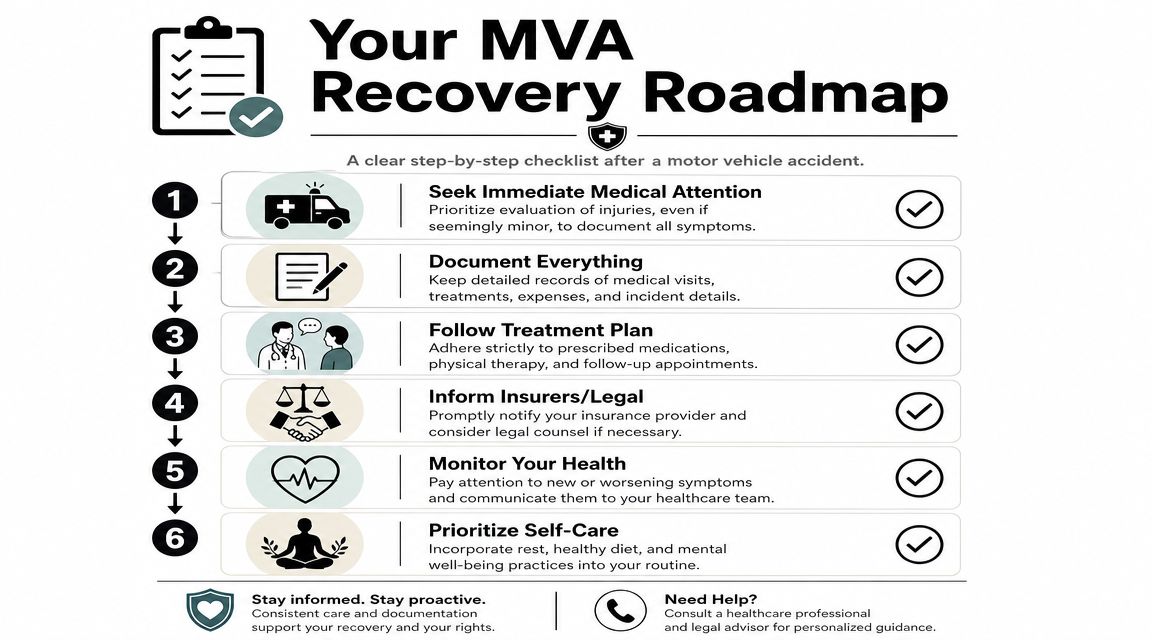
After a motor vehicle accident, individuals often want two things right away. They want to know what's injured, and they want to know what to do next. A good recovery plan should answer both.
The first steps that matter most
Start with a medical evaluation, even if you felt “okay enough” at the scene. Some crash-related problems don't announce themselves immediately. Early documentation also creates a clearer record of what changed after the collision.
Then gather your information in one place. Bring your ID, insurance details, imaging reports if you have them, medication list, and any referral paperwork. If you're beginning rehab, this overview of physical therapy after a car accident can help you know what to expect before your first appointment.
A practical checklist
- Write down your symptoms daily: Note pain location, stiffness, headaches, tingling, sleep trouble, and any activity that makes symptoms worse.
- Track functional limits: Record what you can't do well now, such as turning your head while driving, sitting through work, lifting, bending, or walking comfortably.
- Keep every document: Save visit summaries, prescriptions, imaging reports, work notes, and receipts tied to treatment.
- Follow the plan consistently: Home exercises, follow-ups, and activity modifications matter more than heroic effort on one good day.
Here's a simple overview that can help you stay organized as recovery moves forward.
What tends to help and what usually backfires
A steady routine usually beats extremes. Gentle mobility work, progressive strengthening, posture changes, walking, hands-on treatment when appropriate, and clear return-to-activity guidance often move people forward.
What usually backfires is guessing. That includes staying in bed too long, returning to heavy activity too fast, skipping follow-ups because symptoms come and go, or doing random online exercises that don't match the injury pattern.
Recovery after a car accident is rarely about doing more. It's about doing the right things in the right order.
Taking Control of Your Recovery
If you've been asking what does MVA mean in medical terms, the answer is usually straightforward in injury care: Motor Vehicle Accident. The important part is knowing that this label affects more than vocabulary. It influences evaluation, paperwork, referrals, and the way a rehab plan gets built.
You don't need to memorize medical shorthand to recover well. You do need clear documentation, timely care, and a plan that matches how your body is responding after the crash. If you're dealing with neck pain, back pain, headaches, stiffness, or mobility problems, getting the right support early can make the path feel much more manageable.
For many patients, adding chiropractic care after a car accident to a broader rehab plan can also help address joint restriction, pain, and movement limits when it fits the case.
If you're recovering after a crash and want experienced, coordinated care, MedAmerica Rehab Center provides physical therapy, chiropractic care, acupuncture, and other non-surgical treatment options designed to help you move better, hurt less, and get back to daily life with confidence.
MedAmerica Rehab · Deerfield Beach
Talk to a clinician about your pain
Physical therapy, chiropractic, acupuncture and shockwave therapy under one roof, since 1995. Same-day appointments are available.
Mon–Thu 8:00 AM – 6:30 PM · Fri 8:00 AM – 3:00 PM