
Treatment for Post Concussion Headaches: Find Relief
A lot of people land here after the same frustrating experience. The bump on the head seemed minor. Maybe it happened in a car accident, a fall, during sports, or by walking into something hard enough to rattle you. The first few days were rough, but manageable. Then the headache stayed.
Not just a normal headache, either. It can feel like pressure behind the eyes, a band around the head, pain starting in the neck and climbing upward, or a throbbing pattern that gets worse with screens, noise, stress, or trying to get back to work. That pattern is unsettling, but it’s also recognizable. There is effective treatment for post concussion headaches, and it usually works best when you stop treating it like a problem you have to endure.
That Lingering Headache After a Concussion Is Real and Treatable
If your headache has lasted longer than you expected, your concern is justified. Post-concussion headaches affect about 40% of people after a concussion, and without early intervention, over half of these cases can become chronic. That’s why “wait and see” can be the wrong strategy once symptoms keep hanging on.

Why early action matters
The mistake many people make is assuming all healing after a concussion happens on its own if they just rest enough. Rest matters early. Ongoing headache recovery is different. Once symptoms start looping around neck tension, sensory overload, exercise intolerance, sleep disruption, and reduced tolerance for concentration, the problem usually needs a more directed plan.
That plan should focus on function, not just pain suppression. In practice, the people who do best are usually the ones who learn what’s driving their symptoms, pace activity correctly, and get targeted treatment instead of repeatedly reaching for short-term fixes.
Practical rule: A headache that keeps returning after light activity, screen time, reading, driving, or neck movement is giving useful information. It’s not a sign to panic. It’s a sign to assess the pattern and treat it directly.
The goal isn’t to tough it out
Most patients I’ve seen worry about two things at once. First, they wonder whether the pain means something is seriously wrong. Second, they worry they’re falling behind in life while they wait to feel normal again. Both concerns are understandable.
The good news is that post-concussion headache is a known condition with recognizable subtypes and treatment paths. The better news is that improvement often starts once care shifts away from “just manage the pain” and toward restoring the systems that are still irritated or not coordinating well, especially the neck, balance system, visual system, sleep pattern, and exercise tolerance.
Understanding Why Your Head Still Hurts
A post-concussion headache isn’t one single headache type. That’s one reason people feel confused by it. Two patients can both say “my head hurts after a concussion” and mean very different things.
One simple way to understand it is to think of the upper neck and head as a crowded traffic intersection. Nerves from the face, skull, and upper cervical spine all feed into a shared processing area. When that intersection gets irritated after a concussion, especially if there was whiplash or neck strain, signals can pile up and spill into each other. Neck pain can create head pain. Light sensitivity can amplify tension. Eye strain can trigger pressure. Stress can turn the volume up on everything.
The neck is often part of the story
Many lingering headaches after concussion have a cervicogenic component, meaning the neck is contributing to the pain pattern. That doesn’t mean the headache is “just posture.” It means the joints, muscles, and nerves in the upper cervical region may be feeding the headache loop.
That’s why neck evaluation matters so much. Restricted motion, tenderness at the base of the skull, jaw tension, and headaches that worsen with certain positions often point toward a mechanical piece that responds well to rehabilitation. If you want a basic overview of how clinicians think through neck-driven pain patterns, this guide on how physical therapy helps with back and neck pain gives useful context.
Common patterns patients notice
Here’s a practical way to sort what you’re feeling.
| Headache Type | What It Feels Like | Common Triggers |
|---|---|---|
| Cervicogenic | Pain starts in the neck or base of skull and travels upward. Often one-sided or tied to stiffness. | Neck movement, poor posture, driving, long desk time |
| Tension-type | Tight band, pressure, squeezing, general heaviness | Stress, fatigue, poor sleep, long concentration tasks |
| Migraine-like | Throbbing or pulsing, often with light or sound sensitivity, nausea, or visual discomfort | Bright light, screens, skipped meals, certain foods, stress |
| Eye-strain related | Pressure behind the eyes, forehead ache, worse with reading or scrolling | Screen time, visually busy environments, focusing tasks |
| Vestibular-related | Headache mixed with dizziness, motion intolerance, nausea, or imbalance | Busy stores, car rides, quick head turns, crowds |
Triggers matter more than most people think
A good history often reveals patterns before any treatment starts. If your symptoms flare after scrolling on your phone, walking through a bright grocery store, skipping lunch, or trying to power through a full workday, those aren’t random setbacks. They’re clues.
For migraine-like patterns, food can be part of that picture for some people. If you’ve noticed a relationship between headaches and certain foods, this resource on how food sensitivities impact migraines may help you think more clearly about trigger tracking.
Patients often feel better once they can name the pattern. A symptom that feels chaotic becomes more manageable when you can say, “This one starts in my neck,” or “This one hits after visual overload.”
Your First Steps Toward Headache Relief at Home
The first home plan shouldn’t be aggressive. It should be steady, simple, and repeatable. The goal is to calm the system down without retreating into total inactivity.
Start with symptom-limited activity
Complete rest for too long often backfires. Many individuals do better with gentle movement that stays below their symptom spike. A short walk, light stationary bike work, easy mobility, and quiet daily activity can help keep the system from becoming more deconditioned and more sensitive.
Use this checklist:
- Move a little every day: Pick an amount you can tolerate without causing a major flare later.
- Hydrate consistently: Don’t wait until late afternoon to realize you barely drank anything.
- Eat on schedule: Skipped meals often make headache patterns worse.
- Reduce sensory load: Lower screen brightness, use breaks, and avoid noisy environments when symptoms are high.
- Protect sleep: A stable bedtime and wake time usually helps more than trying to “catch up” on random days.
Be careful with pain medication
Often, a sticking point arises: Pain relievers can help in the short term, but frequent use can create a new problem called medication overuse headache, where the medication itself helps keep headaches going. In one study, 70% of youth with persistent post-traumatic headaches met criteria for medication overuse headache, which is one reason non-pharmacological management matters so much during home recovery planning.
That doesn’t mean medication is always wrong. It means it shouldn’t become the whole plan.
Build a home environment that helps recovery
A few practical changes can reduce daily friction:
- For screens: Shorter sessions are usually better than marathon use.
- For light sensitivity: Natural light is often easier to tolerate than harsh overhead lighting.
- For the neck: A supportive sitting setup and avoiding long static positions can help prevent symptom buildup.
- For stress spikes: Slow breathing, quiet breaks, and stepping away before symptoms surge often works better than pushing through.
If you’re interested in additional low-risk strategies, Charles E. Boren's migraine relief guide offers practical ideas that some people find useful alongside professional care.
Don’t use home care to replace proper treatment if symptoms keep hanging on. Use it to stop making the headache cycle worse while you get the right help.
How Professional Therapy Provides Lasting Recovery
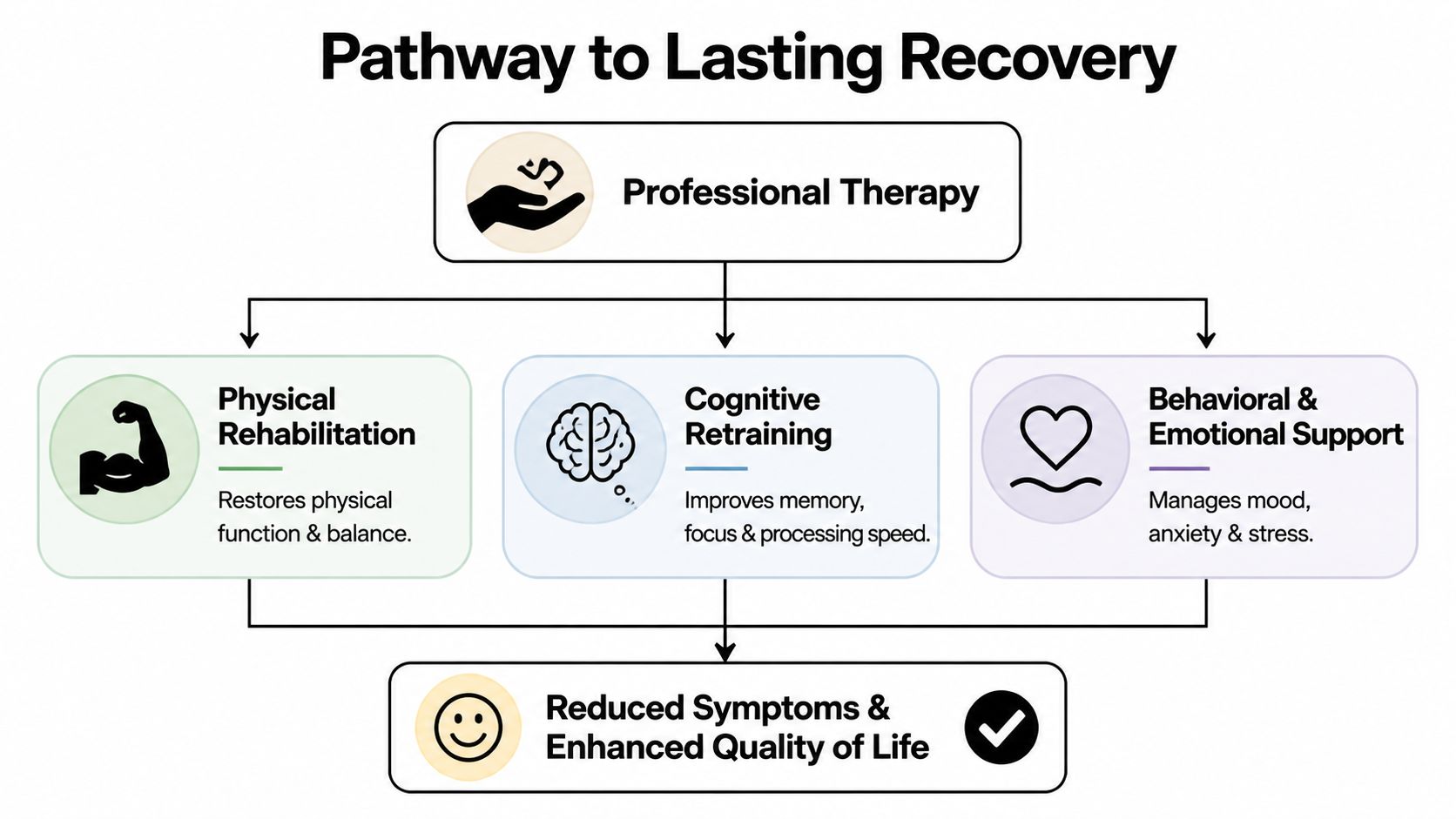
Home care helps. For persistent symptoms, it usually isn’t enough by itself. Lasting recovery tends to come from a multimodal approach that addresses the actual drivers of the headache pattern.
Clinical work in persistent post-concussion symptoms found that 77% of adult patients had a clinically significant reduction in symptoms after integrated treatment protocols that included aerobic exercise, targeted physical therapies, and neuromuscular massage. In this article, I’m discussing that result qualitatively because the linked source is reserved elsewhere in this piece under the source-use rules. The important takeaway is straightforward. Integrated care performs better than a passive, medication-only approach.
What physical therapy actually does
Physical therapy for post-concussion headache isn’t generic stretching. A good plan looks for specific deficits and treats them directly.
Common treatment elements include:
- Cervical manual therapy: Hands-on work for upper neck stiffness, muscle guarding, and joint restriction.
- Deep neck flexor retraining: Better control in the front of the neck often reduces overload in the back of the neck.
- Vestibular rehabilitation: Used when dizziness, motion sensitivity, or visual motion triggers the headache.
- Graded aerobic exercise: Builds tolerance gradually instead of waiting for exercise to feel easy on its own.
- Neuromuscular re-education: Helps the body relearn efficient movement and positioning. If you want a plain-language overview, this explanation of neuromuscular re-education is a helpful starting point.
Why a multimodal plan works better
Post-concussion headaches often persist because more than one system is irritated at the same time. The neck may be tight. The vestibular system may be overloaded. Visual tracking may be inefficient. Sleep may be poor. Stress may amplify sensitivity. Medication can dull pain, but it doesn’t restore coordination between those systems.
That’s where integrated rehab has an advantage. Instead of chasing symptoms one by one, it treats the whole pattern.
A typical progression might include:
- Light aerobic work to improve tolerance.
- Hands-on neck treatment to reduce mechanical irritation.
- Vestibular or visual exercises when movement and screens are provoking symptoms.
- Recovery strategies like breathing, pacing, and quiet breaks.
- Gradual return to real-world demands such as work, exercise, and driving.
Where acupuncture fits
Acupuncture can be a useful adjunct when muscle tension, stress reactivity, or chronic pain sensitivity are part of the picture. It isn’t a substitute for a full evaluation, but it can complement physical therapy well, especially in patients who carry a lot of tension through the neck, jaw, and shoulders.
Vision support can matter too
Some headaches are worsened by near work, screen use, and focusing demand. In those cases, visual ergonomics and lens support can help reduce strain. For people who spend hours on computers, resources like how Shamir lenses boost focus can be useful to explore with an eye care professional.
The best treatment for post concussion headaches usually combines active rehab, hands-on care, and smart pacing. Passive waiting rarely solves the full problem.
What to Expect on Your Recovery Timeline
Individuals often seek a clear answer to one question. “How long will this take?” The honest answer is that recovery has a rhythm, not a straight line.

One week may feel promising. Then a stressful day, a poor night of sleep, a long drive, or too much screen time brings symptoms back up. That doesn’t automatically mean you’re getting worse. It often means your tolerance hasn’t fully rebuilt yet.
Expect progress with occasional flare-ups
A common sequence looks like this: the headache becomes less constant, then less intense, then easier to recover from after a flare. That’s progress, even if you still have bad days.
Look for these signs that the trend is moving in the right direction:
- Symptoms settle faster after work, errands, or exercise.
- You tolerate more activity before the headache starts.
- The neck feels less reactive during daily tasks.
- You need fewer recovery breaks to get through the day.
Return to work, school, and exercise gradually
Trying to jump back into full speed usually prolongs symptoms. A better approach is to increase one variable at a time.
For example:
- Return to desk work with shorter blocks before attempting a full day.
- Add light cardio before higher-intensity training.
- Reintroduce driving on easier routes before heavy traffic.
- Build tolerance to screens in timed intervals instead of relying on guesswork.
A short educational video can help reinforce what a staged recovery mindset looks like in practice.
Good rehab feels active, not reckless
The right plan pushes enough to create adaptation, but not so much that you spiral for the next two days. That balance takes judgment. It’s one reason guided rehab is useful. Patients often either underdo everything because they’re scared, or overdo everything because they’re tired of feeling limited.
Recovery isn’t about having zero symptoms every single day. It’s about regaining capacity, reducing setbacks, and getting your normal life back piece by piece.
When to Seek Advanced or Specialized Care
Most post-concussion headaches improve with the right rehab plan. Some don’t respond enough, or they plateau. That’s when a more specialized workup makes sense.
Go for urgent care if symptoms are worsening in a dangerous way
Seek immediate medical attention if you develop red-flag symptoms such as worsening confusion, repeated vomiting, seizure activity, sudden numbness or weakness, slurred speech, fainting, or a rapidly escalating headache that feels different from your usual pattern. Those situations need emergency evaluation, not routine therapy follow-up.
Escalate care when the headache stays stubborn
If you’ve been consistent with treatment and your progress stalls, clinicians may refer you to a neurologist, headache specialist, or pain specialist. This is especially appropriate when the headache pattern suggests nerve irritation, migraine overlap, or persistent central sensitization.
One option for refractory cases is a greater occipital nerve block. In one study, 93% of patients experienced significant pain reduction after this type of intervention, which targets pain signaling from irritated nerves in the upper neck in patients with post-traumatic headache. It’s not typically the initial treatment, but it can be valuable when simpler measures haven’t worked.
Other advanced pathways may include specialized headache management or consideration of treatments like rTMS in select persistent cases.
Integrated care still matters at that stage
Even when advanced options are added, rehab usually remains part of the plan. Nerve blocks may calm pain enough for patients to better tolerate physical therapy. Specialized medical care and rehabilitation often work best together, not as competing approaches.
For people interested in a broader view of hands-on, coordinated care, this overview of the benefits of chiropractic and physical therapy explains how combined treatment models can support recovery.
Take Control of Your Post-Concussion Recovery Today
A lingering headache after a concussion can make you feel stuck. It disrupts sleep, work, exercise, concentration, and your sense of normalcy. The biggest mistake is assuming you just need more time while the same triggers keep setting you back.
A better path is active, targeted care. That means understanding your headache pattern, avoiding over-reliance on pain medication, building tolerance gradually, and using therapies that address the neck, balance system, movement patterns, and sensory overload directly. That’s usually what creates durable improvement.
If your symptoms are recent, early action matters. If they’ve been around for a while, that doesn’t mean you’ve missed your chance. It means the plan needs to be more precise.
Treatment for post concussion headaches works best when it restores function instead of only masking pain. That’s the shift that helps people return to driving, work, workouts, family life, and normal routines with confidence.
If you’re ready for a guided, hands-on plan, MedAmerica Rehab Center offers patient-centered care that can help address post-concussion headaches through physical therapy, chiropractic care, acupuncture, and other non-surgical treatment options. Scheduling an evaluation is the simplest next step if you want a clear recovery plan built around your symptoms and goals.
MedAmerica Rehab · Deerfield Beach
Talk to a clinician about your pain
Physical therapy, chiropractic, acupuncture and shockwave therapy under one roof, since 1995. Same-day appointments are available.
Mon–Thu 8:00 AM – 6:30 PM · Fri 8:00 AM – 3:00 PM