
Physical Therapy After Shoulder Surgery: Essential Steps for Faster Recovery
That first week after shoulder surgery is a strange mix of relief, discomfort, and a whole lot of questions. The surgery is done, but now what? The answer is simple: your recovery starts right away, and physical therapy after shoulder surgery is the roadmap that turns a successful procedure into a successful outcome. It’s not about pushing through pain; it's about protecting the repair and gently reminding your shoulder how to move again.
What to Expect Immediately After Shoulder Surgery
The first few days are all about creating the right environment for healing. Your surgeon has done their part fixing the structures inside your shoulder, but how you manage this initial phase has a huge impact on how well and how quickly you recover.
This is a time for two main things: protecting the work your surgeon did and managing the normal post-op swelling and pain. You'll go home with a detailed list of instructions—following them to the letter is your most important job right now.
Getting the Basics Right at Home
Before you even see us in the clinic, your rehab has already begun at home. The most important piece of equipment you have is your sling. It’s there to keep the joint still and protect the delicate repairs. Getting used to it is key, because it’s going to be your best friend for a few weeks, even when you sleep.
Beyond that, your goals are straightforward:
- Manage Pain: Stay on top of your prescribed pain medication schedule. If you wait for the pain to get bad, it's much harder to get it under control. Good pain management lets your body rest and heal.
- Control Swelling: Ice is your superpower. Using ice packs as directed is one of the best things you can do to calm down inflammation. Less swelling means less pain and a better healing environment.
Think of it like this: your surgeon built the house, and your physical therapist is the contractor who helps you finish it. But you're the one living in it. Taking care of things properly in that first week lays the foundation for a much smoother rehab process.
Your First Physical Therapy Appointment
Many people are nervous about their first PT visit, which is often just a few days after surgery. Don’t be. This session is not about a hard workout; it’s about assessment, education, and getting a plan in place. We’re here to see where you’re starting from, not to push your healing shoulder.
Here’s what you can expect during that first appointment:
- We'll Talk: We’ll go over your surgeon's report, listen to your story, and talk about what you want to get back to doing.
- We'll Look: Your therapist will check out the surgical site, looking for any signs of excess swelling or issues with your incision.
- We'll Gently Move: We will carefully perform passive range of motion (PROM). This is where the therapist moves your arm for you. You just relax. This lets us see your current mobility without you having to use your muscles, which keeps the surgical repair safe.
- We'll Make a Plan: You'll leave with a very simple home program, clear instructions on icing, and practical tips for things like getting dressed or finding a comfortable way to sleep.
This first visit is all about teamwork. It’s where we align your goals with the safe, proven protocols for physical therapy after shoulder surgery to make sure your recovery gets started on the right foot from day one.
Breaking Down the 4 Phases of Shoulder Rehab
Recovering from shoulder surgery isn't a sprint; it’s a journey broken down into a few key stages. Think of it less like a rigid schedule and more like a roadmap. Each phase has a specific job to do, and we only move on when your shoulder is ready.
While we talk about weeks and months, your personal progress is what truly guides the process. You and your therapist will work together, hitting specific milestones before moving to the next level. Knowing what's happening at each stage helps you become an active partner in your own recovery.
This timeline gives you a bird's-eye view of what to expect right after surgery—the foundation for everything that comes next.
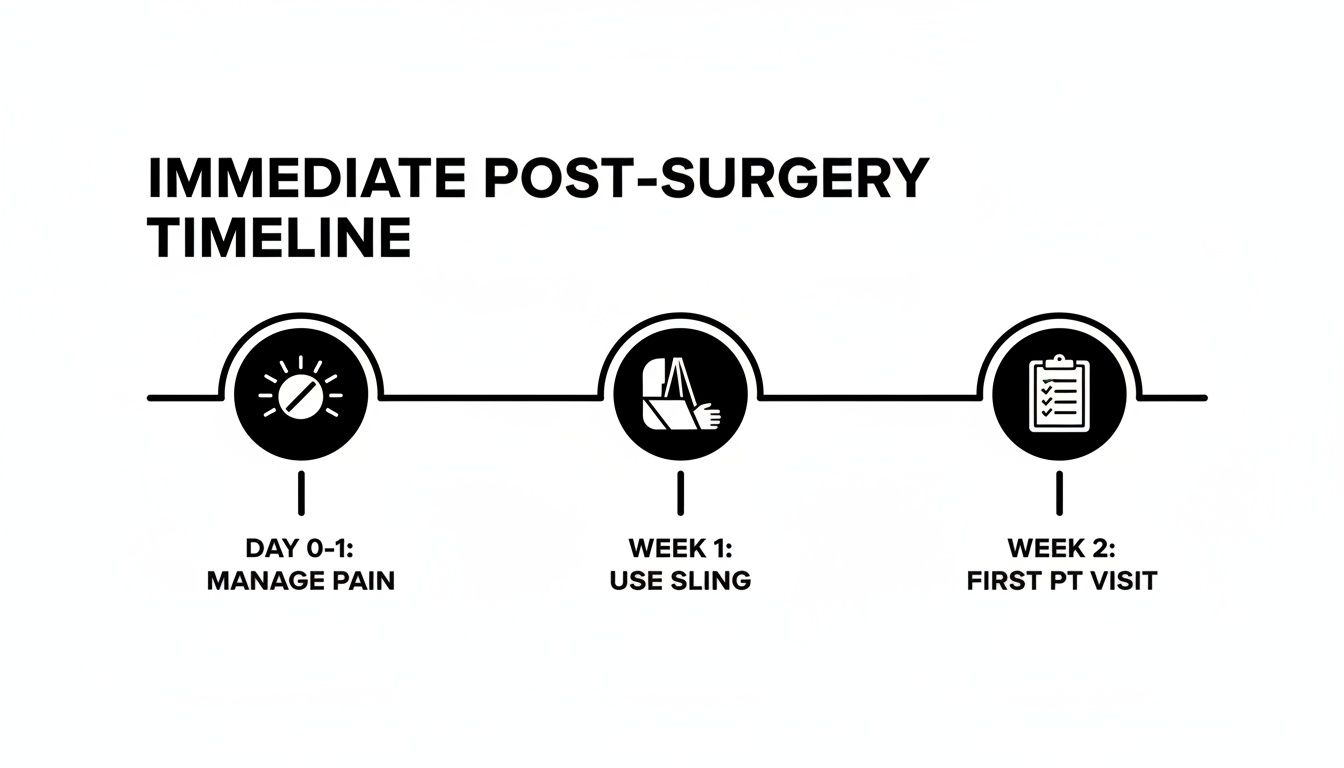
As you can see, the first few days are all about managing pain, keeping the shoulder safe in a sling, and getting started with your physical therapist.
Phase 1: Maximum Protection (Weeks 0-6)
The first six weeks are all about one thing: protecting your surgeon's work. The tissues inside your shoulder are healing, and our job is to give them the best possible environment to do so. This means we move carefully and deliberately.
During your PT sessions, your therapist will do most of the work. They’ll gently move your arm for you in what’s called passive range of motion (PROM). It might feel like you’re not doing much, but this is one of the most important things we can do early on.
This gentle movement helps:
- Keep the joint from getting stiff or "frozen."
- Nourish the cartilage inside the shoulder.
- Reduce pain and manage swelling.
Outside of therapy, your sling is non-negotiable. Your homework will be simple: icing, plus gentle movements for your hand, wrist, and elbow to keep the blood flowing.
Your only job in this phase is to be patient. You have to let your body heal without getting in the way. Trying to push it now is the fastest way to have a setback.
Phase 2: Restoring Motion (Weeks 6-12)
Around the six-week mark, things start to change. This is often a huge mental boost for patients because you finally get to start moving your shoulder on your own again. We ease into it carefully to avoid putting too much stress on the new repair.
We begin with active-assisted range of motion (AAROM), where your own muscles do some of the work, but with a little help.
- Pulleys: You'll use your good arm to help guide the surgical arm through its motion.
- Cane/Stick Exercises: Holding a stick with both hands lets your strong side lead the way, teaching the recovering shoulder how to move correctly.
Once you’re comfortable and have good control, we’ll move on to active range of motion (AROM). This is where you’re moving your arm using only its own strength. We’ll introduce exercises like pendulums and wall crawls to rebuild that mind-muscle connection.
Phase 3: Building a Strong Foundation (Weeks 12-20)
Once you’ve got your motion back and the surgical site is strong, we shift our focus to building strength. The muscles around your shoulder, especially your rotator cuff, have been on vacation for months and need to be woken up.
This isn't about hitting the weight room. Early strengthening is focused on endurance and control, using very light resistance.
- Light Therapy Bands: These are perfect for targeting those small, stabilizing rotator cuff muscles.
- Small Dumbbells: We’re talking 1-2 pounds max, focusing on slow, controlled movements.
- Isometrics: This involves tensing the muscle without actually moving the joint—a super safe way to get muscles firing again.
The most important thing here is perfect form. We watch every single rep to make sure you're using the right muscles and not creating bad habits that could cause problems later.
Phase 4: Getting Back to Life (Week 20 and Beyond)
This is the final stretch, and it's where we put all the pieces together. The goal now is to get your shoulder ready for the demands of your life, whether that’s playing tennis, picking up your kids, or just carrying in the groceries without a second thought.
The exercises become much more specific to your goals. Instead of a simple lift, you might do a diagonal lift that mimics reaching into a high cabinet. For athletes, we might start introducing plyometrics—light, controlled throwing or catching drills—to prepare the shoulder for dynamic action.
A study tracking shoulder surgery patients found that by the six-month mark, most people had regained 82% to 92% of their total expected recovery. It’s a long road, but a structured PT plan is what gets you to the finish line.
This phase is all about you. We'll work together to simulate the exact movements you need for your job, your hobbies, and your daily routine. We want your shoulder to be strong, stable, and ready for anything. For some therapist-approved exercises you can do at home, check out our guide on effective home exercises after rotator cuff surgery.
Core Exercises That Fuel Your Shoulder Recovery
The exercises you do during physical therapy after shoulder surgery aren't just a random list of movements. Each one has a specific job, timed perfectly to help your body heal correctly. A good therapist won't just hand you a sheet of paper; they'll show you the "why" behind every exercise, making sure it’s right for your stage of recovery.
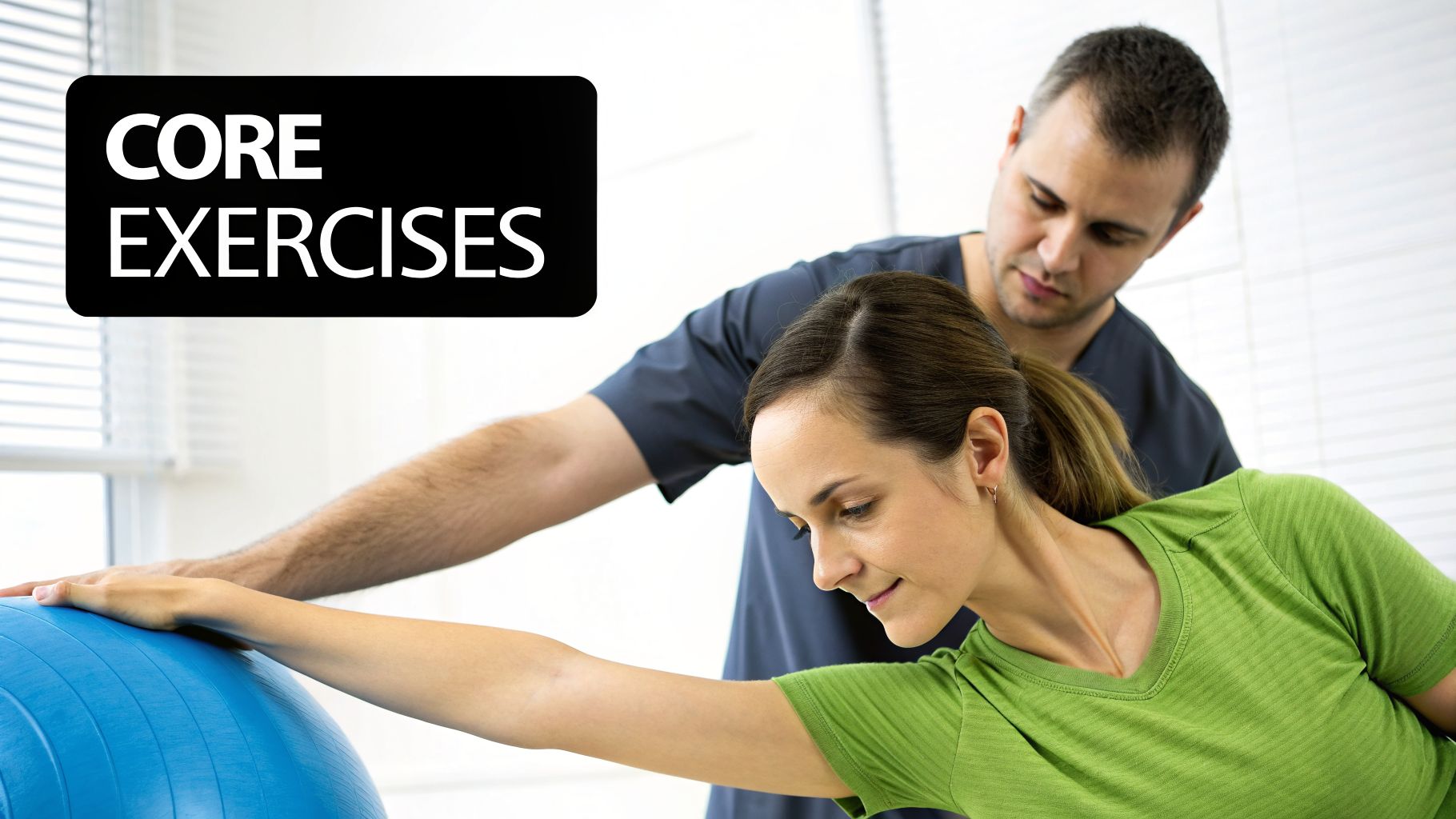
The number one rule? Perfect form is everything. Trying to push through pain or using sloppy technique is the fastest way to have a setback. We’re looking for gentle, progressive movements that encourage healing, not challenge the recent surgery.
Gentle Motion in the Early Passive Phase
In those first few weeks, your shoulder muscles are not ready to work. The main goal here is simple: prevent the joint from getting stiff and keep blood flowing to the area without putting any stress on the healing tissues. This is where passive exercises, guided by your therapist, are absolutely key.
Two of the most common early movements are:
- Pendulum Swings: You’ll bend at the waist, supporting your body with your good arm, and let the surgical arm hang straight down. From there, you use your body to create a gentle swing, like a pendulum. The trick is to keep your shoulder muscles completely limp—gravity and momentum should be doing all the work.
- Passive External Rotation: While lying on your back with your elbow bent to 90 degrees, you'll hold a cane or a stick in both hands. Your good arm does the work, gently pushing your surgical arm outward to rotate the shoulder. This is a small, controlled motion, and you stop well before you feel any sharp pain or deep stretching.
These exercises are crucial for keeping the joint mobile so it doesn't "freeze up" while everything is mending.
Re-Engaging Muscles in the Active Phase
Once your surgeon gives you the green light, usually somewhere around the 6 to 12-week mark, it's time to start waking those shoulder muscles back up. This is an exciting step, but it needs to be handled with care. The goal isn't strength yet; it's about re-learning how to fire the muscles and rebuilding that mind-body connection.
We often start with isometric exercises, where you contract the muscle without actually moving the joint.
- Isometric External/Internal Rotation: An easy way to do this is to stand in a doorway. To work external rotation, you'll gently press the back of your hand into the doorframe. For internal rotation, you’ll press your palm into the frame. Hold the contraction for a few seconds, then relax. No movement, just muscle activation.
- Wall Push-ups: This is a great, safe way to start engaging the bigger muscles around your chest and shoulder. Stand a couple of feet from a wall, place your hands on it, and perform a very slow, controlled push-up. The wall supports most of your weight, keeping the load light and stable.
A physical therapist is your guide and safety net here. We provide hands-on cues to ensure you're firing the right muscles and not cheating by using your neck or back, which is a very common mistake people make.
Building Stability in the Strengthening Phase
After you've got movement and control back, the real strength work begins. This phase is all about rebuilding the stability your shoulder needs to handle everyday life. Resistance bands become your best friend because they provide smooth, consistent tension.
A few key strengthening exercises you'll likely see are:
- Banded External Rotation: Keep your elbow tucked into your side, hold a resistance band, and slowly rotate your forearm away from your body. This homes in on the small rotator cuff muscles that are so important for keeping the ball of the joint centered in the socket.
- Banded Internal Rotation: This is just the opposite motion. You’ll pull the band inward across your stomach, again making sure that elbow stays glued to your side. This helps create balanced strength around the joint.
- Rows: With a band anchored in front of you, pull back and focus on squeezing your shoulder blades together. This is a must-do for strengthening the postural muscles that support your entire shoulder.
Your therapist will start you with the lightest band and make sure your form is flawless before moving you up in resistance. We may also bring in other tools to help. For instance, you can learn more about how an over-the-door pulley exerciser is often used to assist in shoulder rehab.
How to Manage Your Recovery and Avoid Setbacks
Your work in our clinic is just the beginning. The real, lasting healing happens in the hours and days between your appointments. How you manage your daily habits and protect the surgical repair is what truly drives a successful recovery.
Think of your physical therapist as your co-pilot. We guide the process, but your awareness and communication are critical. Knowing what to watch for helps you stay in the driver's seat and avoid unnecessary detours on your road back to full function.
Red Flags: When to Call Your Doctor or PT
It's completely normal to feel some soreness and discomfort, but certain symptoms are not part of the standard healing process. Don't "wait and see" with these—an immediate phone call can prevent a small issue from becoming a major setback.
Contact your surgeon or physical therapist right away if you experience:
- A sudden spike in pain that your prescribed medication doesn't touch.
- New or worsening swelling, redness, or warmth around your incision. These can be signs of infection.
- Numbness, tingling, or a "pins and needles" sensation that appears or gets worse in your arm, hand, or fingers.
- A distinct 'pop' in your shoulder, especially if it’s followed by a new, sharp pain.
These signs are rare, but being vigilant is key. We're your partners in this, so please, never hesitate to reach out with a concern.
Navigating Daily Life After Surgery
Simple things you never used to think about—like sleeping or getting dressed—can feel like major hurdles at first. A few small adjustments can make a world of difference in your comfort and safety.
Sleeping, for example, is often the biggest challenge. Many of our patients find that sleeping in a recliner for the first few weeks is the most comfortable option. If you're in a bed, build a "pillow fort" to prop up your surgical arm, keeping it slightly elevated and supported.
Getting dressed has a simple trick. When putting a shirt on, always slide your surgical arm in first. When taking it off, that same arm comes out last. This little habit drastically reduces strain on the healing tissues.
Think of your sling as your full-time bodyguard for the first few weeks. Follow your surgeon's instructions to the letter. It’s not just for support; it’s a constant visual reminder to you and everyone around you that your shoulder is healing and off-limits to bumps, pulls, or sudden movements.
Your commitment is the single most important part of this process. The link between consistent therapy attendance and a great outcome is undeniable. Studies on post-surgical patients show that those who stick with their physical therapy after shoulder surgery have major reductions in pain, with over 75% getting back to meaningful levels of function. You can read more about the impact of consistent care on shoulder recovery outcomes.
Keeping your appointments ensures you are progressing at a safe and steady pace, moving you closer to your goals with every single session.
Finding the Right Physical Therapy Partner in Deerfield Beach
Your choice of physical therapist is just as important as your surgeon. The person guiding your physical therapy after shoulder surgery will be your partner for months, and that relationship is the key to a successful recovery. It’s a decision that will shape your entire journey back to strength and confidence.

In a place like Deerfield Beach, you have plenty of options, but they aren't all the same. You need a team that sees you as a person, not just an appointment slot. This is where a clinic's history really shows. We've been part of this community at MedAmerica Rehab since 1995, and we've helped thousands of people through this exact process.
Look for More Than Just Exercises
A great PT clinic does a lot more than just hand you a sheet of exercises. The foundation of quality care is a treatment plan built specifically for you—your surgery, your body, and your goals. Cookie-cutter programs just don't work.
What you should really be looking for is a clinic that prioritizes:
- One-on-One, Hands-On Therapy: Your therapist should be working with you directly, using manual techniques to ease pain and restore mobility. You shouldn't feel like you're on your own in a crowded gym.
- A Collaborative Team: Having physical therapists, chiropractors, and other specialists working together gives you a much more complete path to recovery.
- A Genuinely Supportive Space: The vibe of the clinic matters. When you're in a friendly, encouraging place, the hard work of rehab feels a lot less like a chore.
The connection you have with your therapist is powerful. One patient survey found that people attended an average of 16.3 PT sessions, and 65% of their improvement was directly tied to that therapy. An overwhelming 94.8% said their therapists explained things clearly, which is the cornerstone of building trust.
Advanced Tools and Practical Support
The best recovery plans blend proven hands-on care with modern technology to help you heal faster. Using evidence-based tools can make a huge difference in managing pain and speeding up tissue repair. For instance, having access to advanced shockwave therapy can be a game-changer for breaking down stubborn scar tissue and improving circulation.
But great care goes beyond the treatment table. The simple, practical things can make or break your experience.
- Flexible Scheduling: Life doesn’t stop for rehab. A clinic that offers flexible appointment times, even same-day options, really understands what patients need.
- Clear Insurance Communication: Navigating insurance can be a nightmare. A good front office team will handle the calls, verify your benefits, and explain everything upfront so you don’t get hit with surprises.
The right clinic makes everything feel seamless, from the first call to your last visit. They take care of the logistics so you can focus on getting better.
Making the Right Choice in Deerfield Beach
To stand out in a place like Deerfield Beach, clinics have to make it easy for patients to find them. That's why many will optimize their Google Business Profile for local success so you can see reviews and find quality care quickly.
At MedAmerica Rehab, we work hard to check all these boxes. With nearly three decades of experience, we mix hands-on, expert care with a philosophy that always puts you first. We believe rehab is a partnership, one built on trust and personal attention.
If you’re curious about our approach, you can learn more about what a typical physical therapy session looks like with our team. We’re here to make sure you have the support you need, every step of the way.
Common Questions About Shoulder Surgery Rehabilitation
The road to recovery after shoulder surgery is full of milestones, but it’s also perfectly normal to have a lot of questions pop up along the way. Knowing what to expect can bring a lot of peace of mind and help you focus on what matters—getting better.
We've put together answers to the most common questions we hear from our patients every day. Think of this as a conversation starter to help you feel confident and prepared for your own rehab journey.
How Long Will I Need Physical Therapy?
This is usually the first thing people ask, and the honest answer is: it depends. There’s no single timeline that fits everyone. How long you’ll need physical therapy comes down to the kind of surgery you had, how your body heals, and what you want to get back to doing.
As a general guide, you can expect rehab to last anywhere from three to six months. A less complex procedure, like a minor arthroscopic cleanup, might put you on the shorter end of that window. On the other hand, a major rotator cuff repair or a total shoulder replacement is a bigger project and will require a longer commitment to get a strong, lasting result.
We’ll give you a more personalized timeline after your first visit and adjust it as you hit your goals.
Should Physical Therapy Be Painful?
This is a really important question. Your physical therapy sessions are meant to challenge your shoulder, but they should never cause sharp or intense pain. We're always looking for that sweet spot of "therapeutic discomfort"—the feeling of a muscle working hard or getting a good stretch, not the kind of pain that makes you wince.
Our philosophy is "challenge, don't damage." A good physical therapist knows exactly how to find this balance and will be checking in with you constantly during your sessions.
If you feel a sharp, stabbing, or sudden spike in pain during any exercise, stop right away and let your therapist know. That's your body's signal for "too much, too soon," and we'll immediately find a different way to accomplish our goal for the day.
Your feedback is the most important tool we have. You’re the only one who knows what you're feeling, so open communication is absolutely key to keeping your recovery safe and on track.
When Can I Start Driving or Go Back to Work?
Getting back to your daily routine is a huge milestone, but we have to do it safely. When you can return to driving and work depends on your surgeon's instructions, which arm was operated on, and what you do for a living.
You absolutely cannot drive while taking narcotic pain medication or while your arm is in a sling. For most people, that means getting the green light to drive usually happens around the four to six-week mark once you have enough motion and control to handle a car safely.
Returning to work has a much wider timeline:
- Desk Jobs: If your job is mostly sedentary, you might be able to get back within a few weeks, provided your pain is under control and you can get comfortable.
- Physical Jobs: If your work involves lifting, pushing, or reaching overhead, you’re looking at a much longer wait—often three to six months. We need to be sure the surgical repair is fully healed and strong enough to handle those demands.
A big part of your therapy will be preparing you for this. We'll simulate work-related tasks right here in the clinic to build up your strength and confidence for a safe return.
What if My Progress Feels Slow?
It’s completely normal to feel like you’ve hit a wall at some point. Healing isn’t a straight line—you'll have weeks where you make huge leaps and other times when it feels like nothing is changing. The most important thing is to not compare your recovery to someone else's.
If you’re feeling discouraged, please talk to us. We can take an objective look at where you are, figure out if anything is holding you back, and make adjustments to your program. Sometimes, all it takes is a new exercise or a different manual therapy technique to get you over a plateau and moving forward again.
Navigating your recovery is a team effort. You deserve a partner who listens, understands your goals, and has the expertise to guide you safely. At MedAmerica Rehab Center, we blend decades of hands-on experience with a commitment to one-on-one, personalized care.
If you’re getting ready for shoulder surgery in the Deerfield Beach area, let us show you how we can help make your recovery a success. Visit our website or call us today to schedule your first consultation at https://www.medamericarehab.com.