

How to Treat Carpal Tunnel Without Surgery A 2026 Guide
When that pins-and-needles feeling wakes you up at 3 AM, or a dull ache makes holding your coffee mug a chore, your first thought is getting relief—right now. The good news is that you don't have to overhaul your life to start feeling better.
The first steps are all about calming down the irritated median nerve. By making a few smart, simple adjustments, you can reduce the pressure in your wrist and give the nerve a much-needed break. For many people, these initial strategies bring significant relief and set the stage for lasting recovery.
Finding Immediate Relief From Carpal Tunnel Pain
Before diving into targeted exercises or physical therapy, let's focus on what you can do today. These immediate actions are designed to soothe the nerve and halt the cycle of irritation.
The table below summarizes the most effective first-line actions you can take at home or work to manage carpal tunnel pain and numbness.
Immediate Relief Strategies for Carpal Tunnel Symptoms
| Strategy | How It Helps | Best Practice Tip |
|---|---|---|
| Activity Modification | Reduces repetitive strain and gives the irritated median nerve a chance to calm down. | Take 5-minute breaks every hour from typing or tool use to shake out your hands. |
| Nighttime Splinting | Prevents you from bending your wrist while sleeping, which maximizes space in the carpal tunnel. | Choose a splint that keeps your wrist neutral (straight), not bent in either direction. |
| Cold Packs | Constricts blood vessels to decrease swelling and provides a numbing effect for acute pain. | Apply for 15-20 minutes after an activity that causes a flare-up. Never apply ice directly to skin. |
By combining these simple tactics, you create an environment that promotes healing and breaks the cycle of pain and inflammation.
Listen To Your Body: Rest and Modify Activities
The very first thing to do is become a detective. What activities make your symptoms flare up? Think about your daily routine. Does the tingling start after a long stretch of typing? Or maybe it’s worse after an afternoon of gardening or using power tools.
These repetitive motions, especially when your wrist is bent, are the usual suspects.
Taking a break doesn't mean stopping everything. It's about being smarter with your movements.
- If you're on the computer all day, try using voice-to-text software for some of your work.
- If you work with hand tools, consciously loosen your grip and take frequent breaks every 30-60 minutes to stretch and change your hand position.
- Even holding a phone or book for a long time can bend your wrist and cause trouble. Pay attention and switch it up.
Splinting: Your Best Friend for Nighttime Relief
A wrist splint is one of the most powerful tools for immediate carpal tunnel relief. The goal is to find one that holds your wrist in a neutral position—completely straight. This straight alignment opens up the most space inside the carpal tunnel, taking direct pressure off the nerve.
The most important time to wear your splint is while you sleep. Most of us curl our wrists at night without realizing it, which can make morning pain and numbness so much worse. A splint prevents this, giving the nerve hours of uninterrupted rest.
While it's okay to wear a splint during the day for specific tasks that bother you, don't wear it 24/7. Your wrist still needs to move to keep its strength and flexibility. It's all about balance.
Cool It Down: Using Cold Packs to Reduce Swelling
When your wrist feels sore, achy, and inflamed, a cold pack can feel like a lifesaver. The cold helps reduce swelling and has a wonderful numbing effect on that sharp, nagging pain.
Wrap a cold pack or a bag of frozen vegetables in a thin towel and apply it to your inner wrist for 15-20 minutes. Do this a few times a day, especially after an activity that triggered your symptoms. For more tips, check out our guide on the proper use of ice packs for physical therapy.
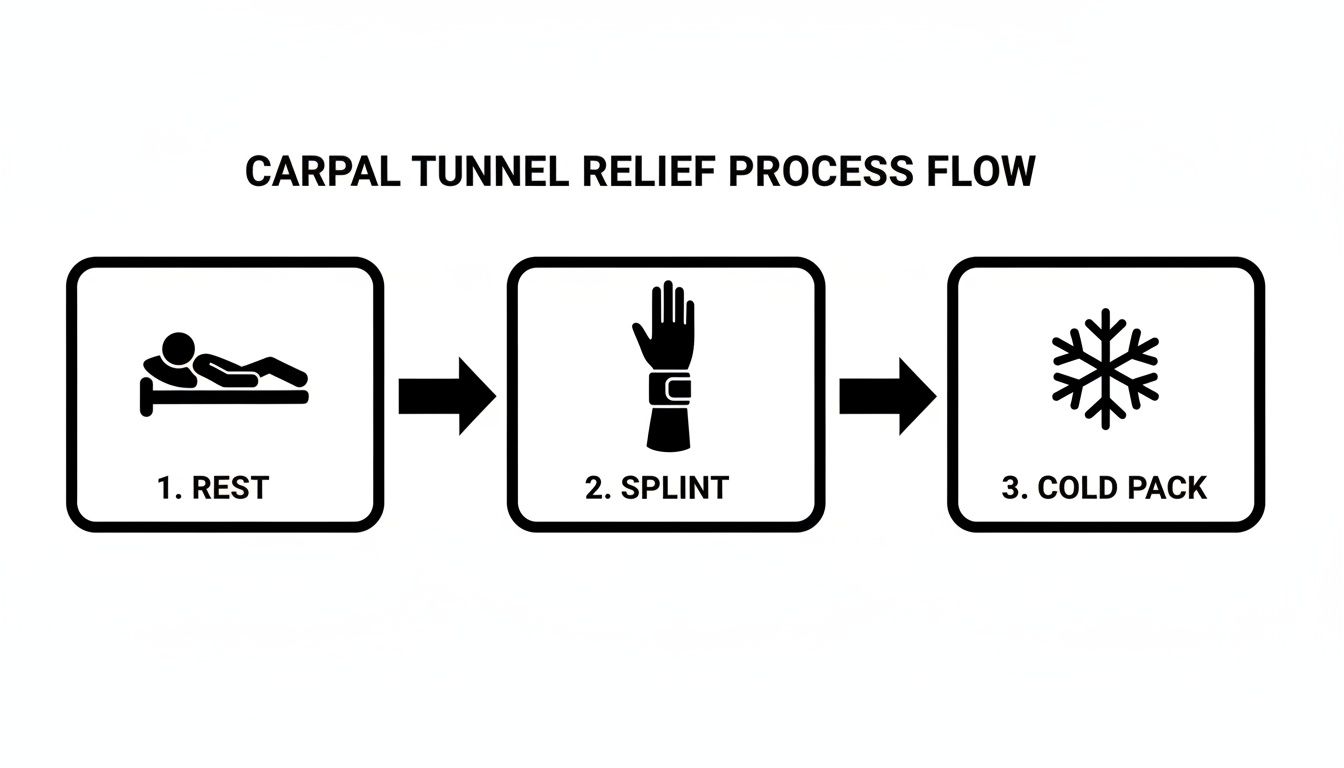
This trio of rest, splinting, and cold therapy is your first line of defense. Research consistently shows that these conservative approaches are highly effective, especially for mild to moderate symptoms. For many, taking these steps is enough to delay or even completely avoid the need for more invasive procedures.
Using Exercises to Improve Nerve and Tendon Health
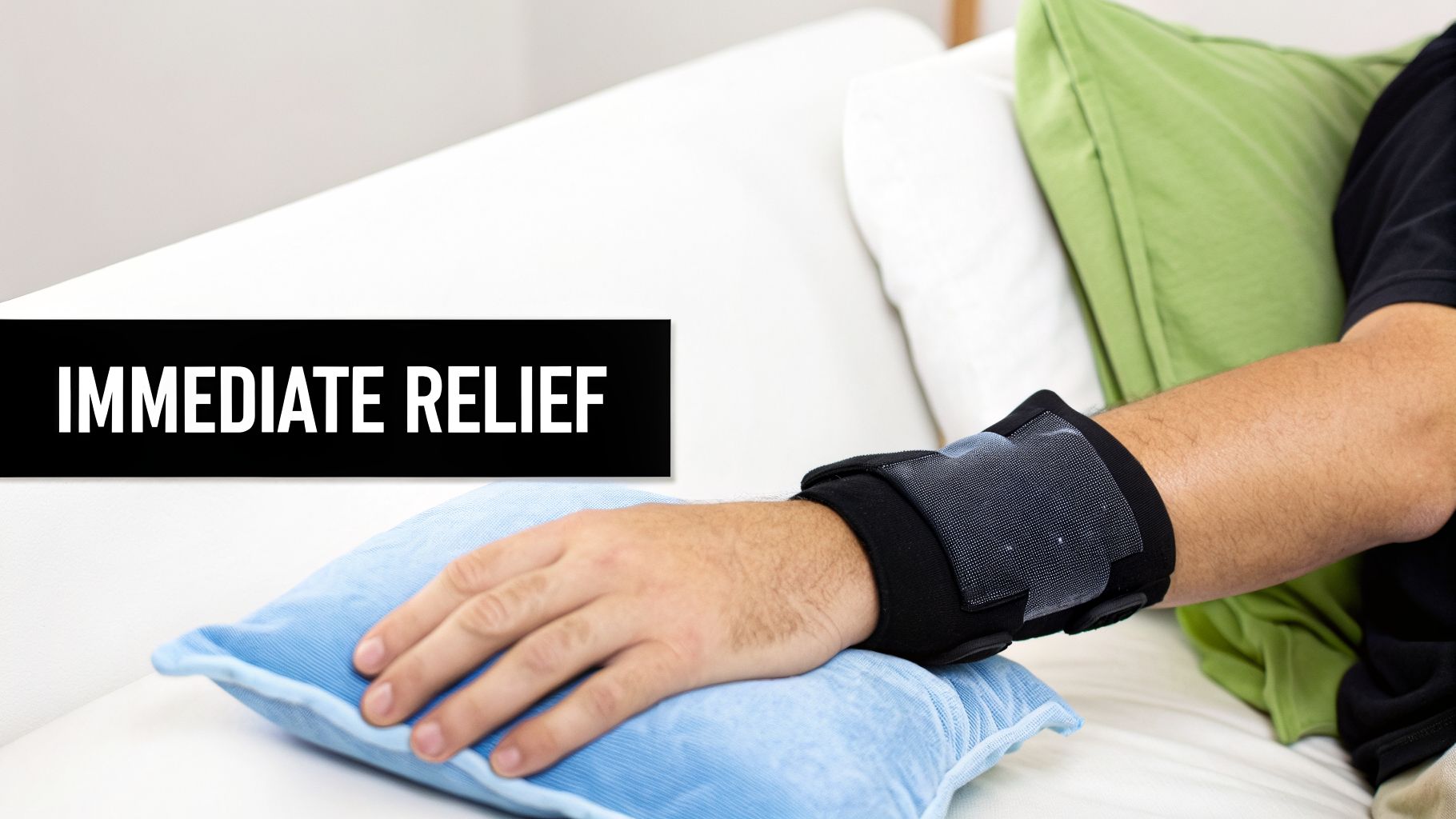
While rest and splinting are great for calming down an angry nerve, the real, lasting change comes from getting active with specific movements. Gentle, targeted exercises are a cornerstone of treating carpal tunnel without surgery. These aren't tough workouts, but rather precise movements designed to restore the health of the delicate structures inside your wrist.
Think of it as physical therapy for that small, crowded tunnel. The main goal is to get the median nerve and the tendons around it to slide and glide past one another smoothly again. Over time, this helps break down any sticky spots, reduce friction, and ultimately relieve the pressure that’s causing you pain.
Why Movement Is So Important for Nerve Health
When a nerve gets compressed, it can’t move freely. This is a big problem. It can lead to adhesions, where the nerve literally starts to stick to the tissues around it, making the compression and irritation even worse. This is where nerve gliding exercises, often called nerve flossing, come into play.
These movements are designed to gently mobilize the median nerve along its entire path, all the way from your neck down into your hand. It’s a bit like flossing your teeth—the idea is to gently pull the nerve back and forth to break it free from any points where it’s getting caught. This action helps restore the nerve’s natural mobility, improves its blood supply, and can significantly reduce that frustrating numbness and tingling.
From my own experience, mastering these simple exercises was a huge turning point. It gave me a sense of control over my symptoms and a way to actively manage flare-ups instead of just waiting for them to pass.
Your Gentle Nerve Gliding Routine
When it comes to these exercises, consistency beats intensity every time. You want to move slowly and gently, stopping immediately if you feel any sharp pain. A light stretching feeling is what you’re after, not discomfort. Try to complete 5-10 repetitions of this sequence, 2-3 times per day.
- Start: Begin with your wrist straight and neutral. Bend your fingers and thumb into a gentle fist.
- Fingers Up: Keeping your thumb tucked in, straighten your fingers so they point directly up toward the ceiling.
- Wrist Back: Now, keep those fingers straight and bend your wrist back, so your palm faces forward.
- Thumb Out: Extend your thumb out to the side, away from your palm.
- Add a Stretch: Use your other hand to gently pull back on your thumb, deepening the stretch just a little. Hold this final position for 3-5 seconds.
This sequence carefully takes the median nerve through its full range of motion. Remember to flow smoothly from one step to the next, only holding that final gentle stretch.
Tendon Gliding for Smoother Finger Movement
It’s not just the nerve in your carpal tunnel. You also have nine flexor tendons that control your fingers. When these tendons get swollen and inflamed, they hog space and add to the nerve compression. Tendon gliding exercises are designed to get these tendons moving independently again, which helps reduce that friction.
These movements encourage each tendon to glide smoothly within its sheath and against the others. This reduces swelling and helps you keep the flexibility you need for pain-free hand movements.
Perform these five hand shapes as one smooth, flowing sequence. Hold each position for a couple of seconds before moving to the next.
- Straight Hand: Start with your fingers and thumb straight and held together.
- Hook Fist: Bend your fingers at the top two joints, but keep the main knuckles straight.
- Full Fist: Make a complete, but gentle, fist.
- Tabletop: Bend your hand at the main knuckles to 90 degrees, keeping your fingers straight and flat like a tabletop.
- Straight Fist: Keep your fingers straight but bend them down from the main knuckles.
Running through this cycle several times a day ensures all your flexor tendons are moving like they’re supposed to. Making these glides part of your daily routine is a powerful, proactive step toward getting better without surgery.
The Power of Professional Hands-On Treatments

While splints, rest, and home exercises are great first steps, sometimes they just don’t cut it. When the tingling, numbness, or pain sticks around, it’s time to bring in an expert to get to the root of the problem. This is where partnering with a skilled physical therapist makes all the difference, especially for stubborn carpal tunnel symptoms.
A good therapist does more than just look at your wrist. They investigate the entire chain of movement—from your neck and shoulder all the way down to your fingertips—to find what’s really causing that nerve compression. It’s this whole-body approach that often unlocks lasting relief.
Manual Therapy Techniques
Manual therapy is a hands-on approach where a therapist uses skilled techniques to release tight tissues and improve joint movement. It’s far more targeted than a general massage. The goal is simple: create more space for your median nerve to breathe.
One of the first things a therapist will do is use soft tissue mobilization to work on the muscles in your forearm. When these muscles are overworked and tight, they form knots and adhesions that pull on the tendons running through the carpal tunnel, adding pressure. Releasing these trigger points can bring almost immediate relief.
They might also use joint mobilization. This involves gentle, specific movements of the small carpal bones in your wrist to improve how they glide past one another. Sometimes the problem isn’t even in the wrist; a stiff joint in your neck can impact nerve function down your entire arm.
A comprehensive evaluation is key. A physical therapist may find that poor posture or a tight muscle in your shoulder is the real starting point of your nerve irritation, not just the wrist itself. Addressing these "upstream" problems is often the secret to lasting relief.
Advanced Treatment Modalities
On top of hands-on work, clinics like MedAmerica Rehab Center often use advanced tools to accelerate healing right at the cellular level. These aren’t just fancy gadgets; they are evidence-based treatments that help calm inflammation and kick-start your body’s own repair mechanisms.
- Therapeutic Ultrasound: This uses sound waves to create a gentle heat deep inside your wrist. The warmth boosts blood flow, bringing more oxygen and nutrients to the area to help reduce chronic inflammation around the median nerve.
- Low-Level Laser Therapy (LLLT): You might hear this called “cold laser.” It uses specific light wavelengths to stimulate your cells without any heat. It’s a painless way to reduce inflammation, ease pain, and even promote nerve healing.
- Extracorporeal Shockwave Therapy (ESWT): For more persistent cases, shockwave therapy can be a game-changer. It sends acoustic waves into the wrist to break up scar tissue and stimulate the growth of new blood vessels, which can dramatically speed up tissue repair.
What a Personalized Therapy Plan Looks Like
When you see a therapist, you won’t get a cookie-cutter handout. You’ll get a plan built specifically for you after a thorough assessment.
A typical session is a blend of different approaches. It might start with manual therapy to release tight forearm and neck muscles. Then, your therapist may use a modality like ultrasound to calm inflammation in the wrist.
Finally, they’ll personally guide you through nerve and tendon gliding exercises, making sure your form is perfect. They’ll also give you practical tips on setting up your workstation and adjusting daily habits. This combination of hands-on care, advanced tools, and personalized education is what makes a recovery plan truly effective. You can explore the different pieces of a successful recovery journey in a comprehensive overview of physical therapy.
This integrated approach is designed to get real, measurable results. It helps you feel better and transforms your efforts from a guessing game into a coordinated, powerful strategy for healing.
Optimizing Your Ergonomics at Work and Home
How you sit, type, and even hold your phone can either soothe or strain your wrists. It’s easy to overlook, but your daily environment is a massive piece of the puzzle when learning how to treat carpal tunnel without surgery.
The goal is to create a setup that keeps your wrists in a straight, neutral position. This reduces the constant pressure and repetitive stress that irritates that median nerve. Think of it as building a wrist-friendly lifestyle, one small change at a time.
Your Computer Workstation Audit
If you spend hours at a desk, that setup is ground zero. A poorly arranged workspace can undo all your other efforts. Let's walk through how to audit your desk with the help of some basic ergonomic office equipment.
- Monitor Height: Position your screen so the top is at or just slightly below eye level. If you have to look down, you create a chain of tension from your neck and shoulders right down to your arms.
- Keyboard and Mouse Placement: Your keyboard should be placed where your elbows naturally fall at about a 90-degree angle. The most important part? Your wrists should be straight, not bent up or down, while you type.
- Chair Position: Adjust your chair height so your feet are flat on the floor with your knees also at a 90-degree angle. A stable posture starts from the ground up.
One of the most common mistakes I see is people resting their wrists directly on a hard desk edge or even a gel wrist rest while typing. This puts direct pressure right on the carpal tunnel. Your wrists should float while you're active; use the rest only during breaks.
Rethinking Your Mouse and Keyboard
Your standard mouse and keyboard can force your hands into an awkward, pronated (palms-down) position for hours on end. For many people I've worked with, switching to an ergonomic model is a complete game-changer.
A vertical mouse is a great place to start. It puts your hand in a "handshake" position, which is far more neutral and reduces strain on your forearm muscles. Split or curved keyboards can also encourage a more natural wrist and hand posture.
I personally found that switching to a trackball mouse gave my wrist a much-needed break. Moving the cursor with my thumb eliminated the repetitive gripping and dragging motions that were flaring up my symptoms.
It might feel strange for a few days, but giving it a solid week can make a world of difference in your daily comfort levels.
Ergonomics Beyond the Office
Carpal tunnel isn’t just an "office worker" problem. The habits you have at home play a huge role in your recovery. Once you start looking, you'll see repetitive motions and awkward wrist angles everywhere.
Think about these common daily activities:
- Using Your Phone: Do you hold your phone for long periods with your wrist bent? Try propping it up on a pillow or stand. Using voice-to-text can also give your thumbs and wrists a well-deserved rest.
- Cooking and Prepping: Chopping with a dull knife requires much more force, which strains your wrist. Keep your knives sharp and look for kitchen tools with larger, cushioned grips to reduce how tightly you have to pinch.
- Gardening or Hobbies: Gripping small trowels, clippers, or paintbrushes can be tough. Seek out ergonomic tools with thicker handles and remember to take frequent breaks to stretch your hands and fingers.
Making these small adjustments throughout your day lessens the total burden on your wrists, giving that median nerve the space and peace it needs to finally start healing.
When to Consider Injections and Other Advanced Options
So, you've tried splinting, you're doing your exercises, and you've had some hands-on care, but the relief just isn't sticking. It's easy to get discouraged and think surgery is the only path left.
But before you go there, you should know about a middle ground: advanced injection therapies that can make a real difference. These aren't just about masking pain. They're designed to change what’s happening inside the carpal tunnel itself, offering a powerful option when the first lines of defense aren't enough.
The Classic Approach: Corticosteroid Injections
For years, the go-to for stubborn carpal tunnel has been a corticosteroid injection, or a "cortisone shot." The idea is simple. Corticosteroids are powerful anti-inflammatories. By injecting one directly into the carpal tunnel, we can quickly calm down the swelling around the tendons.
This opens up more space in the tunnel, taking pressure off the median nerve. For many people, the relief from pain and numbness is fast and dramatic. A single shot can break a cycle of severe symptoms, giving you a valuable window to get back to your physical therapy and ergonomic changes without being in constant pain.
The catch? The relief is often temporary. A cortisone shot tackles the inflammation, but it doesn't fix the sticky tissues or mechanical problems that caused the compression in the first place. It's very common for symptoms to creep back in a few months after the steroid wears off.
While a useful diagnostic tool and short-term solution, repeated steroid injections are generally not a sustainable long-term strategy. The focus is shifting toward treatments that offer more lasting structural changes.
That's why we now see these injections more as a bridge to other treatments, not the final destination.
The New Frontier: Ultrasound-Guided Hydrodissection
A much newer and, frankly, more exciting approach is getting incredible results: ultrasound-guided hydrodissection. This is a clever mechanical fix for a mechanical problem. Instead of just quieting inflammation, it works to physically free the trapped nerve.
Here's how it works: using a real-time ultrasound, a clinician can see your median nerve and the tissues crowding it. With that precise visual, they inject a sterile fluid (usually just saline) into the tight space. The gentle pressure of the fluid physically separates, or "dissects," the nerve from the tight ligament and any scar tissue that has it pinned down.
This process is called nerve hydrodissection, and it directly addresses the root cause—compression—by creating space and letting the nerve glide freely again.
And the research is backing it up. One important study found that patients who had hydrodissection didn't just feel better, but the results lasted. The data showed a 43-46% reduction in nerve swelling that was still present six months later. That's a huge difference from the temporary fix we often see with steroids. You can read the study for yourself on PubMed and see how it provides a better long-term outcome.
Comparing Injection Therapies for Carpal Tunnel
So, how do you decide between an old-school cortisone shot and this newer hydrodissection procedure? Looking at them side-by-side helps clarify what each one is built to do.
| Feature | Corticosteroid Injection | Ultrasound-Guided Hydrodissection |
|---|---|---|
| Primary Goal | Reduce inflammation and swelling. | Physically free the nerve from compression. |
| Mechanism | Chemical (anti-inflammatory drug). | Mechanical (fluid pressure creates space). |
| Durability | Often temporary; symptoms may recur. | Aims for long-term structural improvement. |
| Best For | Rapidly calming an acute flare-up. | Addressing nerve adhesions and chronic compression. |
As you can see, this table highlights a shift in how we think about treatment—moving from just managing symptoms to actually fixing the underlying issue. While hydrodissection is a more specialized procedure, its potential to provide a long-term solution makes it a fantastic option for anyone hoping to stay out of the operating room.
For a look at other advanced options that help tissues heal, you might want to check out our post on shockwave therapy for pain relief.
Recognizing When to See a Specialist
Trying to manage carpal tunnel on your own is a great first step, but it’s just as important to know when conservative care has hit its limit. While rest, splints, and physical therapy work wonders for many, there are some clear signs that it’s time to see a specialist.
Ignoring these warning signs can, unfortunately, lead to permanent nerve damage. Think of it like your car's check engine light—you can drive for a little while, but if you ignore it for too long, you risk a much bigger, more expensive problem down the road. For carpal tunnel, that breakdown is an injury to the nerve that you can't reverse.
Critical Red Flags to Watch For
If you notice any of the following, it’s a signal that the nerve compression might be getting worse, and you should schedule a professional evaluation right away. Time is a factor here.
- Constant Numbness: Maybe your tingling used to come and go, but now it’s there all the time. Shaking your hand out doesn't bring the feeling back like it used to.
- Visible Muscle Wasting: Take a look at the fleshy muscle at the base of your thumb. If it looks sunken or smaller than the one on your other hand, this is a sign of thenar atrophy. It means the nerve is struggling to send signals to the muscle.
- Loss of Sensation: You have trouble telling the difference between hot and cold water with your fingertips. Or maybe you find it hard to feel small things like coins or buttoning a shirt.
- Debilitating Pain or Weakness: The pain has become so disruptive it's getting in the way of your daily life. A common complaint we hear is that grip strength is so poor that people are constantly dropping mugs, tools, or their phone.
Seeing these symptoms doesn't mean your self-care efforts have failed. It's a sign that you're paying attention to your body and taking the right step to protect your hand function for the long haul.
When Repetitive Treatments Fall Short
Another red flag is getting stuck in a cycle of temporary fixes. Relying on treatments that provide short-term relief without ever solving the root cause—the nerve compression—can be a problem.
For example, data from hand surgeons highlights a concerning pattern: 72.9% of them regularly see patients who have had multiple steroid injections that stopped working before they finally sought a surgical opinion. This shows a real gap between getting temporary relief and finding a lasting solution. You can read more about this in research from the Radiological Society of North America.
If this sounds familiar, a consultation at a clinic like MedAmerica Rehab Center can offer a full workup. We can help determine if your condition has progressed to a point where a different approach is needed to protect the health of your nerve.
Your Questions About Nonsurgical Treatment Answered
When you decide to tackle carpal tunnel without surgery, it’s completely normal to have questions about the road ahead. Knowing what to expect can make all the difference, helping you feel more in control and have better conversations with your physical therapist or doctor.
What’s a Realistic Timeline for Relief?
Everyone's body is different, so recovery isn't a one-size-fits-all timeline. If your symptoms are mild, you might start feeling better within a few weeks just by wearing a splint at night and changing a few daily habits.
For more stubborn or moderate symptoms that have been around for months, it often takes one to three months of consistent effort—think physical therapy, exercises, and ergonomic tweaks—to achieve real, lasting relief. The absolute key here is consistency. A few good days won't fix the problem; steady habits will.
How Will I Know If It’s Actually Working?
Progress can be subtle at first, so don't get discouraged if the pain isn't gone overnight. You might just notice you're waking up less from that pins-and-needles sensation. Or maybe you get through your workday with a little less aching in your wrist.
A simple trick is to keep a small journal. Just jot down your symptom level on a scale of 1-10 each day. Over time, you'll start to see a clear trend.
A key sign of progress is when the frequency and intensity of your symptoms start to drop. Even if you still have some discomfort, having more "good days" than "bad days" means you are definitely on the right track.
For a more in-depth look at the condition and its treatment options, this is a fantastic resource on Carpal Tunnel Syndrome.
Can Carpal Tunnel Just Go Away on Its Own?
It's very rare, but it can happen. If the root cause is temporary—like swelling during pregnancy—the symptoms might disappear once that situation resolves.
However, for most people, carpal tunnel is a progressive issue. If you ignore it, the nerve compression usually gets worse over time, not better. That’s exactly why proactive, conservative treatment is so important. It stops the cycle before it leads to more significant problems.
If your symptoms are sticking around or you have questions about your own recovery, our multidisciplinary team at MedAmerica Rehab Center is here to help. We can provide a complete evaluation and map out a personalized plan to get you back to feeling like yourself. Find out more about our approach or schedule an appointment at https://www.medamericarehab.com.